


Secondary sourcePainting
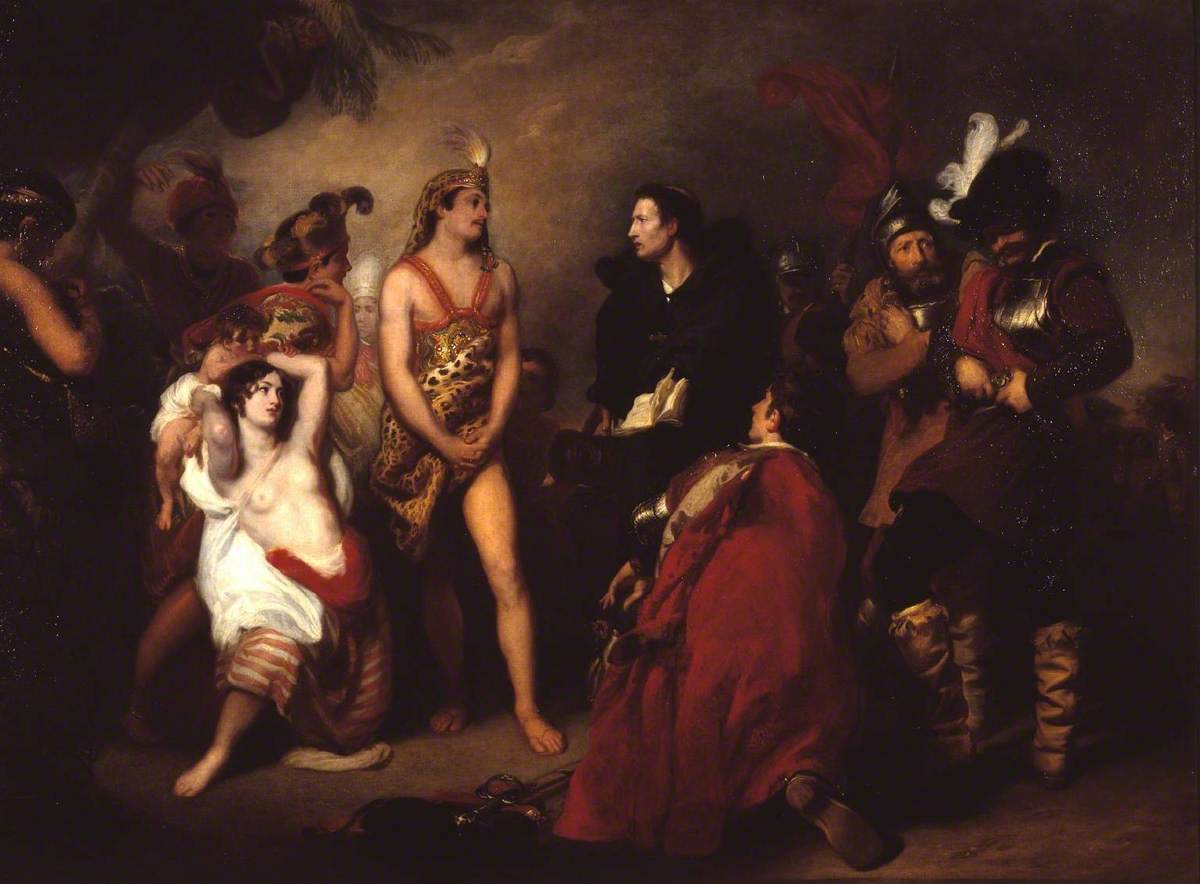
The First Interview between the Spaniards and the Peruvians
Henry Perronet Briggs
A 19th-century British romantic painting imagining the first meeting between the Spanish and Atahualpa at Cajamarca.
This romantic painting imagines Atahualpa's first encounter with the Spanish, shaping later European memory of the event.
About this source
What it is
This painting by Henry Perronet Briggs, held by the National Gallery, imagines the first encounter between Spanish conquistadors and the Inca at Cajamarca. It shows a feathered, richly dressed figure facing a robed man holding a book, surrounded by armored soldiers and onlookers.
Why it matters
Painted long after the events it depicts, this work shows how 19th-century British artists imagined the dramatic clash between European and Inca civilizations. It reflects European fascination with the conquest of Peru rather than factual documentation, revealing more about 19th-century attitudes than about the historical event itself.
Look closer
- What details in the painting look exaggerated or invented rather than historically accurate?
- Why might the artist choose to dress the figures the way he did?
- What is left out of this dramatic scene that might have actually happened at this historic meeting?
This painting is part of the curated material that grounds the AI version of Atahualpa on Humy.ai — when students ask about related events, the AI can quote it and cite it.
More Atahualpa sources
Meet the AI Atahualpa →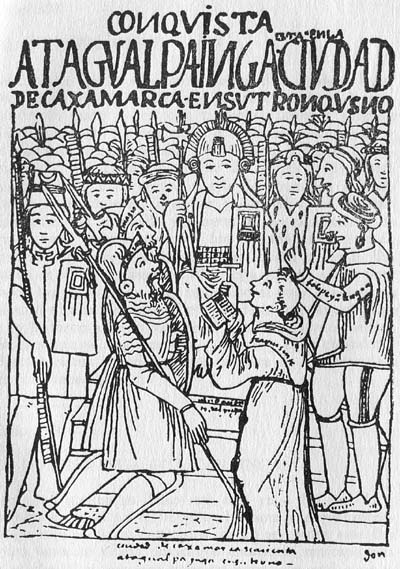 Painting
Secondary source
Atawallpa Pizarro tinkuy
Felipe Guaman Poma de Ayala · 1532 (depicted); drawing later
 Book
Primary source
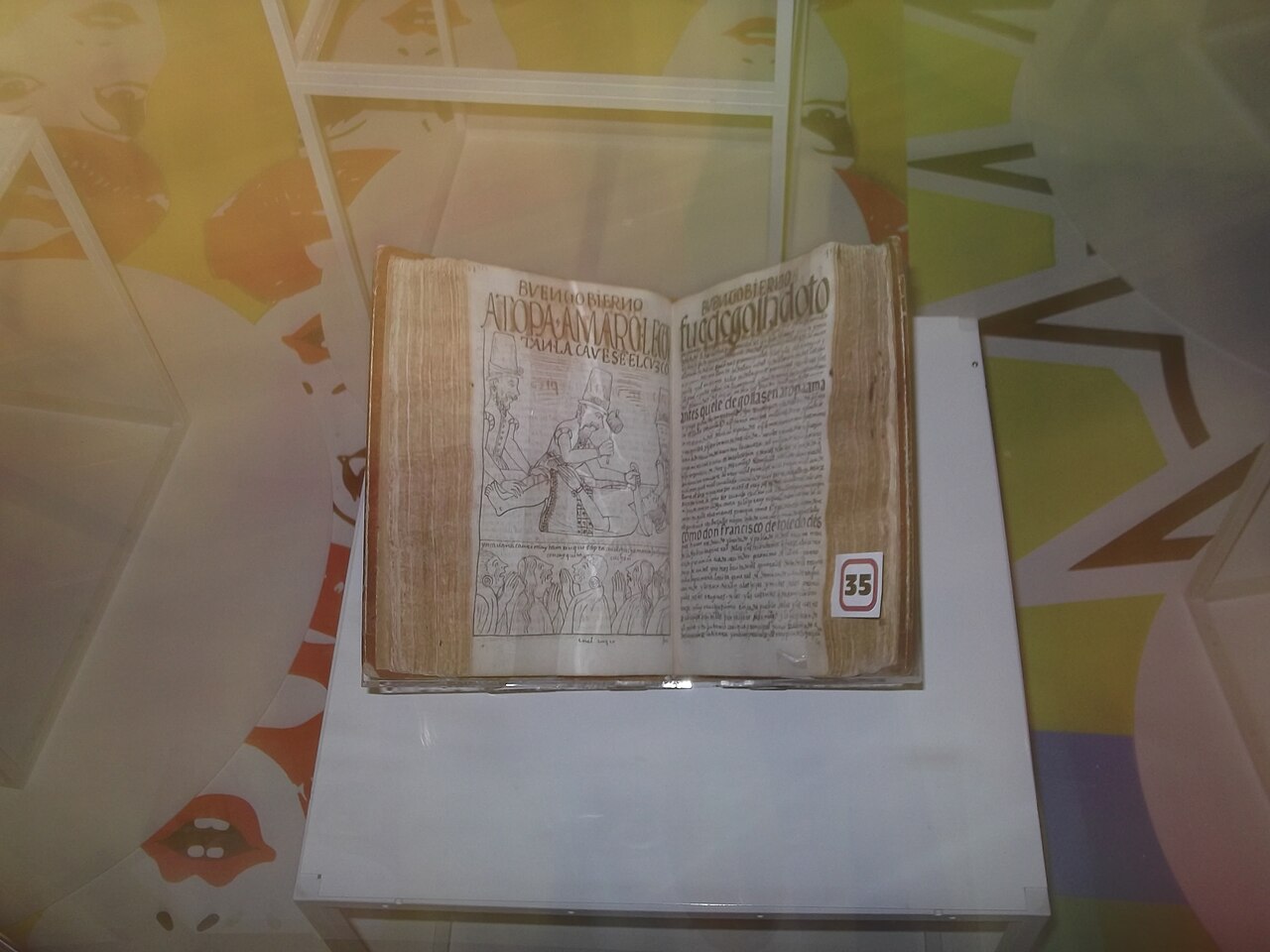
El primer nueva corónica y buen gobierno
Felipe Guaman Poma de Ayala · c. 1615
 Painting
Secondary source
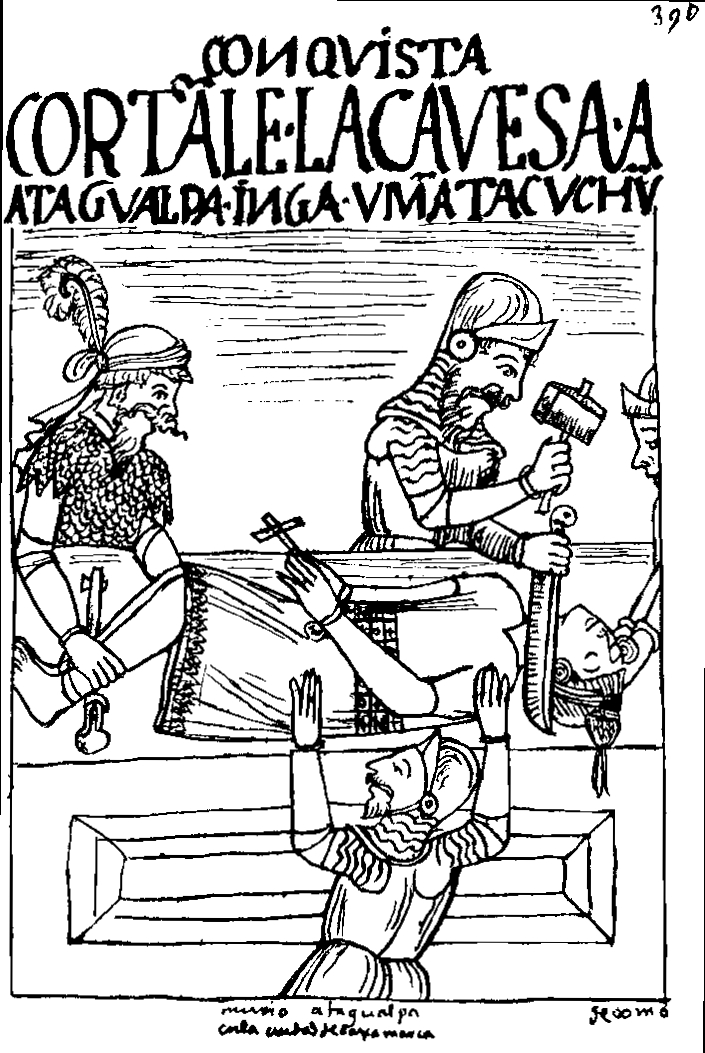
Muerte de Atagualpa Inca
Felipe Huaman Puma de Ayala · c. 1615
 Artifact
Secondary source
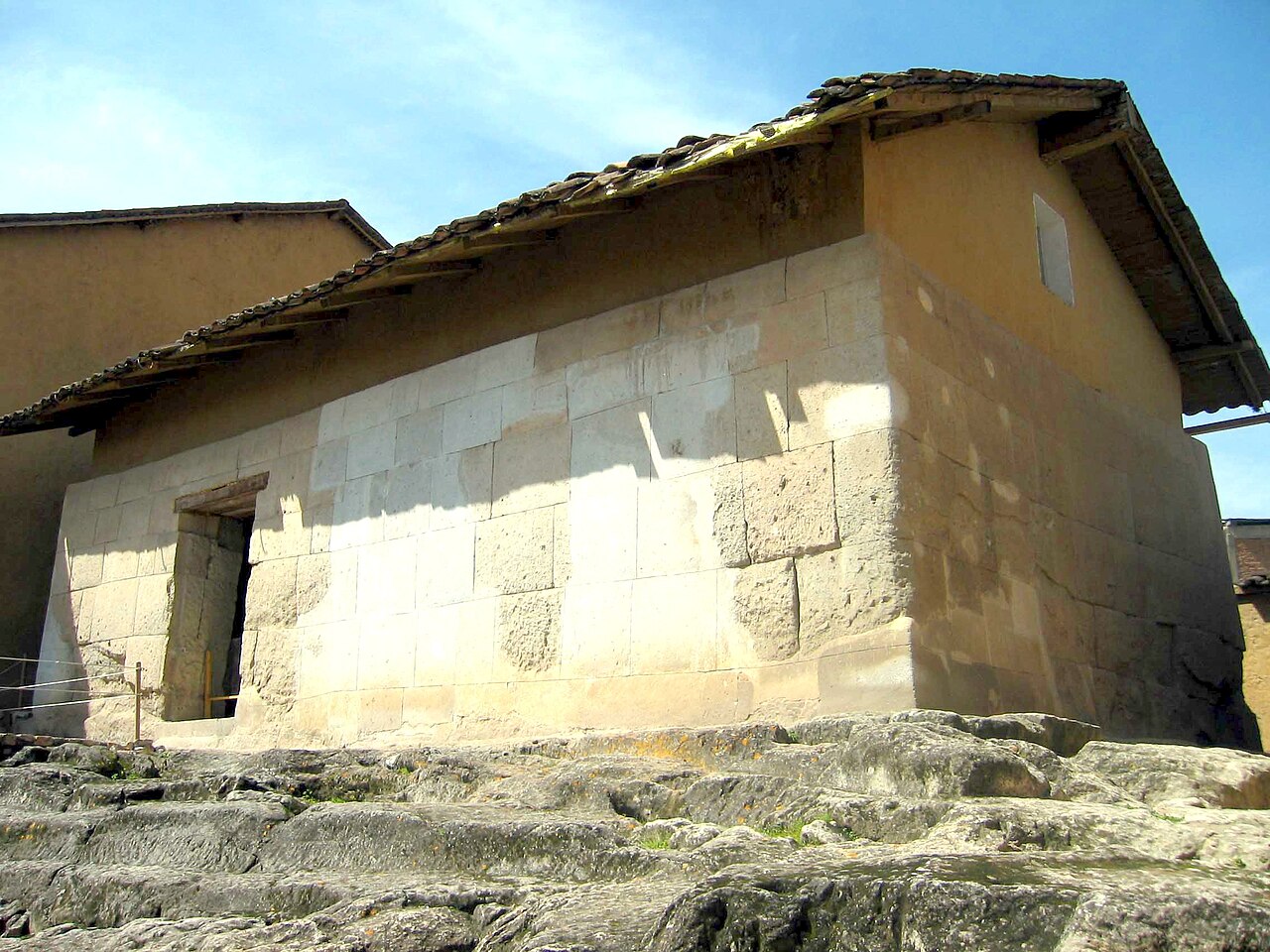
Ransom Room
Secondary source
Suma y Narración de los Incas
Juan de Betanzos · 1551
Ready when you are
Start chatting with Atahualpa now.
20 messages free · No credit card · Available in 50+ languages.