


Primary sourceNewspaper article17 October 1850
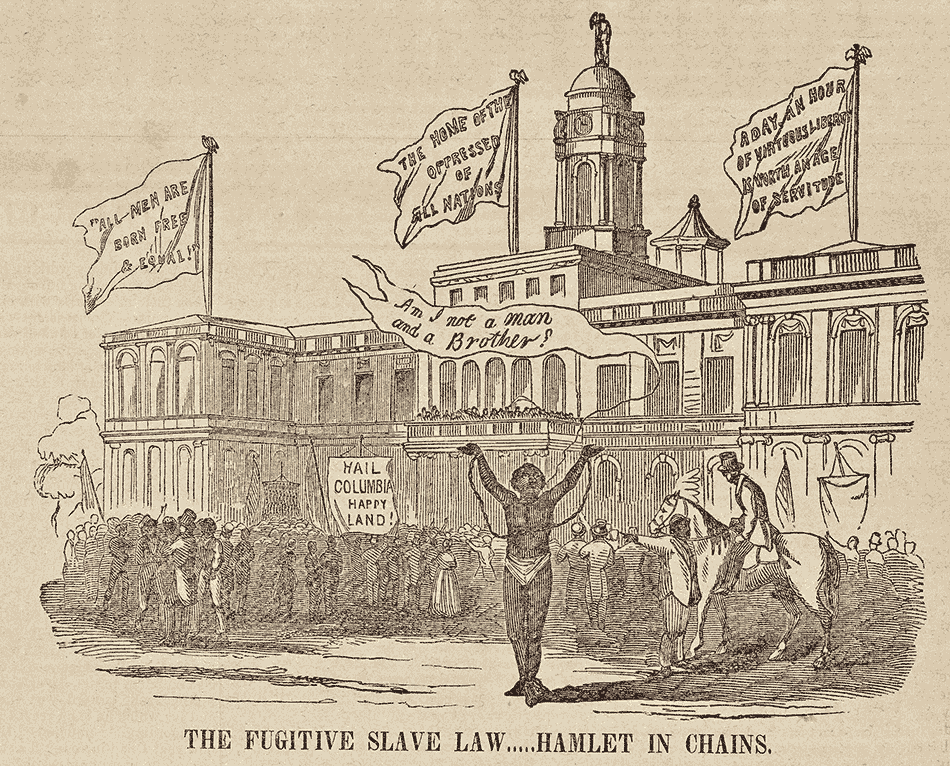
The Fugitive Slave Law.....Hamlet in Chains
17 October 1850
An 1850 newspaper engraving showing James Hamlet in chains, the first person returned to slavery under the Fugitive Slave Act that Coffin's Underground Railroad work opposed.
Shows the law and public crisis that Coffin's Cincinnati Underground Railroad work directly opposed.
About this source
What it is
This wood engraving, published in the National Anti-Slavery Standard on 17 October 1850, shows James Hamlet in chains before a crowd. Banners nearby read phrases like "All men are born free & equal" and "Am I not a man and a brother?"
Why it matters
Hamlet was the first person captured and returned to slavery under the newly passed Fugitive Slave Act of 1850. This law made it dangerous for anyone to help escaped enslaved people, and it directly intensified the Underground Railroad work that Levi Coffin carried out in Cincinnati. The image reflects the public outrage abolitionists felt and used to rally support.
Look closer
- What do the banners in the crowd suggest about public opinion on slavery?
- Why would an abolitionist newspaper choose to publish this image?
- What is left out of the picture that might help us understand Hamlet's own experience?
This newspaper article is part of the curated material that grounds the AI version of Levi Coffin and Harriet Jacobs on Humy.ai — when students ask about related events, the AI can quote it and cite it.
More Levi Coffin sources
Meet the AI Levi Coffin → Book
Primary source
Reminiscences of Levi Coffin
Levi Coffin · 1876
 Book
Secondary source
The Underground Railroad from Slavery to Freedom
Wilbur Henry Siebert · 1898
 Artifact
Primary source
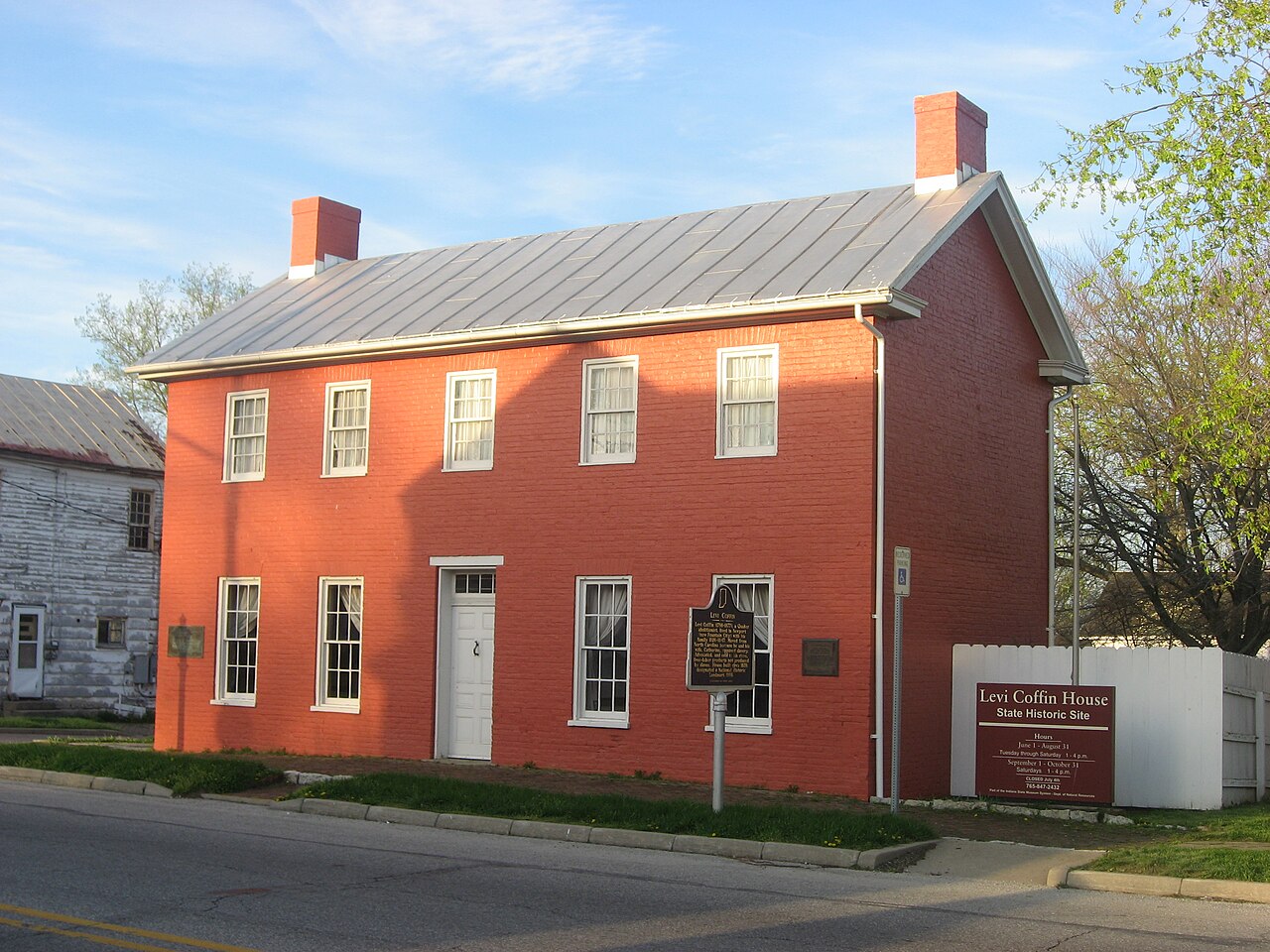
Levi Coffin House
Levi Coffin · 1838-1839
Primary source
A Woman's Life-Work
Laura Smith Haviland · 1881
 Photograph
Primary source
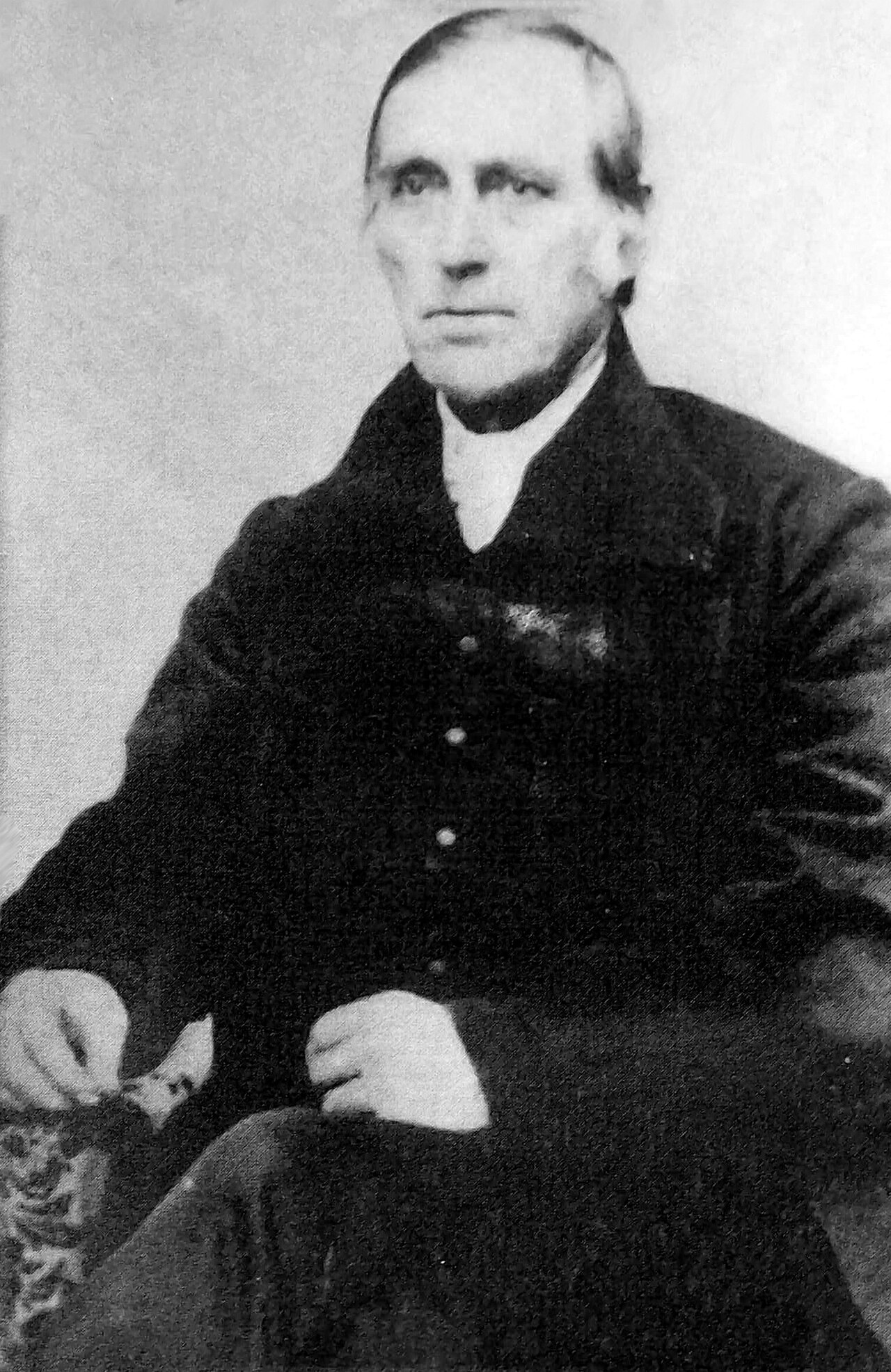
Levi Coffin photograph, c. 1865
Unknown · c. 1865
Ready when you are
Start chatting with Levi Coffin now.
20 messages free · No credit card · Available in 50+ languages.