


Primary sourceBook1927
The Future of an Illusion
Sigmund Freud · 1927
Freud's 1927 book arguing that religion is a wish-fulfilling illusion rooted in human psychology rather than divine truth.
Freud wrote this book himself, directly expressing his critique of religion as psychological illusion.

About this source
What it is
A 1927 book by Sigmund Freud, the founder of psychoanalysis, originally published in German as Die Zukunft einer Illusion. In it Freud applies psychoanalytic ideas to religion.
Why it matters
Freud argues that religious belief is an illusion driven by human wishes, especially the longing for a protective father figure, rather than evidence or reality. The book reveals Freud's own atheism and his belief that civilization depends on strong, often repressive, controls over instinctual human nature. It sparked debate with contemporaries such as Romain Rolland, who questioned Freud's account, and Carl Jung, who saw it as summarizing Freud's earlier rationalist views.
Look closer
- Why does Freud compare religious belief to wish-fulfillment rather than to scientific error?
- What does this book suggest about Freud's own views on society and human nature?
- How might someone of religious faith respond to Freud's argument?
This book is part of the curated material that grounds the AI version of Sigmund Freud on Humy.ai — when students ask about related events, the AI can quote it and cite it.
More Sigmund Freud sources
Meet the AI Sigmund Freud → Book
Secondary source
The Interpretation of Dreams
Sigmund Freud · 1900
 Book
Primary source
Three Essays on the Theory of Sexuality
Sigmund Freud · 1905
 Book
Primary source
The Ego and the Id
Sigmund Freud · 1923
 Book
Primary source
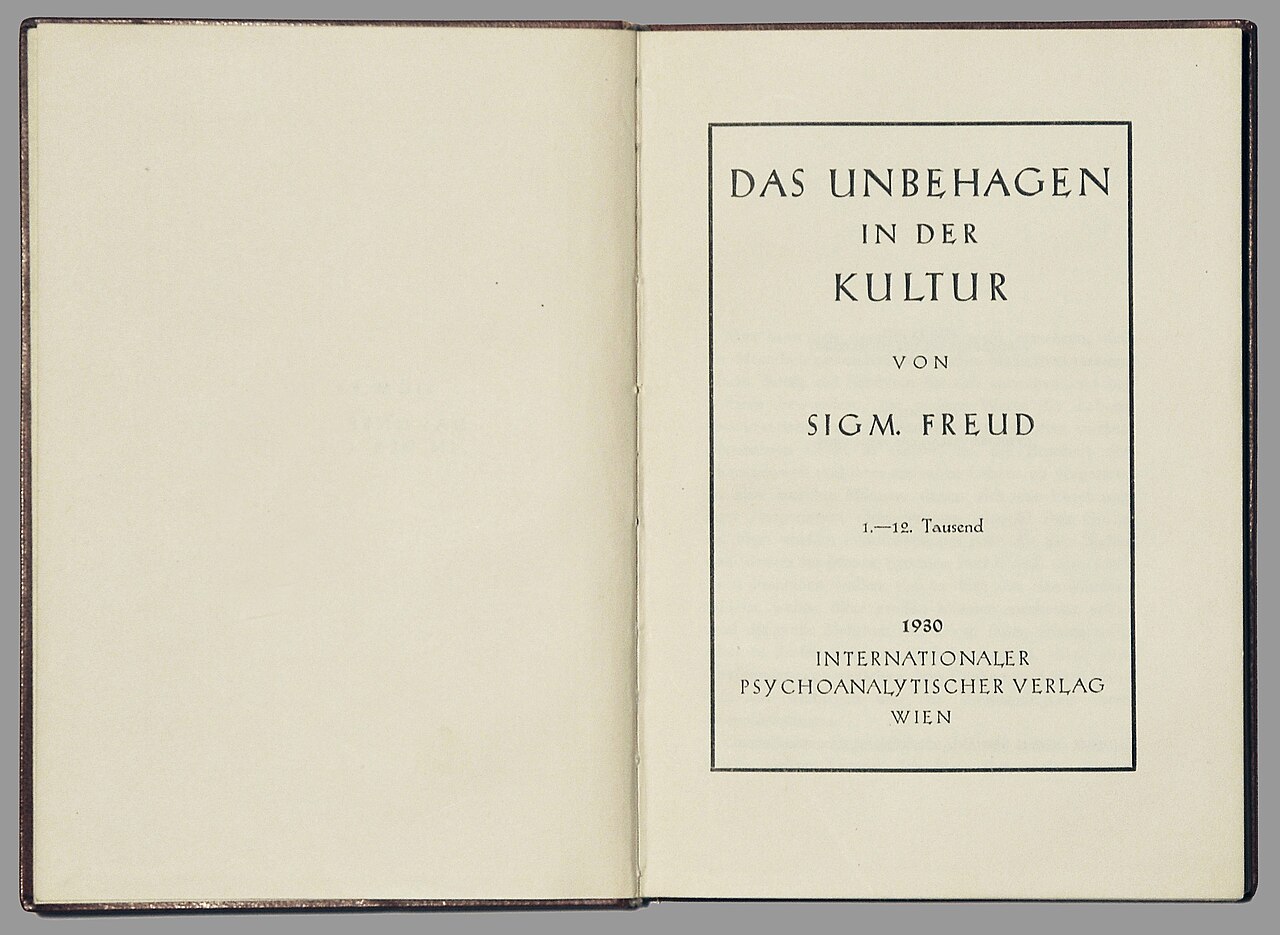
Civilization and Its Discontents
Sigmund Freud · 1930
Primary source
Sigmund Freud's Voice (BBC Broadcast Recording, 1938)
Sigmund Freud · 27 December 1938
Ready when you are
Start chatting with Sigmund Freud now.
20 messages free · No credit card · Available in 50+ languages.