


Secondary sourceSculpture
The Gracchi
Jean-Baptiste Claude Eugène Guillaume
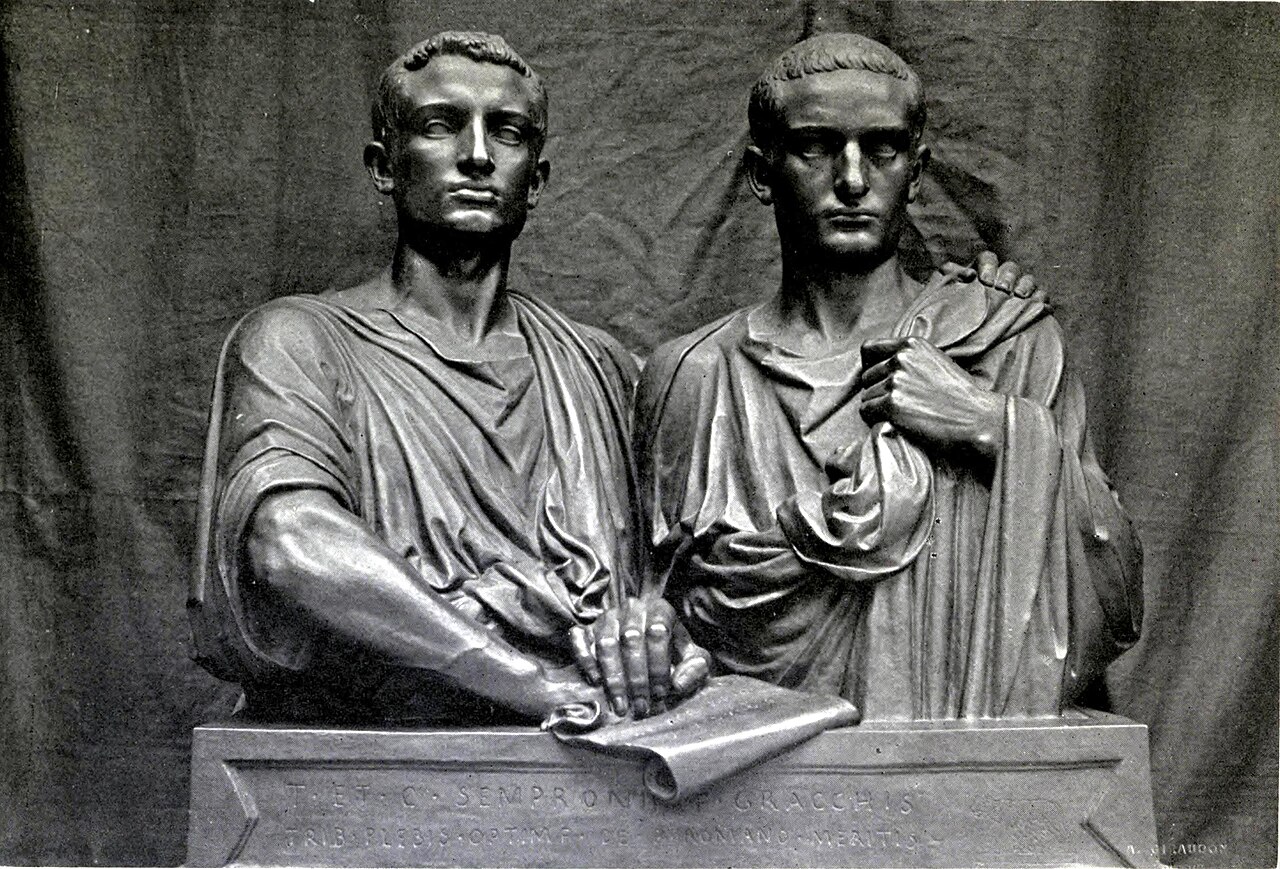
A bronze double bust by Eugène Guillaume showing Tiberius Gracchus and his brother Gaius holding a document inscribed with the word 'property'.
This sculpture commemorates Tiberius Gracchus alongside his brother Gaius as symbols of land reform and shared political legacy.
About this source
What it is
This bronze sculpture by Jean-Baptiste Claude Eugène Guillaume depicts the two Gracchi brothers, Tiberius and Gaius, as a half-length group. The document they hold is inscribed with the word 'property,' referring to their land reform laws. It is held at the Musée d'Orsay.
Why it matters
By the 19th century, the Gracchi brothers were seen as heroes of social reform, and sculptors like Guillaume celebrated them as champions of land redistribution. This work reveals how later generations reinterpreted ancient Roman politics through their own concerns about property and justice.
Look closer
- Why do you think the brothers are shown together rather than individually?
- What does the inscription on the document tell you about what the artist wanted viewers to remember about them?
- How might a 19th-century audience have understood this sculpture differently than an ancient Roman would?
This sculpture is part of the curated material that grounds the AI version of Tiberius Gracchus and Gaius Gracchus on Humy.ai — when students ask about related events, the AI can quote it and cite it.
More Tiberius Gracchus sources
Browse all 50 →
Ready when you are
Start chatting with Tiberius Gracchus now.
20 messages free · No credit card · Available in 50+ languages.