


Primary sourcePainting1856
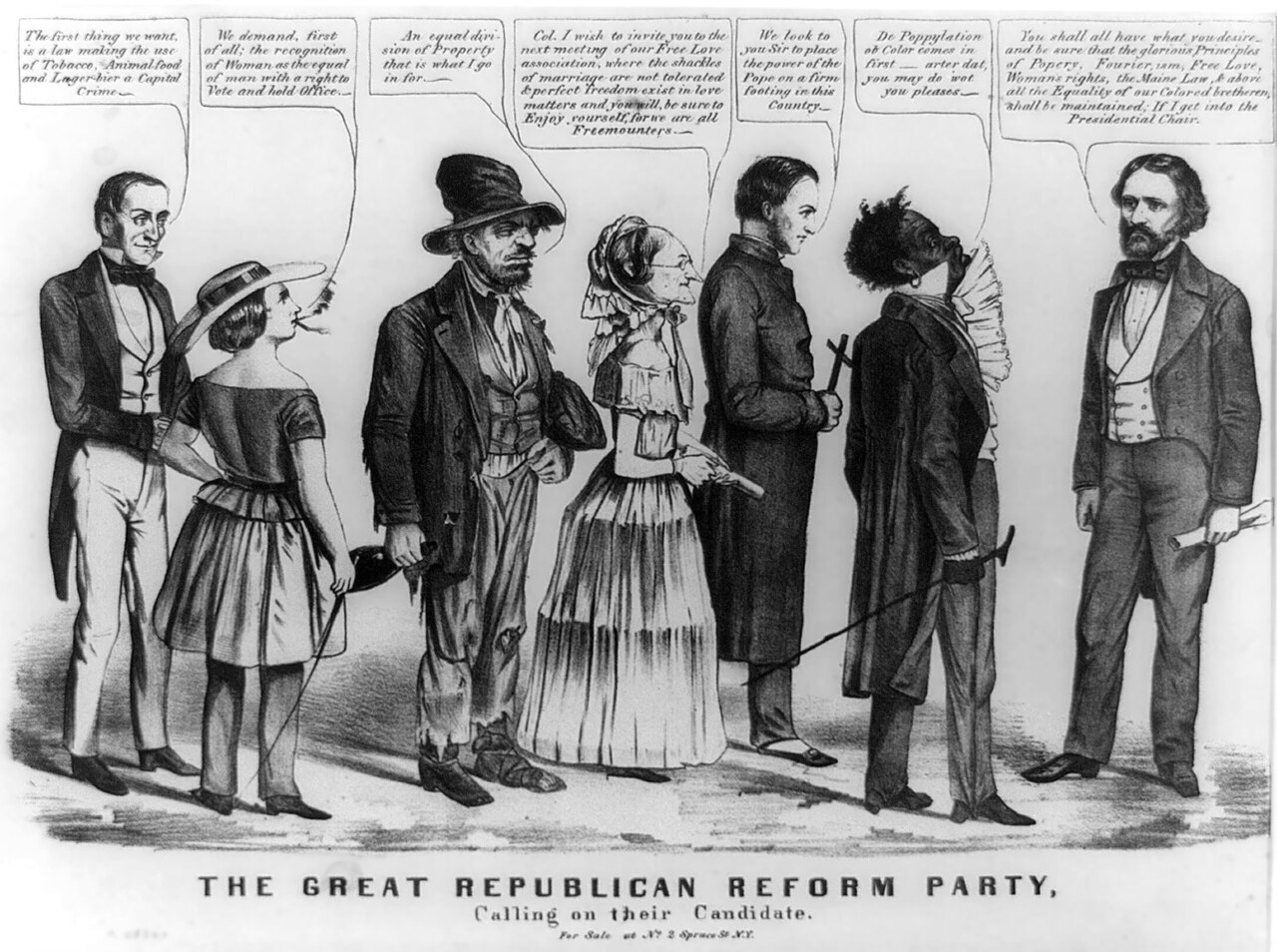
The Great Republican Reform Party Calling on their Candidate
Nathaniel Currier (firm) · 1856
An 1856 political cartoon by Nathaniel Currier mocking Frémont's supporters as a coalition of radical social movements, including a racist caricature.
This cartoon depicts Frémont as the target of political attacks during his 1856 presidential campaign, the first for the Republican Party.
About this source
What it is
This lithograph, titled 'The Great Republican Reform Party, Calling on their Candidate,' was published by Nathaniel Currier's firm in 1856. It shows caricatures of reform-movement figures approaching a well-dressed bearded man, meant to represent John C. Frémont, the first Republican candidate for president.
Why it matters
The cartoon mocks Frémont's political coalition by linking it to various reform movements of the time, such as abolitionism, temperance, pacifism, and feminism, which critics grouped together and stigmatized as dangerous 'isms.' It includes a racist caricature of a Black figure, reflecting how opponents used racist imagery to attack reform causes and the early Republican Party. The cartoon shows how visual propaganda was used in 19th-century American political campaigns.
Look closer
- Why might Frémont's opponents have chosen to link him to so many different reform movements in one image?
- What does the racist caricature in this cartoon reveal about attitudes in American political culture at the time?
- How does this cartoon try to make viewers feel about Frémont and his supporters?
This painting is part of the curated material that grounds the AI version of John C. Frémont on Humy.ai — when students ask about related events, the AI can quote it and cite it.
More John C. Frémont sources
Meet the AI John C. Frémont →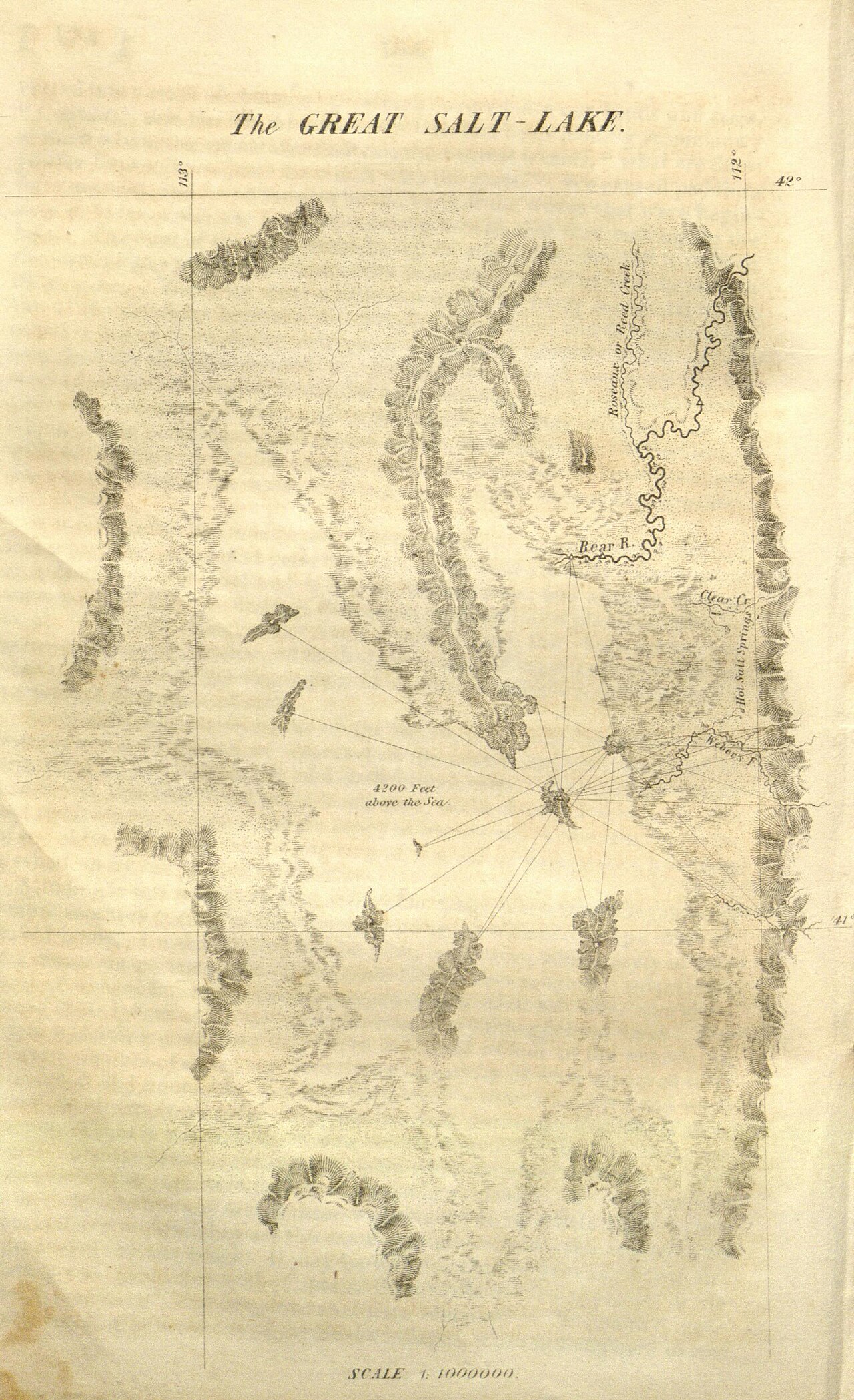 Book
Primary source
Report of the Exploring Expedition to the Rocky Mountains and to Oregon and North California
John C. Frémont and Jessie Benton Frémont · 1845
 Document
Primary source
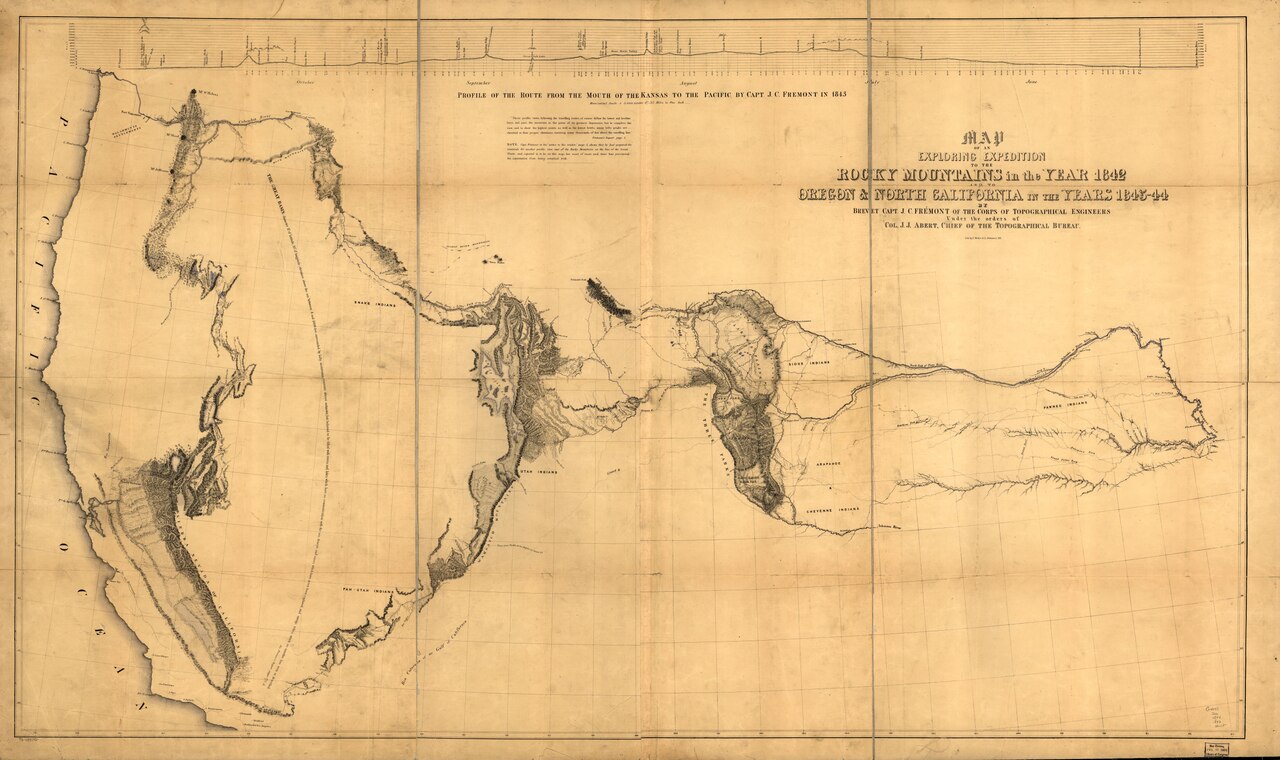
Map of an Exploring Expedition to the Rocky Mountains and to Oregon & North California
Charles Preuss (under John C. Frémont) · 1845
Primary source
Treaty of Cahuenga
José Antonio Carrillo (drafter); signed by John C. Frémont and Andrés Pico · 13 January 1847
 Photograph
Primary source
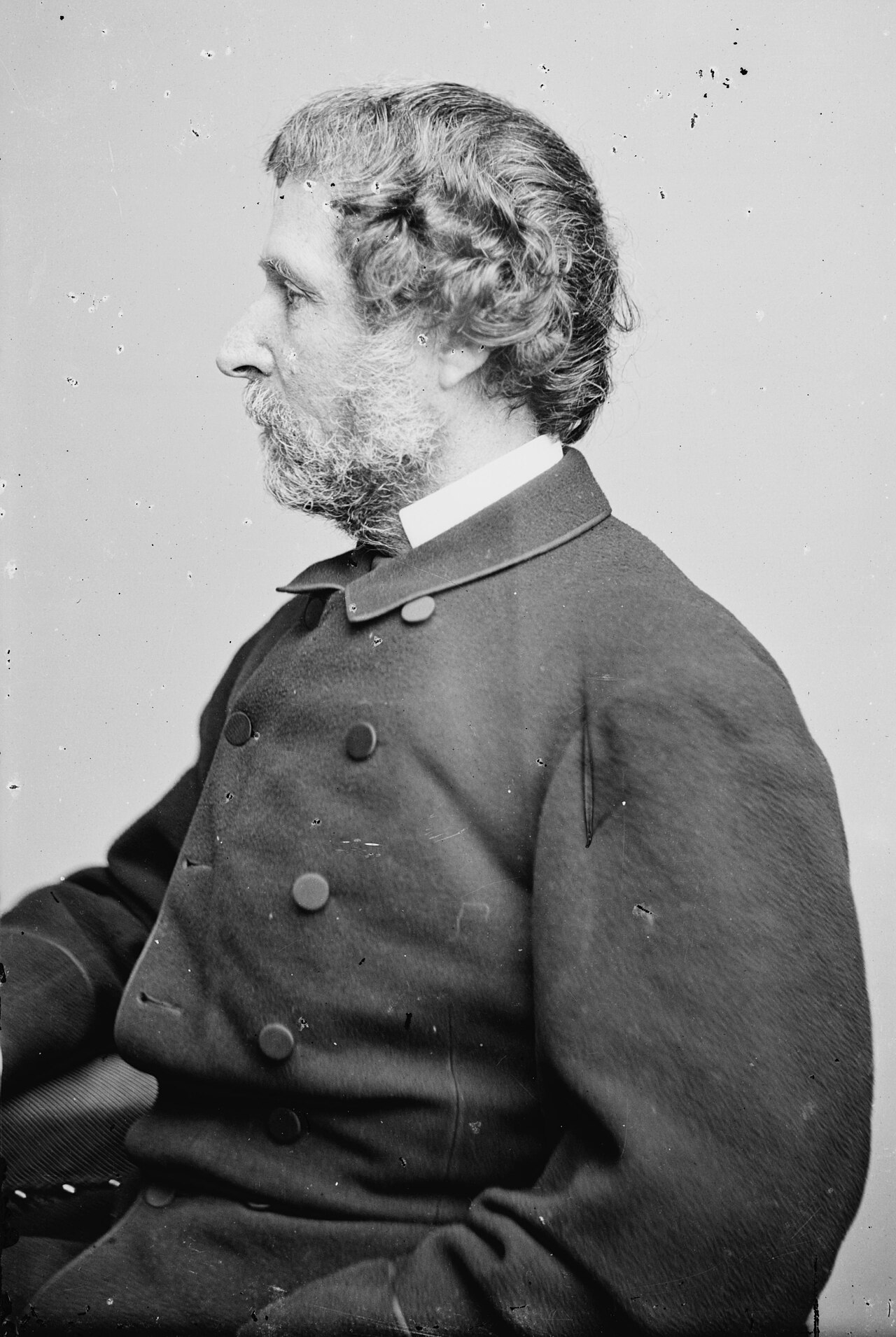
John C. Frémont - Brady-Handy
Mathew Benjamin Brady
 Painting
Primary source
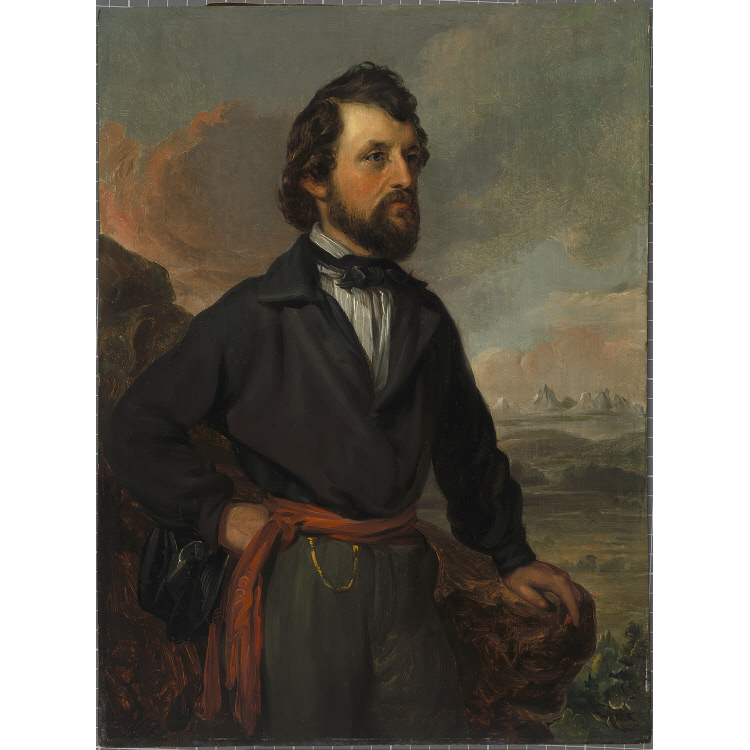
John Charles Frémont
William S. Jewett
Ready when you are
Start chatting with John C. Frémont now.
20 messages free · No credit card · Available in 50+ languages.