


Primary sourcePainting1905
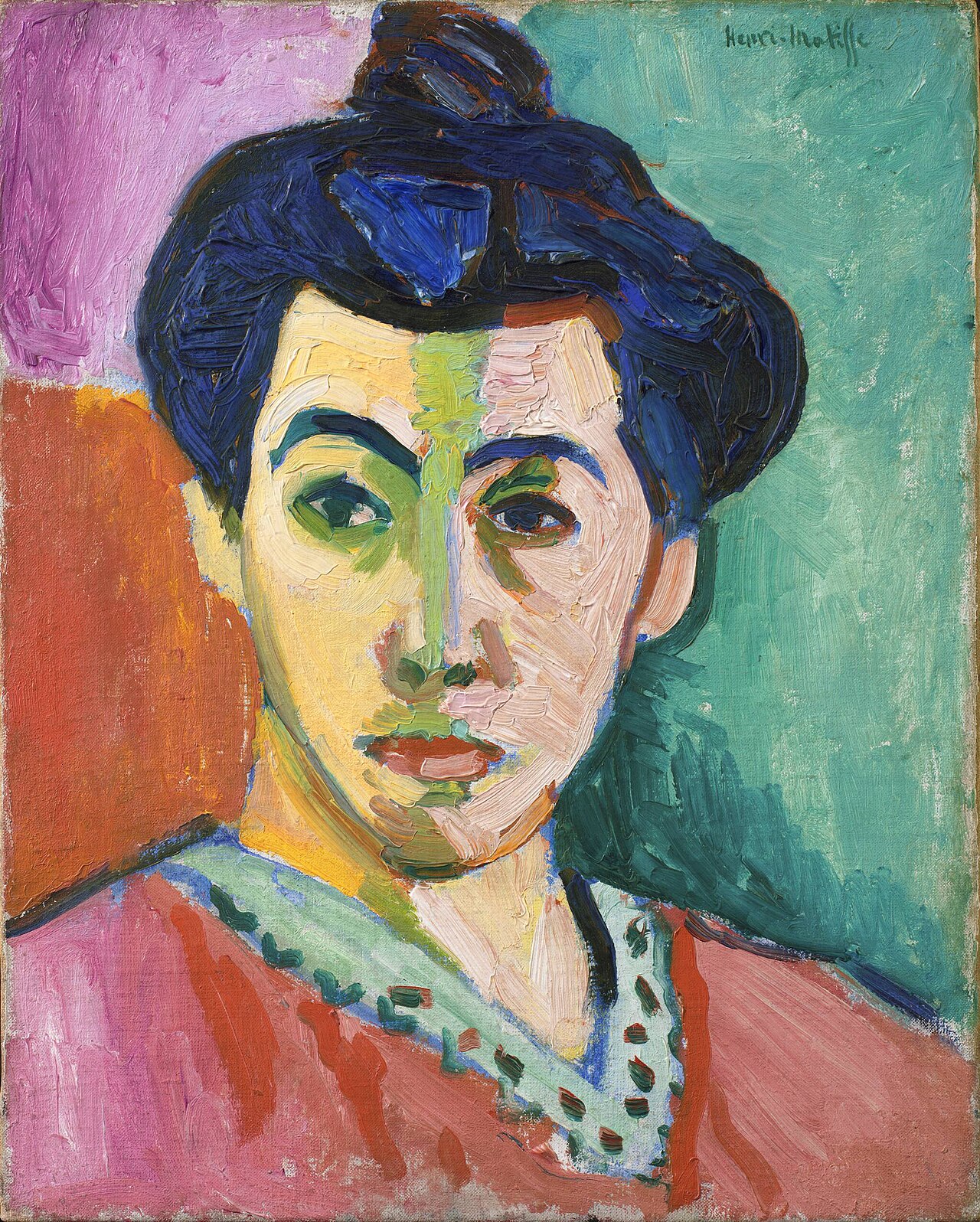
The Green Stripe
Henri Matisse · 1905
A 1905 portrait by Henri Matisse of his wife Amélie, divided by a bold green stripe down her face, famous as a Fauvist experiment in colour.
Painted by Matisse, this portrait of his wife is a key example of his Fauvist use of colour.
About this source
What it is
This oil painting, made by Henri Matisse in 1905, shows his wife Amélie Matisse-Parayre. A vivid green stripe runs down the centre of her face, dividing it into zones of warm and cool colour. It is held at the Statens Museum for Kunst in Copenhagen.
Why it matters
The painting is a landmark of Fauvism, the movement in which Matisse and other artists used colour that did not follow nature, choosing bold, clashing tones instead. Contemporaries were shocked: some critics and even friends of the painting's owners found it unsettling, calling it an almost inhuman portrait. It shows how Matisse put his artistic ideas about colour above a realistic likeness of his own wife, and reveals the controversy Fauvism caused at the time.
Look closer
- Why might Matisse have chosen colours that do not match real skin tones?
- How does the painting make Amélie look both human and strange at the same time?
- What does it tell us that a portrait of a wife could be seen as controversial or unflattering?
This painting is part of the curated material that grounds the AI version of Henri Matisse on Humy.ai — when students ask about related events, the AI can quote it and cite it.
More Henri Matisse sources
Browse all 99 →
Ready when you are
Start chatting with Henri Matisse now.
20 messages free · No credit card · Available in 50+ languages.