


Secondary sourcePainting1617-1618
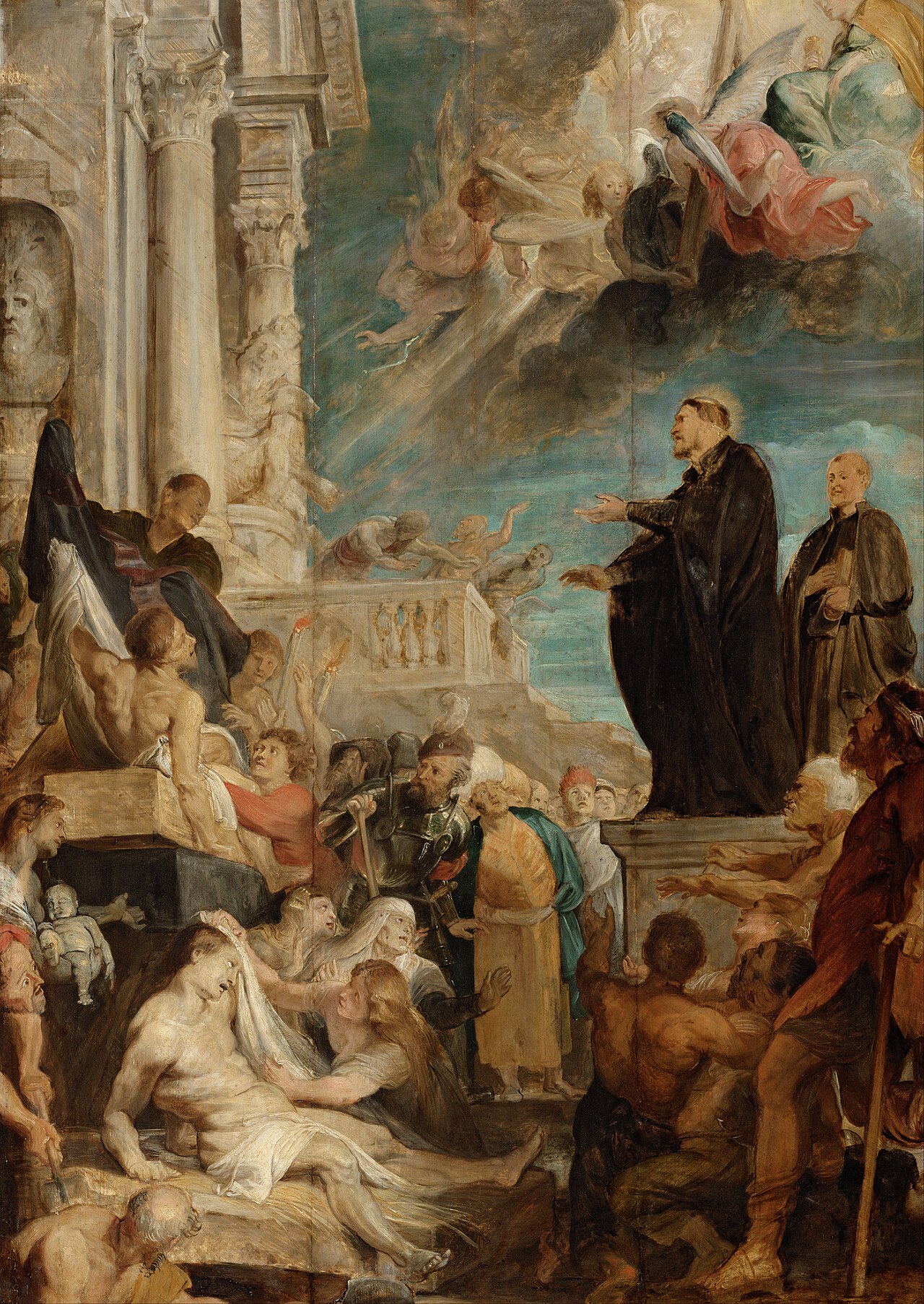
The Miracles of St. Francis Xavier
Peter Paul Rubens · 1617-1618
A large altarpiece by Peter Paul Rubens showing Xavier performing miracles among Asian crowds, painted for the Jesuits of Antwerp.
Rubens's altarpiece depicts Xavier performing miracles, used as propaganda supporting his canonization.
About this source
What it is
This is a large altarpiece painted by Peter Paul Rubens around 1617-1618 for the Jesuit church in Antwerp. It shows St. Francis Xavier raising the dead and preaching to crowds of sick people, with figures drawn from Asia and Africa, and a toppling idol in the background. It now hangs in the Kunsthistorisches Museum in Vienna.
Why it matters
Rubens painted this before Xavier was officially made a saint, as part of the campaign to prove his miracles to the Catholic Church. It is a striking example of Counter-Reformation art, meant to restore faith in Catholic doctrine by showing dramatic, emotional scenes of healing and conversion. The painting mixes European and Asian imagery, based partly on travel accounts and traded goods, showing how Europeans imagined and often distorted other cultures.
Look closer
- What gestures and expressions does Rubens use to show Xavier's power?
- Why might the Jesuits have wanted such a dramatic painting for their church?
- What does the depiction of the falling idol suggest about European attitudes toward other religions?
This painting is part of the curated material that grounds the AI version of Francis Xavier and Peter Paul Rubens on Humy.ai — when students ask about related events, the AI can quote it and cite it.
More Francis Xavier sources
Browse all 85 →
Ready when you are
Start chatting with Francis Xavier now.
20 messages free · No credit card · Available in 50+ languages.