


Primary sourcePainting1568
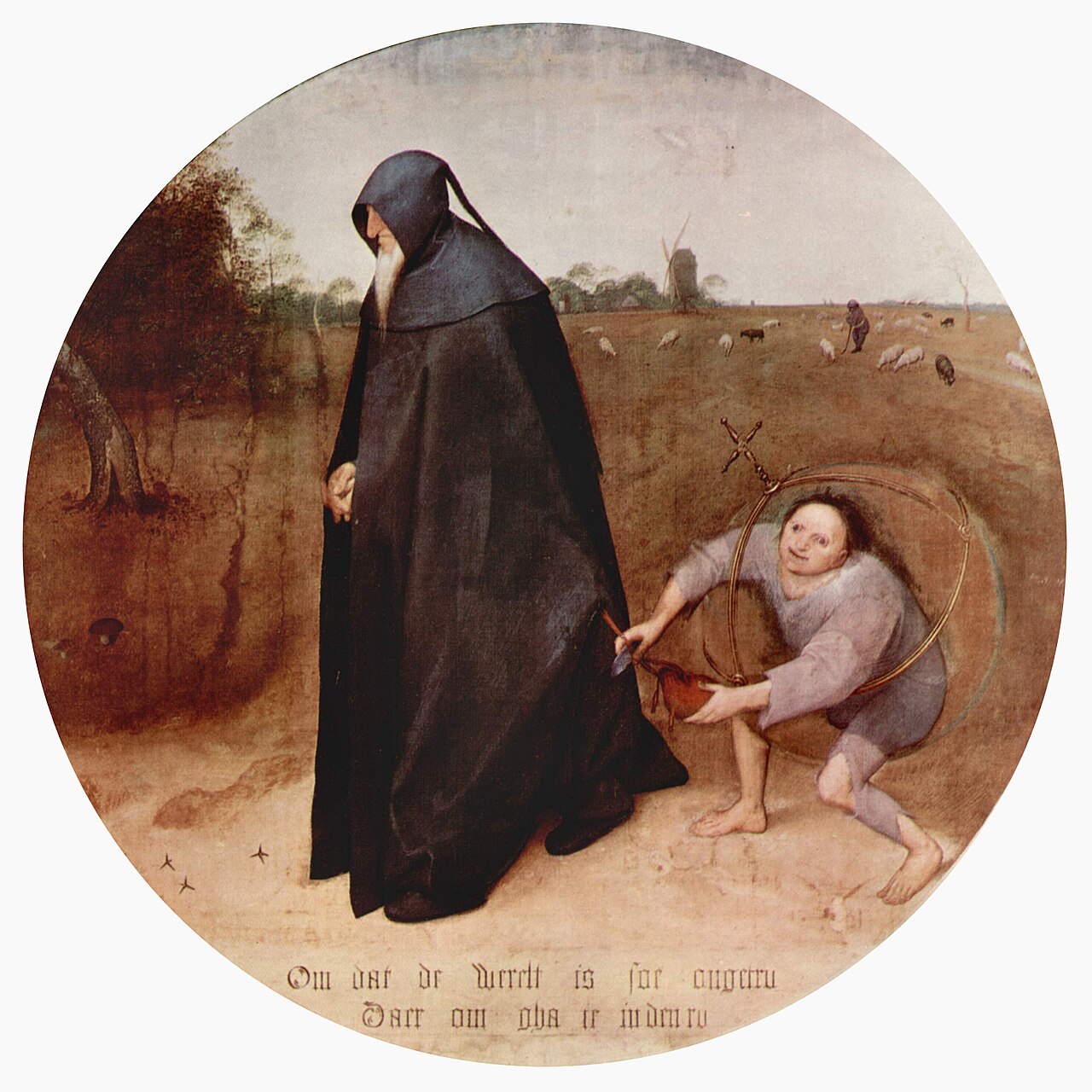
The Misanthrope
Pieter Bruegel the Elder · 1568
A circular tempera painting of 1568 showing a hooded old man being robbed while lost in thought, with a bitter Flemish inscription about the world's perfidy.
This late work, painted and inscribed by Bruegel himself, reflects his moral and satirical concerns near the end of his life.
About this source
What it is
This is a tempera painting on canvas made in 1568 by Pieter Bruegel the Elder, now held at the Museo di Capodimonte in Naples. It shows a black-robed, bearded man clasping his hands while a small barefoot figure, enclosed in a glass globe, cuts the strings of his money pouch. A Flemish inscription at the bottom reads: 'Because the world is perfidious, I am going into mourning.'
Why it matters
The painting mixes image and text to deliver a moral message about greed, vanity and the impossibility of escaping worldly troubles. The misanthrope, blind to both the thief and the caltrops set in his path, is contrasted with a distant shepherd who virtuously tends his flock. It shows Bruegel's skill at using symbolism to comment on human folly, a theme common in his late work. A later copy by his son, Pieter Bruegel the Younger, shows how popular and influential the composition became.
Look closer
- What does the globe-shaped figure stealing the purse seem to represent?
- Why do you think Bruegel included written text as well as images?
- What is the significance of contrasting the misanthrope with the shepherd in the background?
This painting is part of the curated material that grounds the AI version of Pieter Bruegel the Elder on Humy.ai — when students ask about related events, the AI can quote it and cite it.
More Pieter Bruegel the Elder sources
Browse all 96 →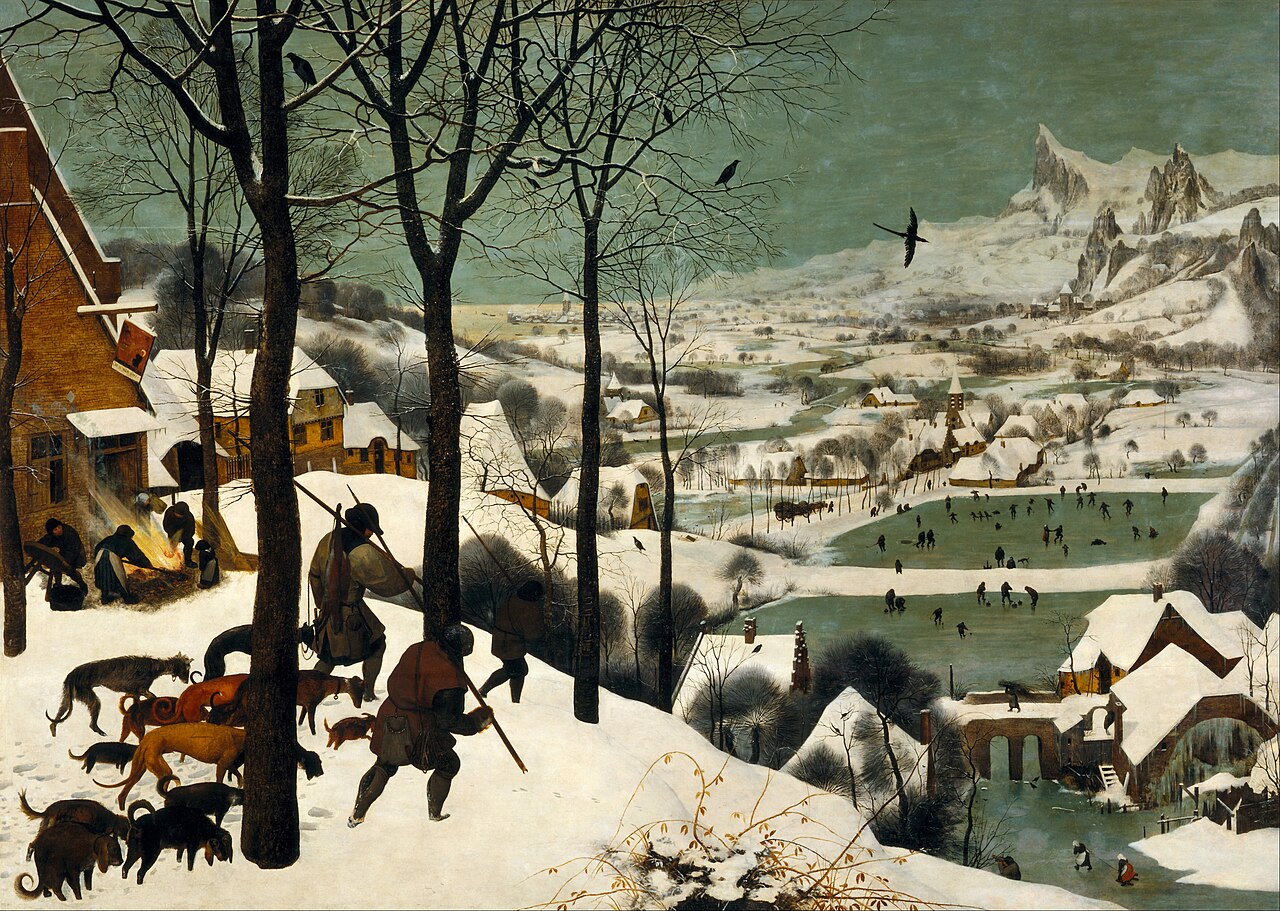 Painting
Primary source
The Hunters in the Snow
Pieter Bruegel the Elder · 1565
 Painting
Primary source
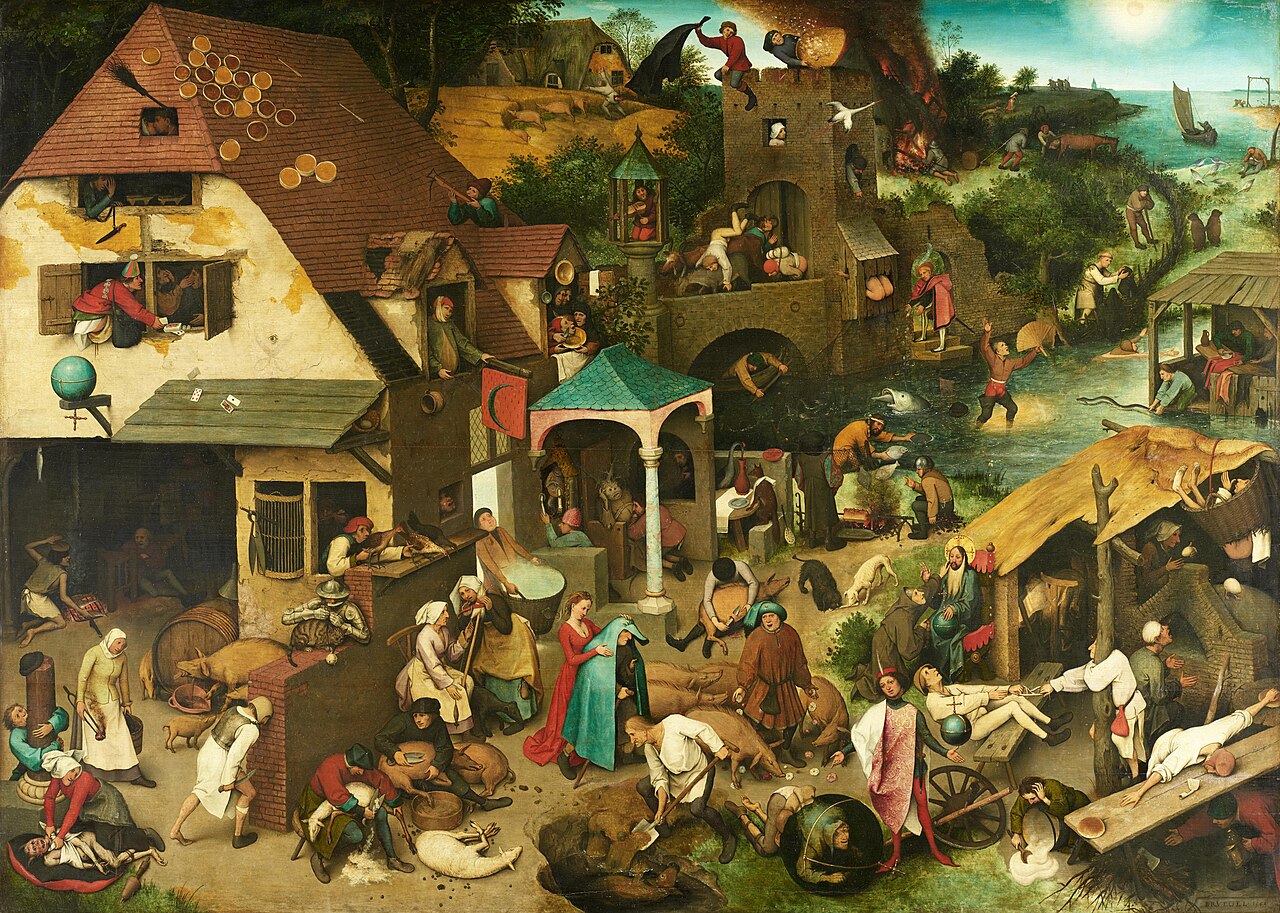
Netherlandish Proverbs
Pieter Bruegel the Elder · 1559
 Painting
Secondary source
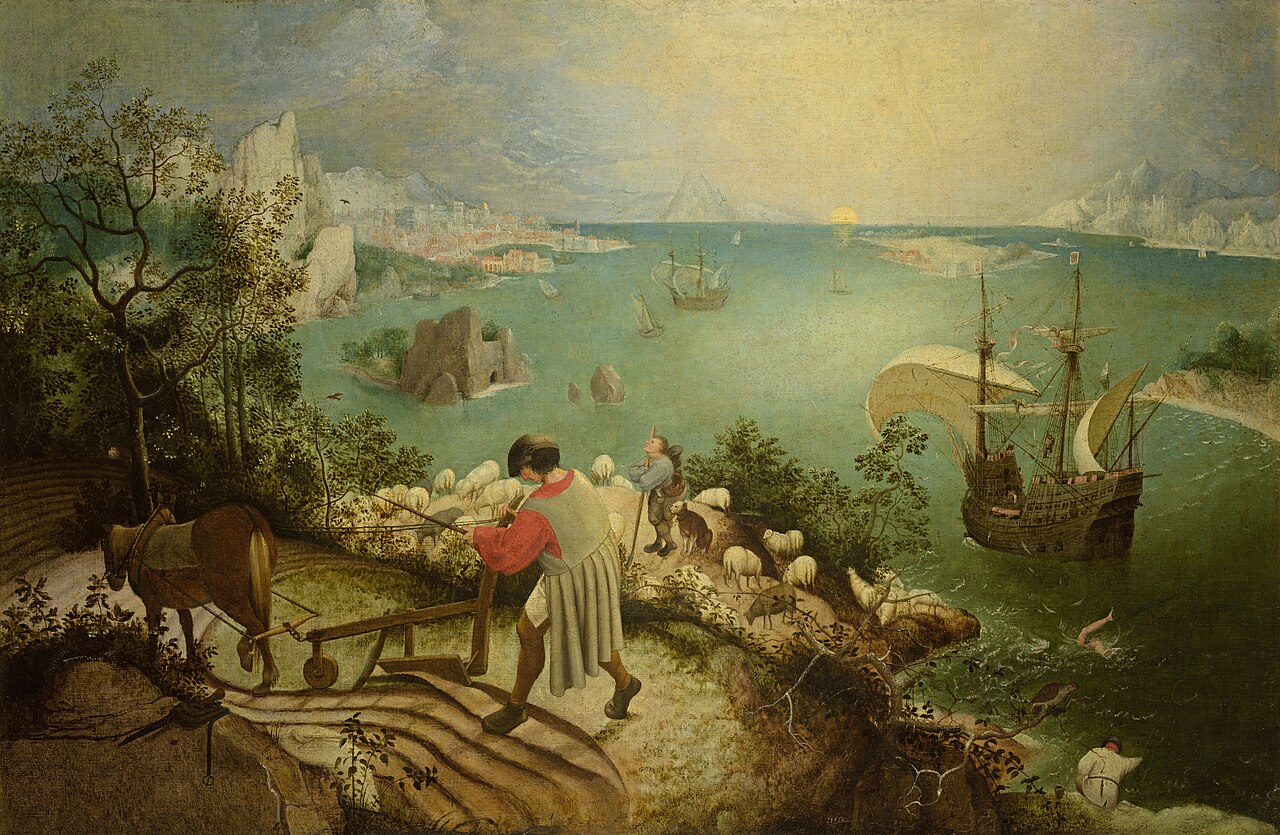
Landscape with the Fall of Icarus
Unknown (circle of Pieter Bruegel the Elder) · c. 1560s
 Painting
Primary source
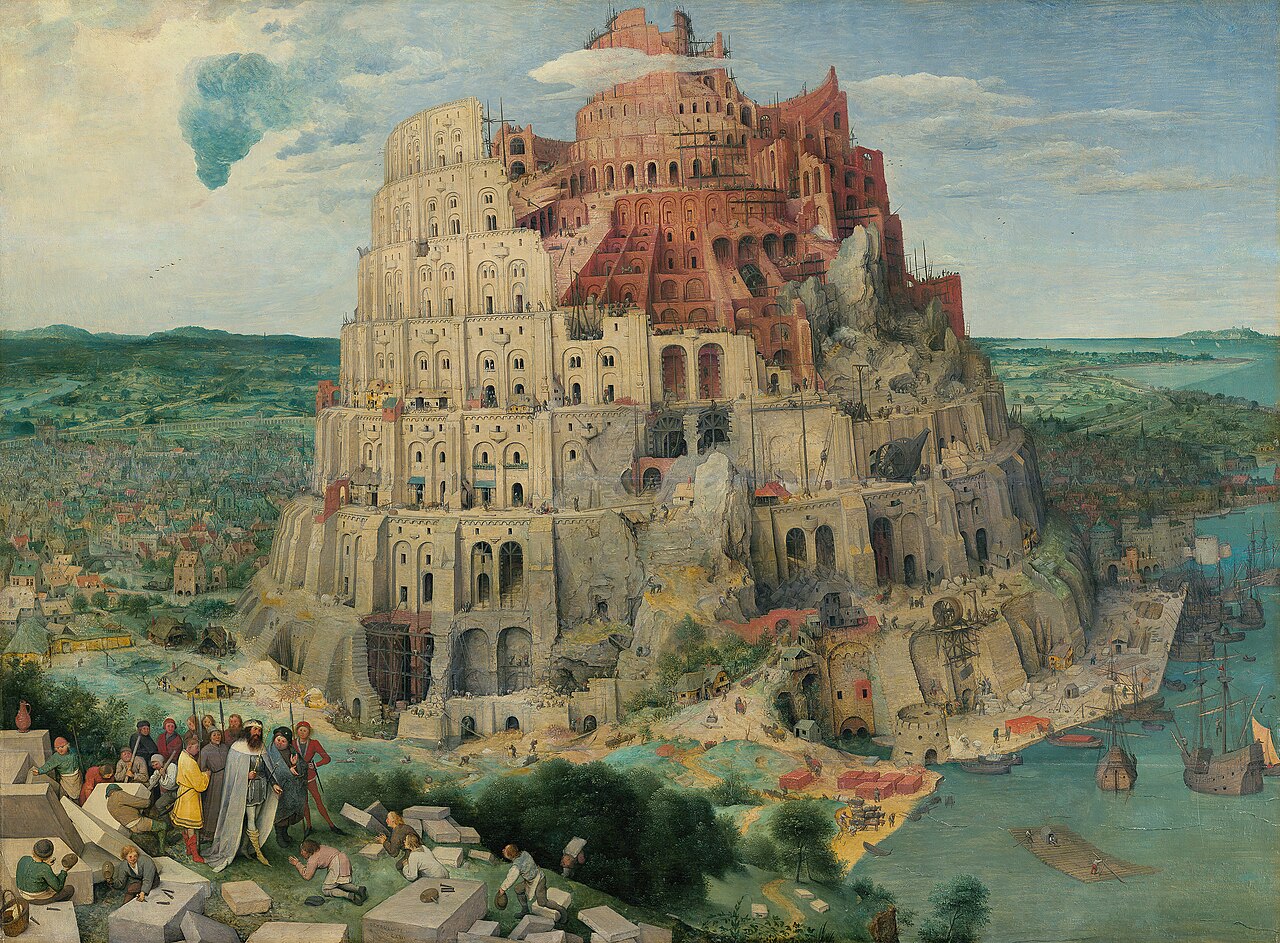
The Tower of Babel
Pieter Bruegel the Elder · 1563
Free account
Read every Pieter Bruegel the Elder source
Sign up free →
Ready when you are
Start chatting with Pieter Bruegel the Elder now.
20 messages free · No credit card · Available in 50+ languages.