


Secondary sourcePaintingc. 1904
The Mongol Invasion
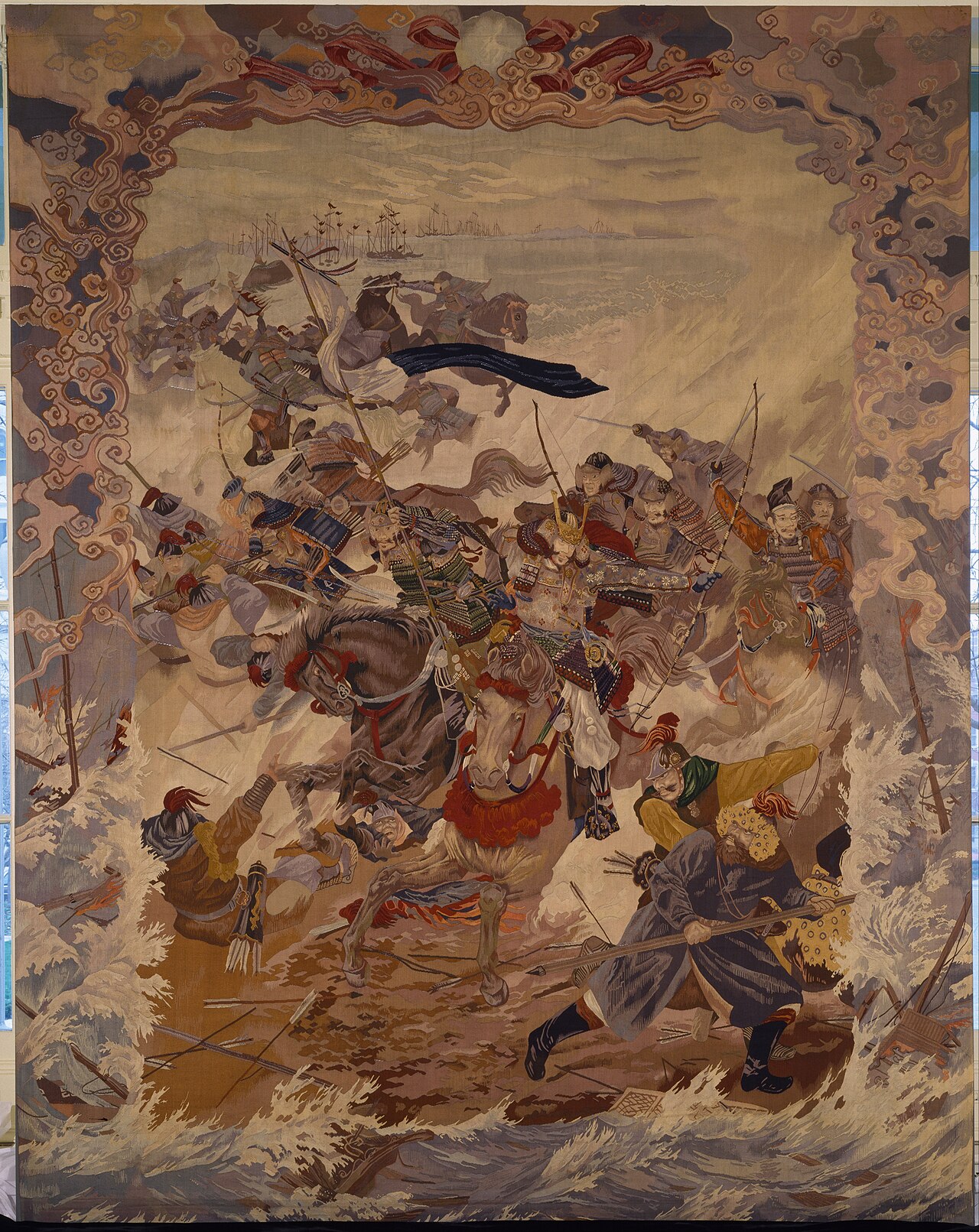
Kawashima Jimbei II (workshop) · c. 1904
A Meiji-era Japanese tapestry-style painting depicting the Mongol invasions of Japan launched under Kublai Khan.
A later Japanese depiction of the Mongol invasions of Japan that Kublai Khan ordered as Yuan emperor.
About this source
What it is
This is a woven or embroidered scene made around 1904 by the Kawashima Jimbei workshop in Japan. It shows samurai warriors fighting on horseback and on foot against an invading force, with ships visible on the sea in the background.
Why it matters
The painting is a later Japanese artistic memory of the Mongol invasions of Japan, which Kublai Khan ordered as emperor of the Yuan dynasty. It shows how, centuries later, Japanese artists imagined and remembered this conflict as a moment of samurai heroism rather than a historical record made at the time.
Look closer
- Why might a Japanese workshop centuries later choose this battle as a subject?
- What details suggest this is an artistic reimagining rather than an eyewitness account?
- Whose perspective is shown here, and whose is missing?
This painting is part of the curated material that grounds the AI version of Kublai Khan on Humy.ai — when students ask about related events, the AI can quote it and cite it.
More Kublai Khan sources
Browse all 81 →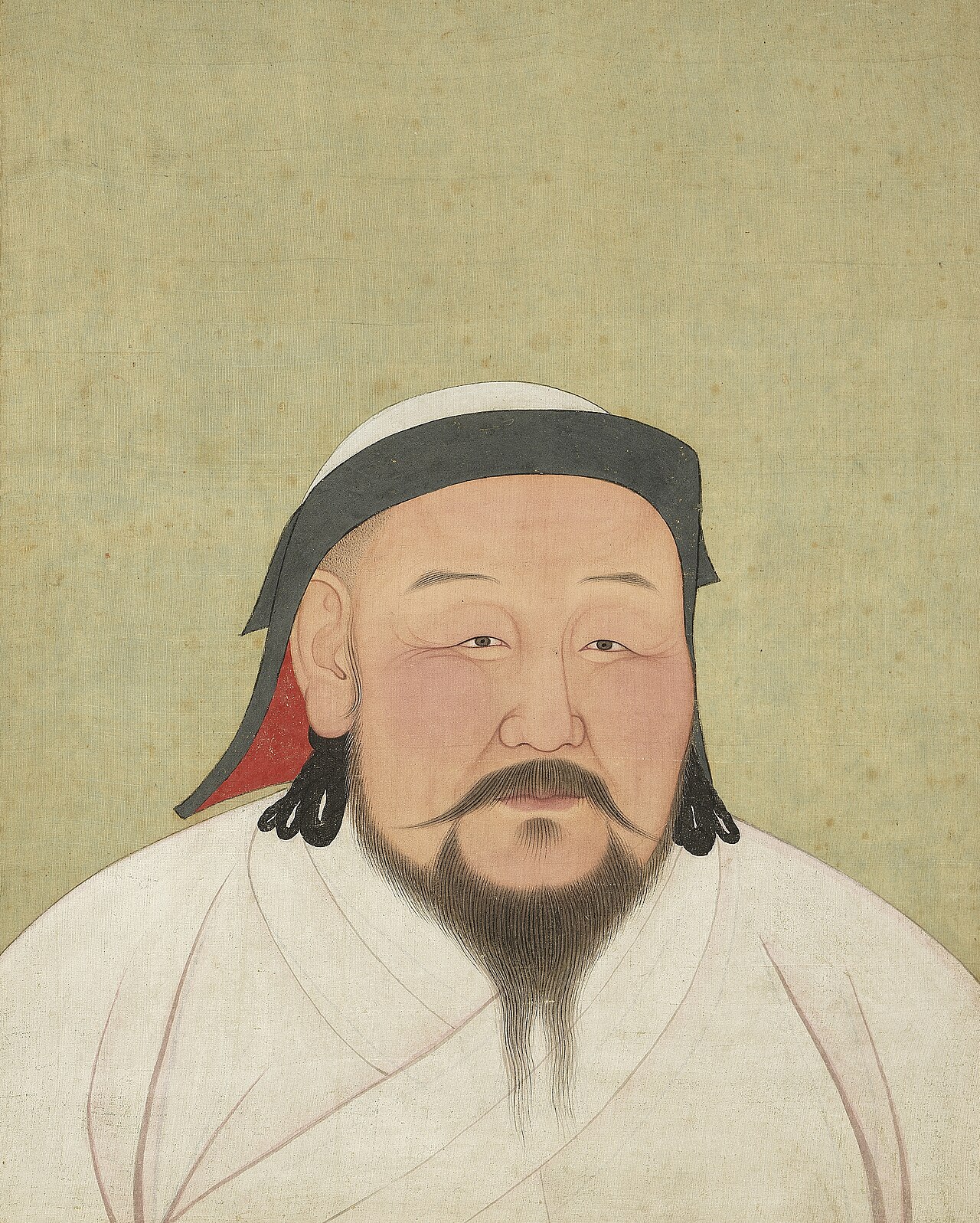 Painting
Secondary source
Portrait of Kublai Khan
Circle of Anige
 Book
Primary source
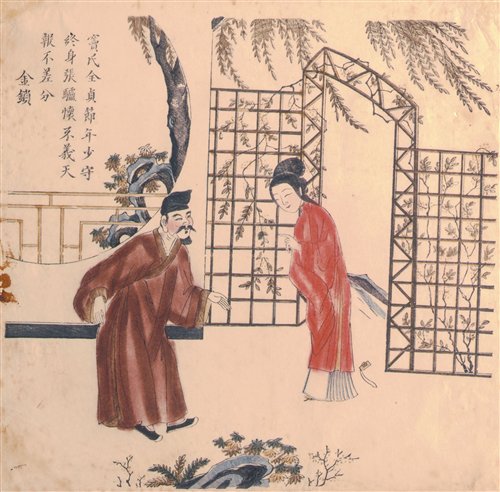
The Injustice to Dou E
Guan Hanqing · 1292
 Book
Secondary source
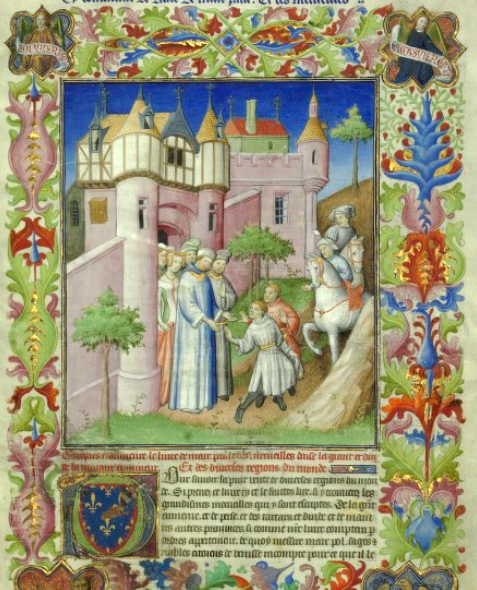
The Travels of Marco Polo
Rustichello da Pisa · 1298
 Book
Primary source
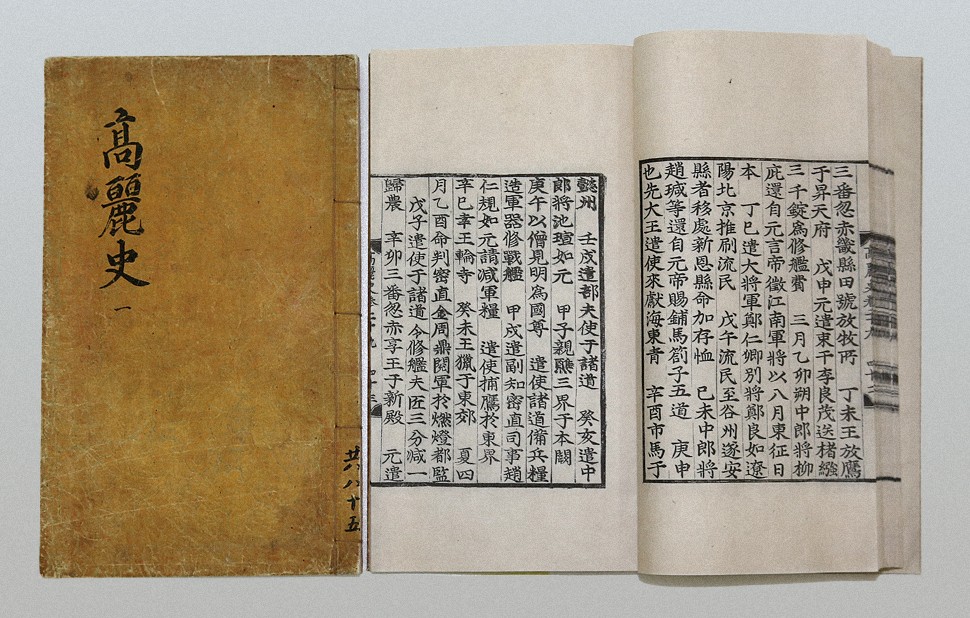
Goryeosa
Chŏng Inji · completed 1451
Free account
Read every Kublai Khan source
Sign up free →
Ready when you are
Start chatting with Kublai Khan now.
20 messages free · No credit card · Available in 50+ languages.