


Primary sourceDocument1846
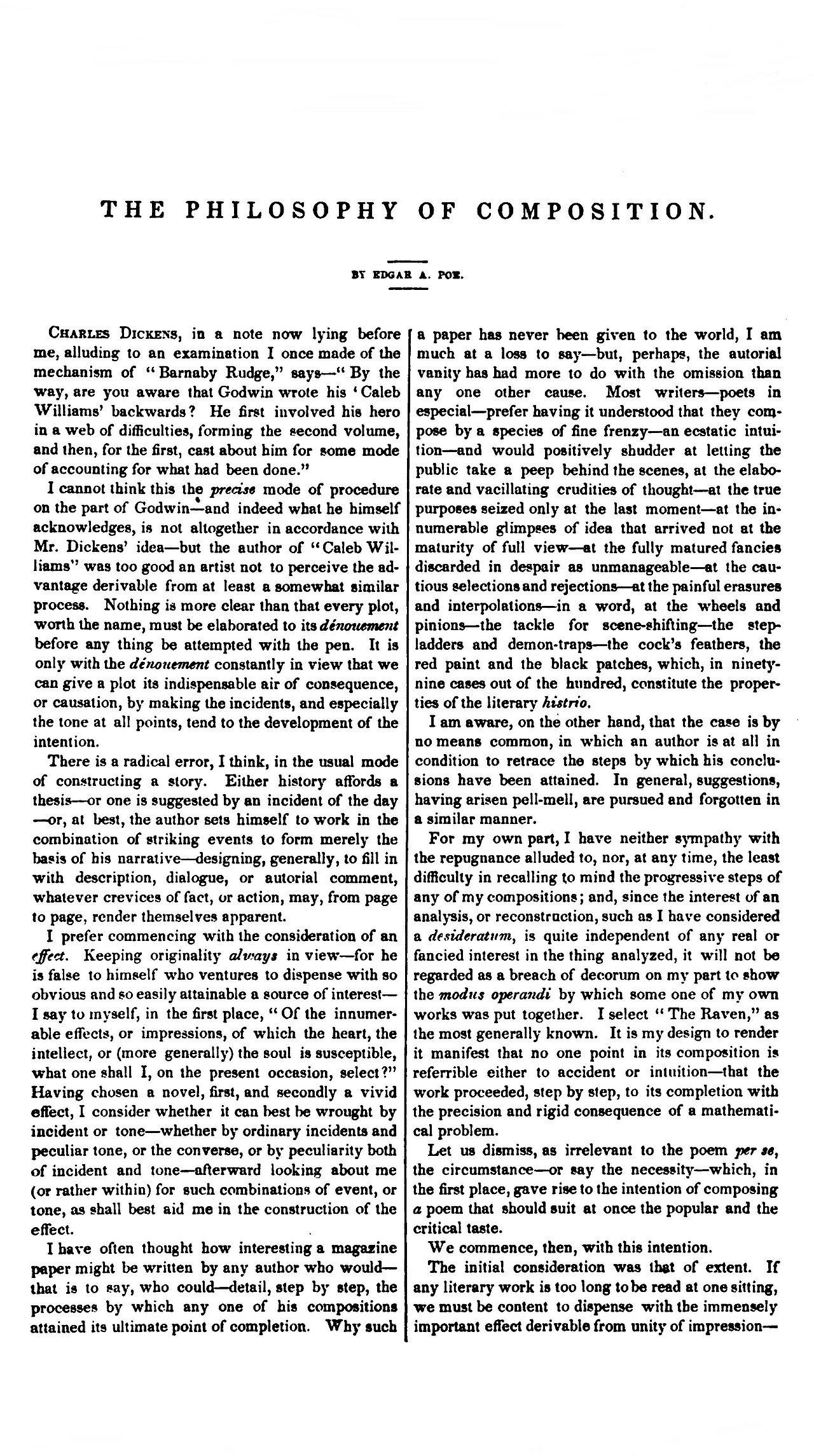
The Philosophy of Composition
Edgar Allan Poe · 1846
Poe's 1846 essay explaining, step by step, how he claims to have written 'The Raven' using careful calculation rather than inspiration.
Poe's own essay on his writing method, explaining his approach to 'The Raven' and his literary theory.
About this source
What it is
Written by Edgar Allan Poe, this essay first appeared in Graham's Magazine in April 1846. In it Poe describes a method for writing, using his poem 'The Raven' as an example of how length, structure and a planned emotional effect should guide composition.
Why it matters
The essay set out Poe's theories of literary craft: that works should be short, built methodically rather than written in a burst of inspiration, and aimed at a single 'unity of effect'. He argued that the death of a beautiful woman was the most poetic subject possible, a theme that recurs through his own writing. Critics have long debated whether Poe truly wrote 'The Raven' this way or whether the essay was partly a joke or exaggeration.
Look closer
- Why might a writer want readers to believe their work was built by calculation rather than inspiration?
- What does Poe's chosen subject say about his view of beauty and sadness?
- Do you think an author's own account of how they wrote something should always be trusted?
This document is part of the curated material that grounds the AI version of Edgar Allan Poe on Humy.ai — when students ask about related events, the AI can quote it and cite it.
More Edgar Allan Poe sources
Meet the AI Edgar Allan Poe →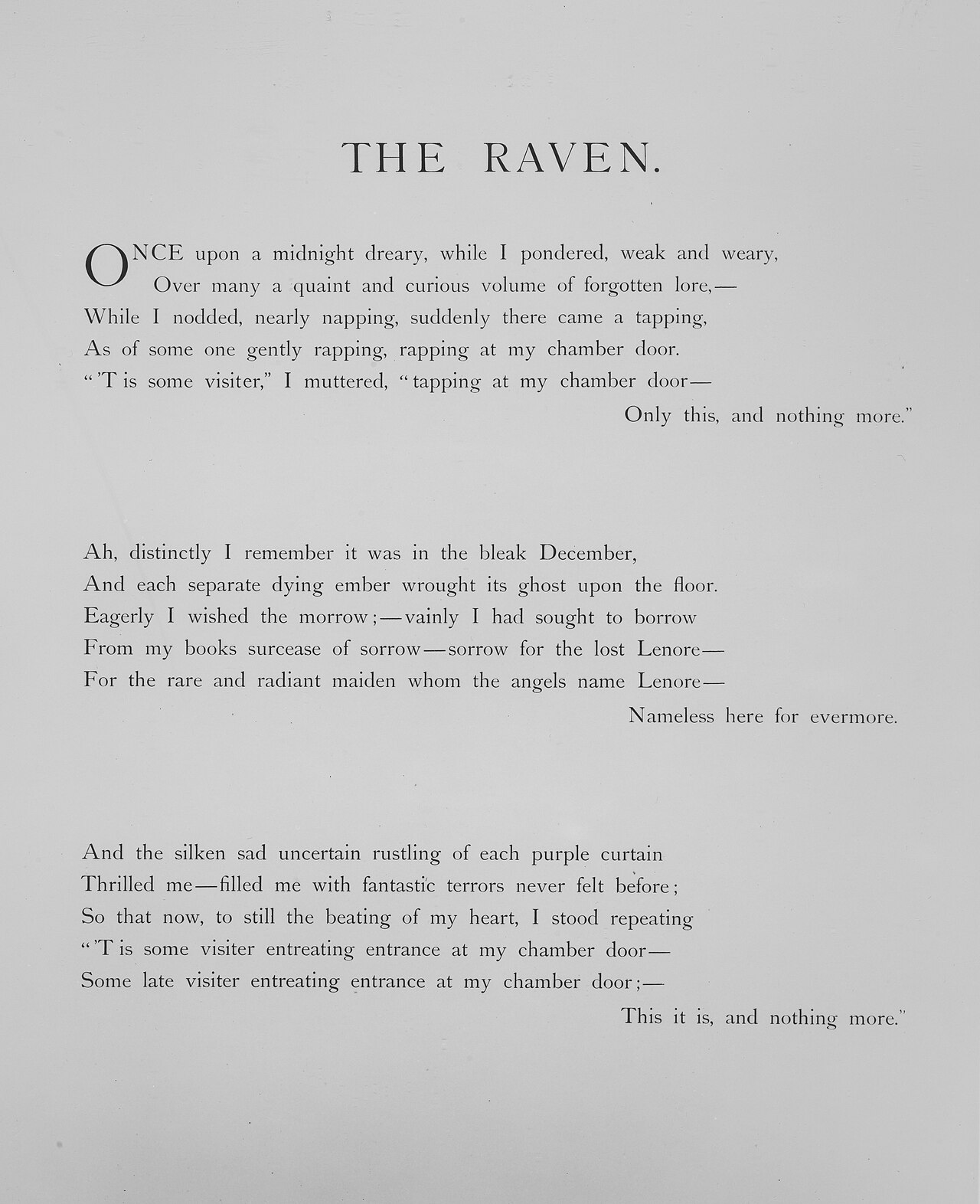 Book
Primary source
The Raven
Edgar Allan Poe · 1845
 Book
Primary source
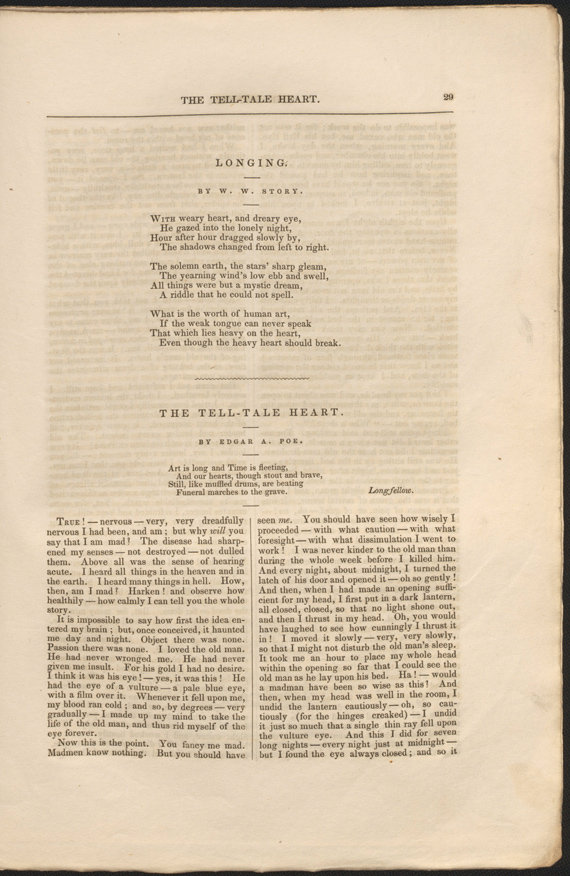
The Tell-Tale Heart
Edgar Allan Poe · 1843
 Book
Primary source
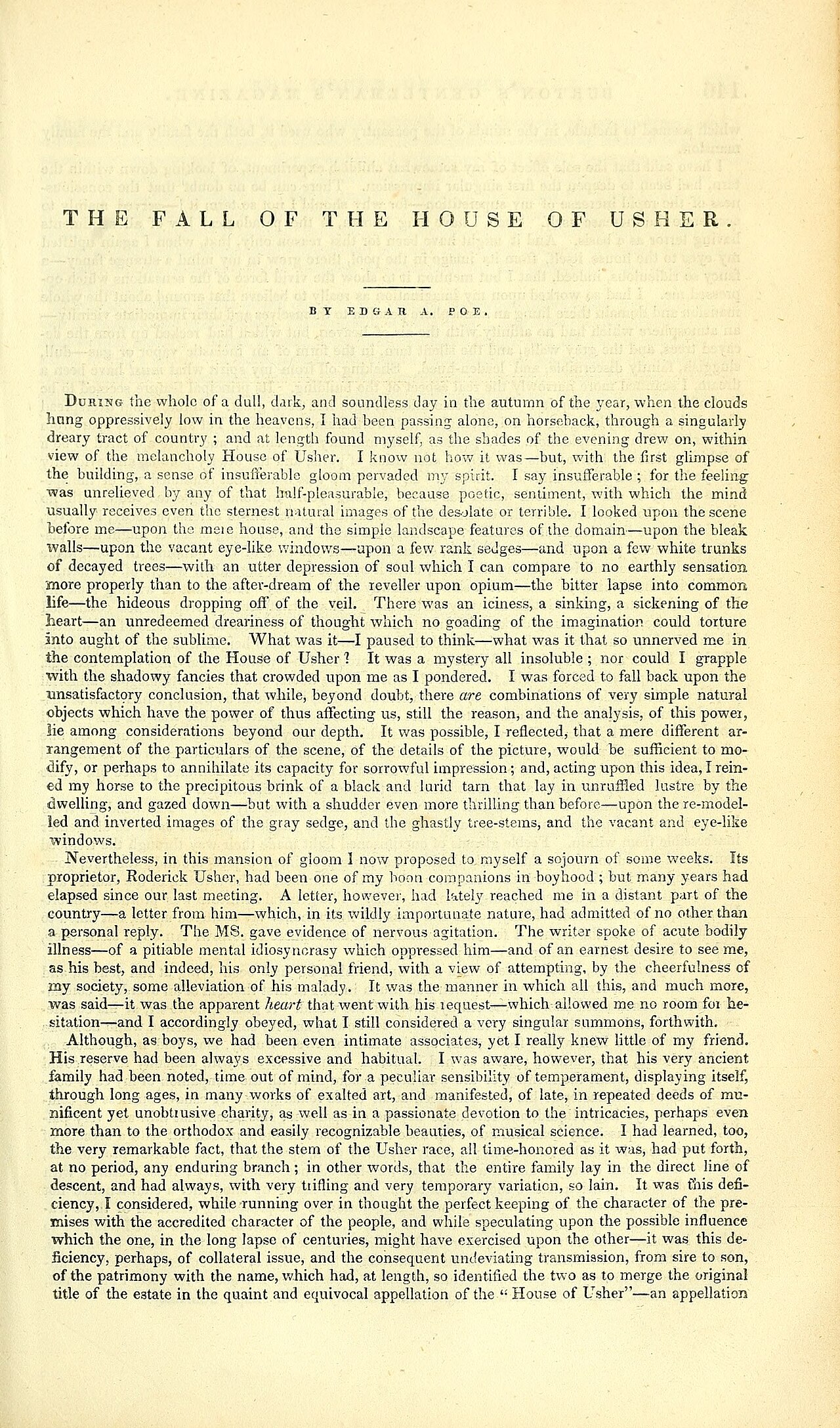
The Fall of the House of Usher
Edgar Allan Poe · 1839
 Book
Primary source
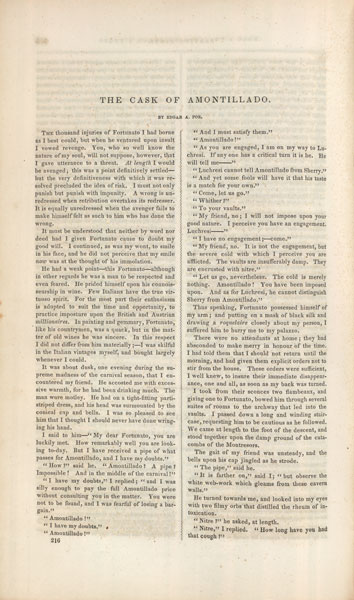
The Cask of Amontillado
Edgar Allan Poe · November 1846
 Book
Primary source
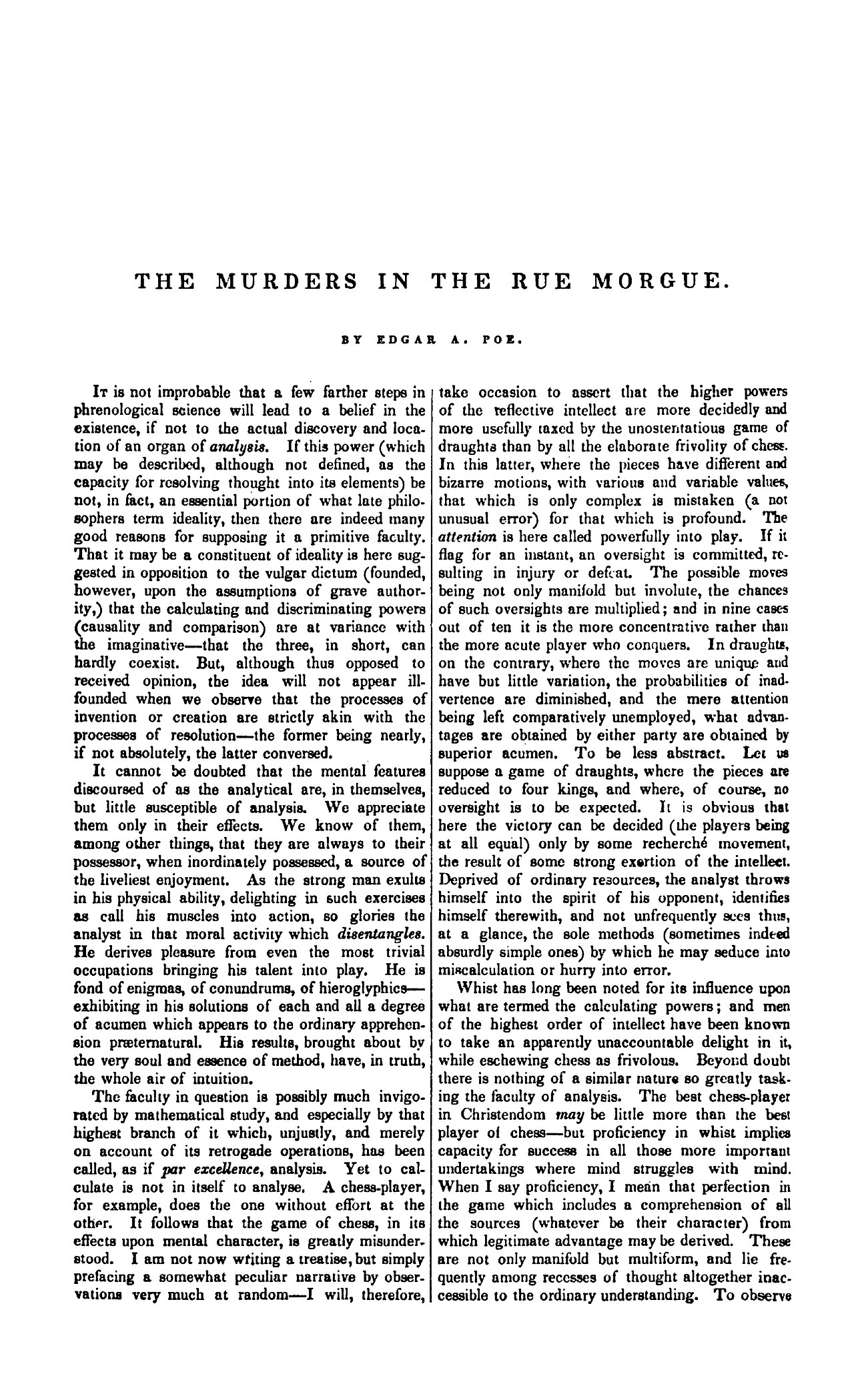
The Murders in the Rue Morgue
Edgar Allan Poe · 1841
Ready when you are
Start chatting with Edgar Allan Poe now.
20 messages free · No credit card · Available in 50+ languages.