


Primary sourcePainting1726
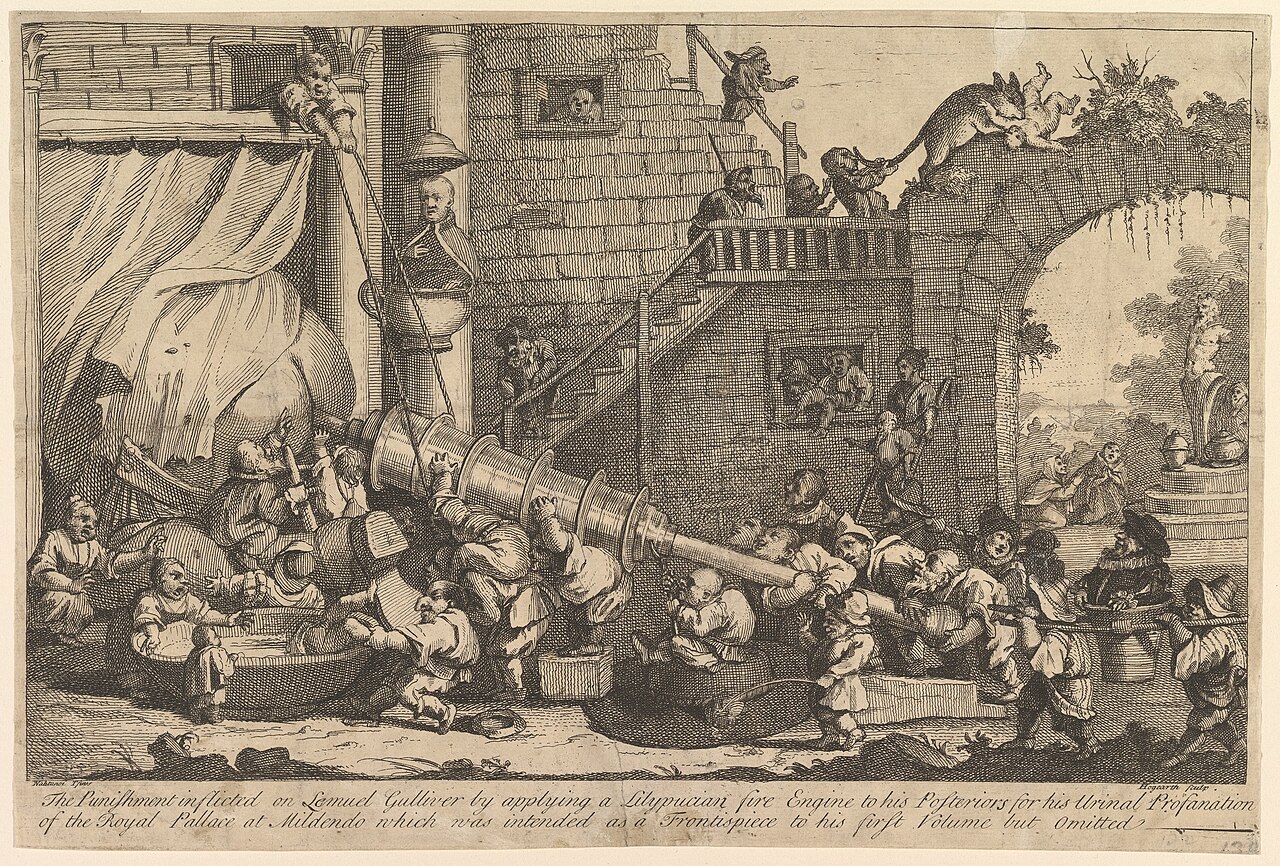
The Punishment Inflicted on Lemuel Gulliver
William Hogarth · 1726
A 1726 etching by William Hogarth that satirises the events of Gulliver's Travels, showing Lilliputians spraying the giant Gulliver with fire-engine pipes. It shows the novel being read as political satire within months of publication.
The print responds to Swift's novel, showing how quickly Gulliver's Travels was turned into satire on the politics of its time.
Free Humy account · No credit card · 120,912 sources to read
About this source
What it is
This is an etching by William Hogarth, dated 1726. It shows Lilliputian citizens using a fire engine with long pipes to spray Gulliver, a giant figure seen at the left. A crowd watches from a palace courtyard that has a statue and a balcony. The print is held by the Metropolitan Museum of Art.
Why it matters
Hogarth made the print within months of the first publication of Gulliver's Travels, so it shows the book being absorbed into political satire very quickly. Its scene is drawn from Swift's story of Lilliput, where the court and its officials are mocked. Read together, the novel by Swift and the print by Hogarth show how two satirists could respond to the same public mood.
Look closer
- What is happening to Gulliver, and what does the crowd seem to think about it?
- How does the palace setting help the print make a political point?
- Which parts of Swift's book does this print leave out, and why might Hogarth have chosen this scene?
This painting is part of the curated material that grounds the AI version of Jonathan Swift on Humy.ai — when students ask about related events, the AI can quote it and cite it.
More Jonathan Swift sources
Browse all 79 →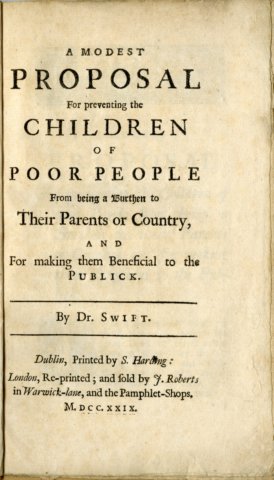 Document
Primary source
A Modest Proposal
Jonathan Swift · 1729
 Book
Primary source
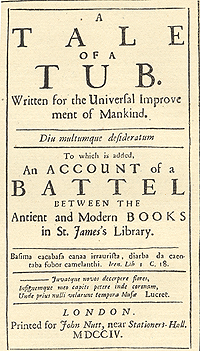
A Tale of a Tub
Jonathan Swift · 1704
 Book
Primary source
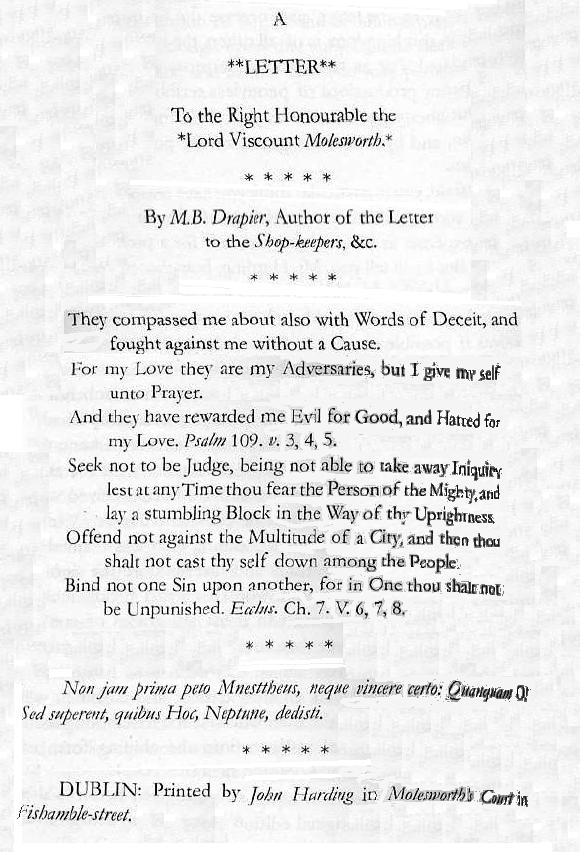
Drapier's Letters
Jonathan Swift · 1724-1725
 Painting
Primary source
Jonathan Swift
Charles Jervas · c. 1718
Free account
Read every Jonathan Swift source
Sign up free →
Ready when you are
Start chatting with Jonathan Swift now.
20 messages free · No credit card · Available in 50+ languages.