


Primary sourcePaintingcirca 1783
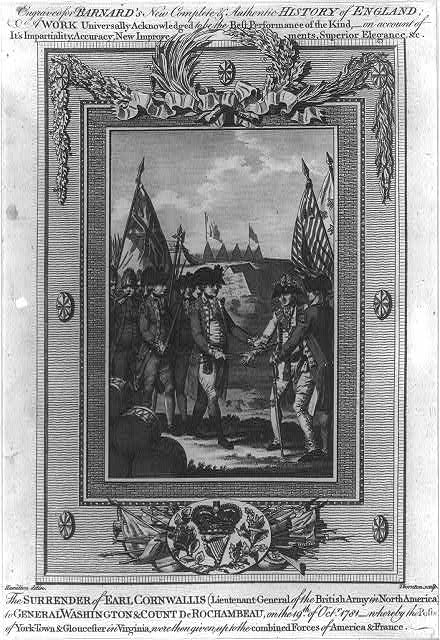
The Surrender of Earl Cornwallis
circa 1783
An engraved print, made around 1783, showing Charles O'Hara handing a sword to Washington and Rochambeau as a stand-in for Cornwallis at Yorktown.
Shows the surrender of Cornwallis's sword at Yorktown, with an officer standing in for him, in a history-book engraving made in his lifetime.
About this source
What it is
This is an engraved print titled The Surrender of Earl Cornwallis. It was engraved for Barnard's New Complete and Authentic History of England and is dated around 1783. The central scene shows a British officer in a tricorn hat handing a sword to an American officer in a cocked hat. Soldiers, flags and tents appear behind them. The library record says the British officer is General Charles O'Hara, who stood in for Cornwallis, handing the sword to Rochambeau while Washington stands with him. The image is an engraving, so it was made by an artist rather than photographed.
Why it matters
The surrender at Yorktown was one of the most important events of the American Revolution, and this print shows how it was pictured for British readers of a history book. Because Cornwallis himself did not take part in the ceremony, the artist used O'Hara to represent him. The print therefore shows a chosen version of the event, not a record of exactly who was present.
Look closer
- Who is shown handing over the sword, and who is receiving it?
- Why might the artist have chosen to show a substitute officer rather than Cornwallis?
- What does the print leave out, such as the soldiers' feelings or the wider cost of the war?
This painting is part of the curated material that grounds the AI version of Charles Cornwallis and Jean-Baptiste Donatien de Vimeur, comte de Rochambeau on Humy.ai — when students ask about related events, the AI can quote it and cite it.
More Charles Cornwallis sources
Meet the AI Charles Cornwallis →Primary source
Articles of Capitulation, Yorktown
Charles Cornwallis; George Washington; Comte de Rochambeau; Comte de Barras · 19 October 1781
 Painting
Secondary source
Surrender of Lord Cornwallis
John Trumbull · 1819
 Painting
Primary source
Charles Cornwallis, 1st Marquess Cornwallis
Thomas Gainsborough · 1783
 Painting
Secondary source
Lord Cornwallis receiving the Hostage Princes
Mather Brown · 1793
 Document
Primary source
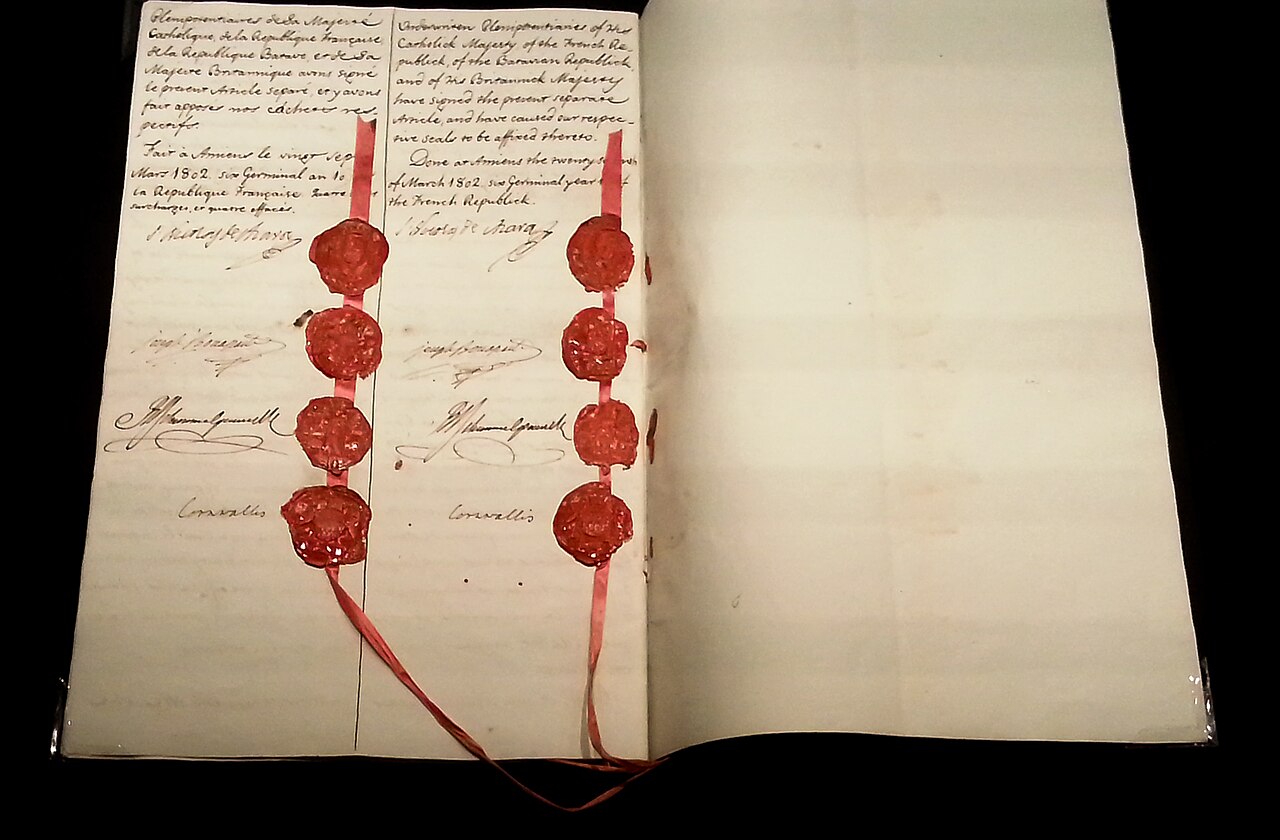
Treaty of Amiens
25 March 1802
Ready when you are
Start chatting with Charles Cornwallis now.
20 messages free · No credit card · Available in 50+ languages.