


Primary sourcePaintingcirca 1855
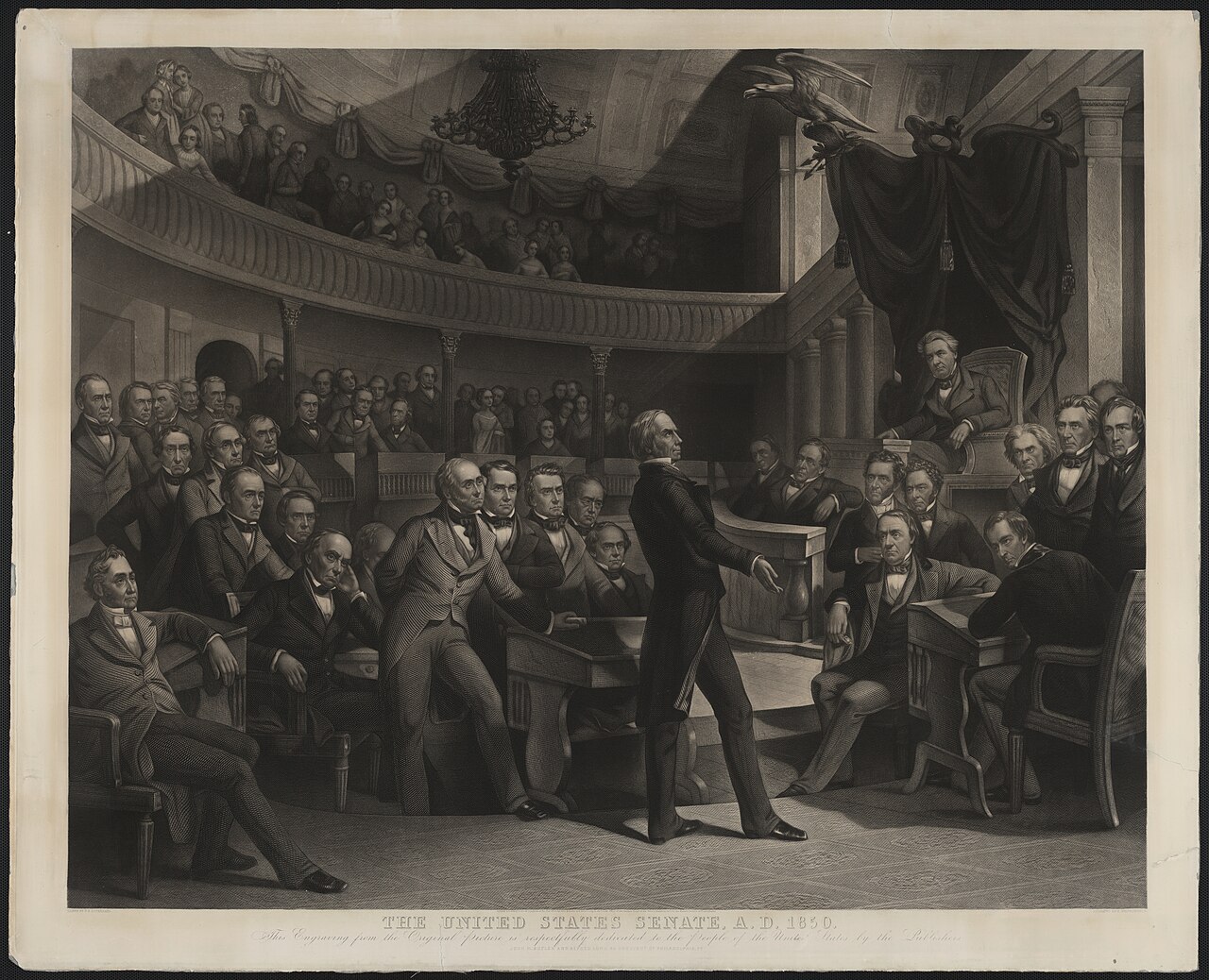
The United States Senate, A.D. 1850
Peter F. Rothermel · circa 1855
An engraving of the Old Senate Chamber showing Henry Clay presenting the Compromise of 1850, with Webster and Calhoun nearby. It shows the setting of the debates over the compromise that Douglas helped shape.
This engraving depicts Clay at the center of the Senate presenting his last great compromise in 1850.
About this source
What it is
This is an engraving drawn by Peter F. Rothermel and engraved by Robert Whitechurch, dated about 1855 in the catalogue. It shows a crowded Senate chamber with a curved gallery filled with spectators, a chandelier, and rows of seated senators. A standing figure in the center gestures toward colleagues. According to the museum record, Henry Clay introduces the Compromise of 1850 here, with Daniel Webster seated to his left and John C. Calhoun to the left of the Speaker's chair.
Why it matters
The Compromise of 1850 was an attempt to settle disputes over slavery in the territories after the Mexican-American War. Douglas helped broker it in the Senate. The engraving shows the chamber where these fights took place and highlights the three senators known as the Great Triumvirate, who tried to balance the interests of the North, South and West.
Look closer
- Who is placed at the center of the picture, and what does that choice suggest about the event?
- What does the crowd in the gallery show about how the public followed the Senate?
- What does the image leave out, such as the views of people who were not senators?
This painting is part of the curated material that grounds the AI version of Henry Clay and Stephen A. Douglas on Humy.ai — when students ask about related events, the AI can quote it and cite it.
More Henry Clay sources
Meet the AI Henry Clay →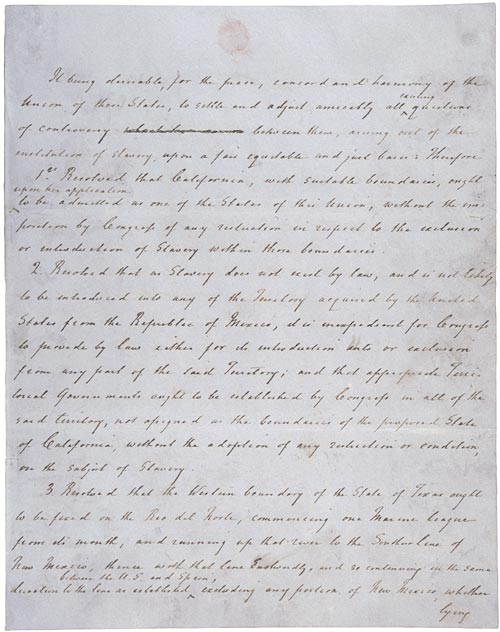 Document
Primary source
Compromise of 1850
Henry Clay · 29 January 1850 (resolutions); statutes enacted September 1850
 Document
Primary source
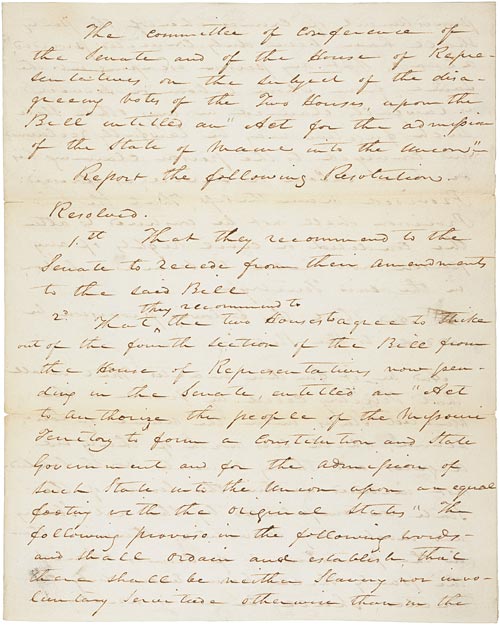
Missouri Compromise Conference Committee Report
1 March 1820
 Document
Primary source
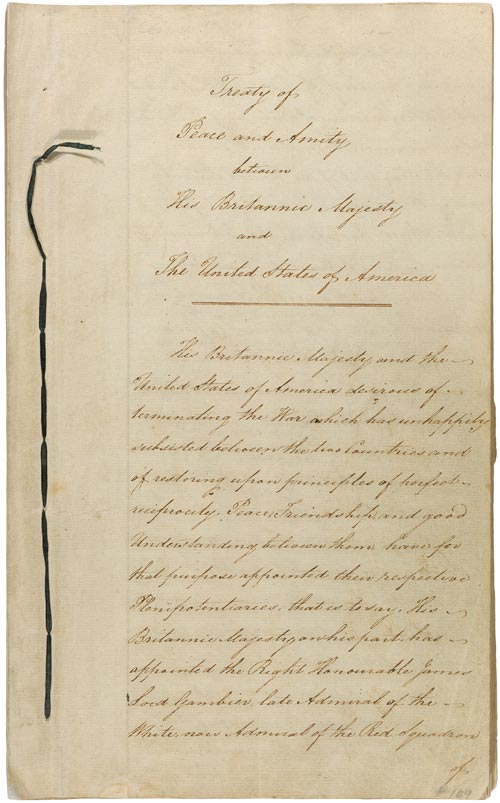
Treaty of Ghent
24 December 1814
 Speech
Primary source
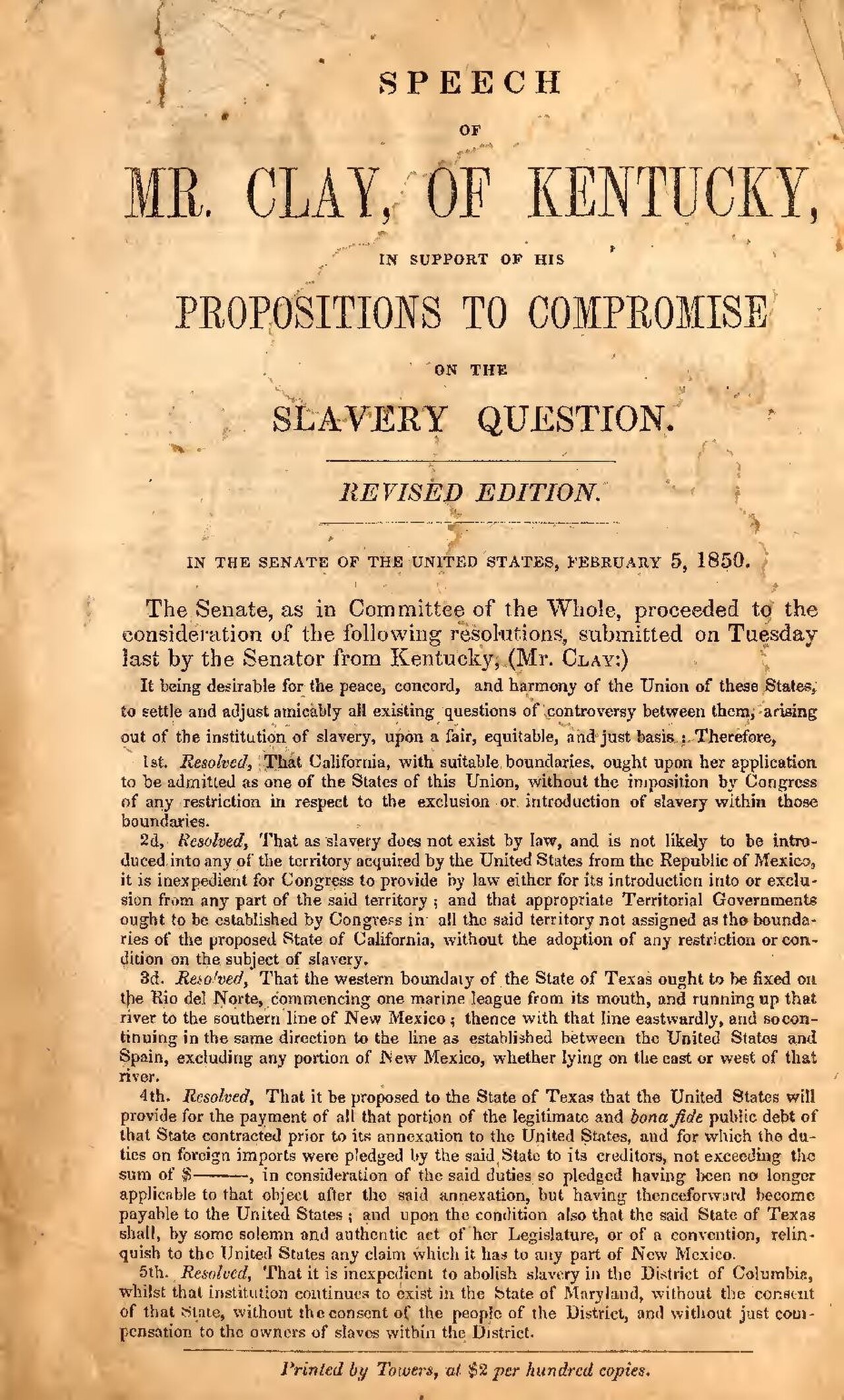
Speech on the Compromise Resolutions
Henry Clay · 5-6 February 1850
 Photograph
Primary source
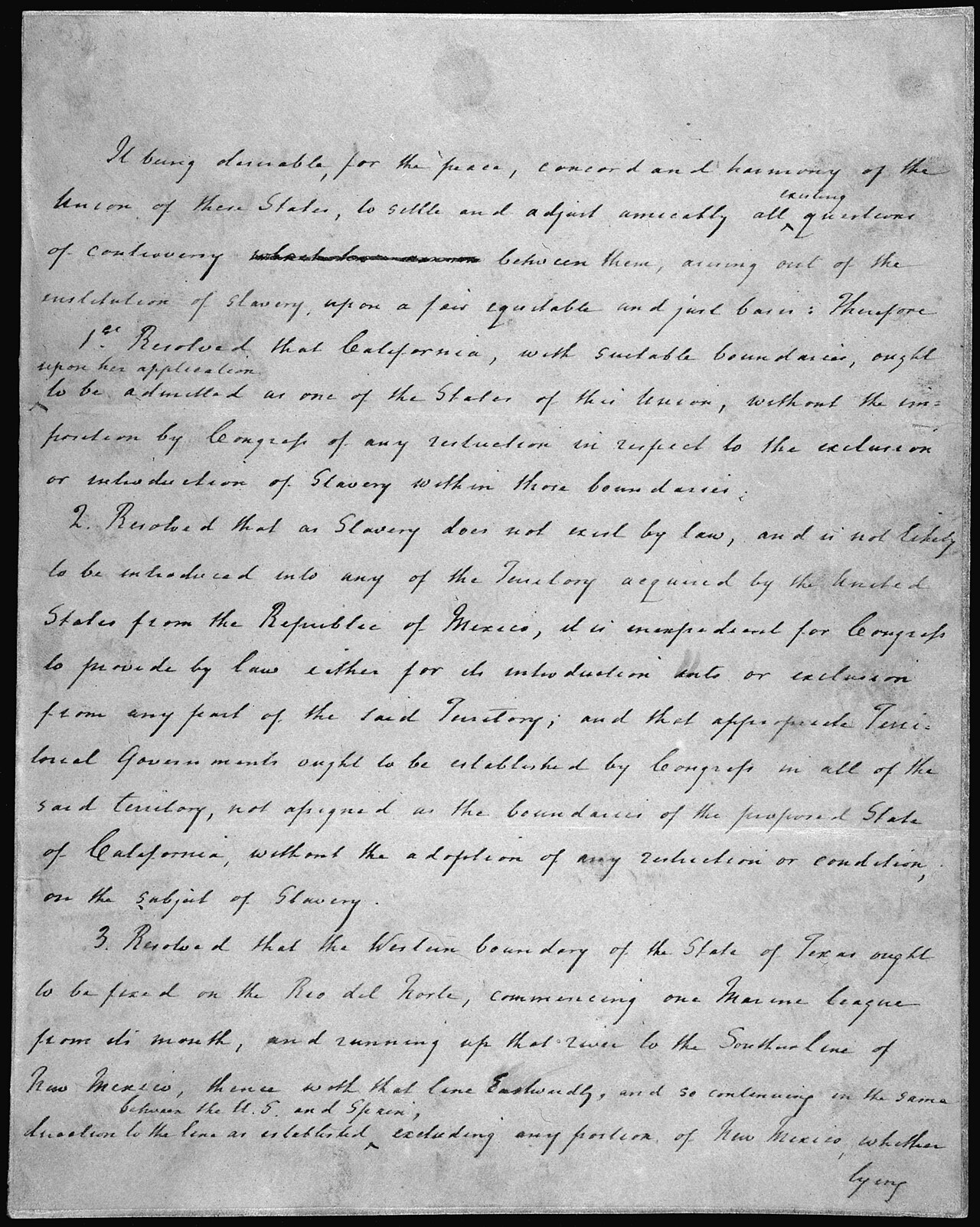
Compromise of 1850, Page 1 of 6 (National Archives)
Henry Clay · 1850-01-29
Ready when you are
Start chatting with Henry Clay now.
20 messages free · No credit card · Available in 50+ languages.