


Primary sourceBook1749
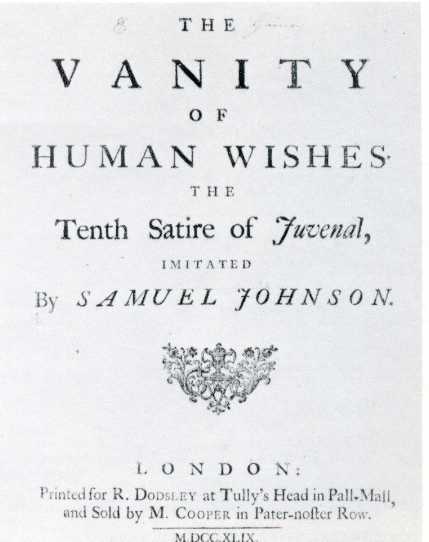
The Vanity of Human Wishes
Samuel Johnson · 1749
Samuel Johnson's 1749 poem imitating Juvenal's tenth satire, reflecting on the futility of worldly ambition and the value of Christian faith.
This poem, Johnson's first signed publication, shows his poetic skill and moral philosophy.
About this source
What it is
This is The Vanity of Human Wishes: The Tenth Satire of Juvenal Imitated, a poem by Samuel Johnson published in 1749. It was written while Johnson was also working on his Dictionary, and was the first of his works to carry his name on the title page.
Why it matters
The poem adapts the ancient Roman poet Juvenal's satire to argue that worldly ambition, wealth, and fame cannot bring lasting happiness, and that only Christian values offer true guidance. Later critics, including Walter Scott and T. S. Eliot, considered it Johnson's greatest poem. It shows Johnson's skill as a poet and the serious moral and religious thinking that ran through his life's work, even though it earned him little money at the time.
Look closer
- Why might Johnson have chosen to adapt an ancient Roman poem rather than write something entirely new?
- What examples does the poem use to show the dangers of ambition?
- Why might a poem about the emptiness of worldly success have mattered so much to later readers?
This book is part of the curated material that grounds the AI version of Samuel Johnson on Humy.ai — when students ask about related events, the AI can quote it and cite it.
More Samuel Johnson sources
Meet the AI Samuel Johnson →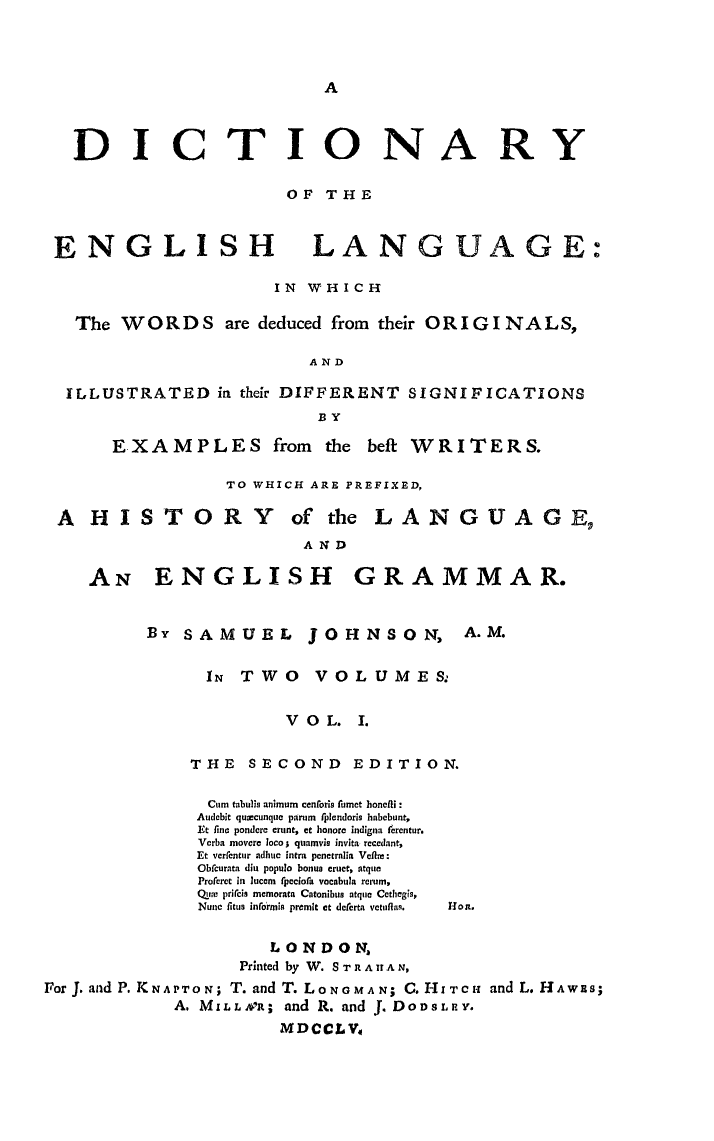 Book
Primary source
A Dictionary of the English Language
Samuel Johnson · 1755
 Book
Primary source
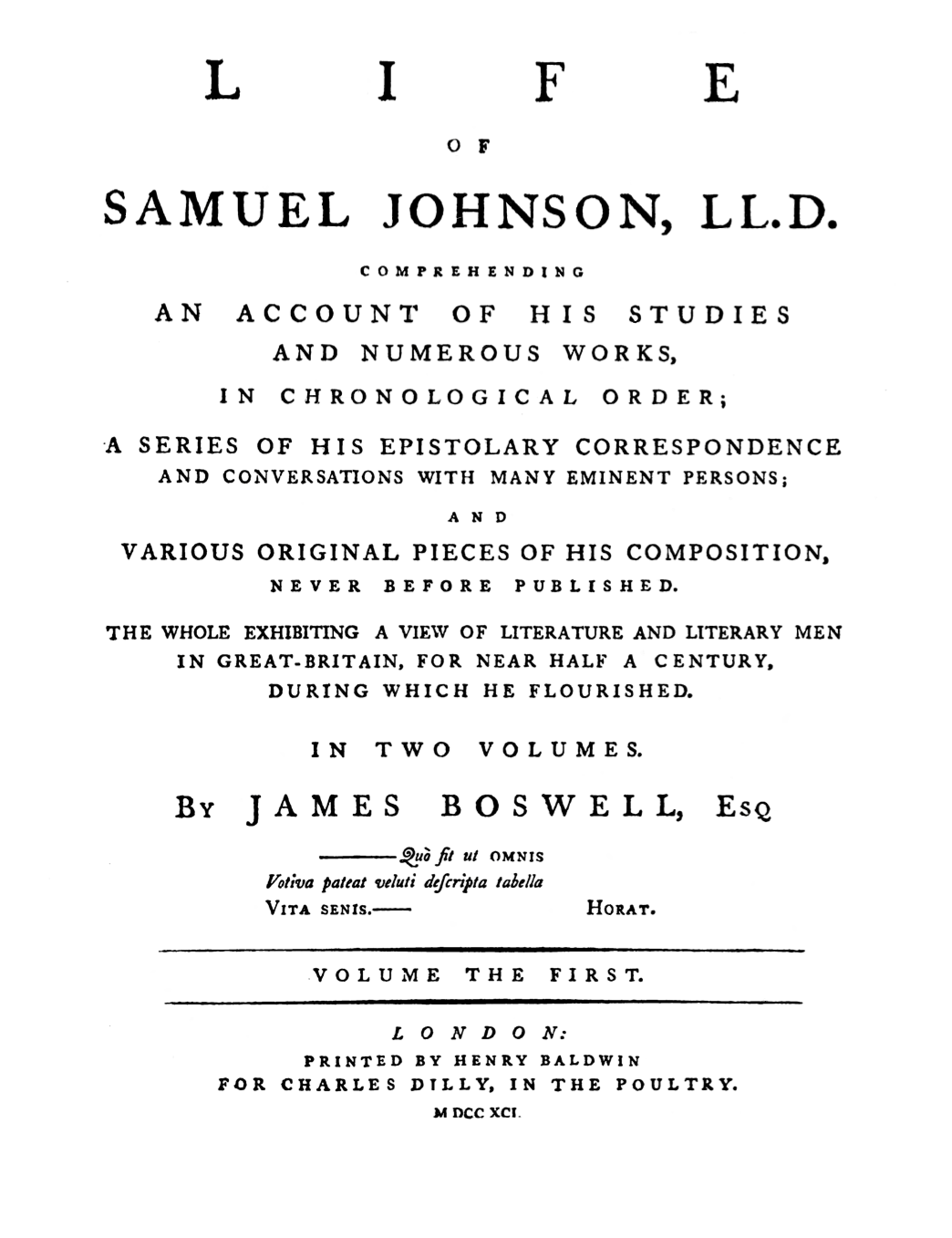
The Life of Samuel Johnson
James Boswell · 1791
Primary source
Letter to Lord Chesterfield
Samuel Johnson · 7 February 1755
 Book
Primary source
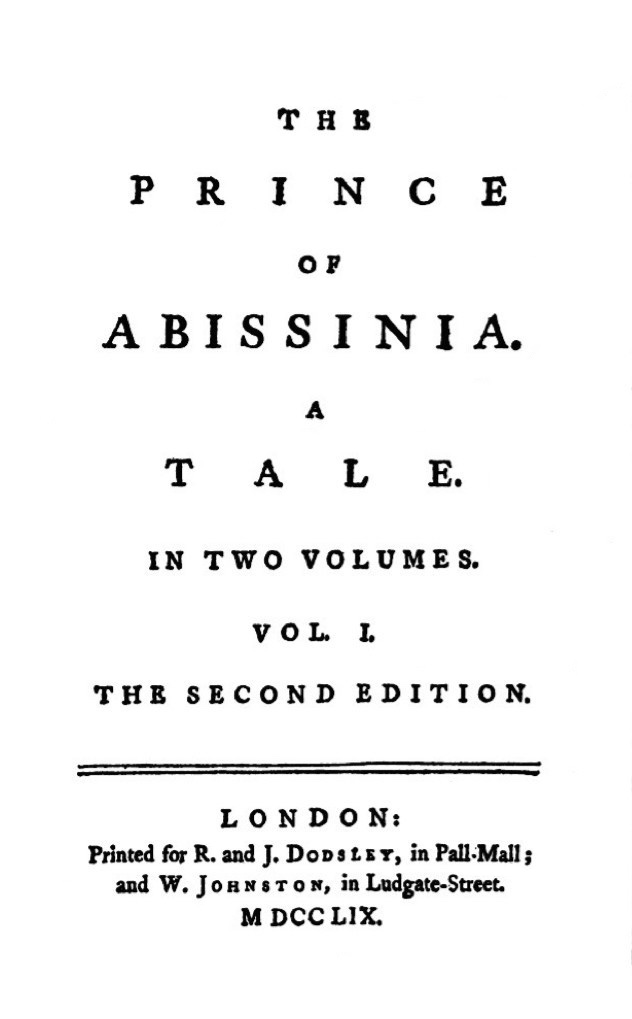
The History of Rasselas, Prince of Abissinia
Samuel Johnson · 1759
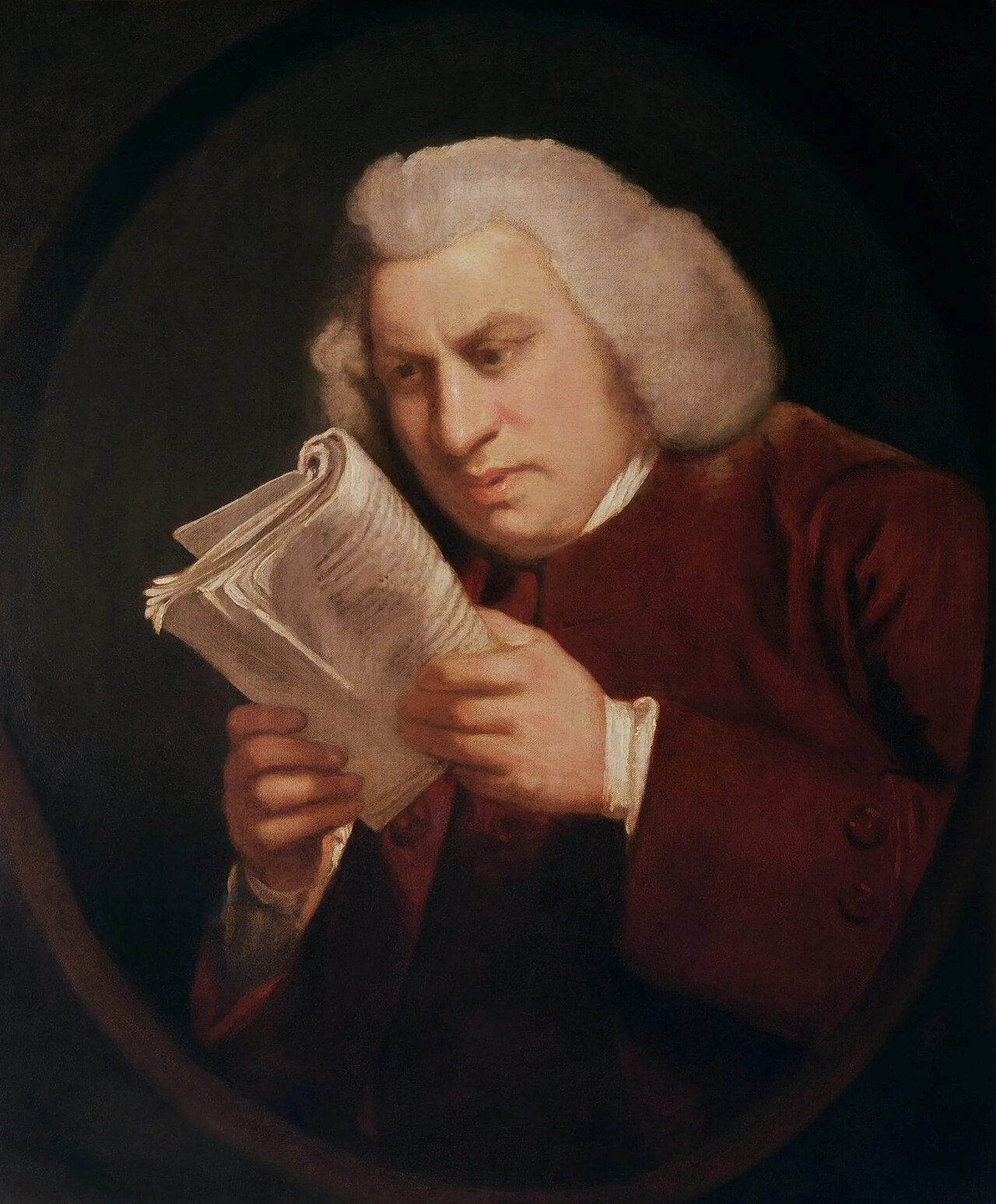 Painting
Primary source
Portrait of Samuel Johnson
Joshua Reynolds · c. 1775
Ready when you are
Start chatting with Samuel Johnson now.
20 messages free · No credit card · Available in 50+ languages.