


Secondary sourcePainting1570
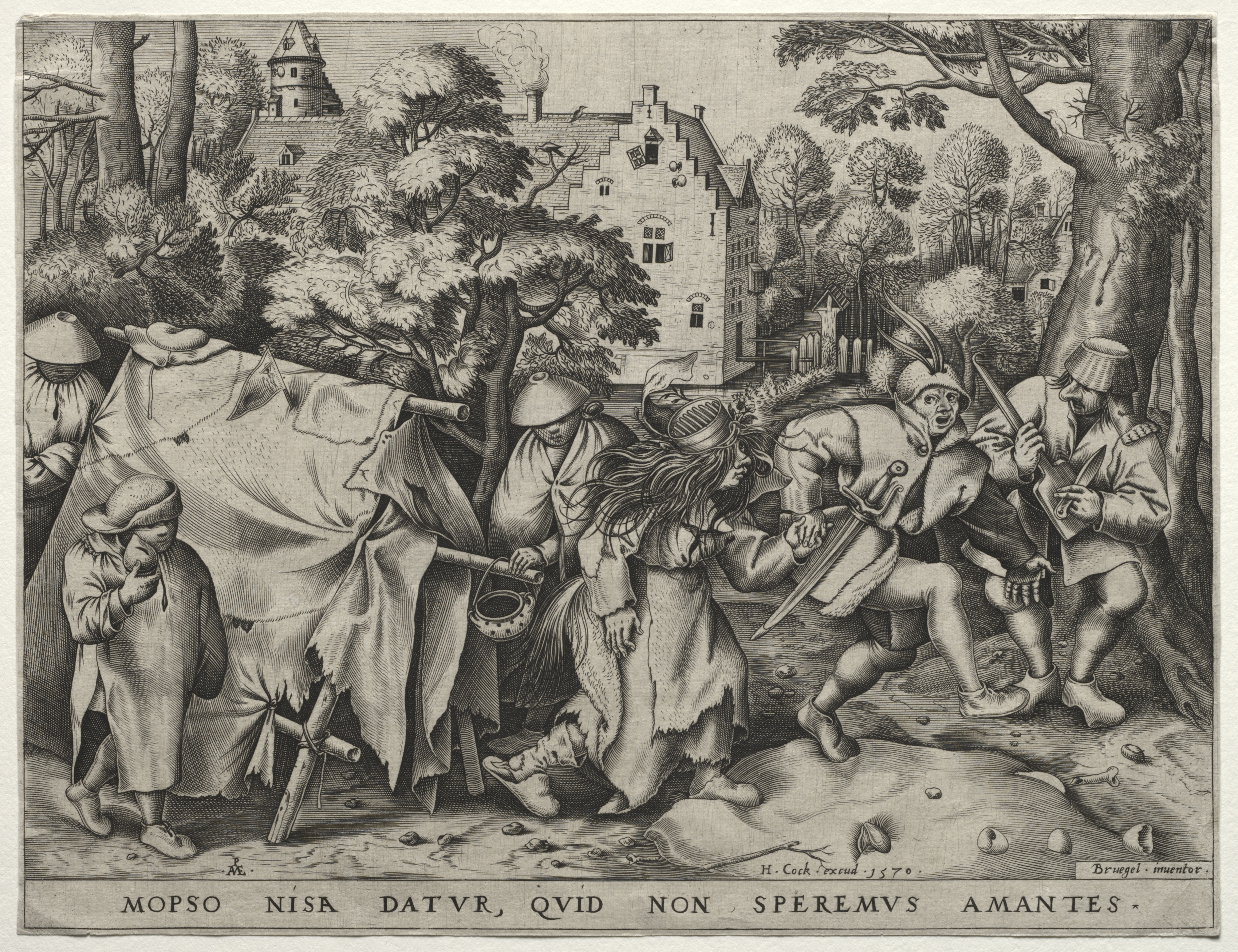
The Wedding of Mopsus and Nisa
Pieter van der Heyden after Pieter Bruegel the Elder · 1570
An engraving made just after Bruegel's death from his design, depicting a comic folk play known as The Dirty Bride.
This engraving, made just after Bruegel's death, reproduces his design for a comic folk play scene.
About this source
What it is
This engraving, made in 1570 by Pieter van der Heyden after a design by Pieter Bruegel the Elder, depicts a comic folk play called The Dirty Bride, traditionally performed during the carnival season before Lent. It shows peasant figures in a rural setting, with a woman fleeing a man who chases her with a sword. A Latin caption runs along the bottom. It is held by the Cleveland Museum of Art.
Why it matters
Made soon after Bruegel's death, the print shows how his designs continued to be published by Antwerp's engraving industry, which paired designers like Bruegel with skilled professional engravers such as van der Heyden. The scene reflects a popular proverb about a disorderly world, showing Bruegel's interest in folk customs, humour and social commentary.
Look closer
- What details suggest this is a comic or satirical scene rather than a serious one?
- Why might the artist have chosen a proverb about a messy bride to comment on society?
- What does the involvement of a separate engraver tell you about how prints were produced in Bruegel's time?
This painting is part of the curated material that grounds the AI version of Pieter Bruegel the Elder on Humy.ai — when students ask about related events, the AI can quote it and cite it.
More Pieter Bruegel the Elder sources
Browse all 96 →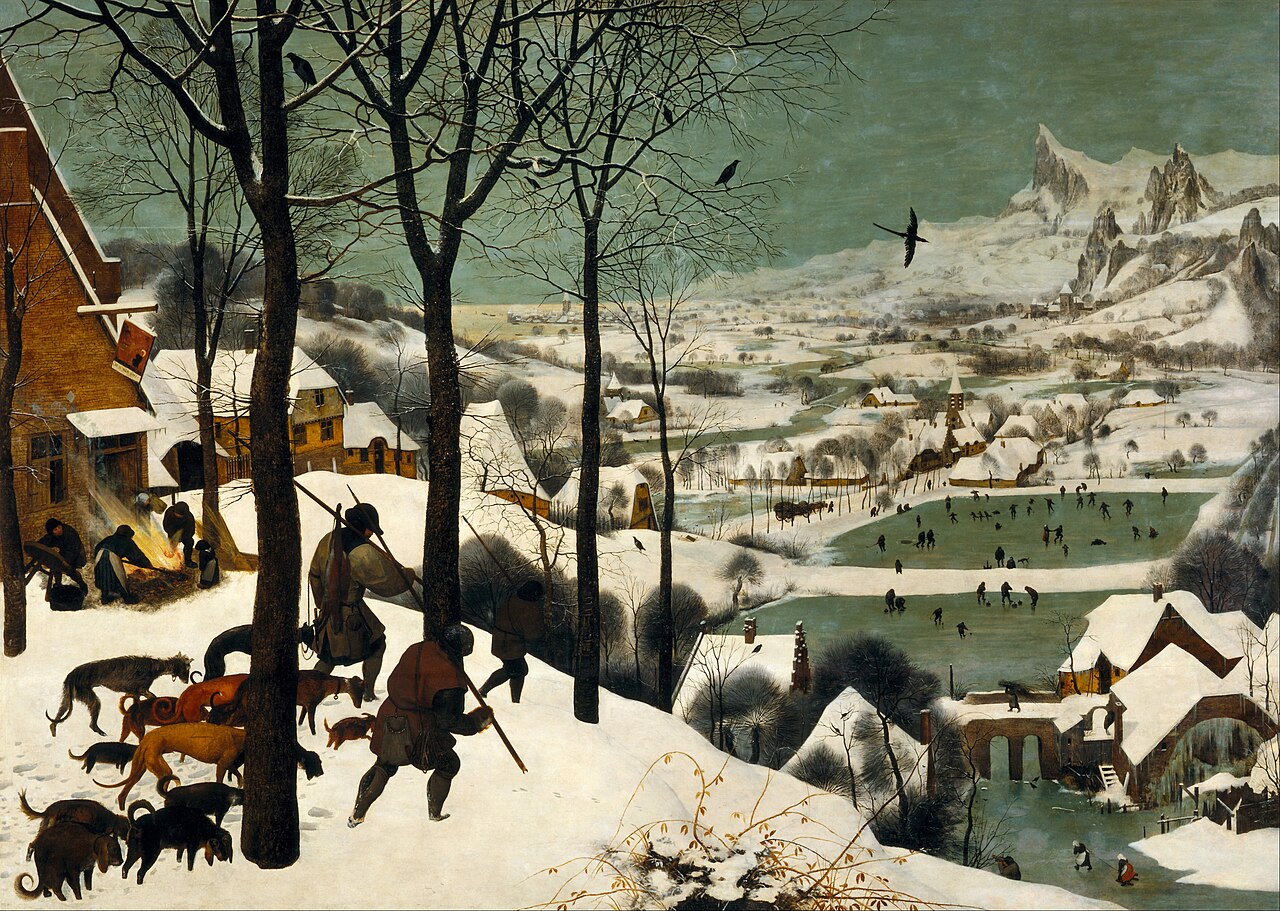 Painting
Primary source
The Hunters in the Snow
Pieter Bruegel the Elder · 1565
 Painting
Primary source
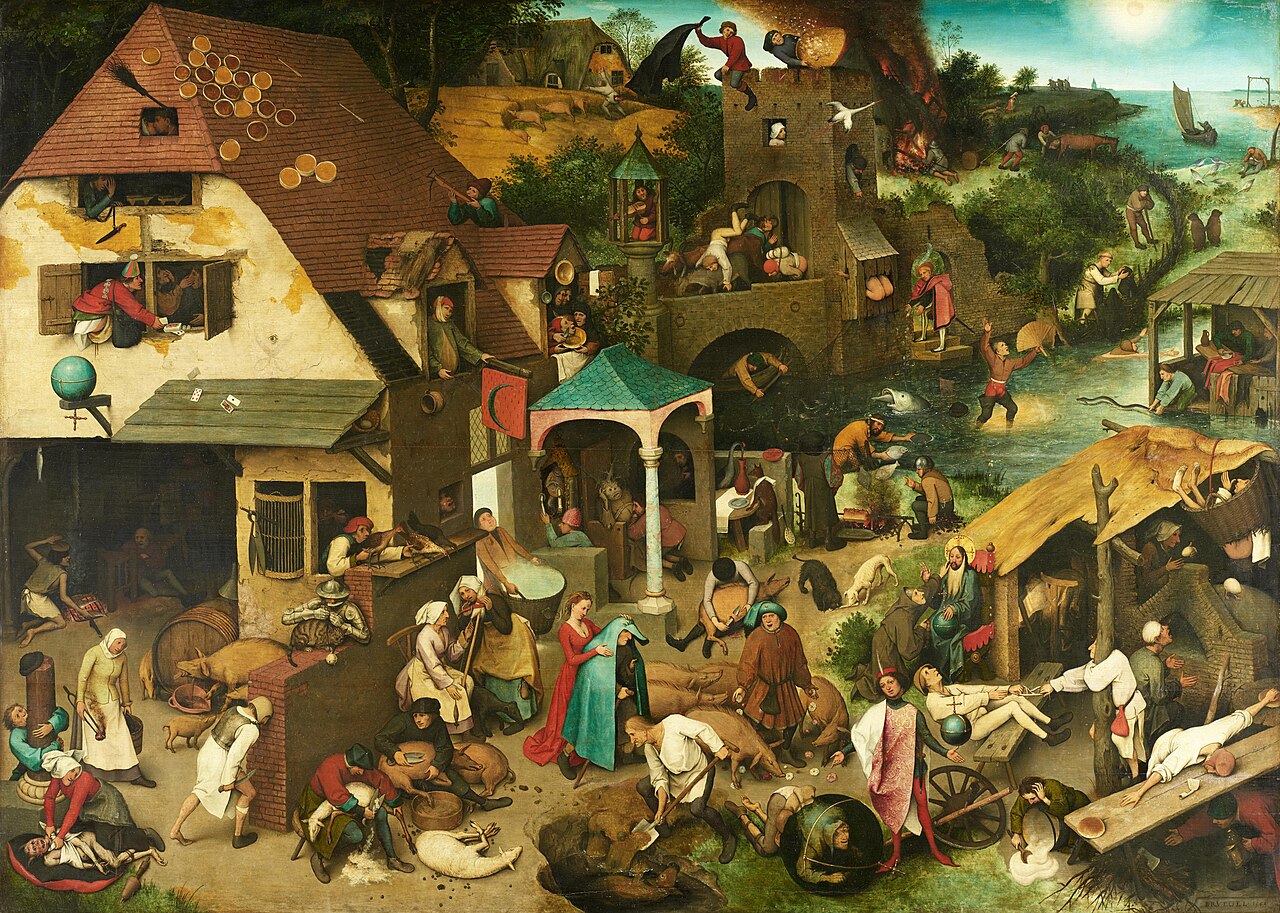
Netherlandish Proverbs
Pieter Bruegel the Elder · 1559
 Painting
Secondary source
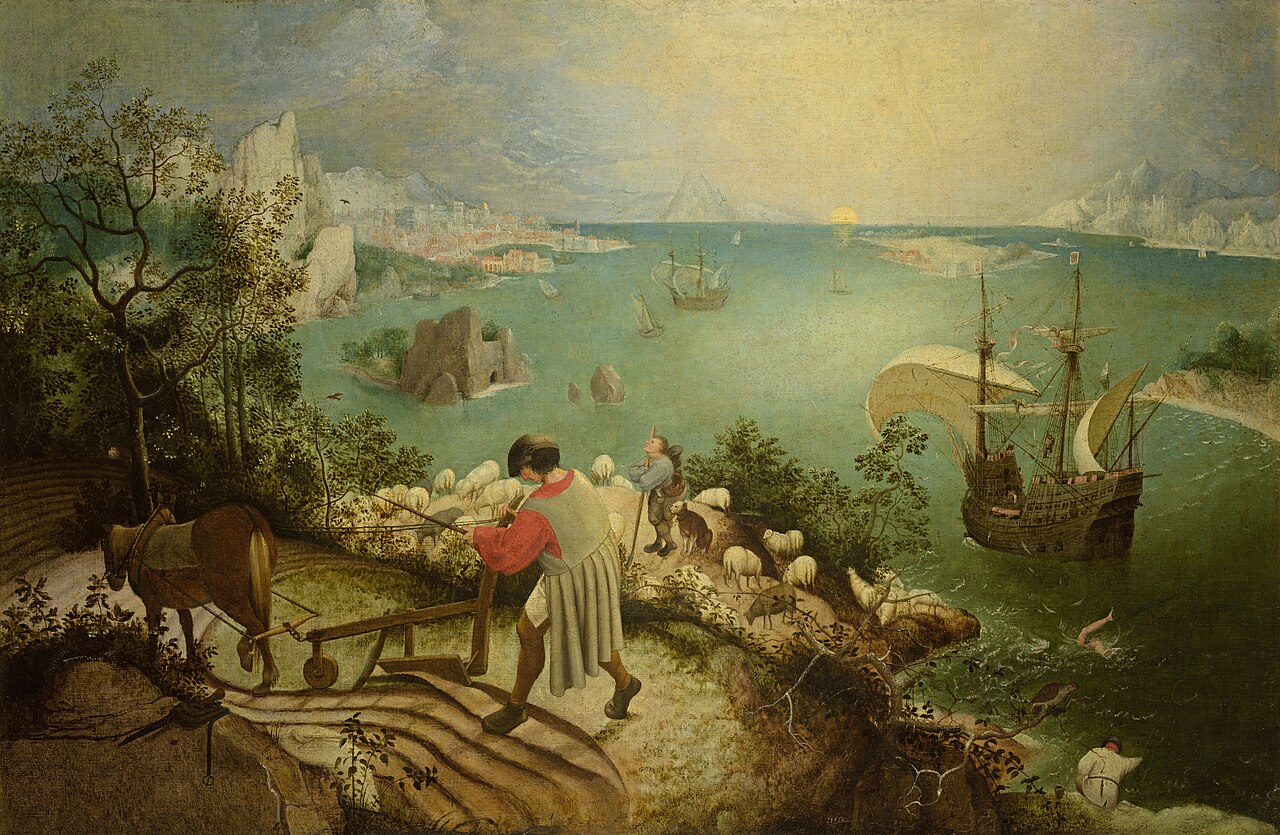
Landscape with the Fall of Icarus
Unknown (circle of Pieter Bruegel the Elder) · c. 1560s
 Painting
Primary source
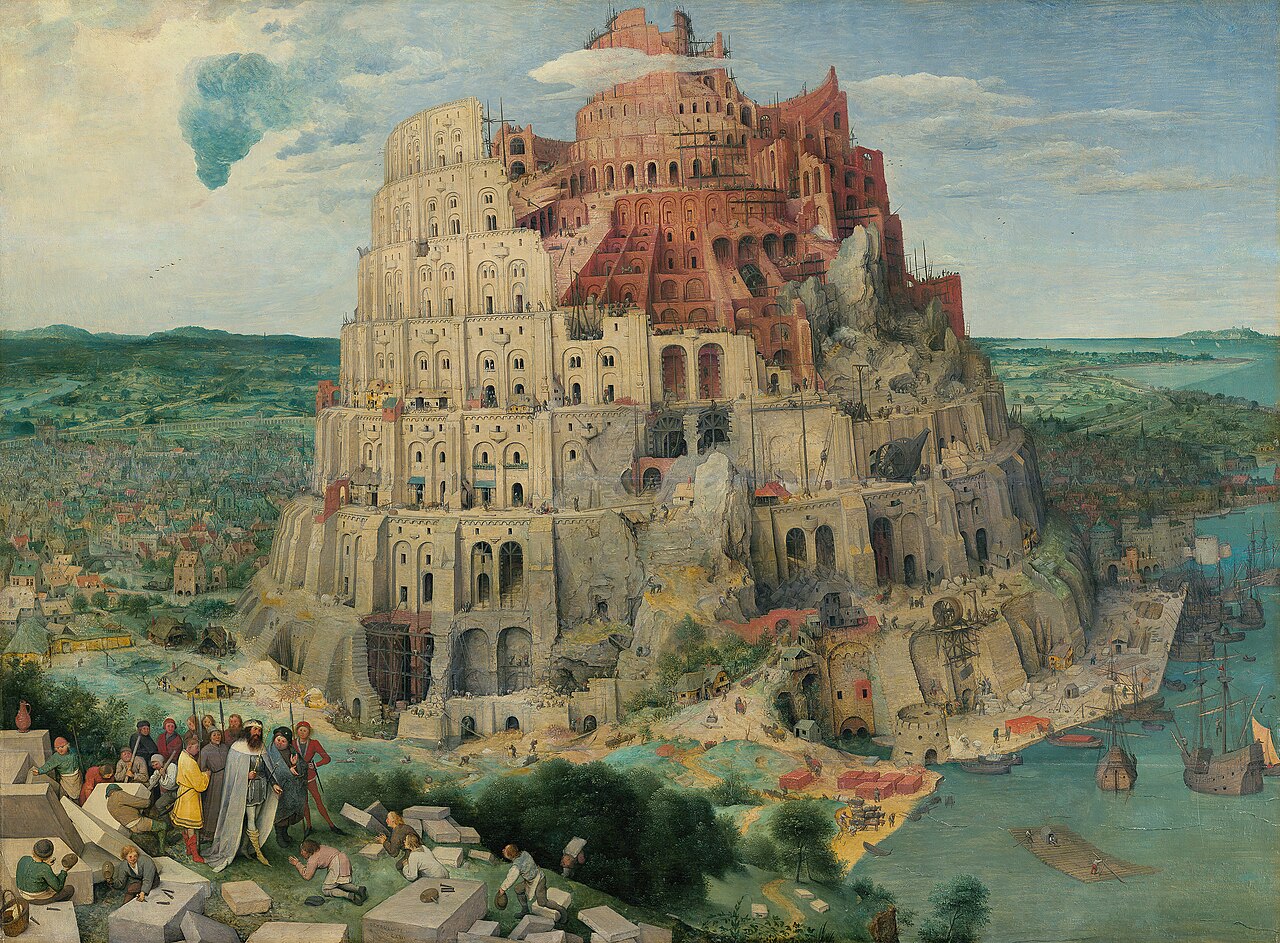
The Tower of Babel
Pieter Bruegel the Elder · 1563
Free account
Read every Pieter Bruegel the Elder source
Sign up free →
Ready when you are
Start chatting with Pieter Bruegel the Elder now.
20 messages free · No credit card · Available in 50+ languages.