


Primary sourceArtifact1875
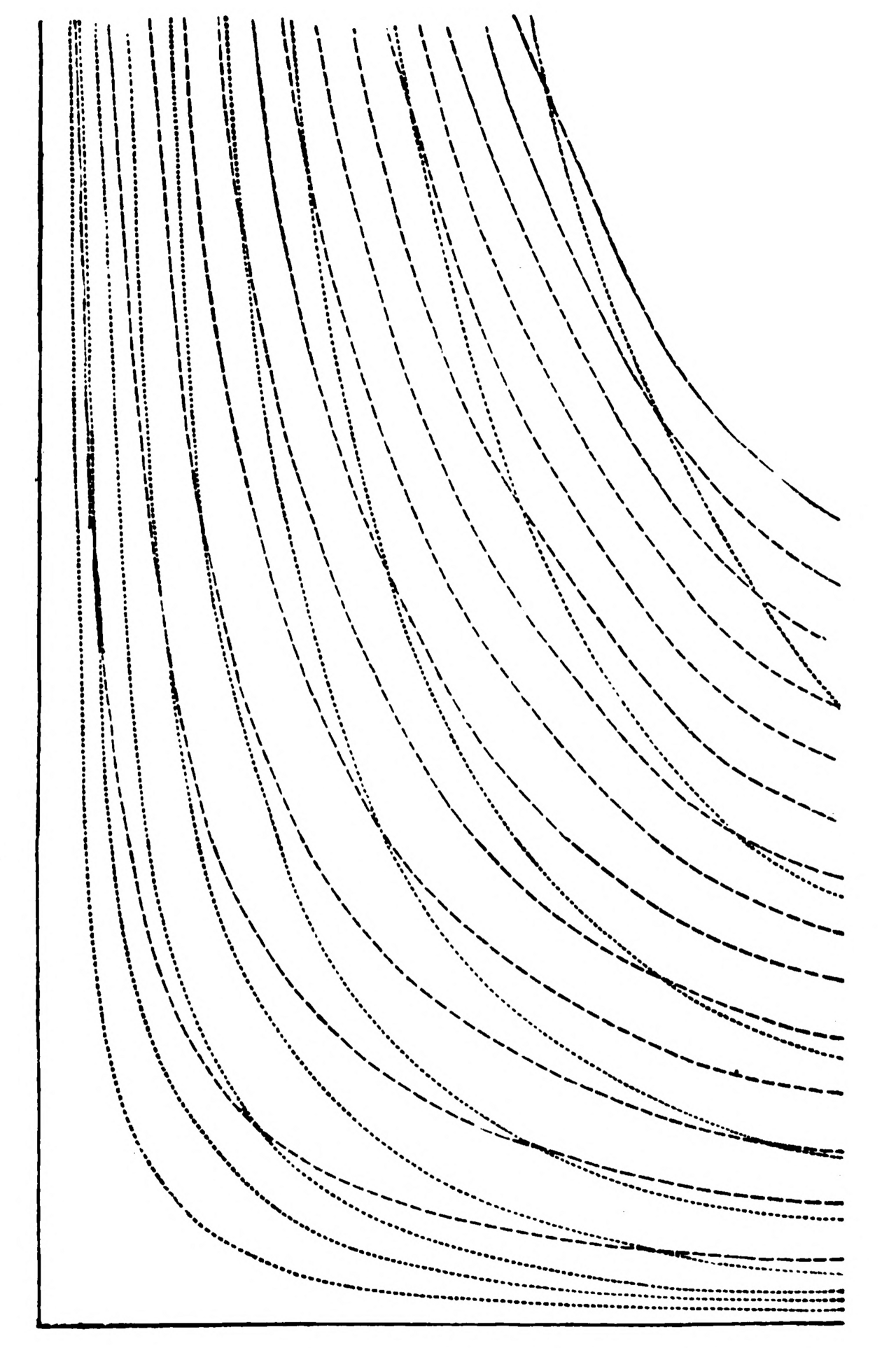
Theory of Heat, Figure 18: Isothermals and Adiabatics
James Clerk Maxwell · 1875
A line drawing from Maxwell's 1875 Theory of Heat contrasting isothermal and adiabatic curves, with dashed and dotted lines.
Shows Maxwell's own method of contrasting thermodynamic curves in his 1875 textbook on heat.
About this source
What it is
This is Figure 18 from James Clerk Maxwell's 1875 book Theory of Heat. It is a line drawing of a family of curved lines inside an L-shaped frame. Dashed curves and dotted curves sweep from the top toward the lower right and cross one another. The key in the record labels the dashed lines as isothermals and the dotted lines as adiabatics.
Why it matters
Isothermal curves keep temperature constant, and adiabatic curves involve no heat exchange. Maxwell used drawings like this to set the two side by side so readers could see how they differ. The figure reflects the thermodynamic work of the 1870s, when physicists were building a theory of heat from the behaviour of gases and engines.
Look closer
- How do the dashed and dotted lines differ, and why might a diagram use two line styles?
- What does the L-shaped frame suggest about the quantities being compared?
- What would this drawing not tell a reader without the explanation in the text?
This artifact is part of the curated material that grounds the AI version of James Clerk Maxwell on Humy.ai — when students ask about related events, the AI can quote it and cite it.
More James Clerk Maxwell sources
Browse all 90 →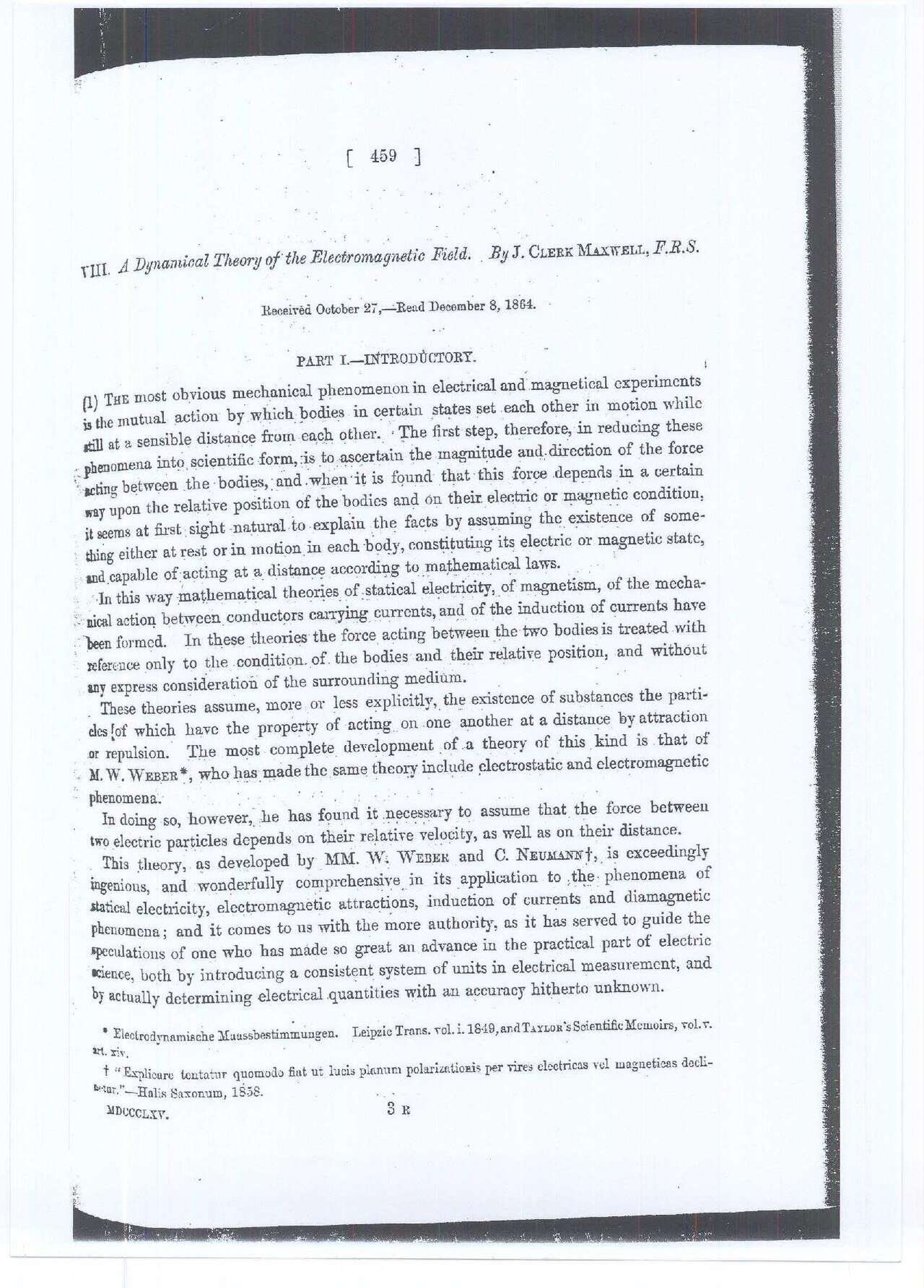 Document
Primary source
A Dynamical Theory of the Electromagnetic Field
James Clerk Maxwell · 1865 (read 8 December 1864)
 Photograph
Primary source
Tartan Ribbon Colour Photograph
James Clerk Maxwell with Thomas Sutton · 1861
 Document
Primary source
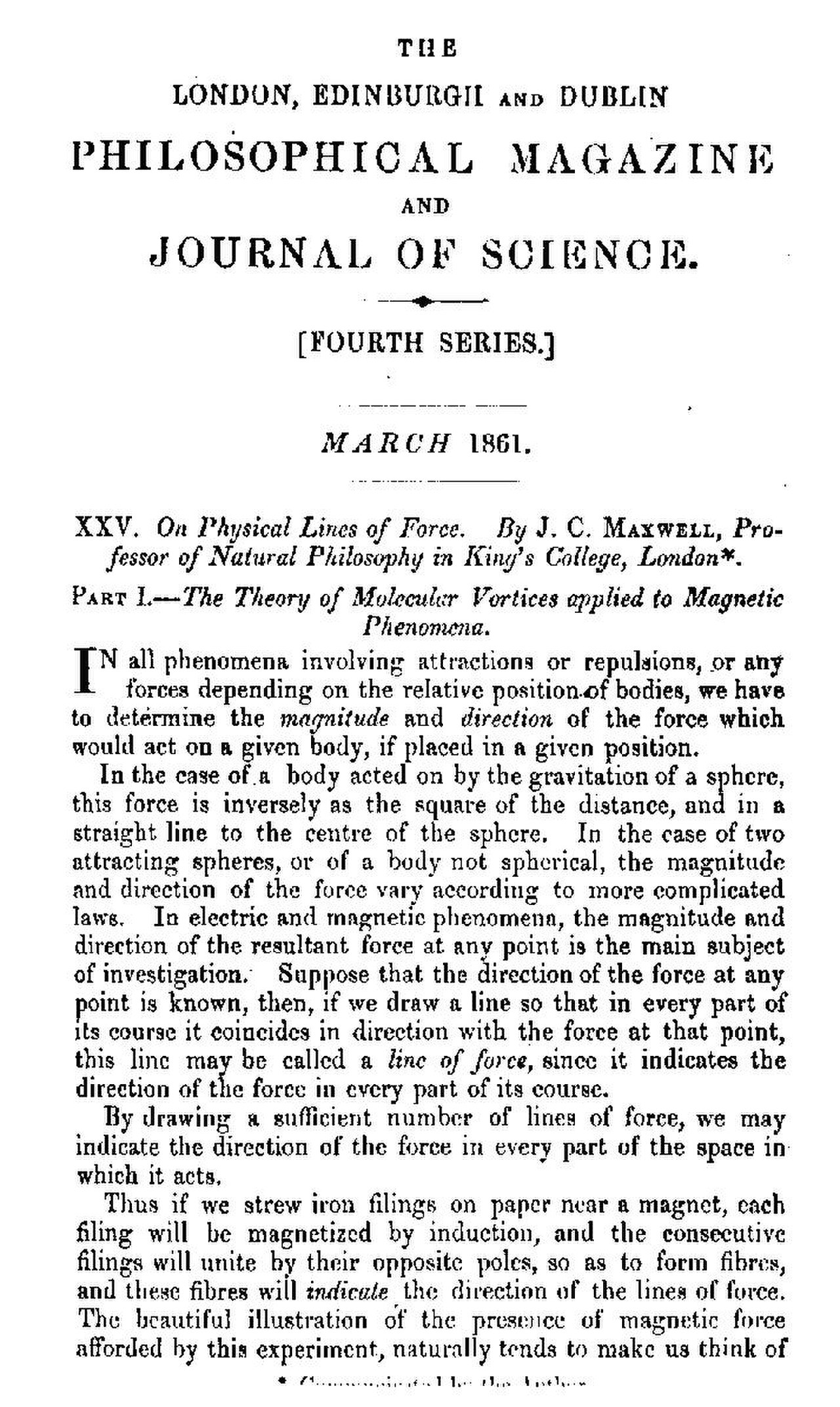
On Physical Lines of Force
James Clerk Maxwell · 1861–1862
 Document
Secondary source
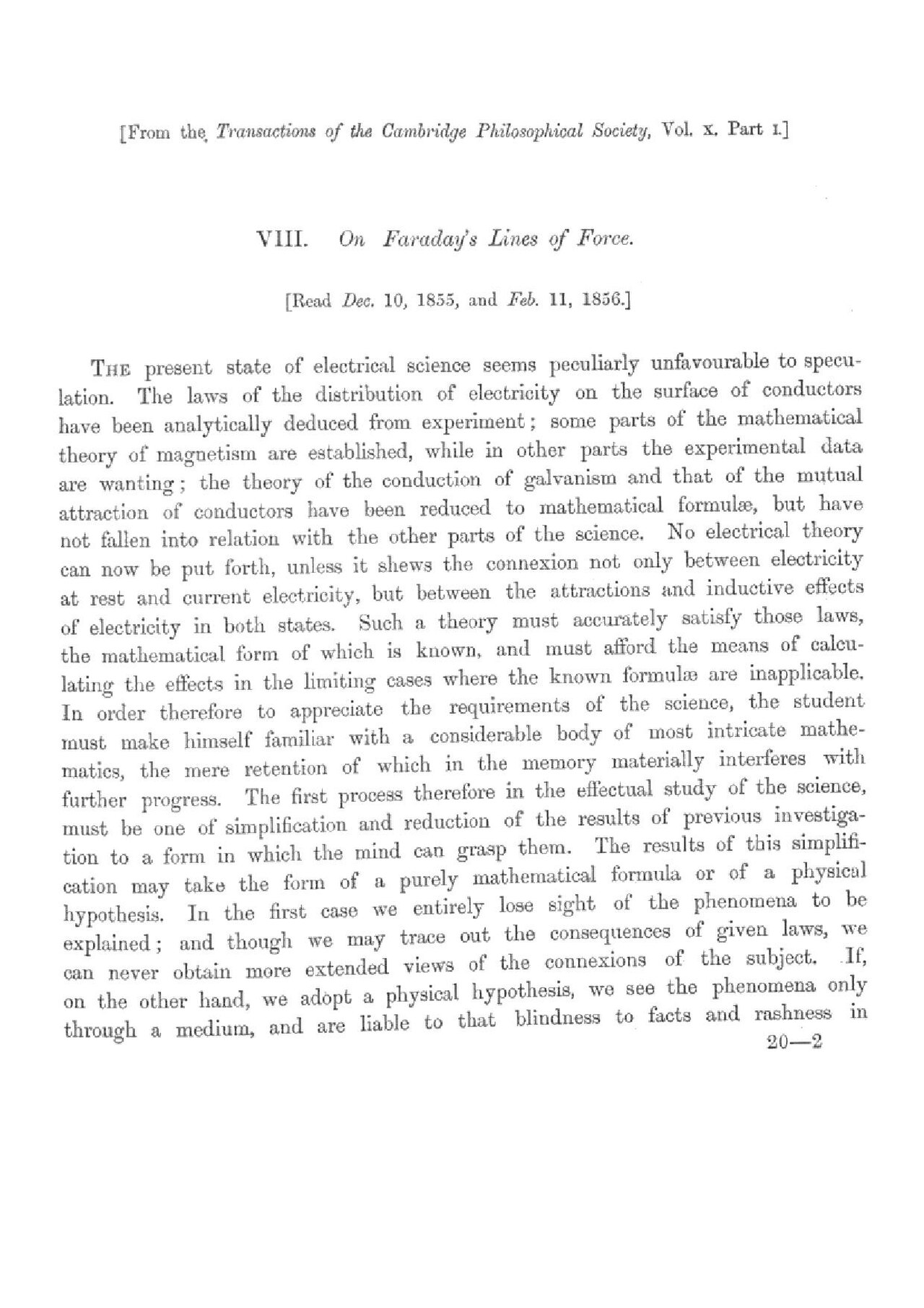
On Faraday's Lines of Force
James Clerk Maxwell · 1855-1856
Free account
Read every James Clerk Maxwell source
Sign up free →
Ready when you are
Start chatting with James Clerk Maxwell now.
20 messages free · No credit card · Available in 50+ languages.