


Primary sourcePainting1879
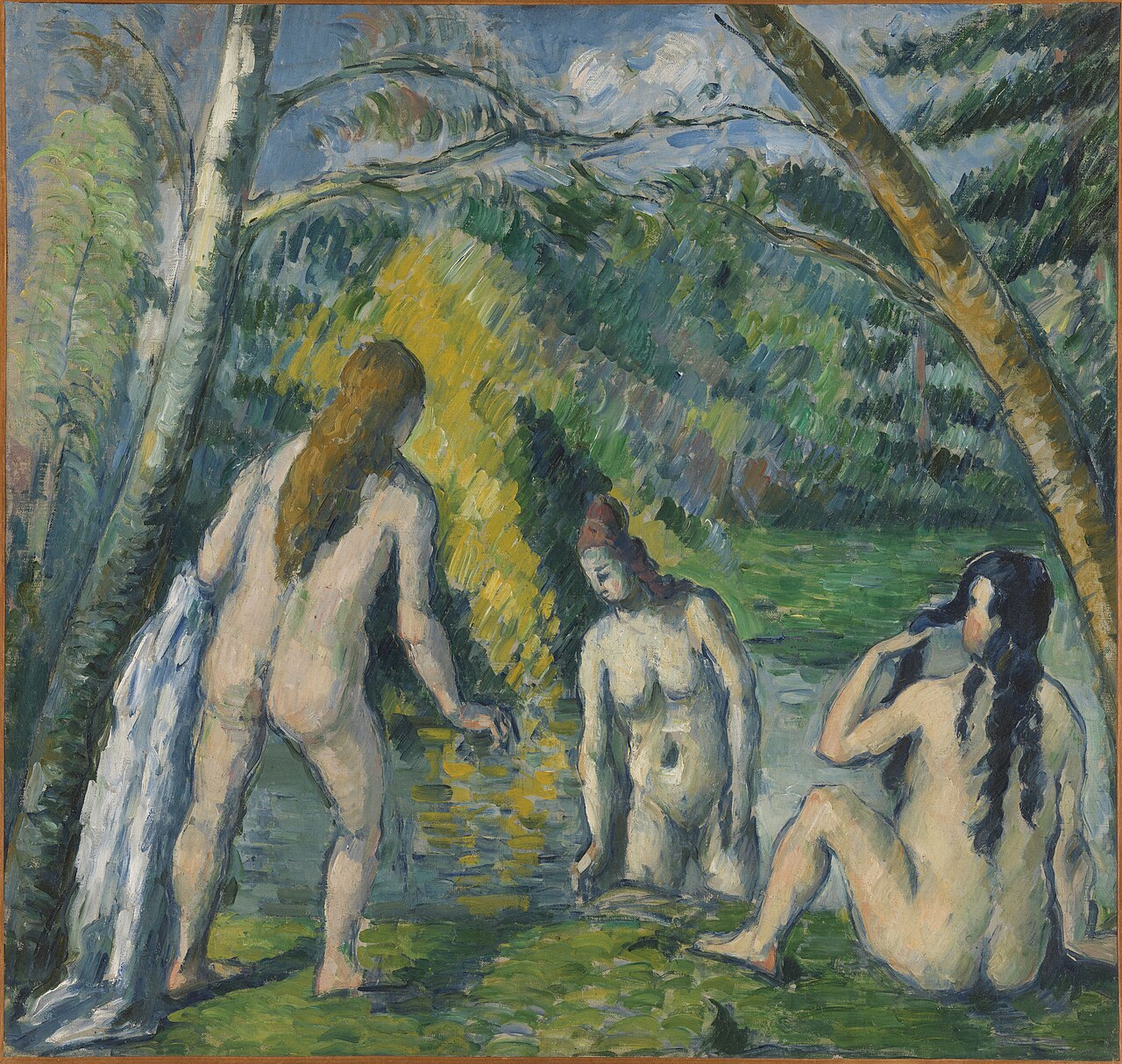
Three Bathers
Paul Cézanne · 1879
An 1879 oil painting by Paul Cézanne of three nude women bathing outdoors, which Matisse bought in debt in 1899 and kept as a personal talisman for over three decades.
Matisse owned this painting for 37 years, calling it his talisman, before donating it to the City of Paris.
About this source
What it is
This is an oil-on-canvas painting by Paul Cézanne, showing three nude female bathers framed by trees. It was painted around 1879 and is now held by the Musée des Beaux-Arts de la Ville de Paris.
Why it matters
Why it matters
Cézanne painted bathers throughout his career, exploring form and composition rather than idealised beauty. Henri Matisse admired this painting so much that he bought it despite going into debt, kept it for over thirty years as a source of inspiration, used it to teach his own students, and later gave it to the City of Paris. It shows how one artist's work can shape another's whole career.
Look closer
- What shapes and brushstrokes do you notice in how the bodies and trees are painted?
- Why might Matisse have called this painting his source of "faith and perseverance"?
- What does it mean for an artist to keep another artist's work as inspiration for decades?
This painting is part of the curated material that grounds the AI version of Henri Matisse on Humy.ai — when students ask about related events, the AI can quote it and cite it.
More Henri Matisse sources
Browse all 99 →
Ready when you are
Start chatting with Henri Matisse now.
20 messages free · No credit card · Available in 50+ languages.