


Secondary sourceArtifact1700-1750
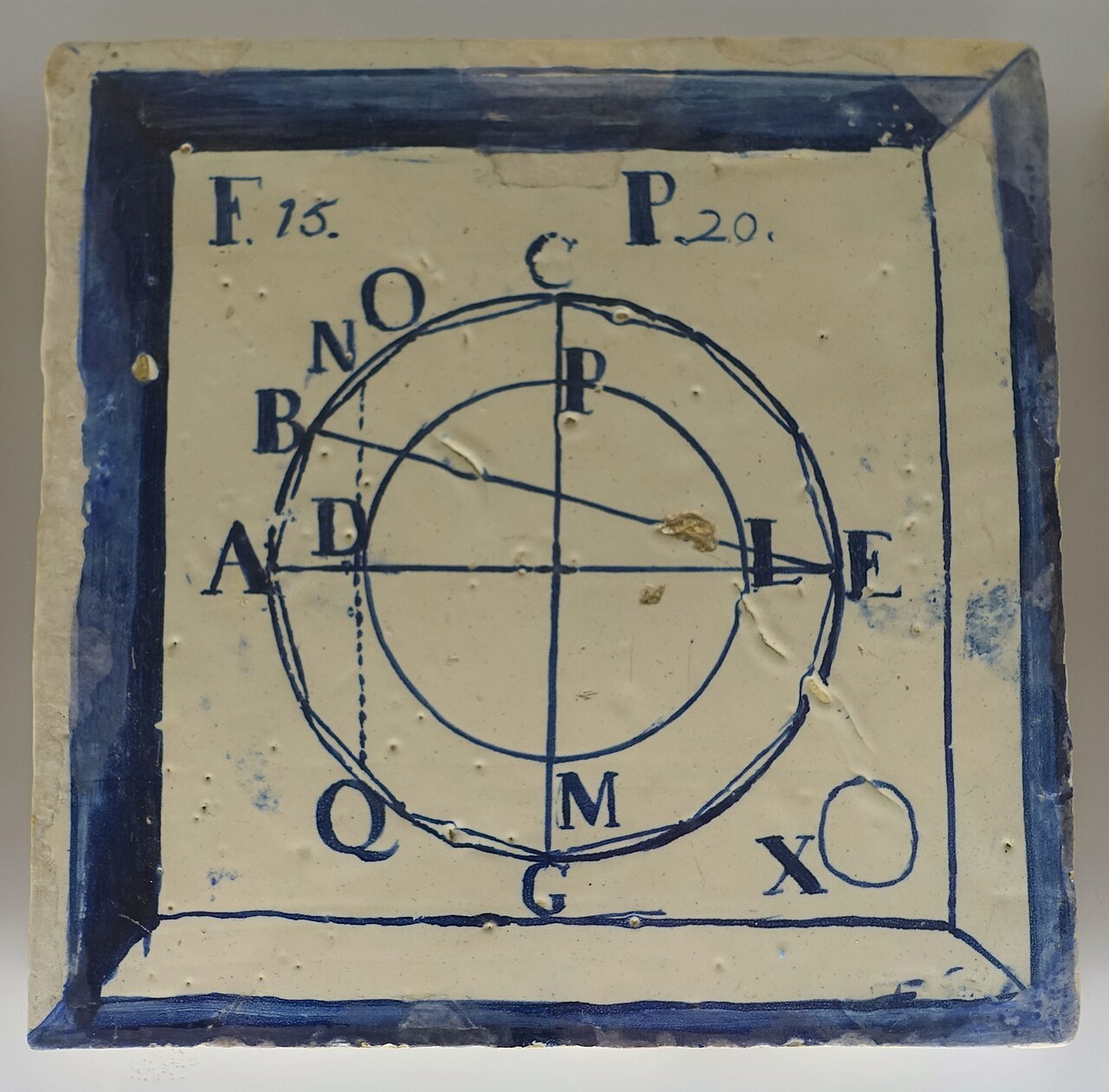
Tile of Proposition 20 from Tacquet's Selected Theorems of Archimedes
1700-1750
An 18th-century Portuguese ceramic teaching tile showing a geometric theorem selected from Andre Tacquet's 1654 compilation of Archimedes' work.
This teaching tile reproduces a geometric theorem of Archimedes as compiled by Andre Tacquet.
About this source
What it is
This is a glazed ceramic tile from Coimbra, Portugal, made sometime between 1700 and 1750, now held in the Museu Nacional Machado de Castro. It displays a geometric diagram illustrating Proposition 20, one of the theorems of Archimedes selected and published by the Jesuit mathematician Andre Tacquet in 1654.
Why it matters
This tile shows how Archimedes' geometry was still being taught nearly two thousand years after his death, reaching classrooms through Jesuit educators like Tacquet. It is evidence of how ancient Greek mathematics was adapted for teaching students in early modern Europe.
Look closer
- Why might a teacher choose to turn a geometric diagram into a decorative tile?
- What does the care put into this object suggest about how Archimedes' ideas were valued in education?
- What might this tile not tell us about the original theorem or Archimedes' own explanation of it?
This artifact is part of the curated material that grounds the AI version of Archimedes on Humy.ai — when students ask about related events, the AI can quote it and cite it.
More Archimedes sources
Browse all 87 →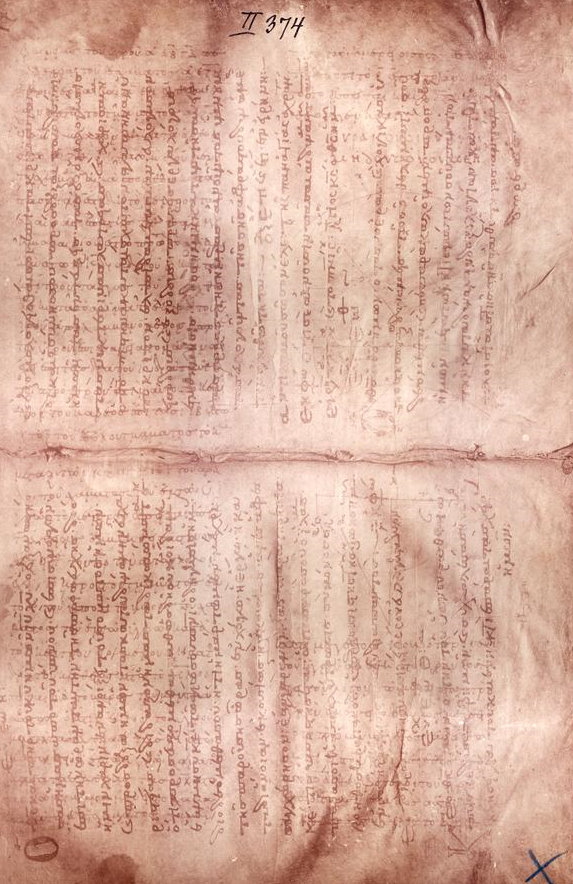 Book
Secondary source
Archimedes Palimpsest
c. AD 950, overwritten 1229
 Letter
Primary source
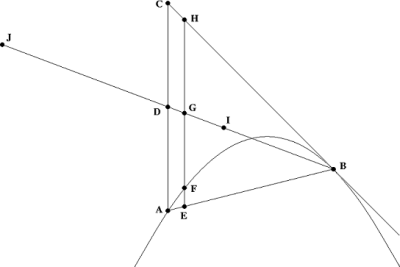
The Method of Mechanical Theorems
Archimedes · c. 250 BCE
 Book
Secondary source
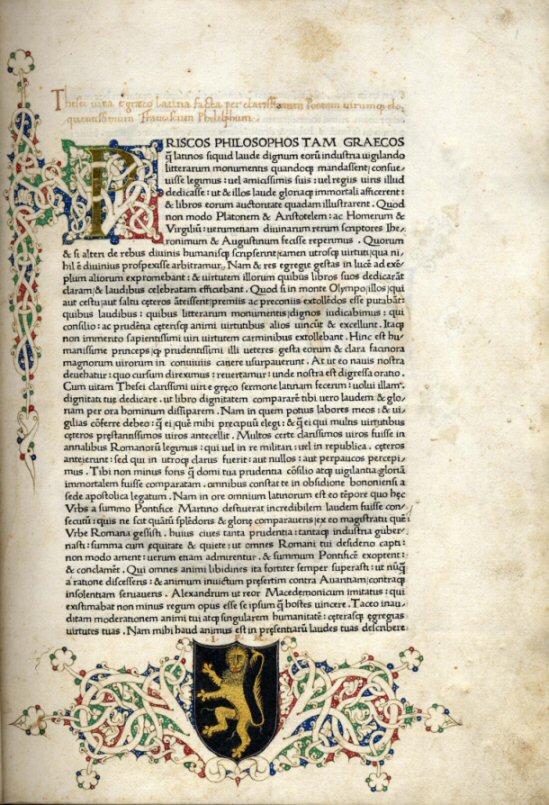
Parallel Lives
Plutarch · c. 100-120 AD
 Book
Primary source
Tusculanae Disputationes
Cicero · c. 45 BCE
Free account
Read every Archimedes source
Sign up free →
Ready when you are
Start chatting with Archimedes now.
20 messages free · No credit card · Available in 50+ languages.