


Secondary sourcePainting1750 (text originally 1651)
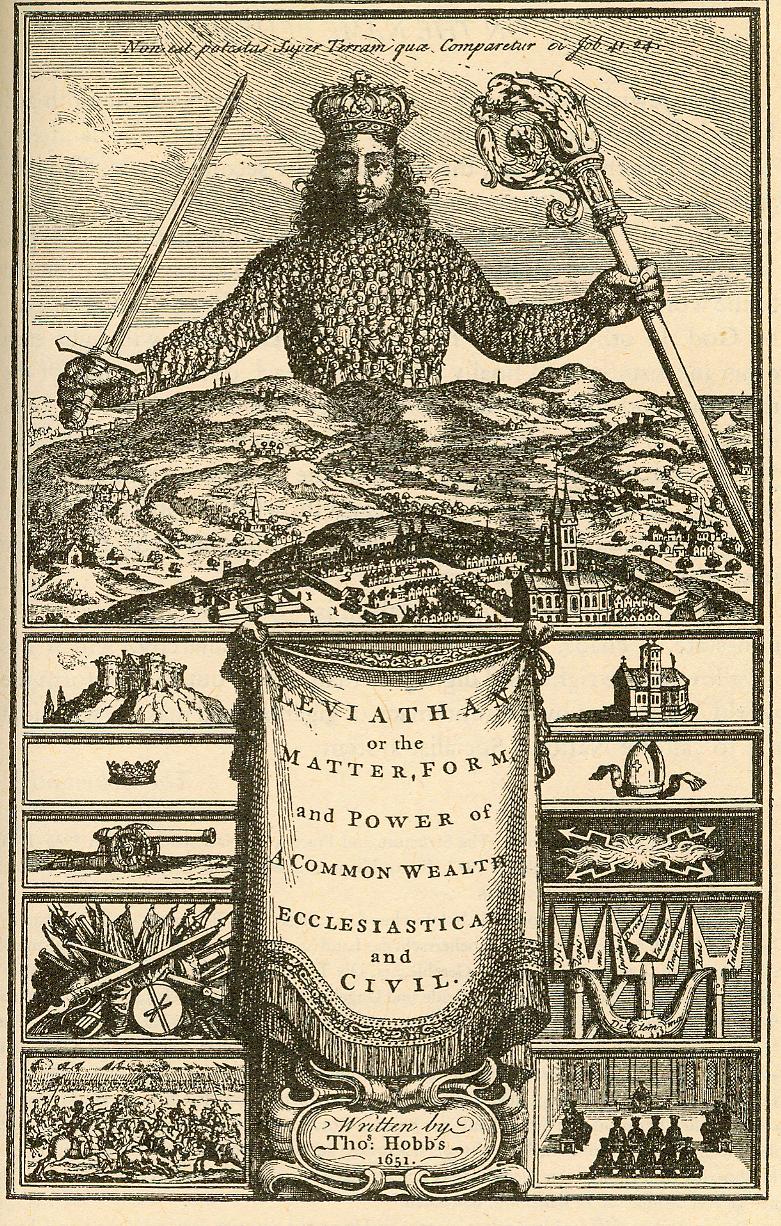
Title Page of Leviathan, 1750 Edition
Unknown engraver · 1750 (text originally 1651)
The engraved title page of a 1750 edition of Hobbes's Leviathan, showing the famous image of the giant sovereign made of many bodies.
The title page of Hobbes's own major work, Leviathan, reprinted decades after his death.
About this source
What it is
This is the engraved title page from a 1750 printing of Thomas Hobbes's Leviathan, originally written in 1651. It shows a giant crowned figure made up of many smaller human bodies, holding a sword and a crozier, above a landscape with scenes of war and government.
Why it matters
The image illustrates Hobbes's central idea: that a strong sovereign, made legitimate by the consent of the people who compose its body, is needed to keep peace and prevent chaos. This later edition shows how Hobbes's ideas and striking image continued to be printed and read long after his death.
- Why do you think the sovereign is drawn as made up of many small people?
- What do the smaller scenes around the title tell us about the kind of power Hobbes is describing?
- Why might this image remain popular for printers almost a century after it was first published?
This painting is part of the curated material that grounds the AI version of Thomas Hobbes on Humy.ai — when students ask about related events, the AI can quote it and cite it.
More Thomas Hobbes sources
Meet the AI Thomas Hobbes →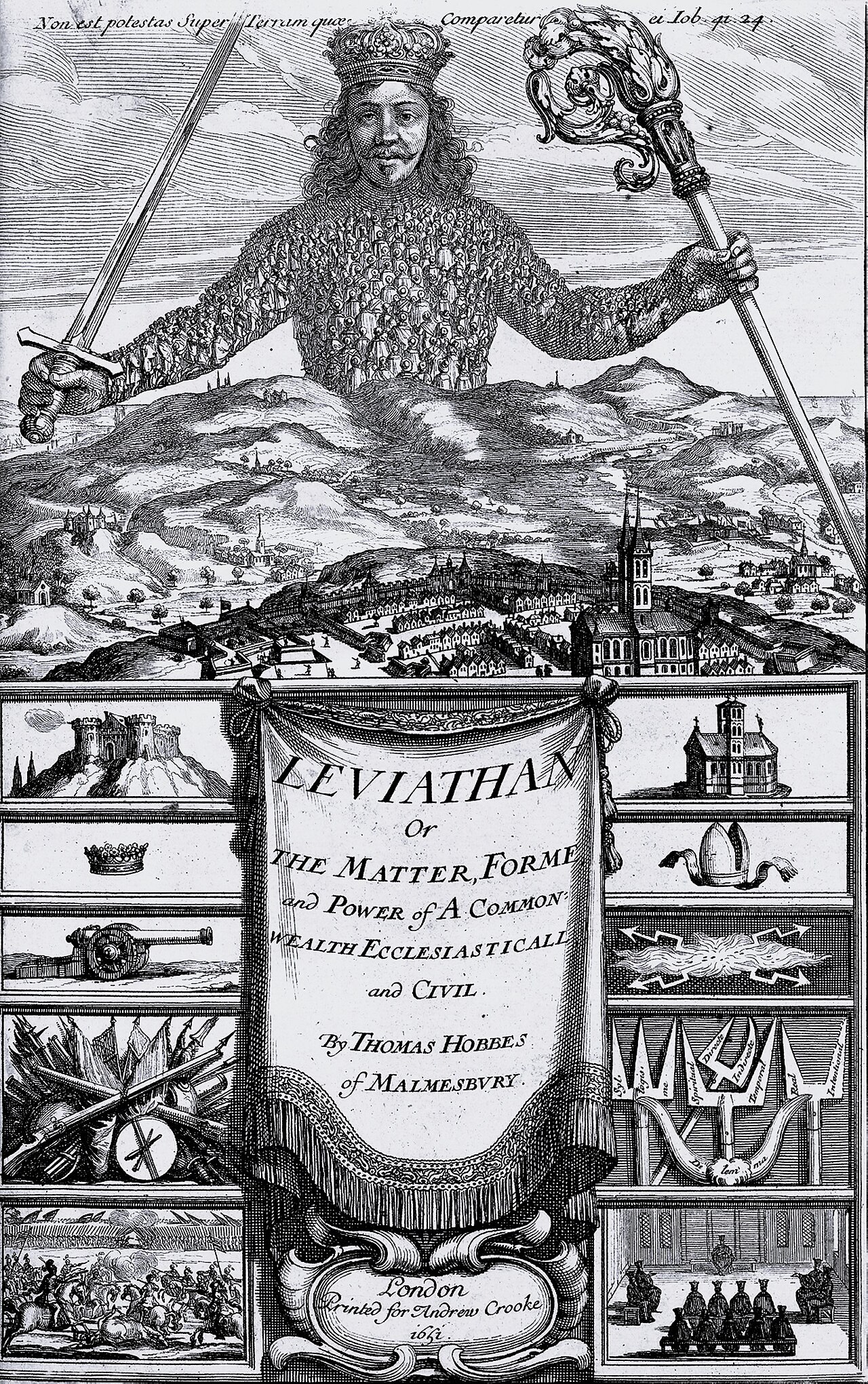 Book
Primary source
Leviathan
Thomas Hobbes · 1651
 Book
Primary source
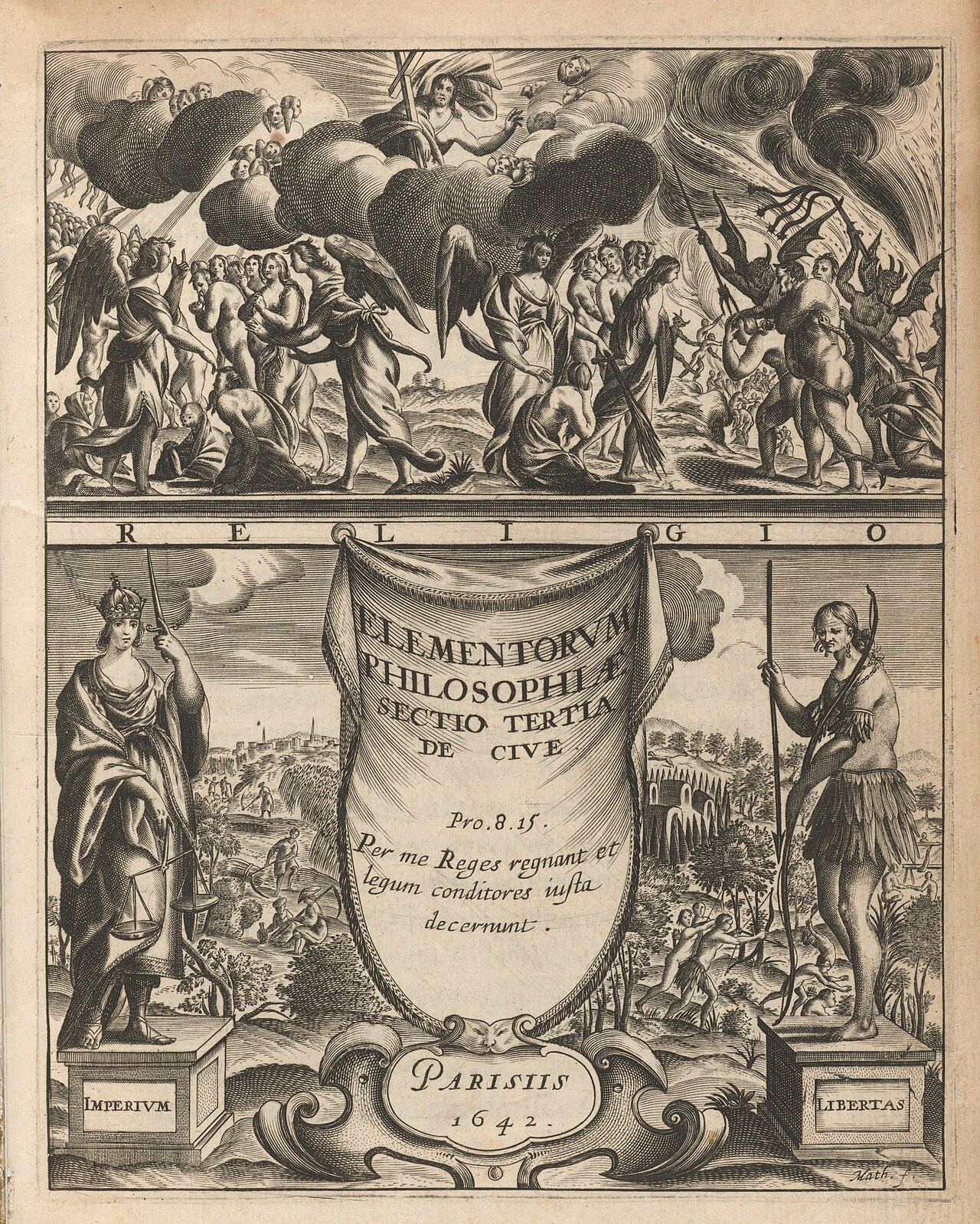
De Cive
Thomas Hobbes · 1642
 Painting
Secondary source
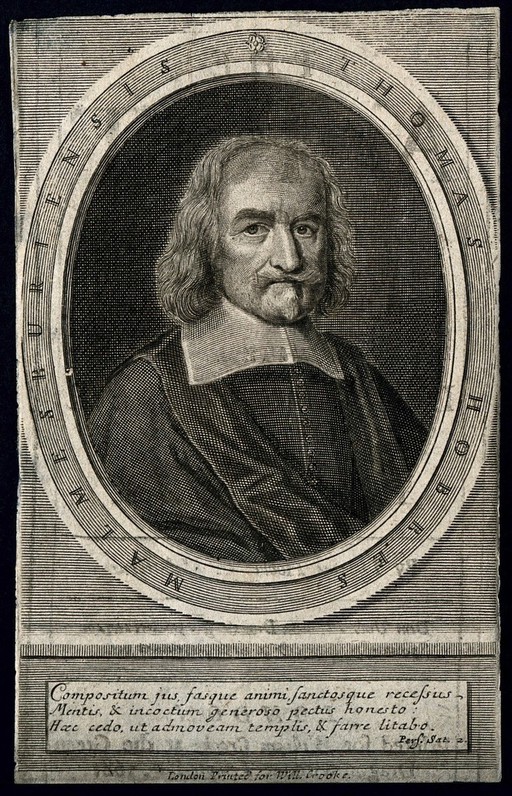
Portrait of Thomas Hobbes, Line Engraving
Primary source
The Elements of Law
Thomas Hobbes · 1640
 Artifact
Secondary source
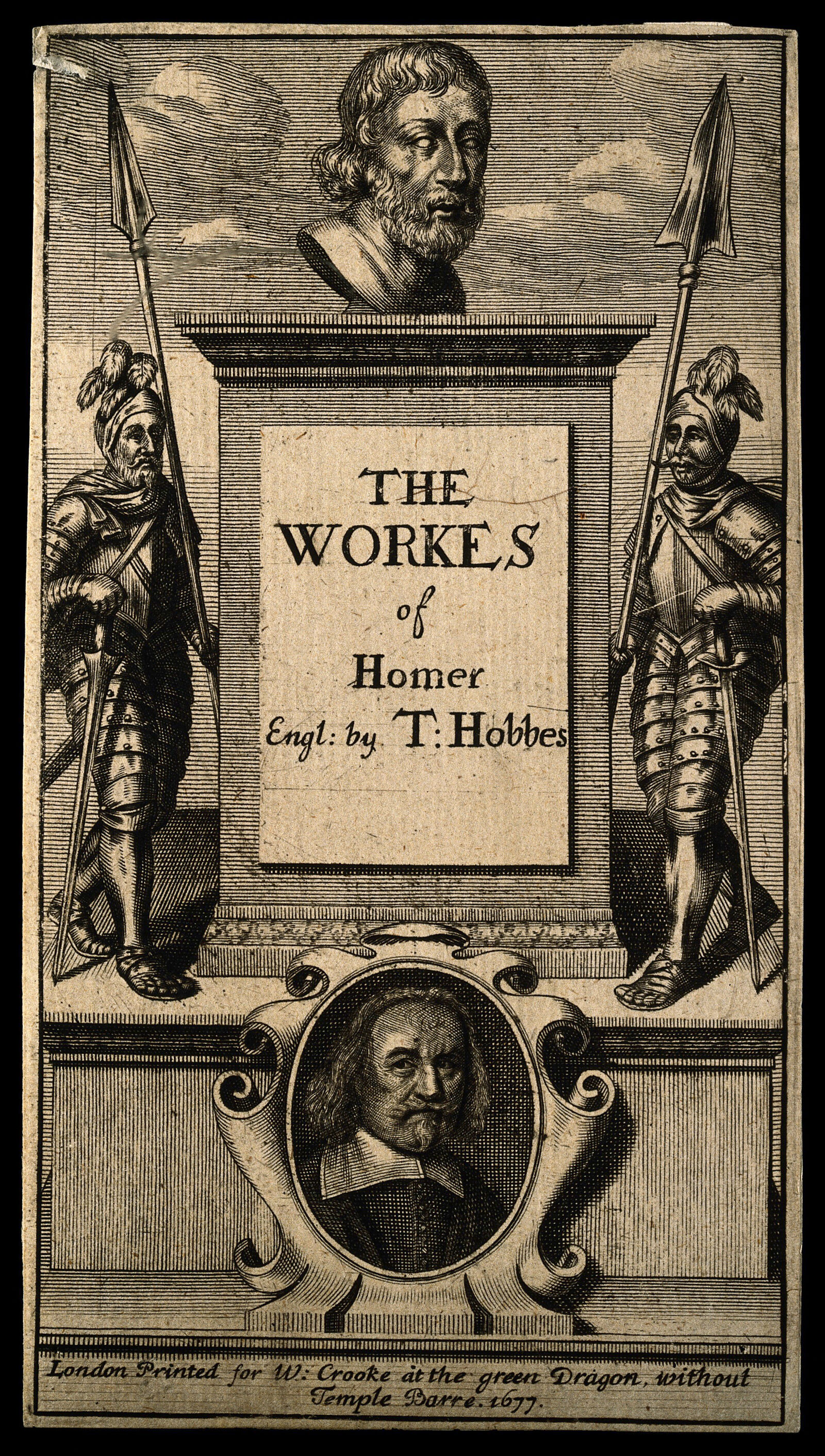
Title Page of The Workes of Homer, Translated by Thomas Hobbes
1677
Ready when you are
Start chatting with Thomas Hobbes now.
20 messages free · No credit card · Available in 50+ languages.