


Primary sourceArtifactca. 1875
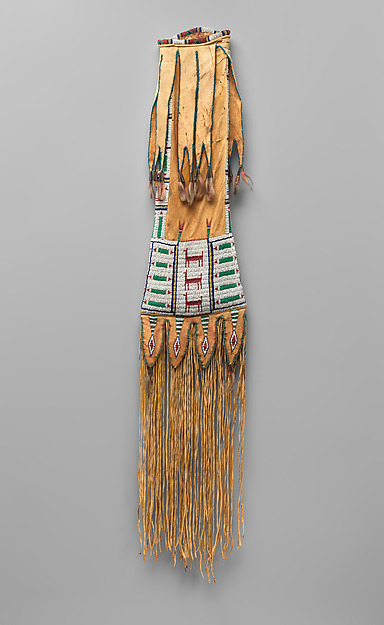
Tobacco Bag, Southern Cheyenne
ca. 1875
A beaded hide tobacco bag made by Southern Cheyenne artisans around 1875, from the same era and region as Little Raven's Arapaho band.
This Southern Cheyenne bag reflects the material culture of the southern Plains world Little Raven lived in.
About this source
What it is
This is a tobacco bag made of tanned leather decorated with pigment, glass beads, metal cones, and horsehair, created by Southern Cheyenne artisans around 1875. It is now held by The Metropolitan Museum of Art as part of the Charles and Valerie Diker Collection of Native American Art.
Why it matters
Though not made by Little Raven himself, this bag comes from the same time and southern Plains region as his Arapaho band, who lived alongside the Southern Cheyenne. It offers a glimpse of the everyday craftsmanship, materials, and beadwork traditions shared by Plains peoples during his lifetime.
Look closer
- What materials were used to make this bag, and what do they tell you about available resources on the Plains?
- Why might beadwork patterns have carried meaning beyond decoration?
- How does an everyday object like this help you imagine daily life differently than a treaty or map does?
This artifact is part of the curated material that grounds the AI version of Little Raven on Humy.ai — when students ask about related events, the AI can quote it and cite it.
More Little Raven sources
Meet the AI Little Raven →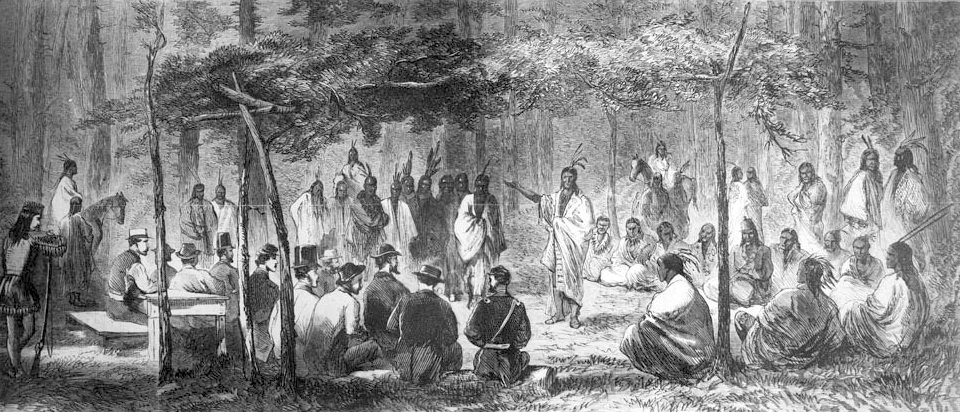 Document
Primary source
Medicine Lodge Treaty
October 1867
 Photograph
Primary source
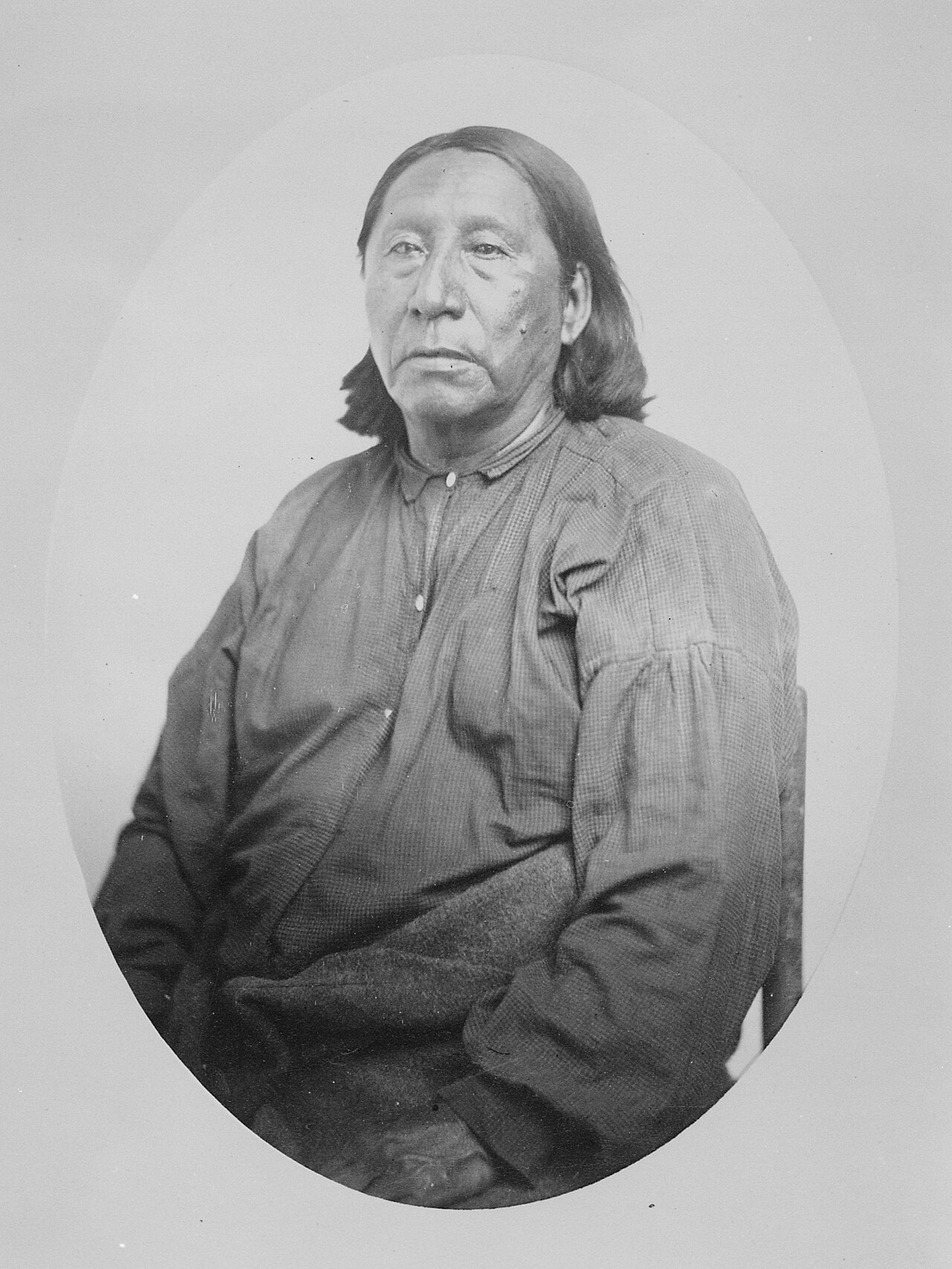
Little Raven, Head Chief of the Arapaho
William S. Soule · 1868-1874
 Painting
Secondary source
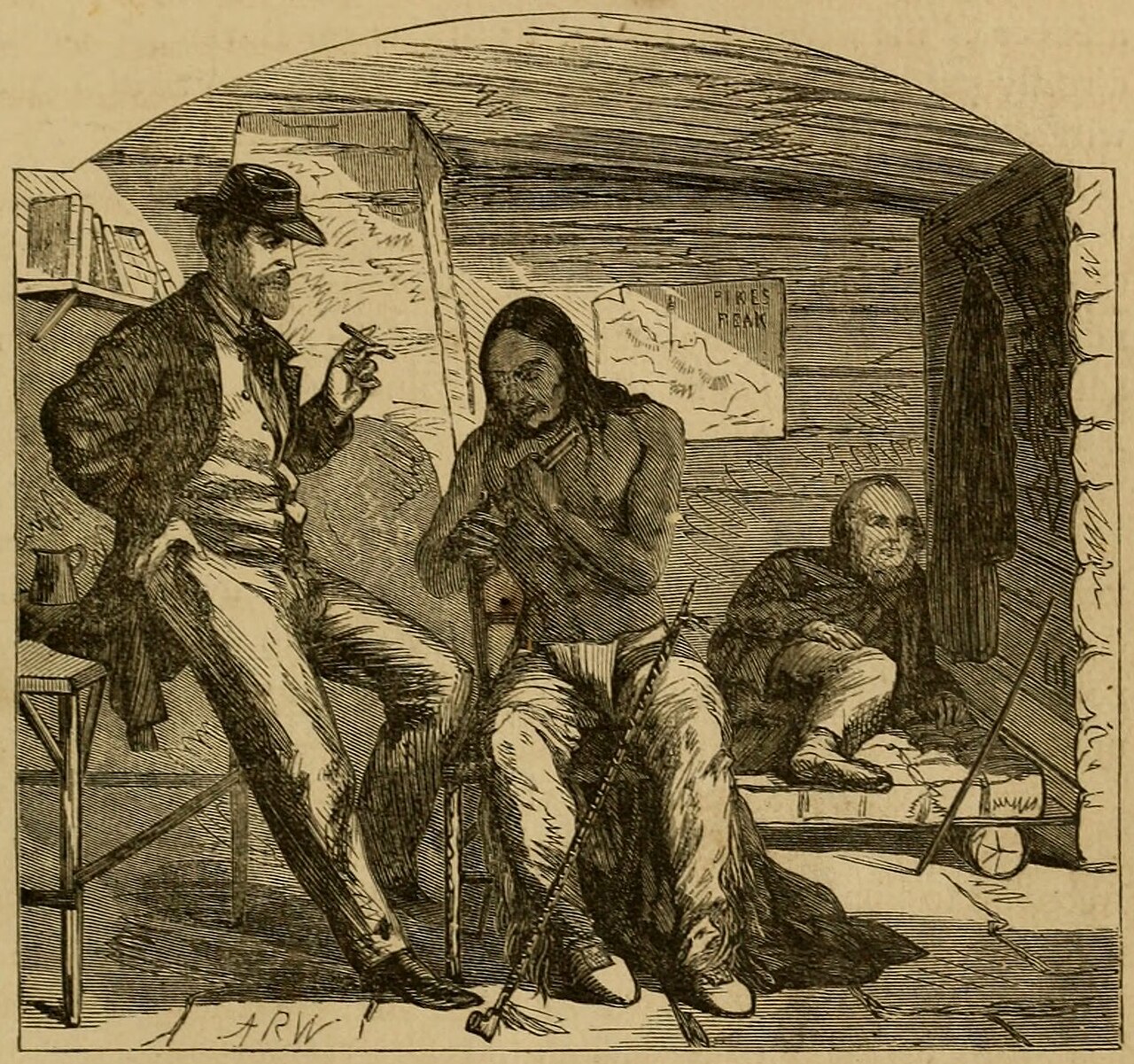
A Visit from Little Raven
Alfred Waud · 1859
Primary source
My Life on the Plains
George Armstrong Custer · 1874
Primary source
Annual Report of the Commissioner of Indian Affairs, 1874
United States Office of Indian Affairs · 1874
Ready when you are
Start chatting with Little Raven now.
20 messages free · No credit card · Available in 50+ languages.