


Secondary sourceSculpture1970
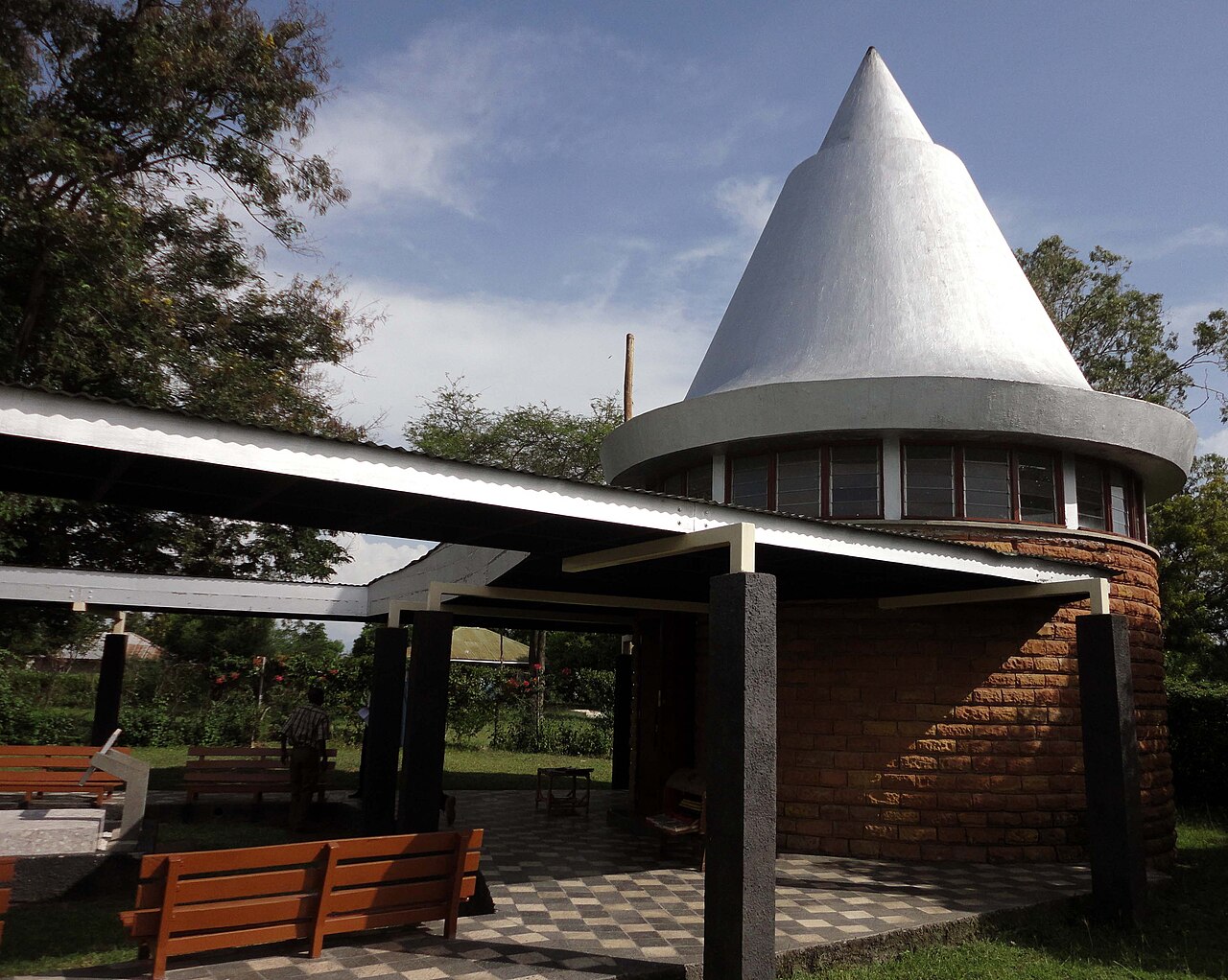
Tom Mboya Mausoleum, Rusinga Island
1970
The 1970 mausoleum built on Rusinga Island for Tom Mboya, erected after his assassination in 1969 and later declared a national monument.
This mausoleum was built to honour Mboya after his assassination and later became a national monument commemorating his legacy.
About this source
What it is
This is a photograph of the Tom Mboya Mausoleum on Rusinga Island, built in 1970 following his assassination in 1969. The building is a circular brick structure with a pointed roof, and it was gazetted as a national monument in 2001.
Why it matters
Tom Mboya was a pioneering trade unionist and a prominent, eloquent politician in Kenya's independence era. His assassination shocked the country, and this mausoleum, built by his contemporaries soon after his death, reflects the national mourning that followed. The shape of its roof is said to symbolise the bullet that killed him, making the monument itself a statement about his violent death and his lasting status as one of Kenya's recognised National Heroes.
Look closer
- Why might the roof's shape be designed to recall the way he died?
- What does the choice to make this a national monument tell you about how Mboya was remembered?
- What does a monument like this tell us, and what does it leave out, about his life and death?
This sculpture is part of the curated material that grounds the AI version of Tom Mboya on Humy.ai — when students ask about related events, the AI can quote it and cite it.
More Tom Mboya sources
Browse all 8 →
Ready when you are
Start chatting with Tom Mboya now.
20 messages free · No credit card · Available in 50+ languages.