


Primary sourceArtifact1622-1628
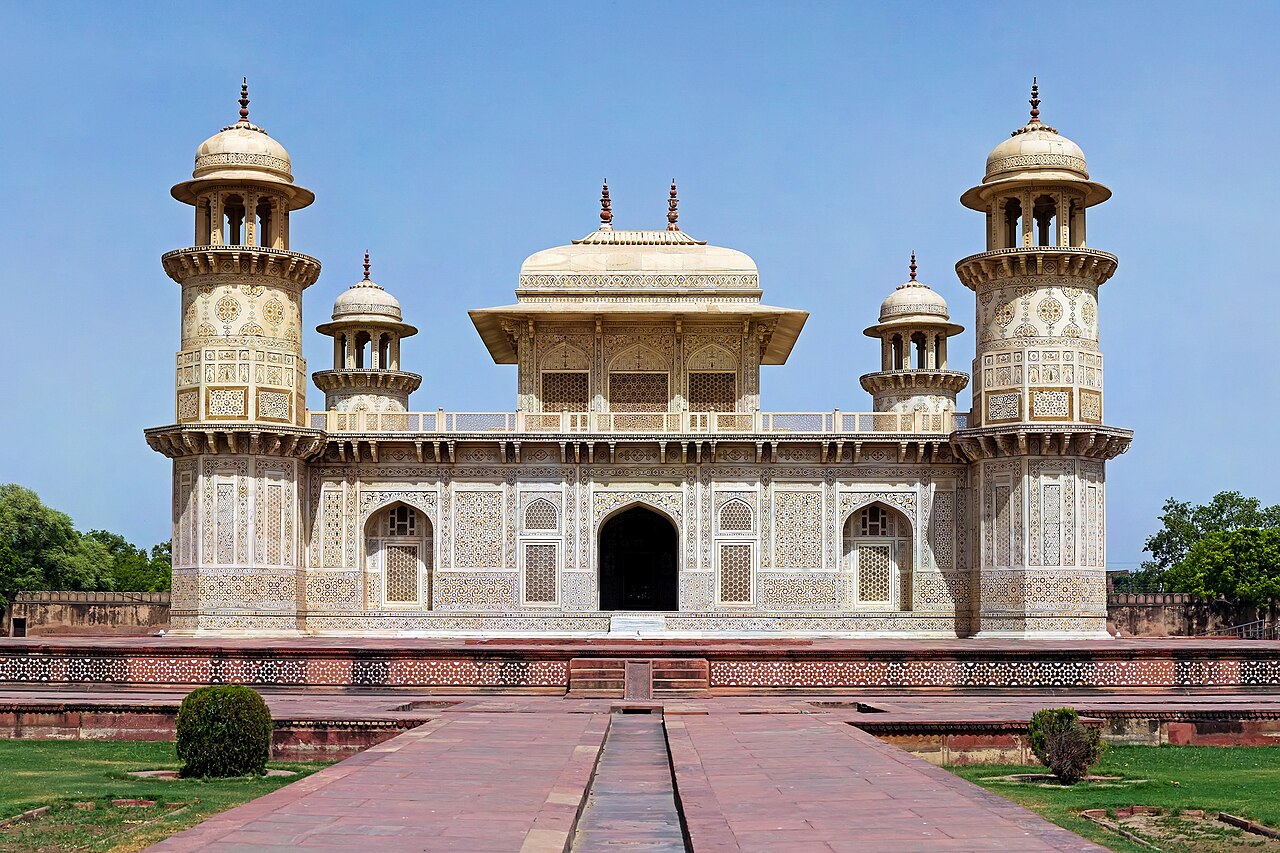
Tomb of I'timad-ud-Daulah
1622-1628
A white marble mausoleum in Agra built between 1622 and 1628 by Nur Jahan for her father, Jahangir's chief minister.
Nur Jahan, Jahangir's wife, commissioned this tomb for her father, showing how the empress's family gained influence during his reign.
Free Humy account · No credit card · 120,912 sources to read
About this source
What it is
This is a mausoleum in Agra, India, built between 1622 and 1628. Nur Jahan commissioned it for her parents, Mirza Ghiyas Beg and Ismat Begum, who are buried in the central chamber. Ghiyas Beg had been given the title I'timad-ud-Daulah, meaning Pillar of the State, by Jahangir. The white marble tomb has a square plan, octagonal corner towers, jali screens and pietra dura inlay, and it stands at the centre of a garden. It is maintained by the Archaeological Survey of India.
Why it matters
The tomb shows the power of the empress's family during Jahangir's reign. Nur Jahan had married Jahangir in 1611, and her father rose to be vazir and lord treasurer. The building is often seen as a step between the red sandstone of Akbar's era and the white marble of the Taj Mahal, which was built for Ghiyas Beg's granddaughter Mumtaz Mahal. It shows how architecture recorded family status.
Look closer
- What materials and decorations does the tomb use, and how might they have signalled wealth?
- Why might Nur Jahan have chosen to build a tomb for her parents rather than for another relative?
- What does the building leave out about the workers who built it or the people who lived in Agra then?
This artifact is part of the curated material that grounds the AI version of Jahangir I on Humy.ai — when students ask about related events, the AI can quote it and cite it.
More Jahangir I sources
Browse all 98 →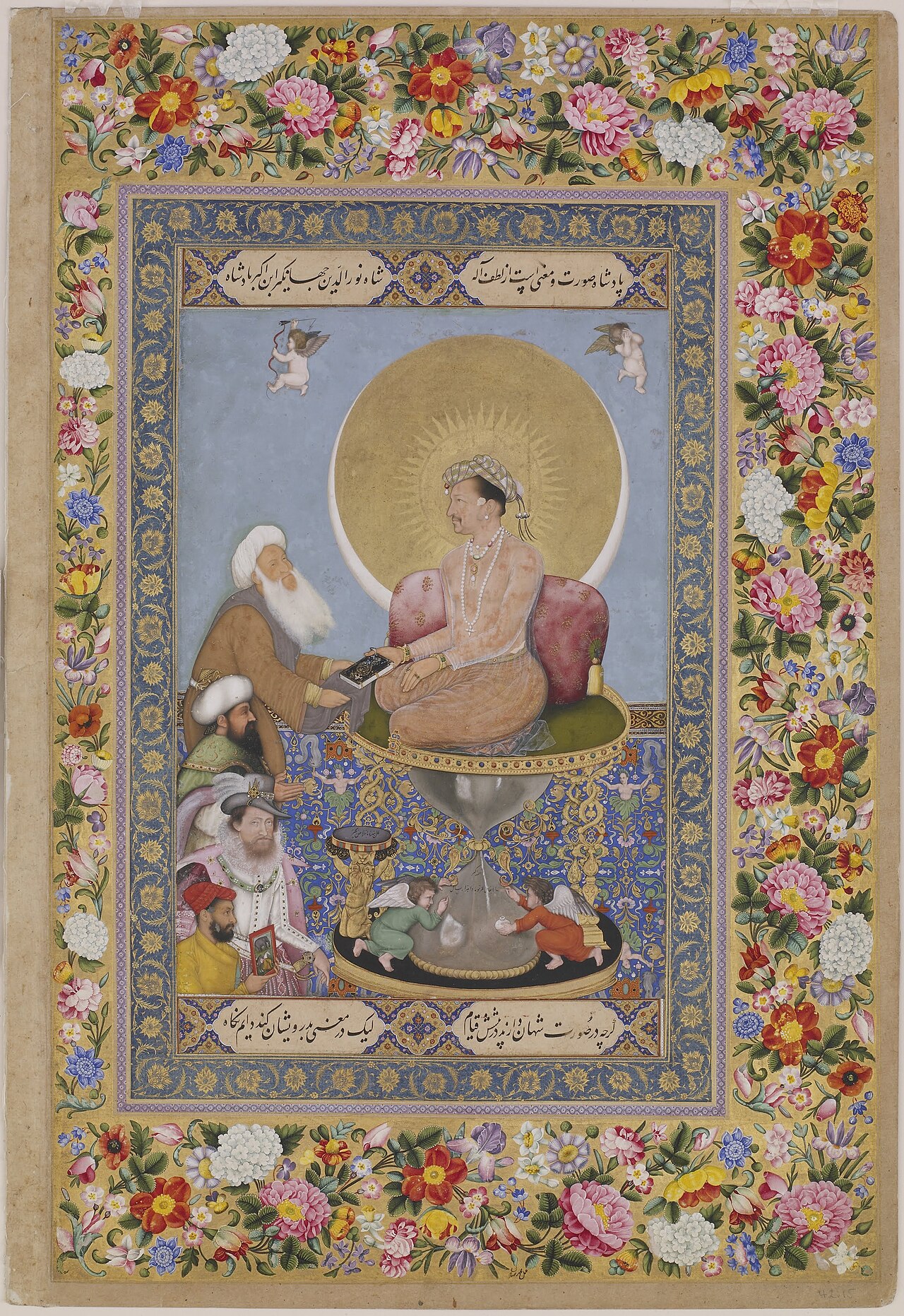 Painting
Primary source
Jahangir Preferring a Sufi Shaikh to Kings
Bichitr · c. 1615-1618
 Painting
Primary source
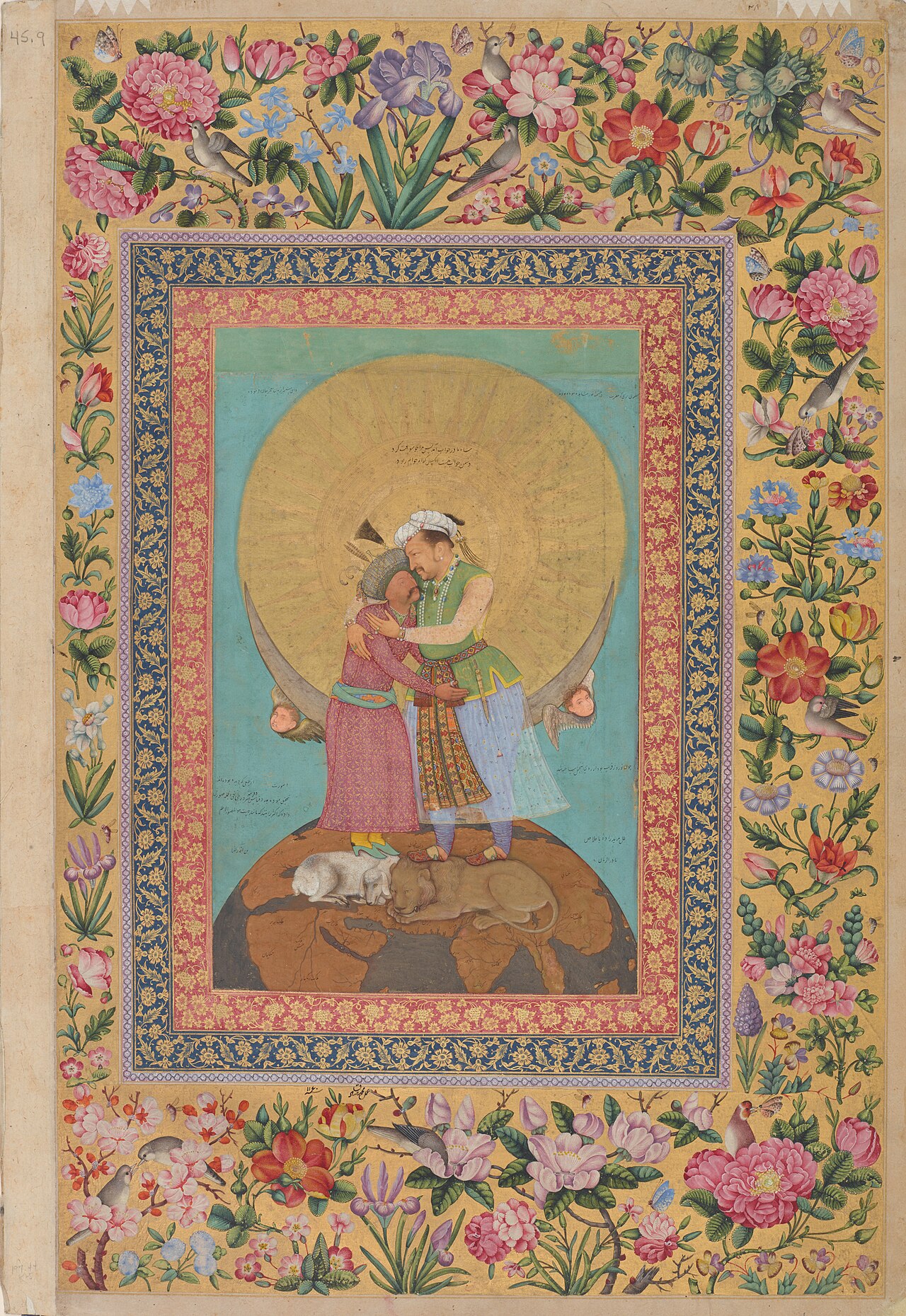
Jahangir Embracing Shah Abbas
Abu'l Hasan · c. 1618
 Painting
Primary source
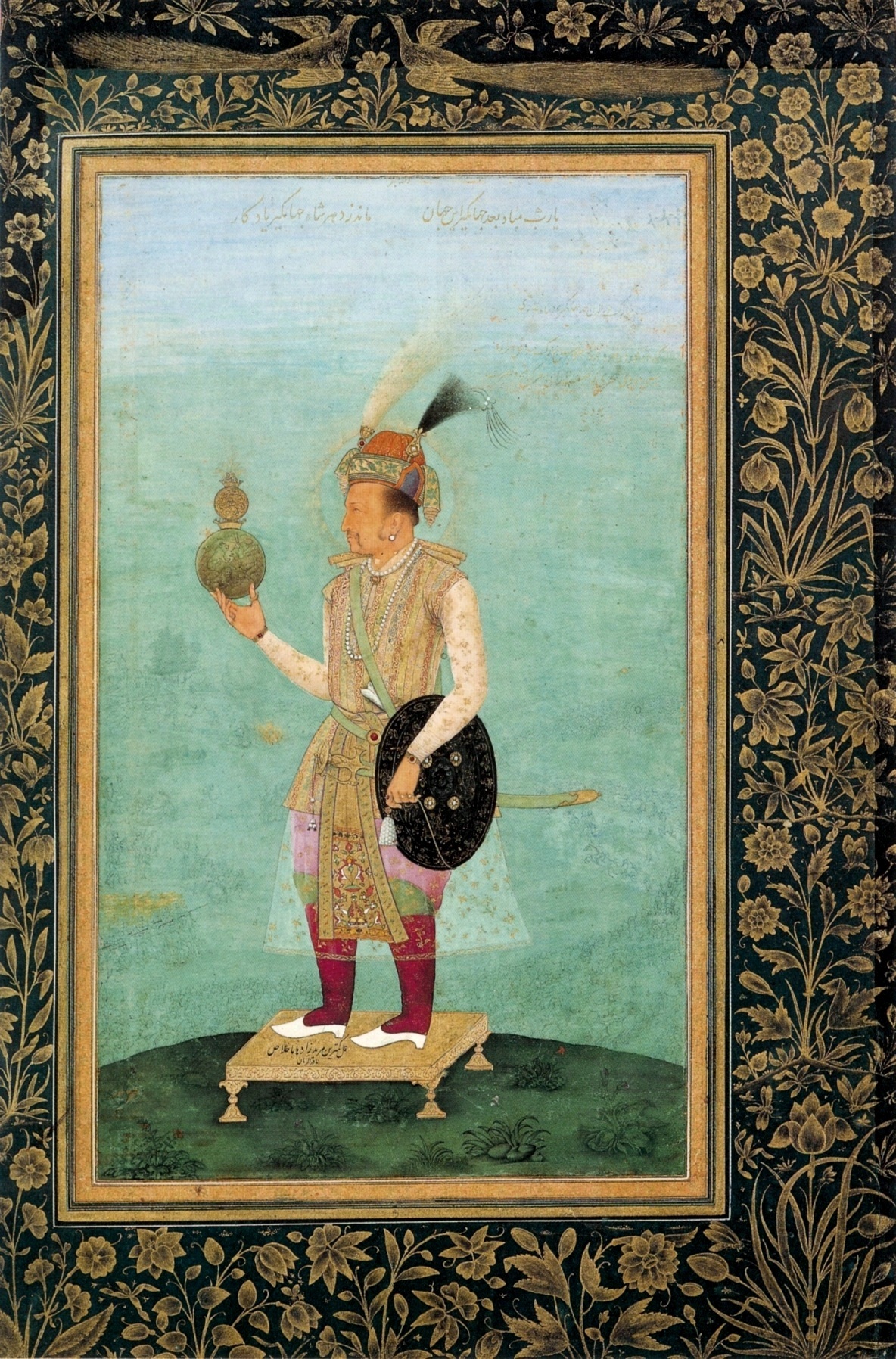
Jahangir Holding a Globe
Abu'l Hasan · c. 1620
 Painting
Primary source
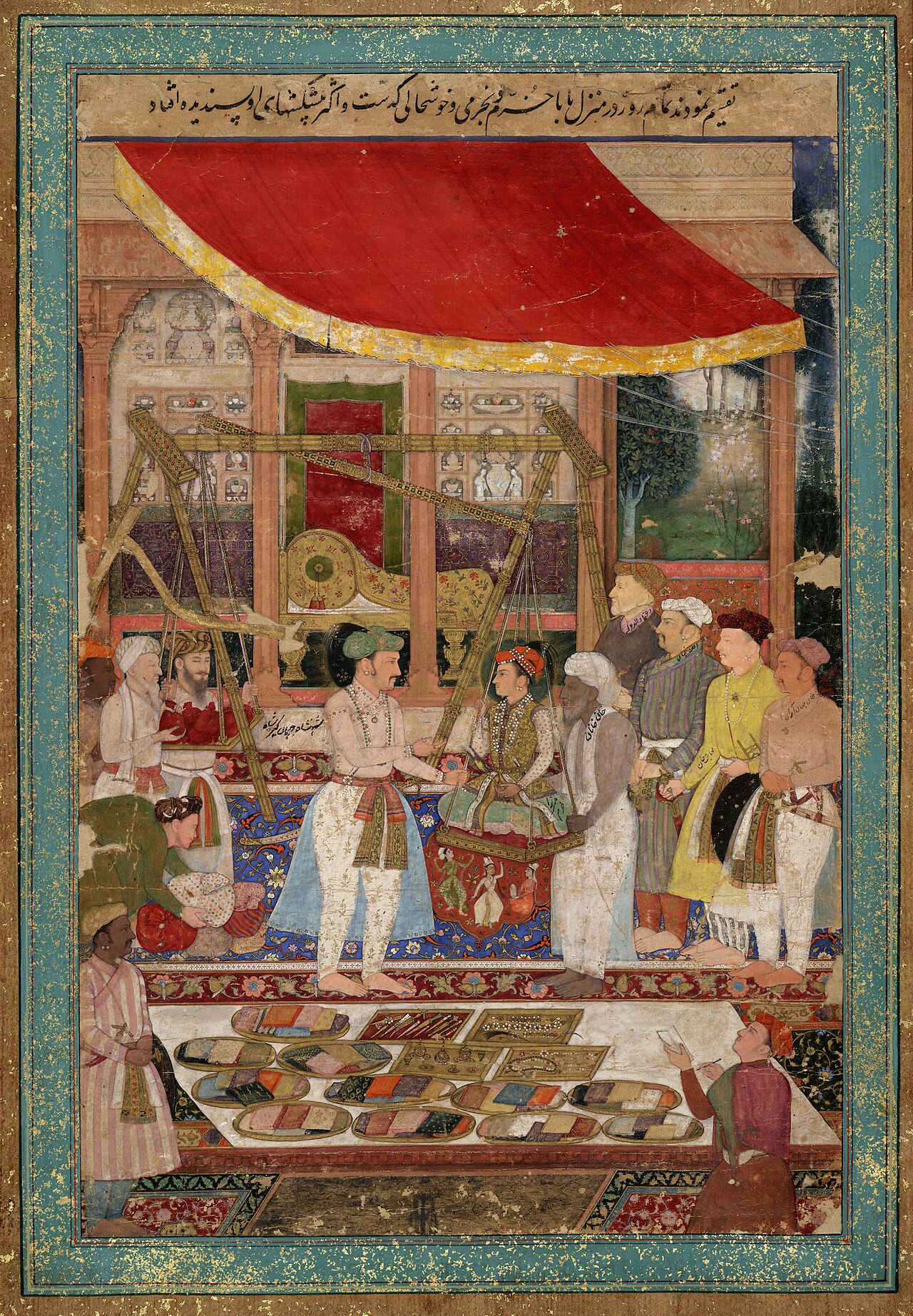
Jahangir Weighing Prince Khurram Against Gold and Silver
Manohar Das · c. 1610-1615
Free account
Read every Jahangir I source
Sign up free →
Ready when you are
Start chatting with Jahangir I now.
20 messages free · No credit card · Available in 50+ languages.