


Secondary sourcePhotograph
Tomb of Khalid ibn al-Walid
Amr ibn Kulthum
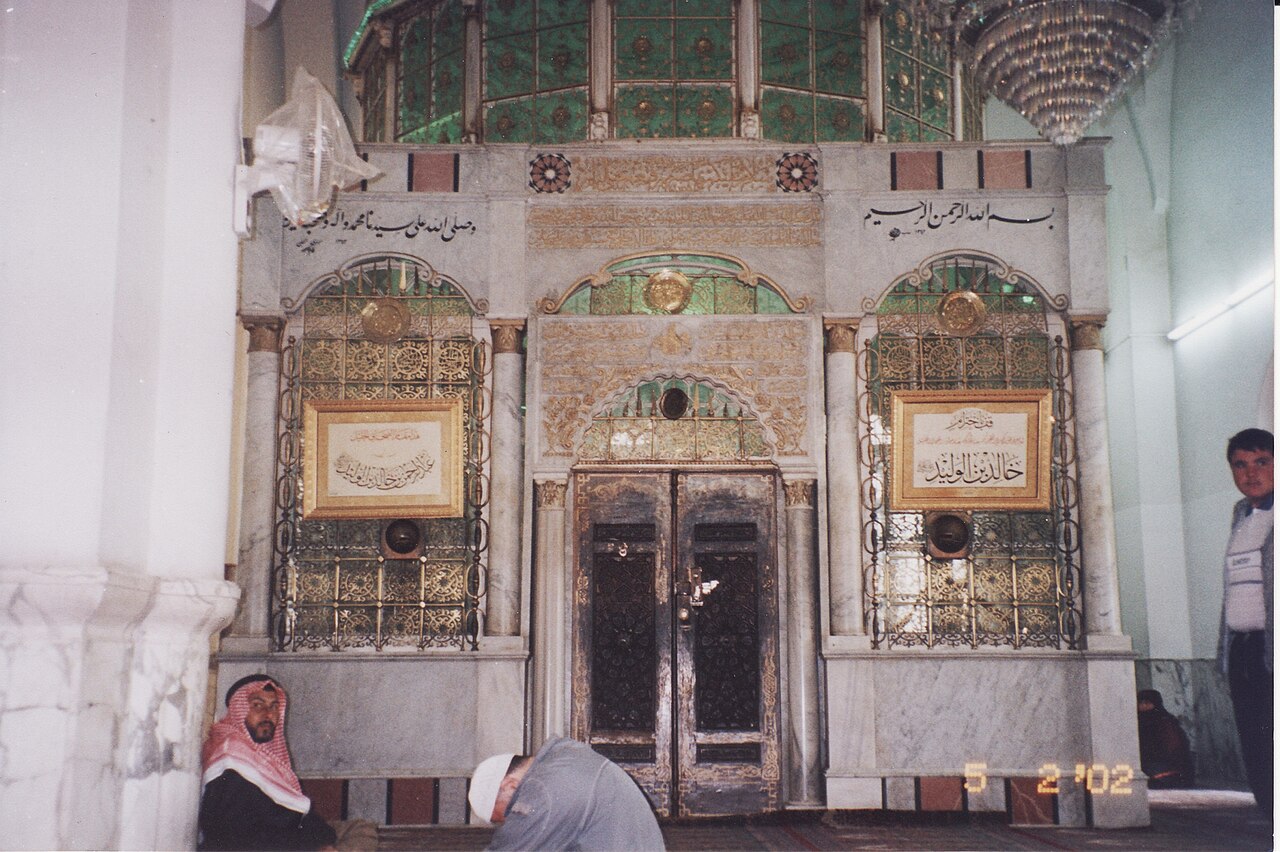
A photograph of the shrine within the Khalid ibn al-Walid Mosque in Homs, identified by tradition as the tomb of Khalid ibn al-Walid.
Shows the shrine traditionally identified as Khalid's tomb, the central site of his veneration.
About this source
What it is
This photograph shows the interior shrine inside the Khalid ibn al-Walid Mosque in Homs, Syria — the marble-walled chamber that tradition identifies as the burial place of Khalid ibn al-Walid.
Why it matters
The tomb has functioned as a pilgrimage site for centuries, reflecting the deep respect Khalid earned as a military commander and companion of Muhammad. The decoration, with gilded calligraphy and stained glass, reflects how later generations honored his memory through religious and artistic tradition rather than through writings from his own lifetime.
Look closer
- What do the decorative details in the photo tell you about how important this site is considered to be?
- Why might people visit a tomb like this today?
- This image shows a modern religious shrine — how is that different from written historical evidence about Khalid's life?
This photograph is part of the curated material that grounds the AI version of Khalid ibn al-Walid on Humy.ai — when students ask about related events, the AI can quote it and cite it.
More Khalid ibn al-Walid sources
Browse all 52 →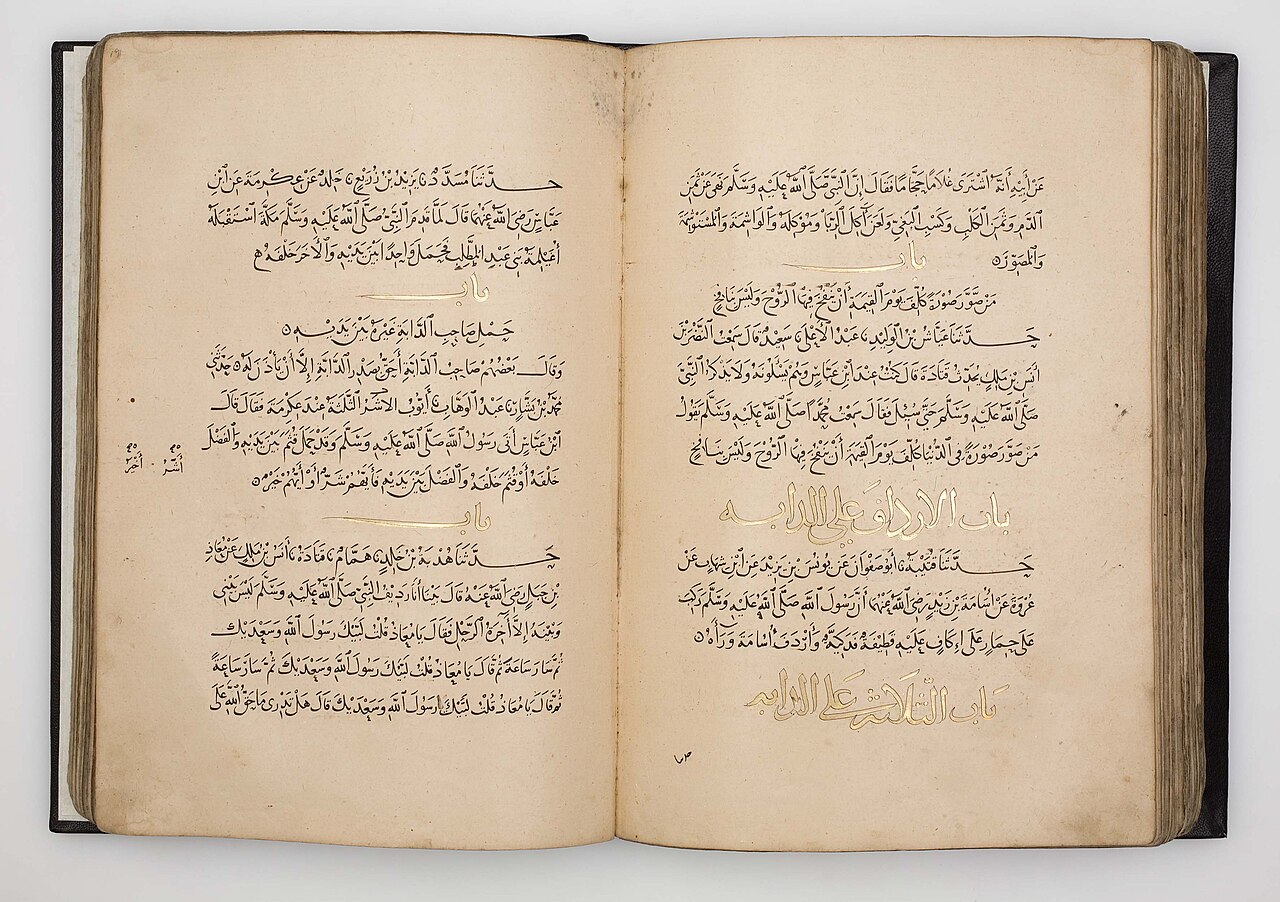 Book
Secondary source
Sahih al-Bukhari
Muhammad ibn Isma'il al-Bukhari · c. 846 CE
 Book
Secondary source
Futuh al-Buldan
Al-Baladhuri · 9th century
Secondary source
Book of Idols
Hisham ibn al-Kalbi · 8th-9th century
 Book
Secondary source
The Book of the Major Classes
Muhammad ibn Sa'd ibn Mani' al-Baghdadi
Free account
Read every Khalid ibn al-Walid source
Sign up free →
Ready when you are
Start chatting with Khalid ibn al-Walid now.
20 messages free · No credit card · Available in 50+ languages.