


Secondary sourceSculpture
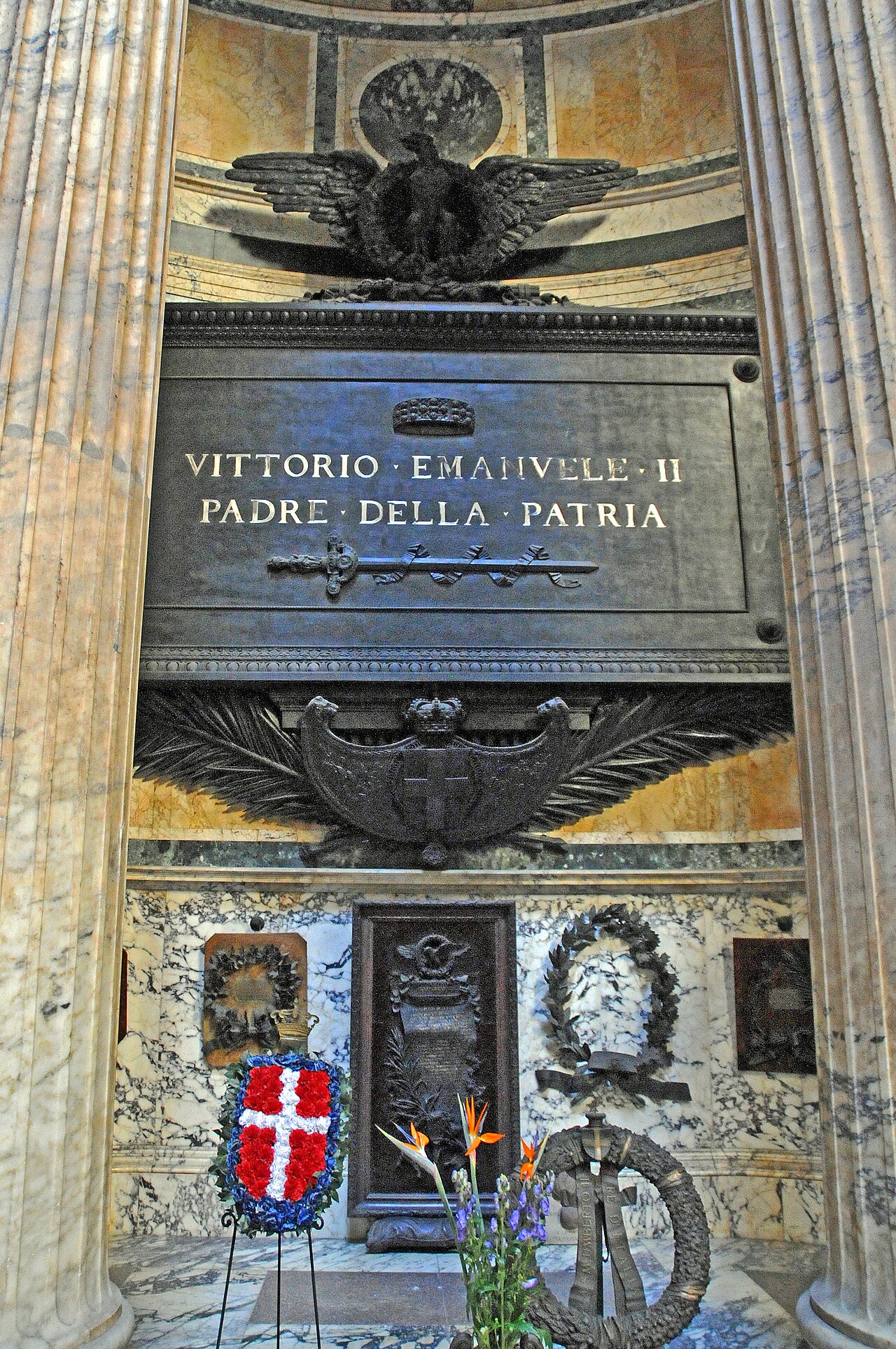
Tomb of Victor Emmanuel II
The burial monument of Victor Emmanuel II in the Pantheon in Rome, inscribed 'Father of the Nation.'
His burial monument, which presents him as 'Father of the Nation' and a symbol of united Italy.
About this source
What it is
This is the tomb of Victor Emmanuel II inside the Pantheon in Rome. A bronze sarcophagus-front bears the inscription 'VITTORIO EMANUELE II PADRE DELLA PATRIA' ('Father of the Nation'), with a bronze eagle above and a sword relief below.
Why it matters
Burying Victor Emmanuel in the Pantheon, rather than in the traditional Savoy family crypt at Superga, presented him as belonging to the whole Italian nation rather than only to his dynasty. The Roman setting and the title 'Father of the Nation' reflect how the new kingdom wanted him remembered: as the symbolic founder of a united Italy centered on Rome.
Look closer
- Why might it matter where a king is buried, and what message does burial in Rome send?
- What do the symbols on the tomb—the eagle and the sword—suggest about how he was remembered?
- Who decides how a ruler is remembered after death, and what might they leave out?
This sculpture is part of the curated material that grounds the AI version of Victor Emmanuel II on Humy.ai — when students ask about related events, the AI can quote it and cite it.
More Victor Emmanuel II sources
Browse all 92 →Primary source
Proclamation of 27 March 1849
Victor Emmanuel II of Italy · 27 March 1849
 Document
Primary source
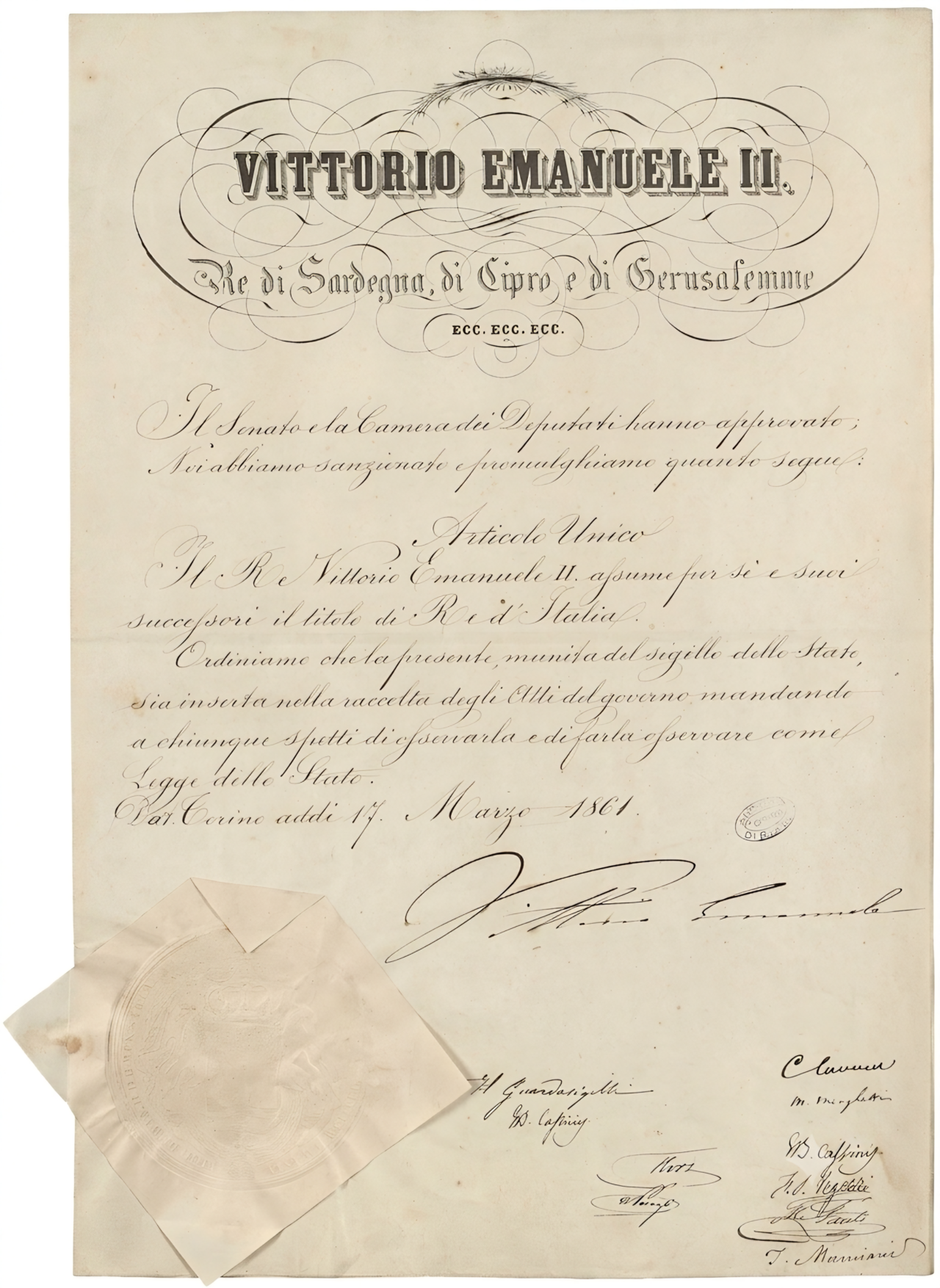
Law proclaiming the Kingdom of Italy
Victor Emmanuel II of Italy · 17 March 1861
 Painting
Secondary source
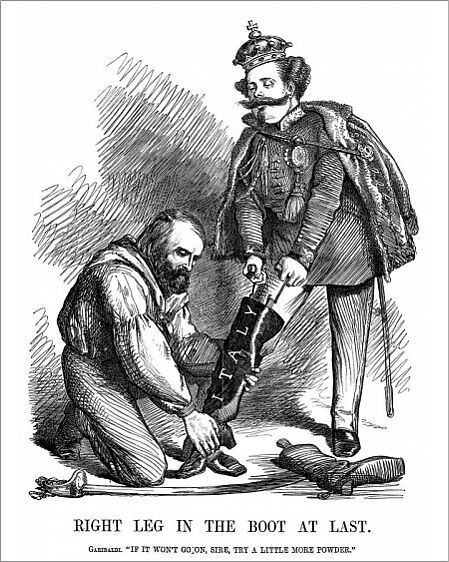
Right Leg in the Boot at Last
John Tenniel · 17 November 1860
 Document
Primary source
Treaty of Villafranca
11-12 July 1859
Free account
Read every Victor Emmanuel II source
Sign up free →
Ready when you are
Start chatting with Victor Emmanuel II now.
20 messages free · No credit card · Available in 50+ languages.