


Secondary sourcePhotograph29 August 2012
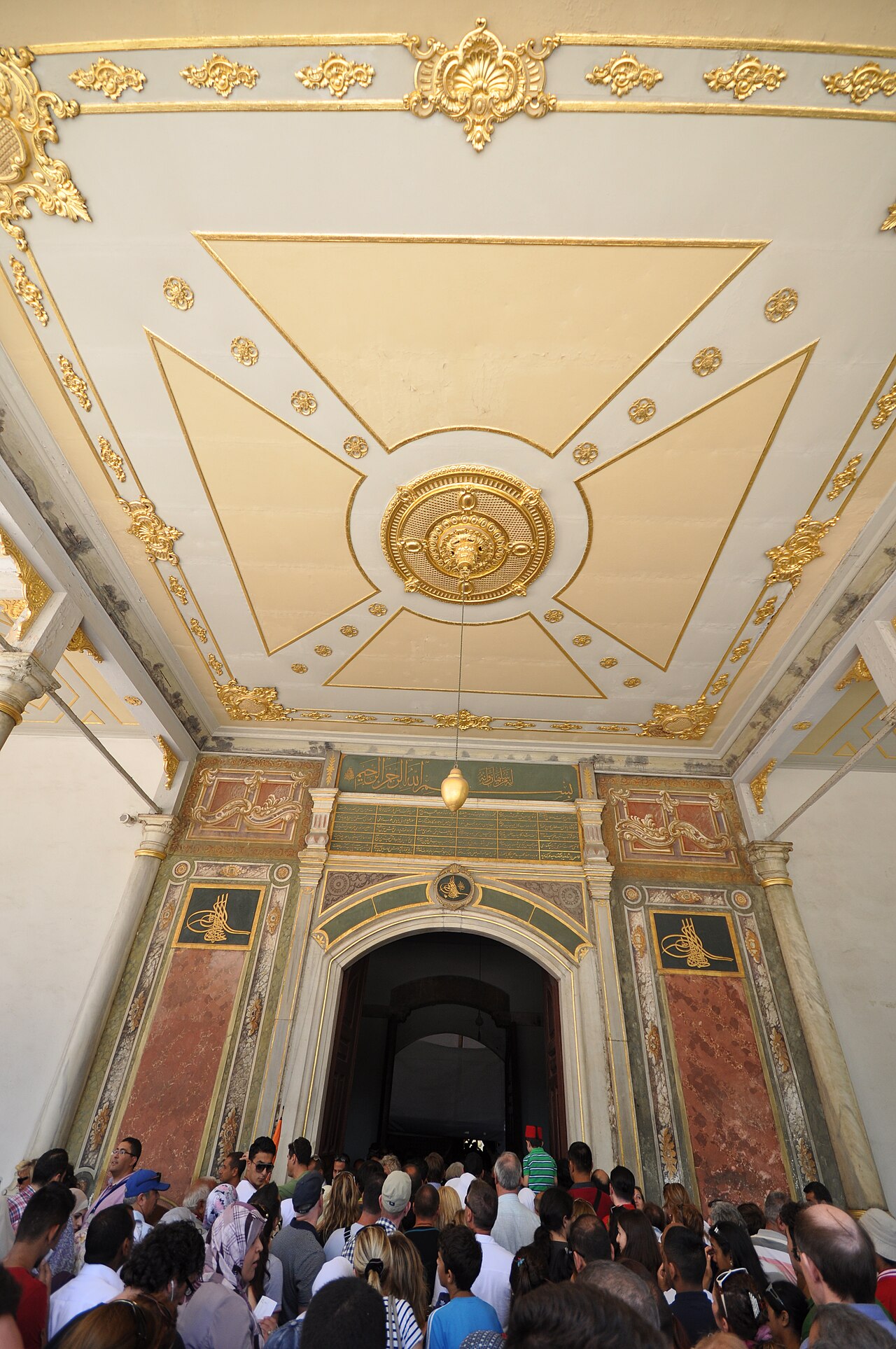
Topkapı Palace, Istanbul, Modern Photograph (Second View)
Jorge Láscar · 29 August 2012
A 2012 photograph of the ornate gateway of Topkapı Palace in Istanbul, the sultans' main residence until 1856. It shows the site as it is today, not as it looked in Abdülmecid I's time.
Shows the palace where Abdülmecid I's predecessors lived and from which he moved the court in 1856.
About this source
What it is
This is a modern photograph taken on 29 August 2012 by Jorge Láscar, showing an interior of an ornate gilded palace gateway with a richly decorated ceiling of gold rosettes and a central medallion. Below, a crowd of tourists stands before an arched doorway flanked by red marble panels with gold calligraphic tughra emblems. The palace is now held as a museum site in Istanbul.
Why it matters
Topkapı Palace was the main residence of the Ottoman sultans for about 400 years, from 1465 to 1856. In 1856 Sultan Abdül Mecid I moved the court to the newly built Dolmabahçe Palace, the first European-style palace on the Bosporus, and the older palace gradually lost its importance. The photograph shows the building as a tourist attraction today. It is a snapshot of the place, not a historic record from the sultan's lifetime, so it helps students see where the sultans lived rather than how the palace looked in his day.
Look closer
- What features in the gateway suggest the building's official or royal purpose?
- Why do you think the tourists are shown in front of this doorway, and how does that change the feeling of the place?
- What does this photograph leave out about the people who lived and worked in the palace?
This photograph is part of the curated material that grounds the AI version of Abdülmecid I on Humy.ai — when students ask about related events, the AI can quote it and cite it.
More Abdülmecid I sources
Browse all 85 →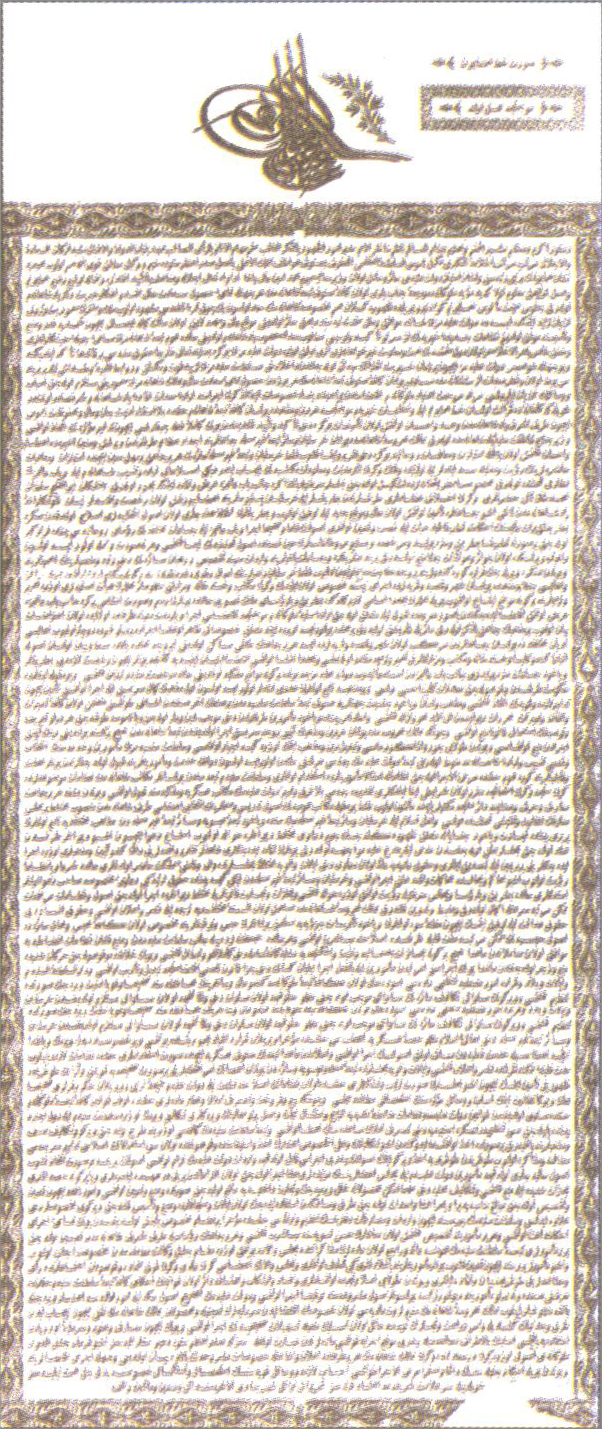 Document
Primary source
Edict of Gülhane
Abdülmecid I; drafted by Mustafa Reşid Pasha · 3 November 1839
Primary source
Treaty of Paris (1856)
30 March 1856
 Artifact
Secondary source
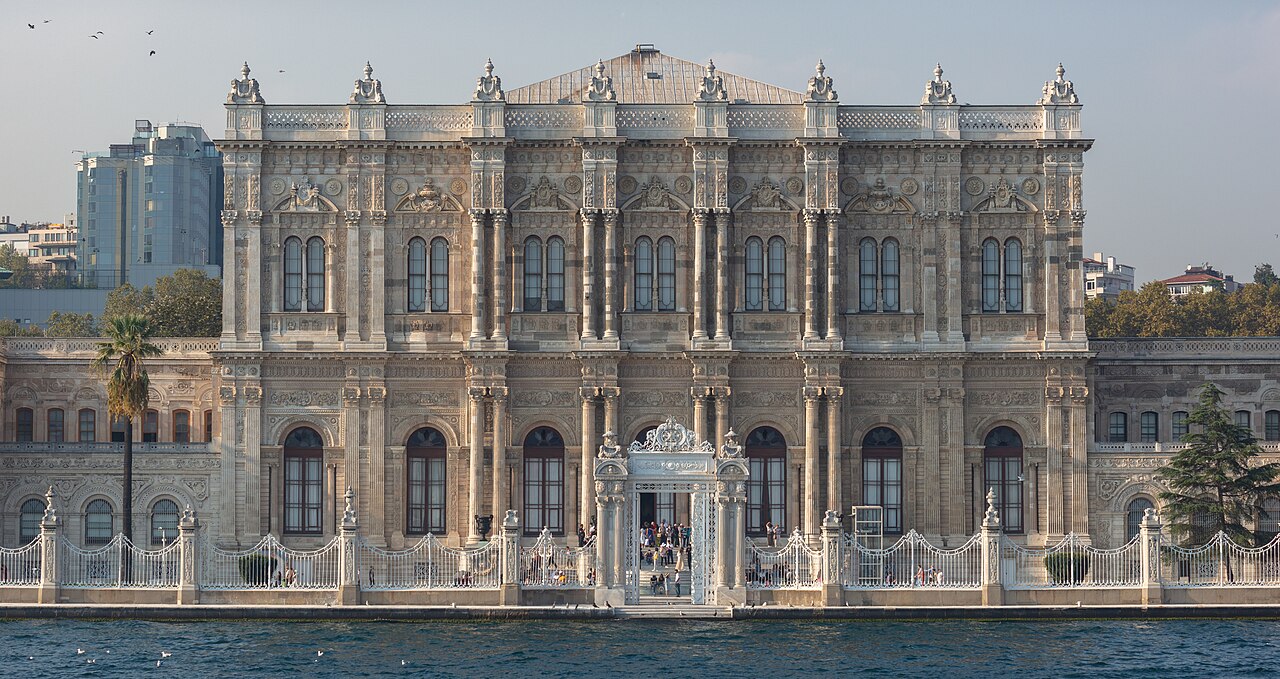
Dolmabahçe Palace
Garabet Balyan, Nigoğayos Balyan, Evanis Kalfa · 1823
 Painting
Primary source
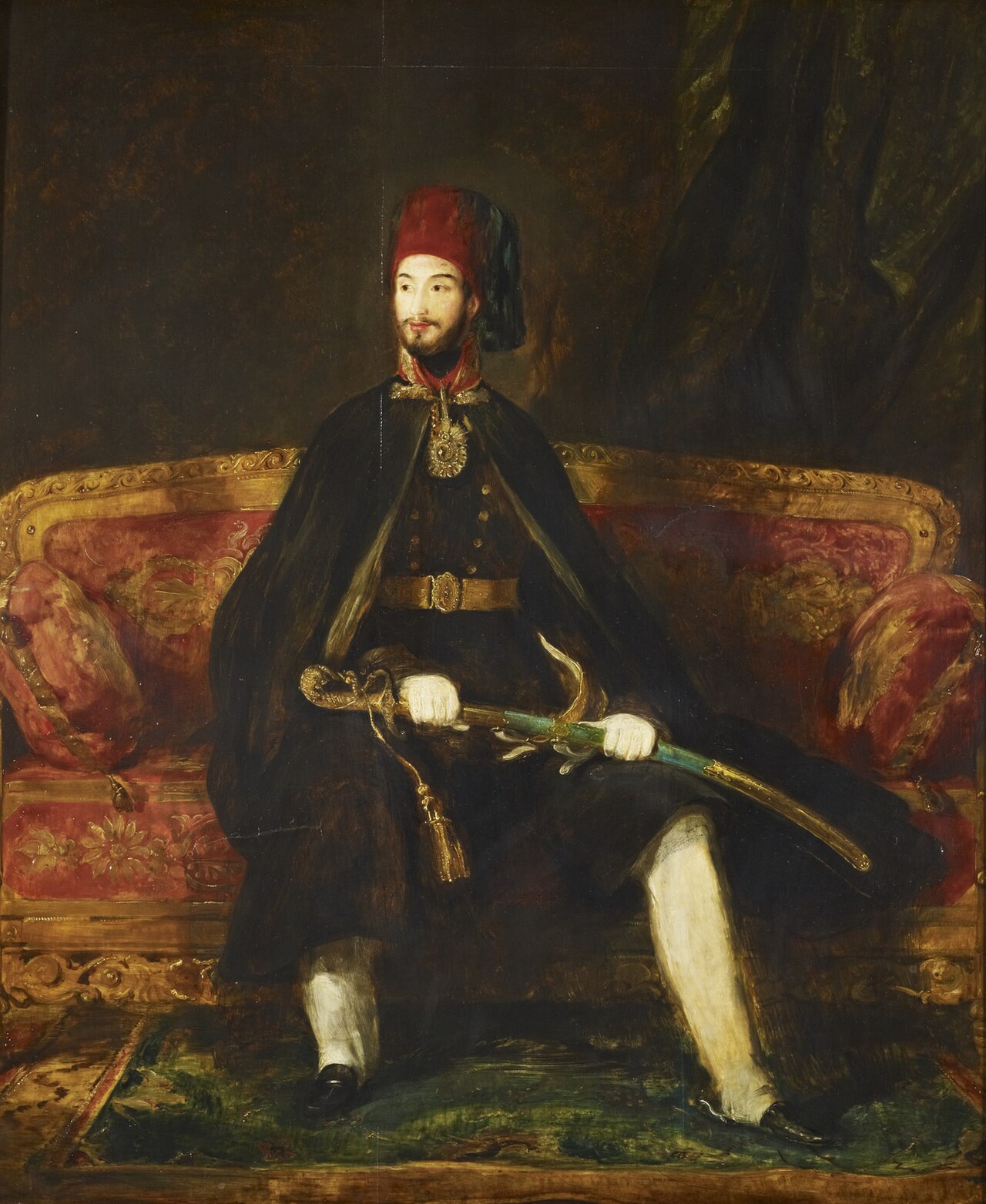
Portrait of Abdülmecid I
David Wilkie · 1840
Free account
Read every Abdülmecid I source
Sign up free →
Ready when you are
Start chatting with Abdülmecid I now.
20 messages free · No credit card · Available in 50+ languages.