


Primary sourcePainting1877
Train shed interior, Grand Central Depot
Edward Henry Knight · 1877
An 1877 engraving of the vast train shed of Grand Central Depot, part of the railway empire Vanderbilt built in New York.
Depicts the Grand Central Depot train shed, part of the railway empire that Vanderbilt built.

About this source
What it is
This is a black-and-white engraving from 1877, edited by Edward Henry Knight, showing the interior of the train shed at Grand Central Depot in New York City. The shed was 600 feet long, 200 feet wide, and 100 feet high—the first balloon-style train shed built in the United States, with a wrought-iron truss roof. It was later torn down in 1903 to make way for the new Grand Central Terminal.
Why it matters
Grand Central Depot was built as part of the railroad network controlled by Cornelius Vanderbilt, who made his fortune consolidating railroads in and around New York. This image shows the scale and engineering ambition of the rail system he helped create, and the kind of infrastructure that defined his business empire.
Look closer
- What does the size and design of this train shed tell you about the importance of railroads at the time?
- Why would an engraving like this be made and published?
- What does the image NOT show about the people who built or worked in this structure?
This painting is part of the curated material that grounds the AI version of Cornelius Vanderbilt on Humy.ai — when students ask about related events, the AI can quote it and cite it.
More Cornelius Vanderbilt sources
Meet the AI Cornelius Vanderbilt →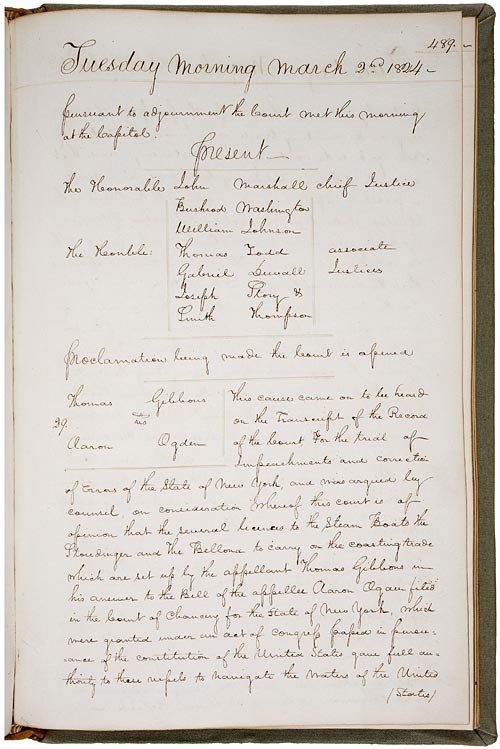 Document
Primary source
Gibbons v. Ogden
John Marshall · 1824
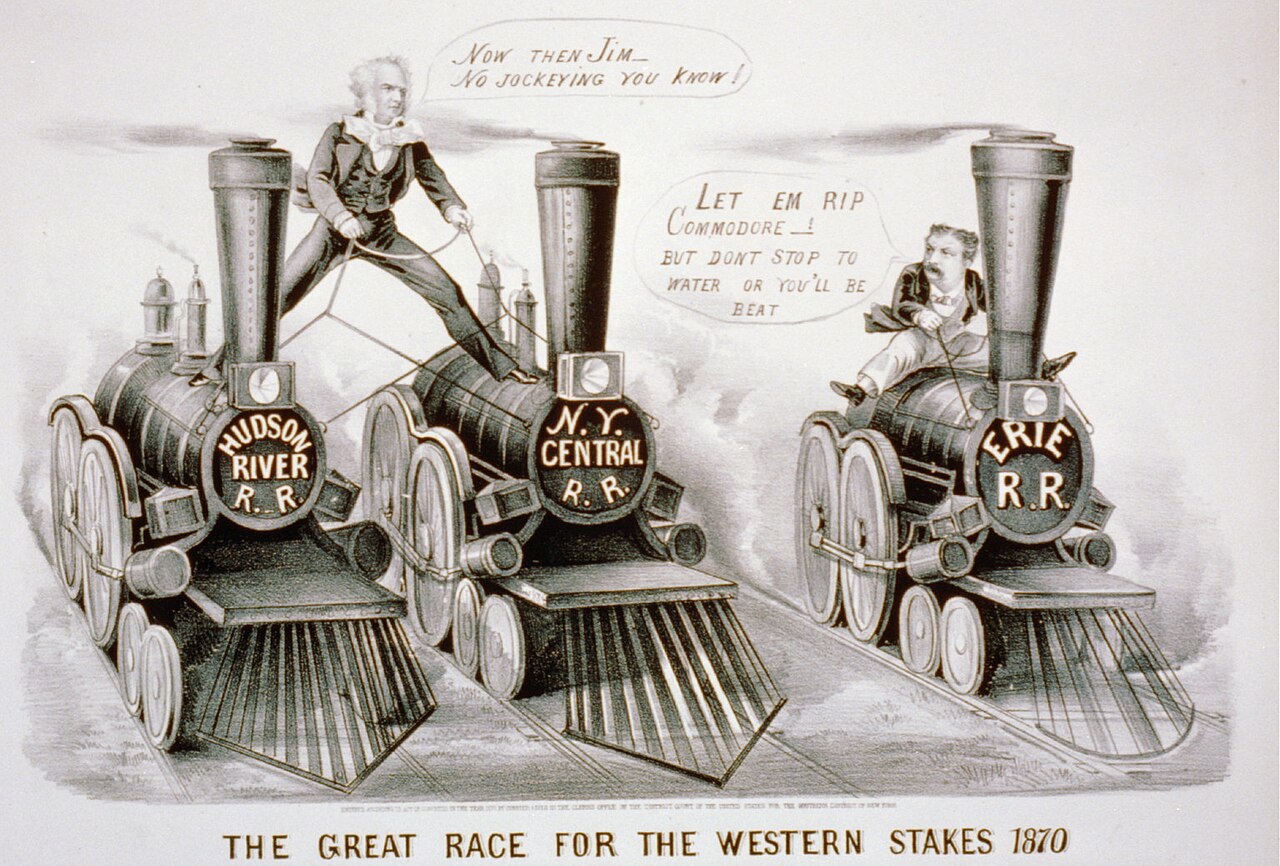 Painting
Secondary source
The Great Race for the Western Stakes
Currier and Ives · 1870
 Photograph
Primary source
Portrait of Cornelius Vanderbilt
Mathew Brady studio
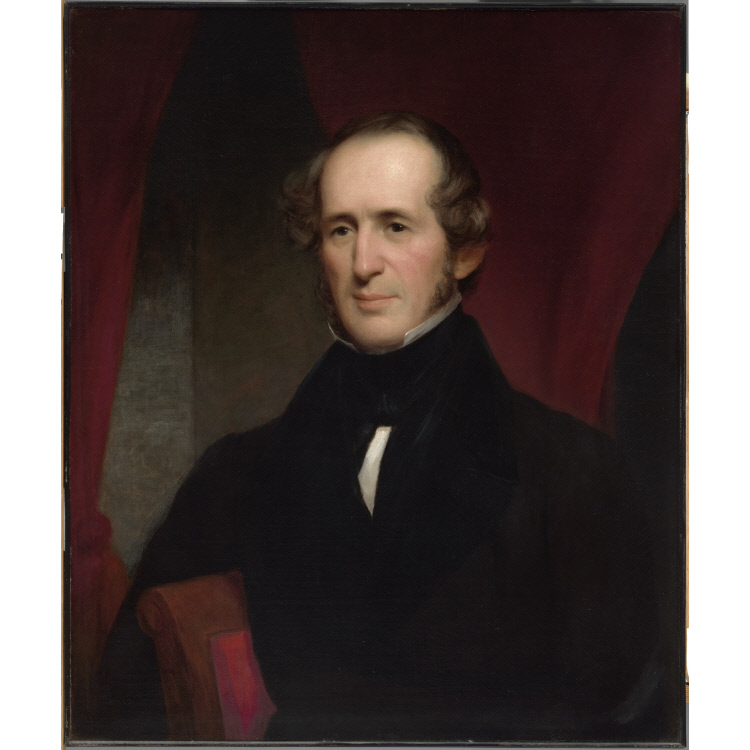 Painting
Primary source
Cornelius Vanderbilt
Nathaniel Jocelyn · 1846
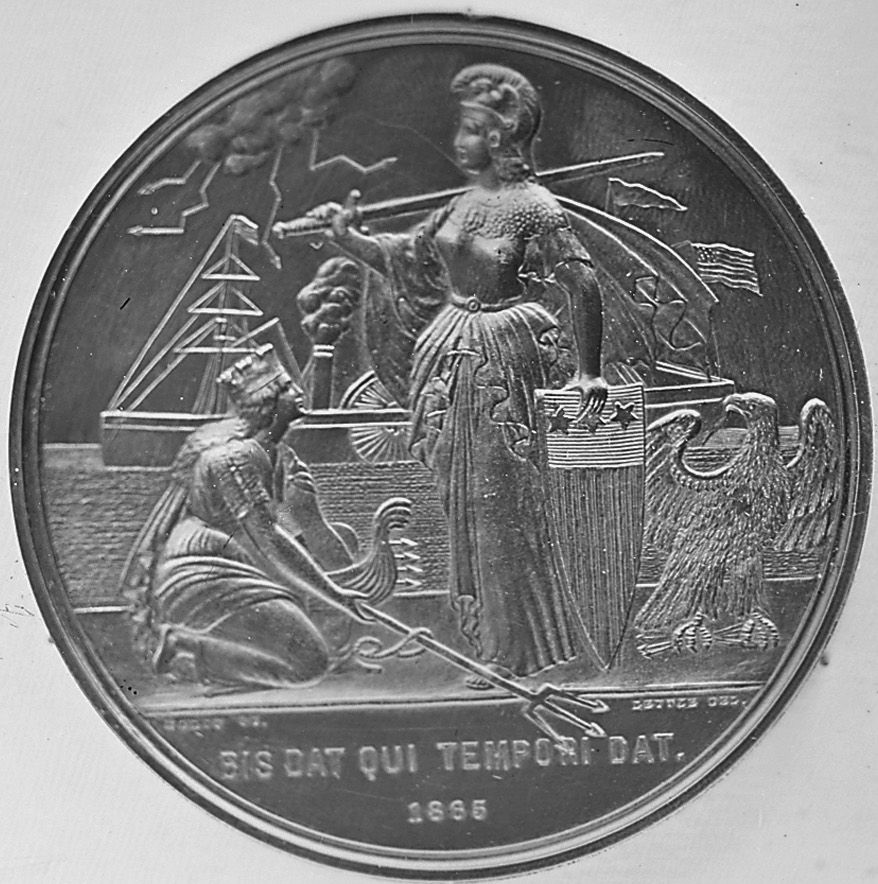 Artifact
Primary source
Cornelius Vanderbilt Medal
United States Mint · 1865
Ready when you are
Start chatting with Cornelius Vanderbilt now.
20 messages free · No credit card · Available in 50+ languages.