


Primary sourceDocument17 September 1851
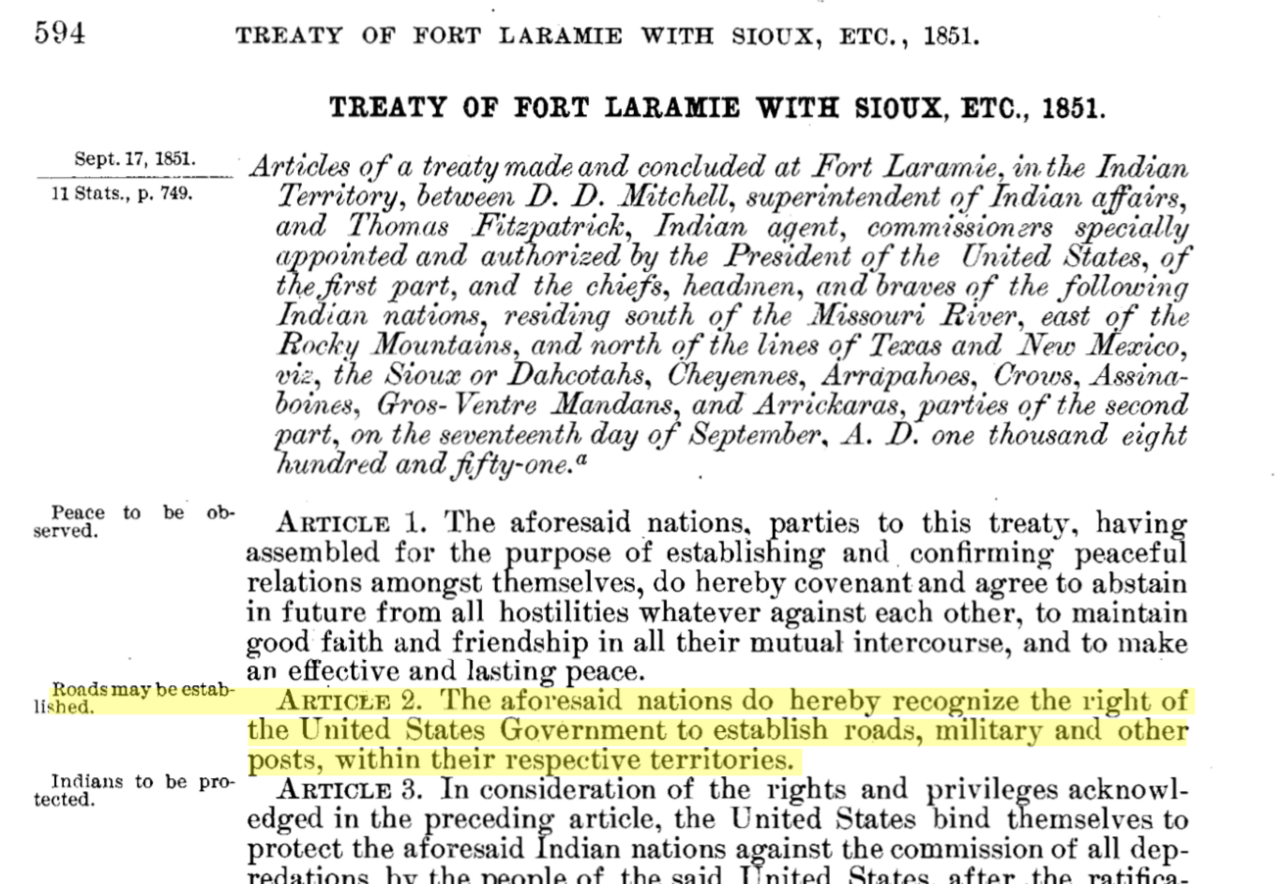
Treaty of Fort Laramie
17 September 1851
The 1851 treaty that defined tribal territories on the Plains, including Lakota lands, laying groundwork for later conflicts Red Cloud fought over.
This treaty defined Lakota territorial claims during Red Cloud's youth, part of the cycle of broken agreements he later resisted.
About this source
What it is
This document is the 1851 Fort Laramie Treaty, signed by U.S. commissioners and representatives of several Plains nations including the Sioux (Lakota), Cheyenne, Arapaho, Crow, Assiniboine, Mandan, Hidatsa, and Arikara. It defined territorial boundaries and allowed safe passage for settlers along the Oregon Trail in exchange for annuity payments.
Why it matters
This treaty set the stage for decades of conflict, as the United States repeatedly failed to enforce its terms and settlers encroached on tribal lands. The Lakota received rights to the Black Hills under this agreement, a claim that became central to later disputes, including those Red Cloud would fight over in his lifetime.
Look closer
- What does the treaty promise the Native nations, and what does it ask of them in return?
- Why might the U.S. government have failed to enforce the treaty's terms?
- How does this treaty connect to later events in Red Cloud's life?
This document is part of the curated material that grounds the AI version of Red Cloud on Humy.ai — when students ask about related events, the AI can quote it and cite it.
More Red Cloud sources
Meet the AI Red Cloud →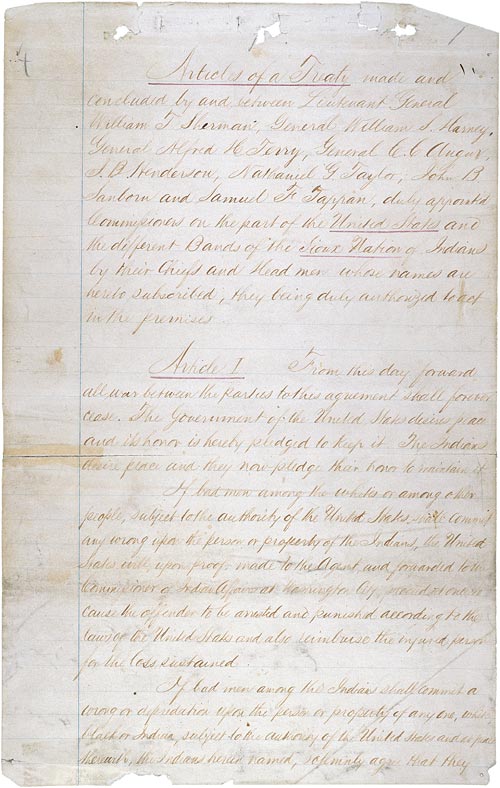 Document
Primary source
Fort Laramie Treaty
29 April 1868
 Newspaper article
Primary source
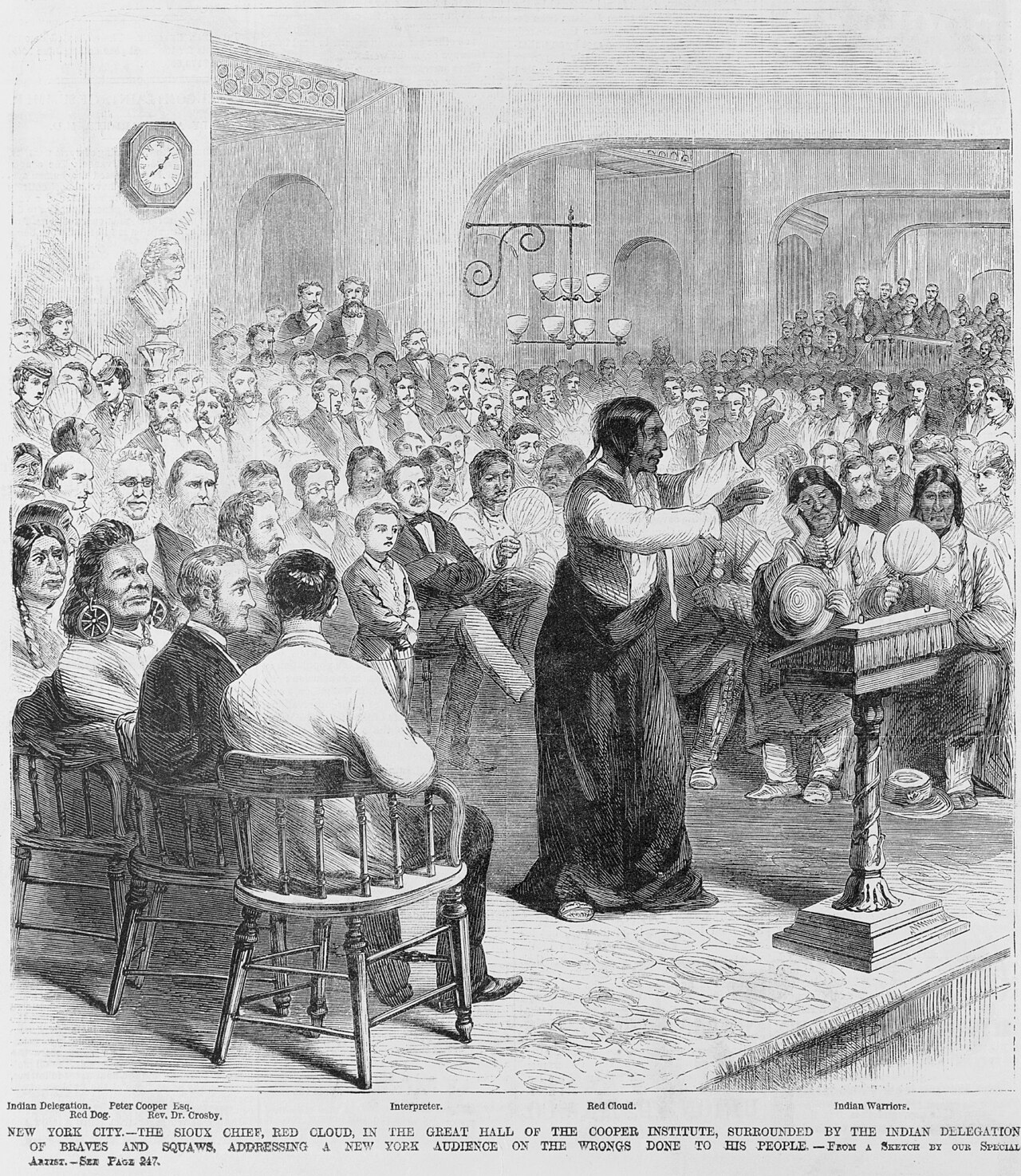
Red Cloud Addressing an Audience at the Cooper Institute
1870
 Document
Primary source
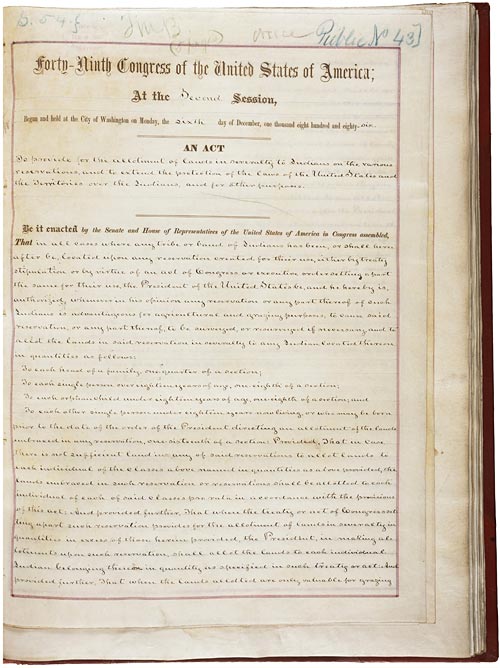
Dawes Act
Henry Dawes · 8 February 1887
 Photograph
Primary source
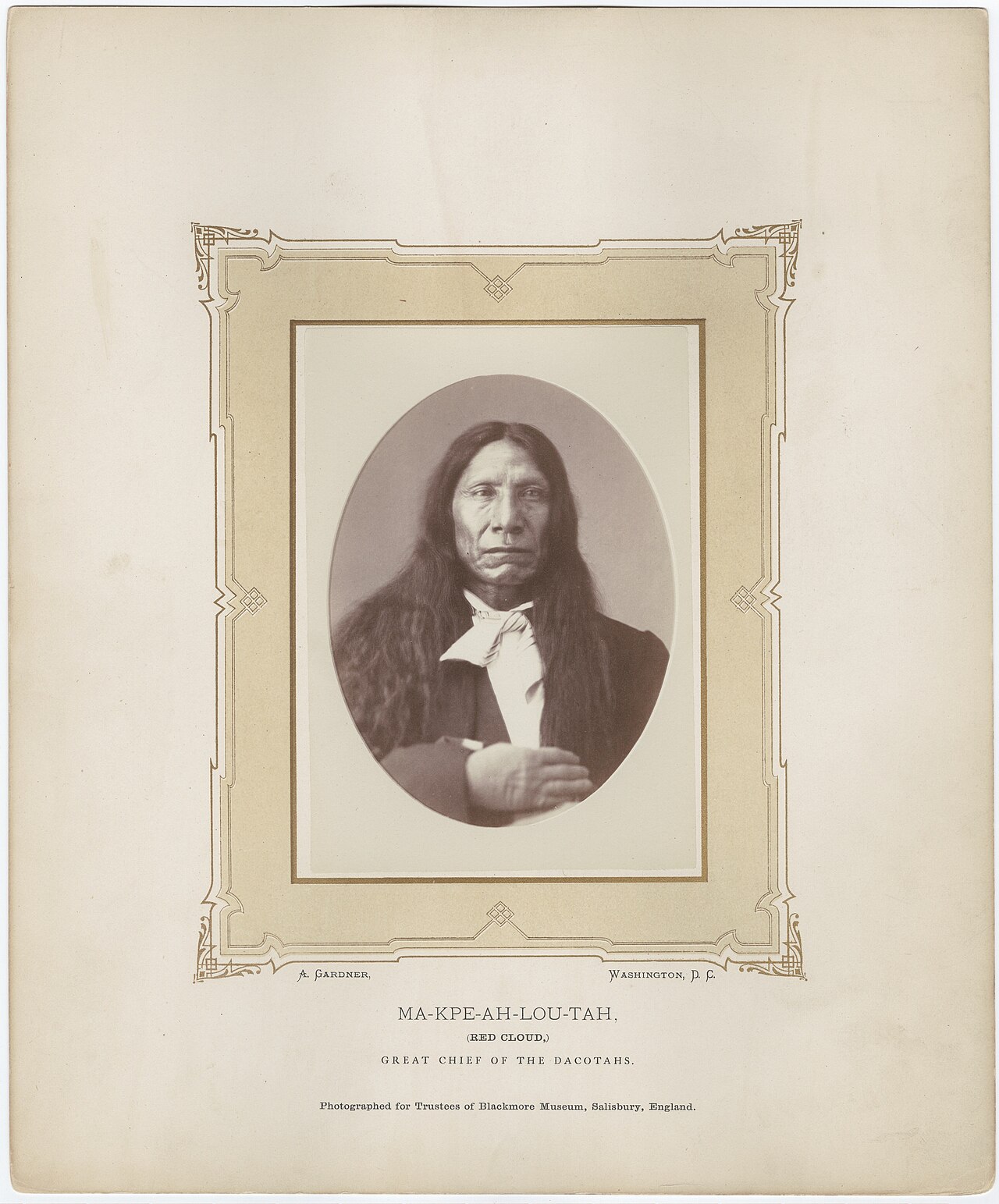
Red Cloud by Alexander Gardner, 1872
Alexander Gardner · 1872
 Photograph
Primary source
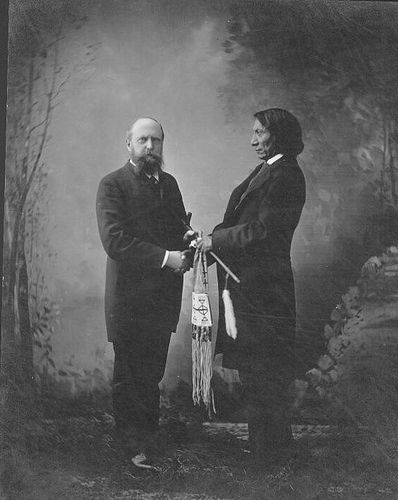
Othniel C. Marsh and Red Cloud in New Haven, Connecticut
Unknown
Ready when you are
Start chatting with Red Cloud now.
20 messages free · No credit card · Available in 50+ languages.