


Primary sourceDocument30 November 1783
Treaty of Paris (1783), first page
30 November 1783
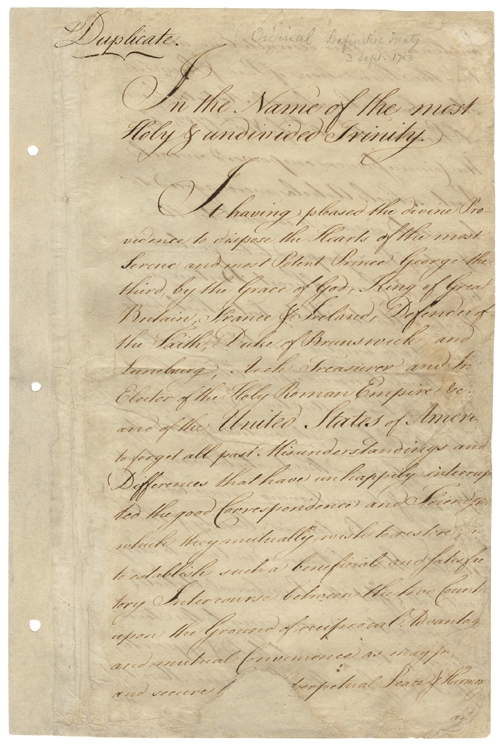
A scan of the first page of a handwritten copy of the Treaty of Paris, dated 30 November 1783, the treaty that formally ended the Revolutionary War. Jay helped negotiate and sign it.
The first page of the treaty Jay helped negotiate and sign, which ended the Revolutionary War.
About this source
What it is
This is a scan of the first page of a handwritten copy of the Treaty of Paris, dated 30 November 1783. The page is marked Duplicate and has three punched holes along the left edge. It opens with the words In the Name of the most Holy and undivided Trinity. The treaty formally ended the Revolutionary War. The image is a scan of a copy, not a photograph of the original paper.
Why it matters
The treaty made Britain recognize the United States as a country. John Jay helped negotiate and sign it, working with John Adams and Benjamin Franklin. Its opening page shows the formal language of an agreement between two powers, and its handwritten copies show how such an agreement was recorded and shared.
Look closer
- Why would there be several handwritten copies of one treaty, and what does the label Duplicate tell you?
- What does the formal opening language suggest about how the two governments saw themselves?
- What does a single page leave out about the negotiations that produced the agreement?
This document is part of the curated material that grounds the AI version of John Jay on Humy.ai — when students ask about related events, the AI can quote it and cite it.
More John Jay sources
Meet the AI John Jay →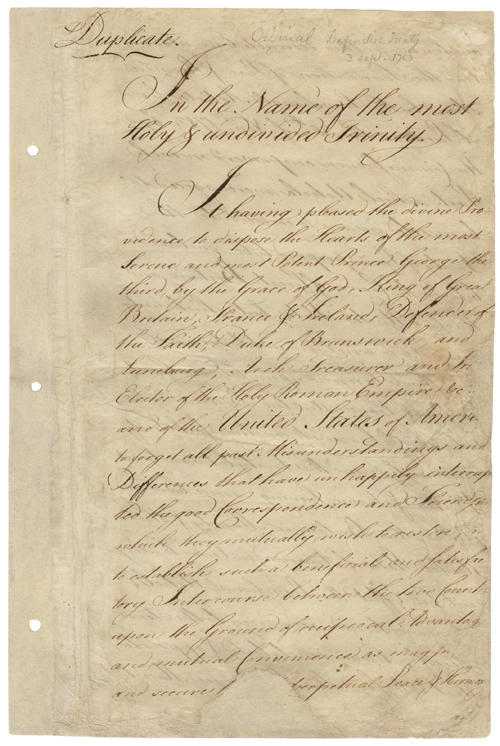 Document
Primary source
Treaty of Paris
3 September 1783
 Book
Primary source
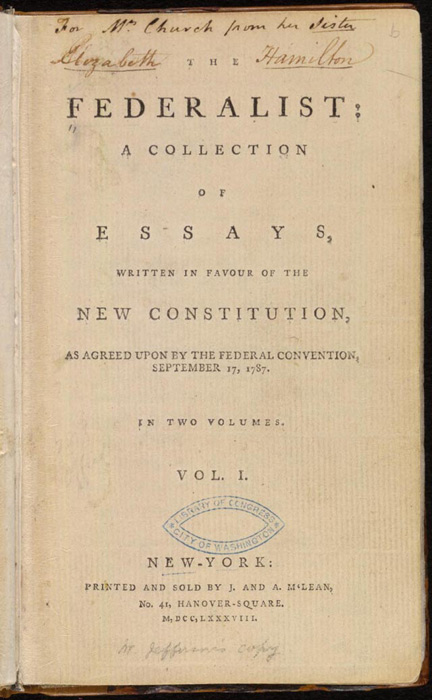
The Federalist Papers
Alexander Hamilton, James Madison, John Jay · 1788
 Document
Primary source
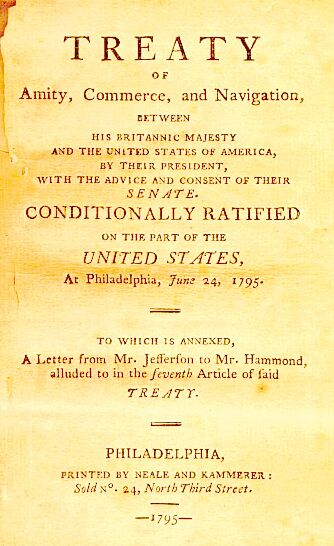
Jay's Treaty
John Jay · 1794
Primary source
Federalist No. 2
John Jay · 31 October 1787
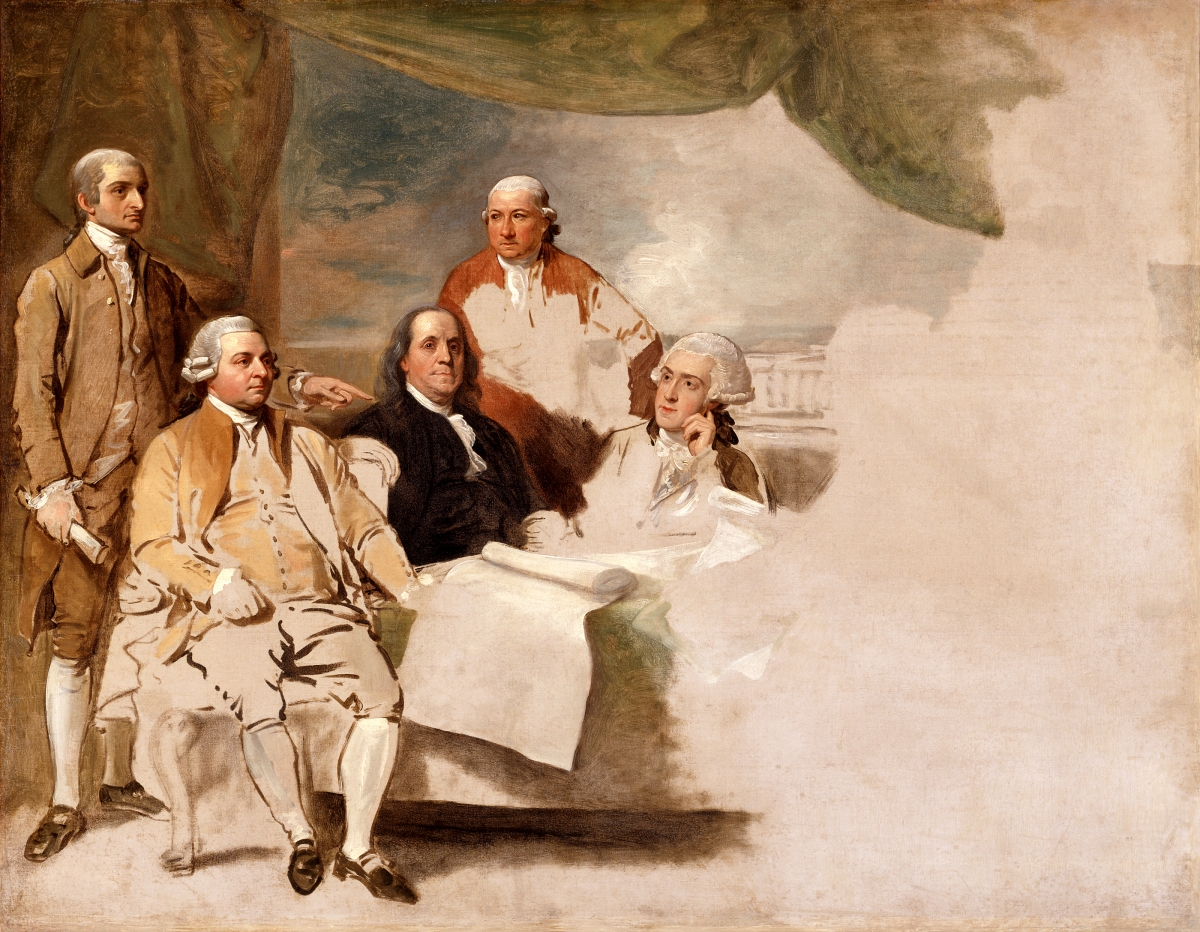 Painting
Primary source
American Commissioners of the Preliminary Peace Negotiations with Great Britain
Benjamin West · 1783-1784
Ready when you are
Start chatting with John Jay now.
20 messages free · No credit card · Available in 50+ languages.