


Primary sourceDocument23 July 1711
Treaty of the Pruth
23 July 1711
The 1711 treaty ending Russia's campaign against the Ottoman Empire on the Pruth River, signed after Peter's army was surrounded. It records his costly setback and the loss of Azov.
Peter led the Russian army whose defeat produced this treaty, which cost him Azov and forced concessions.
About this source
What it is
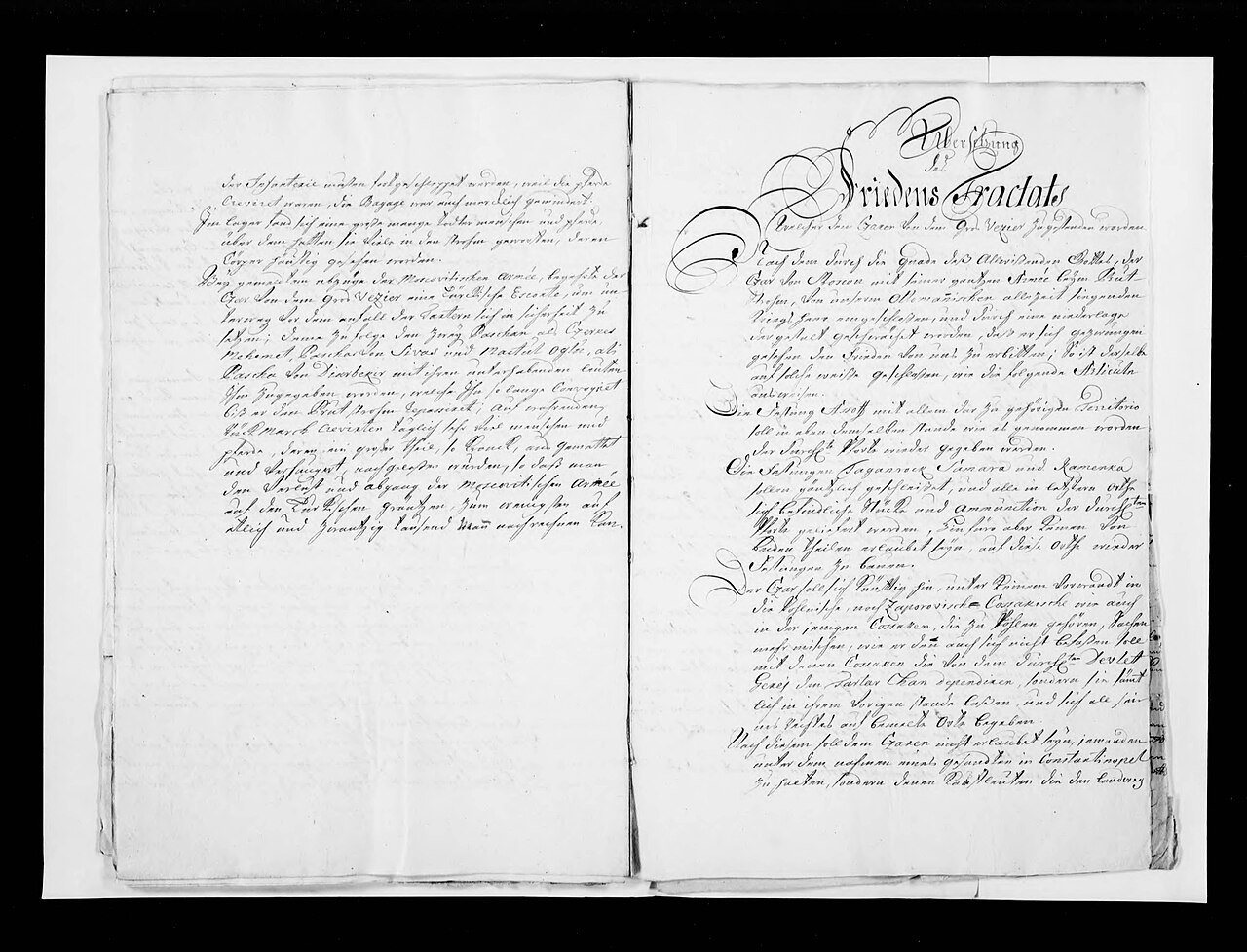
This is a document recording the Treaty of the Pruth, signed on the banks of the Pruth River on 23 July 1711 between the Ottoman Empire and the Tsardom of Russia. It ended the Russo-Turkish War of 1710–1713. The treaty was prepared with the help of Peter Shafirov. The archive's image shows the first page of the original treaty, a manuscript book of two handwritten pages with an ornate title reading 'Friedens Tractats' followed by German script.
Why it matters
The treaty came after a Russian army of about 80,000 men, led by Peter the Great and Boris Sheremetev, was surrounded by an Ottoman army during the Battle of Stănilești in July 1711. Under its terms Azov Fortress was returned to the Ottomans, Taganrog and several Russian fortresses were to be demolished, and the Tsar agreed to stop interfering in the Polish–Lithuanian Commonwealth. The treaty also allowed King Charles XII of Sweden to return safely to Sweden. Because the Ottomans held the upper hand, the terms were a political victory for them. The treaty shows how Russia's wider war with Sweden was shaped by the Ottoman Empire, and how Peter's ambitions were limited by a defeat.
Look closer
- What does the title page look like, and why might a treaty of this kind be written in German?
- Which terms in the treaty would have been most costly for Peter, and which favoured the Ottomans?
- What does the document leave out about the bribe and the Russian treasury that the encyclopedia article mentions?
This document is part of the curated material that grounds the AI version of Peter the Great on Humy.ai — when students ask about related events, the AI can quote it and cite it.
More Peter the Great sources
Meet the AI Peter the Great →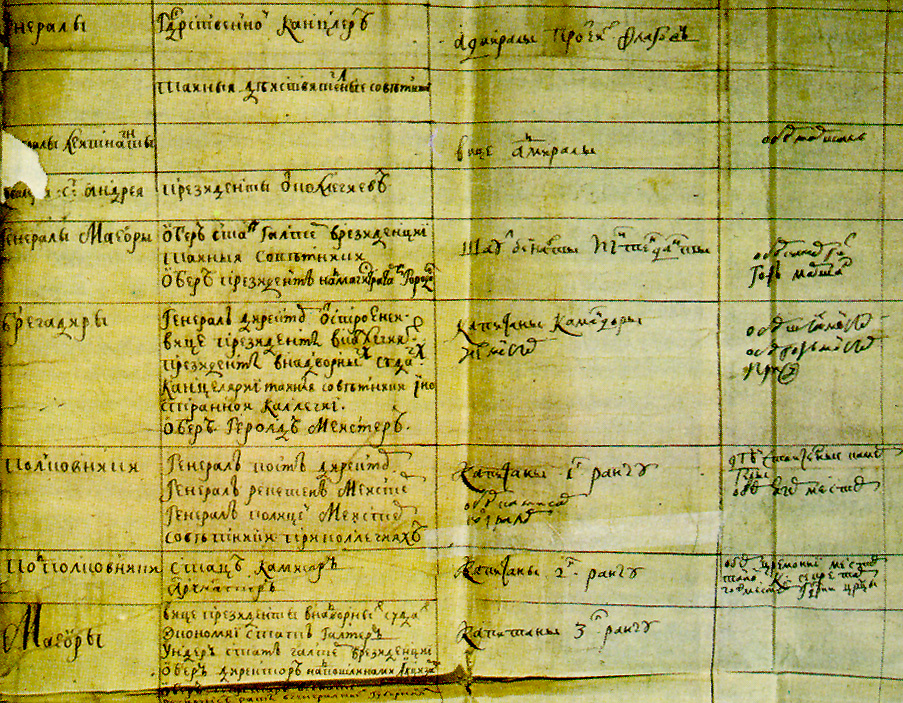 Document
Primary source
Table of Ranks
Peter the Great · 1722
 Document
Primary source
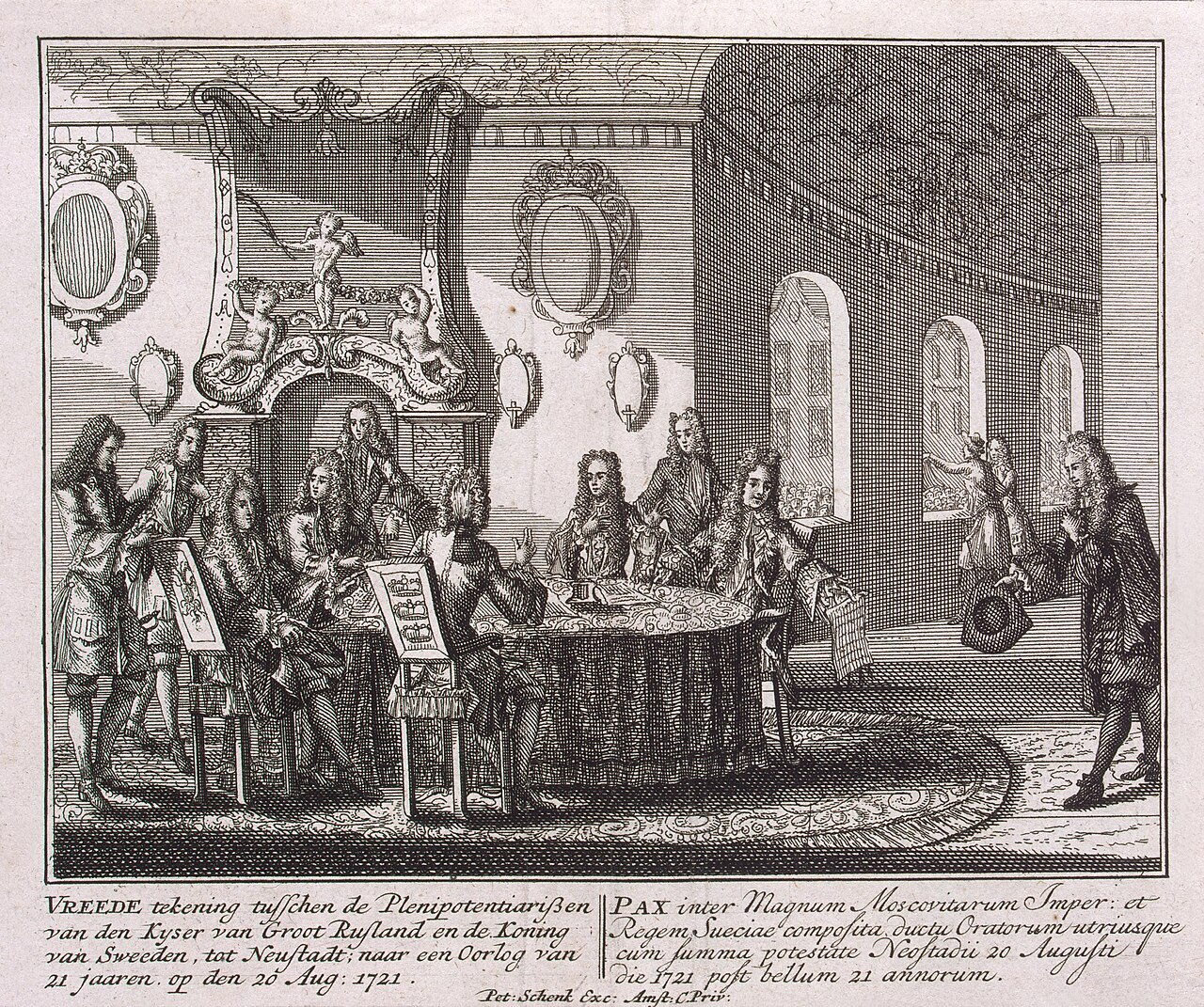
Treaty of Nystad
1721
 Painting
Primary source
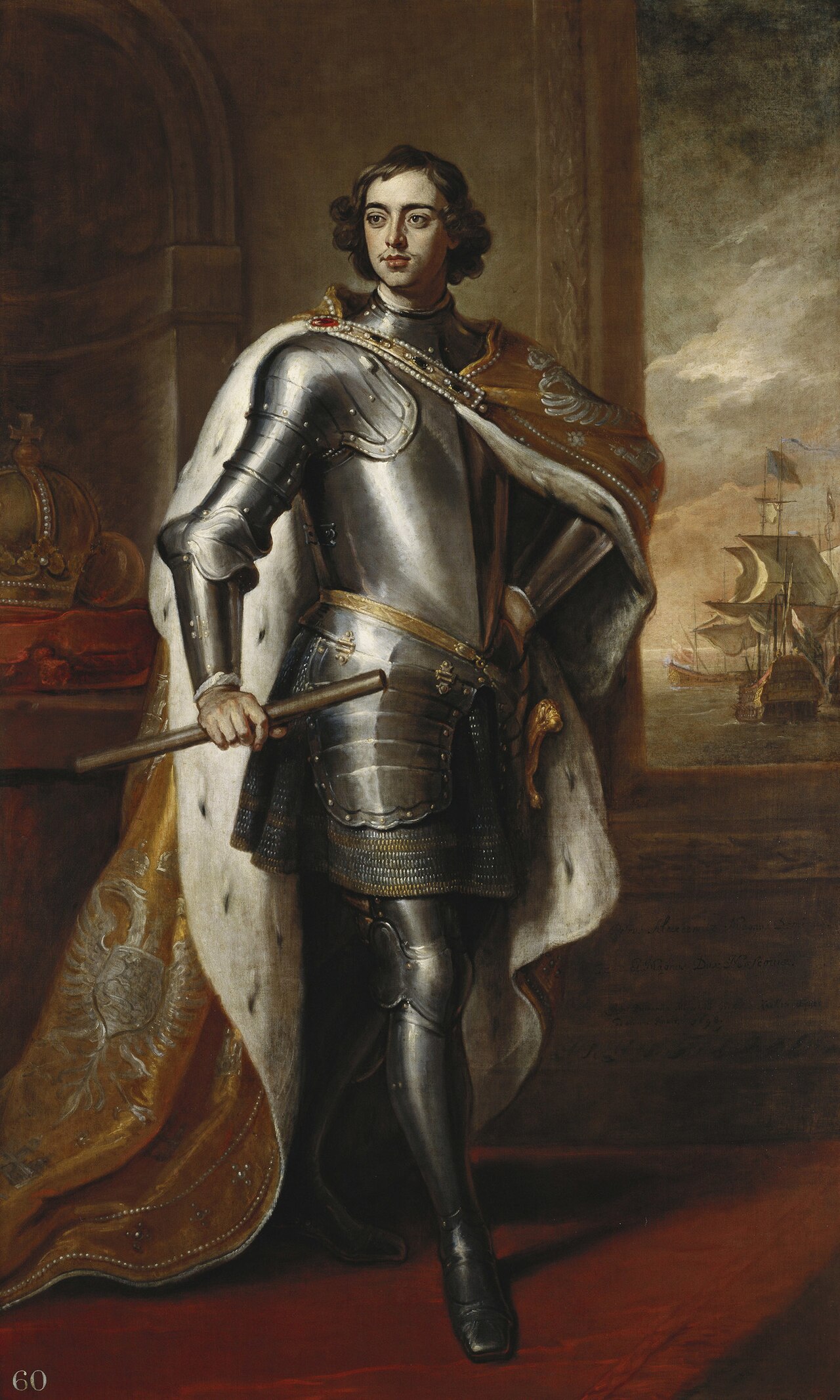
Peter the Great, Tsar of Russia (1672-1725)
Godfrey Kneller · 1698
 Diary entry
Primary source
Diary of an Austrian Secretary of Legation
Johann Georg Korb · 1700
 Artifact
Primary source
Cabin of Peter the Great
1703
Ready when you are
Start chatting with Peter the Great now.
20 messages free · No credit card · Available in 50+ languages.