


Primary sourceDocument1177
Treaty of Venice
1177
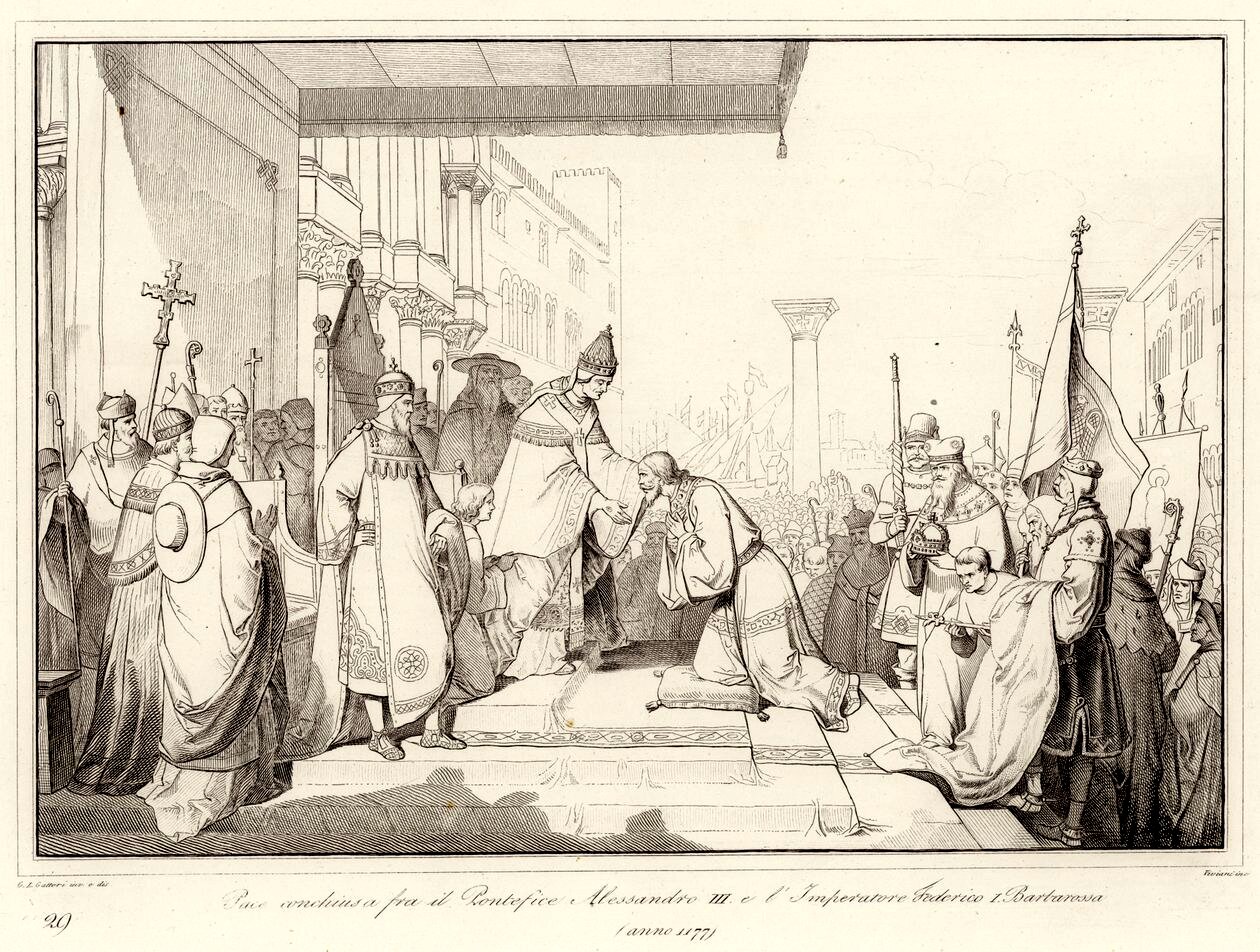
The 1177 treaty in which Frederick Barbarossa recognized Pope Alexander III, ending an eighteen-year schism after his defeat at Legnano.
Frederick personally submitted to the pope in this treaty, marking the failure of his antipope policy.
Free Humy account · No credit card · 120,912 sources to read
About this source
What it is
The Treaty of Venice was agreed in 1177 between Emperor Frederick I Barbarossa, Pope Alexander III, the Lombard League cities, and the Kingdom of Sicily. It followed Frederick's defeat at the Battle of Legnano in 1176, after which he sought peace with the pope.
Why it matters
In the treaty Frederick formally recognized Alexander III as pope and abandoned his own antipope, Callixtus III, ending a long schism within the Church. Doge Sebastian Ziani of Venice and the Patriarch of Aquileia were present, and the king of Sicily's delegates, including the chronicler Romuald II of Salerno, left an eyewitness account. The treaty reshaped politics across Italy, led to a lasting peace with Sicily, and set up a truce with the Lombard League that would later become the Peace of Constance. It marks a turning point where Frederick's earlier policy of backing rival popes finally failed.
Look closer
- Why did Frederick's defeat at Legnano push him to seek peace with the pope?
- What does the treaty's careful wording about rights in Rome suggest about unresolved tensions?
- Who else besides Frederick and the pope had a stake in this agreement, and why?
This document is part of the curated material that grounds the AI version of Frederick Barbarossa on Humy.ai — when students ask about related events, the AI can quote it and cite it.
More Frederick Barbarossa sources
Browse all 95 →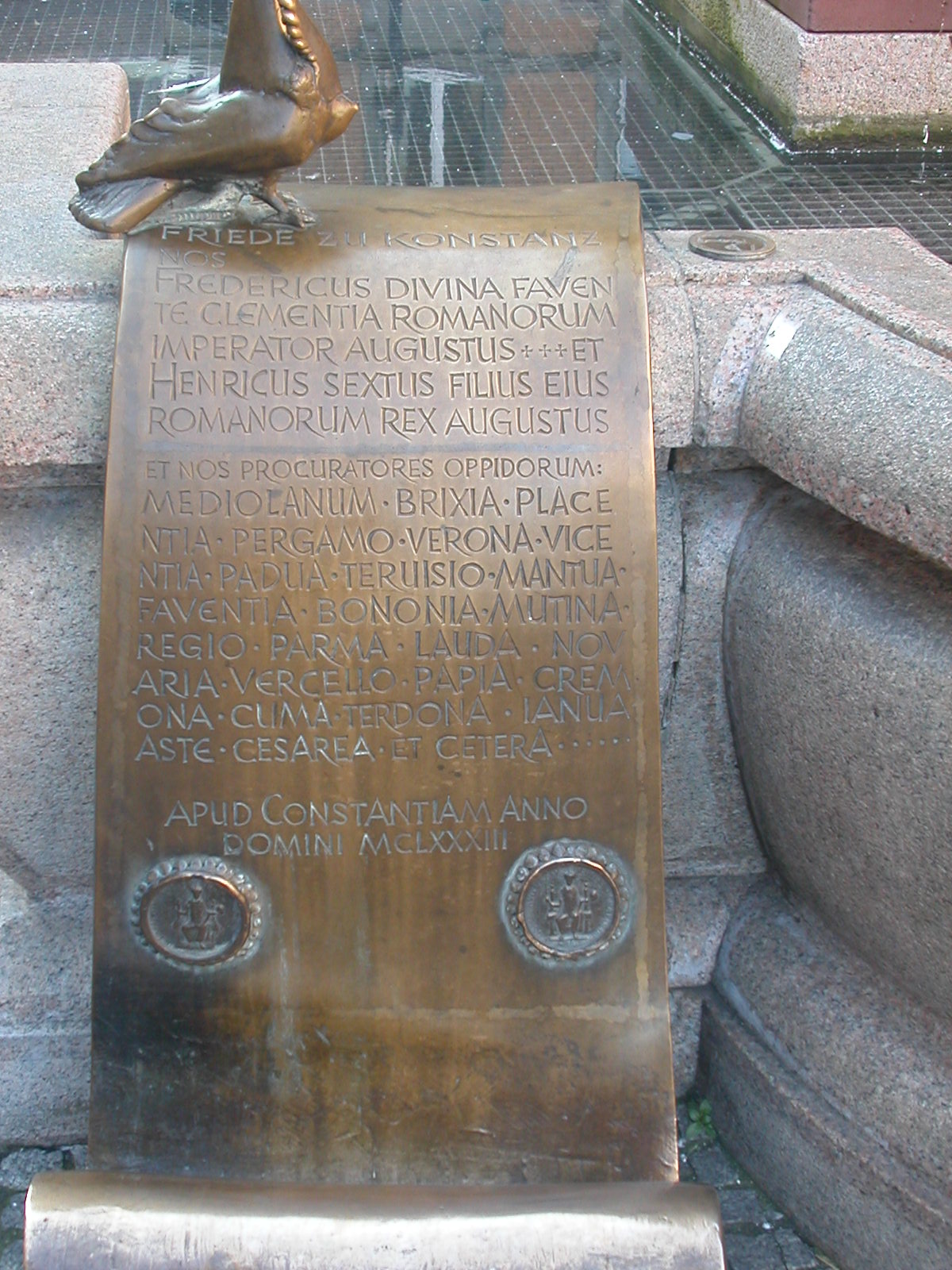 Document
Primary source
Peace of Constance
Frederick I Barbarossa · 25 June 1183
 Sculpture
Primary source
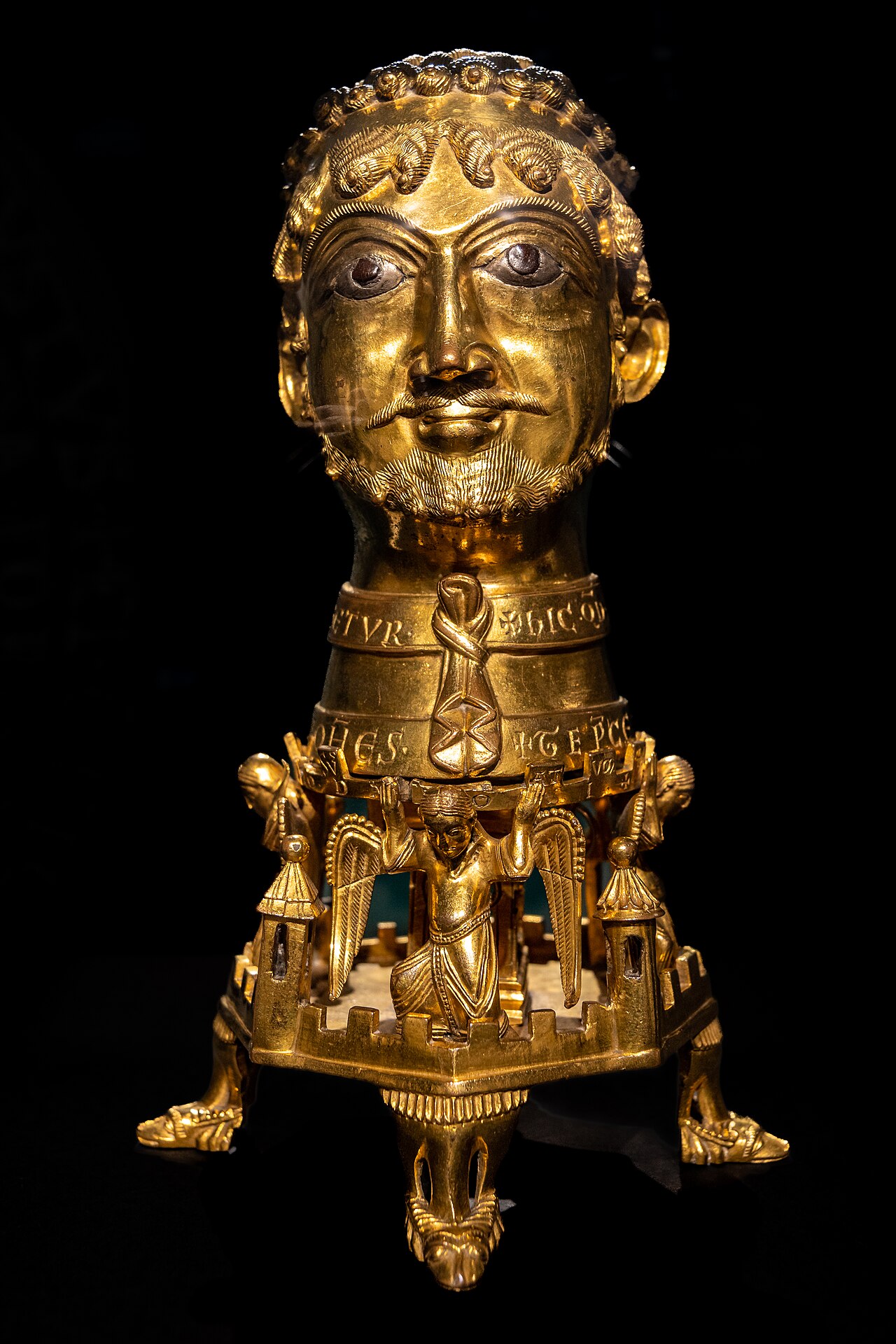
Cappenberg Head
c. 1160
 Artifact
Primary source
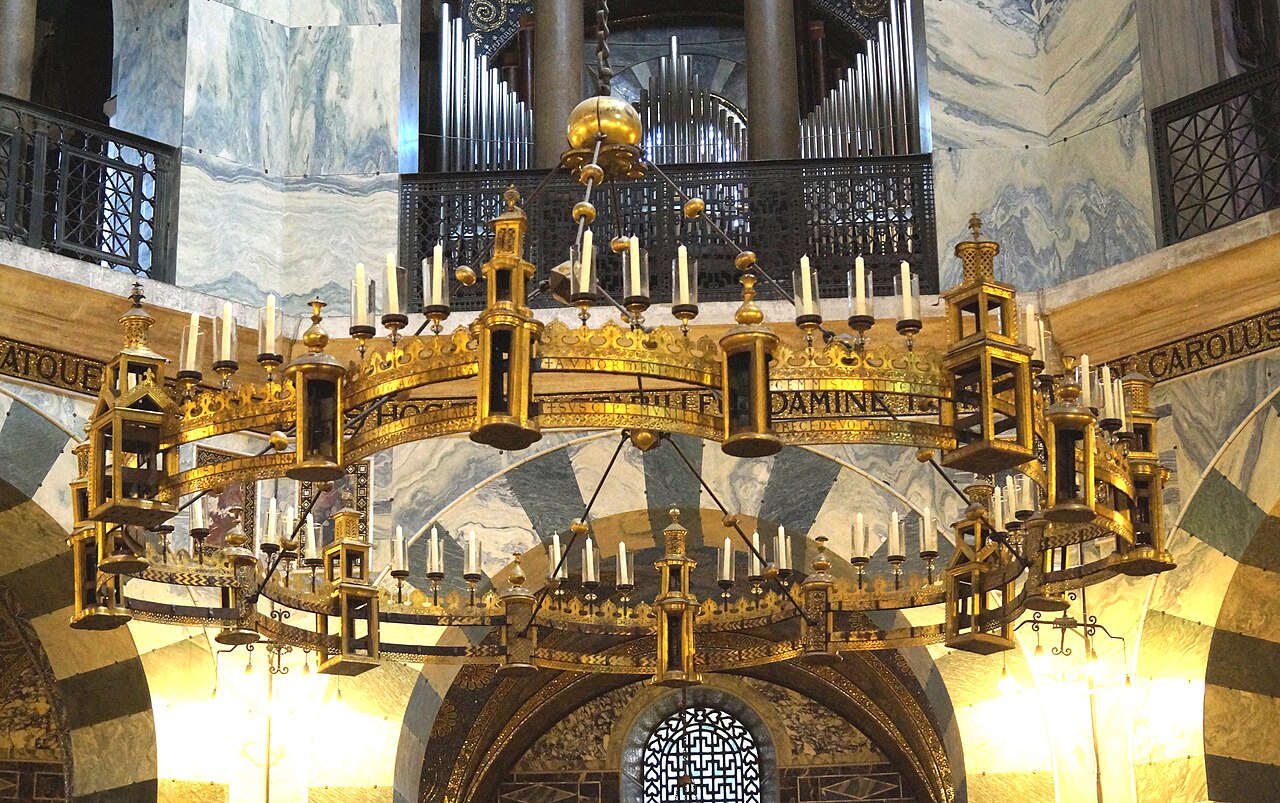
Barbarossa Chandelier
c. 1165-1170
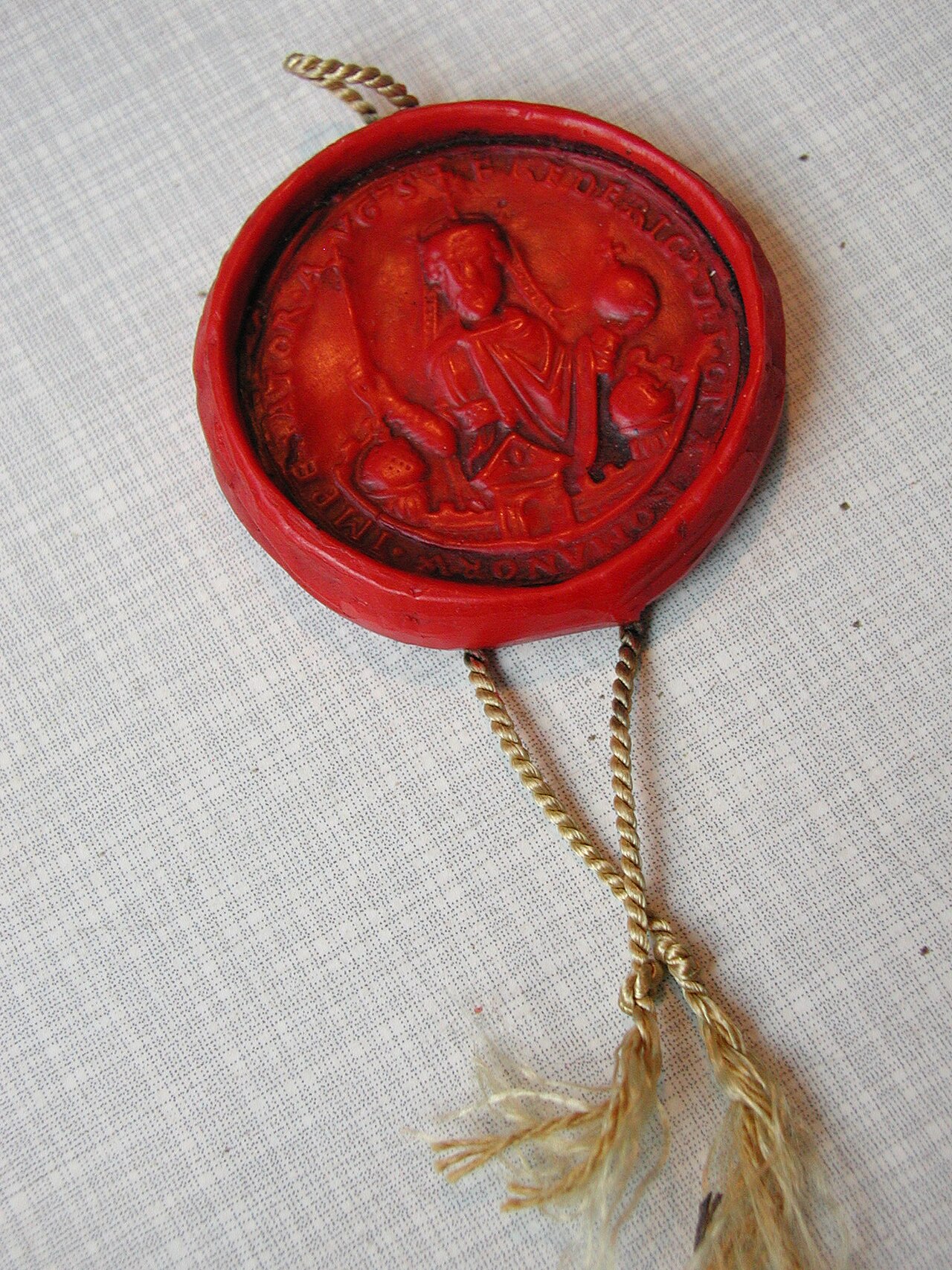 Document
Primary source
Authentica habita
Frederick I Barbarossa · c. 1155
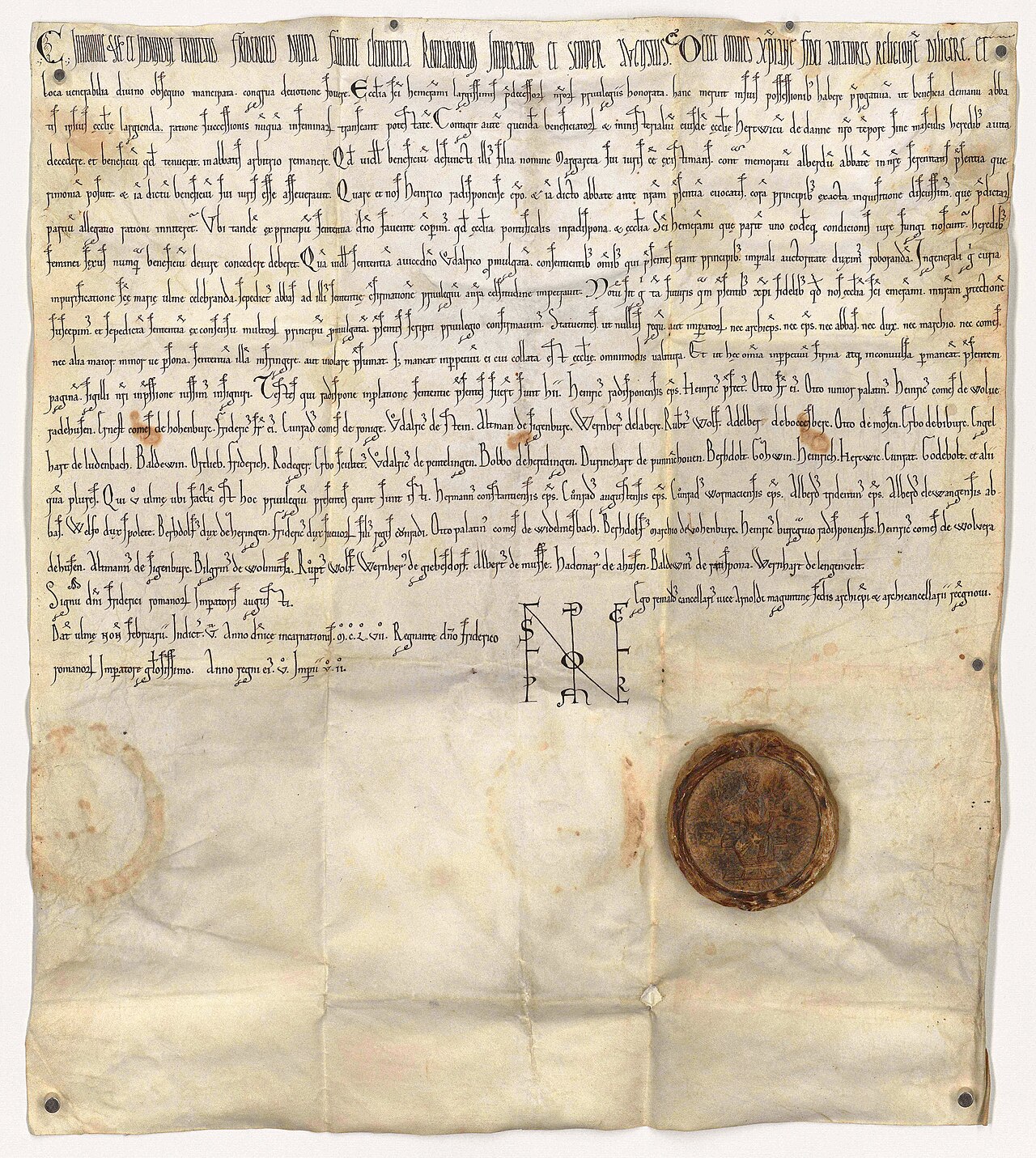
Free account
Read every Frederick Barbarossa source
Sign up free →
Ready when you are
Start chatting with Frederick Barbarossa now.
20 messages free · No credit card · Available in 50+ languages.