


Primary sourceDocument16 March 1731
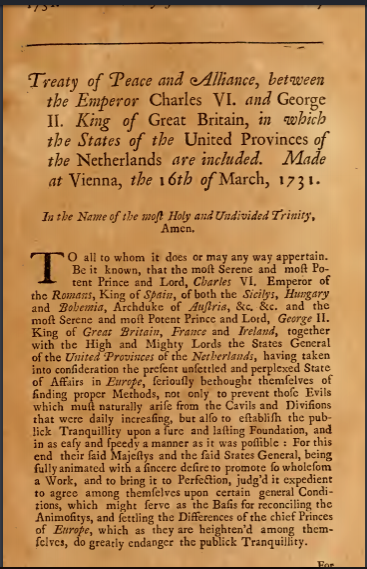
Treaty of Vienna (1731)
16 March 1731
A 1731 treaty by which Charles VI secured British and Dutch recognition of the Pragmatic Sanction in exchange for closing his Ostend Company.
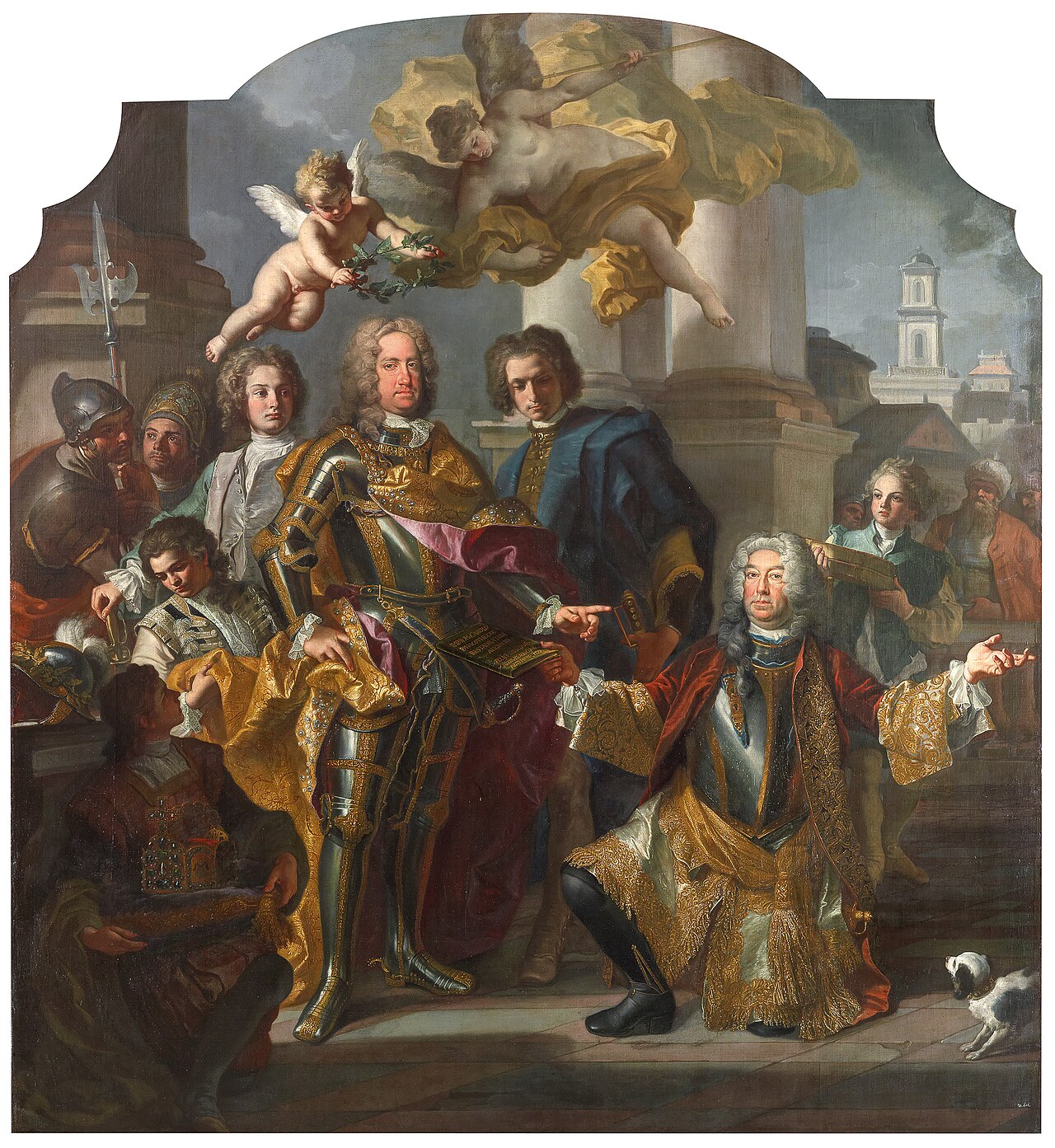
Charles VI signed this treaty, sacrificing his Ostend Company to win recognition of his daughter's succession.
About this source
What it is
This document is the Treaty of Vienna, signed on 16 March 1731 between Great Britain and Emperor Charles VI, with the Dutch Republic also included. A surviving printed title page records the agreement's formal opening.
Why it matters
The treaty ended the earlier Anglo-French alliance and created a new Anglo-Austrian alliance. As the curator's note explains, Charles VI bought British and Dutch recognition of the Pragmatic Sanction — which secured his daughter Maria Theresa's succession — by agreeing to suppress his own Ostend trading company. It shows how Charles repeatedly sacrificed economic interests for dynastic security.
Look closer
- Why would Charles give up a profitable trading company to secure a political guarantee?
- What does the shifting pattern of alliances in these years suggest about trust between European powers?
- What parts of the negotiation might not be visible in a formal printed treaty like this?
This document is part of the curated material that grounds the AI version of Charles VI, Holy Roman Emperor on Humy.ai — when students ask about related events, the AI can quote it and cite it.
More Charles VI, Holy Roman Emperor sources
Browse all 91 →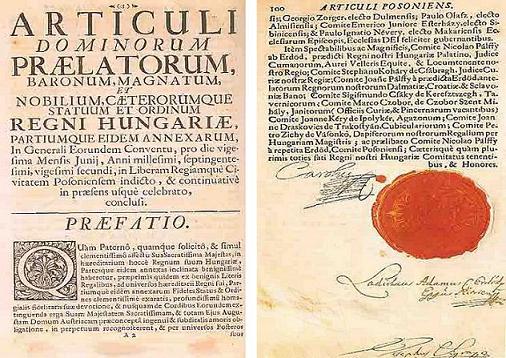 Document
Primary source
Pragmatic Sanction of 1713
Charles VI, Holy Roman Emperor · 1713
 Artifact
Primary source
Karlskirche
Johann Bernhard Fischer von Erlach · 1716-1737
 Artifact
Primary source
Austrian National Library State Hall
Johann Bernhard Fischer von Erlach · commissioned 1722
 Letter
Primary source
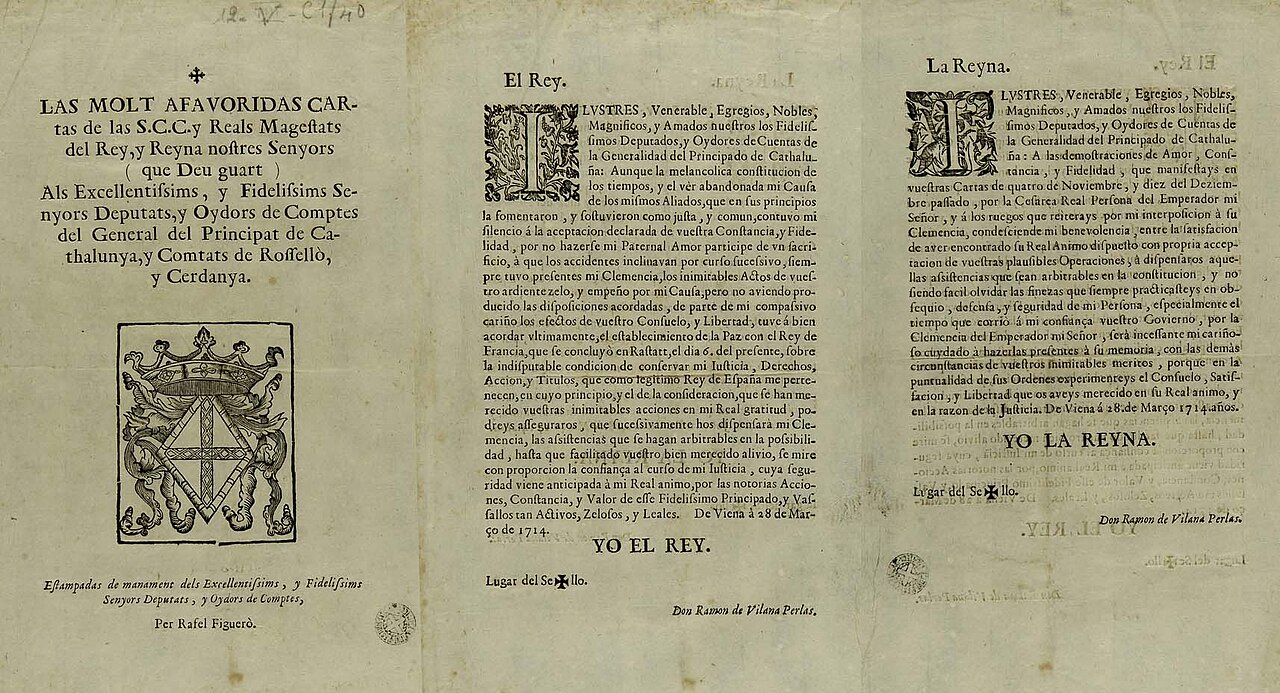
Letter Announcing the Treaty of Rastatt to the Catalan Generalitat
Charles VI, Holy Roman Emperor · 1714
Free account
Read every Charles VI, Holy Roman Emperor source
Sign up free →
Ready when you are
Start chatting with Charles VI, Holy Roman Emperor now.
20 messages free · No credit card · Available in 50+ languages.