


Primary sourcePainting1872
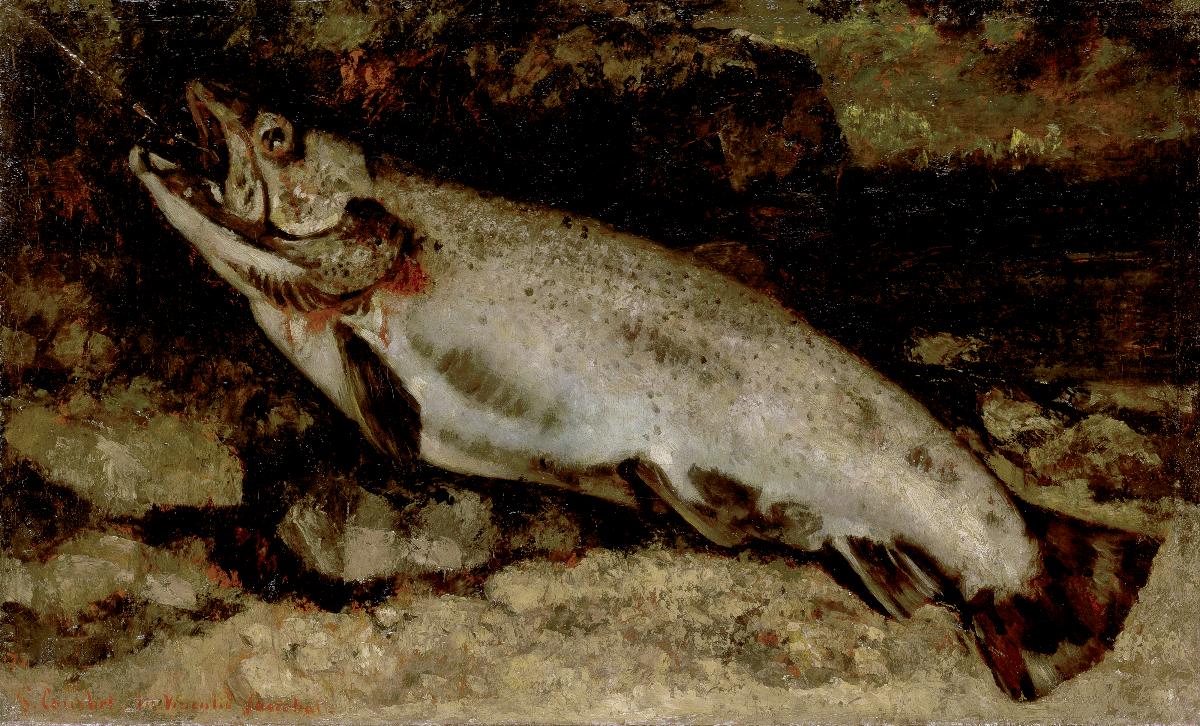
Trout
Gustave Courbet · 1872
A painting of a hooked, gasping trout by Gustave Courbet, made after his imprisonment and widely read as a self-portrait of suffering.
Courbet painted this fish himself after his imprisonment, using it as a symbol of his own suffering.
About this source
What it is
This is an oil painting by the French Realist painter Gustave Courbet, made in 1872. It shows a large trout lying on rocks, its mouth open and a wound visible near the gill. The painting is inscribed with a Latin phrase meaning it was made 'in chains.' It is held today by the Kunsthaus Zürich.
Why it matters
Courbet painted this after being imprisoned for his role in the Paris Commune. Many historians read the suffering fish as a stand-in for Courbet himself, hooked and wounded. It shows how an artist could use a simple still life to comment on his own political punishment.
Look closer
- Why might an artist choose a fish, rather than a self-portrait, to express suffering?
- What does the red wound near the gill add to the mood of the painting?
- What does the Latin inscription tell us about how Courbet wanted the painting understood?
This painting is part of the curated material that grounds the AI version of Gustave Courbet on Humy.ai — when students ask about related events, the AI can quote it and cite it.
More Gustave Courbet sources
Browse all 96 →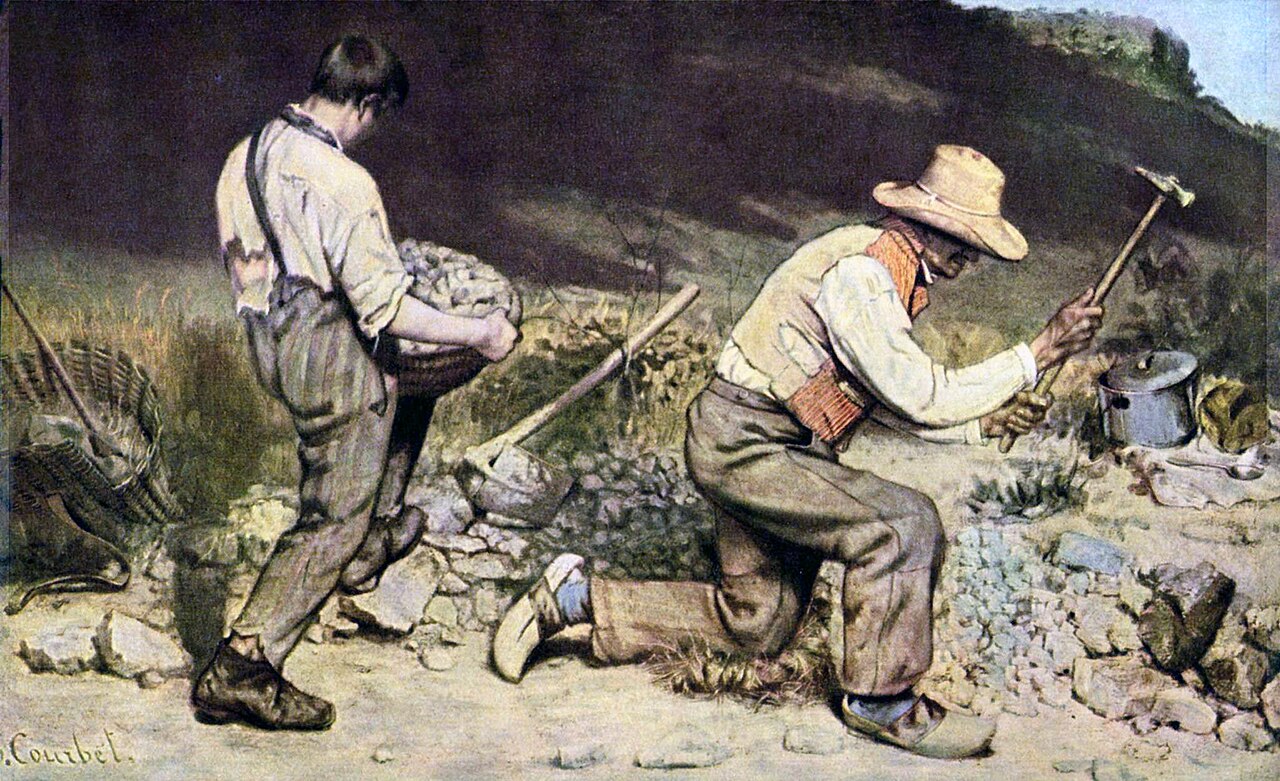 Painting
Primary source
The Stone Breakers
Gustave Courbet · 1849
 Painting
Primary source
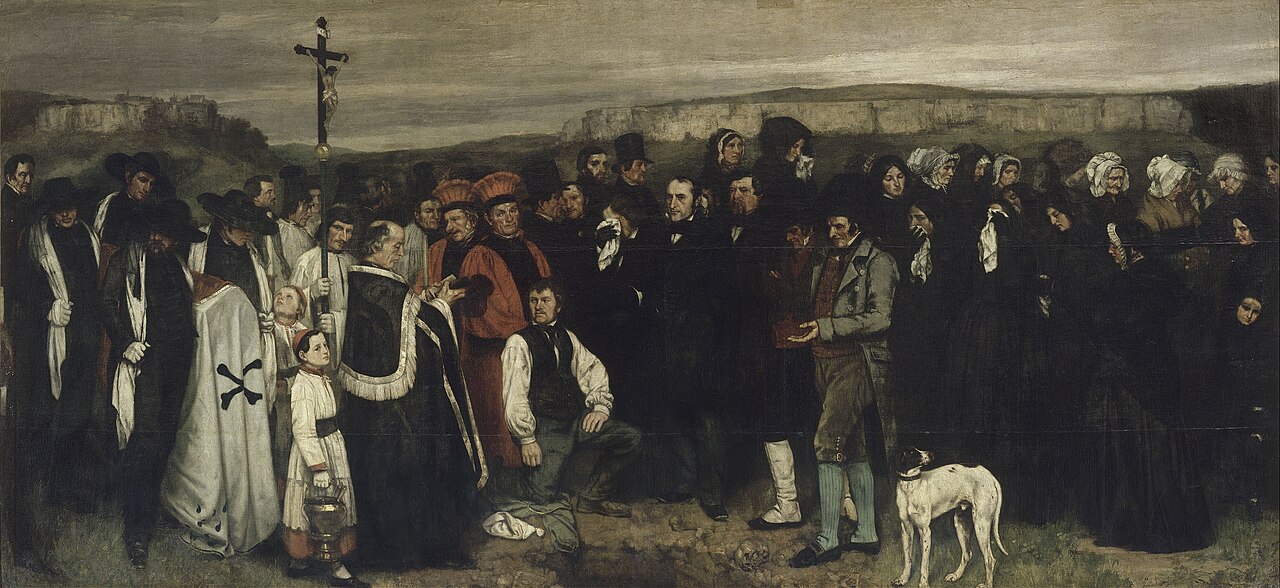
A Burial at Ornans
Gustave Courbet · 1849-1850
 Painting
Primary source
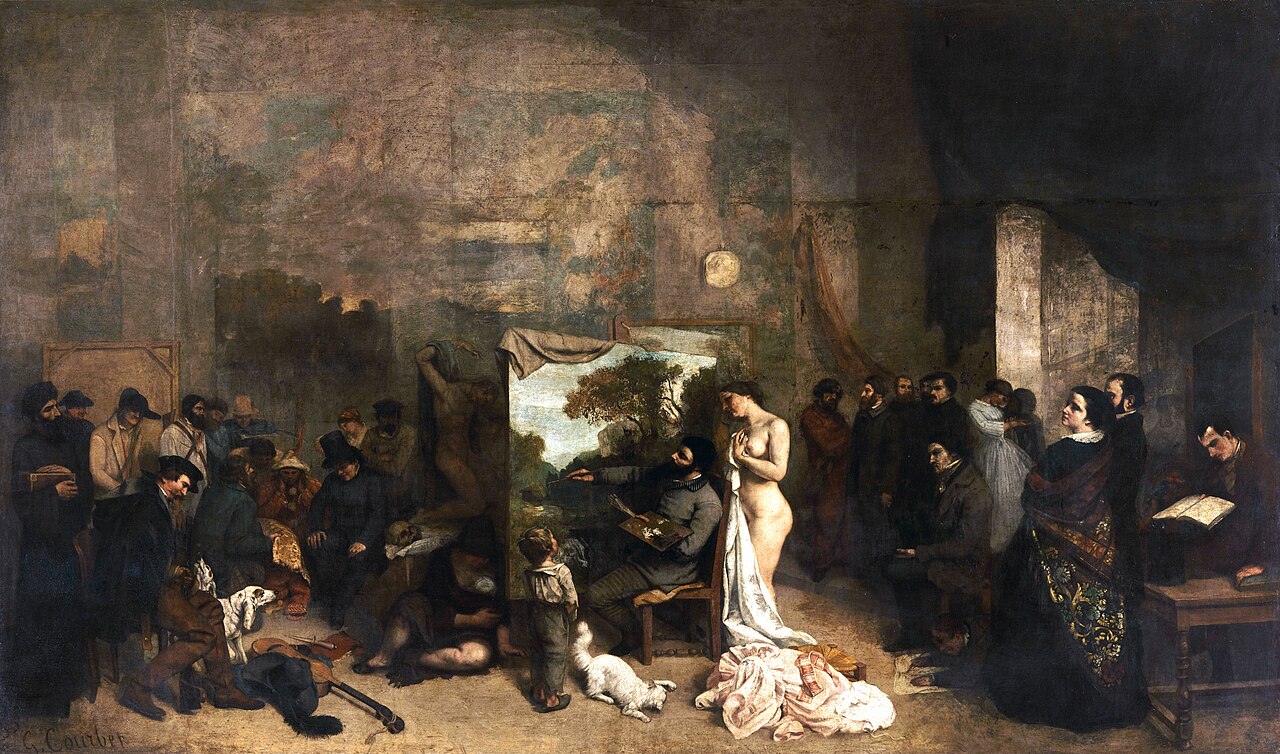
The Painter's Studio
Gustave Courbet · 1855
 Painting
Primary source
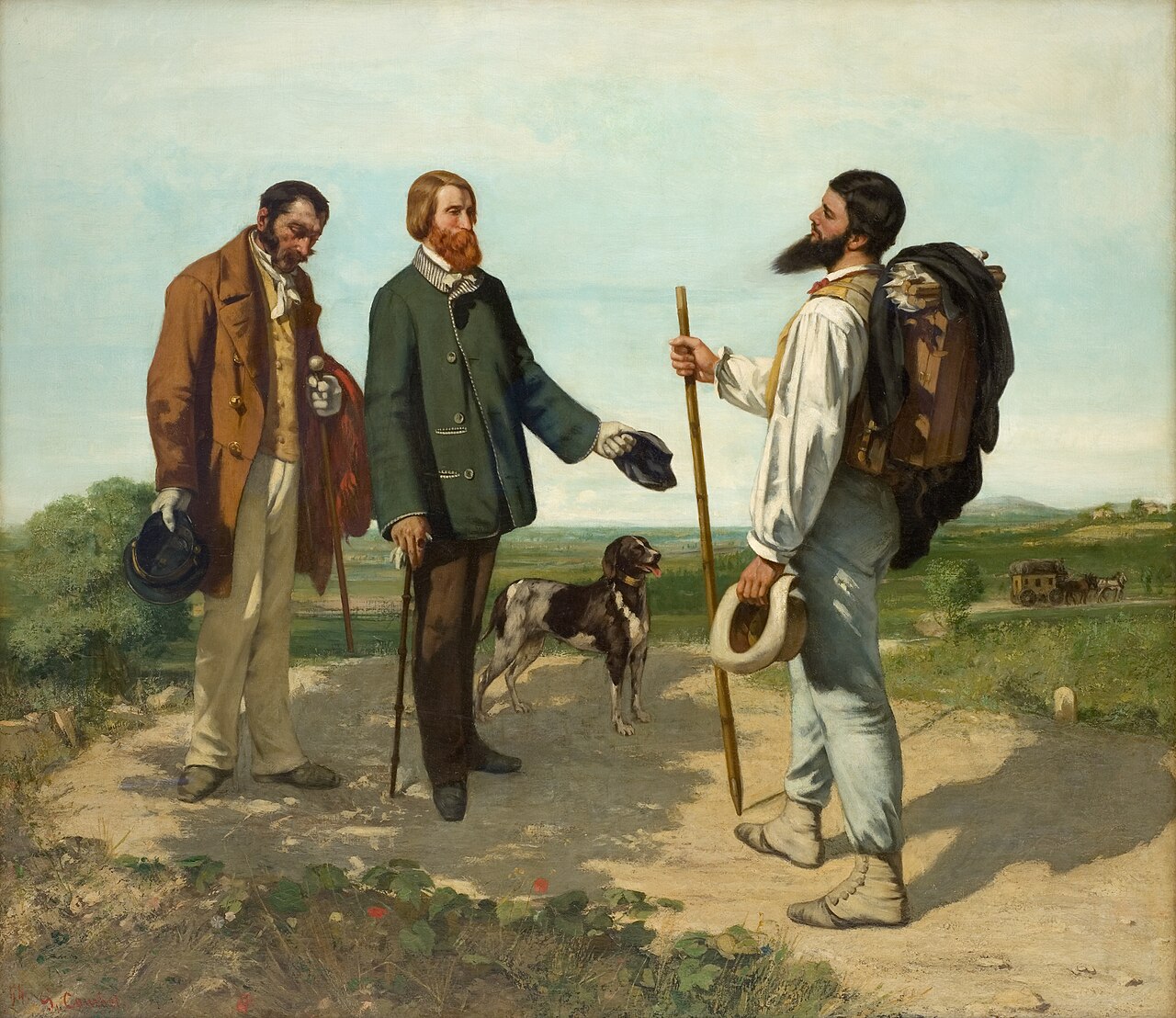
The Meeting, or Bonjour, Monsieur Courbet!
Gustave Courbet · 1854
Free account
Read every Gustave Courbet source
Sign up free →
Ready when you are
Start chatting with Gustave Courbet now.
20 messages free · No credit card · Available in 50+ languages.