


Primary sourceArtifact1837
Tsarskoye Selo Railway
1837
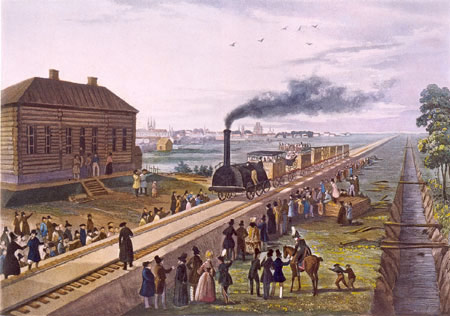
Russia's first public railway, opened in 1837 with the backing of Nicholas I, who rode on early test trips.
Nicholas I backed the railway's construction and personally rode on its early test trips with his family.
About this source
What it is
The Tsarskoye Selo Railway was the first public railway in the Russian Empire, running between Saint Petersburg, Tsarskoye Selo and Pavlovsk. Construction began in 1836 under engineer Franz Anton von Gerstner, and the line officially opened on 30 October 1837 with a steam-hauled train.
Why it matters
The railway was built with the direct support of Nicholas I, who personally reviewed the proposal and later rode on test trips with his family. It shows the limited, selective modernisation pursued under his rule: Russia adopted railway technology, but slowly and mostly using equipment and expertise bought from abroad, while remaining otherwise a largely traditional empire.
Look closer
- Why might Nicholas have supported this short, modest railway rather than a longer national network at first?
- What does the crowd in the image suggest about how people reacted to this new technology?
- What does reliance on foreign engineers and equipment tell you about Russia's industrial development at the time?
This artifact is part of the curated material that grounds the AI version of Nicholas I of Russia on Humy.ai — when students ask about related events, the AI can quote it and cite it.
More Nicholas I of Russia sources
Browse all 88 →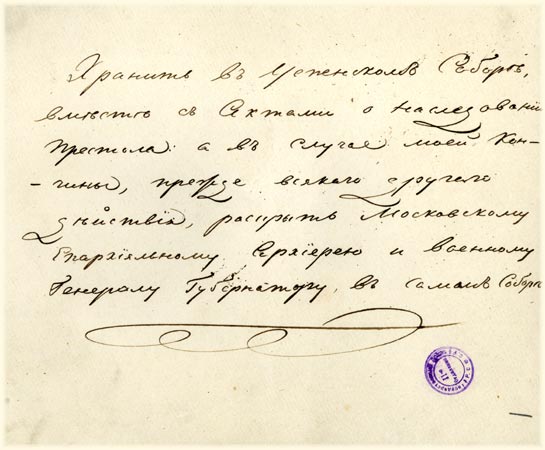 Document
Primary source
Envelope for the Manifesto on the Succession to Grand Duke Nicholas Pavlovich
Alexander I of Russia · August 1823
Secondary source
La Russie en 1839
Astolphe de Custine · 1843
 Document
Primary source
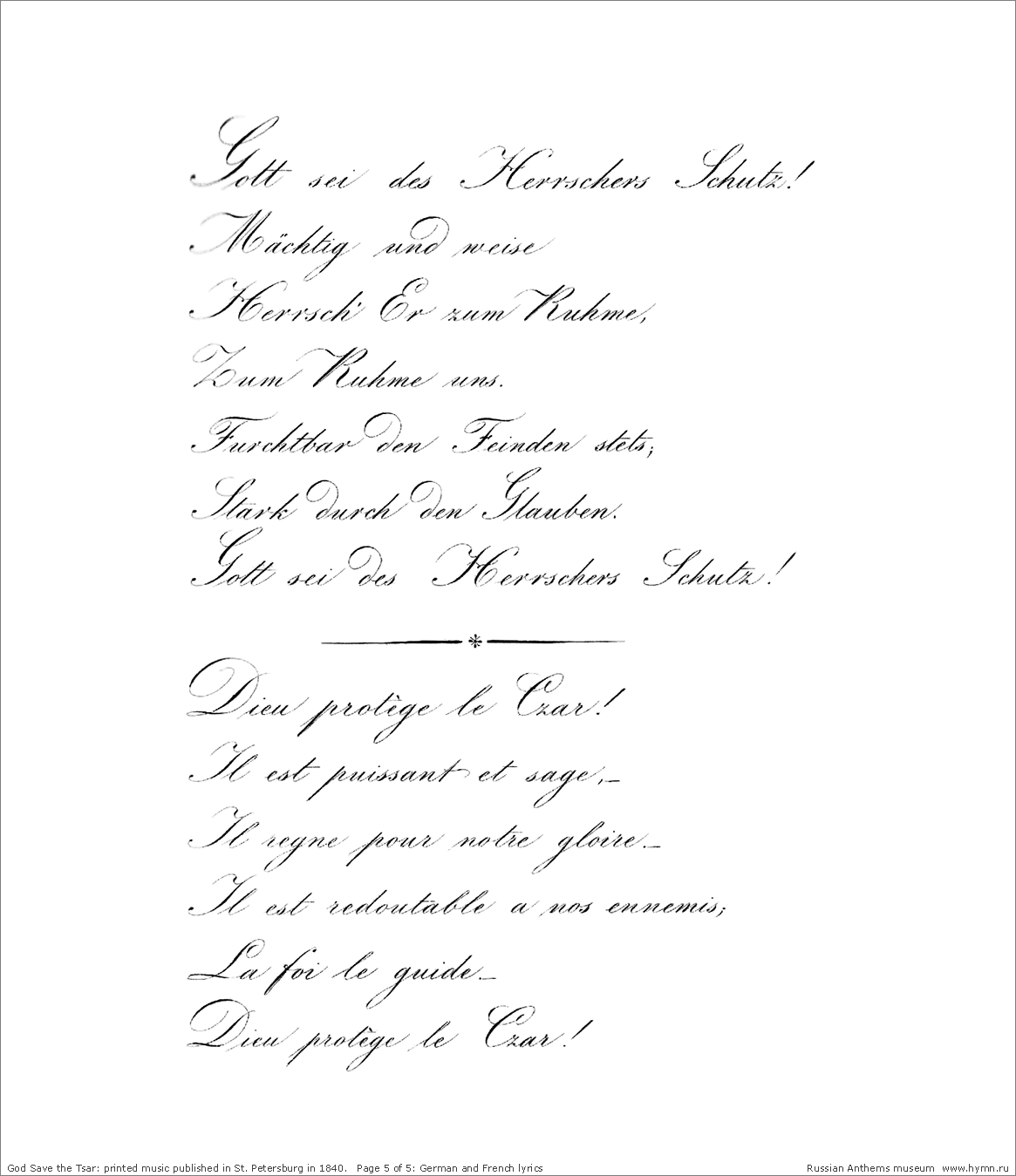
God Save the Tsar!
Alexei Lvov · 1833
 Sculpture
Secondary source
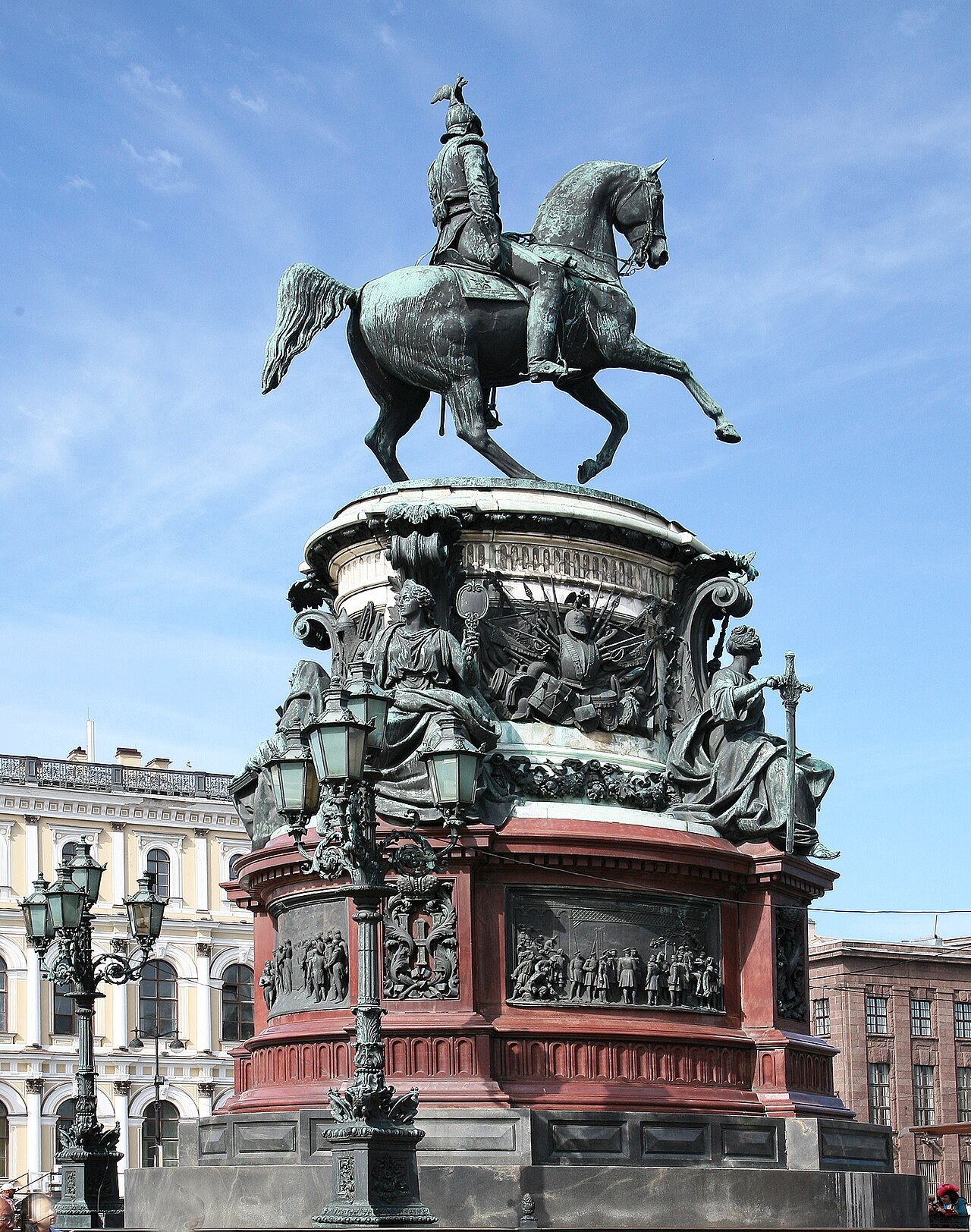
Monument to Nicholas I
Auguste de Montferrand · 1856-1859
Free account
Read every Nicholas I of Russia source
Sign up free →
Ready when you are
Start chatting with Nicholas I of Russia now.
20 messages free · No credit card · Available in 50+ languages.