


Primary sourceArtifact1267 AH (1850 AD)
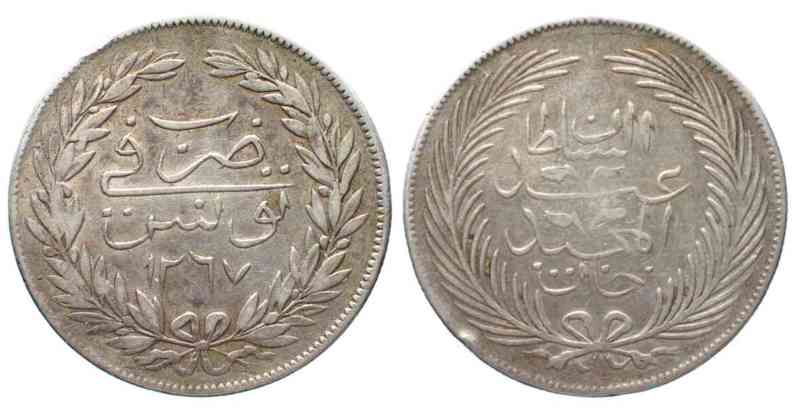
Tunisian 1 Rial Coin of Sultan Abdul Mejid
1267 AH (1850 AD)
A silver coin struck in Tunis in 1850 bearing the name of Sultan Abdul Mejid, showing Ottoman authority over the regency of Tunis.
The coin was struck in the sultan's name in Tunis, showing his nominal authority over the regency.
About this source
What it is
This is a silver 1 Rial coin struck in Tunis in the Islamic year 1267 (1850 AD), during the reign of Ottoman Sultan Abdul Mejid. One side carries an Arabic inscription with the date inside a leaf wreath; the other side bears a monogram surrounded by palm fronds.
Why it matters
Even though Tunis was ruled locally by its own bey, coins like this one were struck in the sultan's name, showing that the regency still recognised Ottoman overlordship. It is a small, everyday object that reveals a big political relationship: local rulers minting money that still honoured a distant sultan.
Look closer
- What details on the coin point to Ottoman rather than purely local authority?
- Why might rulers continue using a distant sultan's name on money even while governing their own territory?
- What does this coin leave out about who actually controlled daily life in Tunis?
This artifact is part of the curated material that grounds the AI version of Abdülmecid I on Humy.ai — when students ask about related events, the AI can quote it and cite it.
More Abdülmecid I sources
Browse all 85 →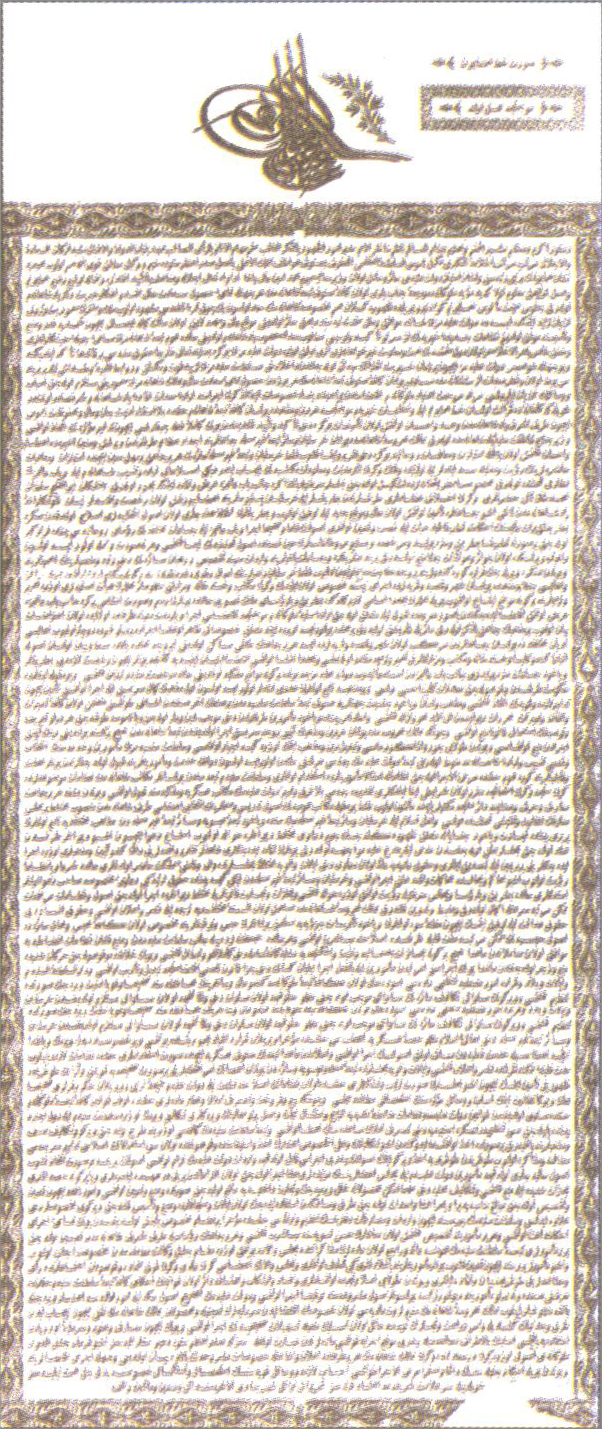 Document
Primary source
Edict of Gülhane
Abdülmecid I; drafted by Mustafa Reşid Pasha · 3 November 1839
Primary source
Treaty of Paris (1856)
30 March 1856
 Artifact
Secondary source
Dolmabahçe Palace
Garabet Balyan, Nigoğayos Balyan, Evanis Kalfa · 1823
 Painting
Primary source
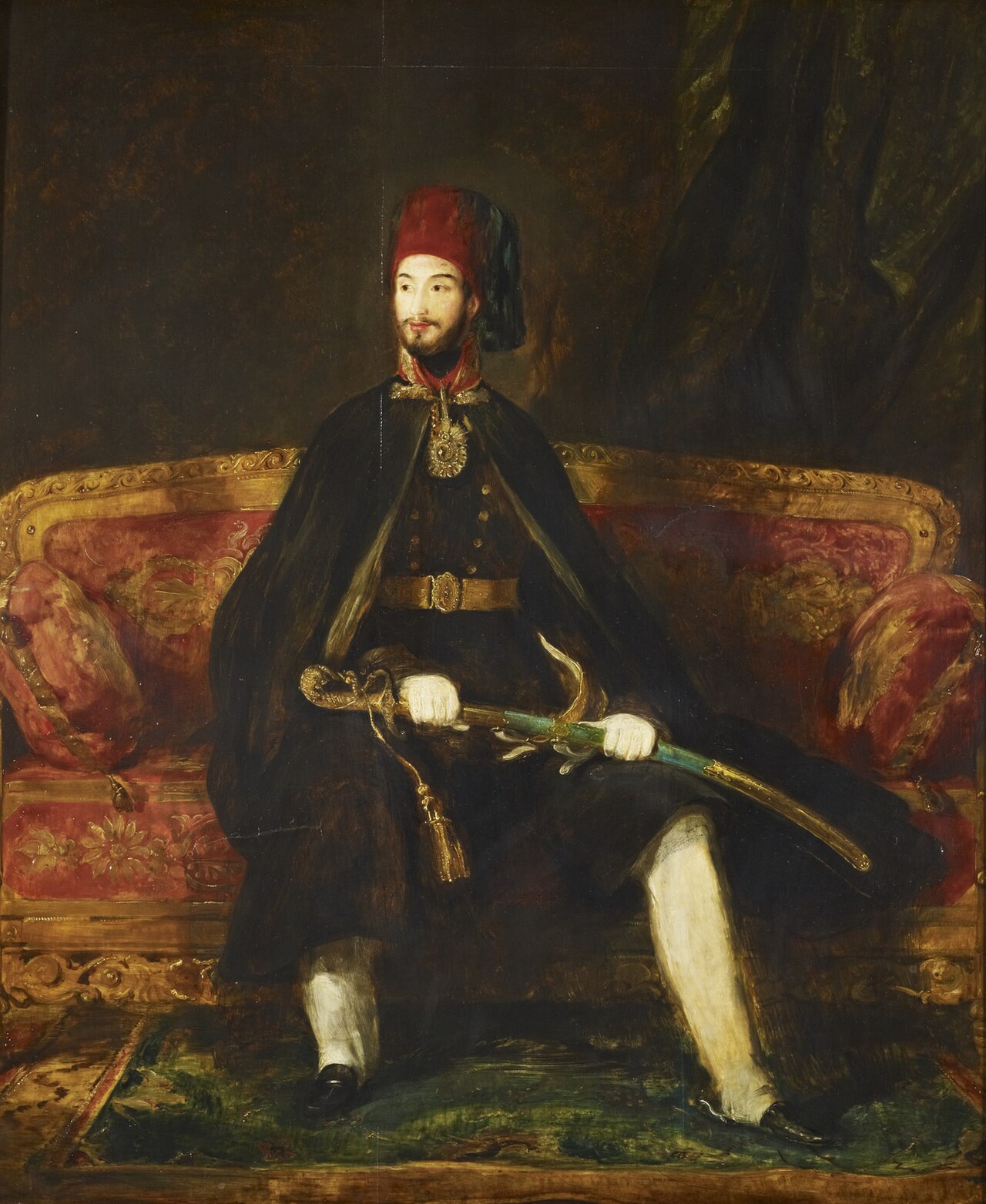
Portrait of Abdülmecid I
David Wilkie · 1840

Free account
Read every Abdülmecid I source
Sign up free →
Ready when you are
Start chatting with Abdülmecid I now.
20 messages free · No credit card · Available in 50+ languages.