


Primary sourcePainting1 July 1876
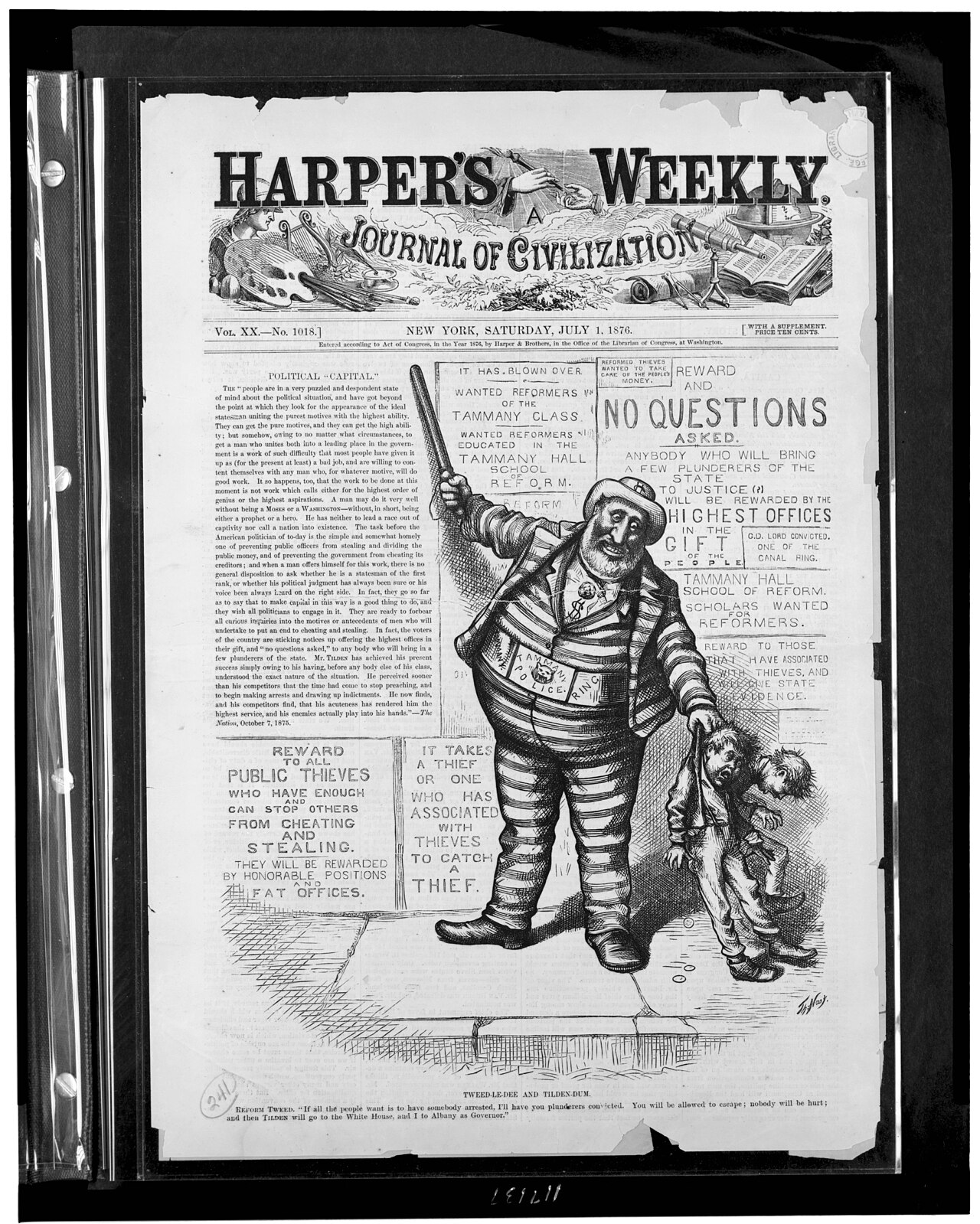
Tweed-le-dee and Tilden-dum
Thomas Nast · 1 July 1876
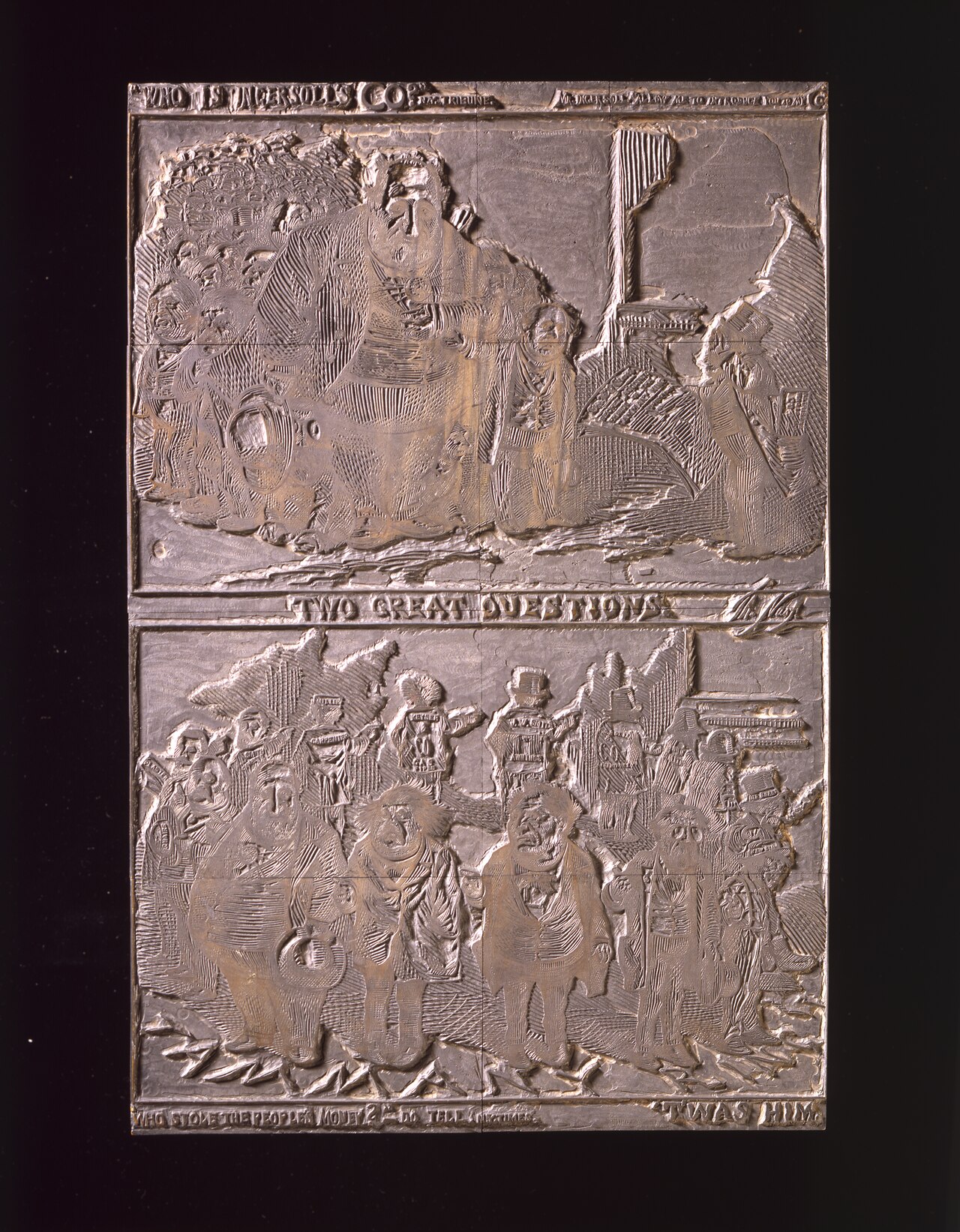
A Nast cartoon of Tweed as a convict leading two small figures, reportedly used by Spanish authorities to identify and capture him in 1876.
This cartoon of Tweed as a fleeing convict reportedly helped Spanish authorities identify and capture him in 1876.
Free Humy account · No credit card · 53,307 sources to read
About this source
What it is
This is a wood engraving by cartoonist Thomas Nast, published in Harper's Weekly on 1 July 1876. It shows a large heavyset man in a striped convict-style suit wearing a Tammany Hall and Police ring pin, leading two small figures by the hand, surrounded by mocking slogans such as "No Questions Asked" and "Reward to All Public Thieves."
Why it matters
The cartoon depicts William "Boss" Tweed after his fall from power. According to the record, Spanish authorities used this very image to help identify Tweed after he fled the country, leading to his capture in Vigo in 1876. It is a rare example of a political cartoon playing a direct role in real events rather than only shaping opinion.
Look closer
- Why might a caricature be useful for identifying a real person, despite being exaggerated?
- What do the slogans surrounding the cartoon suggest about public anger toward Tweed?
- What does it say about Nast's influence that his drawing may have helped capture a fugitive?
This painting is part of the curated material that grounds the AI version of William M. Tweed on Humy.ai — when students ask about related events, the AI can quote it and cite it.
More William M. Tweed sources
Browse all 70 →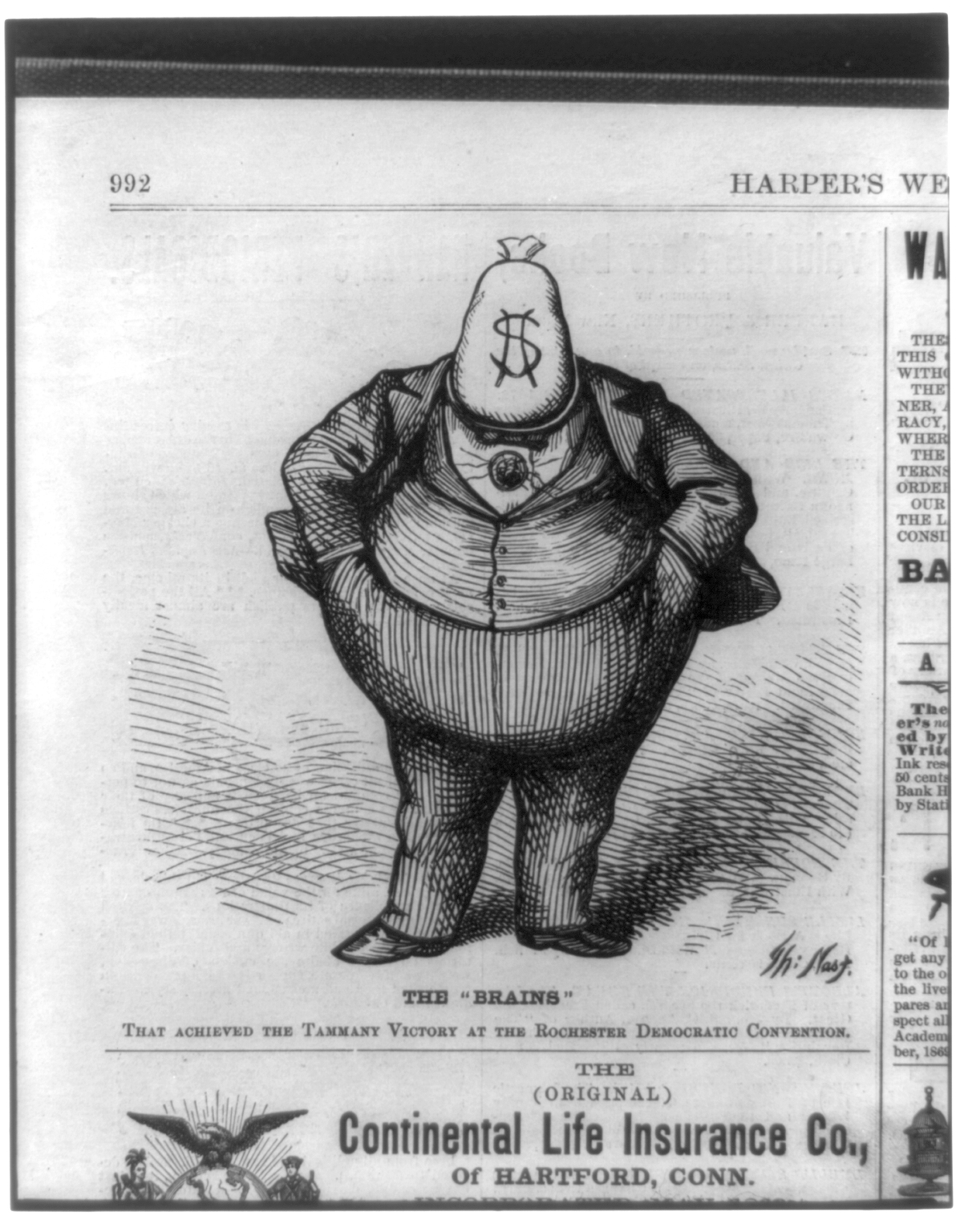 Painting
Primary source
The Brains
Thomas Nast · 21 October 1871
 Artifact
Secondary source
Tweed Courthouse
John Kellum · 1872
 Photograph
Primary source
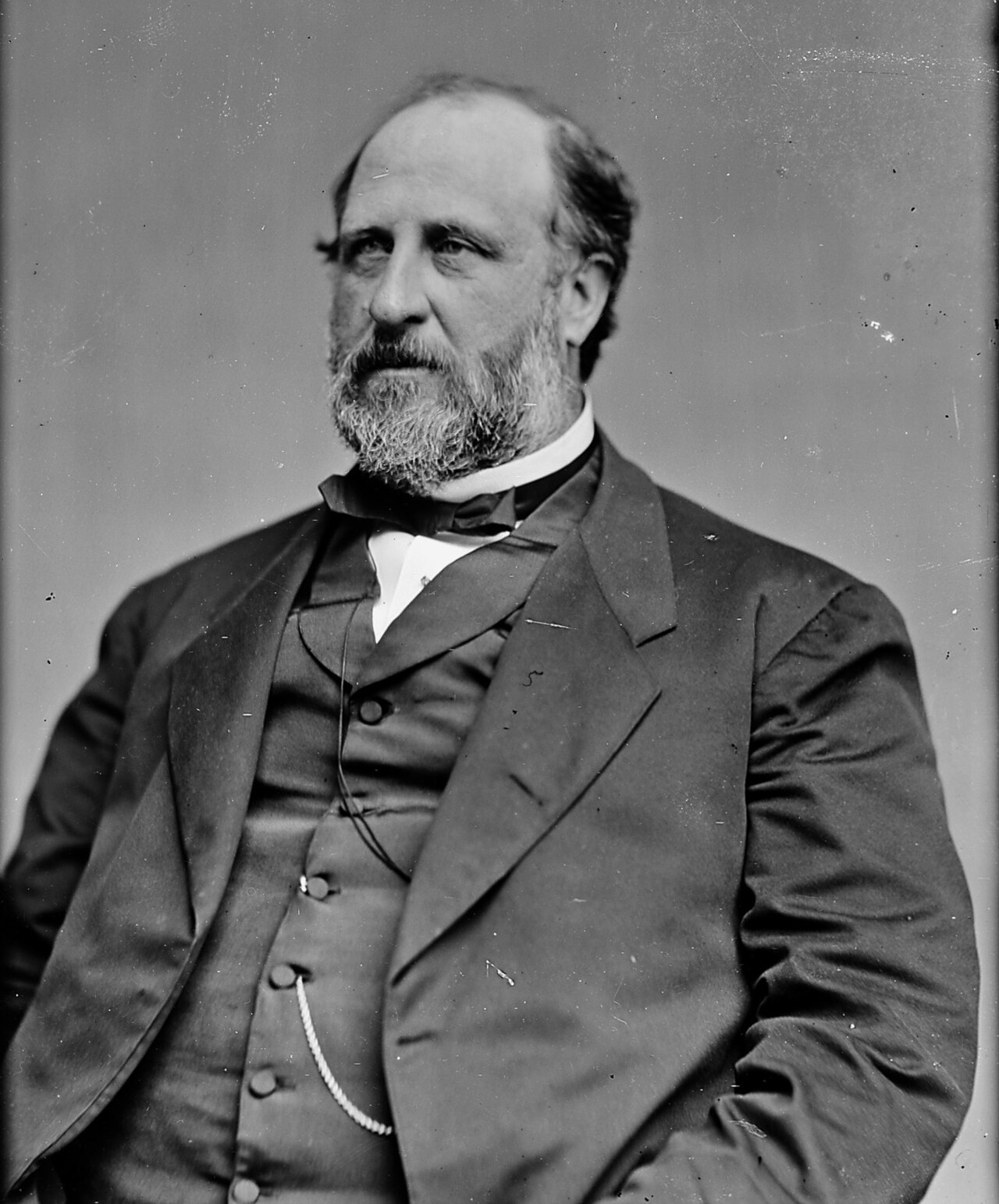
William M. (Boss) Tweed, N.Y
Mathew Benjamin Brady
 Photograph
Primary source
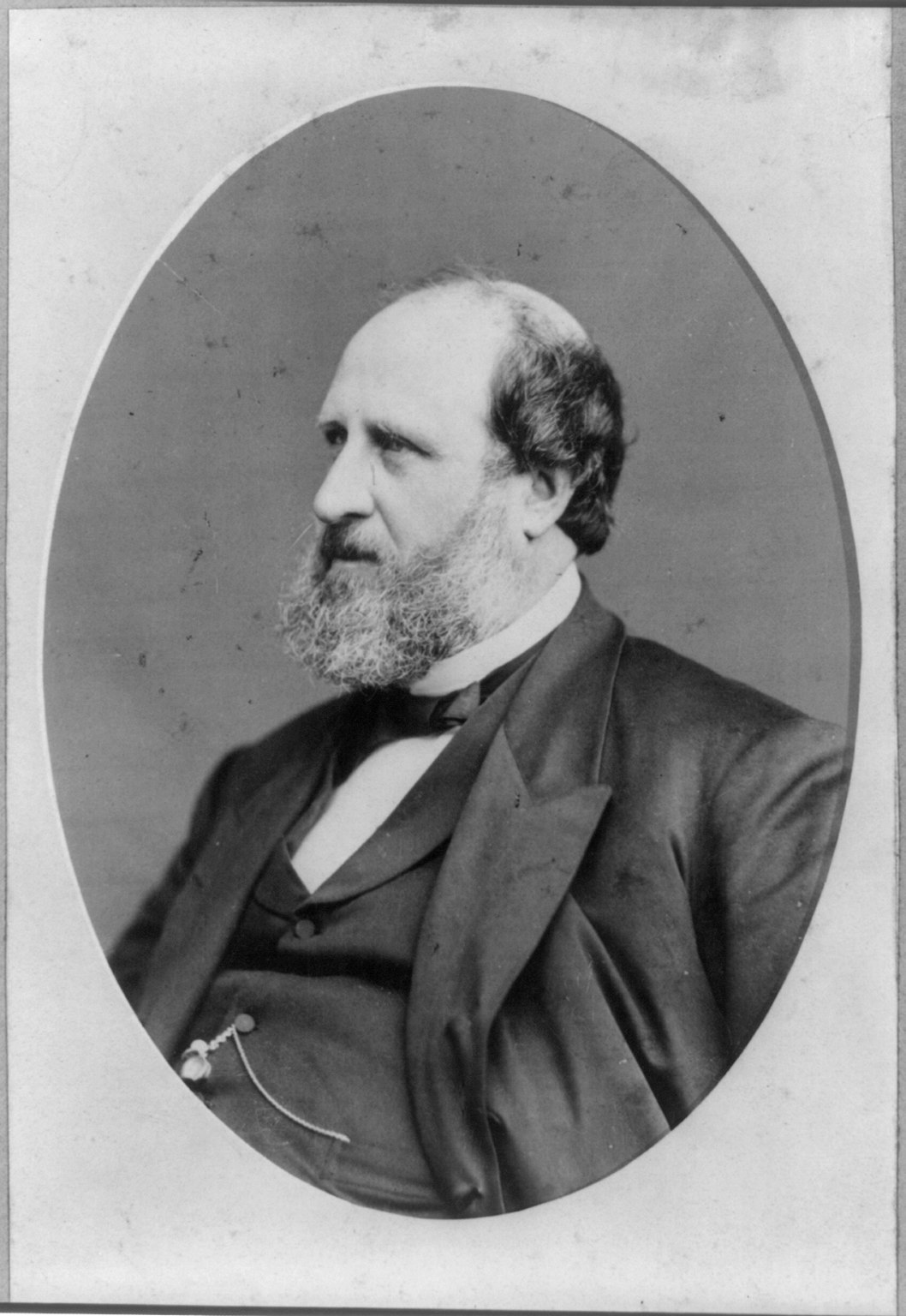
William Magear Tweed Portrait, Facing Left
Free account
Browse every William M. Tweed source
Sign up free →
Ready when you are
Start chatting with William M. Tweed now.
20 messages free · No credit card · Available in 50+ languages.