


Primary sourceDocument1787
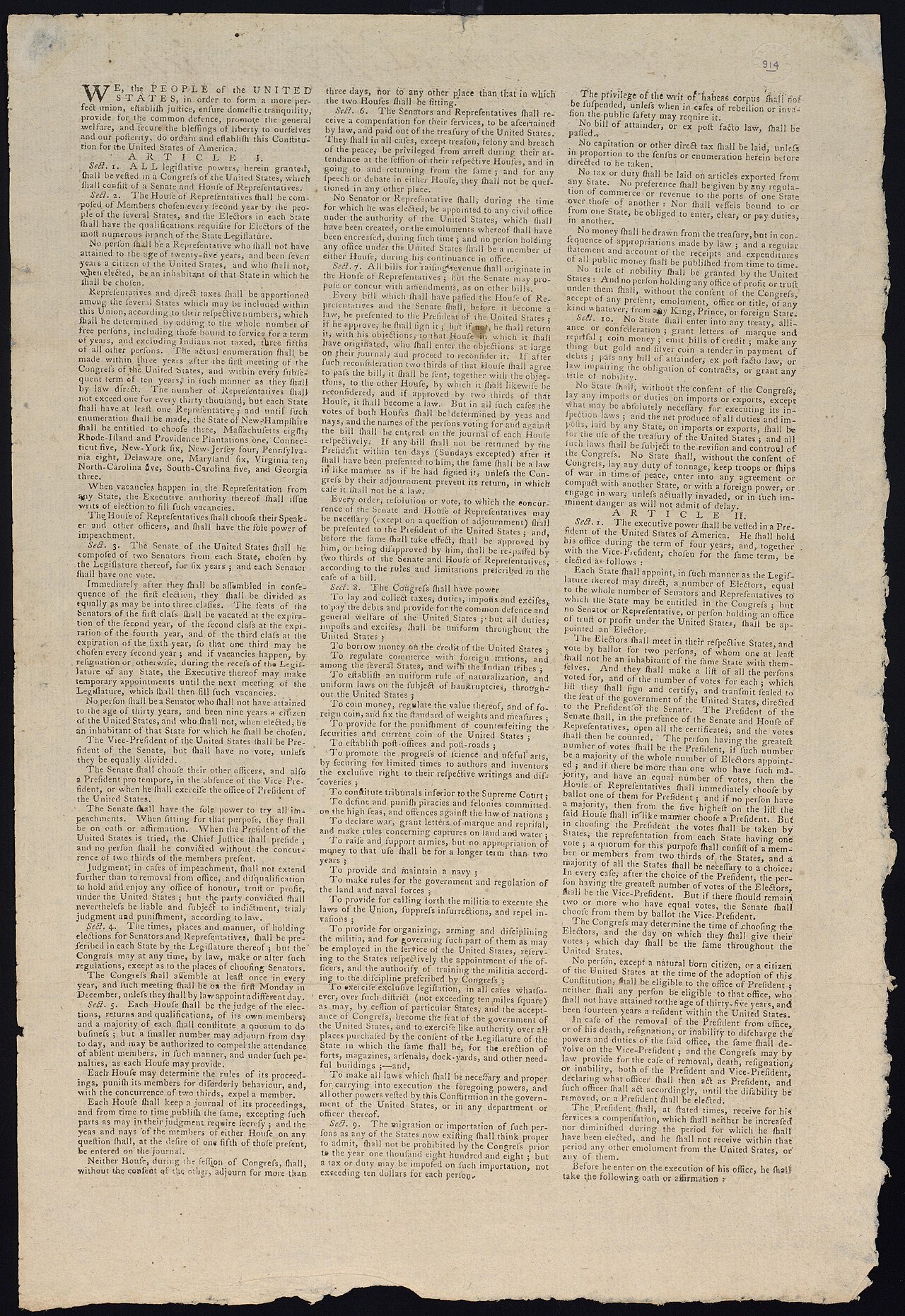
United States Constitution broadside printed by John Carter, Providence, 1787
John Carter · 1787
A printed broadside of the United States Constitution as ratified by the Constitutional Convention on September 17, 1787. George Mason refused to sign the document, which this printed text lets students read directly.
This printed Constitution is the document Mason refused to sign, so it shows the text at the center of his objections.
About this source
What it is
This is a printed broadside, a single large sheet of text, containing the Constitution as ratified by the Constitutional Convention on September 17, 1787. It was printed by John Carter in Providence. The sheet is set in dense black type in several columns, and its text begins with the words 'We, the People of the United States.' The scan in the archive shows aged, yellowed paper with a torn lower edge. The record lists the government of the United States as the creator of the text.
Why it matters
George Mason was one of the delegates to the Constitutional Convention, and he refused to sign the final document. This printed copy shows the text he opposed, the framework that was then sent to the states for ratification. Reading the printed version helps students see the exact words that people in 1787 debated, rather than relying on later summaries of them.
Look closer
- How does the layout of the columns and the section headings make the text easier or harder to follow?
- Why might a printer in Providence have produced a public copy of the document, and who would have read it?
- What does this printed sheet leave out, such as the arguments made at the convention and the views of delegates who did not sign?
This document is part of the curated material that grounds the AI version of George Mason on Humy.ai — when students ask about related events, the AI can quote it and cite it.
More George Mason sources
Meet the AI George Mason →Primary source
Virginia Declaration of Rights
George Mason · 12 June 1776
Primary source
Objections to This Constitution of Government
George Mason · 1787
 Document
Primary source
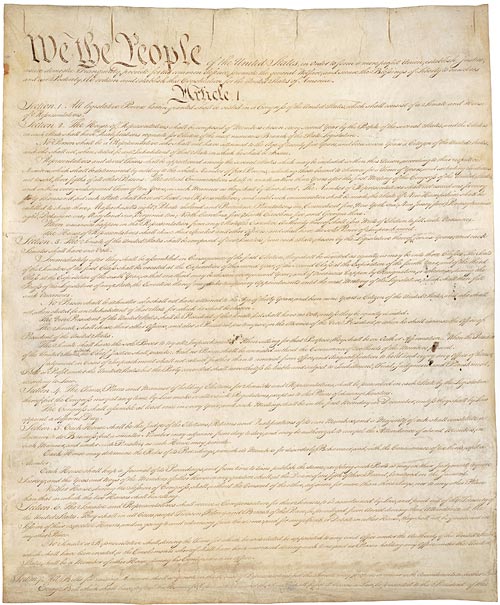
United States Constitution
Constitutional Convention · 17 September 1787
 Document
Primary source
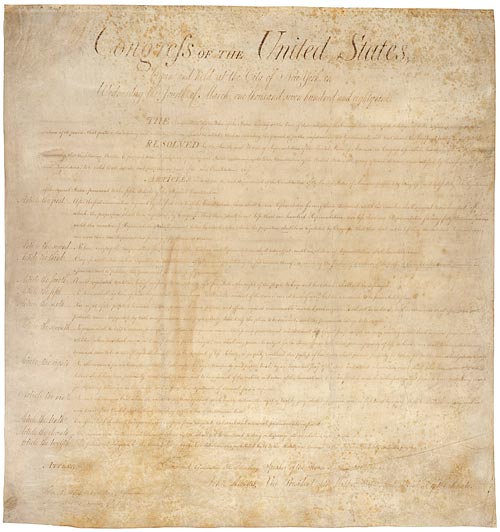
Bill of Rights
25 September 1789
Primary source
Fairfax Resolves
George Mason and George Washington · 18 July 1774
Ready when you are
Start chatting with George Mason now.
20 messages free · No credit card · Available in 50+ languages.