


Secondary sourceArtifact1935
United States Supreme Court Building
Cass Gilbert · 1935
The neoclassical building on Capitol Hill that houses the Supreme Court, built after Taft campaigned for a separate home for the judiciary.
Taft proposed and secured funding for this building as Chief Justice, though it was finished after his death.

About this source
What it is
This is the Supreme Court Building in Washington, D.C., designed by architect Cass Gilbert and completed in 1935. It stands near the U.S. Capitol and has served as the Court's home ever since.
Why it matters
President William Howard Taft proposed the idea of a separate Supreme Court building in 1912. After becoming Chief Justice in 1921, he lobbied Congress successfully to fund it in 1929, wanting the judicial branch to have its own independent home instead of sharing space with Congress. Taft did not live to see the finished building, which opened under his successor, Chief Justice Charles Evans Hughes.
Look closer
- Why might having a separate building matter for a branch of government that is supposed to be independent?
- What does the phrase carved above the columns suggest about the purpose of the building?
- Why do you think some justices were reluctant to leave their old working spaces for this new building?
This artifact is part of the curated material that grounds the AI version of William Howard Taft on Humy.ai — when students ask about related events, the AI can quote it and cite it.
More William Howard Taft sources
Meet the AI William Howard Taft →Primary source
1912 State of the Union Address
William Howard Taft · 3 December 1912
 Document
Primary source
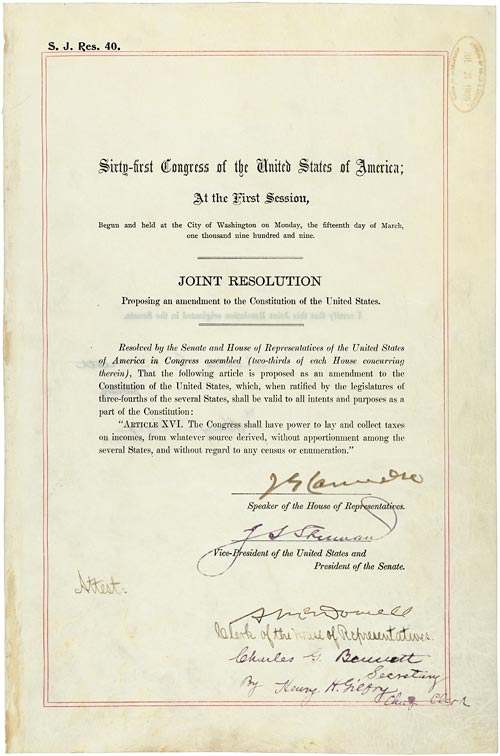
16th Amendment to the U.S. Constitution: Federal Income Tax
61st United States Congress · 1913
Primary source
Inaugural Address of William Howard Taft
William Howard Taft · 4 March 1909
Primary source
Recording of the voice of William Howard Taft
William Howard Taft · c. 1912
 Painting
Primary source
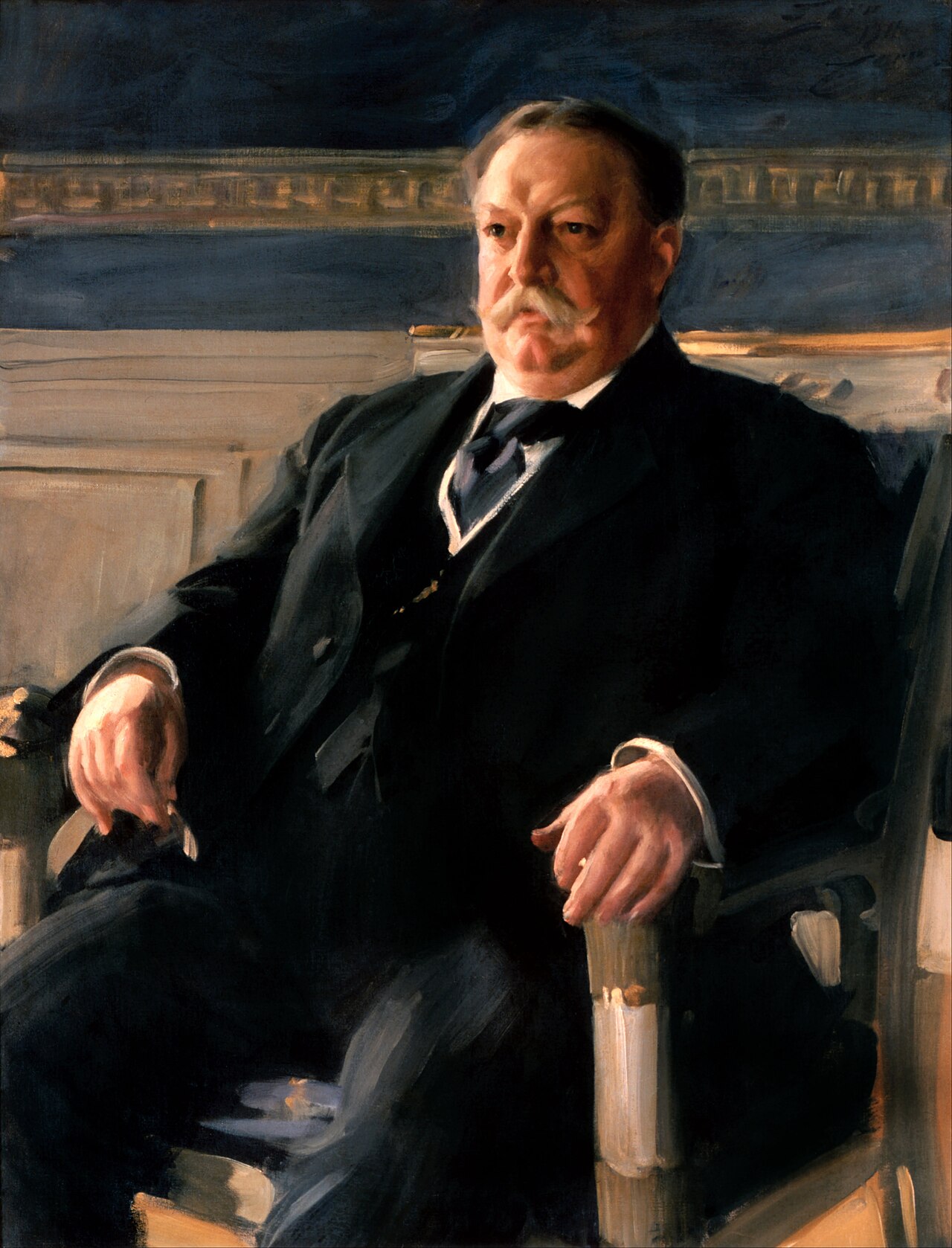
William Howard Taft (Zorn portrait)
Anders Zorn · 1911
Ready when you are
Start chatting with William Howard Taft now.
20 messages free · No credit card · Available in 50+ languages.