


Primary sourceArtifact1951
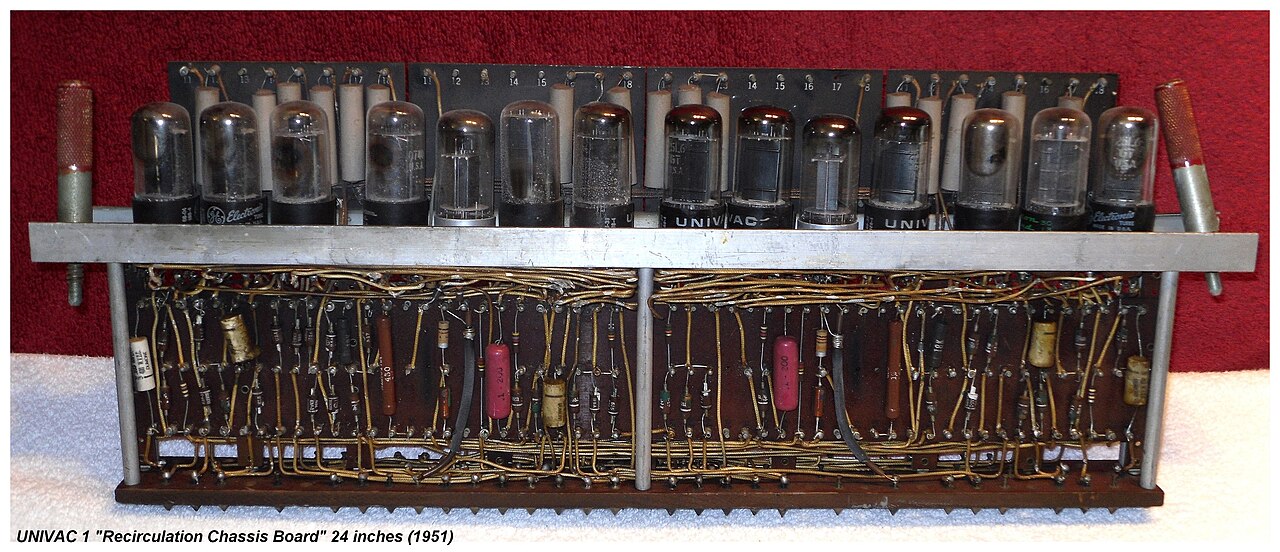
UNIVAC I Recirculation Chassis Board
Remington Rand UNIVAC · 1951
A vacuum-tube circuit board from a UNIVAC I computer, the machine Grace Hopper's team helped build and program in the early 1950s.
This is a component from the UNIVAC I, the computer Hopper helped develop at Eckert-Mauchly.
About this source
What it is
This is a photograph of a Recirculation Chassis vacuum-tube board, a 24-inch component from a UNIVAC I computer manufactured by Remington Rand UNIVAC in 1951. It shows a row of vacuum tubes mounted above a dense tangle of wiring, resistors and capacitors.
Why it matters
Grace Hopper joined the Eckert-Mauchly Computer Corporation in 1949 and helped develop the UNIVAC I, the first general-purpose electronic computer sold commercially. Parts like this chassis board reveal how early computers depended on fragile vacuum tubes and hand-wired circuits long before transistors or microchips existed.
Why it matters
Look closer
- What does the complexity of this wiring suggest about how early computers were built and repaired?
- Why might a single board like this be worth preserving in a collection?
- What does this object leave out about how the whole UNIVAC I machine actually worked?
This artifact is part of the curated material that grounds the AI version of Grace Hopper on Humy.ai — when students ask about related events, the AI can quote it and cite it.
More Grace Hopper sources
Meet the AI Grace Hopper →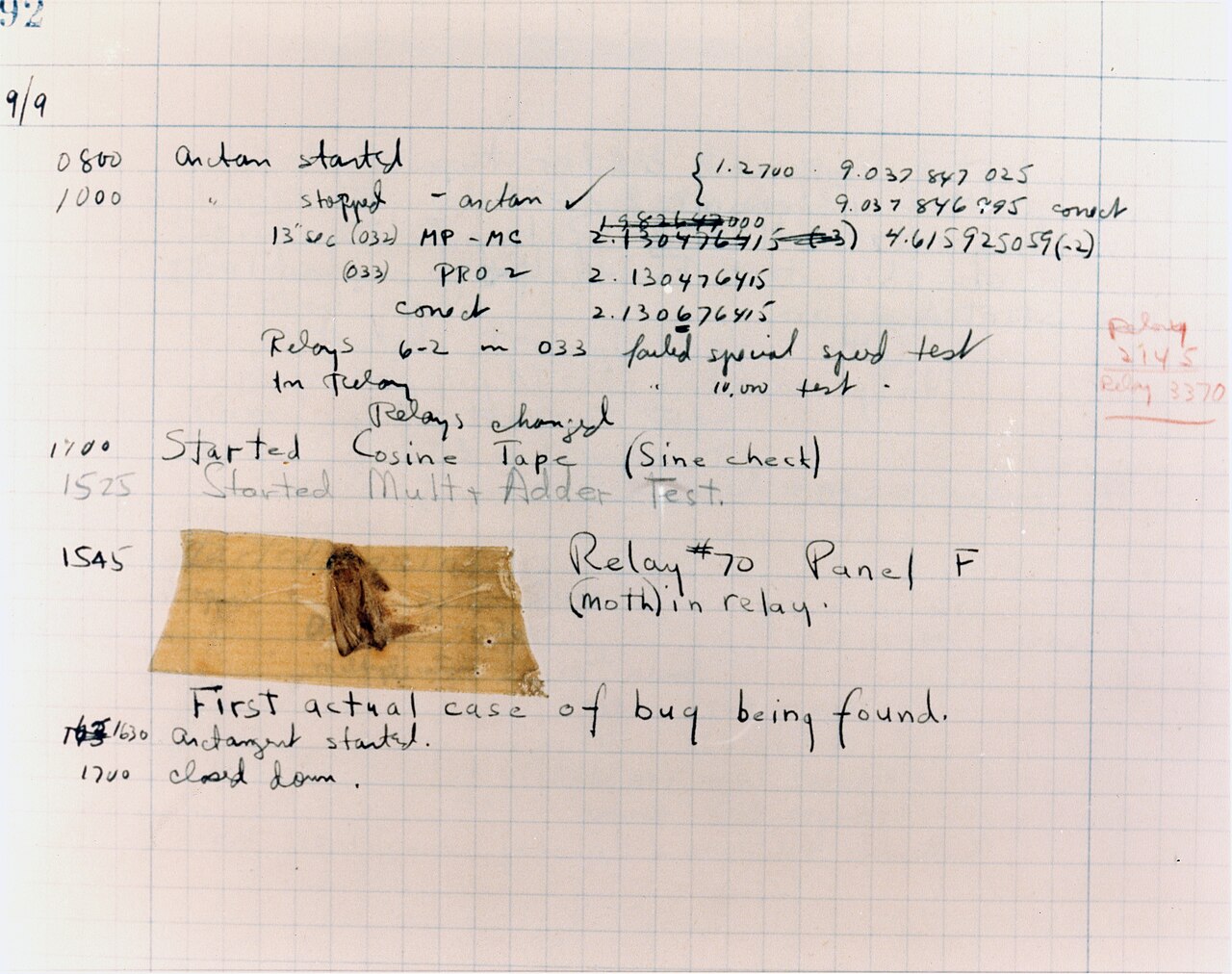 Document
Primary source
First Computer Bug
9 September 1947
 Photograph
Primary source
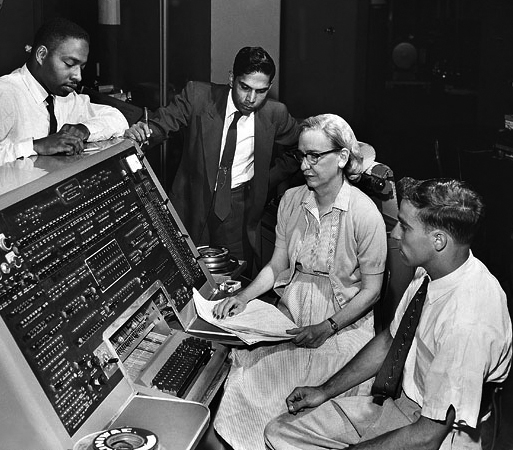
Grace Hopper and UNIVAC
Unknown · June 1957
 Photograph
Primary source
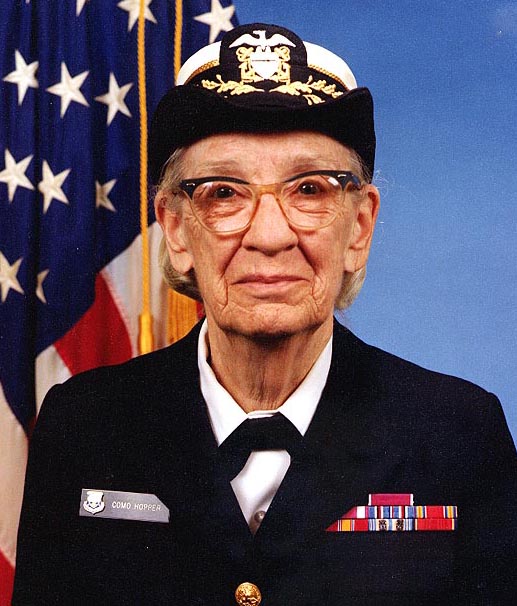
Grace Hopper
James S. Davis · 1984
Primary source
Future Possibilities - Data, Hardware, Software, and People
Grace Hopper · 1982
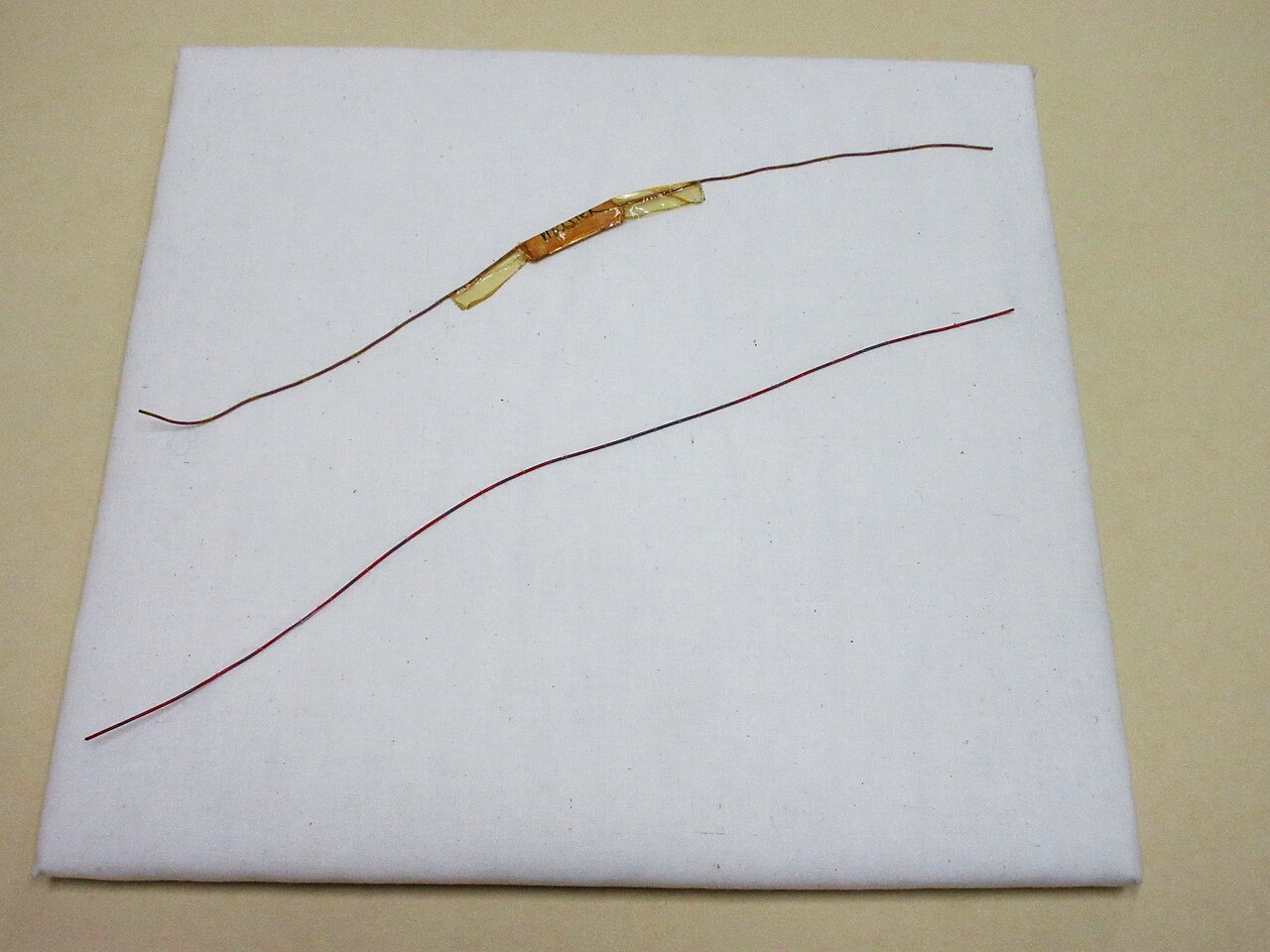 Artifact
Primary source
Wire Nanosecond
Ready when you are
Start chatting with Grace Hopper now.
20 messages free · No credit card · Available in 50+ languages.