
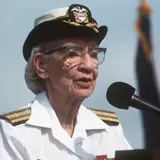
Portrait of Grace Hopper

AI Historical Figure

Grace Hopper

Computer scientist and United States Navy admiral.

Chat with Grace Hopper via text or voice — in 42 languages, drawing on a curated biography and 40 historical sources. Available 24/7.

Start chatting with Grace Hopper20 messages free · No credit card
Lived
1906–1992
From
United States
Known for
MilitaryScience & medicine
Grace Hopper

Grace Hopper

Online · responds in seconds

Hello — I'm Grace Hopper. Computer scientist and United States Navy admiral. What would you like to ask me?

20 messages free · No credit card · Powered by Humy.ai

Live preview · Switch between 42 languages above · Send a message to continue in the app

Multilingual

Talk to Grace Hopper in 42 languages

Ask Grace Hopper questions in any language below, and the rest of Humy's app speaks it too. Pick yours to open the chat in that language.

Also in German (Austria), German (Switzerland), English (UK), English (Australia), English (Canada).

The sources behind this AI

40 sources · 30 photographs · 6 artifacts · 3 documents · 1 speech

Grace Hopper doesn’t improvise from thin air. The AI is grounded in 40 curated historical sources students can inspect. Open any of them to see what informs the conversation.

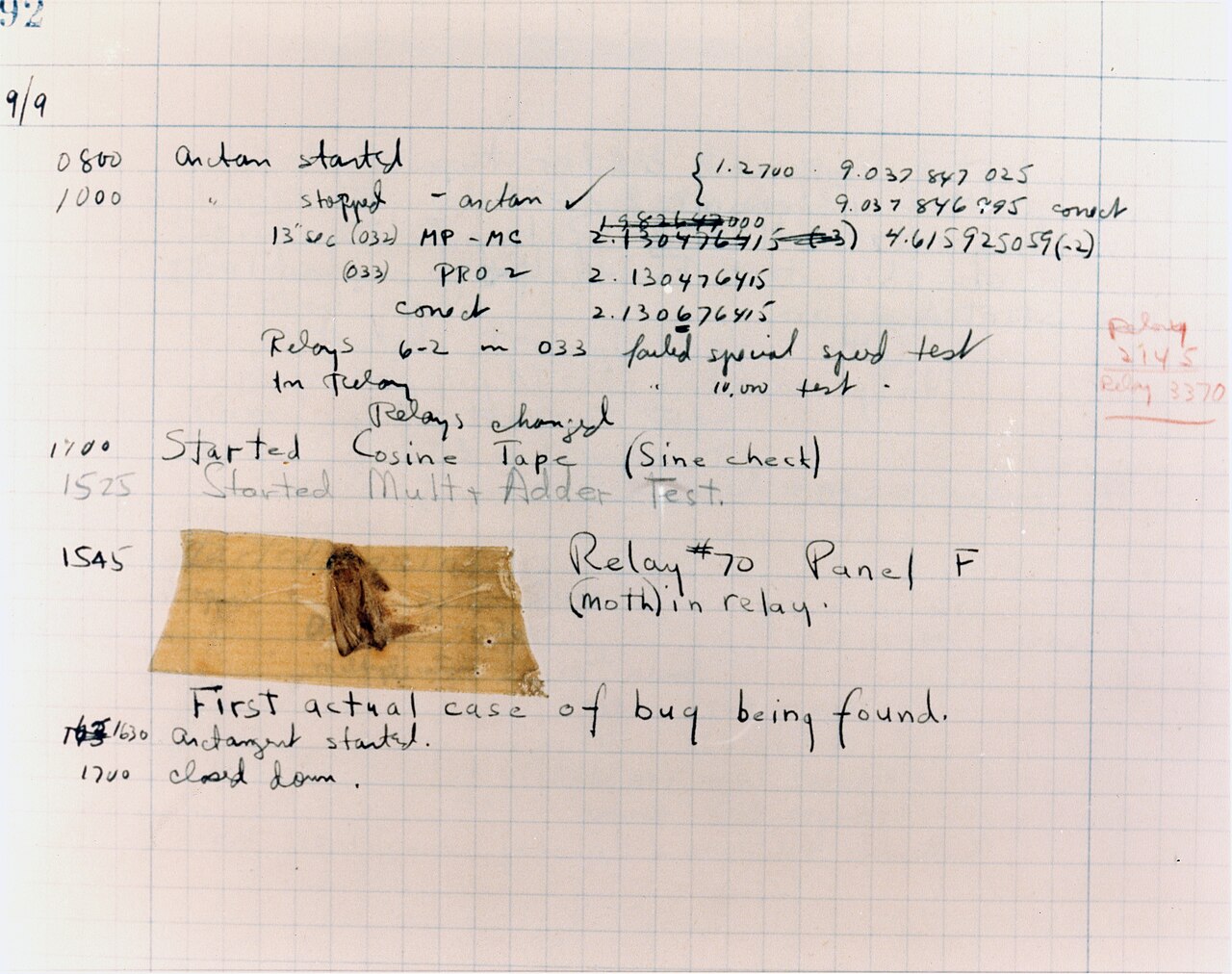
Photo of the Harvard Mark II logbook page dated 9/9 with handwritten entries including 'Relay #70 Panel F (moth) in relay' and 'First actual case of bug being found', with a taped-in moth beneath the entry.Document

Primary source

First Computer Bug

9 September 1947

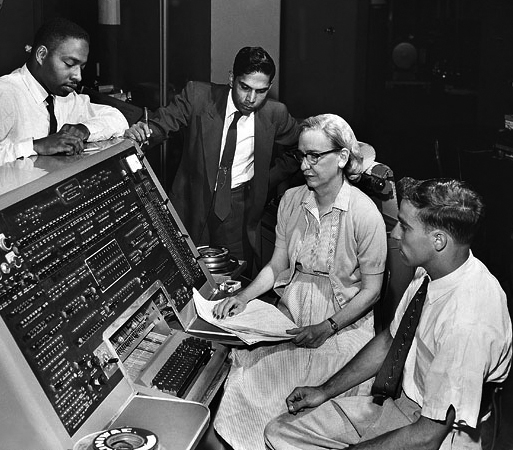
Black-and-white photo of four people at a large UNIVAC computer control panel with rows of switches and lights. A woman with glasses and a light dress holds papers and looks at them. Men stand and sit beside her.Photograph

Primary source

Grace Hopper and UNIVAC

Unknown · June 1957

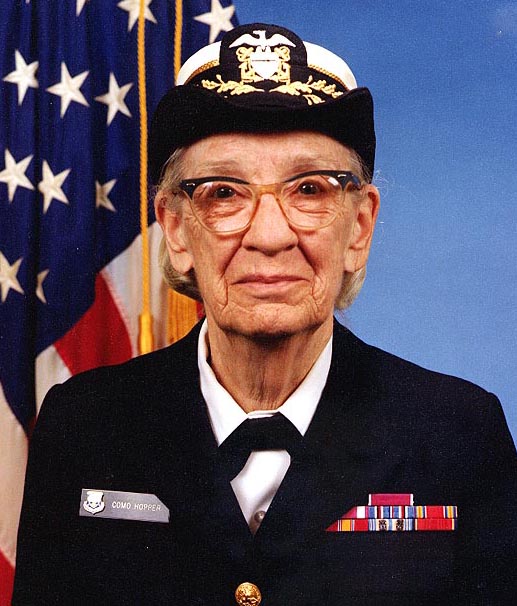
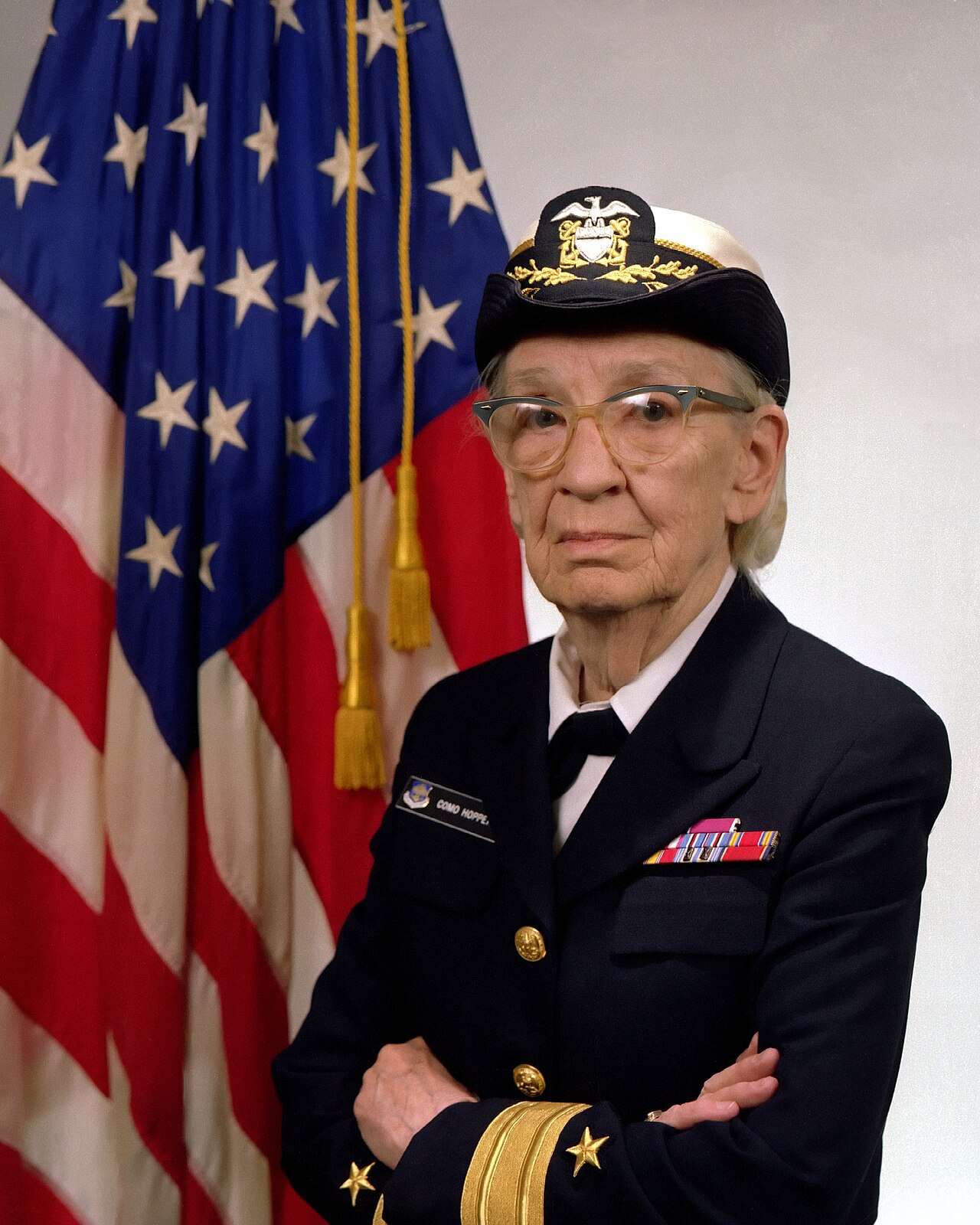
Official portrait of an older woman in a dark naval dress uniform and cap with insignia, wearing eyeglasses, a white shirt and dark tie. A name tag reads Grace M. Hopper. A U.S. flag and blue background are behind her.Photograph

Primary source

Grace Hopper

James S. Davis · 1984

Speech

Primary source

Future Possibilities - Data, Hardware, Software, and People

Grace Hopper · 1982

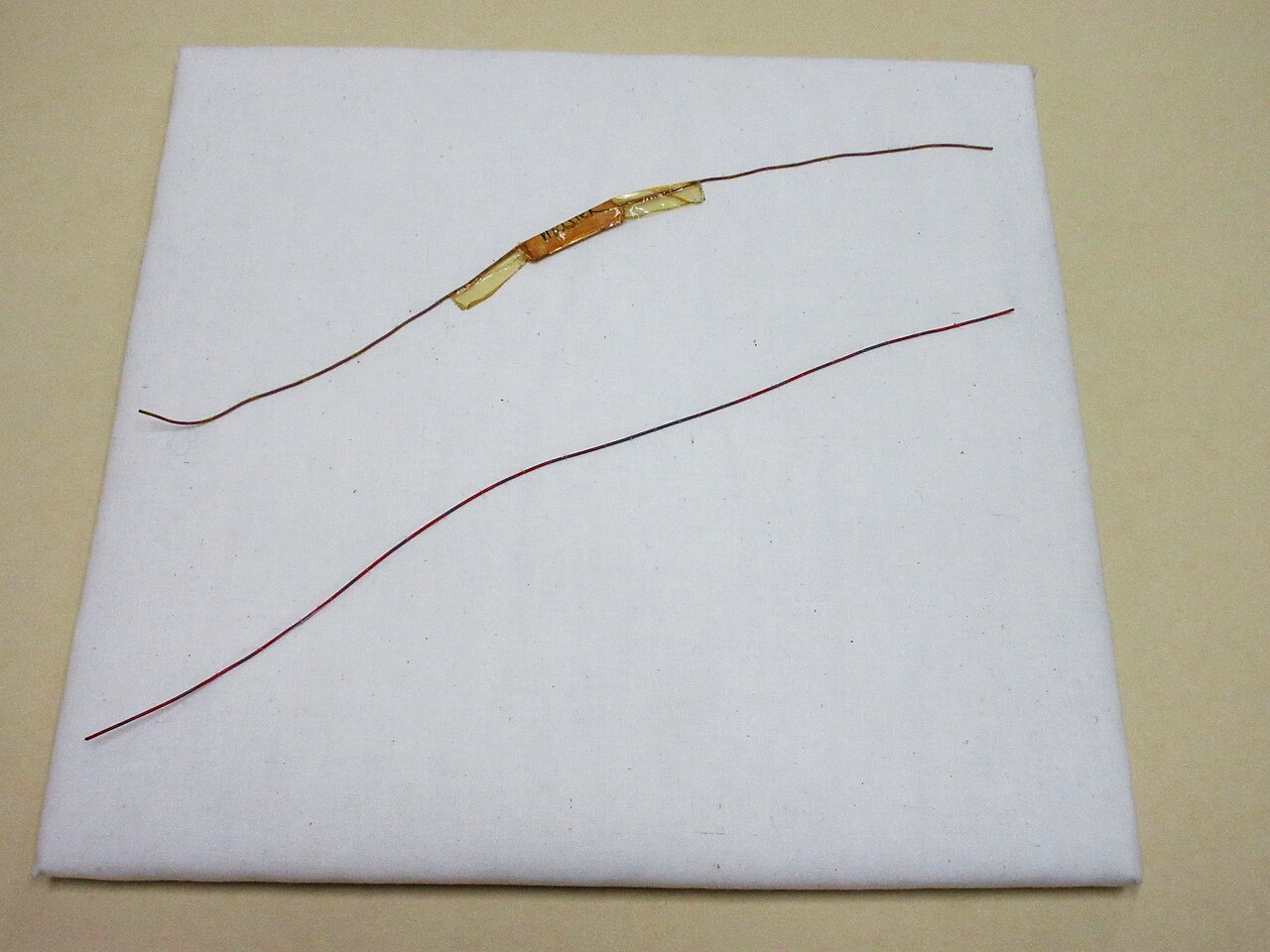
Two thin wires lying on a white cloth. The upper wire has a yellowish-tan tape wrapped around its middle section. The lower wire is reddish and runs diagonally across the cloth. Plain beige background.Artifact

Primary source

Wire Nanosecond

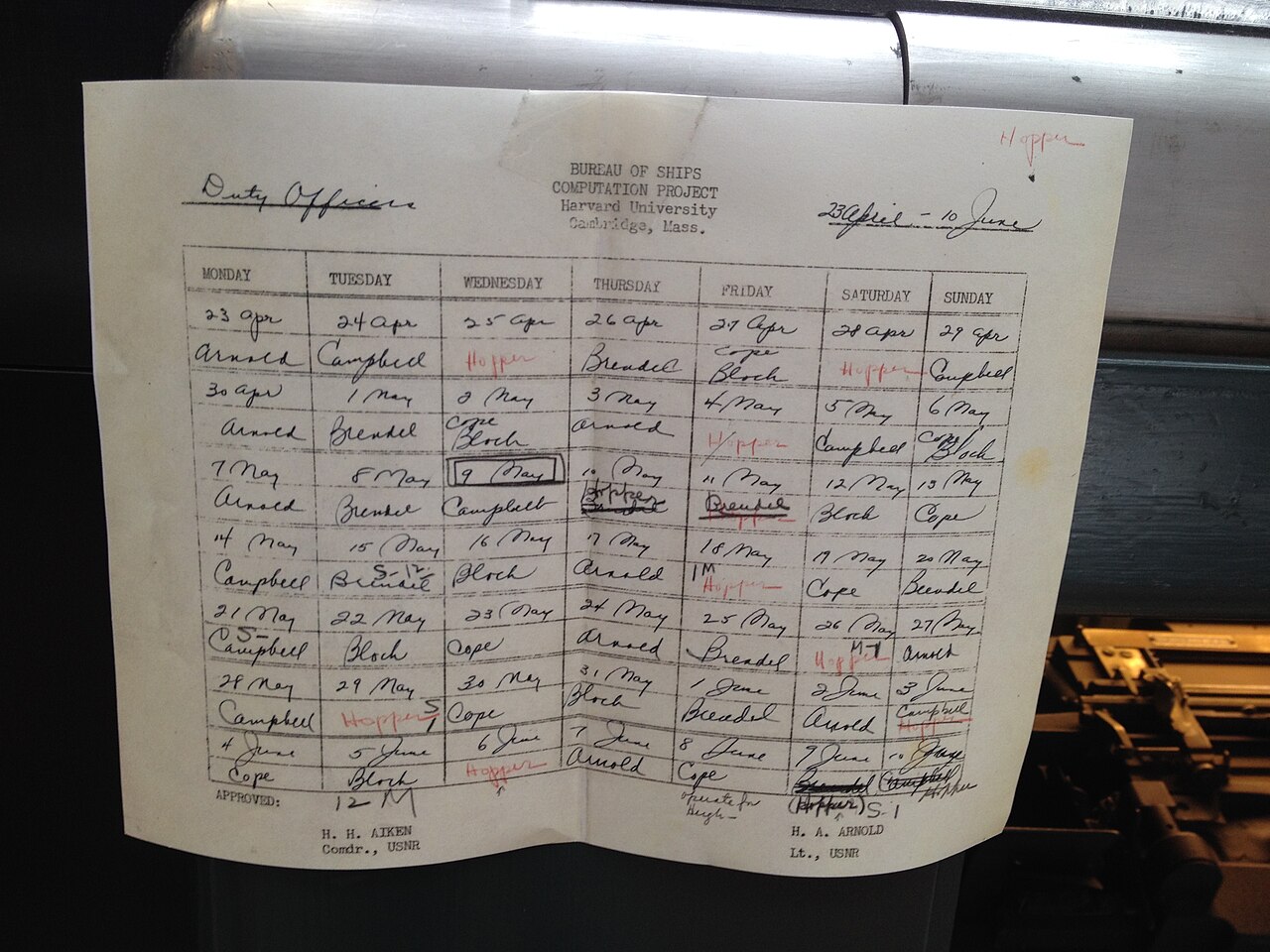
Photo of a typed and handwritten duty officer schedule titled Duty Officers, Bureau of Ships Computation Project, Harvard University, Cambridge, Mass. A grid lists Monday through Sunday dates in April to June with officer names, some in red ink, signed by H. H. Aiken and H. A. Arnold at the bottom. The sheet is pinned to a metal surface.Document

Primary source

Harvard Mark I Duty Officer Sign-Up Sheet

U.S. Navy Bureau of Ships Computation Project personnel

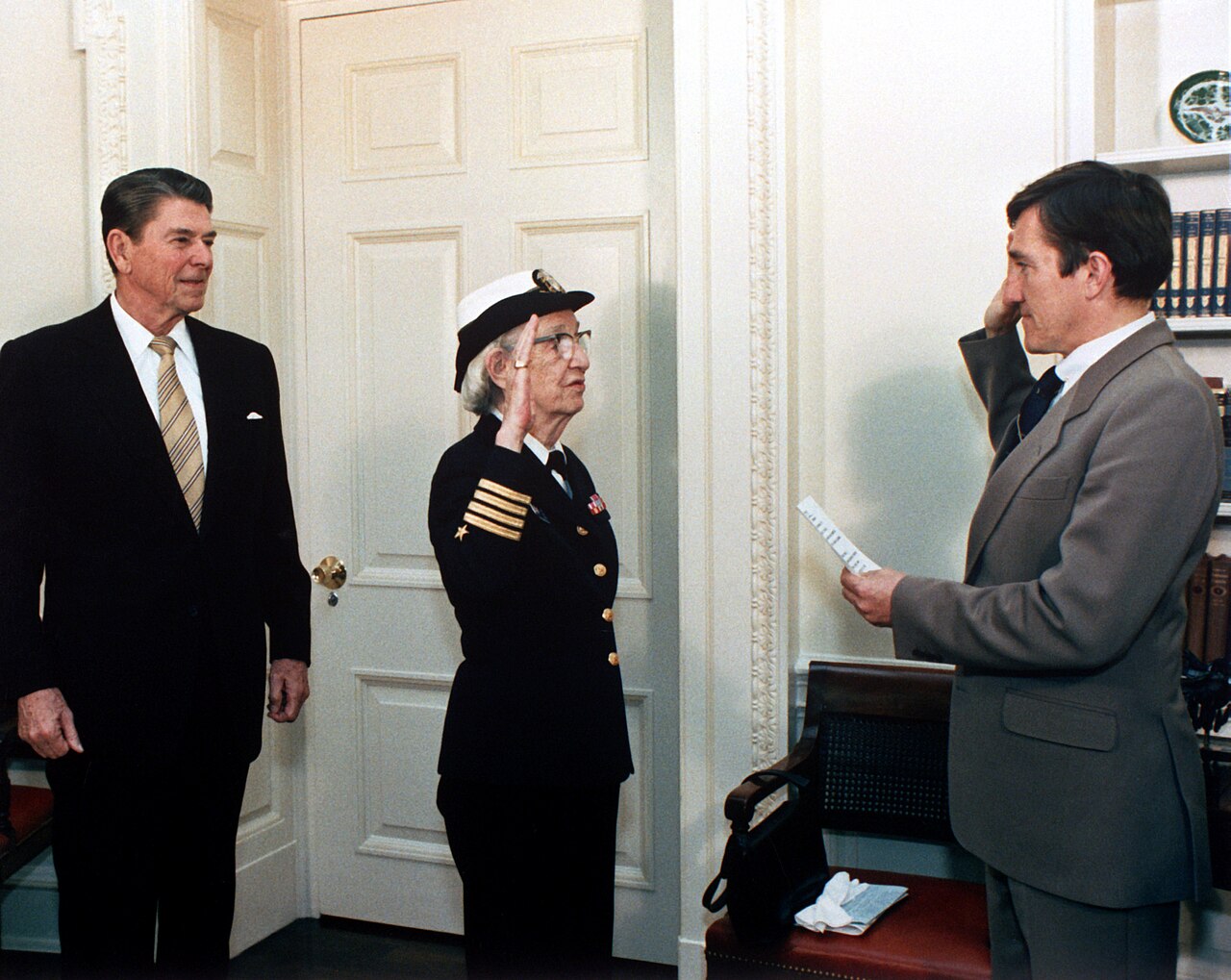
Indoor ceremony in a white-paneled room. An older woman in a navy dress uniform and white cap raises her right hand while a man in a gray suit holds a paper and raises his right hand. A man in a dark suit stands at left beside a white door.Photograph

Primary source

Grace Hopper Promoted to Commodore

Pete Souza · 1983

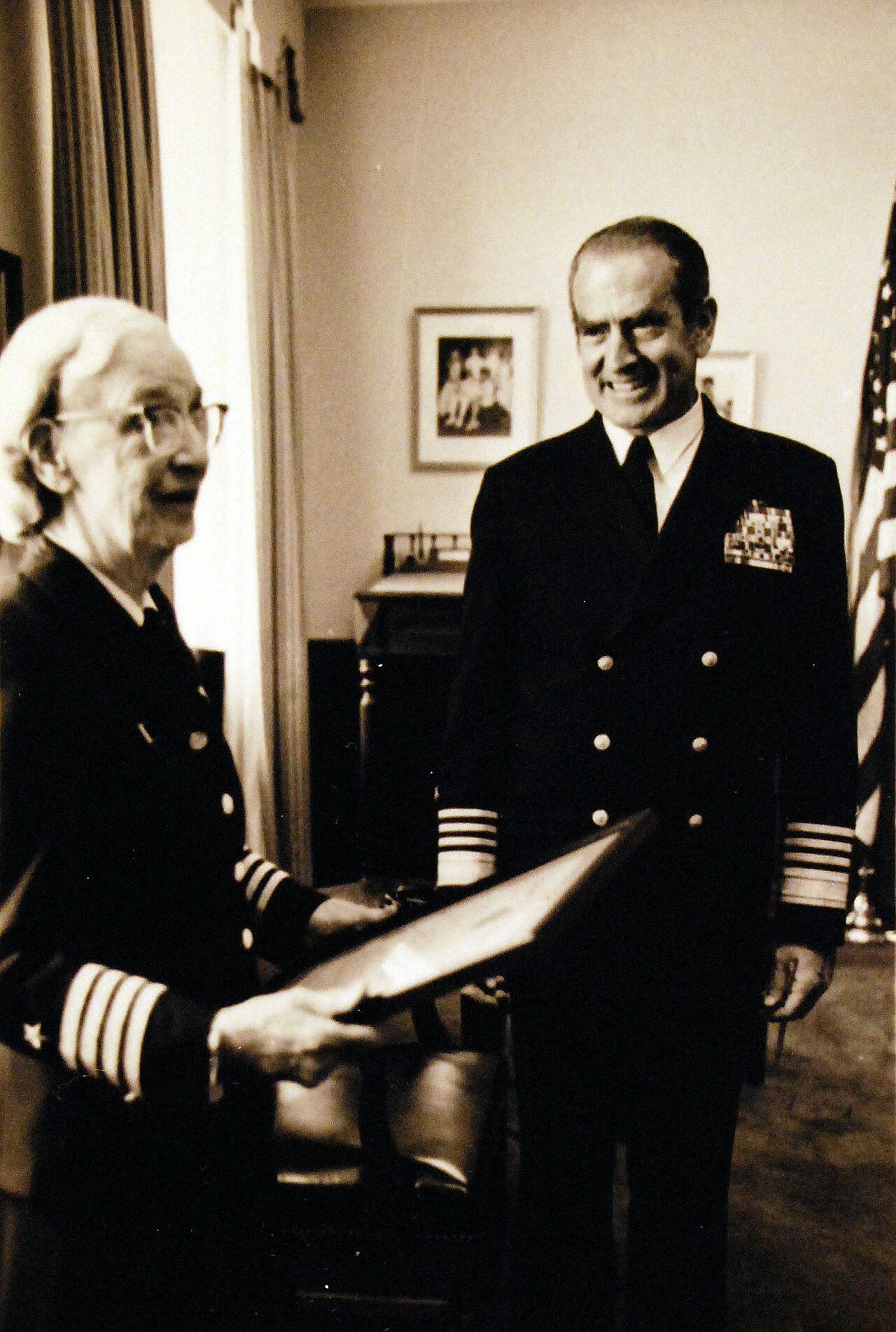
Black-and-white photo of an older woman with glasses and white hair in a dark naval uniform with stripes on her sleeves, holding a certificate folder, smiling. Beside her a smiling man in a dark double-breasted naval uniform with ribbons and sleeve stripes stands before a framed picture and an American flag.Photograph

Primary source

Grace Hopper Promoted to Captain by Admiral Zumwalt

Bill Mason · 13 August 1973

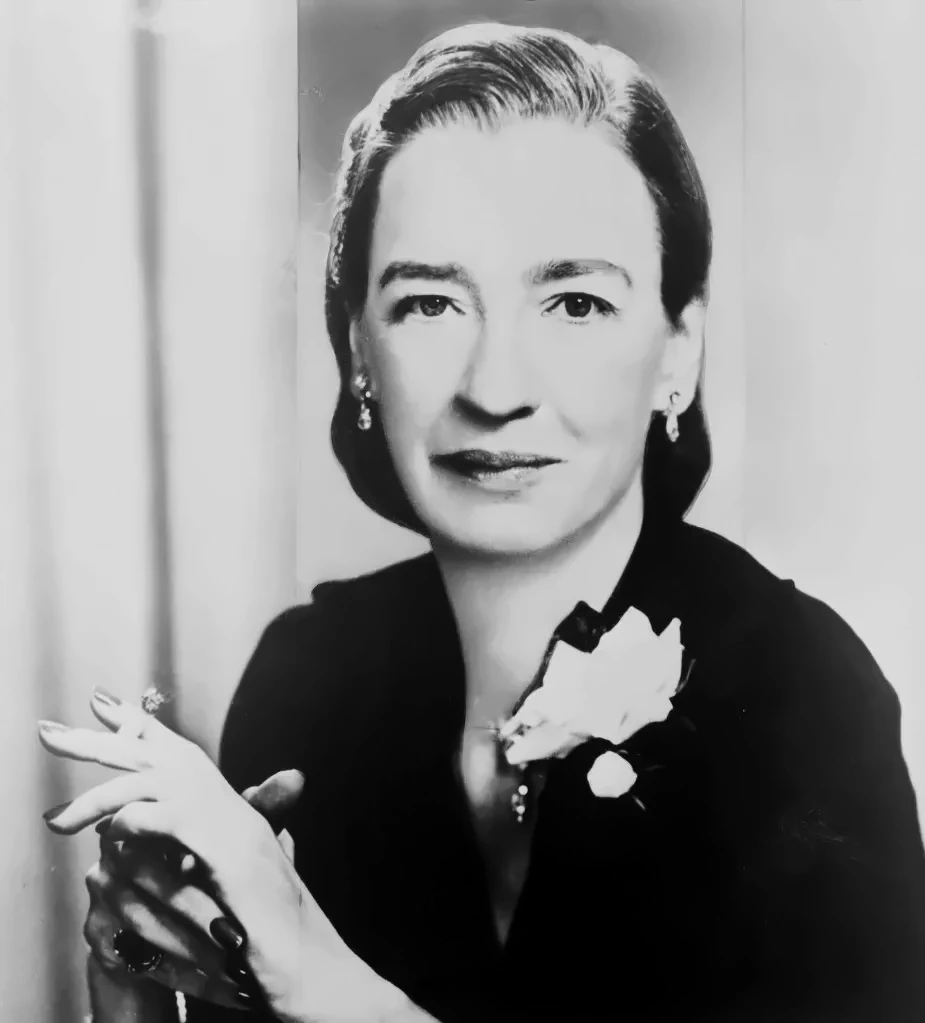
Black-and-white portrait of a woman with pale, smooth hair swept back, wearing drop earrings, a dark top with a light corsage flower at the shoulder, and hands with rings resting together near her waist against a plain backdrop.Photograph

Primary source

Grace Hopper in the 1940s

Unknown · 1940s

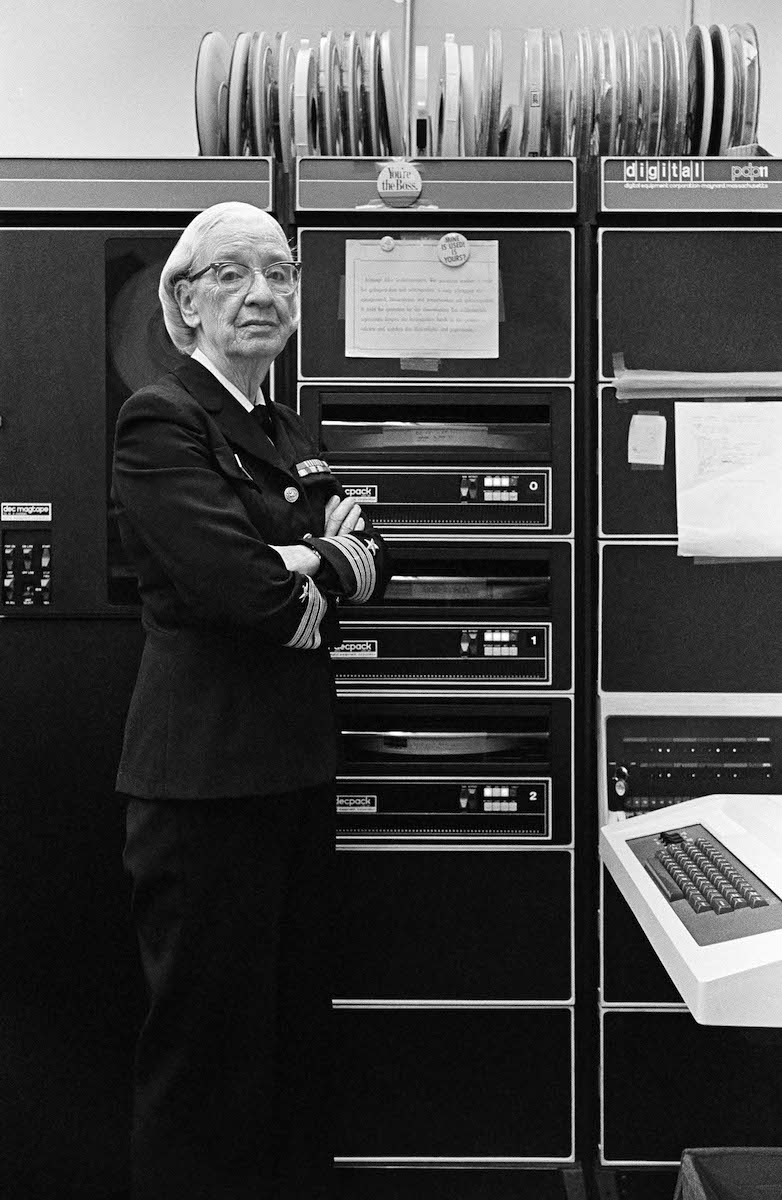
Black-and-white photograph of an older woman with white hair and glasses, wearing a dark naval-style uniform with stripes on the sleeves, arms crossed, standing in front of computer equipment with tape reels stacked on top and a Digital Equipment Corporation terminal at right.Photograph

Primary source

Grace Murray Hopper in Her Office in Washington DC, 1978

Lynn Gilbert · 1978

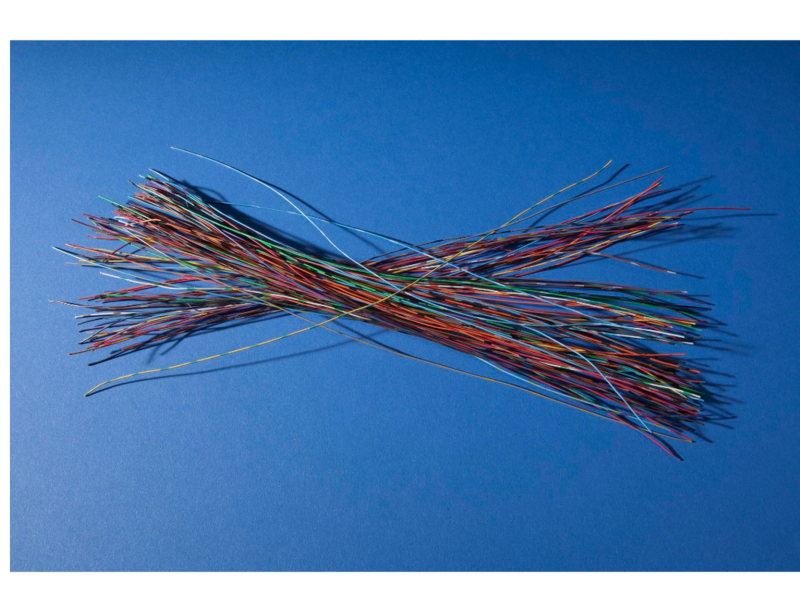
A bundle of many thin, multicolored insulated wires, red, orange, green, blue, white and yellow, laid diagonally across a plain blue background. The wires are cut to different lengths and fan out at both ends.Artifact

Primary source

Grace Hopper's Nanoseconds

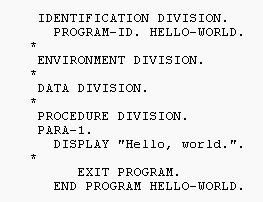
Source code listing of a COBOL Hello World program on a plain background. It shows IDENTIFICATION DIVISION, PROGRAM-ID HELLO-WORLD, ENVIRONMENT DIVISION, DATA DIVISION, PROCEDURE DIVISION, paragraph PARA-1 displaying "Hello, world.", EXIT PROGRAM, and END PROGRAM HELLO-WORLD.Document

Secondary source

COBOL

CODASYL · 1959

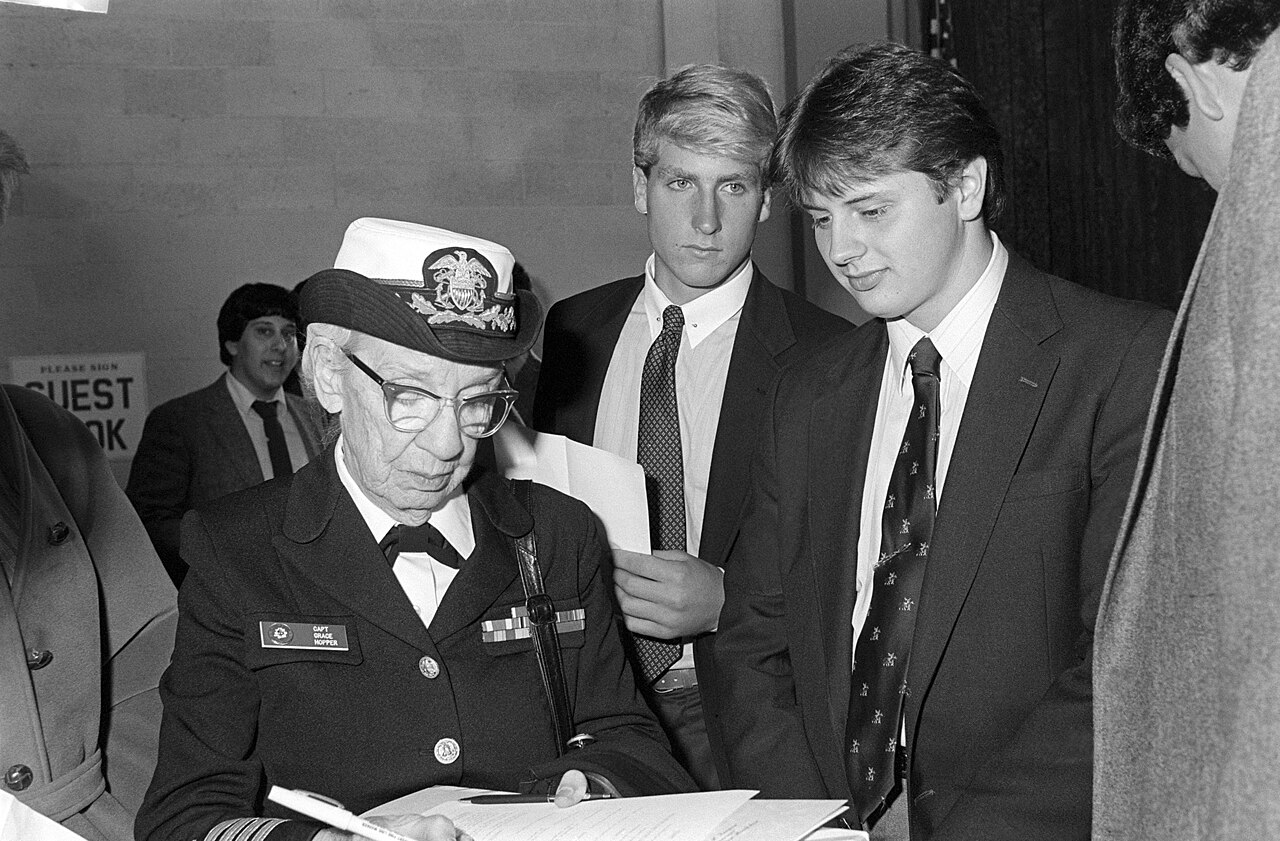
Black-and-white photo of an elderly woman in a navy dress uniform with a white-topped cap and glasses, signing a document on a table. Two young men in suits and ties stand beside her, one holding papers, while another person in a jacket stands at the right edge.Photograph

Primary source

Grace Hopper Signing Autographs at Computer Learning Center Dedication

Department of Defense, American Forces Information Service

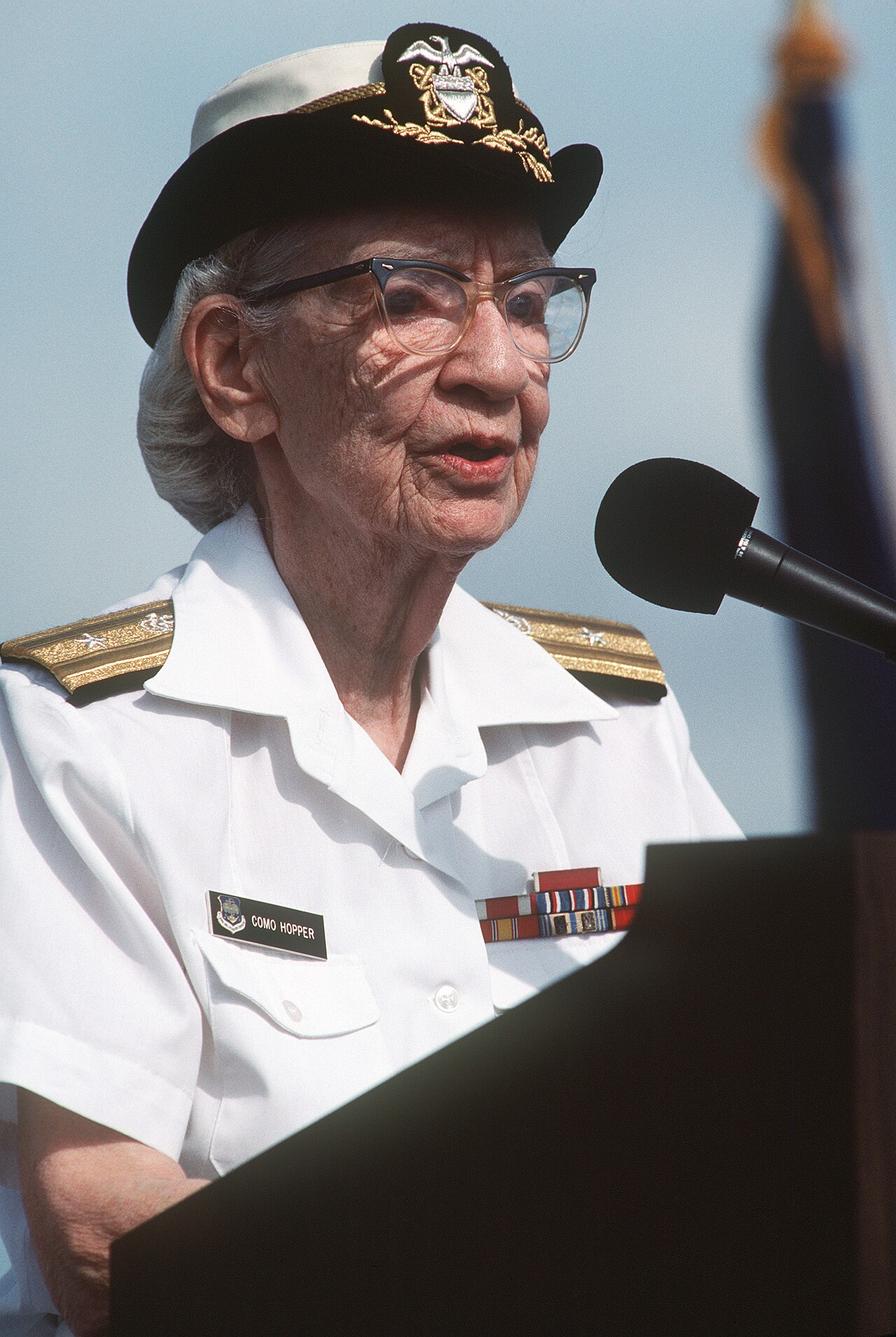
An elderly woman in a white Navy dress uniform and dark combination cap with gold oak-leaf embroidery speaks at a dark podium into a black microphone. She wears glasses and has a nameplate reading COMO HOPPER. Ribbons are pinned on her chest, and a blurred blue flag stands behind her against a pale sky.Photograph

Primary source

Commodore Grace Hopper Speaking at Groundbreaking Ceremony

Department of Defense, American Forces Information Service

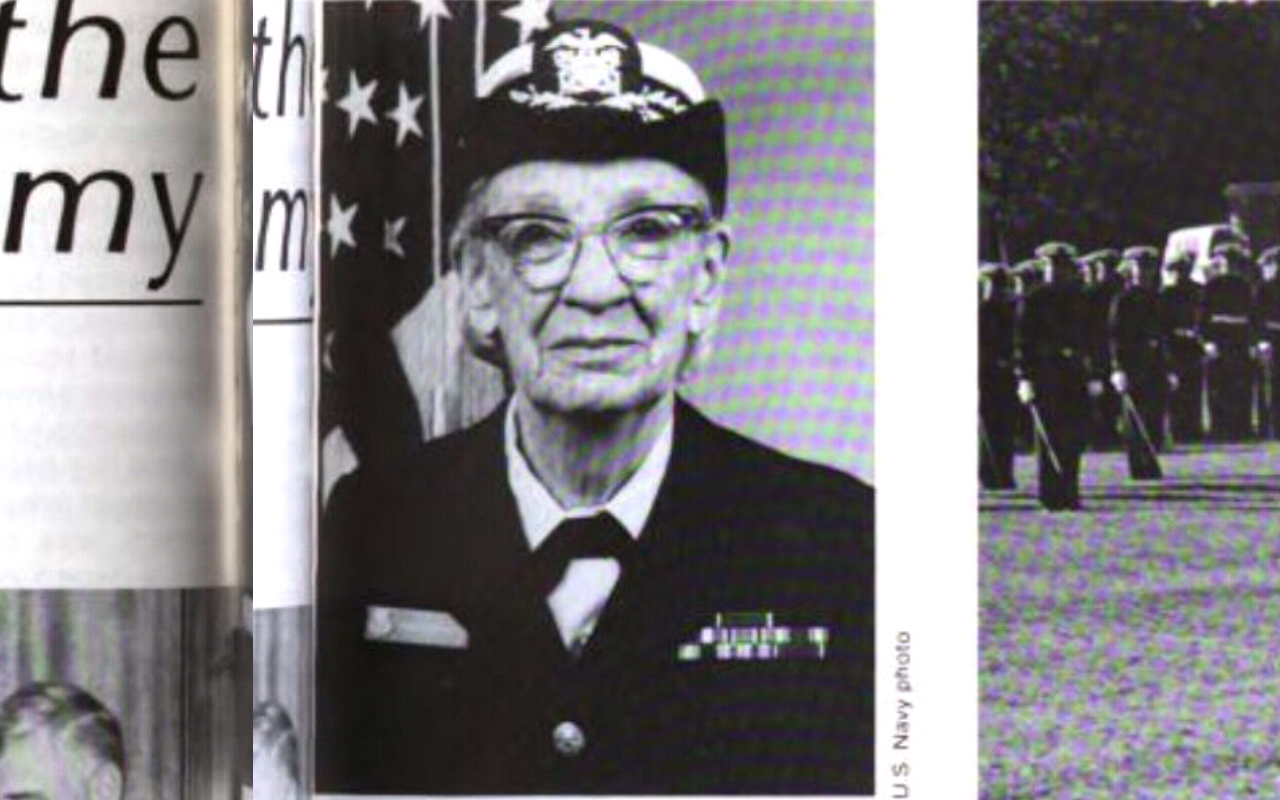
Black-and-white photograph of an older woman in a naval officer's dress cap and uniform with glasses, standing before a US flag. Credit reads U.S. Navy photo. Partial pages of a book appear at left.Photograph

Primary source

Commodore Grace Hopper, Early Computer Pioneer

United States Navy

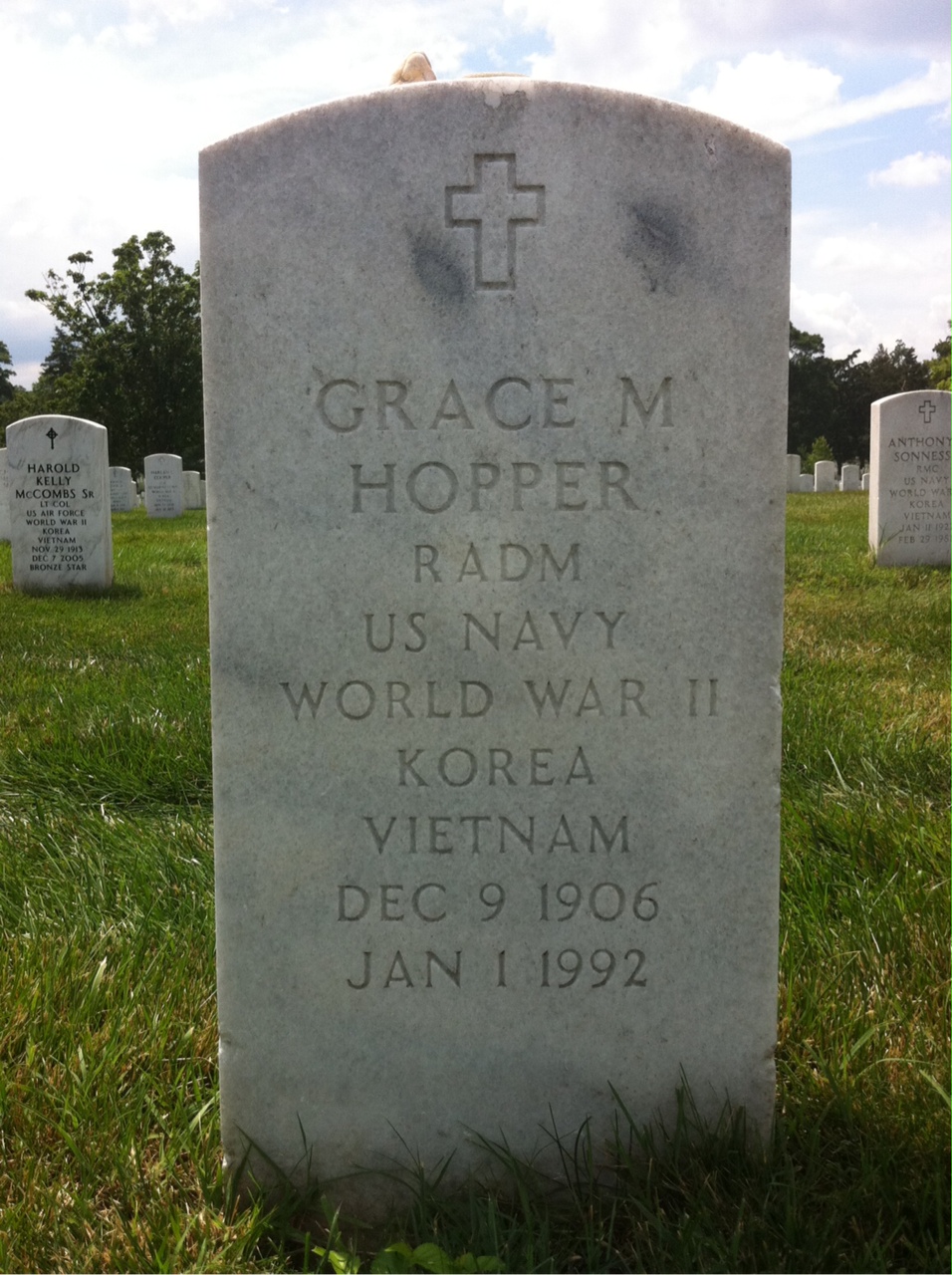
White marble headstone with rounded top and engraved cross, reading GRACE M HOPPER, RADM, US NAVY, WORLD WAR II, KOREA, VIETNAM, DEC 9 1906, JAN 1 1992. Green grass and other headstones in background under a cloudy sky.Photograph

Secondary source

Grave of Grace Hopper

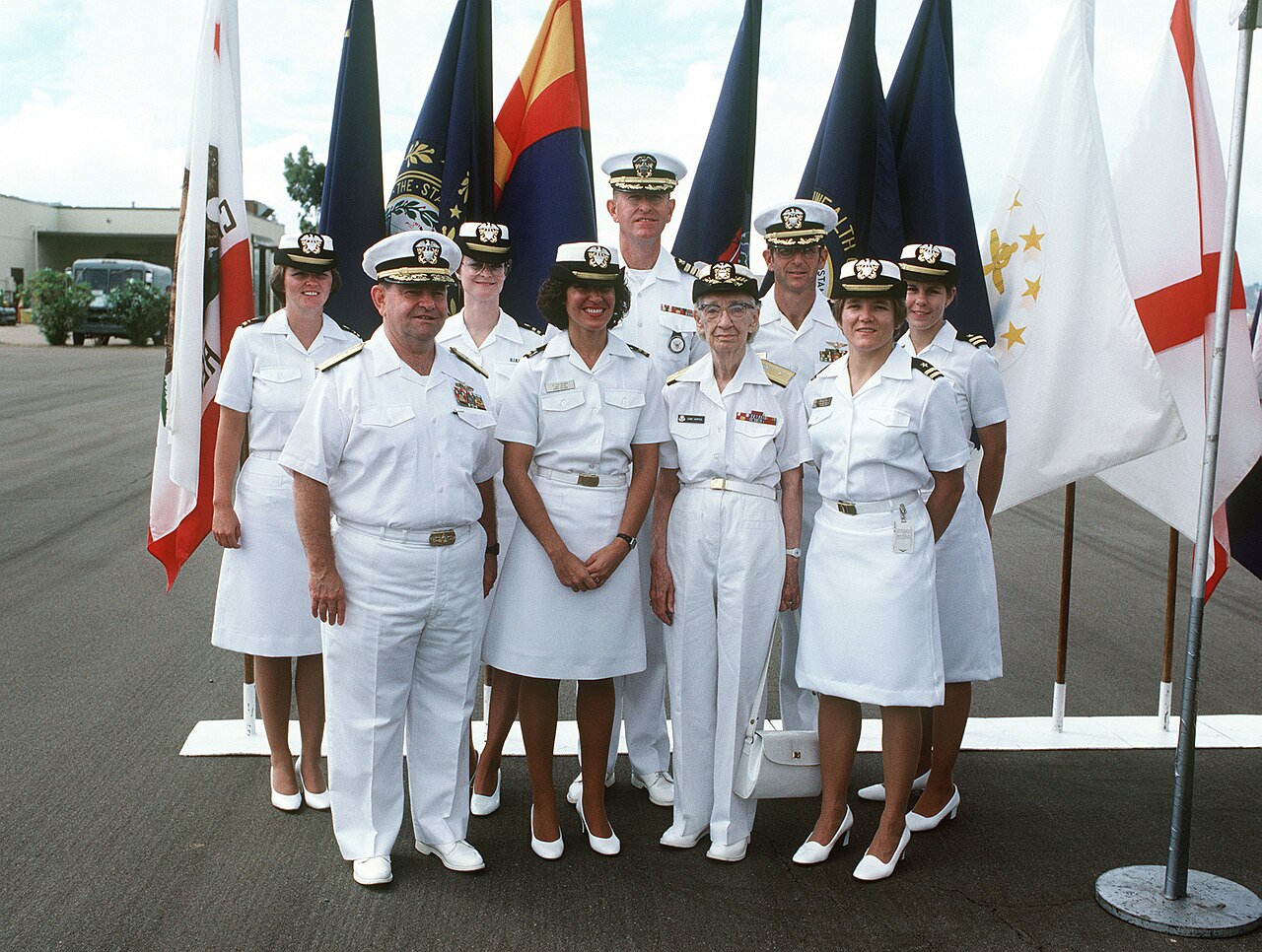
Group of about ten uniformed Navy personnel in white dress uniforms and officer caps stand in two rows before a row of flags, including a California state flag, on a paved outdoor area. Center front, an older woman with white hair wears a cap and ribbons, flanked by younger women and men.Photograph

Primary source

Staff of Naval Regional Data Automation Center with Commodore Grace Hopper

Department of Defense, American Forces Information Service

Official portrait of an elderly woman in a dark navy naval dress uniform and white-trimmed cap with gold insignia, glasses, arms folded, standing before an American flag. Nameplate reads Grace M. Hopper.Photograph

Primary source

Official Portrait of Commodore Grace M. Hopper

James S. Davis · 20 January 1984

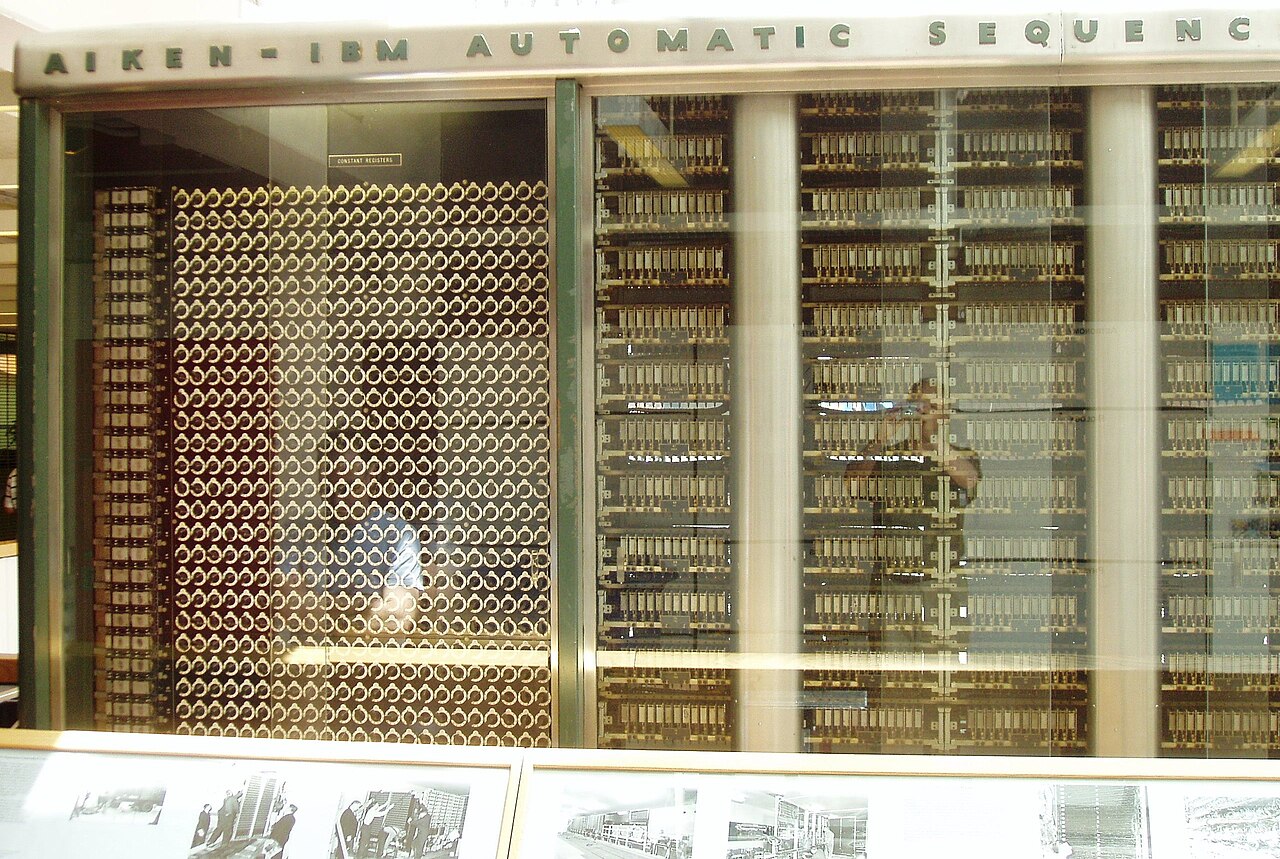
Left segment of the Harvard Mark I computer behind glass, showing rows of rotating counter wheels and switches, with the 'AIKEN-IBM AUTOMATIC SEQUENCE' lettering across the top. Display panels with photographs sit below.Photograph

Secondary source

Harvard Mark I Computer, Left Segment

Daderot · 4 July 2005

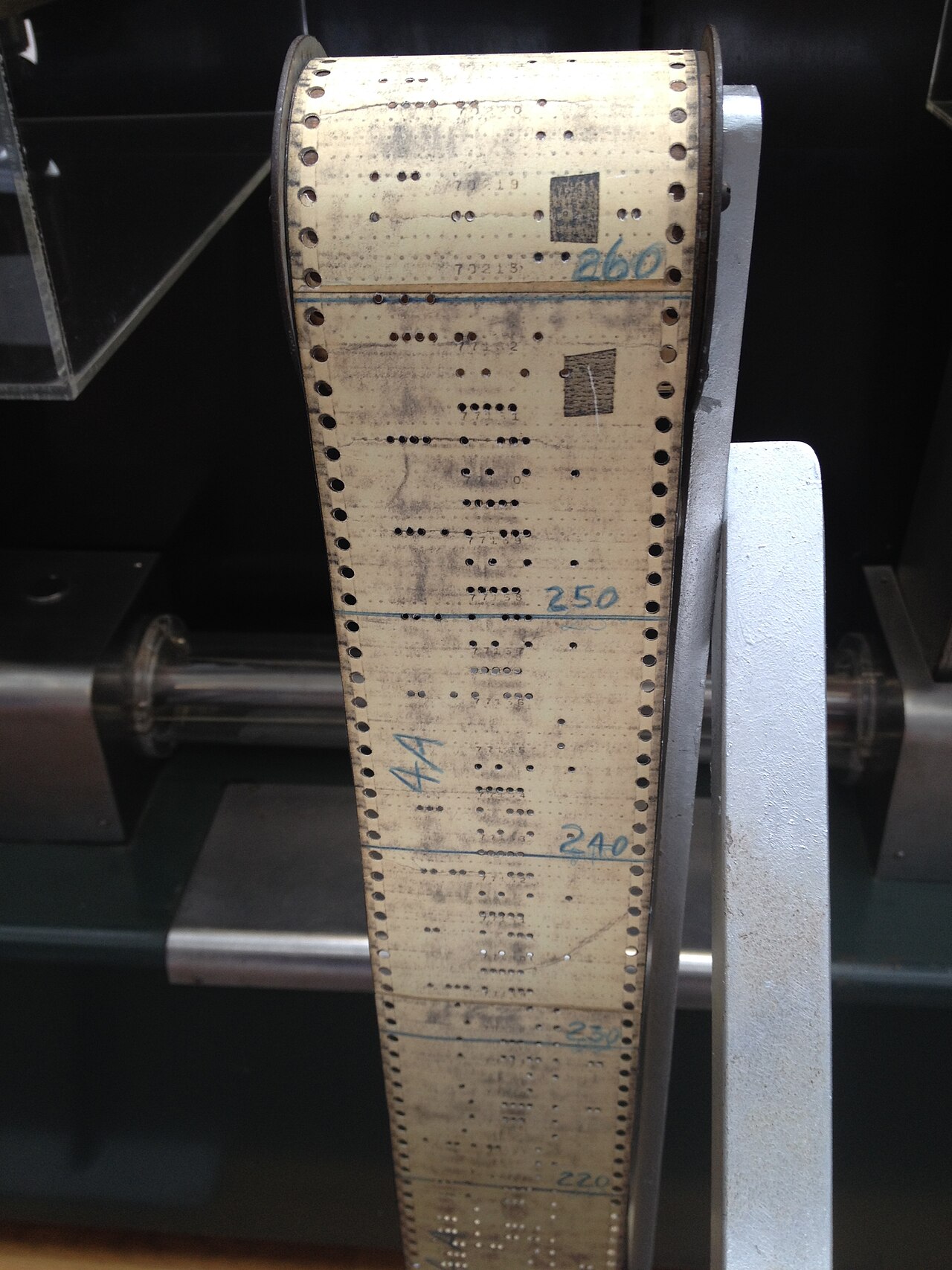
A long strip of yellowed paper punched-tape wound on a metal reel holder, with rows of punched holes and handwritten blue numbers such as 260, 250, 240, 230, and 220 marking sections along the tape.Artifact

Secondary source

Harvard Mark I Program Tape

ArnoldReinhold · 2014

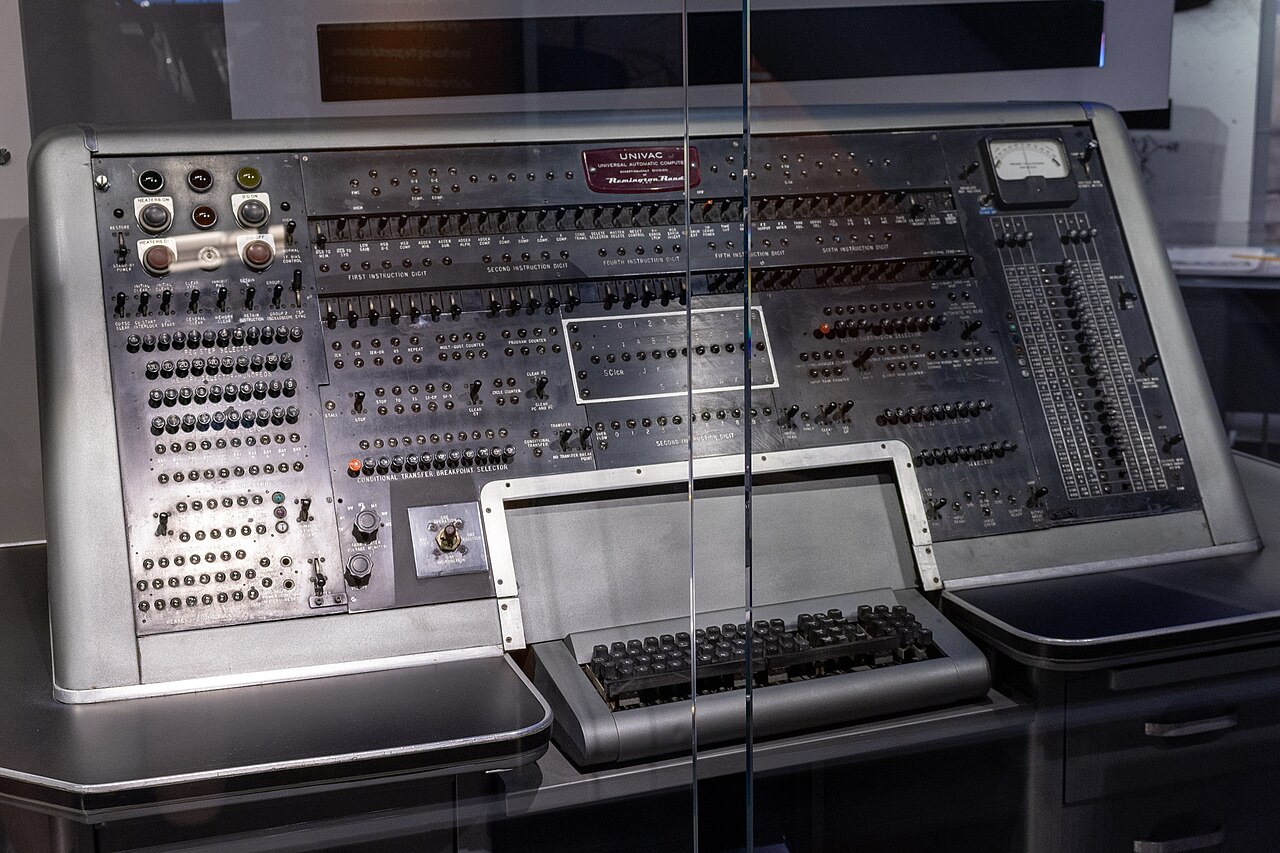
Front view of a silver-grey UNIVAC I control console with rows of toggle switches, indicator lights, a plugboard panel, and a keyboard, displayed behind glass in a museum. A Remington Rand UNIVAC badge is visible on the panel.Photograph

Secondary source

UNIVAC I Console, 1951

The wub · 2023

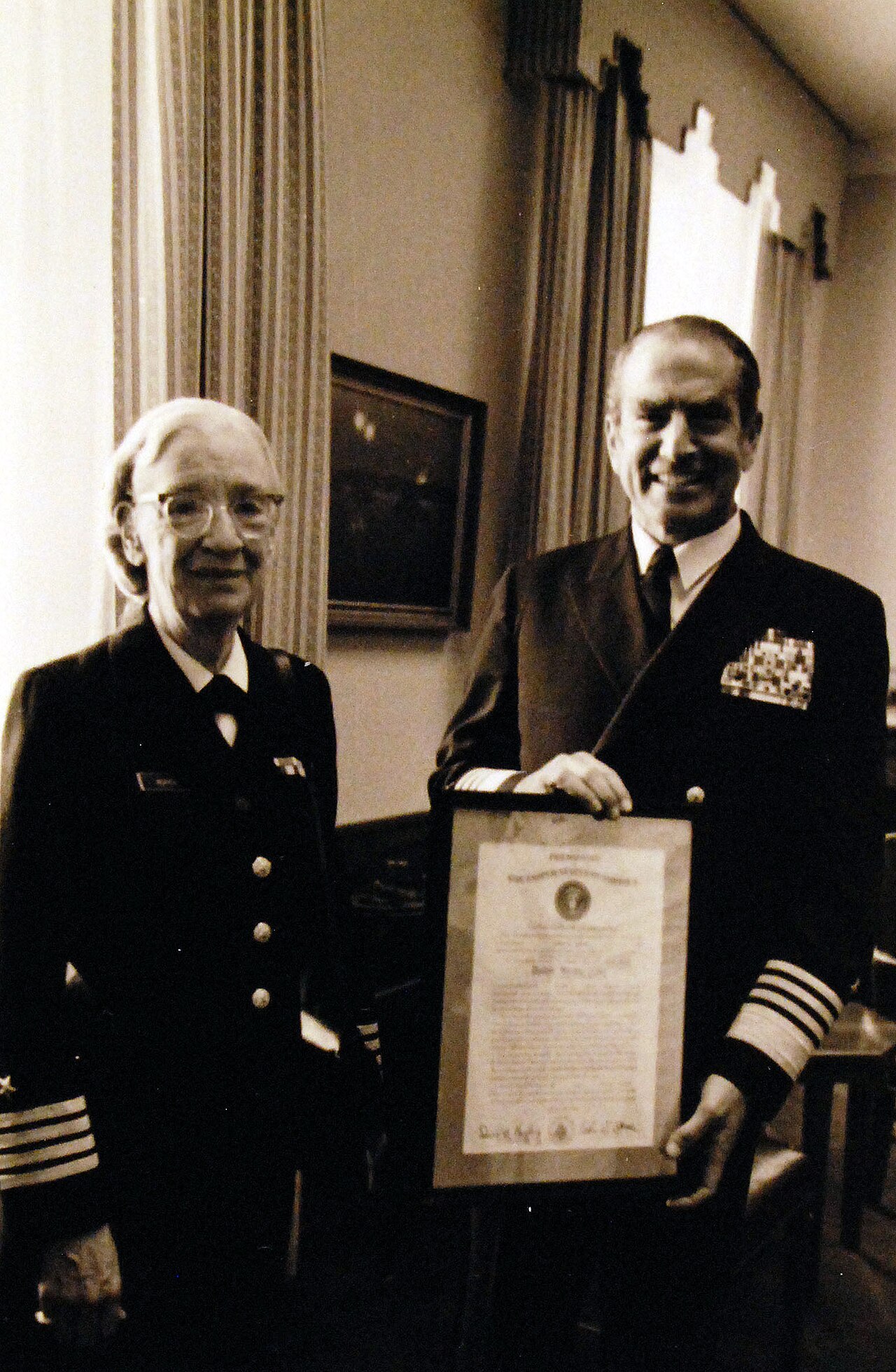
Black-and-white photo of two people in dress naval uniforms standing indoors before a window with striped drapes and a framed painting. An older woman with glasses on the left smiles. A smiling man on the right holds a framed certificate, with a signed document visible.Photograph

Primary source

Admiral Zumwalt Presents Captain's Promotion to Grace Hopper, 1973

Bill Mason · 13 August 1973

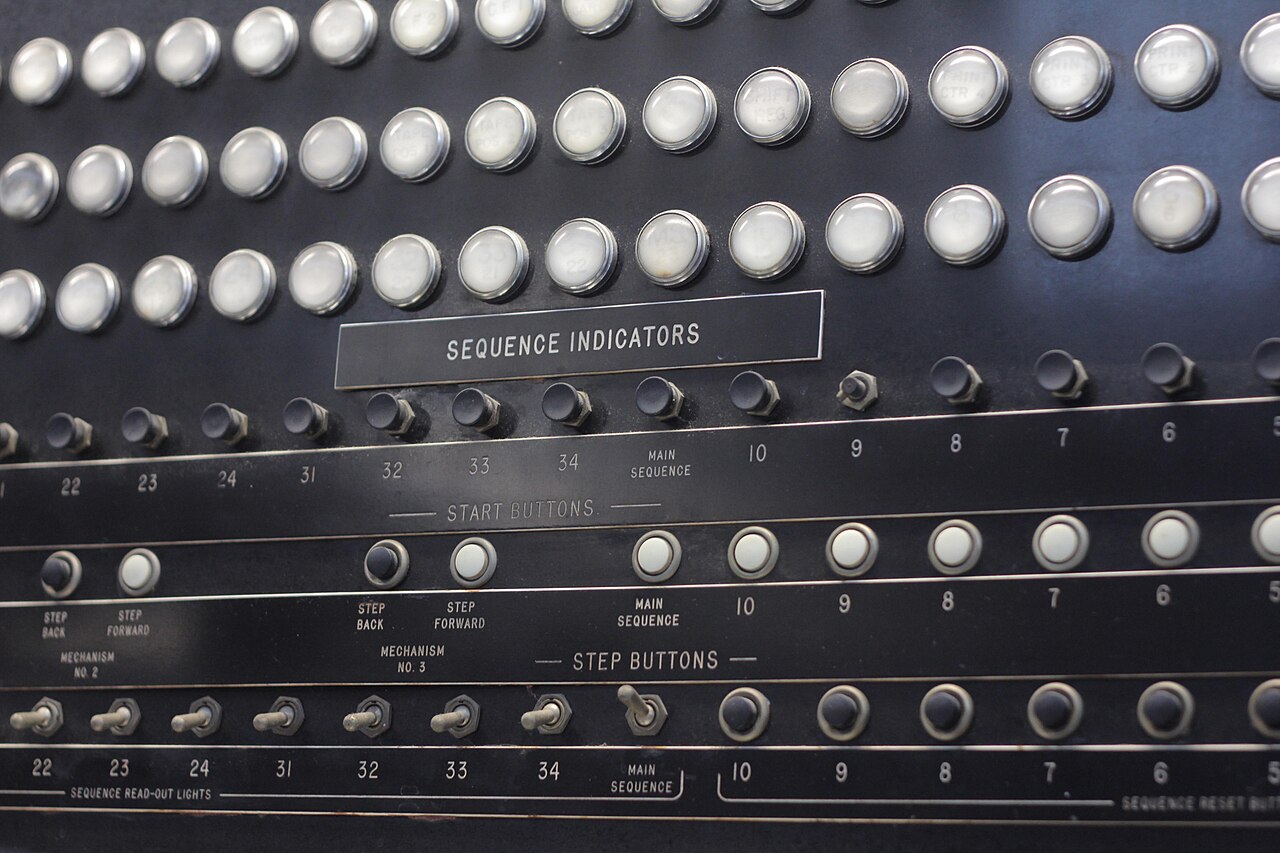
Close-up of a dark metal control panel from the Harvard Mark I computer. Rows of round silver indicator lights sit above a label reading SEQUENCE INDICATORS. Below are rows of toggle switches, round start and step buttons, and small engraved labels with numbers and words such as START BUTTONS, STEP BUTTONS, and MAIN SEQUENCE.Photograph

Secondary source

Harvard Mark I Sequence Indicators Detail

Rocky Acosta · 19 September 2012

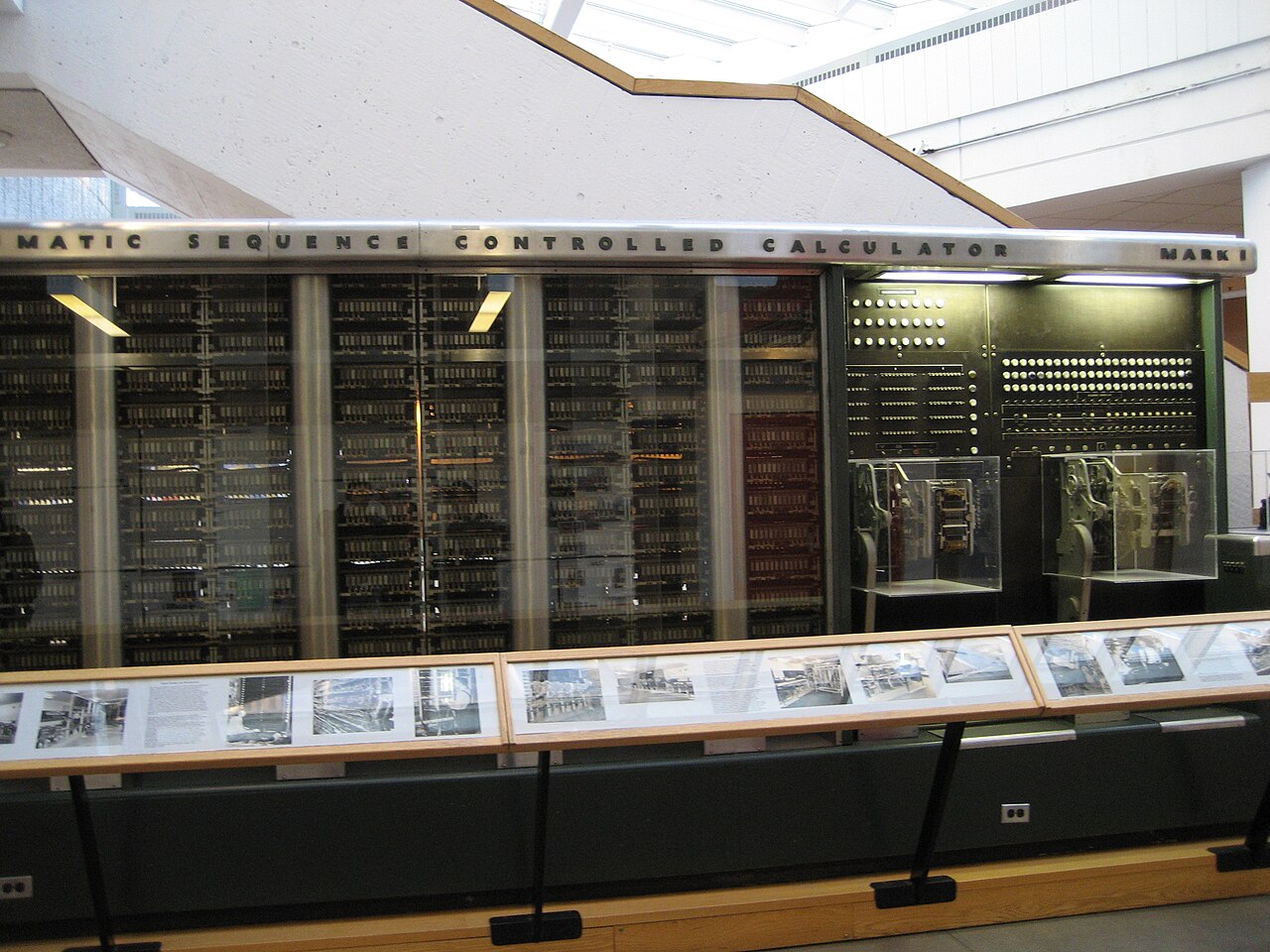
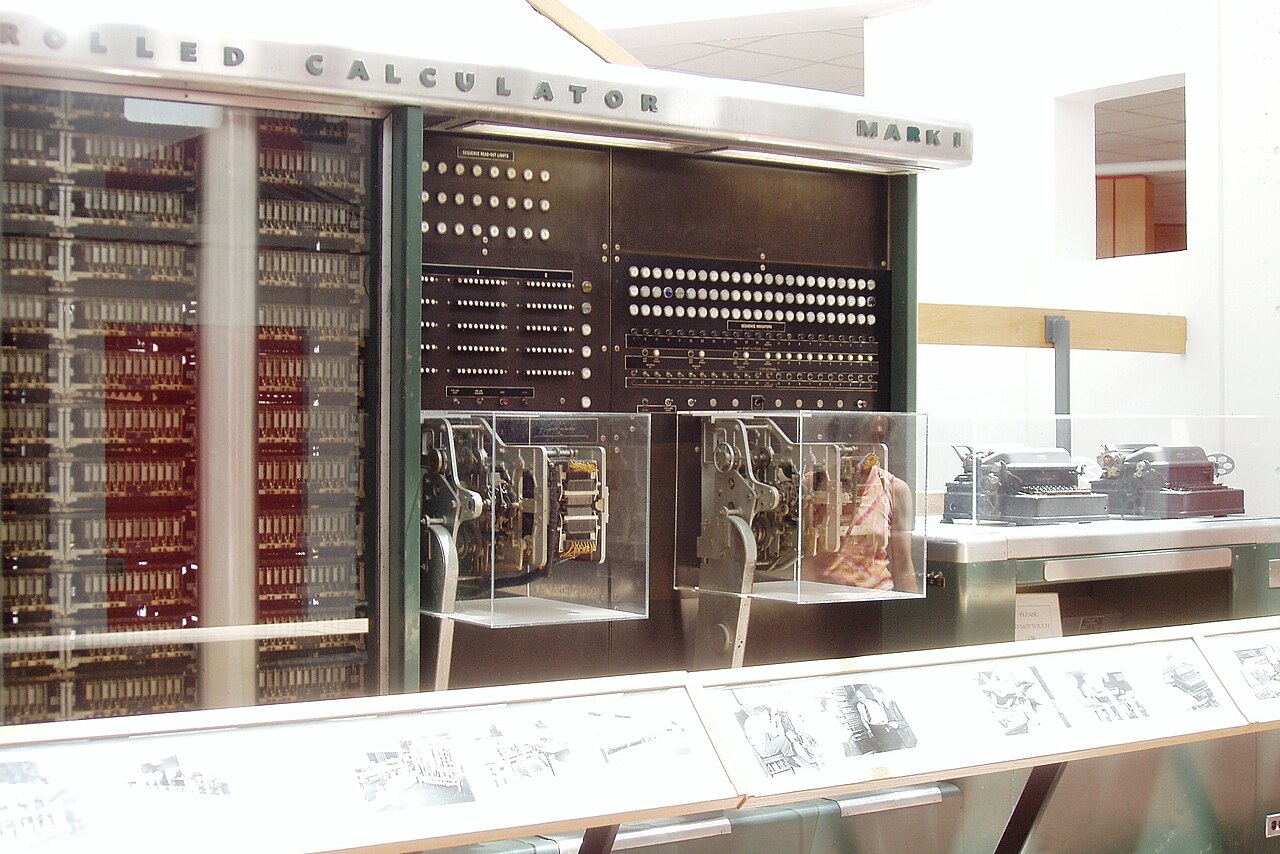
Large grey-and-chrome room-sized machine labeled 'MATIC SEQUENCE CONTROLLED CALCULATOR MARK I' with rows of glass-fronted panels and switches, displayed in a public building with photo panels below.Photograph

Secondary source

Harvard Mark I on Display, 2007

Waldir Pimenta · 4 February 2007

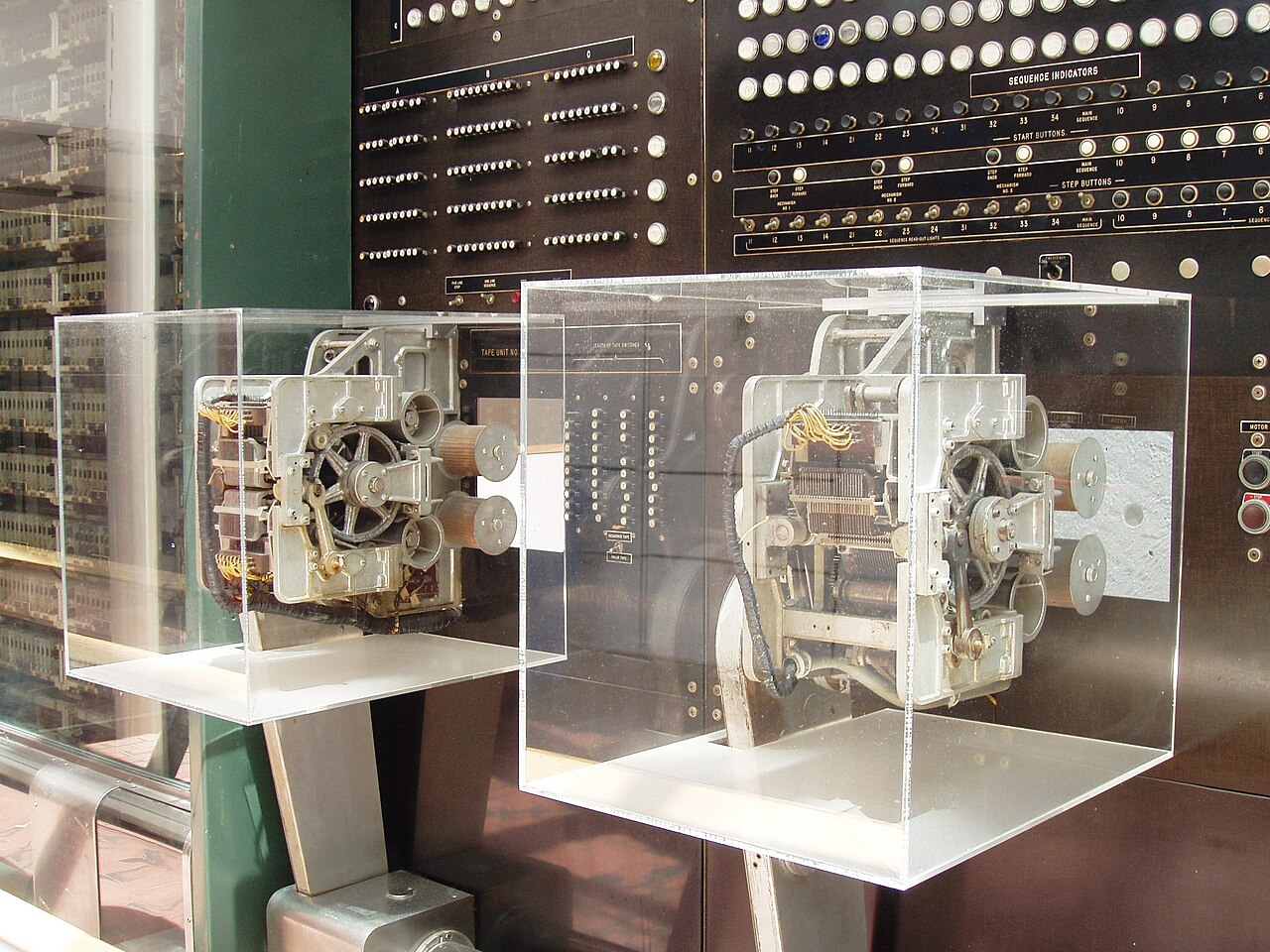
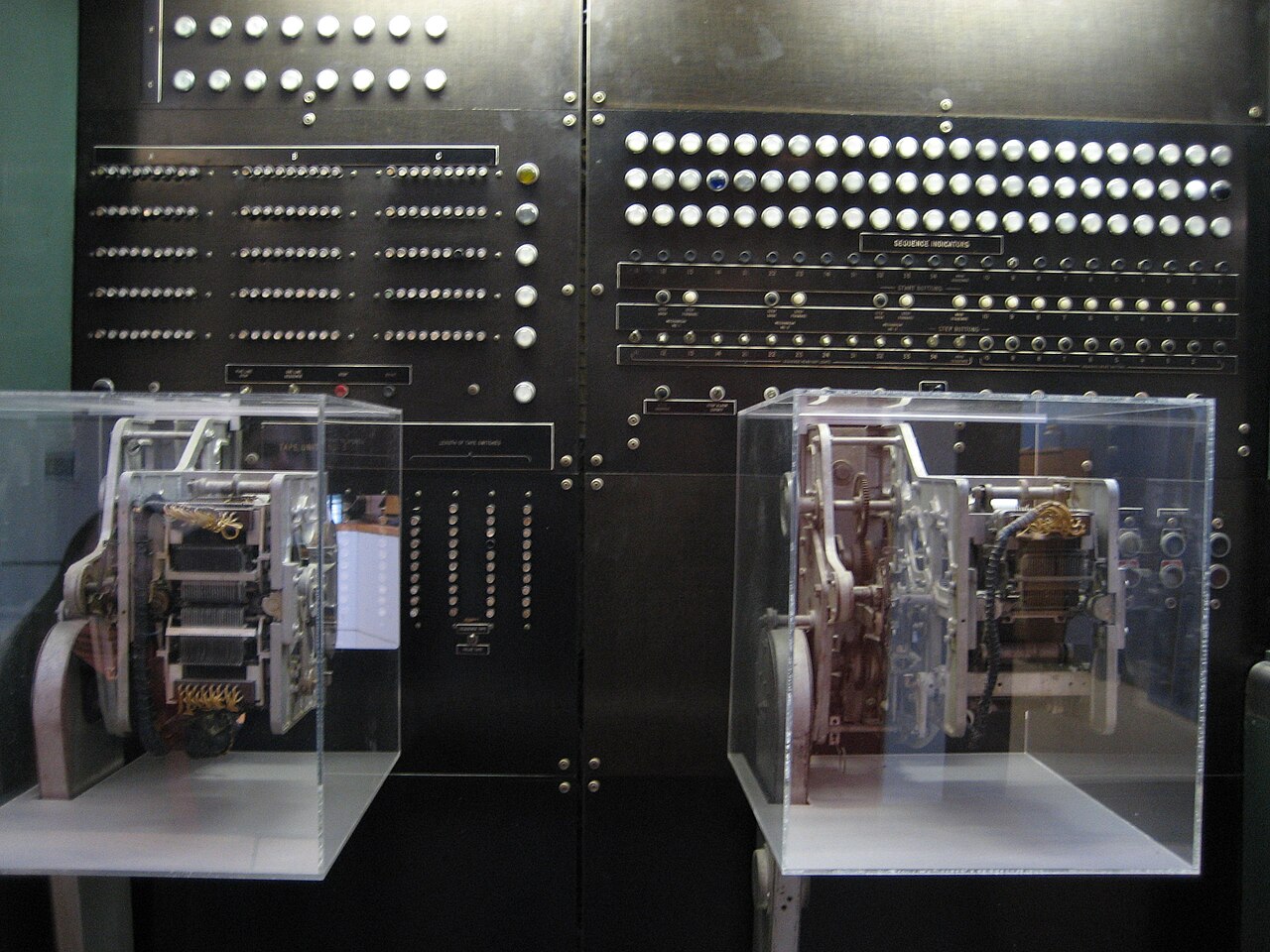
Two transparent acrylic cases mounted on metal stands display electromechanical paper tape reader units, with wiring and gears visible. Behind them is a dark panel with rows of indicator lights, switches, and push buttons labeled for sequence control, part of the Harvard Mark I computer's input-output section.Photograph

Secondary source

Harvard Mark I Input-Output Details

Daderot · 4 July 2005

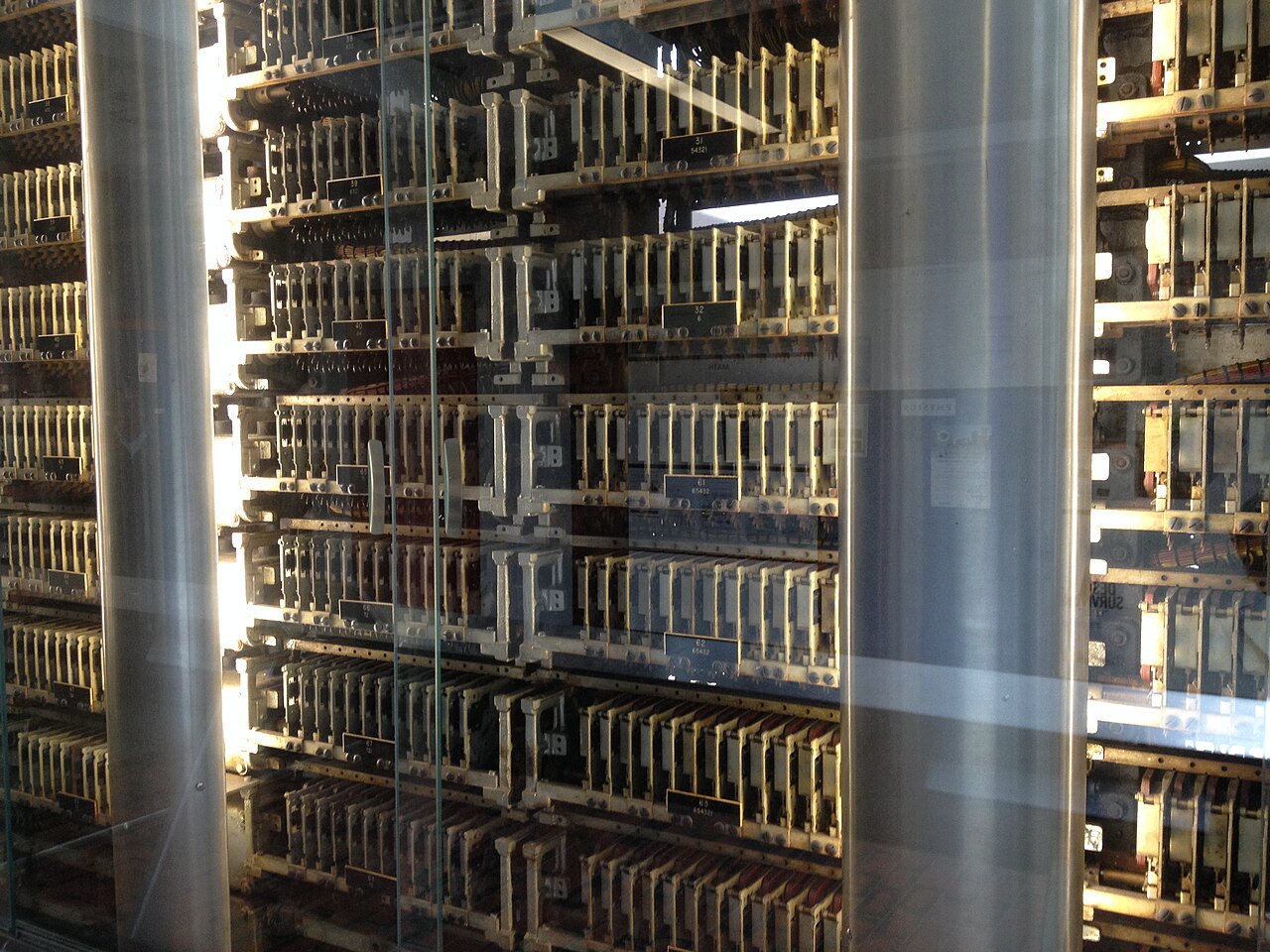
Rear view of the Harvard Mark I computer: rows of metal electromechanical relay and switch units with brass-colored components and labeled panels, mounted between tall cylindrical glass-walled columns.Photograph

Secondary source

Harvard Mark I Rear View

ArnoldReinhold · 23 May 2014

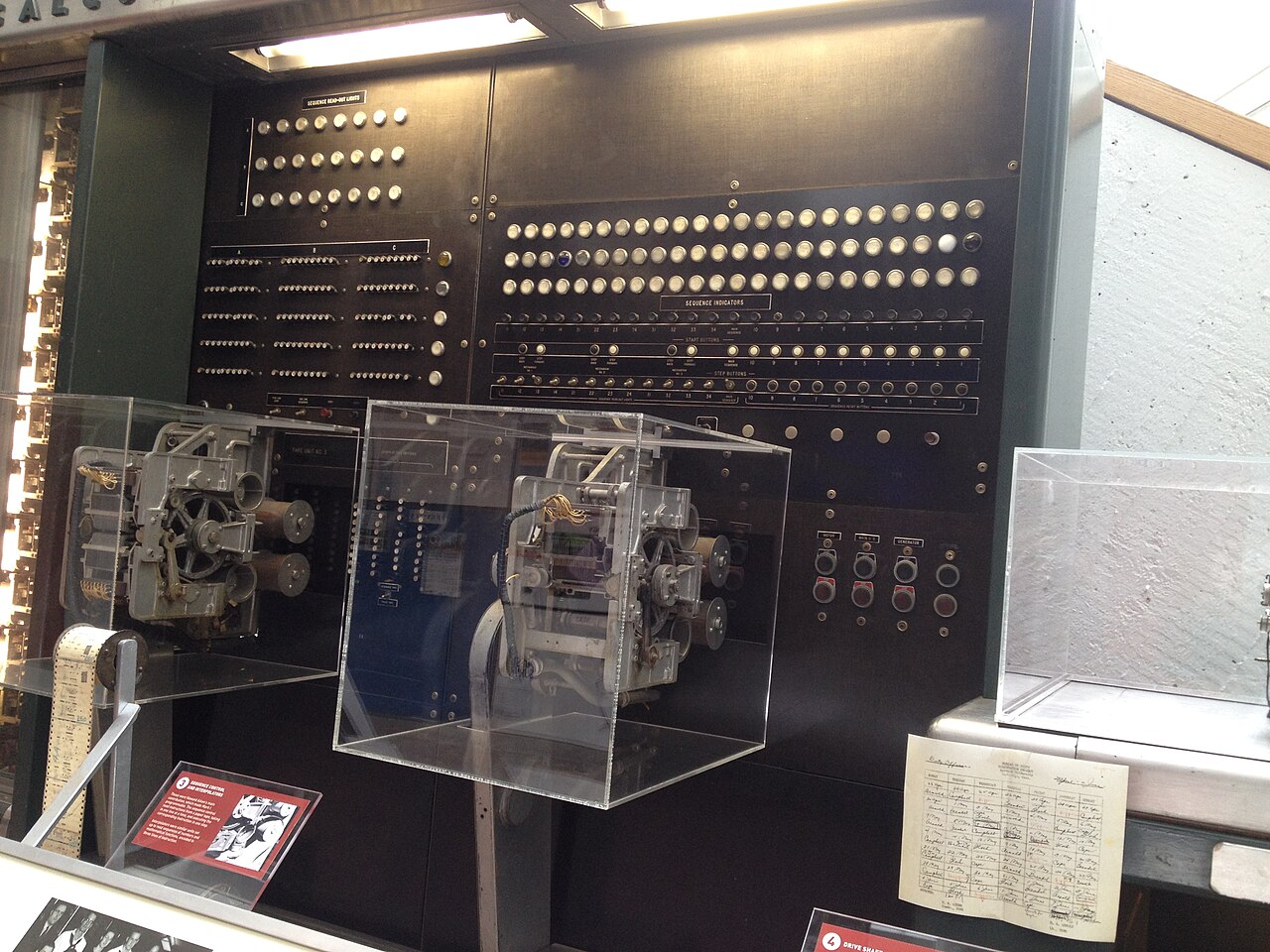
Museum display of the Harvard Mark I sequencer: a dark metal control panel with rows of round indicator lights and switches, two paper tape reader units in clear acrylic cases, and a paper document on the right.Photograph

Secondary source

Harvard Mark I Sequencer

ArnoldReinhold · 23 May 2014

Photograph of part of the Harvard Mark I computer: a dark metal control panel with rows of push buttons and indicator lights, and two rotary mechanisms in clear plastic display cases at the lower left and right.Photograph

Secondary source

Harvard Mark I Partial View

Museum display of the Harvard Mark I calculator, showing its metal panels with rows of dials and switches, a glass-enclosed mechanism, a sign reading 'Mark I', and two typewriters on a table with explanatory panels below.Photograph

Secondary source

Harvard Mark I Computer, Right Segment

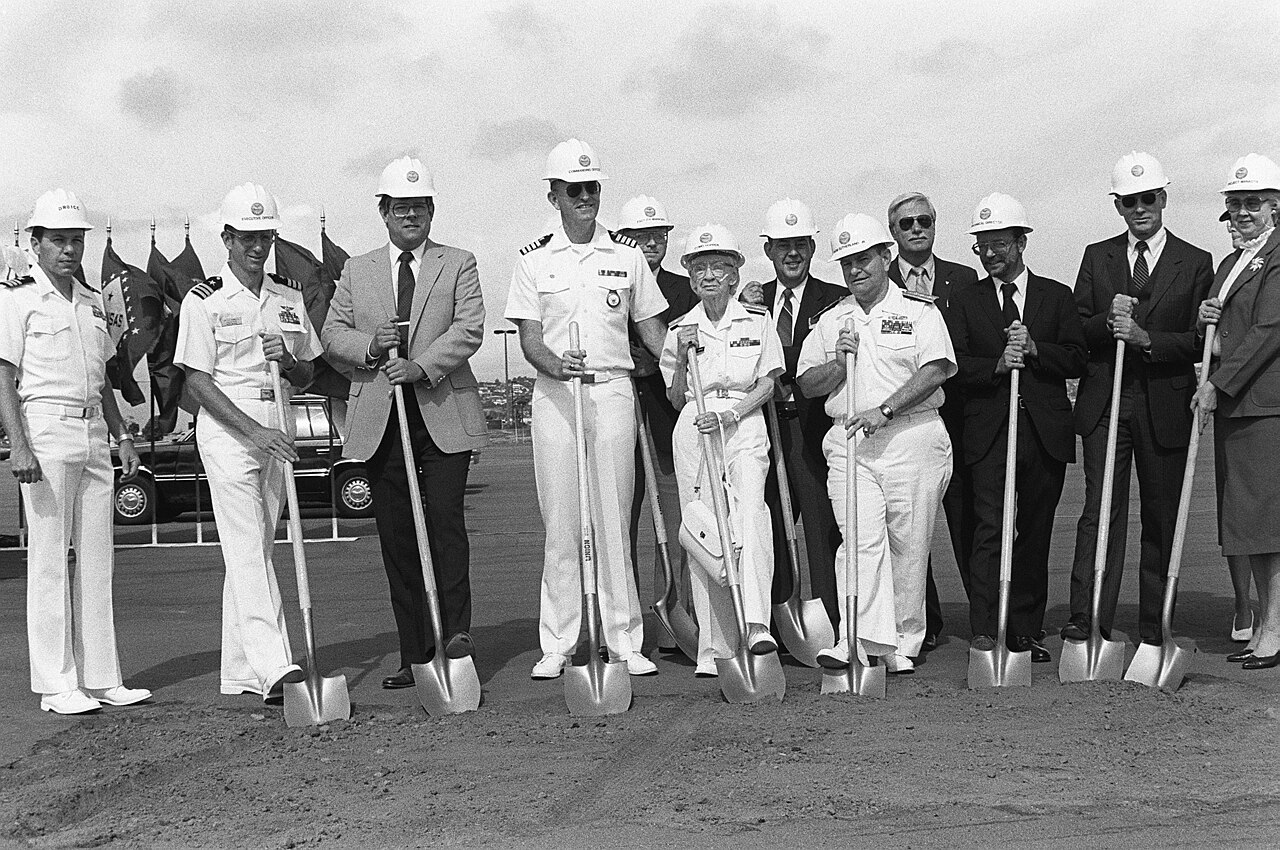
Black-and-white photo of a groundbreaking ceremony outdoors on bare dirt. About fourteen people in white and dark uniforms and suits, most wearing white hard hats, hold shovels in the dirt. A woman in a white naval uniform stands near the center. Flags and a dark car are visible behind them.Photograph

Primary source

Groundbreaking of Grace M. Hopper Navy Data Center, 1985

Department of Defense, American Forces Information Service, Defense Visual Information Center · 27 September 1985

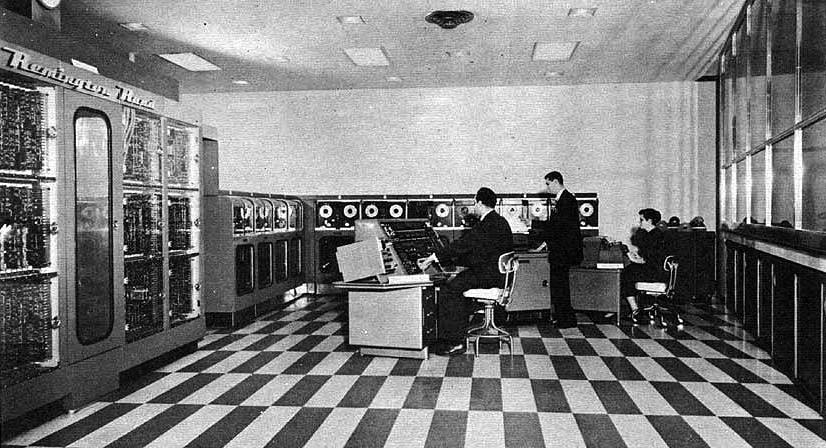
Black-and-white photograph of a large room with a checkerboard tile floor and a glass-walled side. On the left stand tall cabinets with a 'Remington Rand' sign and rows of panels. In the center, two men in suits stand and one seated man operates a control console, and a seated woman works at a desk on the right. Reel-to-reel tape units line the back wall.Photograph

Primary source

UNIVAC I Installation, Franklin Institute

Franklin Life Insurance Company · late 1950s–early 1960s

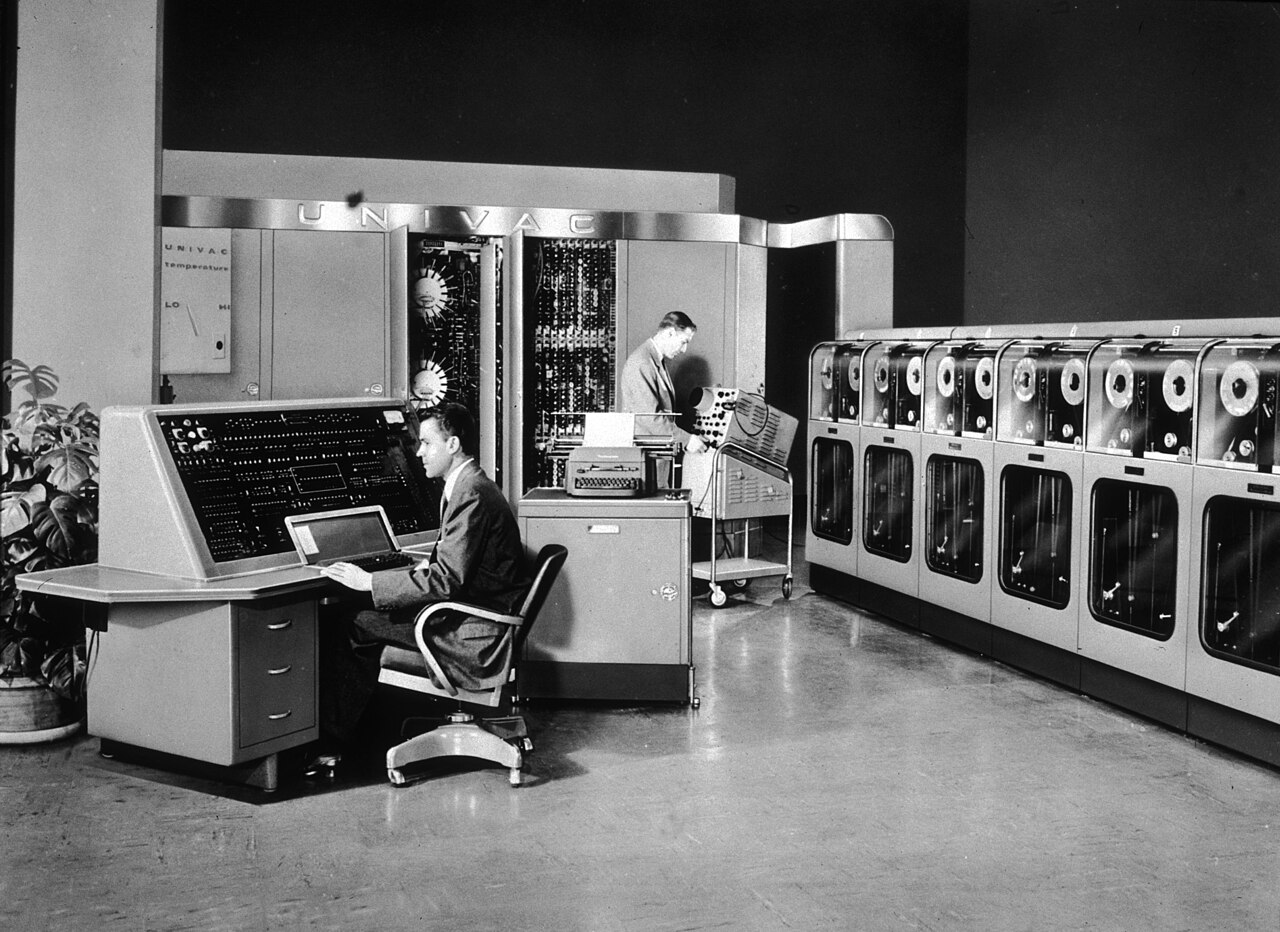
Black-and-white photograph of a room with a UNIVAC computer. A man in a suit sits at a control console with a keyboard and a typewriter-style printer. Behind him, a second man stands at a cabinet with a cart. Tape drive units line the right wall, and a plant stands at left.Photograph

Primary source

UNIVAC I Dedication at the Census Bureau

U.S. Census Bureau employees · 14 June 1951

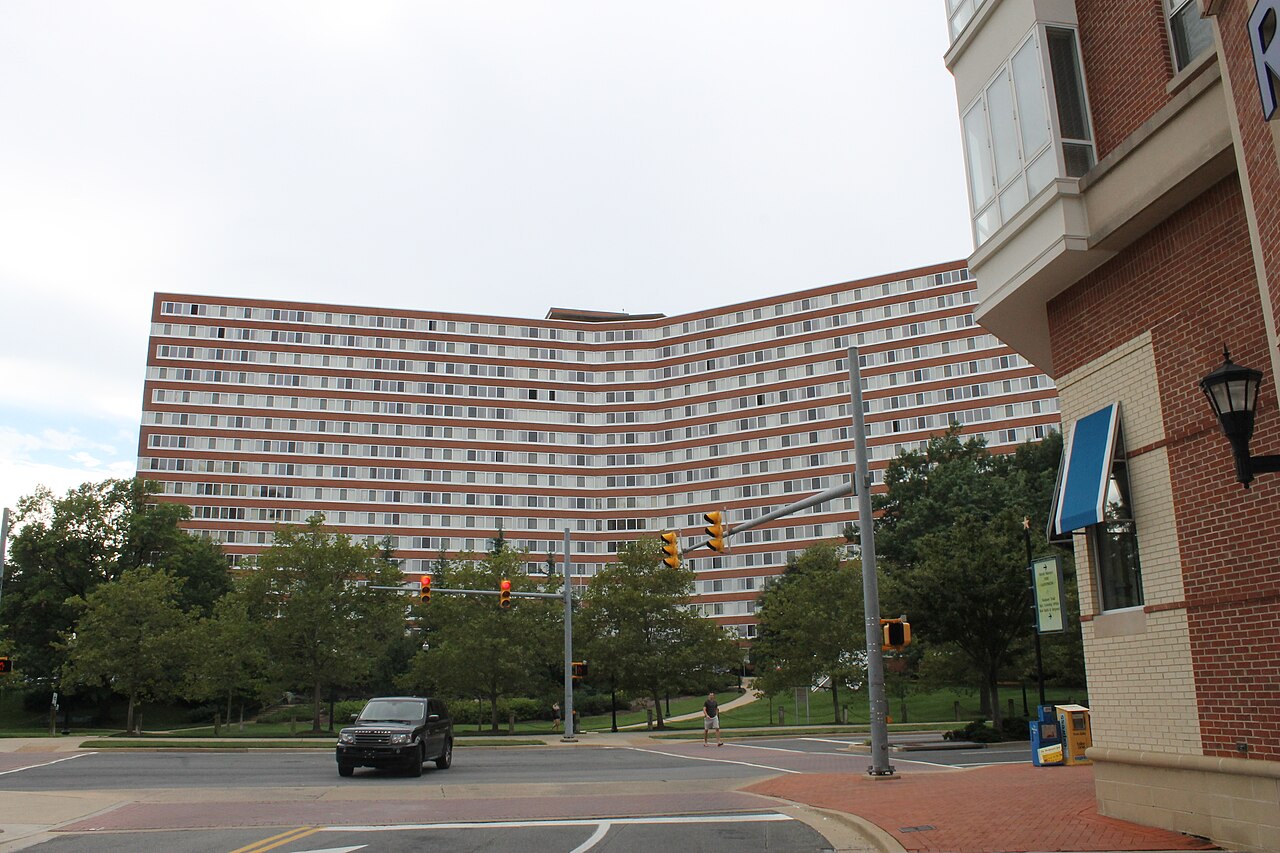
Exterior of the River House apartment building in Arlington, Virginia: a long, curved, multi-story brick-and-white-balconied residential tower behind trees, with a street intersection, traffic light, and a black SUV in the foreground. A pedestrian walks on the sidewalk to the right.Photograph

Secondary source

River House apartments, Arlington

Granby01 · 2 September 2012

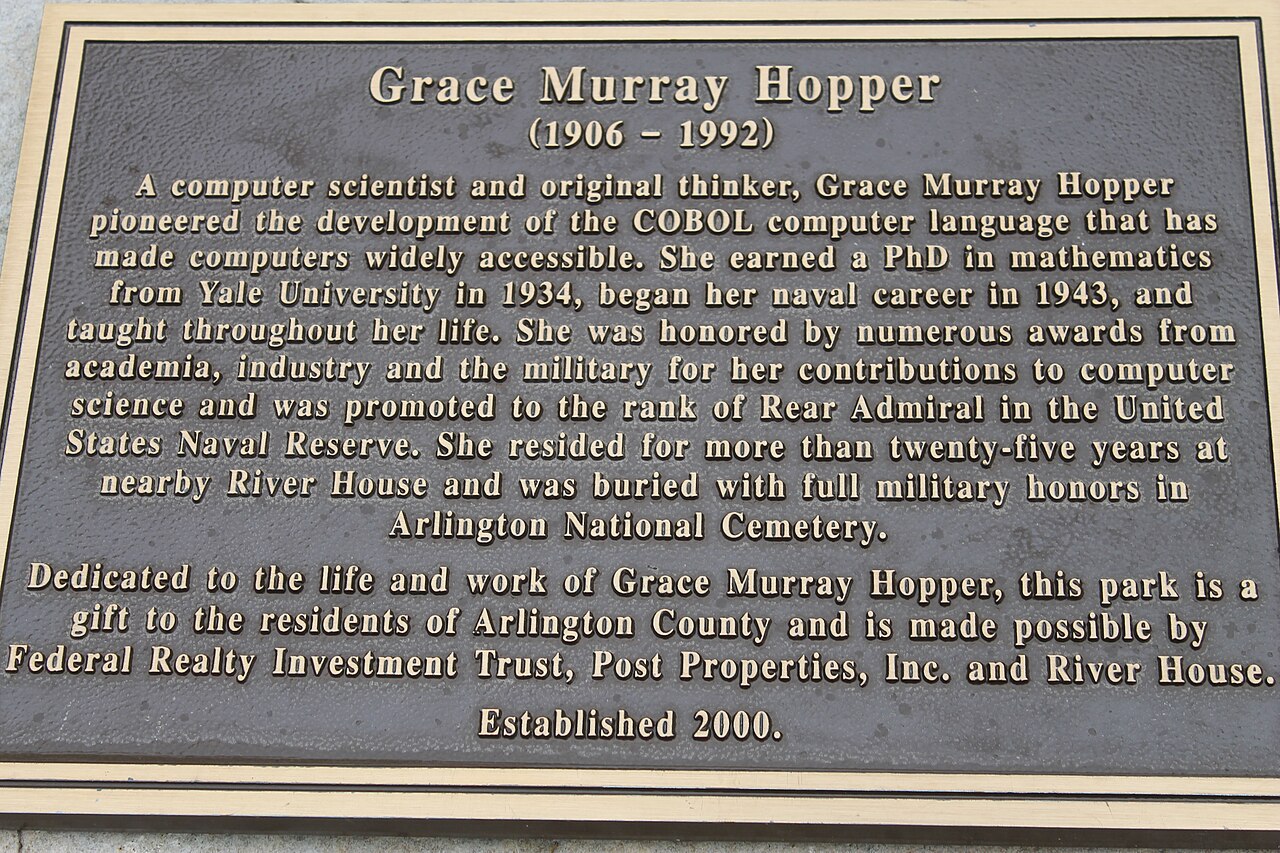
Bronze plaque on a stone surface titled 'Grace Murray Hopper (1906-1992)'. Text describes her as a computer scientist who pioneered COBOL, earned a Yale PhD in 1934, served in the Navy from 1943, was promoted to Rear Admiral, and was buried at Arlington National Cemetery. A second paragraph dedicates the park to her and credits Federal Realty, Post Properties, and River House. Established 2000.Artifact

Secondary source

Plaque dedicating Arlington park to Grace Murray Hopper

2000

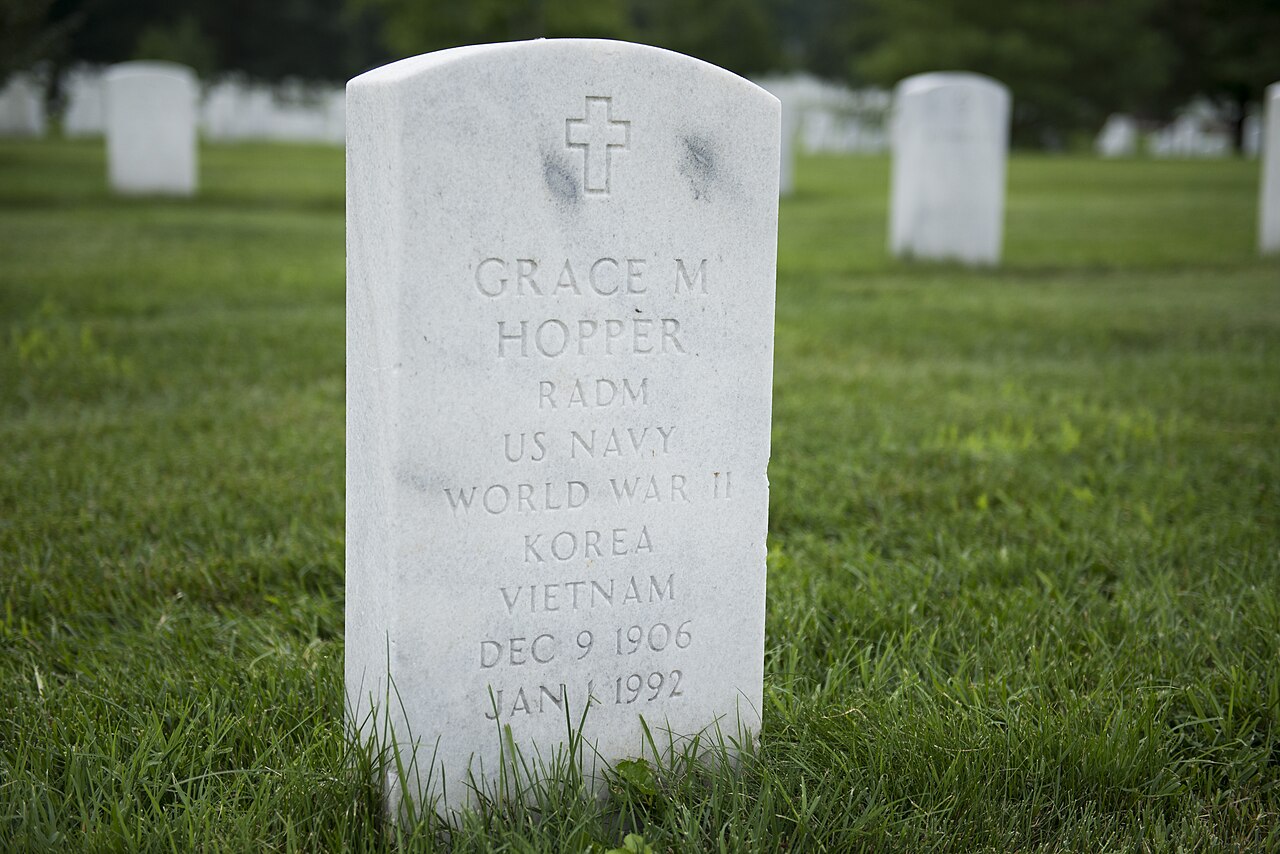
White marble headstone with a carved cross at the top, inscribed 'GRACE M HOPPER, RADM, US NAVY, WORLD WAR II, KOREA, VIETNAM, DEC 9 1906, JAN 1 1992'. Green grass surrounds it, with other headstones blurred in the background.Photograph

Secondary source

Grace Hopper's Grave at Arlington National Cemetery

Arlington National Cemetery · 26 June 2015

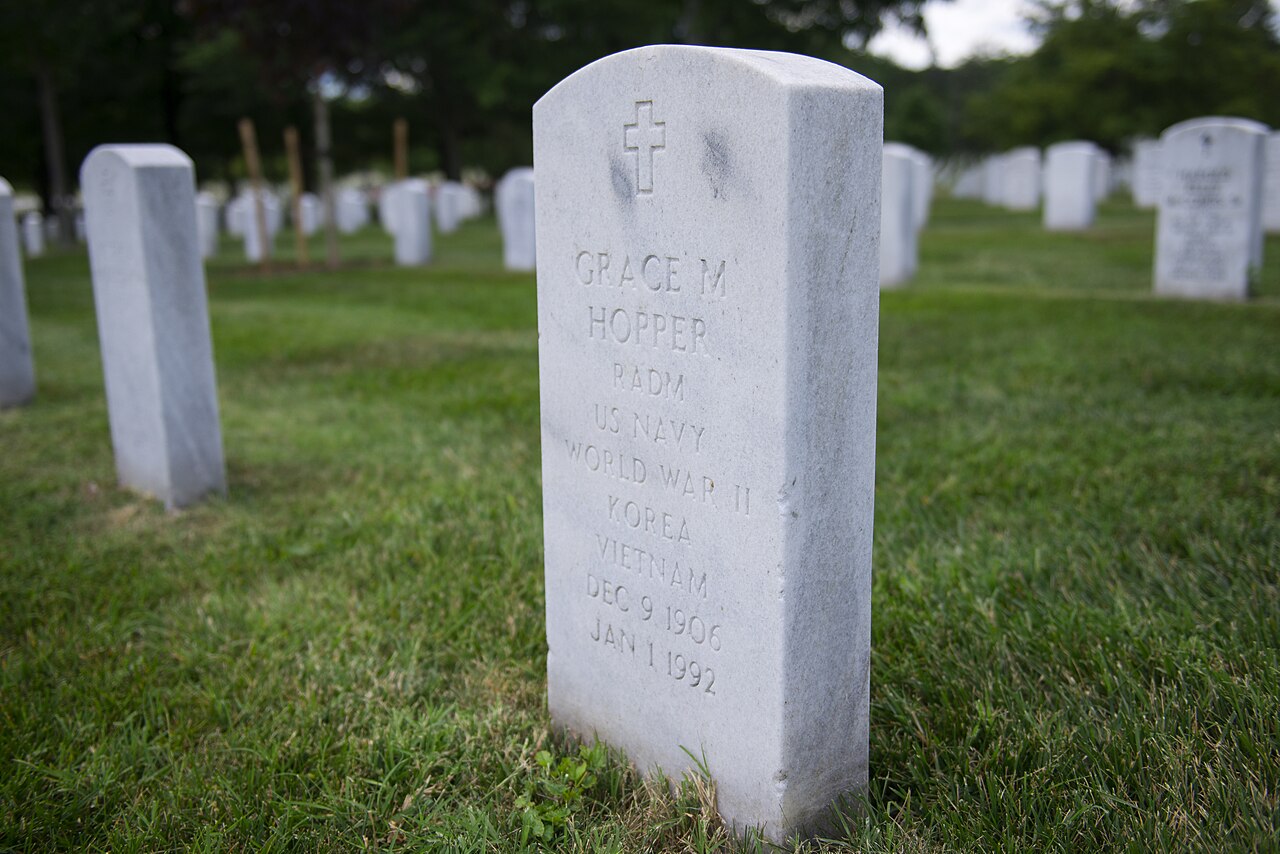
A white marble headstone in a grassy cemetery, engraved with a cross and the words GRACE M HOPPER, RADM, US NAVY, WORLD WAR II, KOREA, VIETNAM, DEC 9 1906, JAN 1 1992. Other headstones are visible in rows behind it.Photograph

Secondary source

Gravesite of Grace Hopper

Elizabeth Fraser / Arlington National Cemetery · 27 June 2017

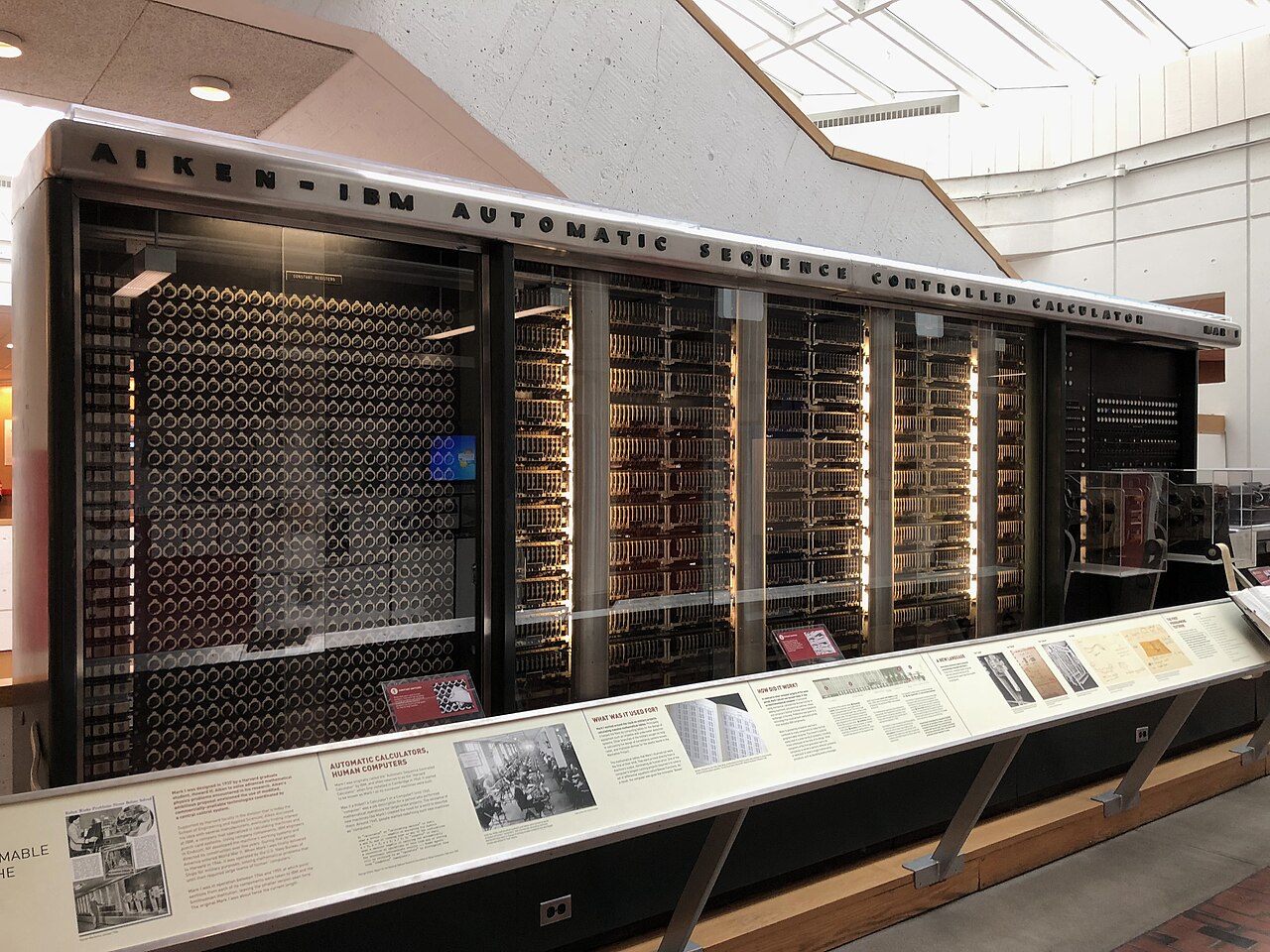
The Harvard Mark I (Aiken-IBM Automatic Sequence Controlled Calculator) on display in a Science Center atrium. A tall room-sized metal and glass cabinet with rows of electromechanical counters and wiring is labeled along its top. A museum information panel runs along the front.Photograph

Secondary source

Harvard Mark I

Capvideo · 10 August 2018

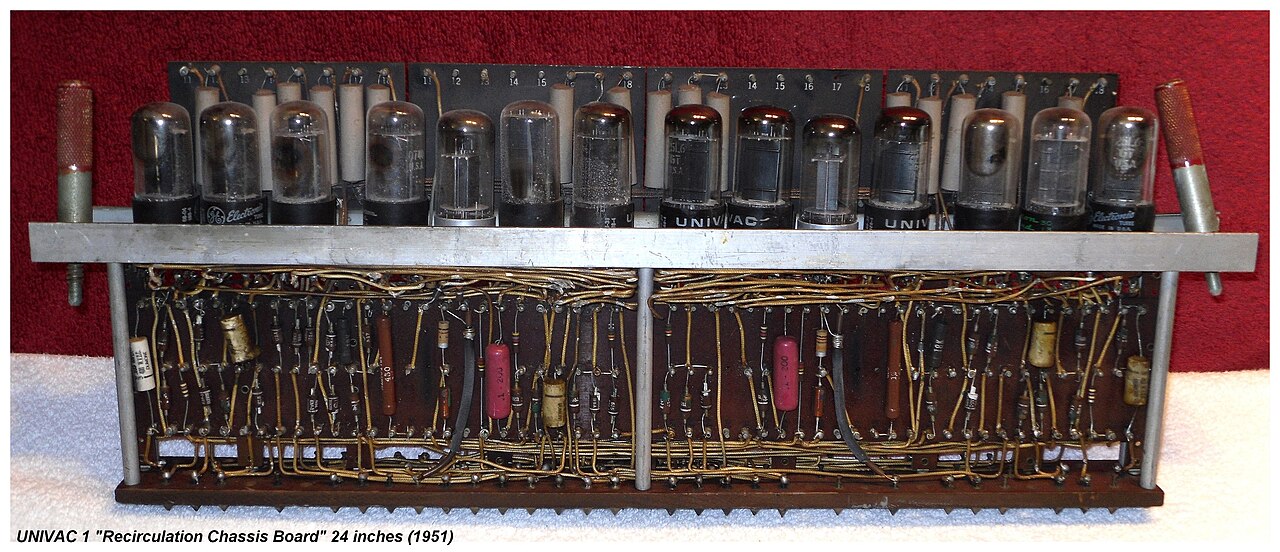
A UNIVAC 1 recirculation chassis board: a row of vacuum tubes mounted on top of a metal bar, with a dense wiring harness, resistors, and capacitors on the board below. Caption reads 24 inches (1951).Artifact

Primary source

UNIVAC I Recirculation Chassis Board

Remington Rand UNIVAC · 1951

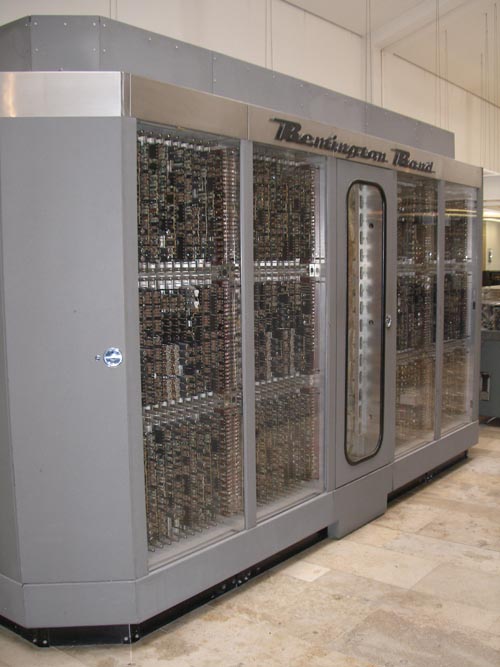
Photograph of a large grey UNIVAC I computer cabinet labeled Remington Rand, with glass-fronted panels displaying rows of vacuum tubes and wiring, on a stone floor in a museum hall.Photograph

Secondary source

UNIVAC I Factronic at the Deutsches Museum

Matthias.Kirschner · 29 November 2005

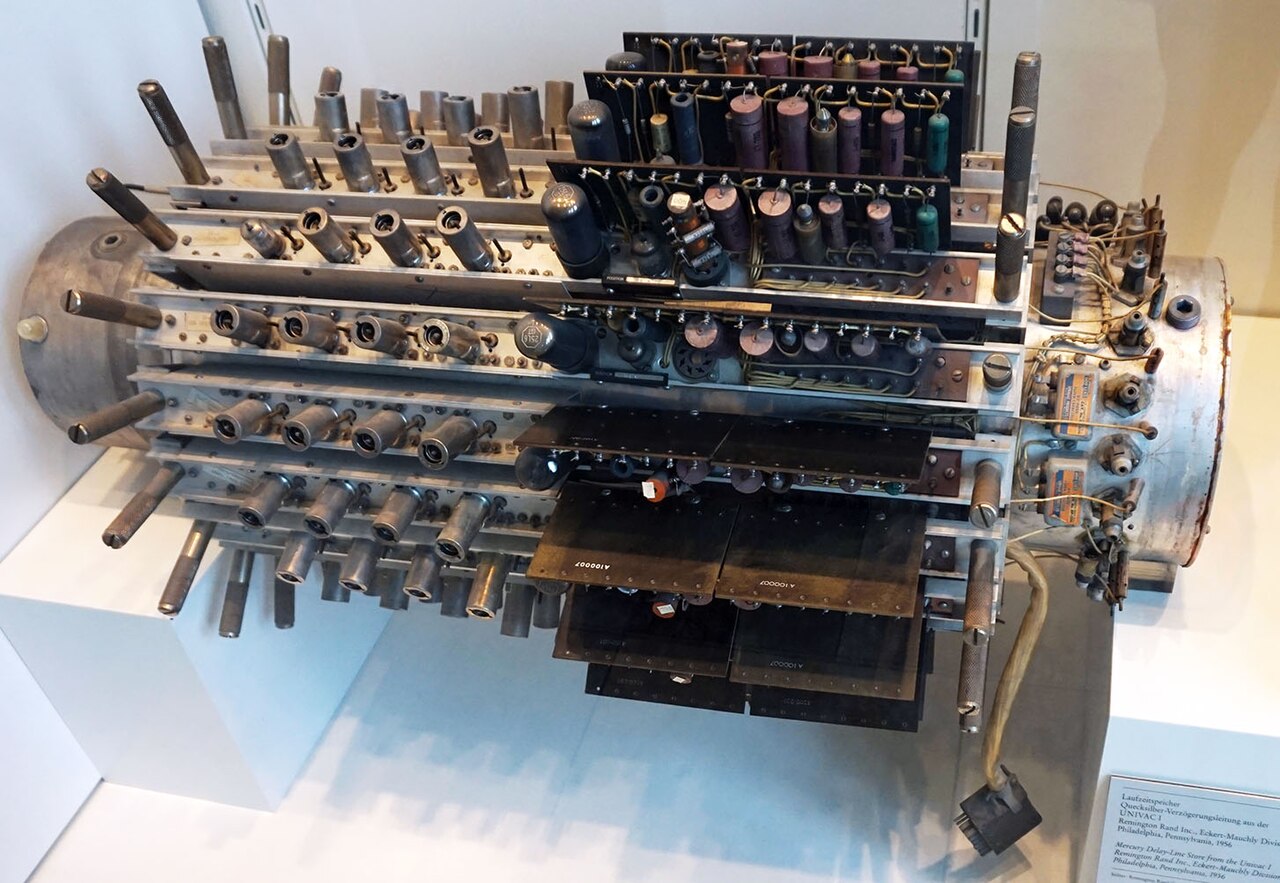
Cylindrical UNIVAC I mercury delay-line memory unit on a display plinth, with rows of metal delay-line tubes, vacuum tubes, circuit boards and wiring visible, and a museum label at lower right.Artifact

Primary source

UNIVAC I Mercury Delay-Line Store

Tiia Monto · 12 August 2017

Want the full shelf? Chat with Grace Hopper in the app and open the Sources panel — every quote links back to the original.

Use Grace Hopper in class

2 collections

Ready-made collections from the Humy team that feature Grace Hopper. Preview any of them, then try it free.

Trusted by educators worldwide

Conversations
375,000+
Real exchanges between students and historical figures
Messages exchanged
4,142,000+
Across every figure, classroom and language
Historical figures
100,000+
Each informed by a curated biography and selected sources
Languages supported
50+
From English and Spanish to Arabic and Korean

Paying customers

Used by 98 schools and universities

Partner school logo
Tecnológico de Monterrey logo
Hyper Island logo
Partner school logo
Chambersburg Area School District logo
Broward County Public Schools logo
Nebo School District logo
National Louis University logo
South Florida PBS logo
Punahou School logo
University of Wisconsin–River Falls logo
Partner school logo
Partner school logo
Archbishop Mitty High School logo
Kingsburg High School logo
Norwalk Public Schools logo
Partner school logo
Connections logo
Partner school logo
Moore Public Schools logo
Partner school logo
Partner school logo
Partner school logo
Partner school logo
Robbinsville Public Schools logo
Partner school logo
Partner school logo
Partner school logo
Tecnológico de Monterrey logo
Hyper Island logo
Partner school logo
Chambersburg Area School District logo
Broward County Public Schools logo
Nebo School District logo
National Louis University logo
South Florida PBS logo
Punahou School logo
University of Wisconsin–River Falls logo
Partner school logo
Partner school logo
Archbishop Mitty High School logo
Kingsburg High School logo
Norwalk Public Schools logo
Partner school logo
Connections logo
Partner school logo
Moore Public Schools logo
Partner school logo
Partner school logo
Partner school logo
Partner school logo
Robbinsville Public Schools logo
Partner school logo
Partner school logo

What educators are saying

“We enjoyed the program last year and used it frequently.”
“My students say it’s a welcome change of pace. I’m not a fan of the “sage on the stage” model, so I try to incorporate research-oriented and self-paced activities. With Humy, students have to take charge of their learning. They’ve become more adept at critical thinking, forming better questions, and improving their reading comprehension. The interview feature has been my go-to tool. I create assignments where students must ask historical figures a set number of questions, then summarize the responses to ensure they’re truly absorbing the material. This approach lets them actively explore the past rather than passively consuming information.”
“Humy has helped me bring historical figures, sometimes long past, to life. When my students interact with these figures in real-time, it eliminates some of the perceived “ancient” characteristics of my curriculum. This has shifted my students’ thinking away from viewing history as abstract or irrelevant. Real-time interactions make historical figures relatable, even allowing students to ask off-topic questions that help put historical lives in a more relevant context for 13-year-olds. The feature I use the most is the interview feature. After teaching a topic, most recently Gandhi and Joan of Arc, I have the students ask pointed, focused questions. We practice good conversation techniques beforehand, teaching them to listen (or read) carefully and formulate thoughtful follow-up questions rather than just interrogating. It helps students practice effective conversation skills.”

FAQ

Frequently asked questions

Who is Grace Hopper?
Computer scientist and United States Navy admiral. On Humy.ai you can chat with an AI version of Grace Hopper that draws on a short biography and 40 historical sources during the conversation — by text or voice, in 42 languages.
Is Grace Hopper AI free?
Grace Hopper is part of Humy's full library of more than 100,000 figures, which comes with a paid plan. A free account (no credit card) includes 20 AI messages a month with the free library's figures, so you can try how the conversations work first. The free plan's 20 AI messages a month are shared by you and your students: enough to try Humy yourself; a whole class needs Plus.
What sources does the Grace Hopper AI use?
It draws on a short biography and 40 historical sources (photographs, artifacts and documents), including “First Computer Bug”, “Grace Hopper and UNIVAC” and “Grace Hopper”. Each source has its own page on Humy.ai.
How historically accurate is the AI version of Grace Hopper?
Each figure uses a short biography and a small set of selected historical sources as context (retrieval-augmented generation), so answers stay closer to known material than the model's general knowledge alone. It isn't a citation-grade research tool — like any LLM, the AI can get details wrong or extrapolate. Treat it as a strong starting point for inquiry and cross-reference important claims.
Can I talk to Grace Hopper by voice?
Yes. In addition to text chat, you can call Grace Hopper and hear their voice respond in real time — useful for auditory learners, interview practice and Socratic dialogue.
Is Humy.ai safe and compliant for schools?
Yes. Humy.ai is used by more than 100 schools, universities and organisations. The platform is FERPA- and GDPR-aligned, supports SSO, and offers an IT-approval pack tailored for school procurement teams.

Ready when you are

Start chatting with Grace Hopper now.

20 messages free · No credit card · Available in 50+ languages.