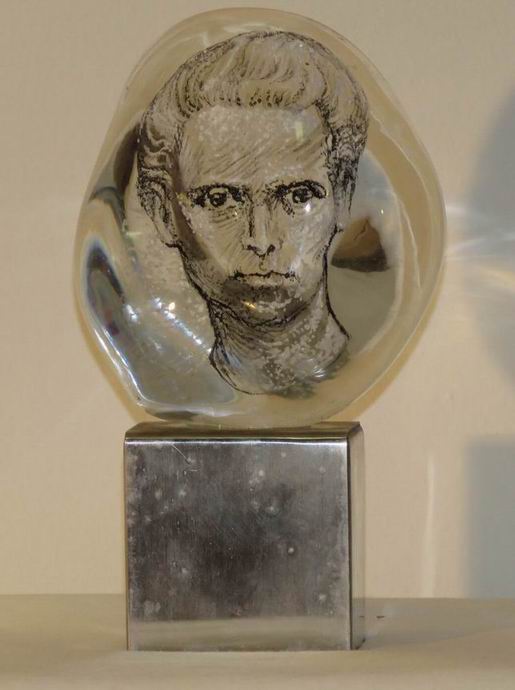

Portrait of Marie Curie

AI Historical Figure

Marie Curie

Renowned physicist and chemist, known for her pioneering research on radioactivity.

Chat with Marie Curie via text or voice — in 42 languages, drawing on a curated biography and 94 historical sources. Available 24/7.

Start chatting with Marie Curie20 messages free · No credit card
Lived
1867–1934
From
PolandFrance
Known for
Science & medicineEducation
Marie Curie

Marie Curie

Online · responds in seconds

Hello — I'm Marie Curie. Renowned physicist and chemist, known for her pioneering research on radioactivity. What would you like to ask me?

20 messages free · No credit card · Powered by Humy.ai

Live preview · Switch between 42 languages above · Send a message to continue in the app

Multilingual

Talk to Marie Curie in 42 languages

Ask Marie Curie questions in any language below, and the rest of Humy's app speaks it too. Pick yours to open the chat in that language.

Also in German (Austria), German (Switzerland), English (UK), English (Australia), English (Canada).

The sources behind this AI

94 sources · 33 photographs · 12 books · 11 documents · 10 artifacts · 9 sculptures · 8 newspaper articles · 6 paintings · 3 speeches · 2 letters

Marie Curie doesn’t improvise from thin air. The AI is grounded in 94 curated historical sources students can inspect. Open any of them to see what informs the conversation.

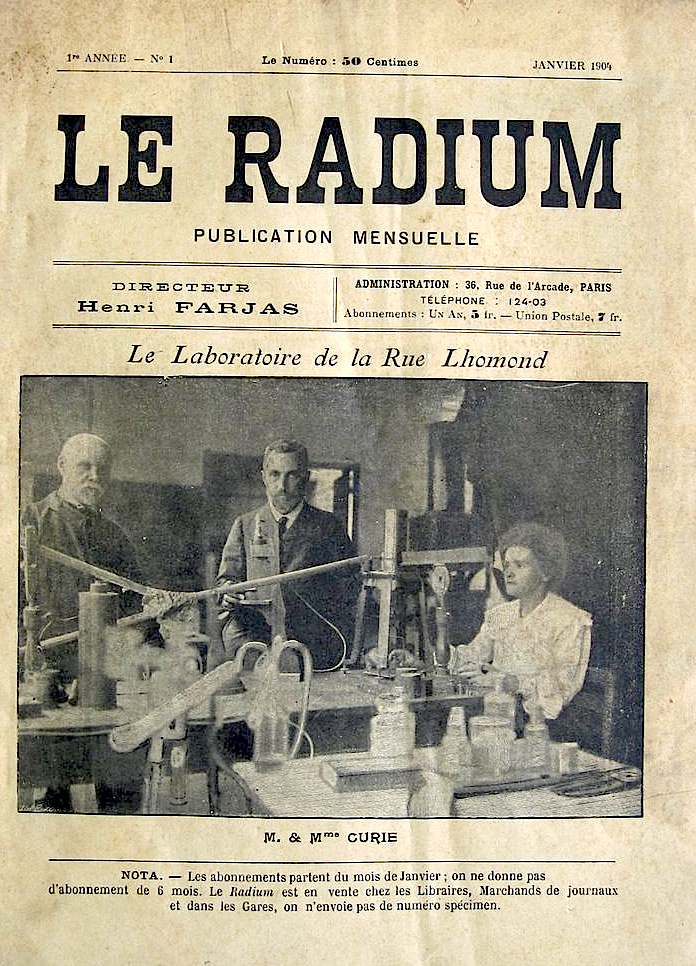
Cover of the January 1904 issue of the magazine Le Radium, showing a printed masthead and a photograph captioned Le Laboratoire de la Rue Lhomond. The photo shows two men and a seated woman among laboratory equipment and glassware, with the caption M. & Mme Curie below.Photograph

Primary source

Photograph of Pierre and Marie Curie in their Laboratory, rue Lhomond

c. 1898-1904

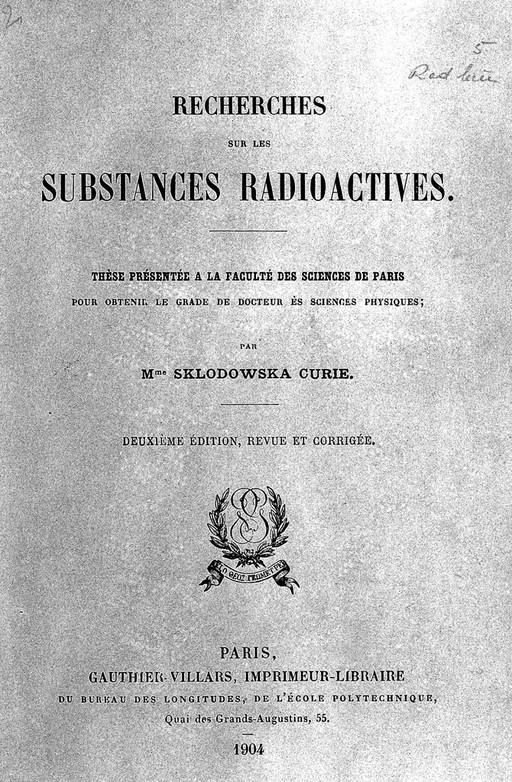
Title page of the 1904 second edition of Recherches sur les substances radioactives by Madame Sklodowska Curie, a thesis presented at the Faculté des Sciences de Paris. Published in Paris by Gauthier-Villars. Handwritten number 5 and a note appear in the top right corner.Book

Primary source

Recherches sur les substances radioactives

Marie Curie · 1904

Document

Primary source

Rayons émis par les composés de l'uranium et du thorium

Marie Curie · 12 April 1898

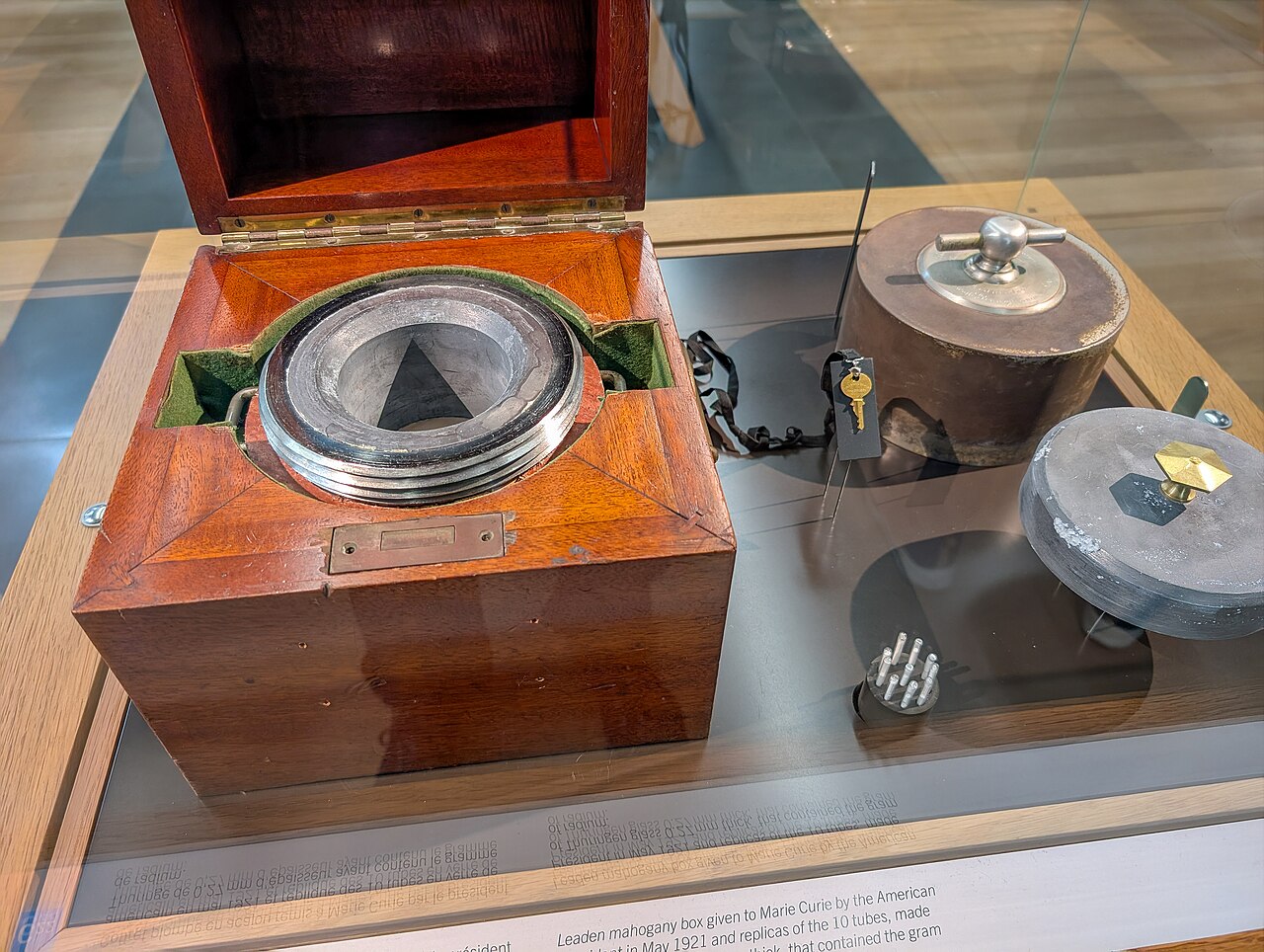
A museum display case showing a wooden mahogany box with its lid open and a round metal radium container inside, beside a separate lidded metal canister with a brass knob, a key on a chain, and a small cluster of tubes on the glass base.Artifact

Primary source

International Radium Standard

Marie Curie · 1911

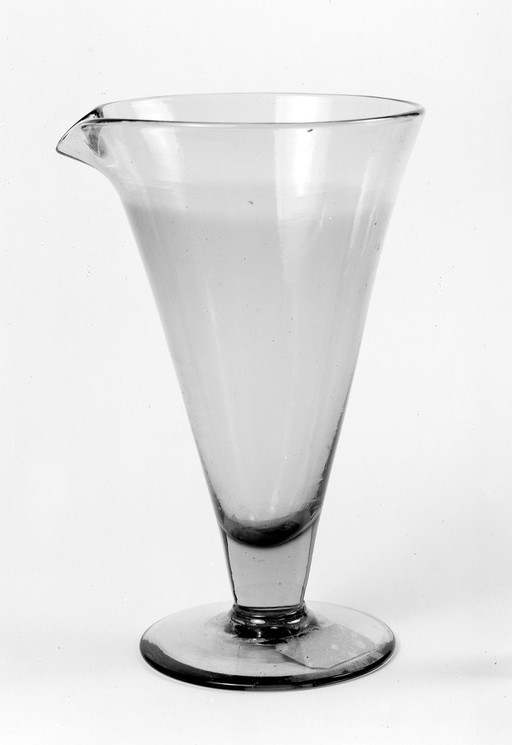
Black-and-white photograph of a clear glass vessel with a flared conical bowl, a pouring spout on the left rim, and a short stem on a flat circular foot, set against a plain light background.Artifact

Primary source

Glass beaker used for the first radium salt solution

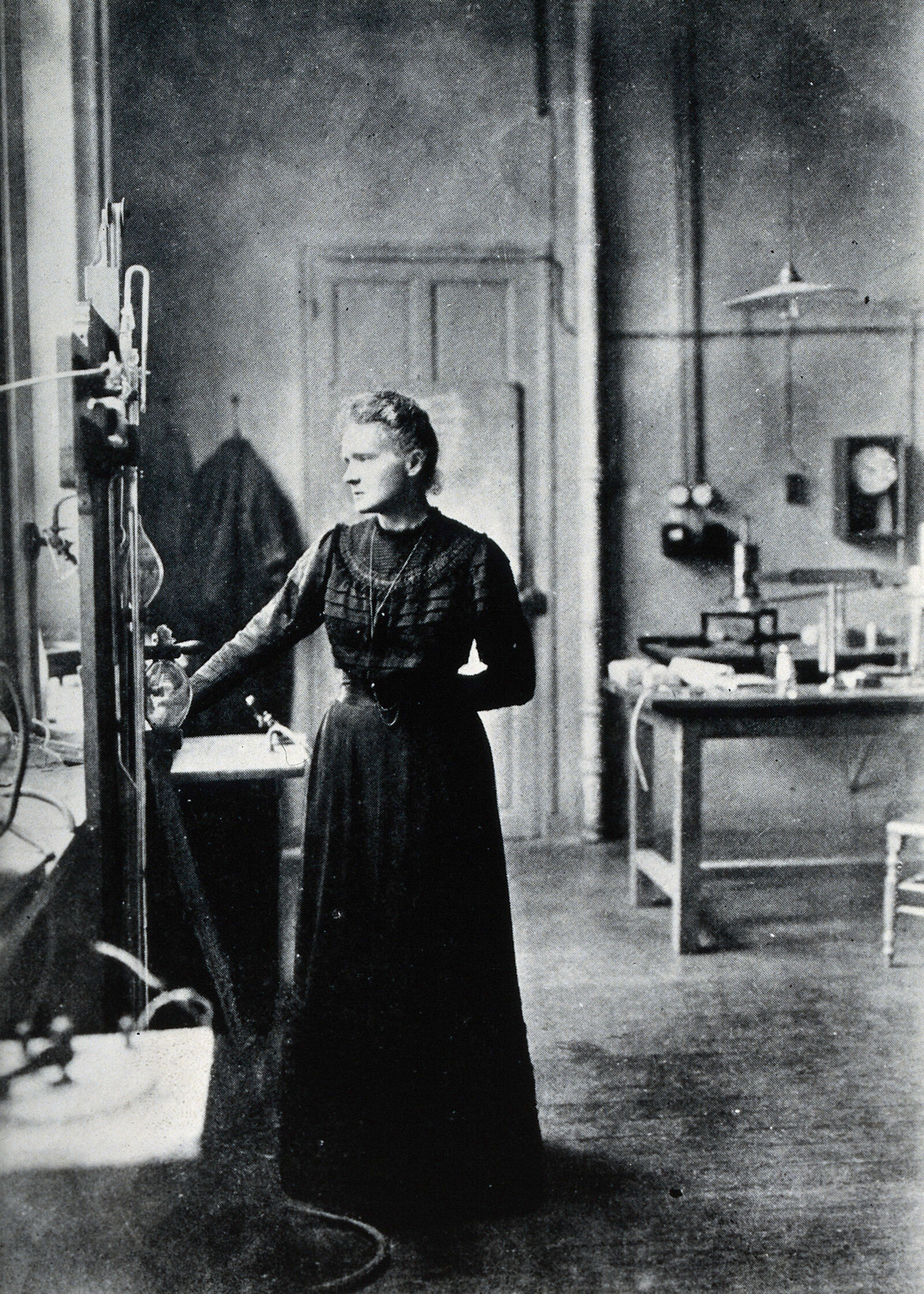
Black-and-white photograph of a woman with hair pinned up, wearing a long dark dress with a high lace-trimmed collar, standing beside laboratory apparatus in a room with a wooden table, a wall clock, and glass equipment. A blurred figure stands in the background.Photograph

Primary source

Marie Curie, Portrait Photograph

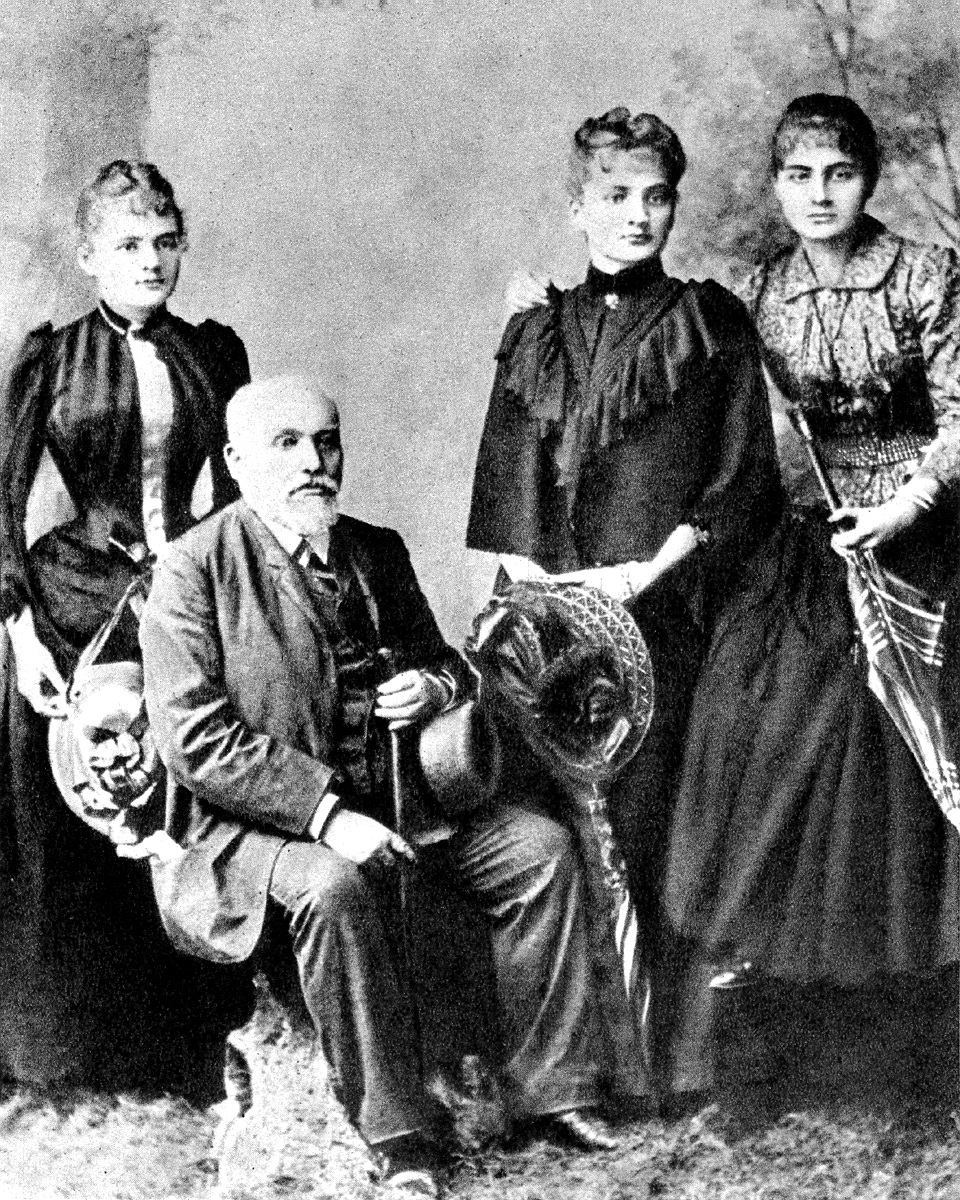
Black-and-white studio portrait of four people. A bald, bearded older man in a suit sits holding a cane, with a hat on his knee. Three young women stand around him in dark dresses; one holds a parasol and another holds a hat.Photograph

Primary source

Władysław Skłodowski with his Daughters Maria, Bronisława and Helena

c. 1890

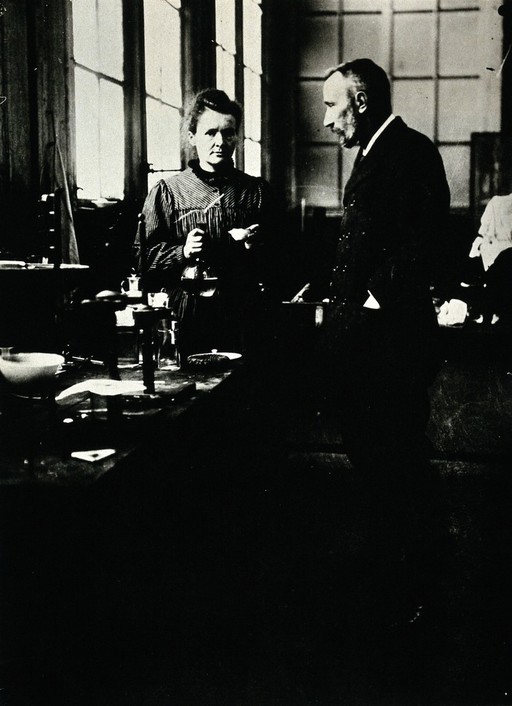
Black-and-white photograph of a dim laboratory. A woman with hair pulled back, wearing a dark striped dress, holds a small glass vessel at a cluttered lab bench. A bearded man with a white collar stands beside her in profile, looking toward her. Tall windows are behind them.Photograph

Primary source

Marie and Pierre Curie in their laboratory

c. 1900

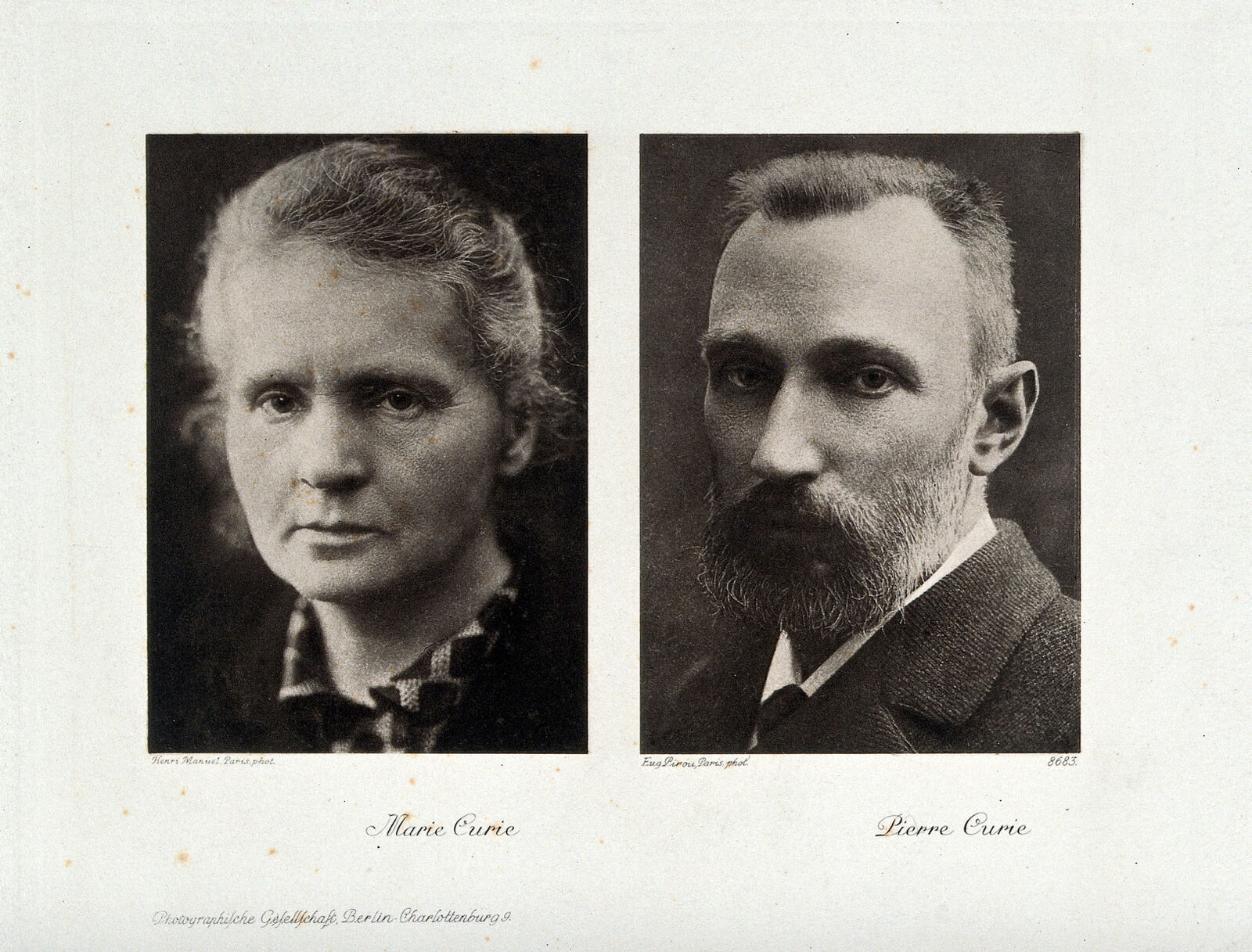
Photogravure plate with two side-by-side portrait photographs on a cream background. Left: a woman with light, wavy hair pulled back, wearing a dark patterned high-necked blouse, labeled Marie Curie. Right: a man with short hair and a full beard in a dark jacket and white collar, labeled Pierre Curie. Credits and number 8683 appear below.Painting

Secondary source

Pierre and Marie Curie, Photogravure Portrait

Eugène Pirou

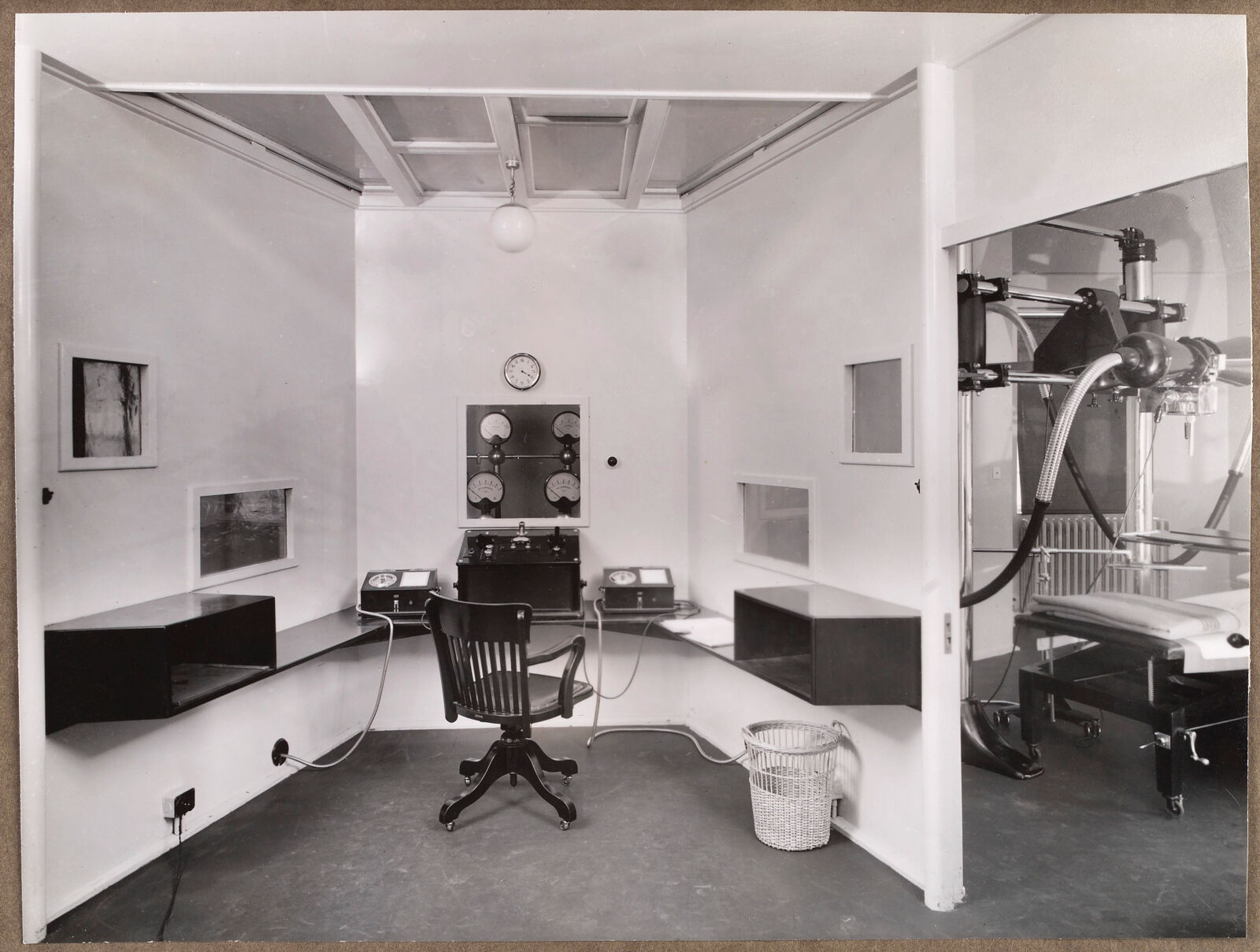
Black and white photograph of an X-ray therapy room with white walls, a dark swivel chair, a control panel with four dial gauges, a wicker waste bin, and an X-ray apparatus with a hose and a treatment couch on the right.Photograph

Primary source

X-ray Therapy Department, Marie Curie Hospital, 1934

Newton & Wright · 1934

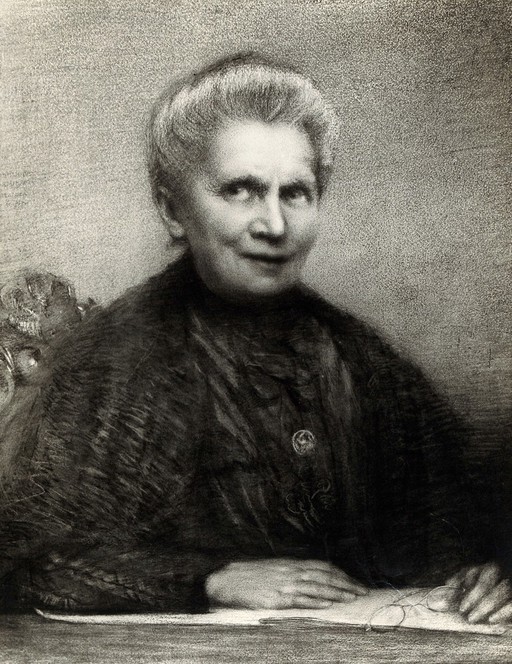
Black-and-white portrait of an older woman with light hair swept up, wearing a dark dress with a small brooch, seated at a table with her hands resting on paper, smiling slightly and looking to the side.Photograph

Primary source

Portrait of Marie Curie, Polish chemist

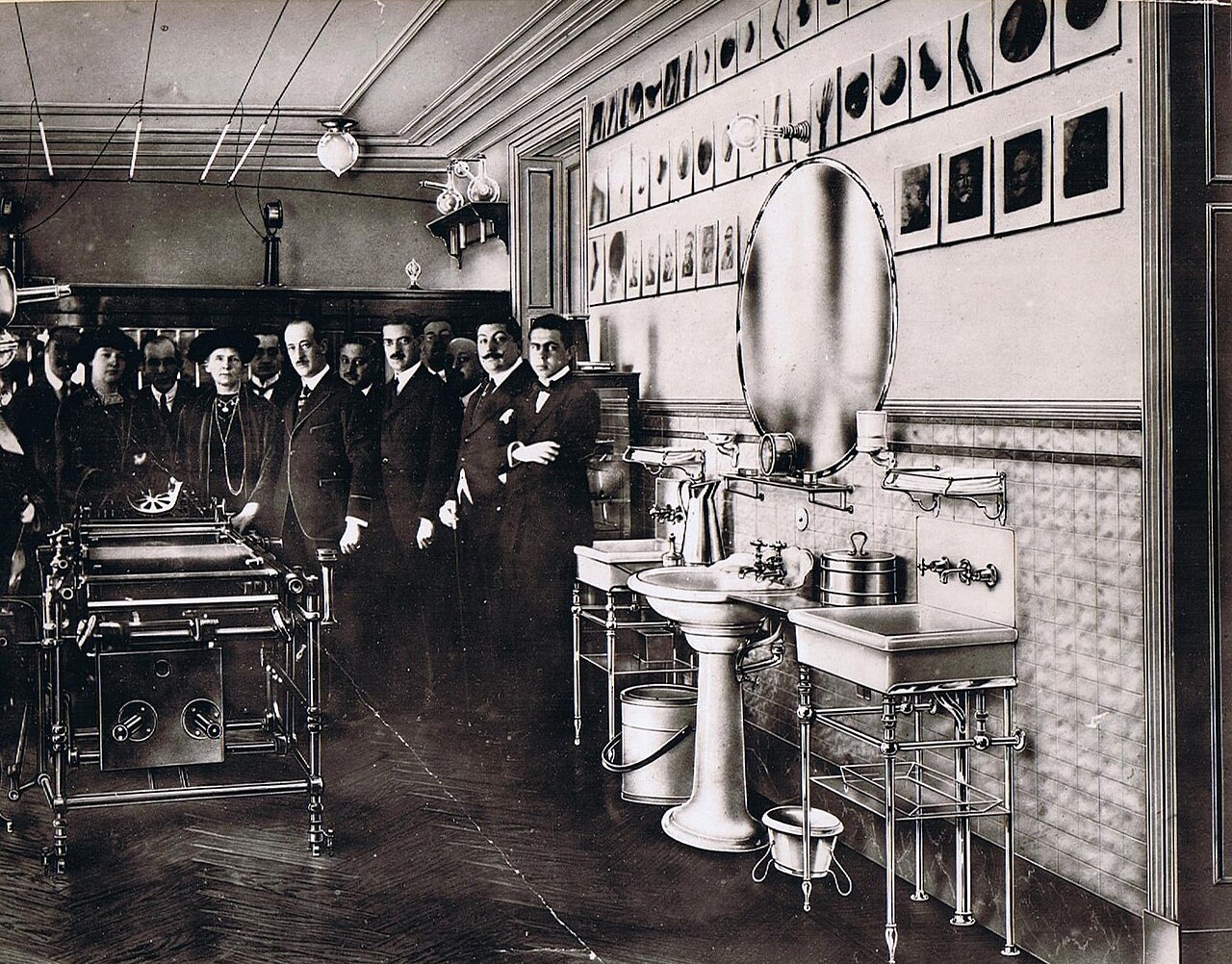
Sepia photograph of an interior room with tiled walls and dark wooden floor. A group of men and women in formal dress stands at left beside a metal apparatus on wheeled legs. At right are pedestal sinks, a large oval mirror, and framed photographs on the wall.Photograph

Primary source

Visit of Madame Curie to Dr Celedonio Calatayud's Radiological Institute

Mundo Grafico

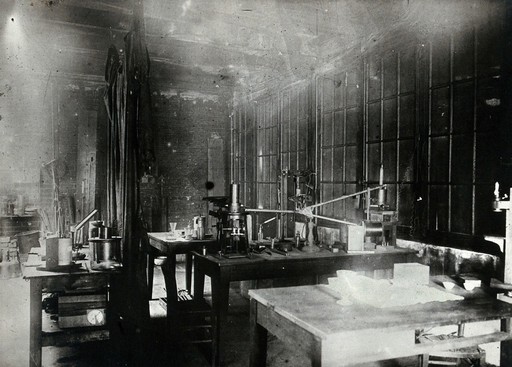
Black-and-white photograph of a dim laboratory with tall multi-pane windows along the right wall, wooden workbenches holding apparatus such as a microscope and metal instruments, and a large white-draped table in the foreground.Photograph

Primary source

Curie laboratory room used for electrometrical measurement

c. 1900

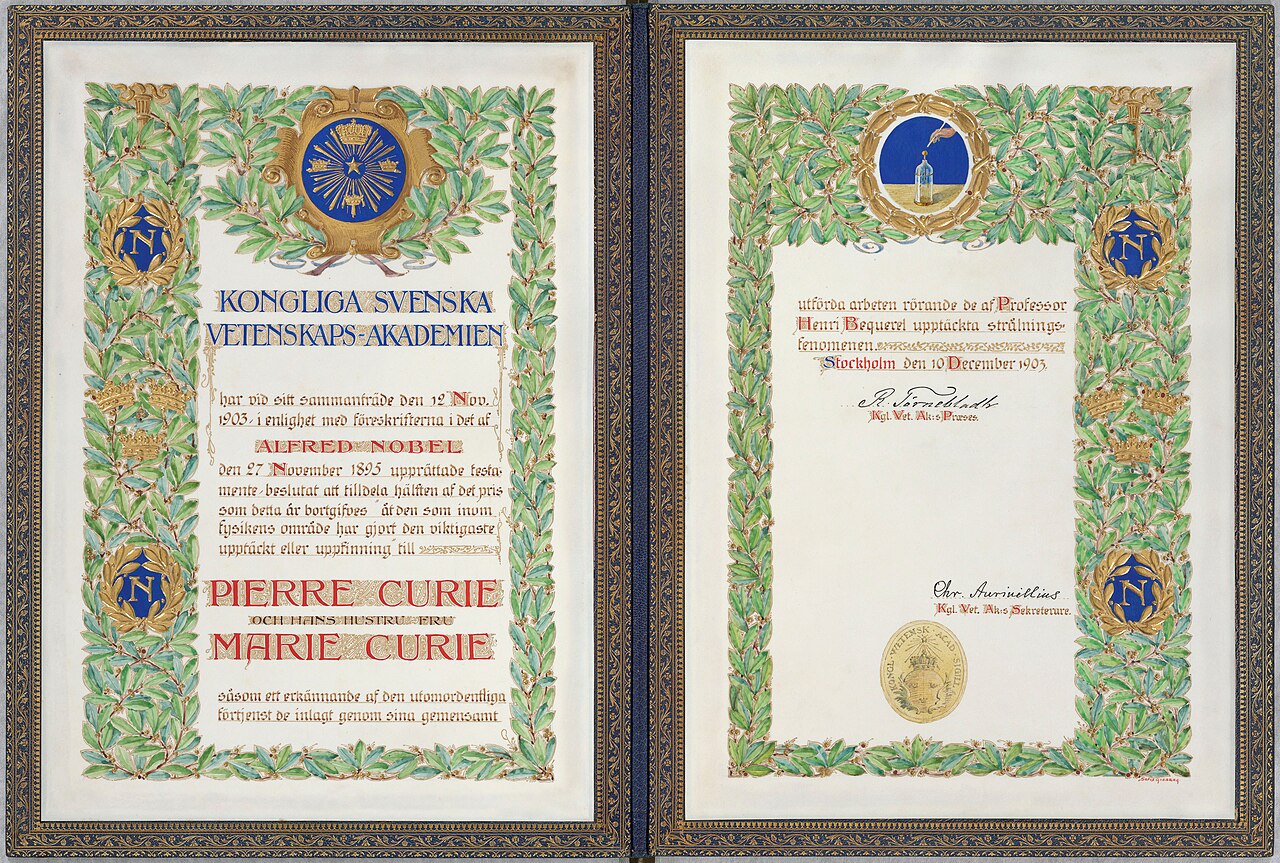
Open leather-bound Nobel Prize diploma with gold-and-green laurel borders. Left page names the Royal Swedish Academy of Sciences, Alfred Nobel, and Pierre Curie and Marie Curie in red lettering. Right page mentions Henri Becquerel, dated Stockholm, 10 December 1903, with signatures and a gold seal.Document

Primary source

Nobel Prize in Physics Diploma, 1903

Sofia Gisberg · December 1903

Document

Tertiary source

Skłodowská

1905

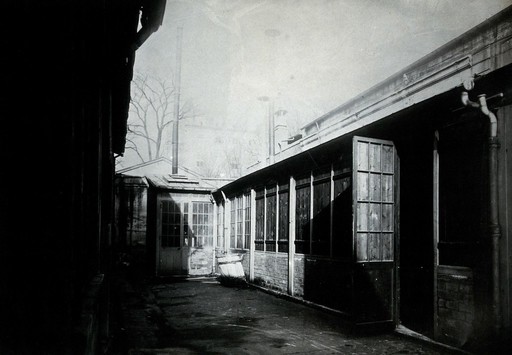
Black-and-white photograph of a narrow paved courtyard lined with a long wooden-framed glass-paned shed or workshop on the right, with open doors, a small brick outbuilding with windows on the left, and a bare tree and chimney in the background.Photograph

Primary source

Curie Laboratory Courtyard for Treating Noxious Gases

c. 1900

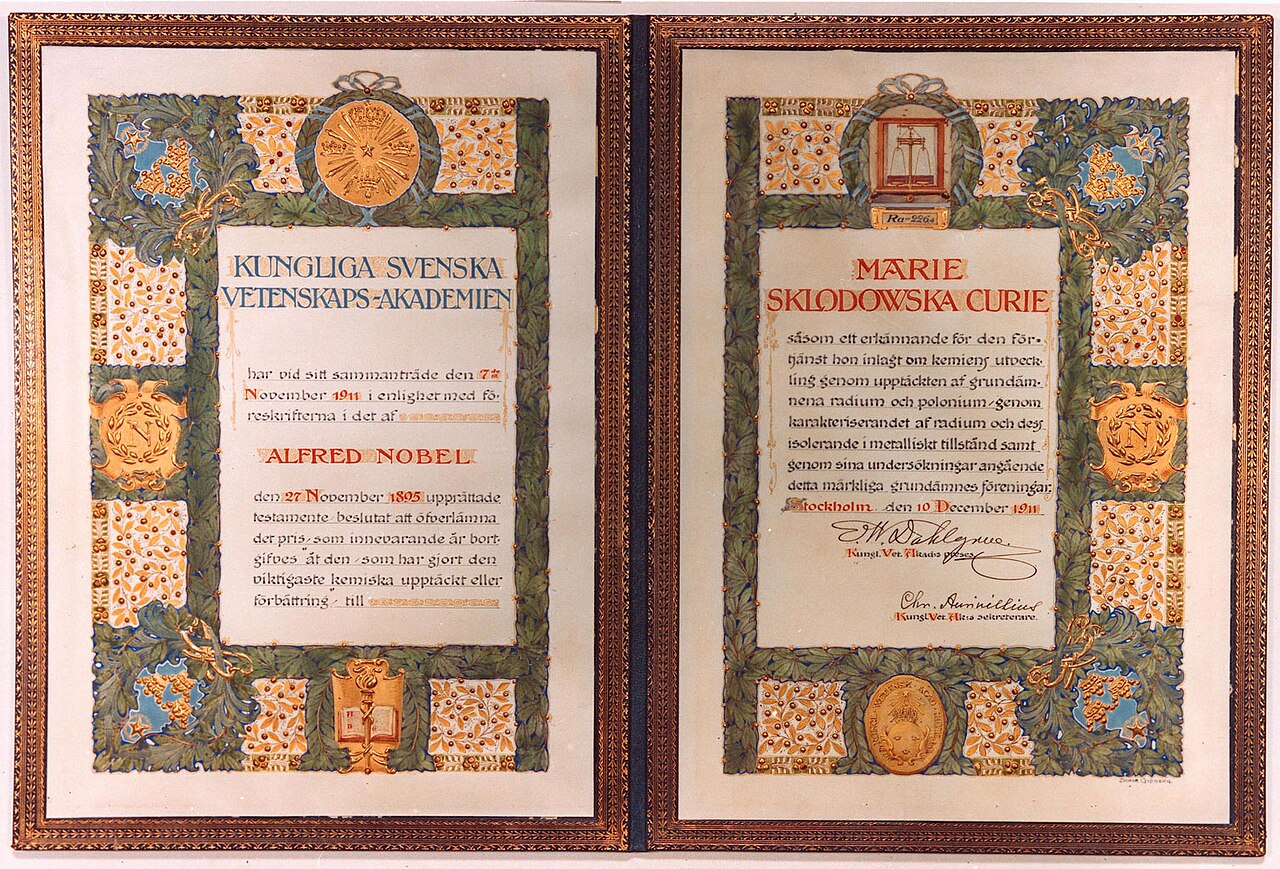
Photograph of an open pair of framed illuminated diplomas side by side. The left one reads Kungliga Svenska Vetenskaps-Akademien and Alfred Nobel; the right one reads Marie Sklodowska Curie, with Swedish text, a date of 10 December 1911, and two signatures. Both have ornate gold and green decorative borders with crests.Document

Primary source

Marie Skłodowska-Curie's Nobel Prize in Chemistry Diploma

Sofia Gisberg (Nobel Foundation) · 10 December 1911

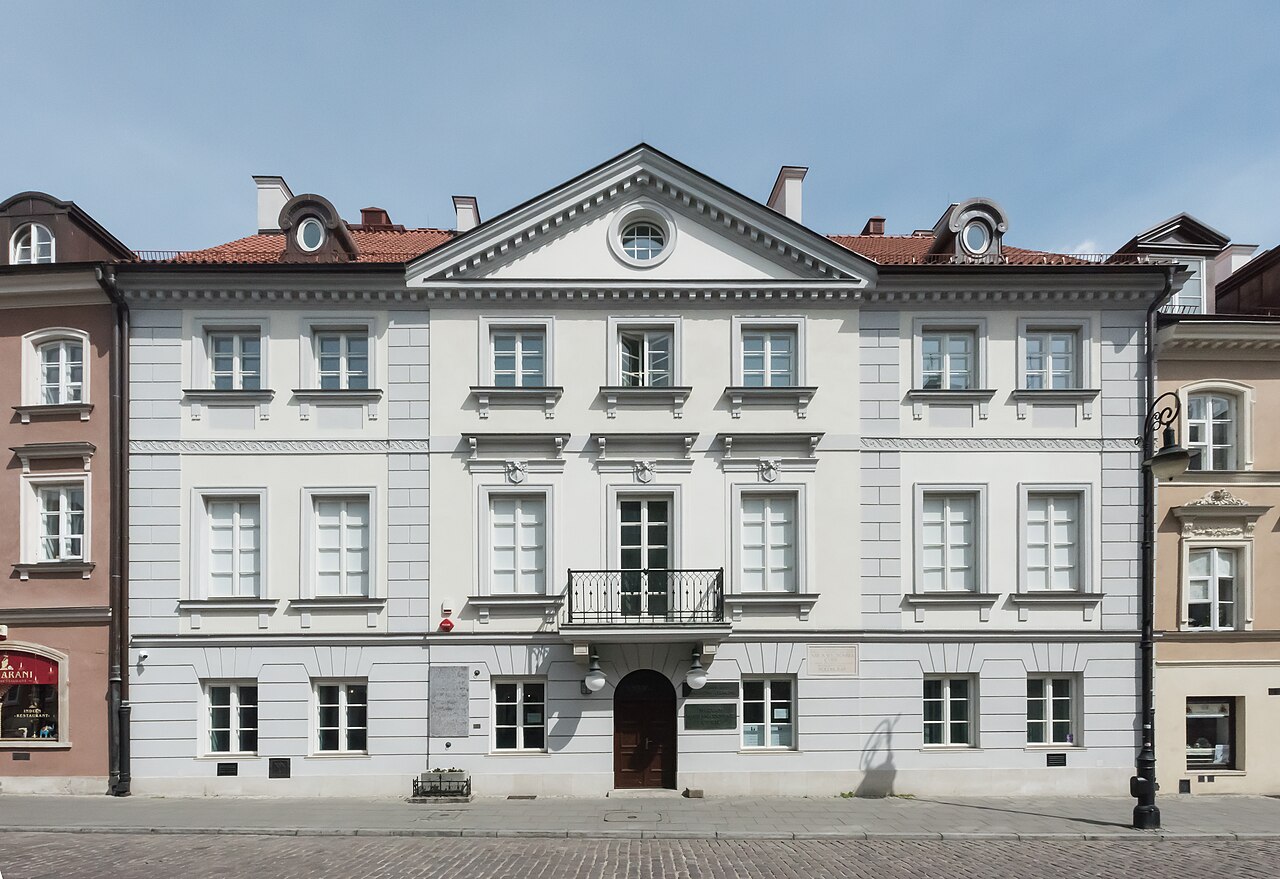
Front view of a three-story white-and-grey neoclassical townhouse with a triangular pediment, a central balcony with iron railing above an arched wooden door, and a red-tiled roof, on a cobbled street. Adjacent pastel buildings flank it.Artifact

Secondary source

Maria Skłodowska-Curie Museum

1967

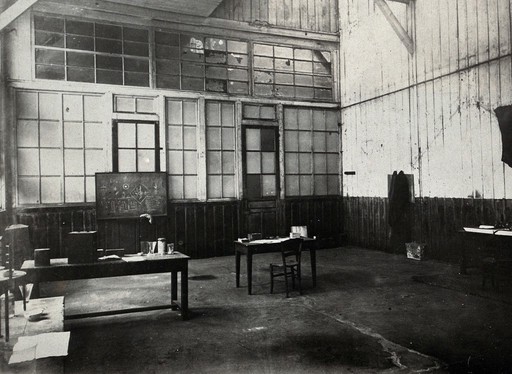
Black-and-white photograph of a large, bare interior room with tall multi-pane windows, wooden-paneled walls, a chalkboard, and wooden tables and a chair. Papers and bottles are on the tables.Photograph

Primary source

Shed Where the Curies Processed Uranium Ore

c. 1900

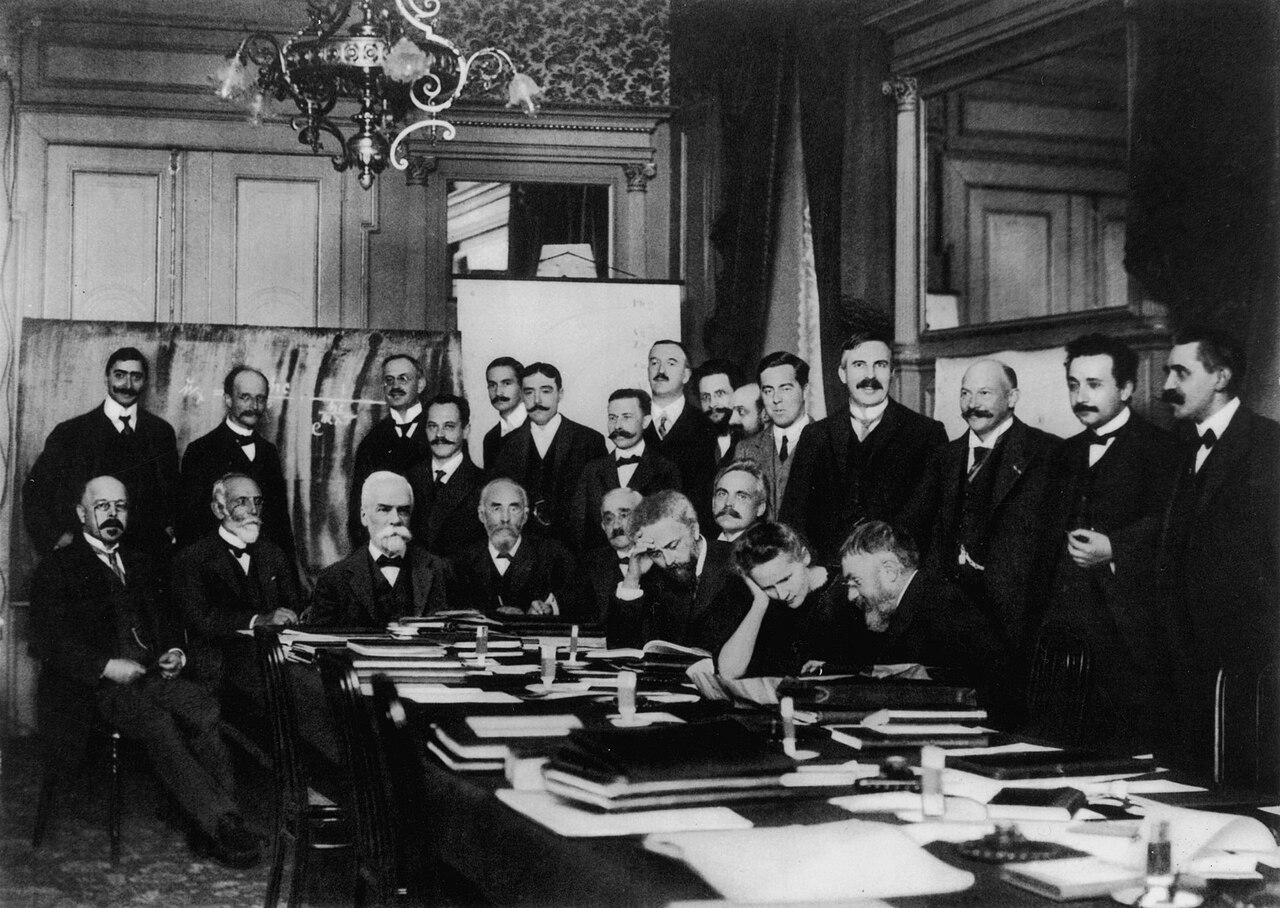
Black-and-white group photograph of about two dozen men in dark suits and bow ties in a formal room with a chandelier and a table covered with papers and books. Most are standing in rows behind, and several are seated at the front. A woman sits at the table's right, leaning her head on her hand.Photograph

Primary source

1911 Solvay Conference Photograph

Benjamin Couprie · 1911

Radio-active SubstancesBook

Primary source

Radio-active Substances

Marie Curie · 1903 (reprinted 1904)

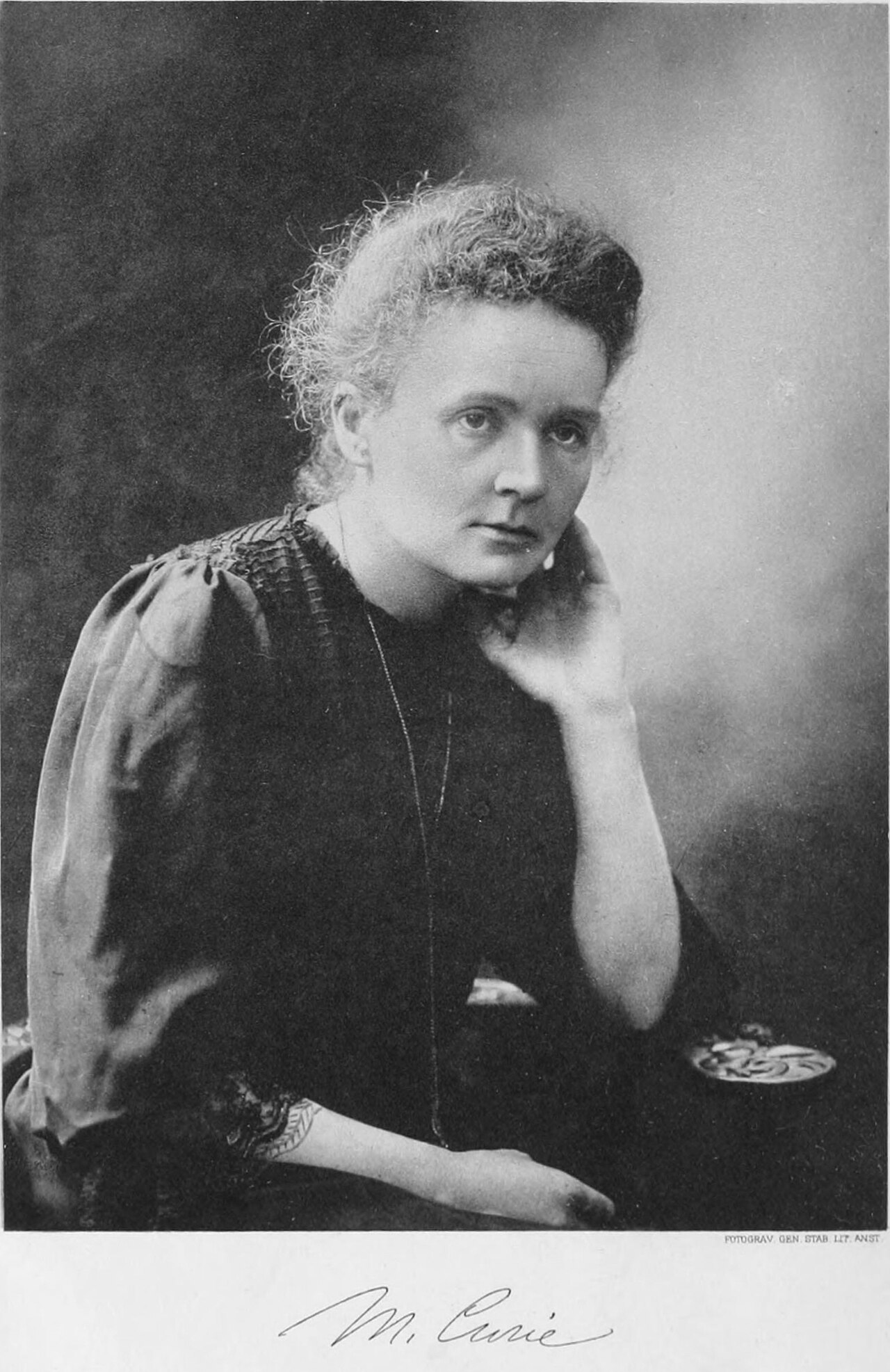
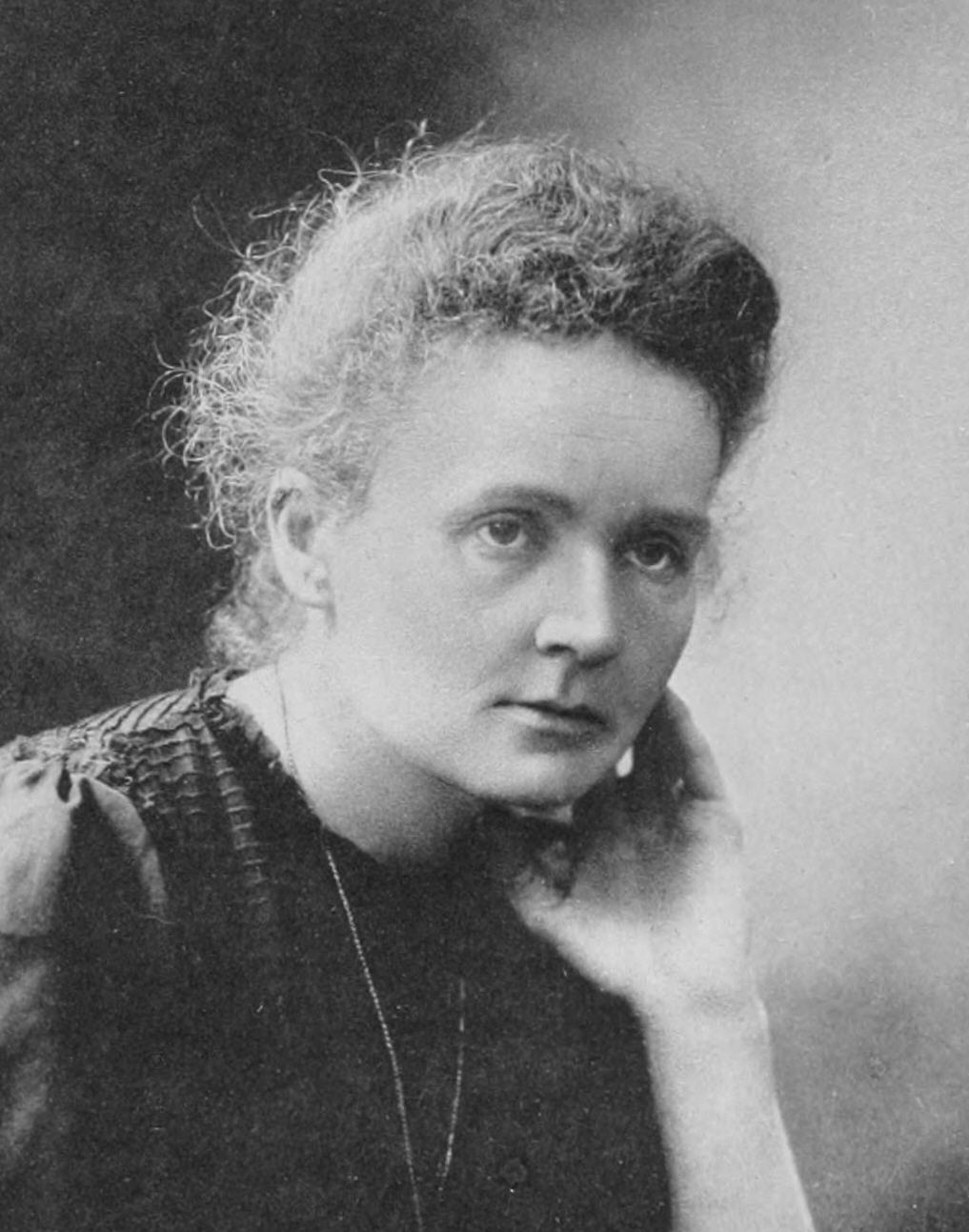
Black-and-white studio portrait of a woman with curly hair pulled up, wearing a dark blouse with a thin chain necklace, resting her right hand against her cheek. Printed signature 'M. Curie' below and small printer credit at lower right.Photograph

Primary source

Nobel Portrait of Marie Curie

Generalstabens Litografiska Anstalt Stockholm · 1911

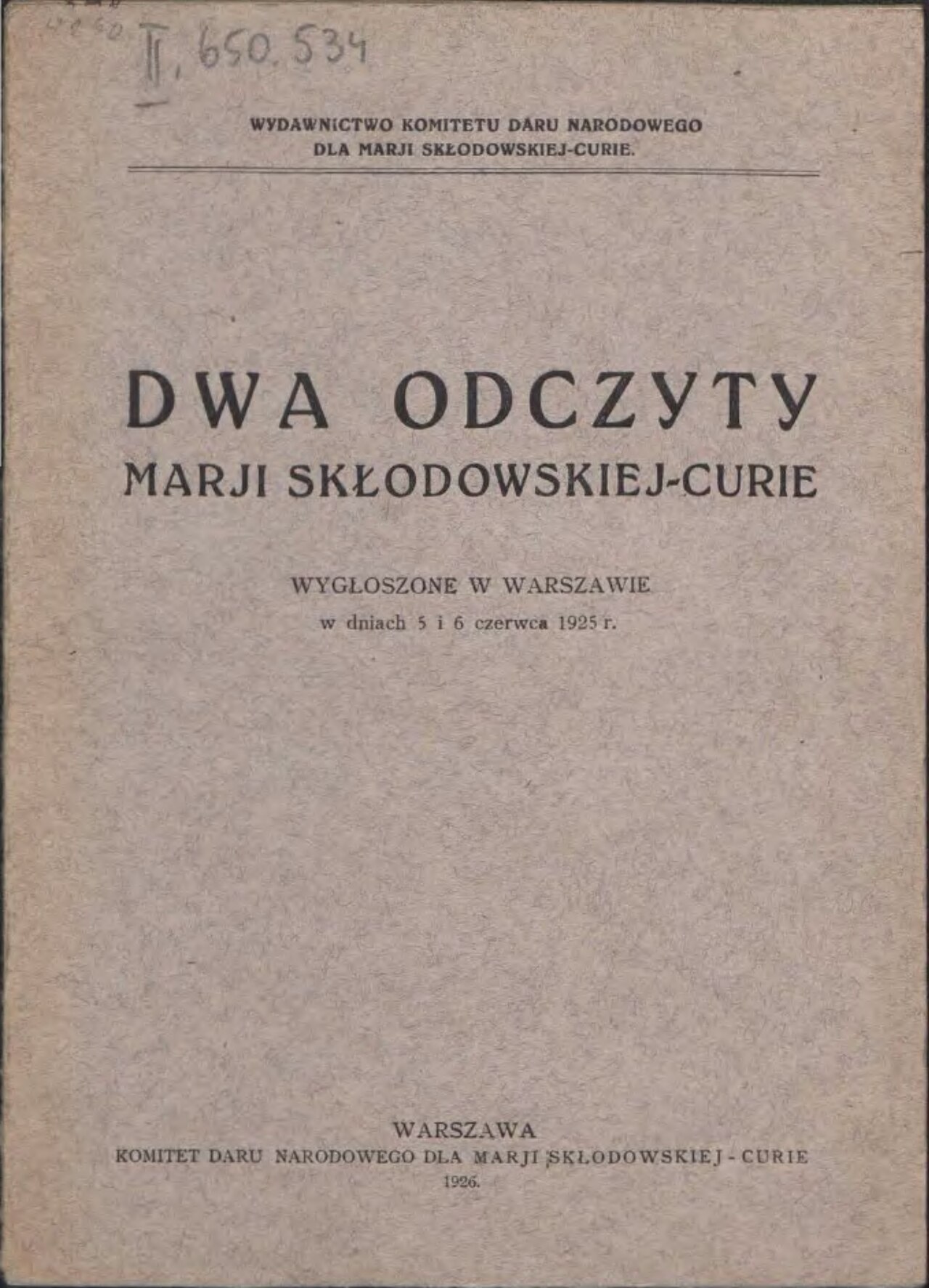
Front cover of a grey paperback booklet titled 'DWA ODCZYTY MARJI SKŁODOWSKIEJ-CURIE' in Polish, with the subtitle 'Wygłoszone w Warszawie w dniach 5 i 6 czerwca 1925 r.' and the publisher line 'Warszawa, Komitet Daru Narodowego dla Marji Skłodowskiej-Curie, 1926'. A handwritten library shelf mark is at the top left.Speech

Primary source

Dwa odczyty Marji Skłodowskiej-Curie

Marie Curie · 1925 (published 1926)

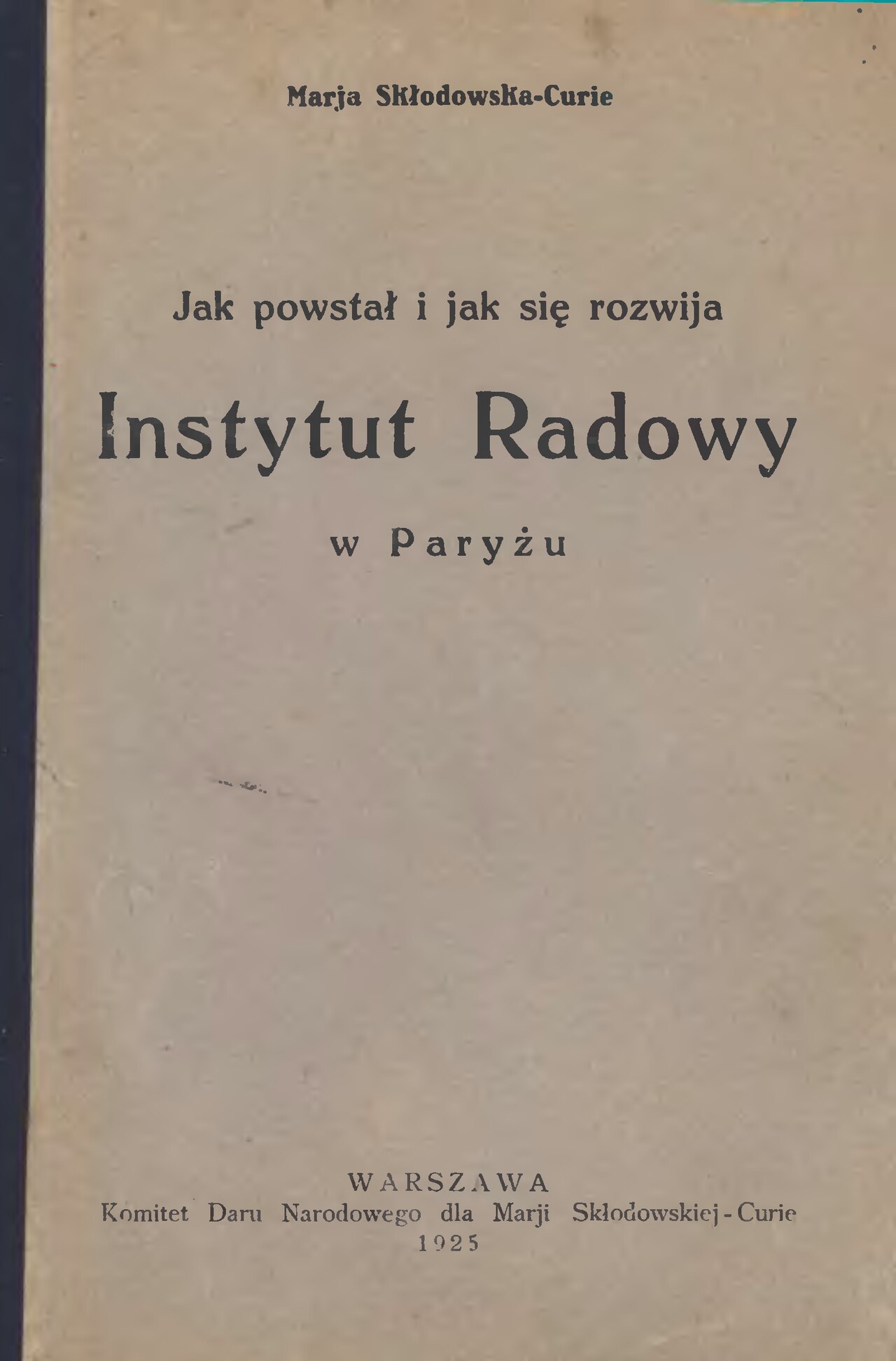
Front cover of a 1925 Polish booklet in beige paper with a dark left edge. Top reads 'Marja Skłodowska-Curie', then the title 'Jak powstał i jak się rozwija Instytut Radowy w Paryżu'. Bottom reads 'WARSZAWA, Komitet Daru Narodowego dla Marji Skłodowskiej-Curie, 1925'.Book

Primary source

Jak powstał i jak się rozwija Instytut Radowy w Paryżu

Marie Curie · 1925

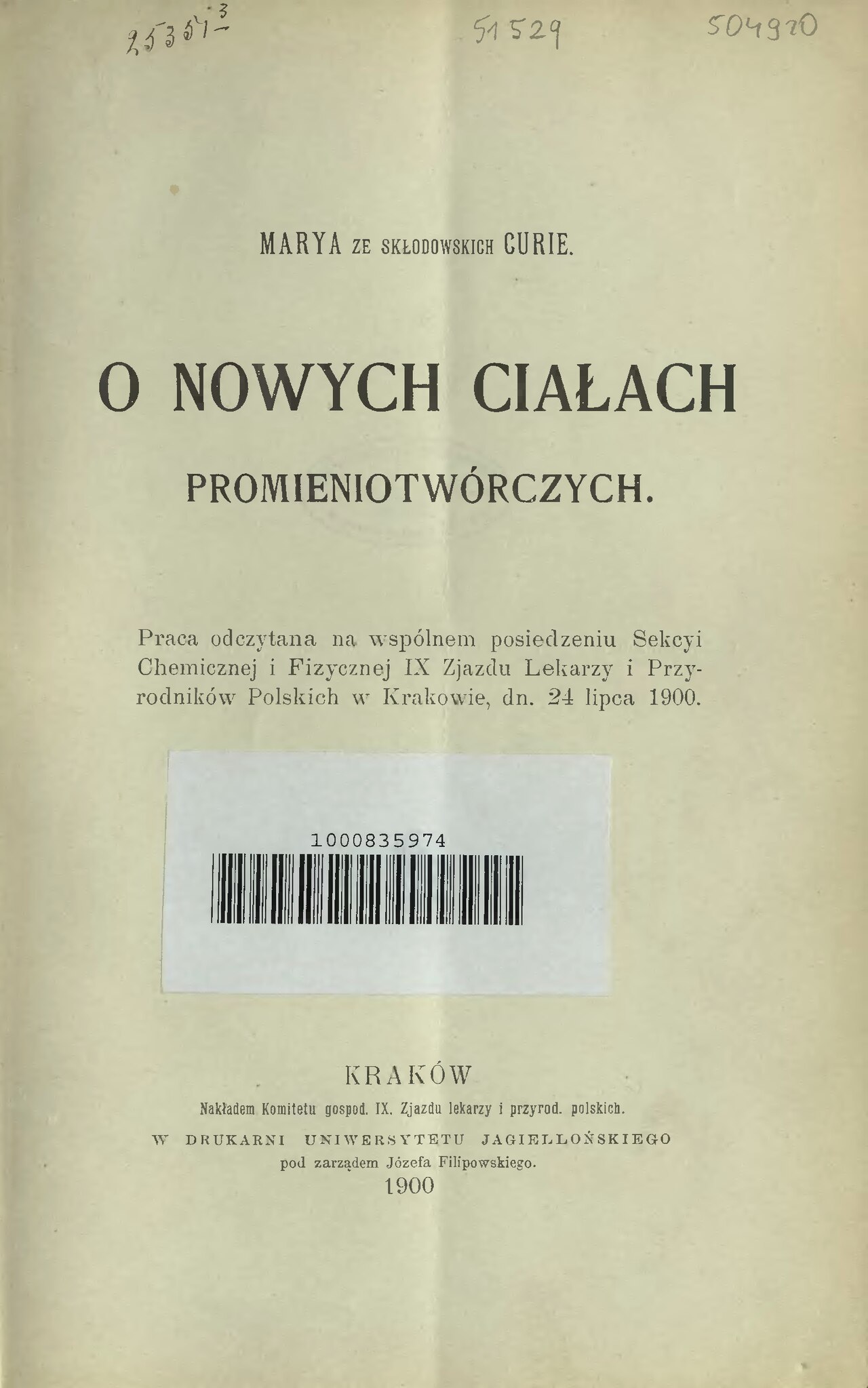
Title page of the Polish-language booklet 'O nowych ciałach promieniotwórczych' by Marya ze Skłodowskich Curie. Text reads it is a paper read at the joint session of the Chemical and Physical Sections of the IX Congress of Polish Physicians and Naturalists in Kraków, 24 July 1900. Published in Kraków by the Congress committee, printed at the Jagiellonian University press in 1900. Library barcode label and handwritten marks at top.Document

Primary source

O nowych ciałach promieniotwórczych

Marie Curie · 24 July 1900

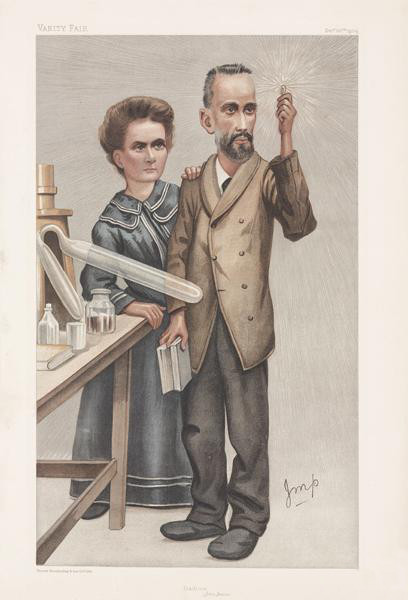
Colored Vanity Fair caricature titled Radium showing a man with a beard in a brown jacket holding a glowing spark aloft, and a woman in a dark dress holding a book beside a laboratory bench with glass tubes and flasks, a microscope behind them, against a radiating light background.Painting

Primary source

Vanity Fair Caricature of Pierre and Marie Curie, 'Radium'

Jean Baptiste Guth · 1904

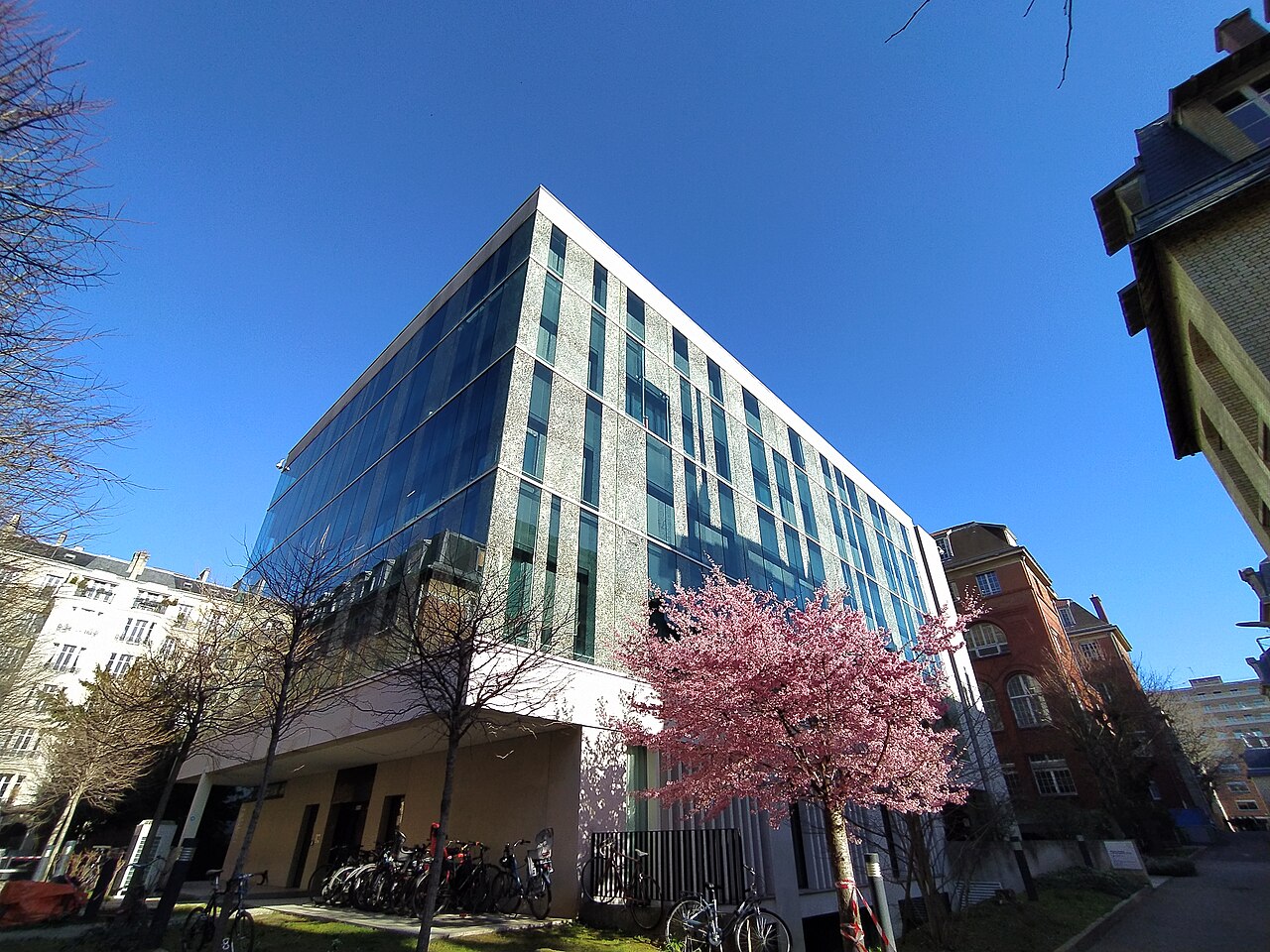
Modern multi-storey building with blue-tinted glass facades and pale stone panels under a clear blue sky. A pink cherry tree in bloom stands in front, with bicycles parked beside the ground floor and older brick buildings on the right.Artifact

Secondary source

Curie Institute

1920

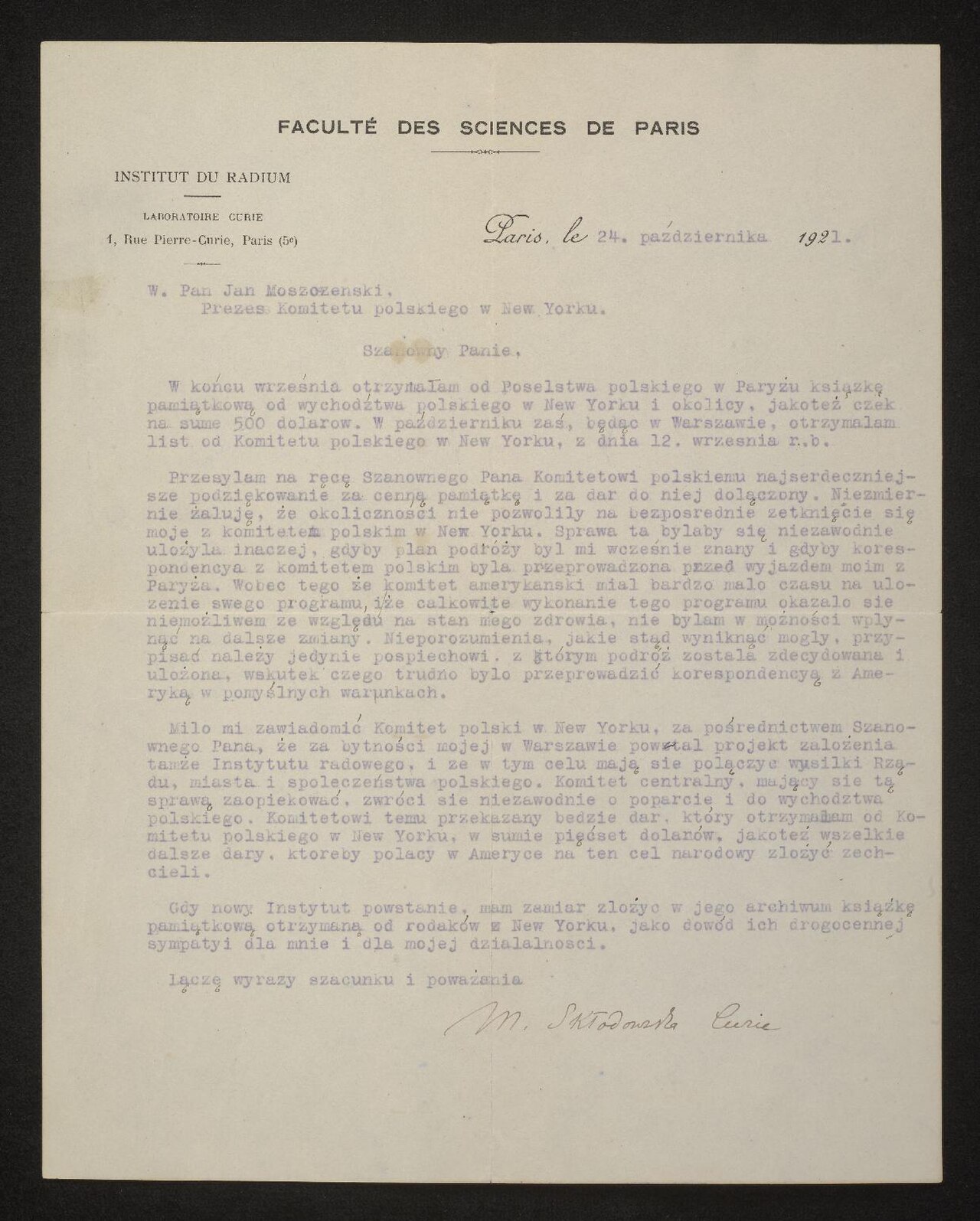
Scanned typed letter on cream paper headed Faculté des Sciences de Paris, Institut du Radium, Laboratoire Curie, dated Paris 24 October 1921, addressed to Jan Moszczeński, President of the Polish Committee in New York. Signed by Marie Curie.Letter

Primary source

Letter from Marie Curie to Jan Moszczenski

Marie Curie · 24 October 1921

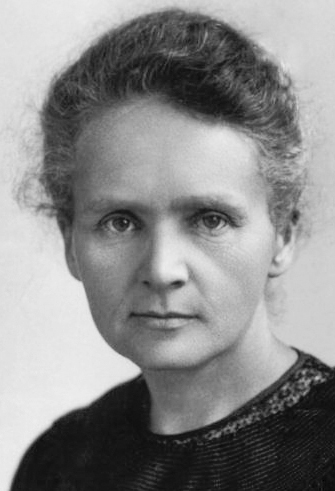
Black-and-white studio portrait of a woman with dark hair pulled back, wearing a dark textured top with a patterned neckline, facing the camera with a serious expression.Photograph

Primary source

Portrait of Marie Curie

c. 1900

Speech

Primary source

President Harding's Remarks Presenting a Radium Gift to Madame Curie

Warren G. Harding · 20 May 1921

Decorative marbled paper with swirling red, yellow, brown and white patterns on the front of a book, with a plain rust-red cloth spine and edge along the left side. No text is visible.Document

Primary source

Radio-active Substances

Marie Curie · 1903

Speech

Primary source

The Discovery of Radium

Marie Curie · 1921

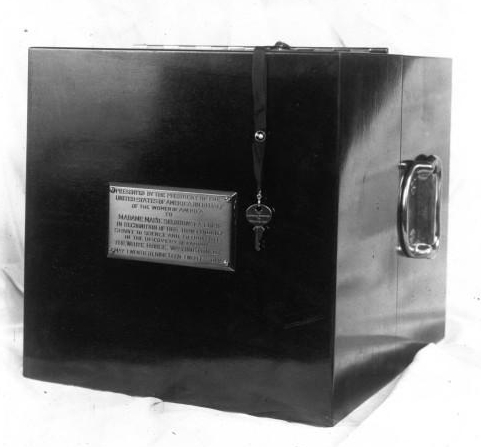
Black-and-white photo of a black metal box with a handle on the right side and a brass plaque on the front engraved with dedication text. A key hangs from a strap on the box. The box sits on a white cloth.Artifact

Primary source

Box Containing One Gram of Radium

20 May 1921

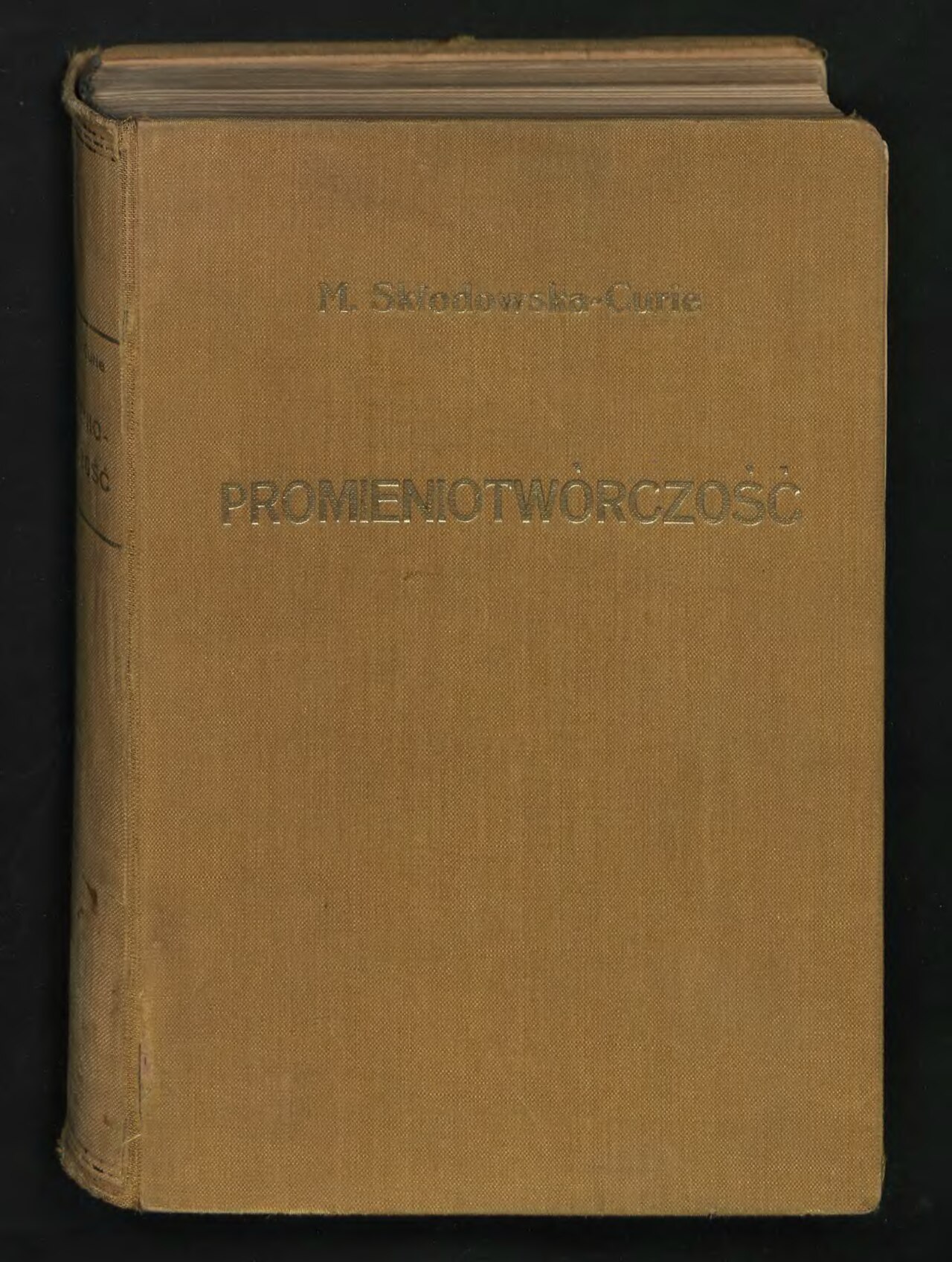
Front cover of a tan cloth-bound book with the author name M. Skłodowska-Curie stamped in small letters at top and the title PROMIENIOTWÓRCZOŚĆ in large embossed capitals in the center. The spine is visible at left with partial faded text. Black background.Book

Primary source

Promieniotwórczość

Marie Curie · 1939

Front cover of a bound volume with a red cloth spine bearing the printed number 395014 and a reddish-brown marbled paper cover with cream and dark swirling patterns. It appears to be a library binding of the work.Document

Primary source

Stan obecny chemji polonu

Marie Curie · 1926

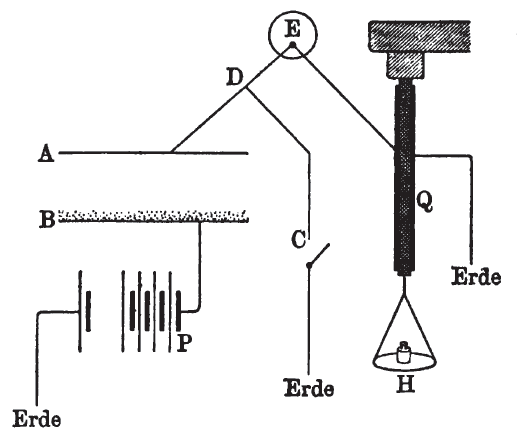
Line diagram of Marie Curie's measuring apparatus. Labeled parts include plates A and B (B with a stippled radioactive sample), switch C, battery P, electrometer E, piezoelectric quartz Q, weight pan H, and several Erde (earth) connections.Artifact

Primary source

Curie's Measuring Apparatus Diagram for Radioactivity

Marie Curie · 1903

Book

Primary source

La Radiologie et la guerre

Marie Curie · 1921

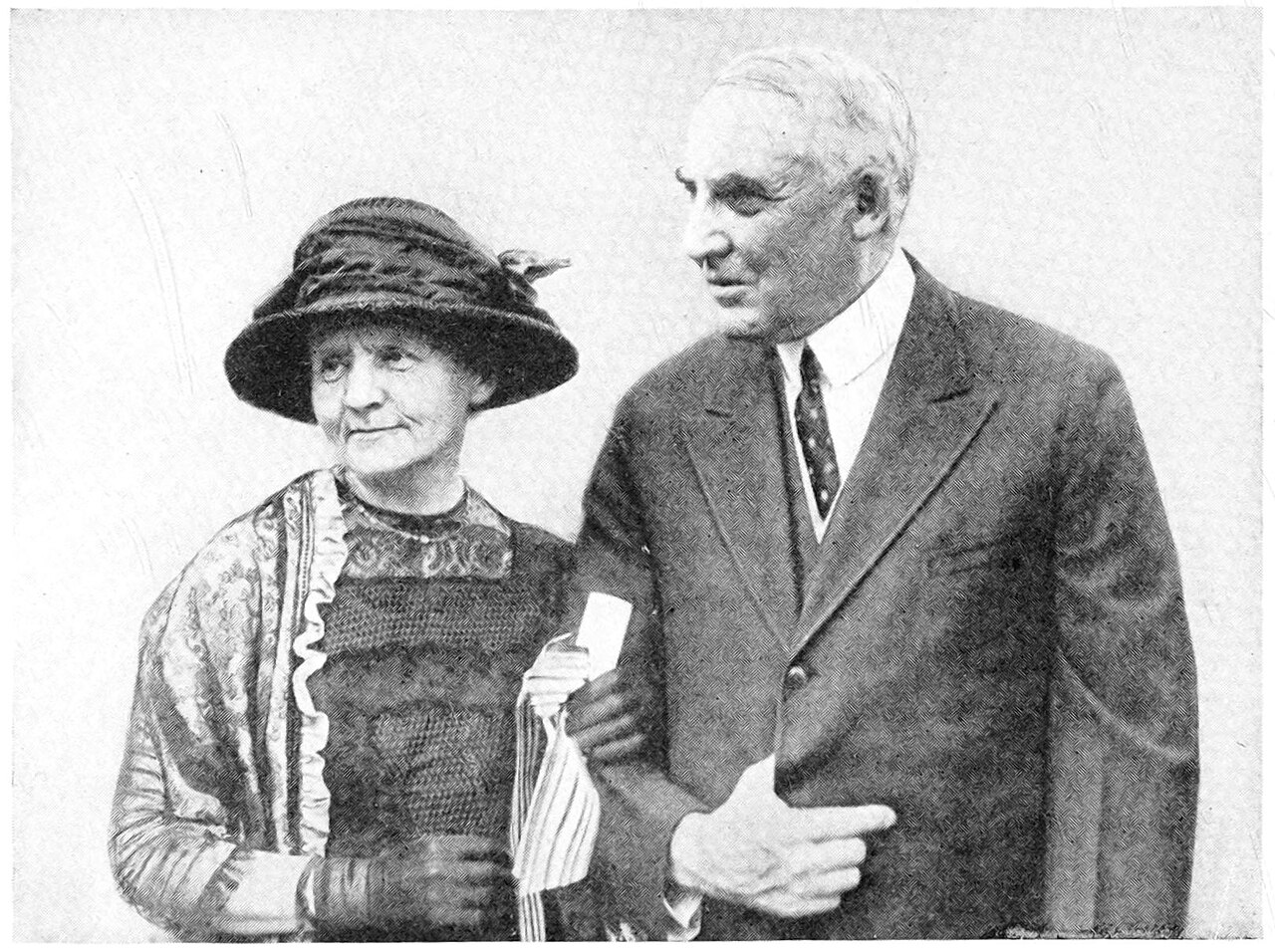
Black and white photograph of an older woman in a dark hat with a ruffled, patterned shawl and a dark knitted top, standing arm in arm with an older man in a suit and striped tie. She holds a folded paper or small card.Photograph

Primary source

Marie Curie and President Harding at the White House

20 May 1921

Colored Vanity Fair caricature titled Radium. A woman in a dark dress with a white collar stands by a laboratory bench with glass tubes, flasks, and a microscope. A bearded man in a tan jacket raises a glowing spark in his hand. Signed JMP.Painting

Secondary source

Radium

Julius Mendes Price · 1904

Newspaper article

Primary source

Mme. Curie Examines Schenectady Plant

23 October 1929

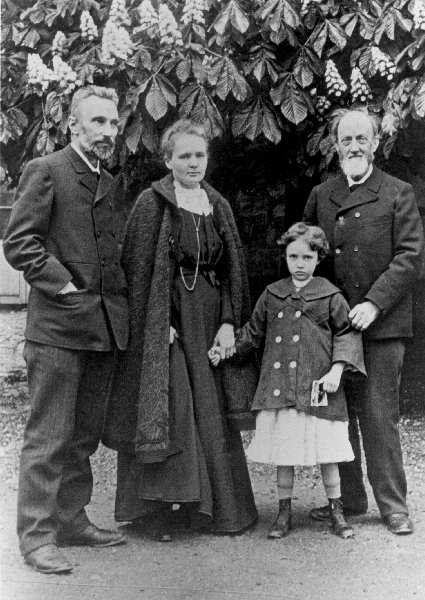
Black and white photograph of four people standing outdoors in front of a leafy tree with white blossoms. On the left a bearded man in a dark suit, next to a woman in a long dark dress and shawl holding hands with a young girl in a light coat and pale skirt. On the right an older bearded man in a dark coat stands with his hand near the girl. Gravel path in the foreground.Photograph

Primary source

Curie Family at the BIPM, 1904

Charles Édouard Guillaume · c. 1904

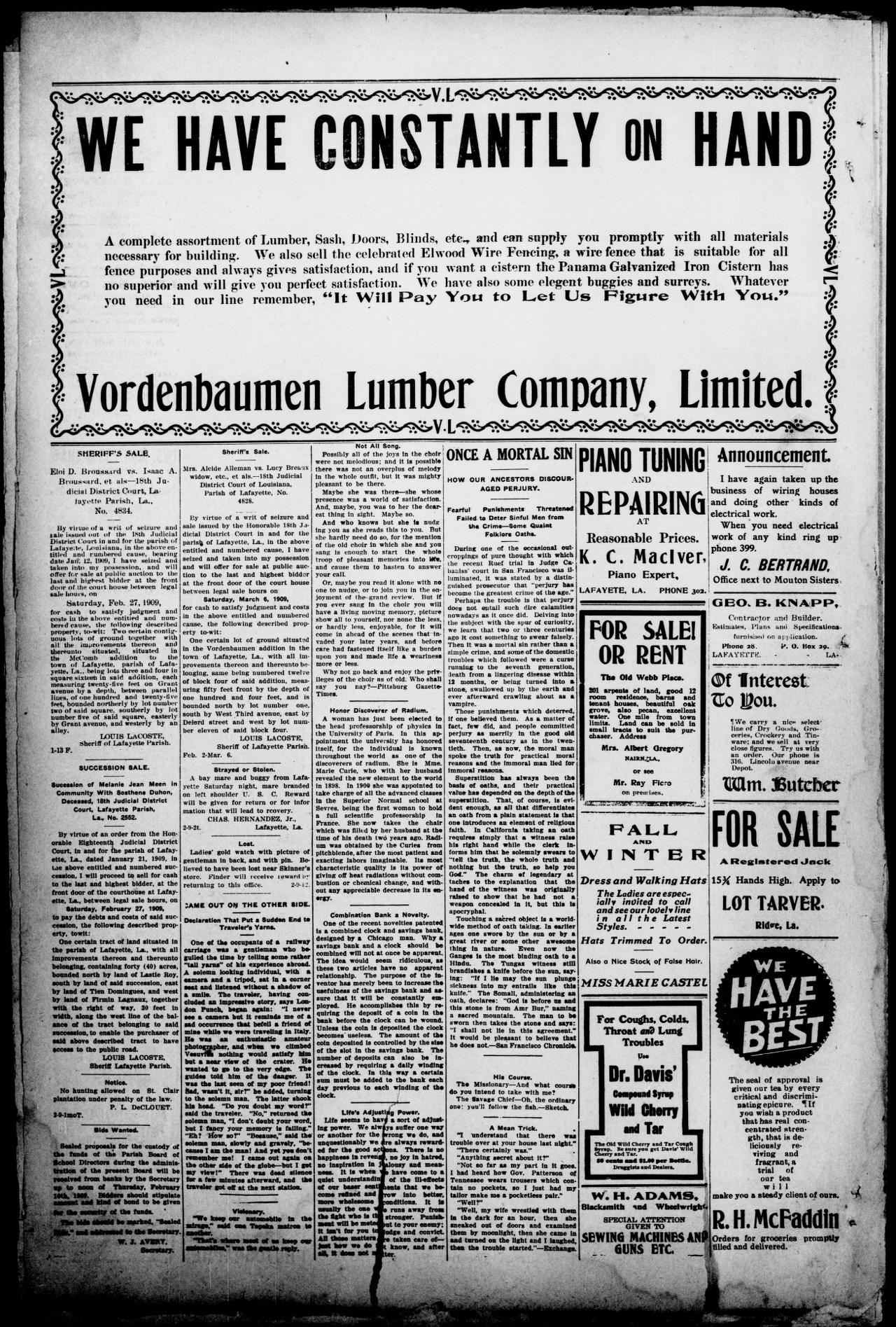
Full scanned front-page-style newspaper page from the Lafayette Advertiser, February 9, 1909, with a large banner advertisement for Vordenbaumen Lumber Company at top and multiple columns of legal notices, news items, and ads below. The article 'Honor Discoverer of Radium' is in the middle columns.Newspaper article

Primary source

Honor Discoverer of Radium

9 February 1909

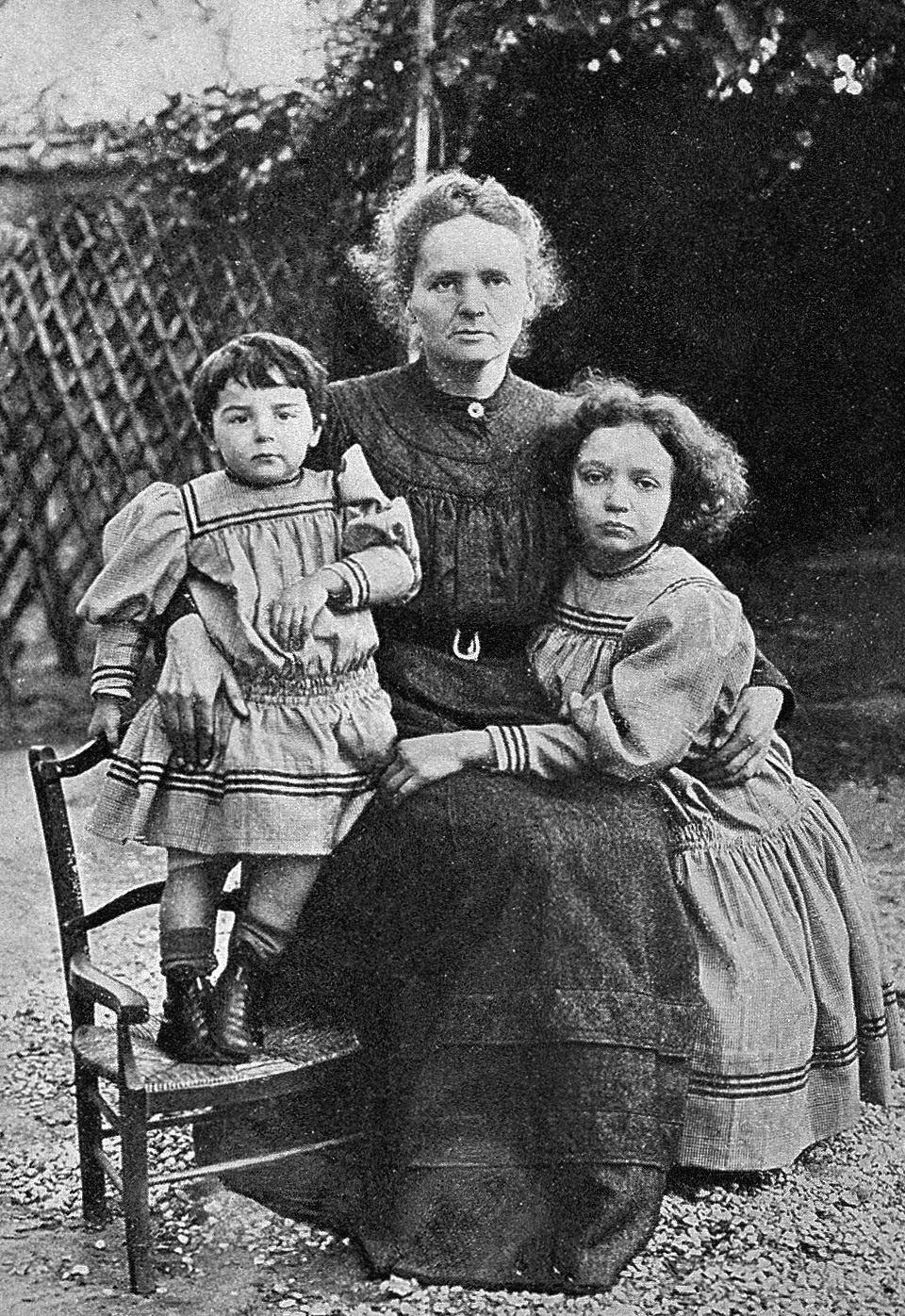
Black-and-white outdoor photograph of a woman with curly hair in a dark dress seated on a chair, with a young girl standing on the chair at left and an older girl in a light patterned dress seated at right. A lattice fence and foliage are behind them, and gravel is underfoot.Photograph

Primary source

Marie Curie with Daughters Eve and Irène, 1908

1908

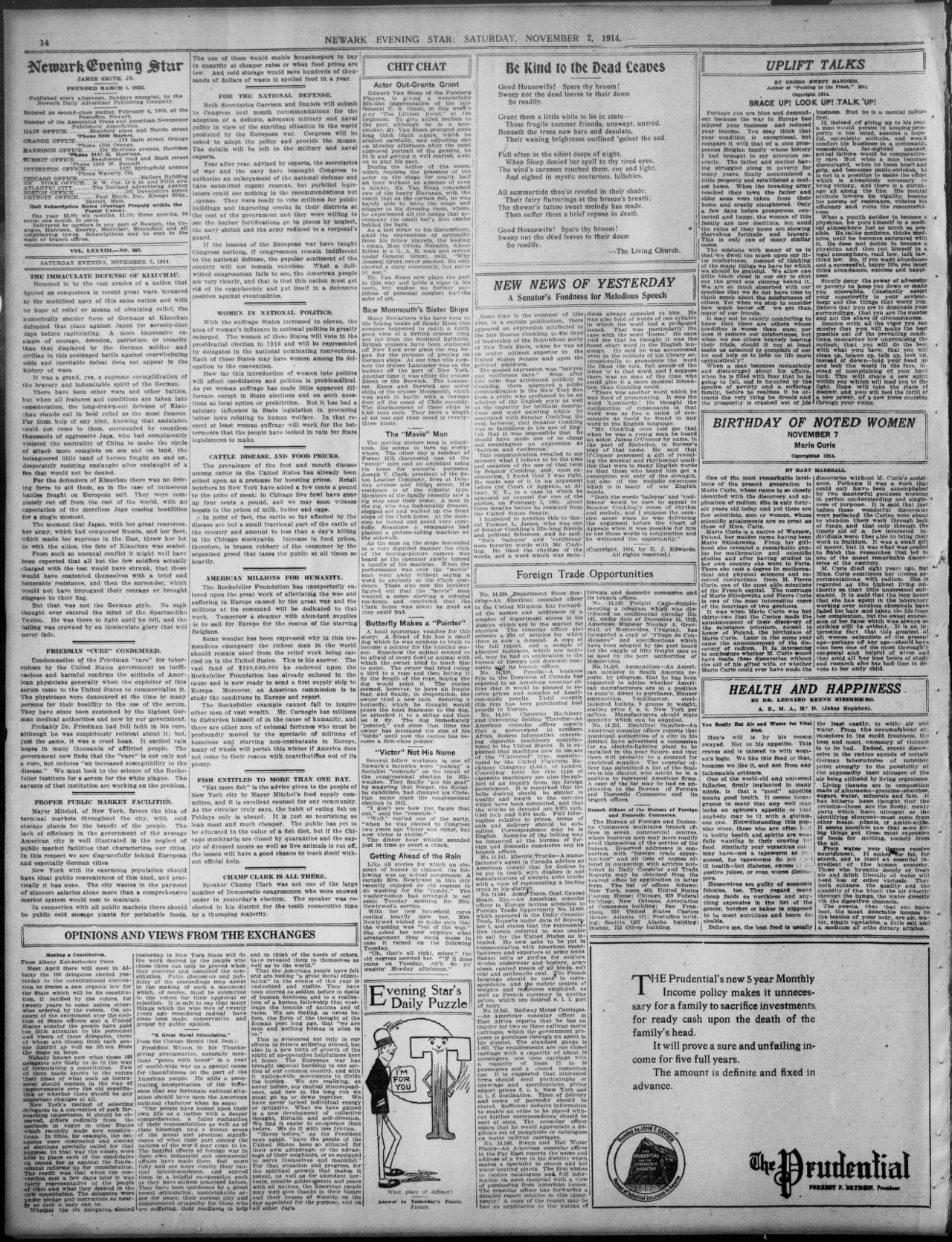
Full front page scan of the Newark Evening Star, Saturday November 7, 1914, page 14. It has many columns of articles, including a 'Birthday of Noted Women' feature on Marie Curie, plus poems, editorials, and advertisements.Newspaper article

Primary source

Birthday of Noted Women: Marie Curie

7 November 1914

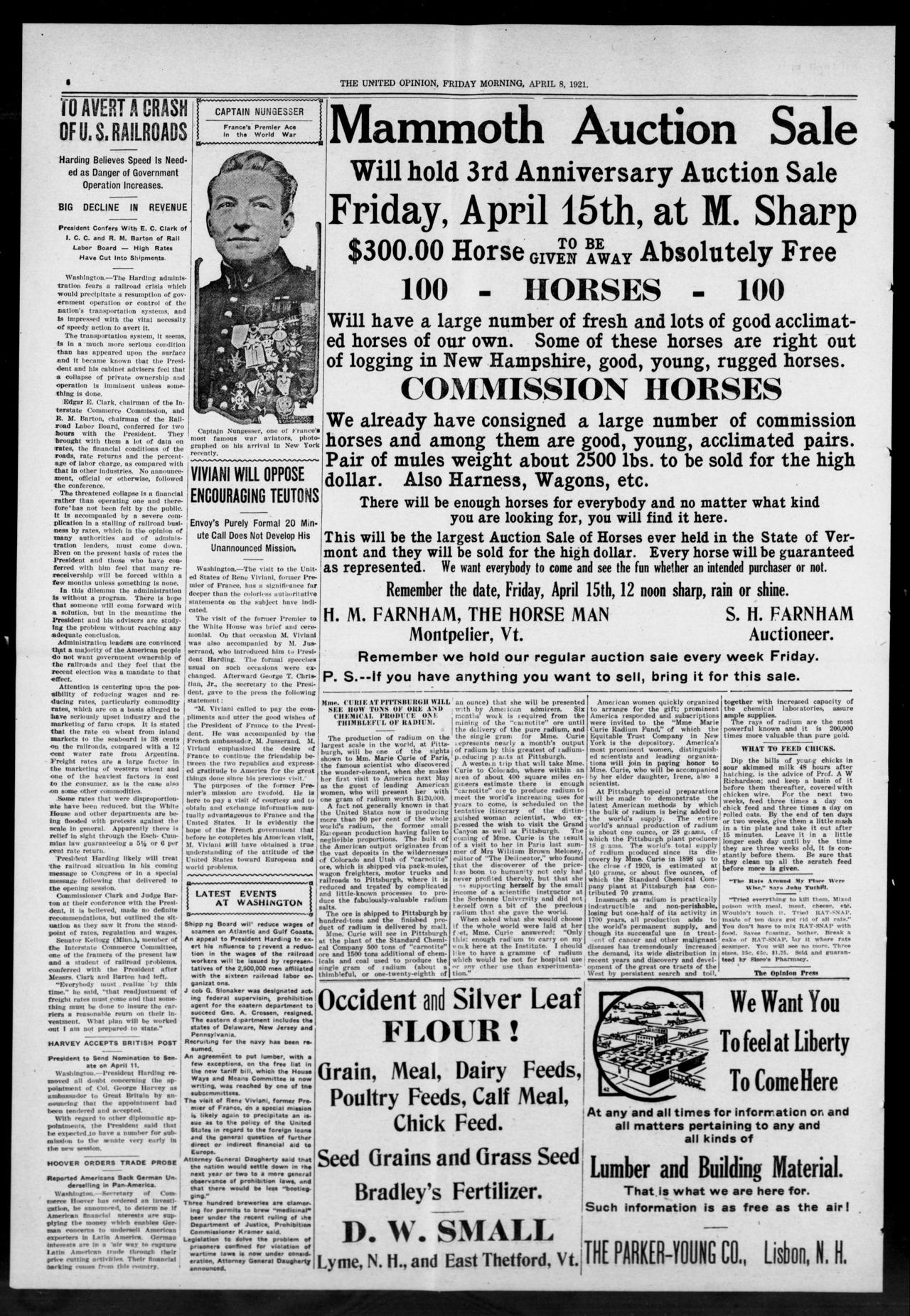
Full front page of The United Opinion newspaper, Friday morning, April 8, 1921. Headlines include Harding on averting a railroad crash, Captain Nungesser's photo, a Mammoth Auction Sale ad, and an article on Mme. Curie at Pittsburgh to see radium.Newspaper article

Primary source

Mme. Curie at Pittsburgh to See Radium

8 April 1921

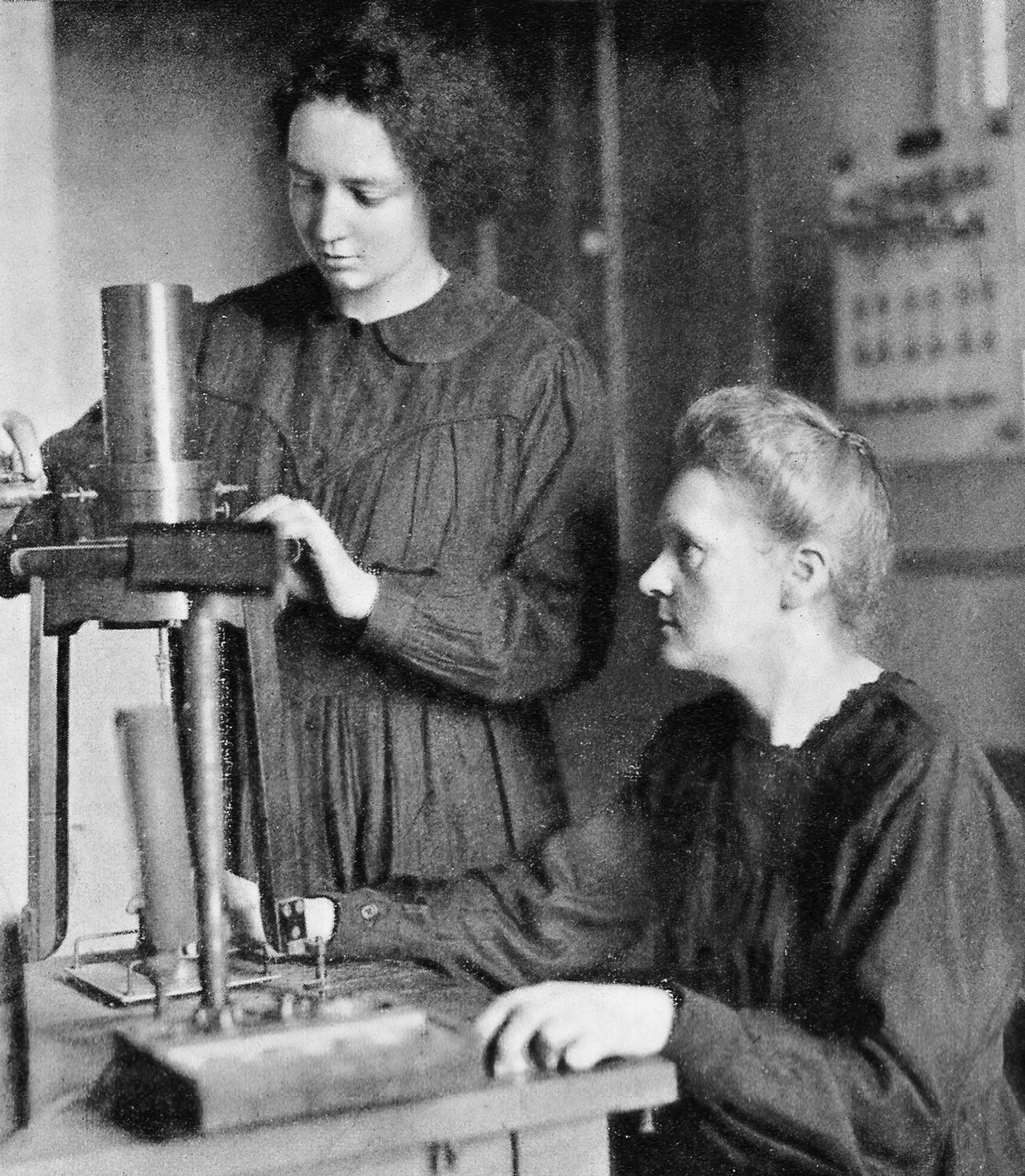
Black and white photograph of two women in dark dresses in a laboratory. A standing woman with dark curly hair looks down and adjusts a metal cylindrical apparatus. A seated woman with light hair pulled back, in profile, looks toward the apparatus while resting her hand on a wooden table beside laboratory equipment.Photograph

Primary source

Irène and Marie Curie in the Laboratory, 1925

1925

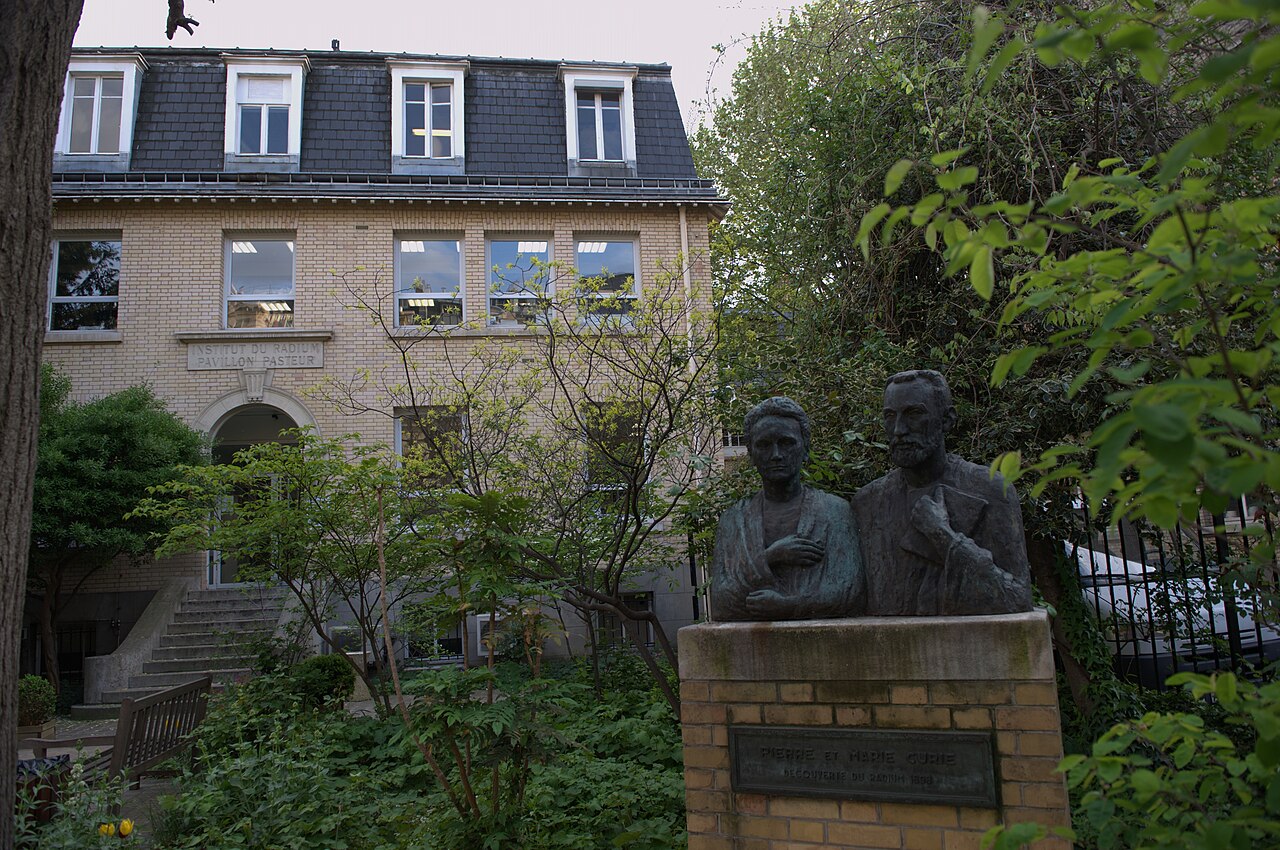
Exterior of the Pavillon Pasteur building with a cream brick facade, slate mansard roof and a sign reading Institut du Radium Pavillon Pasteur. In the foreground on a brick pedestal is a bronze bust sculpture of Pierre and Marie Curie, with a plaque reading Pierre et Marie Curie, Découverte du radium 1898. Green trees surround the courtyard.Artifact

Secondary source

Musée Curie

1995 (renovation); laboratory built 1911-1914

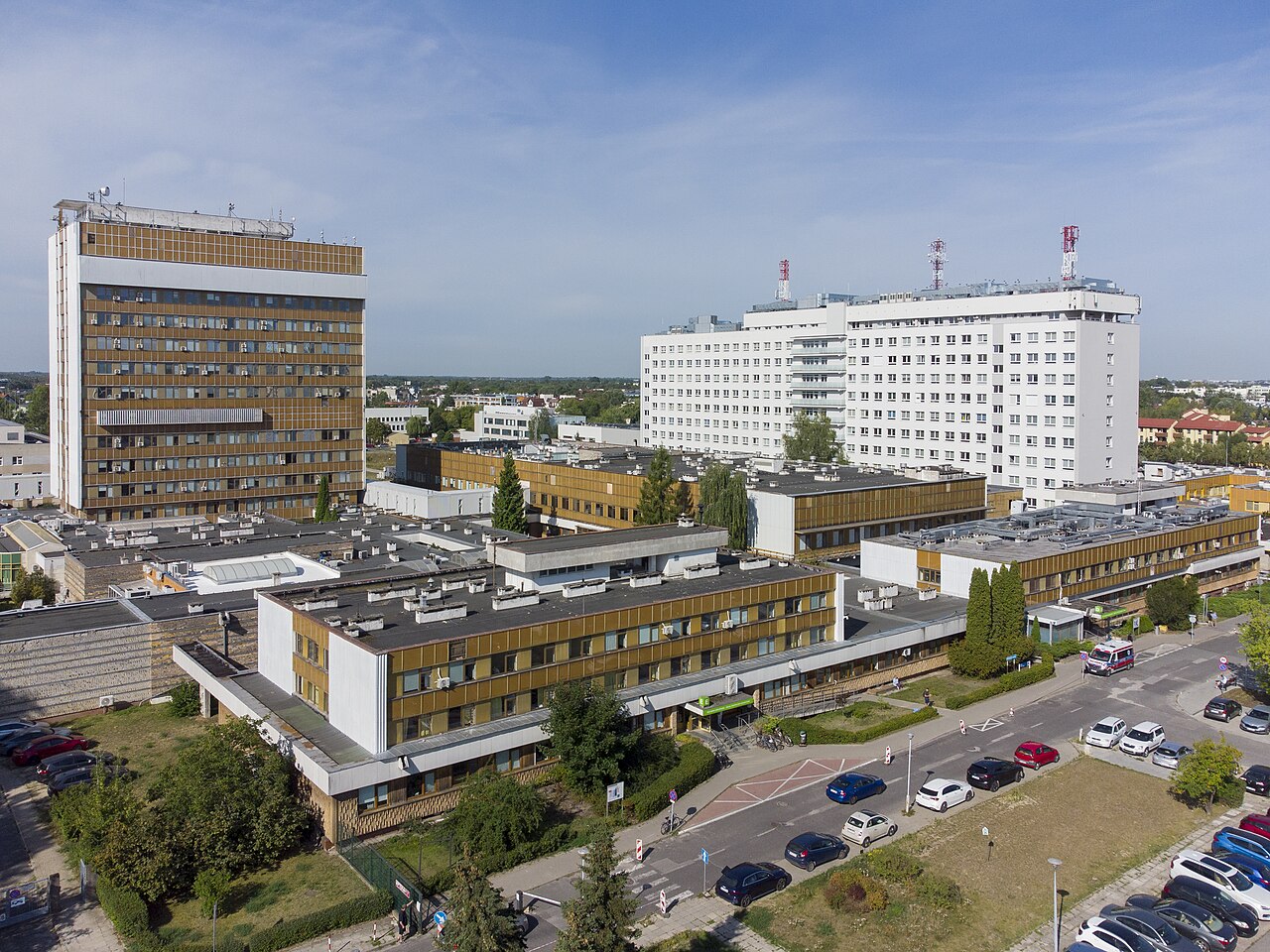
Aerial view from the east of a hospital campus with several multi-story buildings, including a tall tower with a brown-gold facade on the left and a white high-rise with antennas on the right. Cars and an ambulance are on a road in front, under a clear blue sky.Artifact

Secondary source

Maria Sklodowska-Curie National Research Institute of Oncology

Opened 29 May 1932

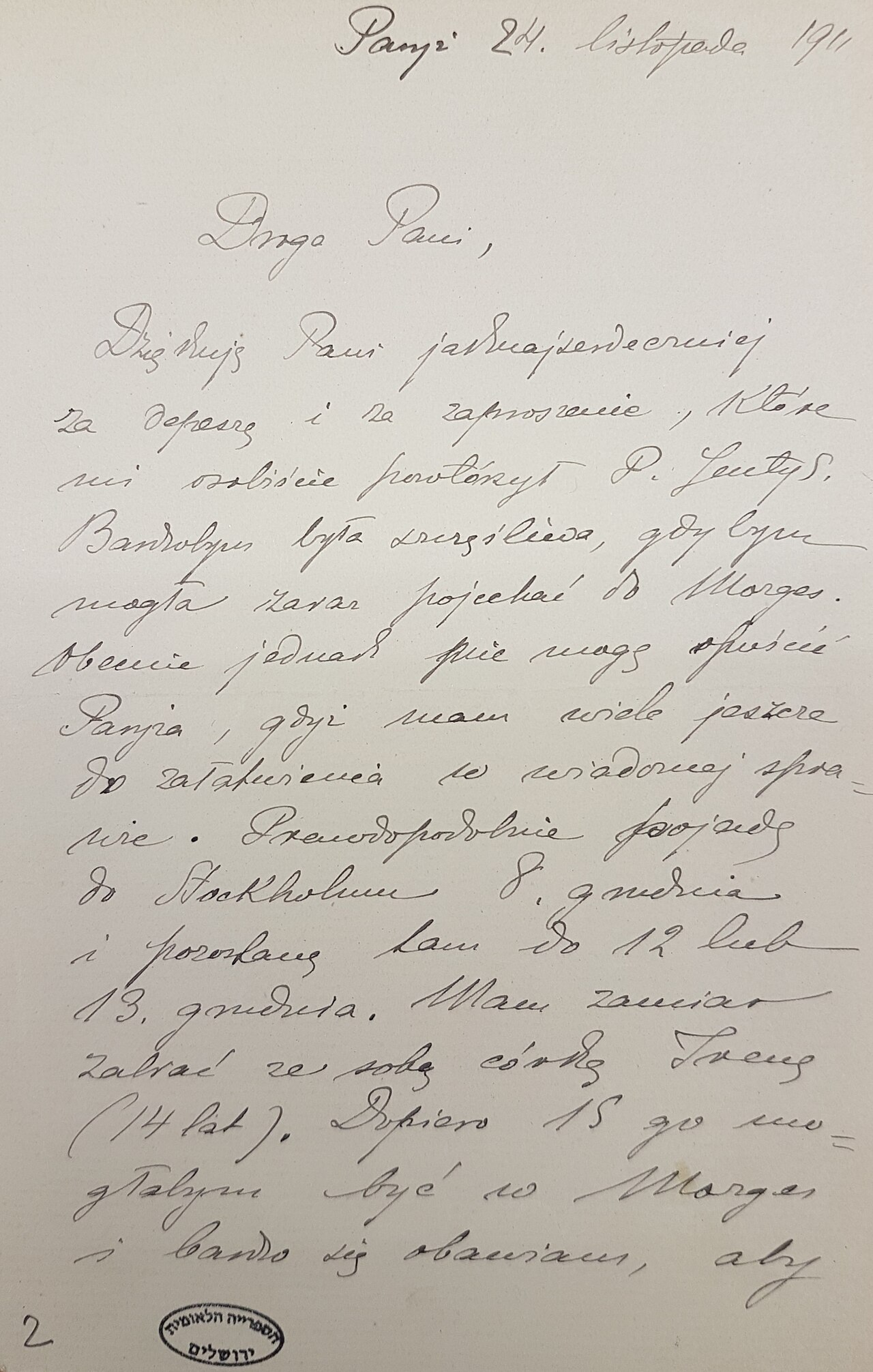
Handwritten letter in Polish cursive on cream paper, dated Paryż 24 listopada 1911 at top, beginning 'Droga Pani'. A Hebrew-lettered library stamp appears at the bottom left with the page number 2.Letter

Primary source

Letter Declining a Visit to Switzerland

Marie Curie · 24 November 1911

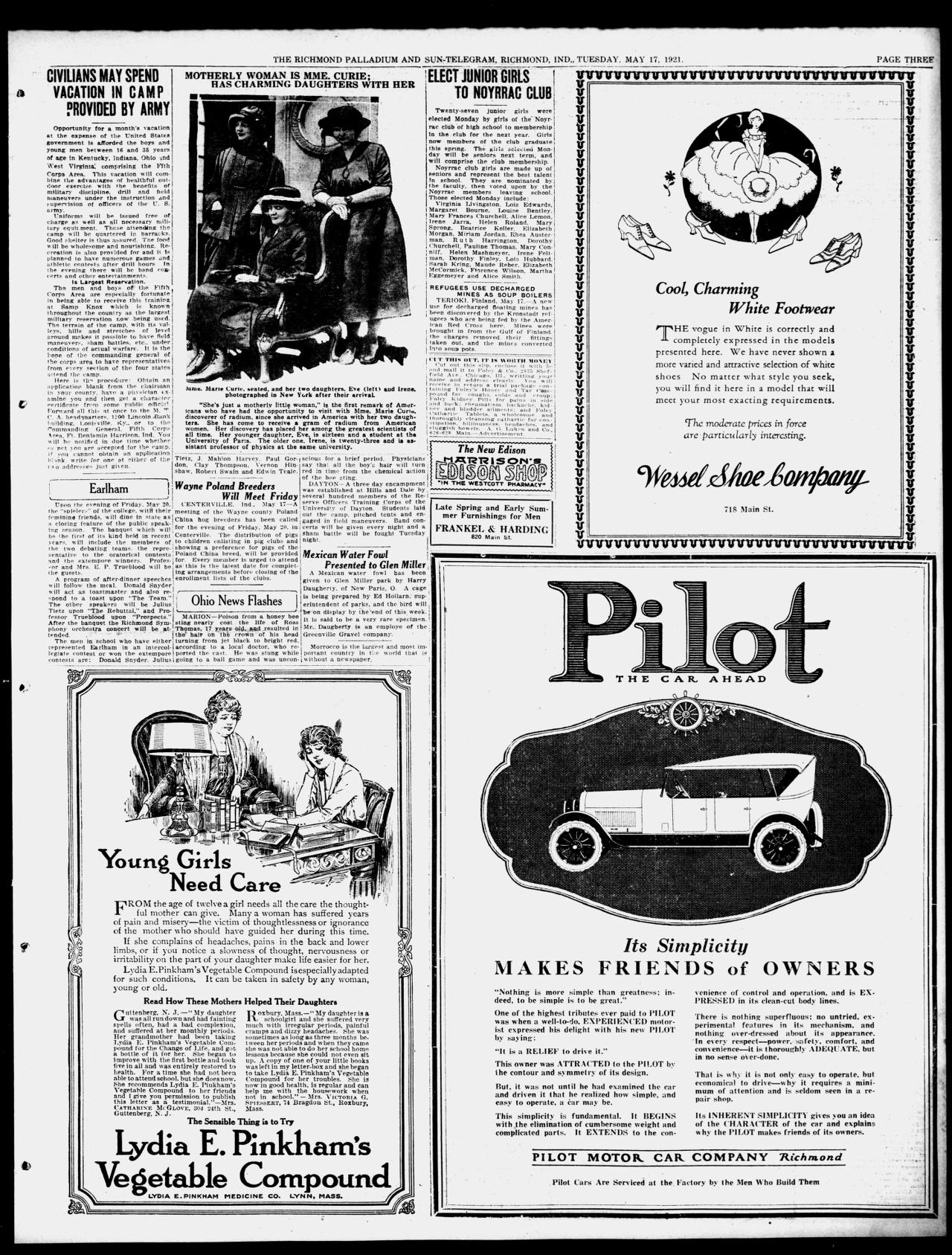
Full page three of The Richmond Palladium and Sun-Telegram, May 17, 1921, a newspaper page with multiple articles, headlines, advertisements for Pilot cars, Lydia Pinkham's Vegetable Compound, and Wessel Shoe Company, and a photo of Mme. Curie with daughters.Newspaper article

Primary source

Motherly Woman Is Mme. Curie

The Richmond palladium and sun-telegram (Richmond, Ind.) · 17 May 1921

A plain dark blue cloth book cover with a faint woven texture and a few light scuff marks. A small slightly lighter rectangular patch appears at the lower left edge. No title or text is visible.Book

Primary source

Autobiographical Notes

Marie Curie · 1923

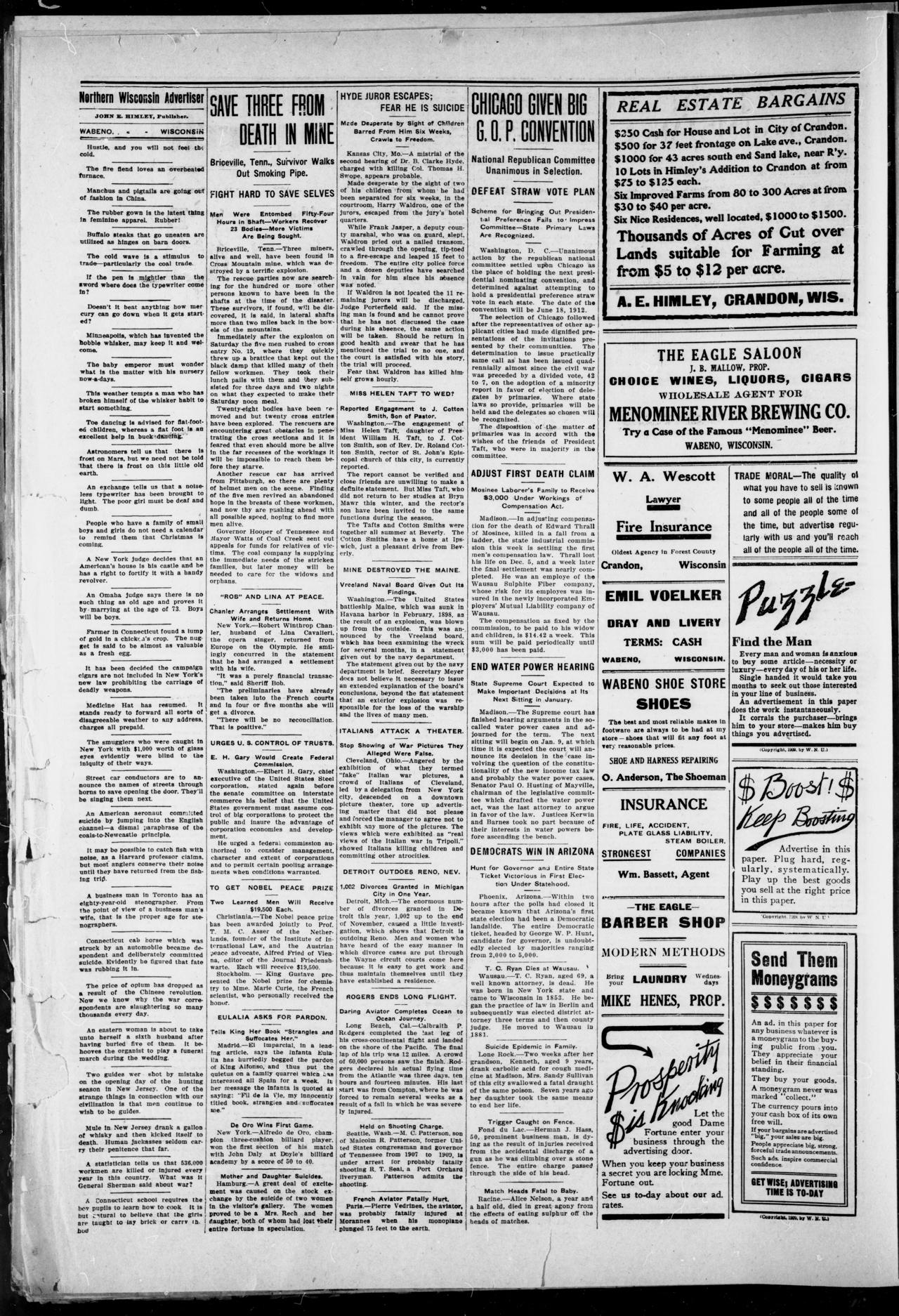
Full scanned front page of the Northern Wisconsin Advertiser, Wabeno, Wisconsin, dated 1911. Multiple columns of small print with headlines including 'Save Three From Death in Mine', 'Chicago Given Big G.O.P. Convention', and a 'To Get Nobel Peace Prize' item. Advertisements for real estate, a saloon, a barber shop, and insurance appear on the right.Newspaper article

Primary source

To Get Nobel Peace Prize

Northern Wisconsin advertiser (Wabeno, Wis.) · 15 December 1911

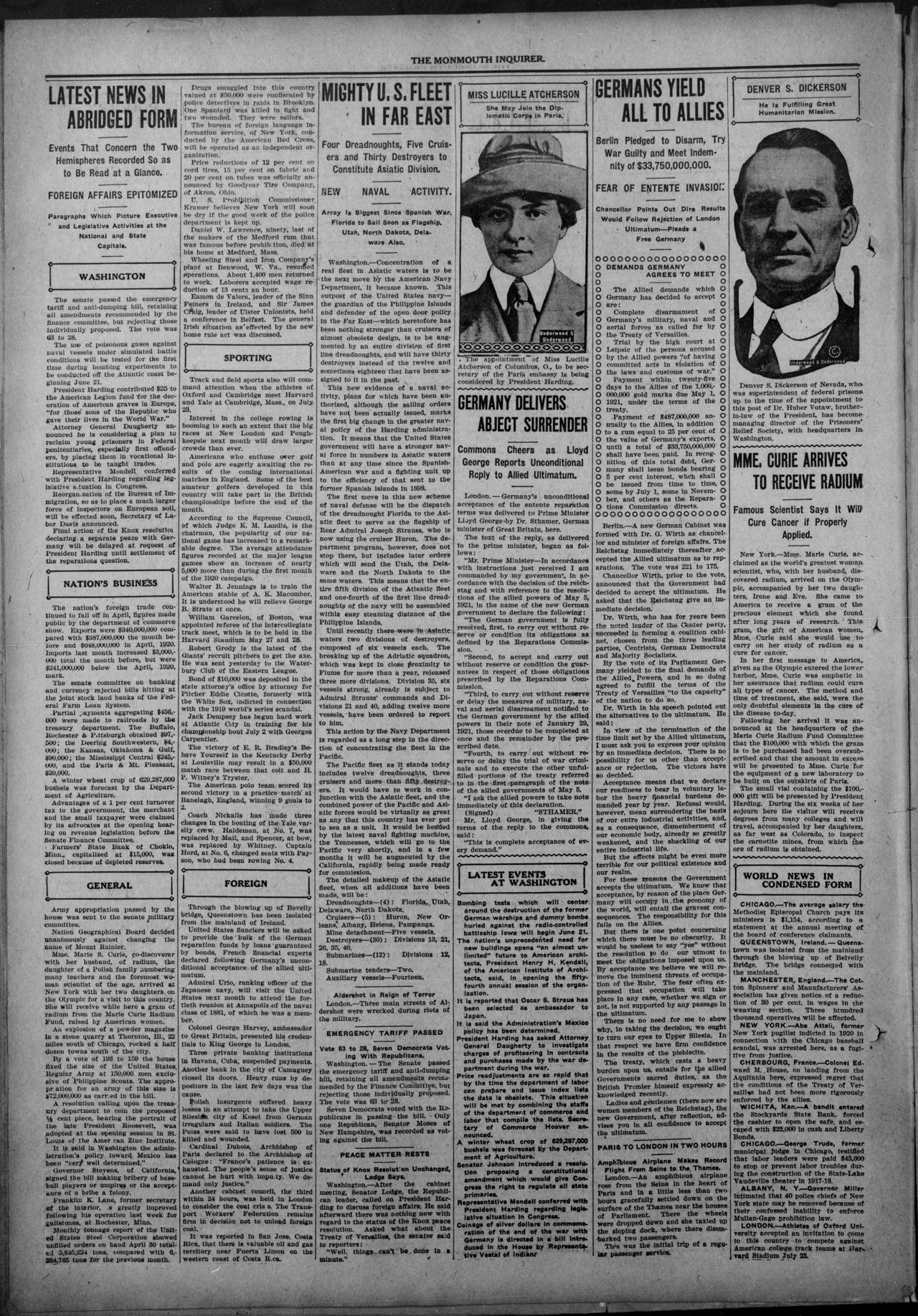
Full page scan of the Monmouth Inquirer newspaper, dated 1921, with several columns of headlines and articles. A portrait of Miss Lucille Atcherson appears in the center, and a portrait of Denver S. Dickerson appears at upper right. The article 'Mme. Curie Arrives to Receive Radium' is in the right column.Newspaper article

Primary source

Mme. Curie Arrives to Receive Radium

The Monmouth inquirer (Freehold, N.J.) · 19 May 1921

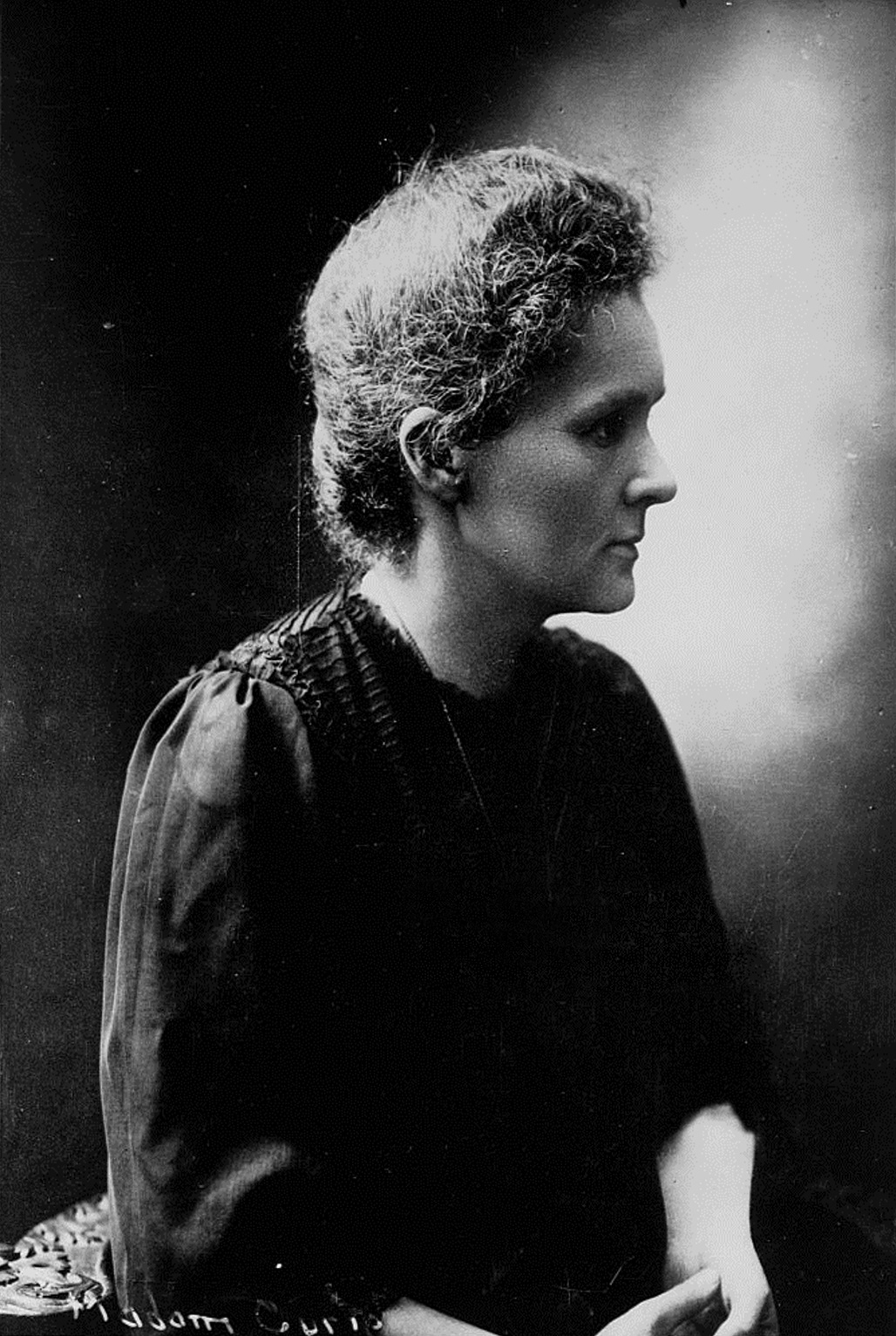
Black-and-white studio portrait in profile of a woman with short wavy hair, wearing a dark high-necked blouse with gathered shoulders and a thin necklace. The background is dark on the left and bright on the right. Handwritten text is visible at the bottom edge.Photograph

Primary source

Marie Curie

Press Illustrating Service, New York City

Black and white portrait photograph of a woman with light, wavy hair pulled back, wearing a dark blouse with gathered shoulders and a thin necklace. She rests her cheek on one hand and gazes toward the viewer against a soft gray backdrop.Photograph

Primary source

Portrait of Marie Curie, Nobel Prize in Chemistry

c. 1911

Book

Primary source

Pierre Curie (biography, LibriVox reading)

Marie Curie · 1923

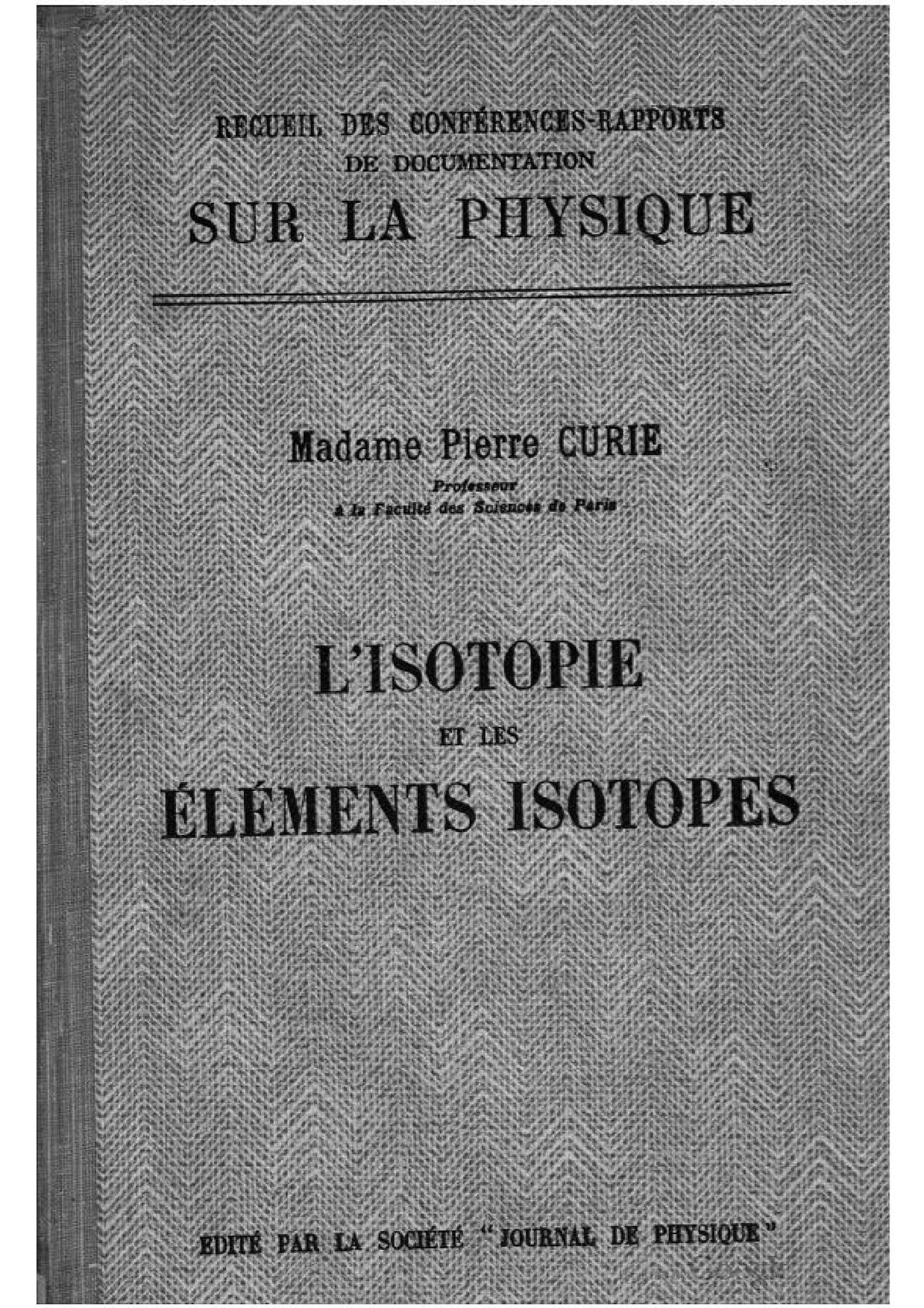
Cover of a bound book in grey patterned cloth. Printed text reads: Recueil des conférences-rapports de documentation sur la physique; Madame Pierre Curie, Professeur à la Faculté des Sciences de Paris; L'isotopie et les éléments isotopes; Édité par la Société Journal de Physique.Book

Primary source

L'isotopie et les éléments isotopes

Marie Curie · 1924

Book

Secondary source

Famous Men of Science

Sarah Knowles Bolton · 1889

Handwritten cursive signature in dark ink reading 'Marie Curie' with a flowing, looping line, written across a plain light background.Document

Primary source

Signature of Marie Curie

Marie Curie

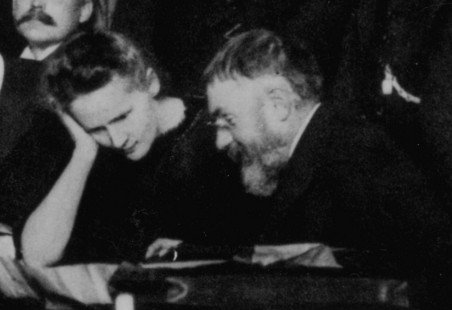
Black-and-white photograph of two people seated at a table. A woman on the left rests her cheek on her hand and looks down. A bearded man with glasses on the right leans forward, looking down. A third man with a mustache is partly visible at the upper left.Photograph

Primary source

Curie and Poincaré at the 1911 Solvay Conference

1911

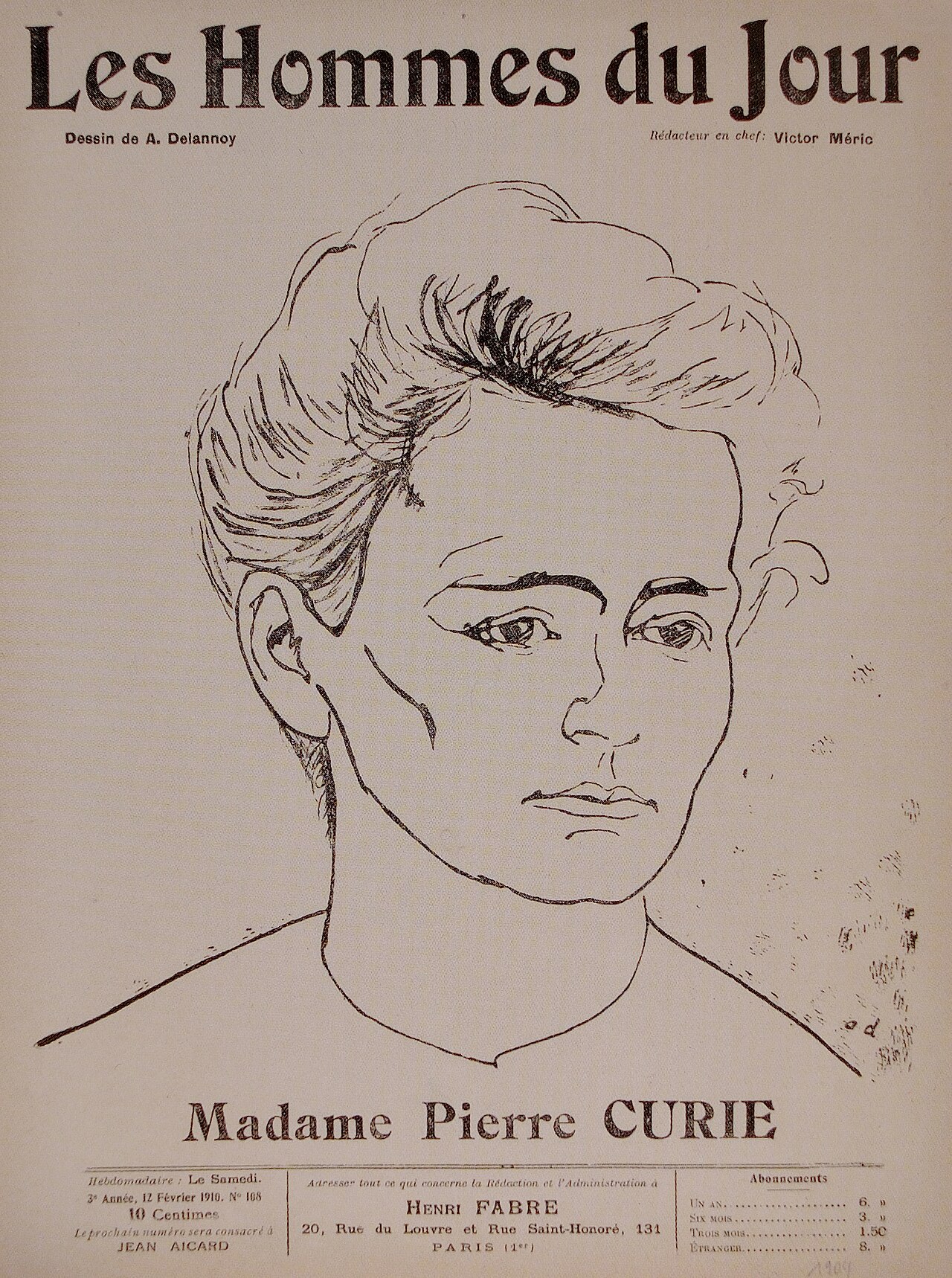
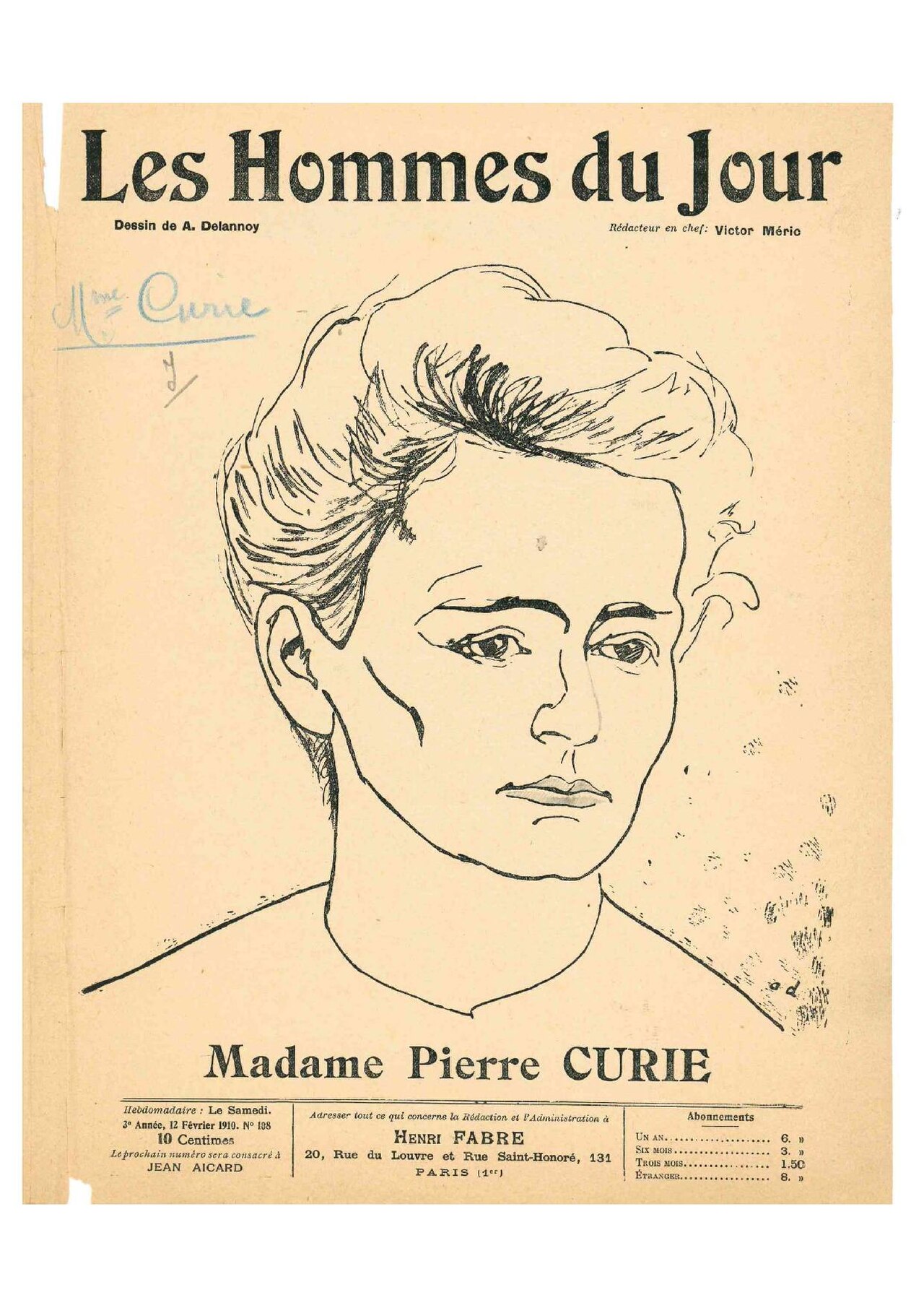
Black-and-white line drawing of a woman's face in profile-leaning three-quarter view, with hair swept up and back, large eyes, and a serious expression. Printed magazine cover titled 'Les Hommes du Jour' at top; caption below reads 'Madame Pierre CURIE'.Painting

Primary source

Portrait of Marie Curie in Les Hommes du Jour

Aristide Delannoy · 12 February 1910

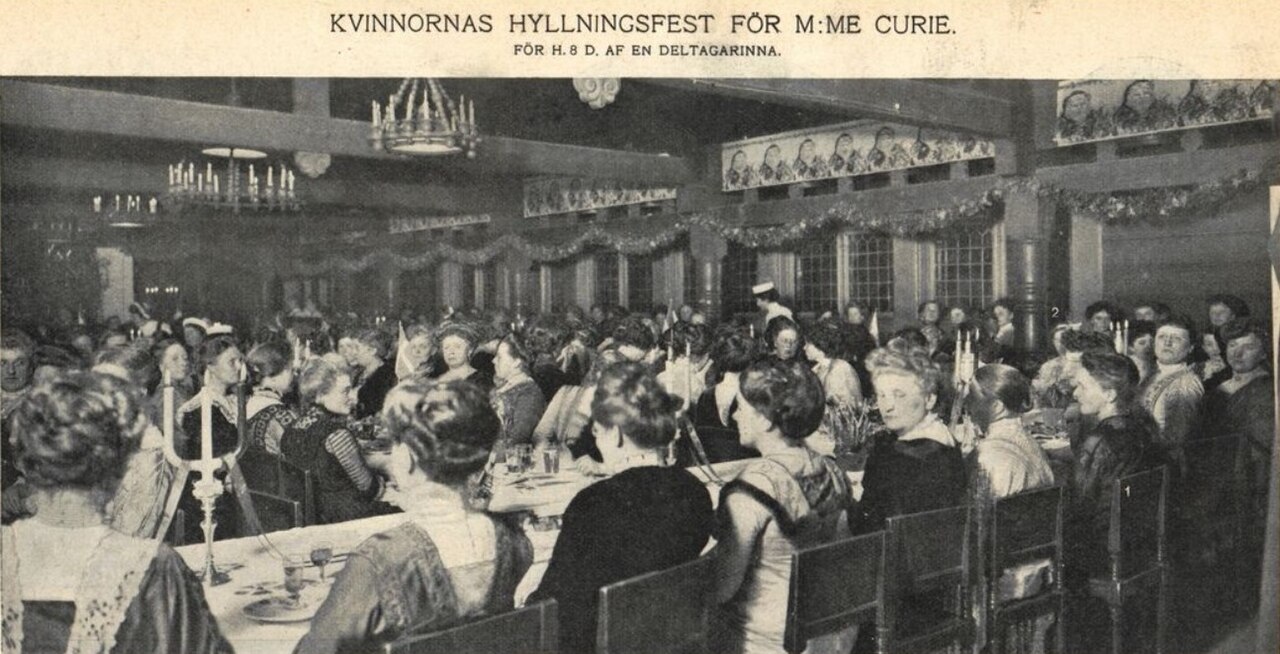
Black-and-white photograph of a large banquet hall with a long dining table and many seated women in period dress, candelabra and chandeliers overhead, and a banner with the caption reading Kvinnornas hyllningsfest för M:me Curie.Photograph

Primary source

Swedish Academic Women Honor Marie Curie

1911

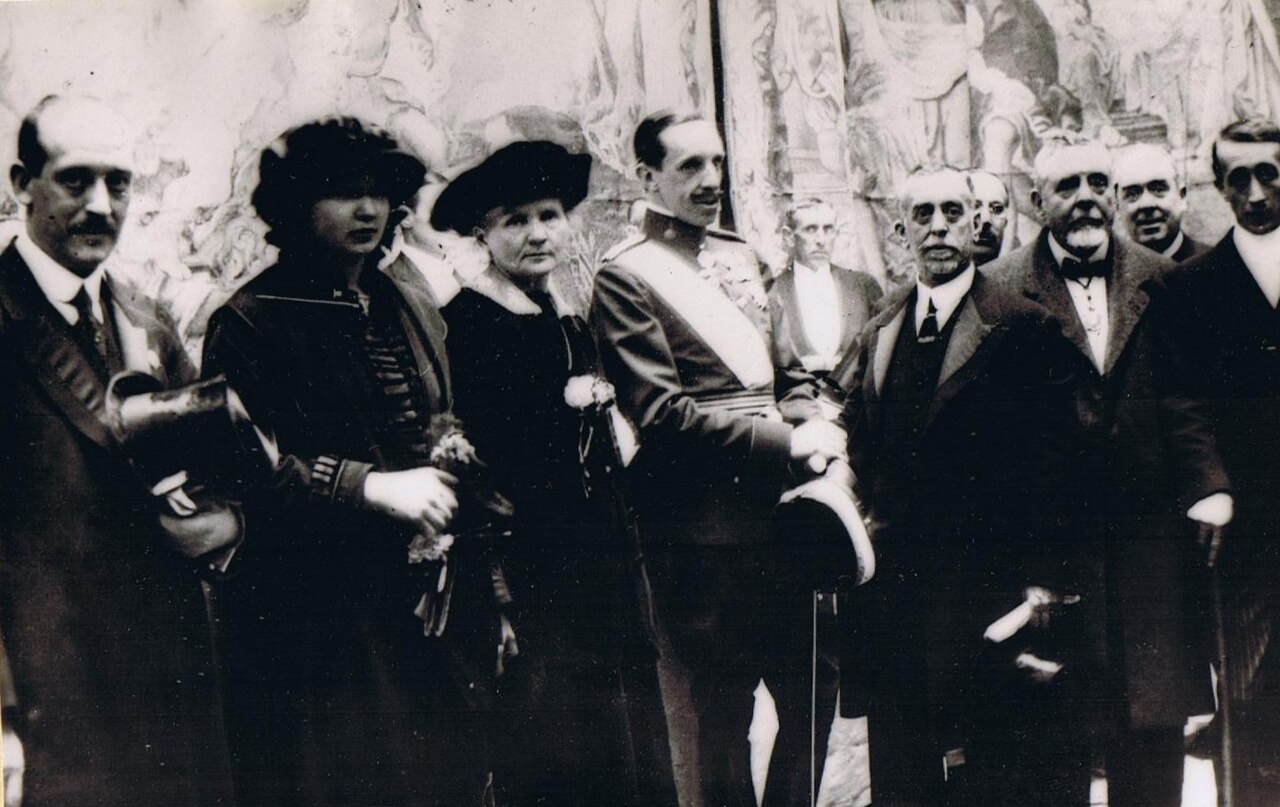
Black-and-white photograph of a group of formally dressed people standing before a tapestry. A man in a military uniform with a sash stands center, shaking hands with an older man. Women in hats stand beside him, including an older woman in a dark dress and hat and a younger woman with dark hair. Several men in suits stand around them.Photograph

Primary source

Marie Curie and King Alfonso XIII in Madrid

1919

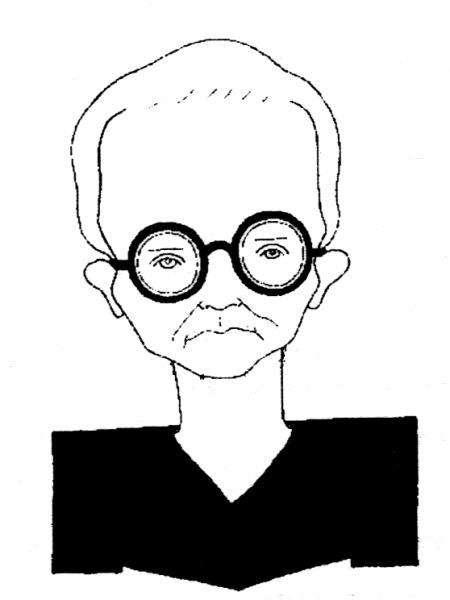
Black-and-white ink line drawing of an elderly woman's face in a caricature style, with round dark-rimmed glasses, short hair, a downturned mouth, and a black-shouldered top with a V-neck.Painting

Primary source

Drawing of Marie Curie by Gheorghe Manu

Gheorghe I. Manu · c. 1926-1934

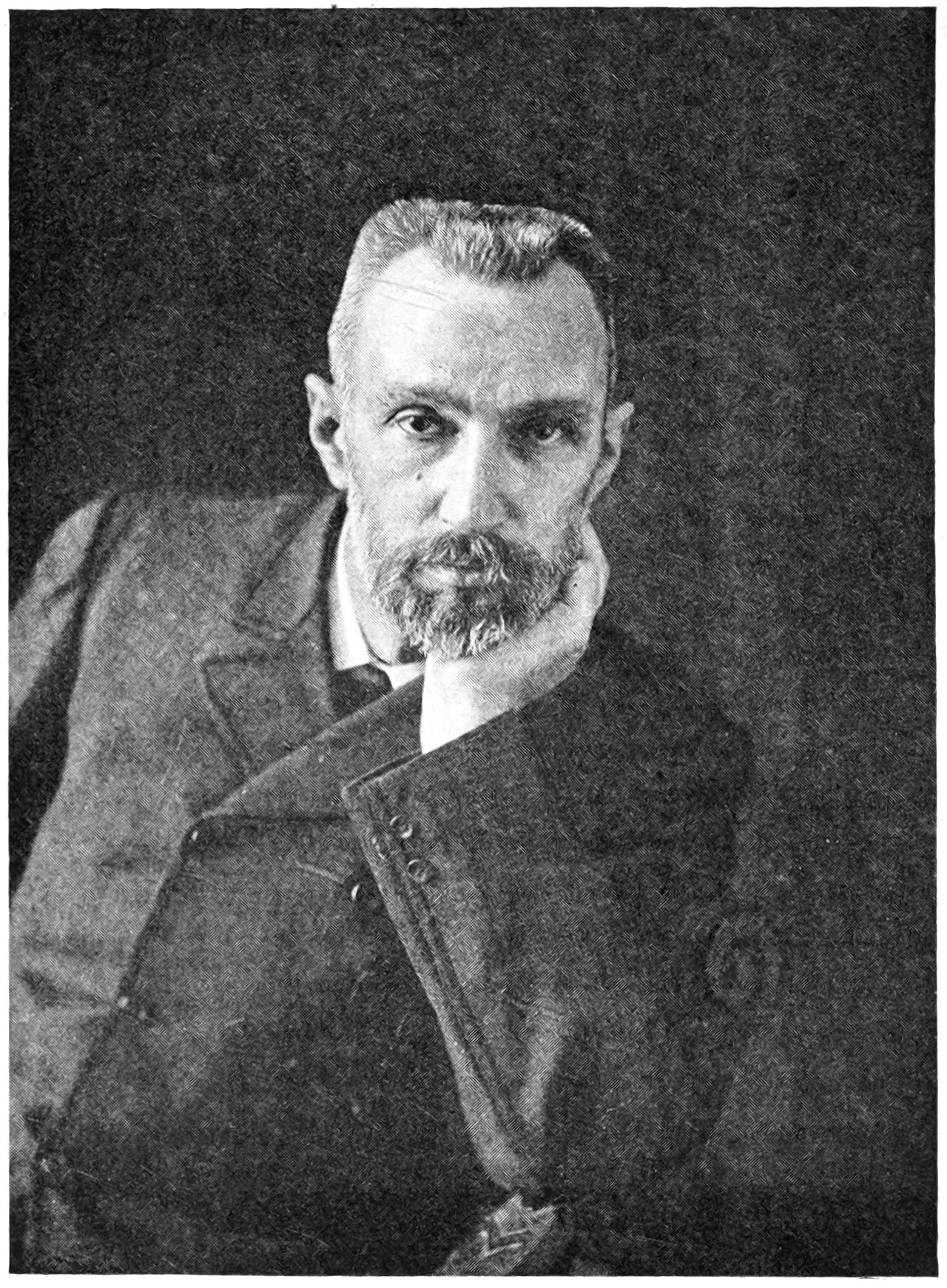
Black-and-white halftone portrait of a middle-aged man with short light hair, a full graying beard and mustache, wearing a dark buttoned coat and collar, looking directly at the viewer against a dark background.Photograph

Primary source

Pierre Curie in 1906

Paul Dujardin · 1906

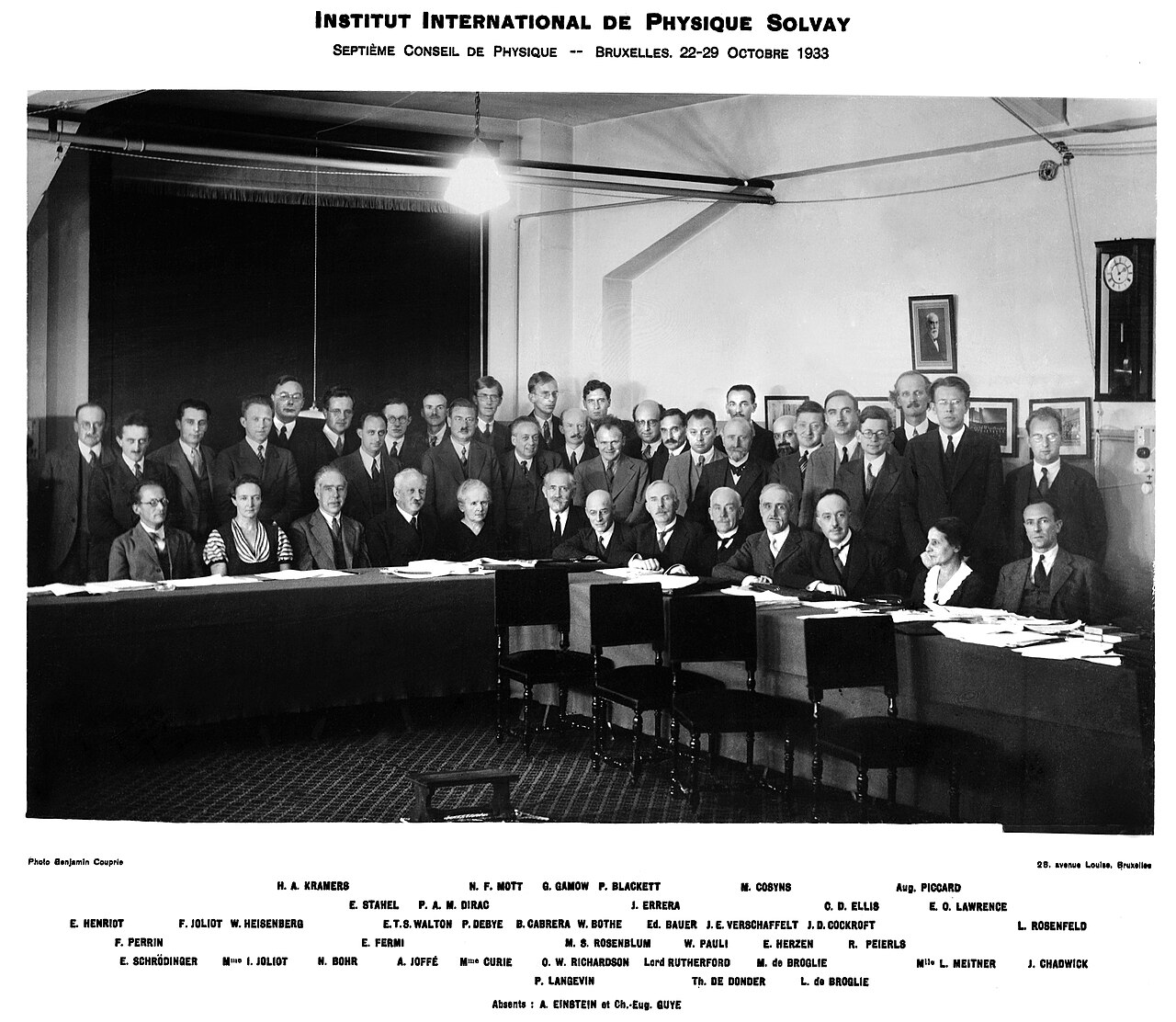
Black-and-white group photograph of about fifty men and a few women at the 1933 Solvay Physics Council in Brussels, seated at a long table in front of rows of standing men. A caption lists the attendees' names.Photograph

Primary source

Photograph of the 1933 Solvay Conference

Benjamin Couprie · October 1933

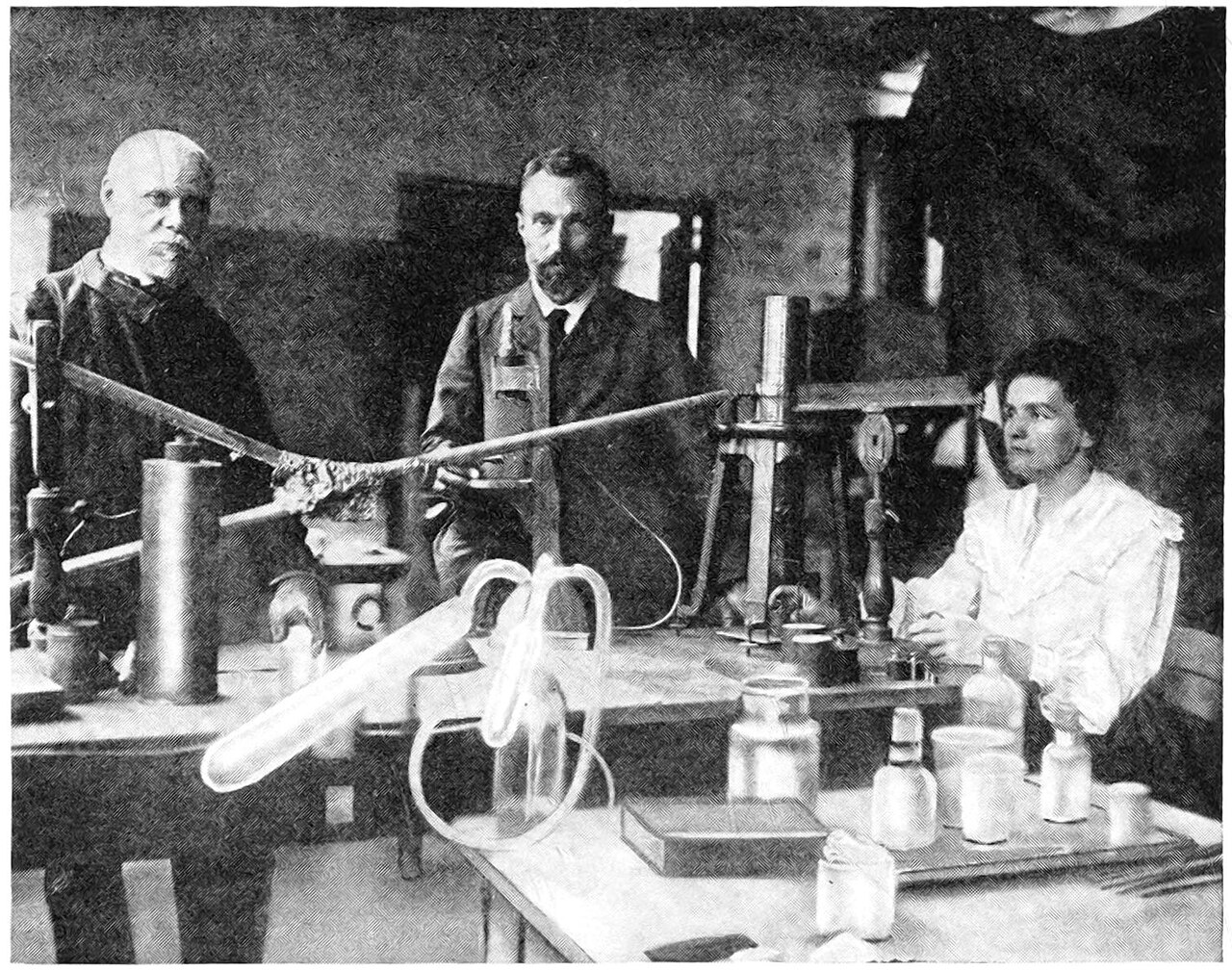
Black and white photograph of a laboratory with three people. A bald older man on the left holds a long glass tube with a glowing-looking tip. A bearded man in a dark suit and tie stands in the center, holding a glass apparatus. A woman with dark hair in a light blouse sits on the right beside glass flasks and bottles on a table.Photograph

Primary source

Pierre and Marie Curie in their laboratory

Henri Manuel · 1923 (depicting earlier laboratory work)

Book

Primary source

Les Rayons alpha, bêta, gamma des corps radioactifs en relation avec la structure nucléaire

Marie Curie · 1933

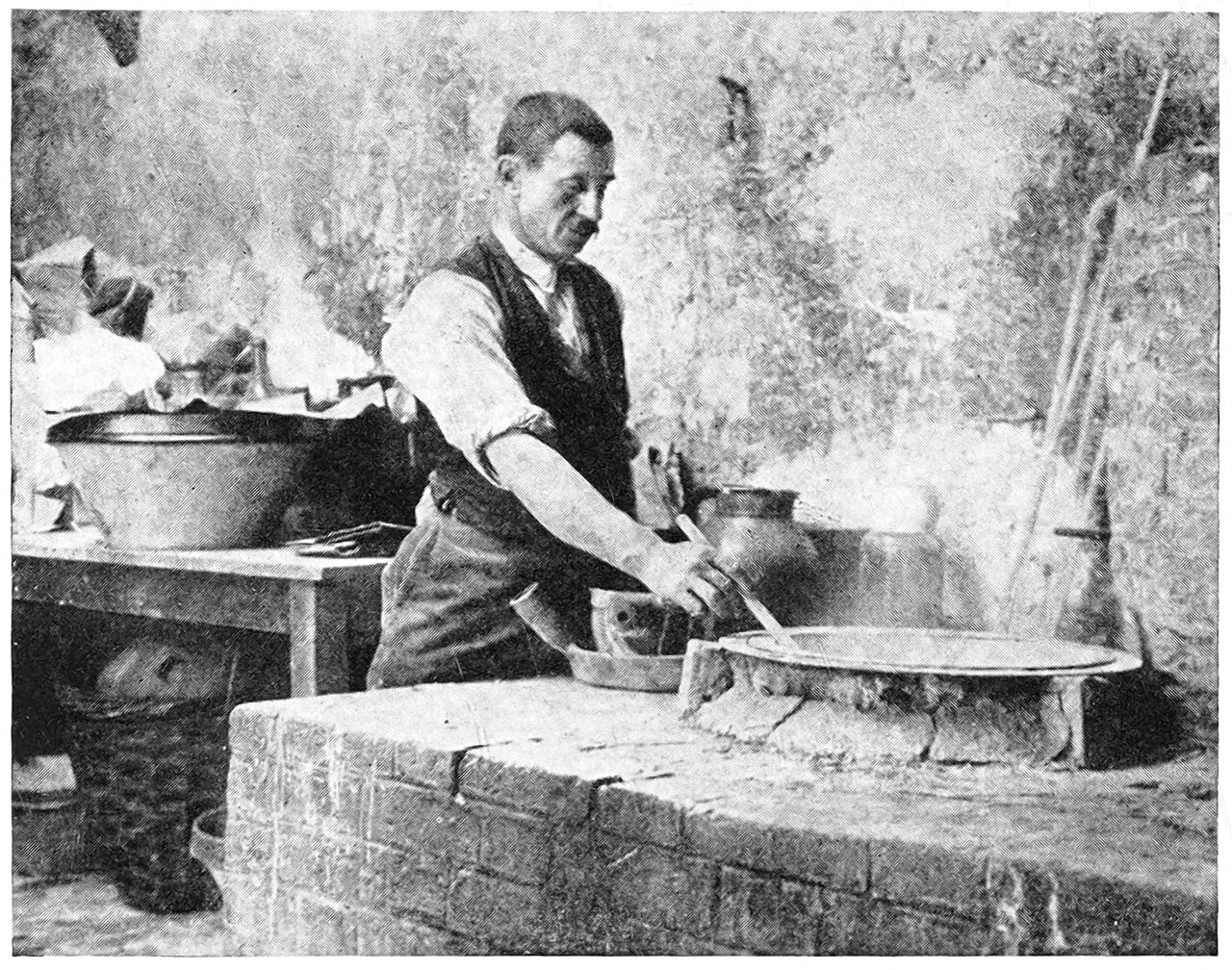
Black and white halftone print of a man in a dark vest and white shirt with rolled sleeves, stirring a pan with a long tool at a brick furnace. Behind him are a large metal pot on a wooden table, a stone pot, and hanging tools against a rough wall.Photograph

Primary source

Radium extraction in the old shed

Marie Curie · 1923 (depicting earlier work)

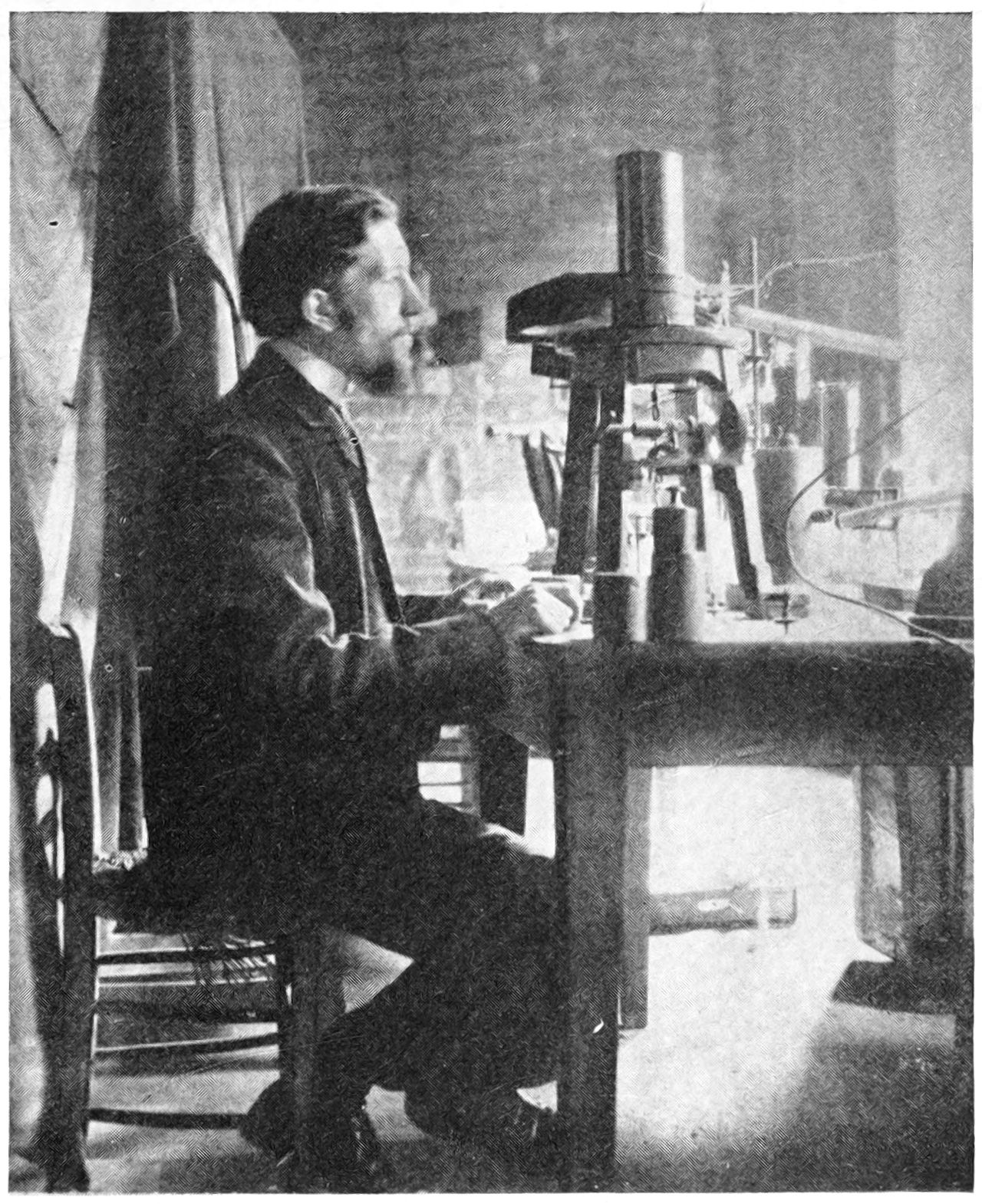
Black and white photograph of a bearded man in a dark jacket seated in profile at a laboratory table, facing left toward a metal apparatus with cylindrical parts, tubes and fittings. Curtain or drapery hangs at the left.Photograph

Primary source

Pierre Curie with quartz piezo-electroscope

Marie Curie · 1923 (depicting earlier work)

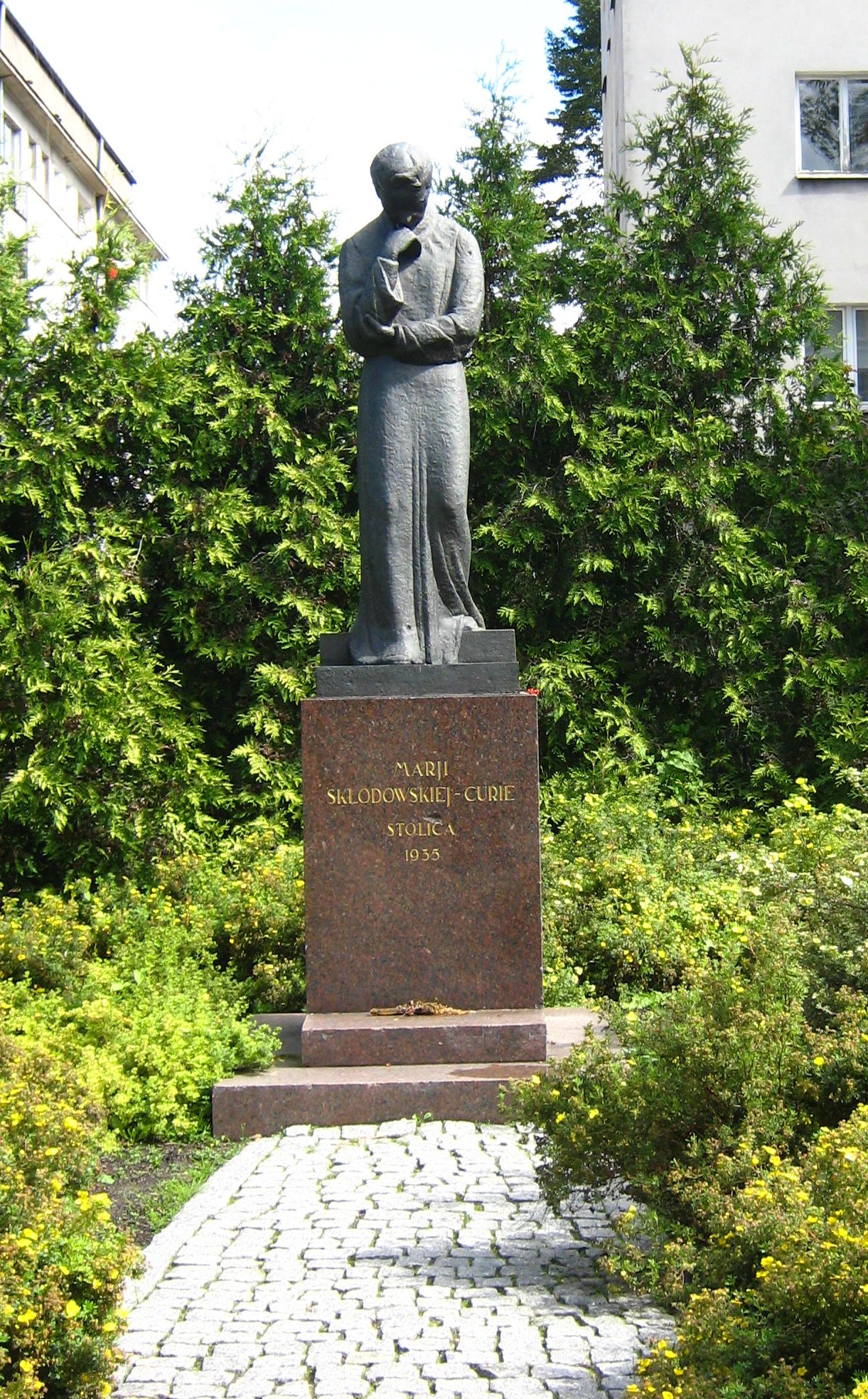
Bronze statue of a robed figure standing on a dark red granite pedestal, head bowed, one hand raised to the chin holding a book or papers. The pedestal is inscribed in gold letters 'MARJI SKŁODOWSKIEJ-CURIE, STOLICA, 1935'. Green shrubs and a cobblestone path surround it, with a building behind.Sculpture

Secondary source

Maria Skłodowska-Curie Monument in Warsaw

Ludwika Nitschowa · 1935

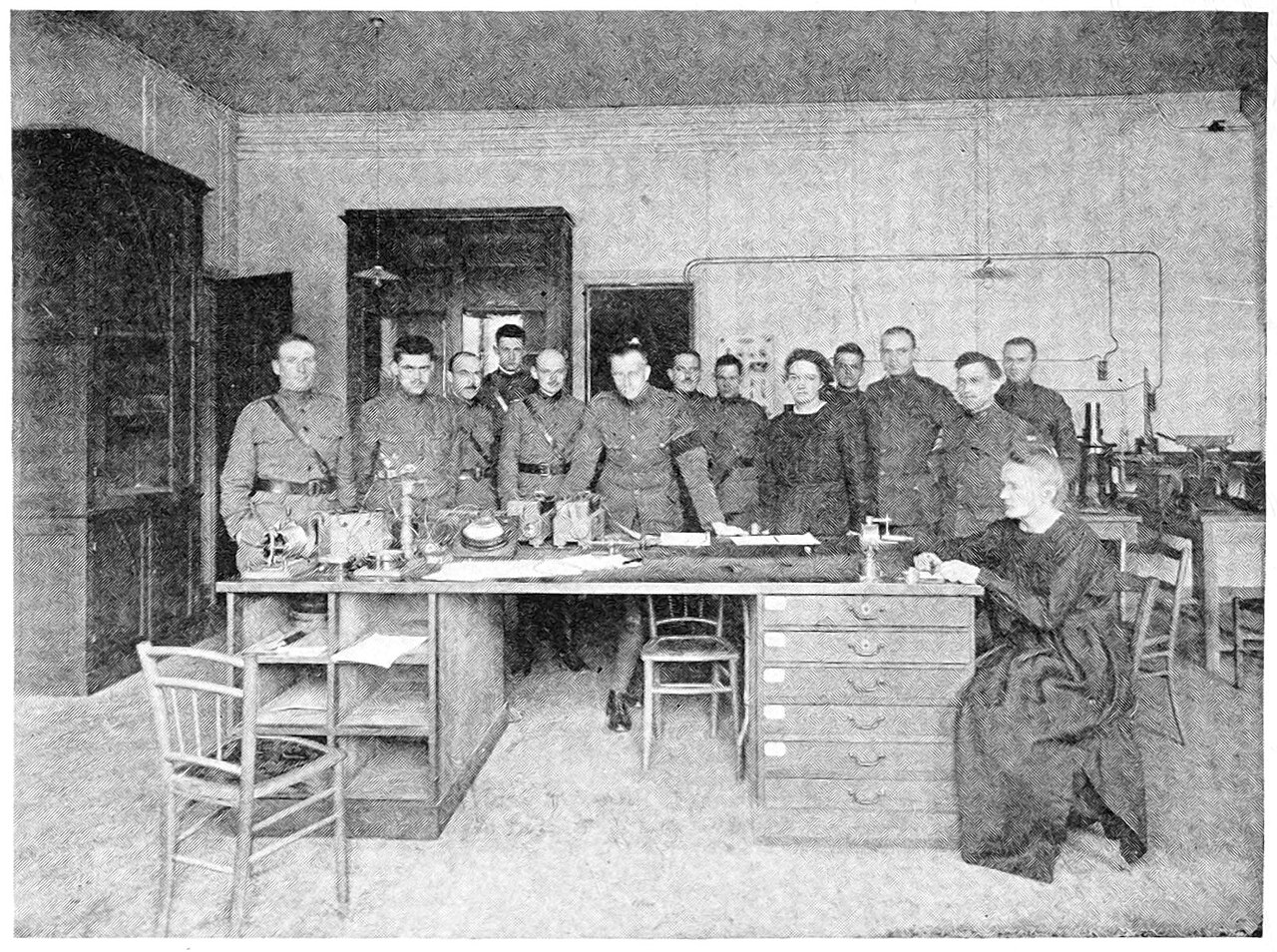
Black and white photograph of a laboratory room with a long wooden table and drawers. A group of about twelve men in military uniforms stand behind the table, with a woman in a dark dress among them. A seated older woman in a long dark dress sits at the right front of the table, near scientific equipment and papers.Photograph

Primary source

Mme Curie instructing American soldiers in her Paris laboratory

Marie Curie · 1923 (depicting earlier wartime work)

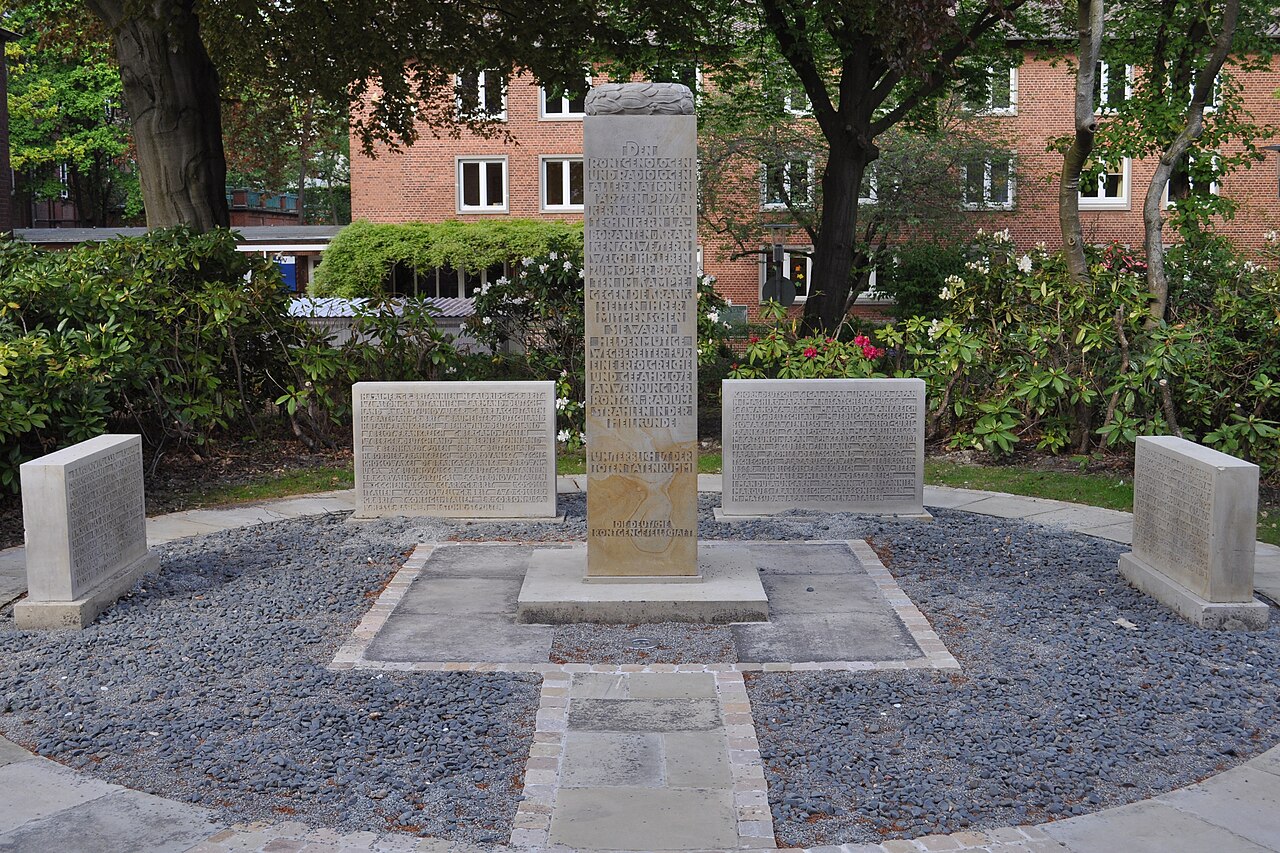
Outdoor memorial in a garden with grey gravel and paved paths. A tall stone obelisk with a carved wreath-like top stands in the center, inscribed with raised German text. Four flat stone tablets with inscribed text surround it, and a red brick building with white-framed windows and green shrubs stands behind.Sculpture

Secondary source

Monument to the X-ray and Radium Martyrs of All Nations

1936

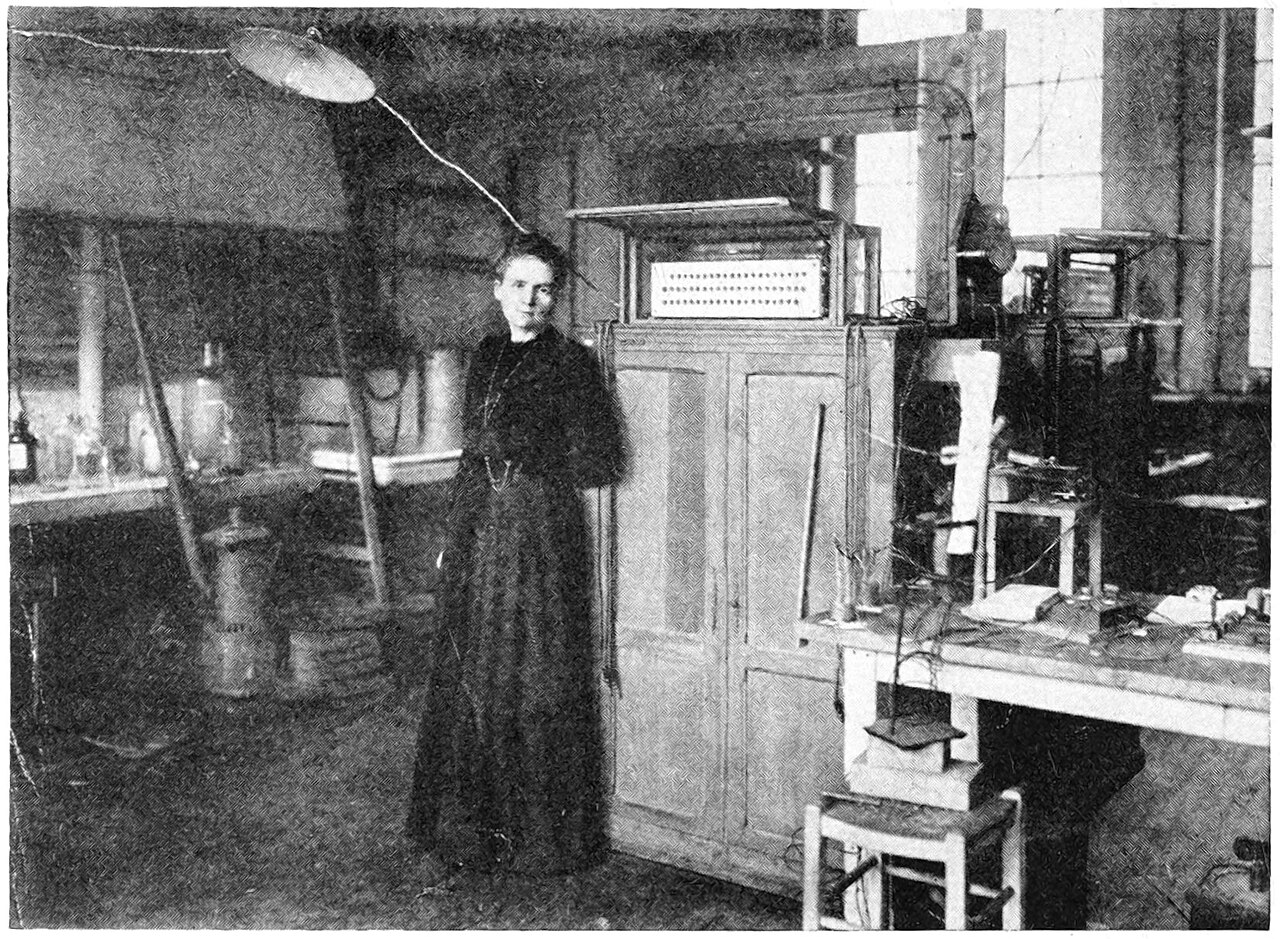
Black and white photograph of a woman in a long dark dress standing beside a wooden cabinet in a laboratory. Shelves with glass bottles, a bench with equipment, a stool, and a lamp are visible around her.Photograph

Primary source

Madame Curie in her Laboratory at the Institut Curie

Henri Manuel · 1923

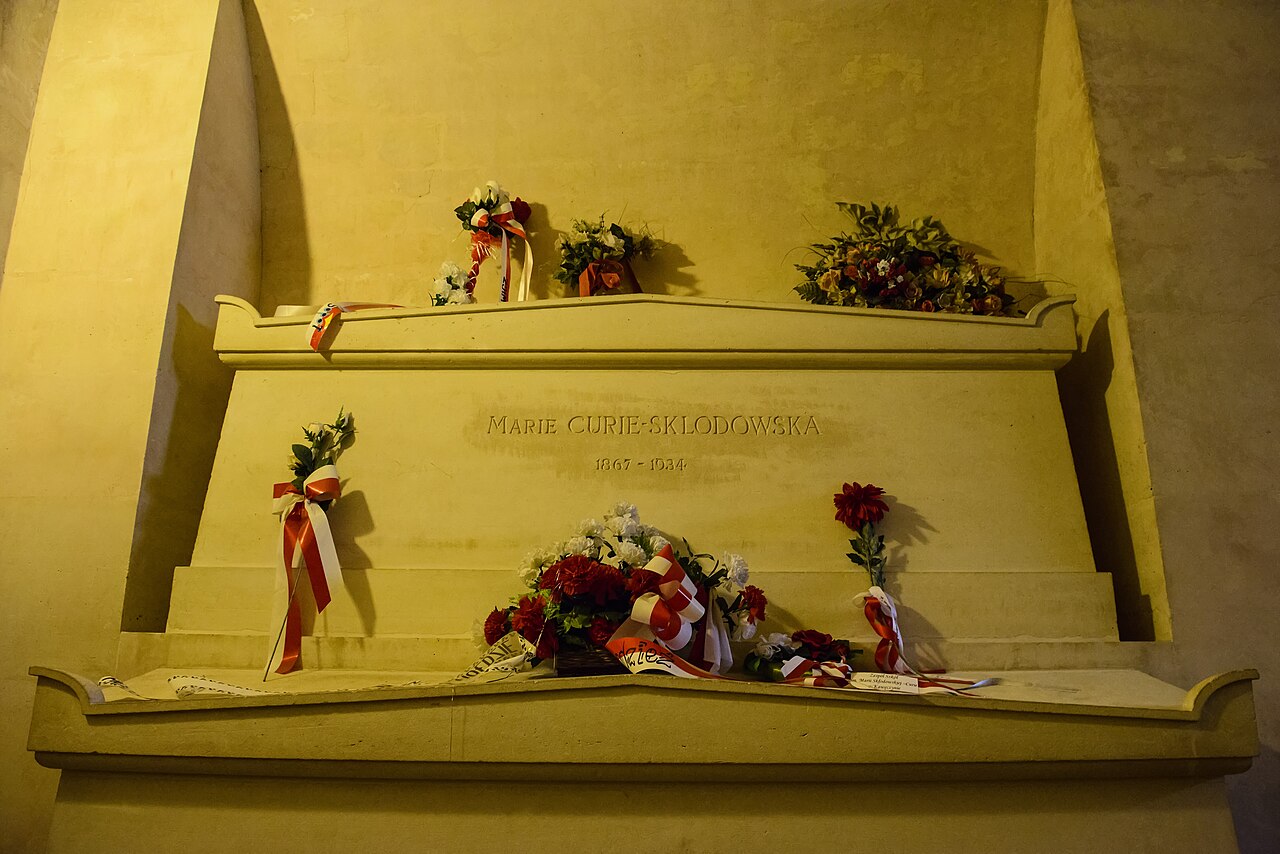
Stone tomb monument inscribed 'MARIE CURIE-SKLODOWSKA 1867 - 1934', decorated with red and white ribbons and flower arrangements placed on its ledges and steps.Artifact

Secondary source

Grave of Marie Curie

1995 (reinterment); photograph 2012

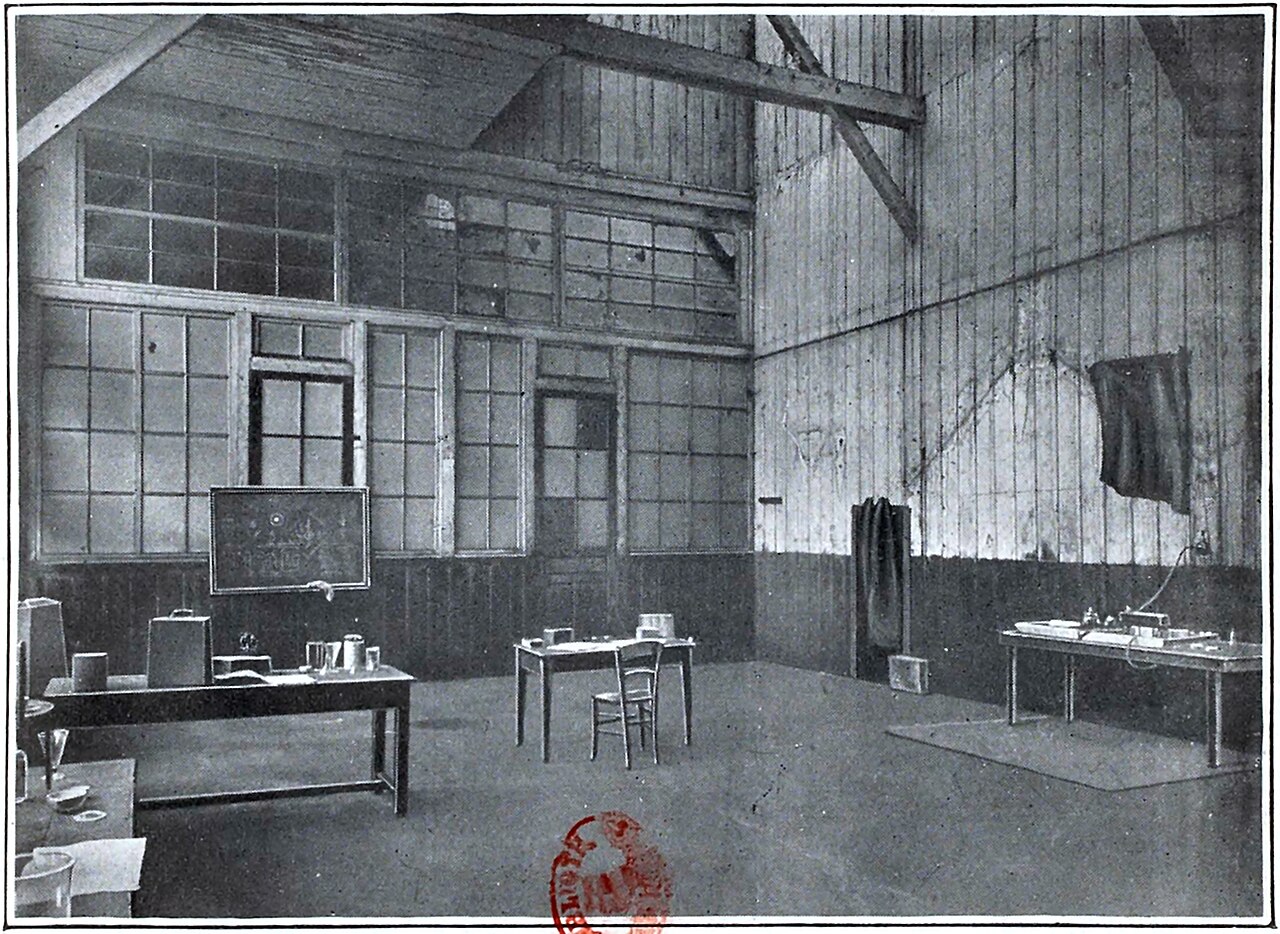
Black and white photograph of a large, bare interior laboratory room with wood-paneled walls, tall multi-pane windows, and a blackboard. Wooden tables with glassware, a chair, and a rug are visible, along with a stove-like cabinet and a hanging cloth.Book

Primary source

Œuvres de Pierre Curie

Pierre Curie (edited by Marie Curie) · 1908

Front page of the weekly Les Hommes du Jour, 12 February 1910, no. 108. A pen-and-ink portrait drawing by A. Delannoy of a woman with hair swept back, captioned Madame Pierre CURIE, with a handwritten note reading Mme Curie above it.Newspaper article

Primary source

Les Hommes du jour, no. 108

Les Hommes du Jour · 12 February 1910

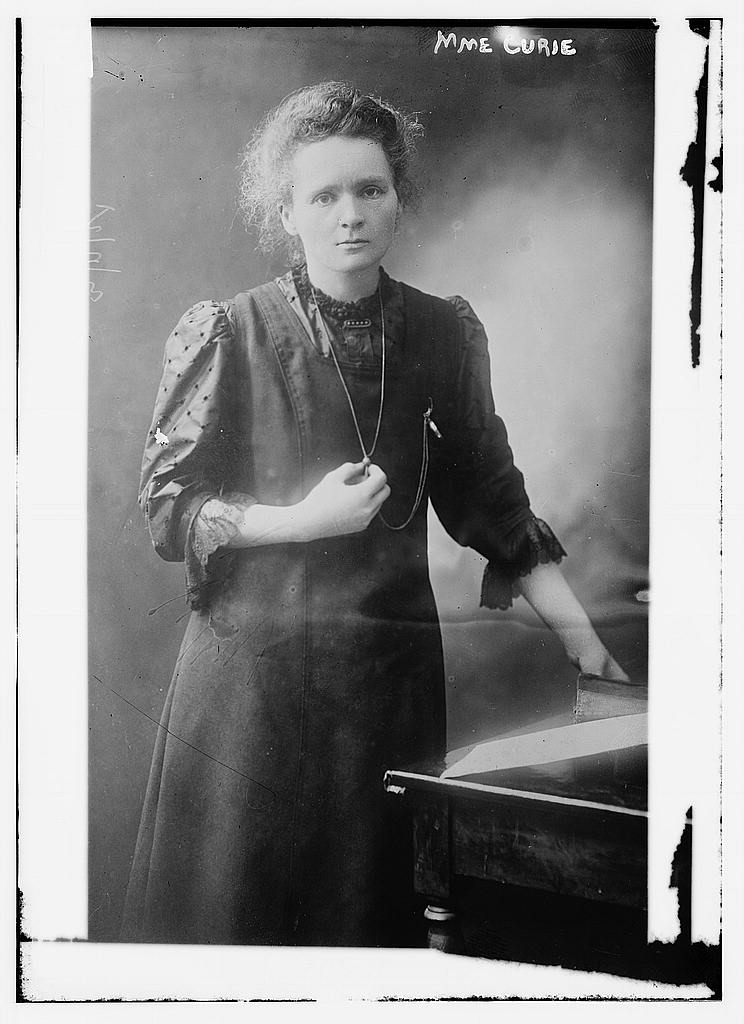
Black-and-white studio portrait of a woman with curly hair pulled up, wearing a dark high-necked dress with dotted puff sleeves and lace cuffs. She stands beside a dark table, hands near a long chain necklace. Text in the upper right reads "Mme Curie".Photograph

Primary source

Photograph of Mme. Marie Curie

1900

Handwritten cursive signature in dark ink on a white background, reading 'M. Skłodowska Curie' with a long flourish at the start and a looping final word.Document

Primary source

Marie Curie Skłodowska Signature Polish

Marie Curie

The Interpretation of Radium and the Structure of the AtomBook

Secondary source

The Interpretation of Radium and the Structure of the Atom

Frederick Soddy · 1922

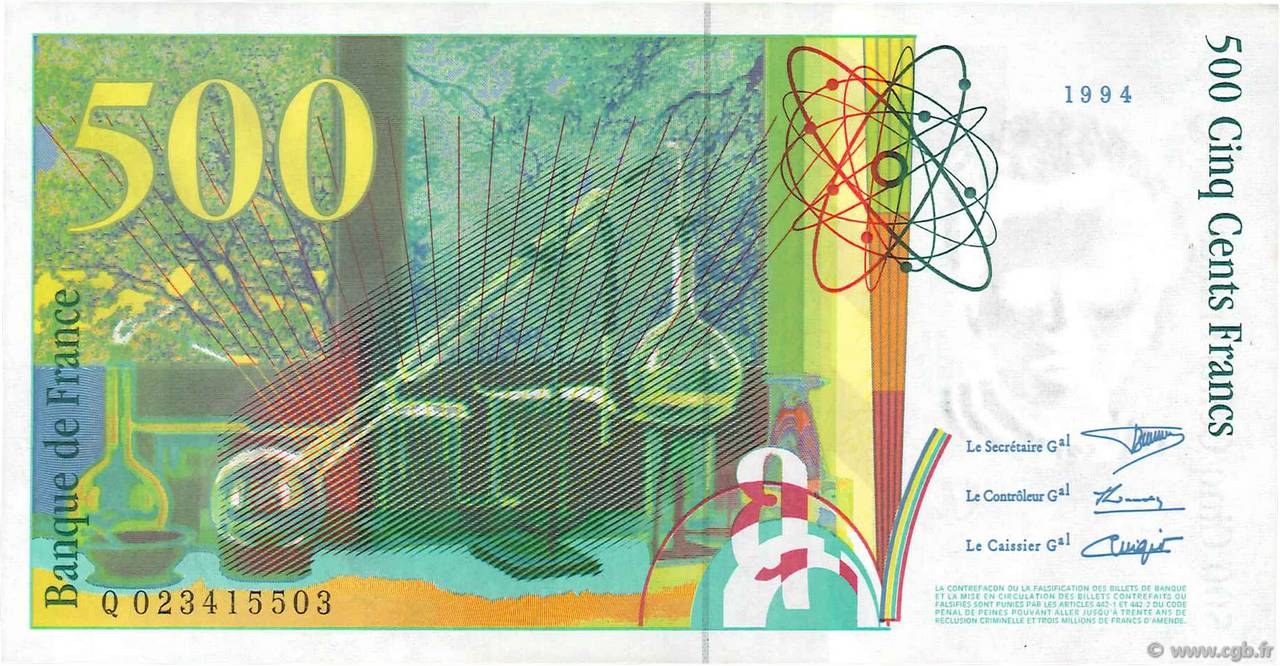
Reverse of a 1994 French 500 franc banknote, mainly green and yellow. Shows the large yellow numeral 500, an atomic-orbit diagram, laboratory glassware, and the series text 'Banque de France' and '500 Cinq Cents Francs'.Artifact

Tertiary source

500 Francs Pierre and Marie Curie Banknote

1994

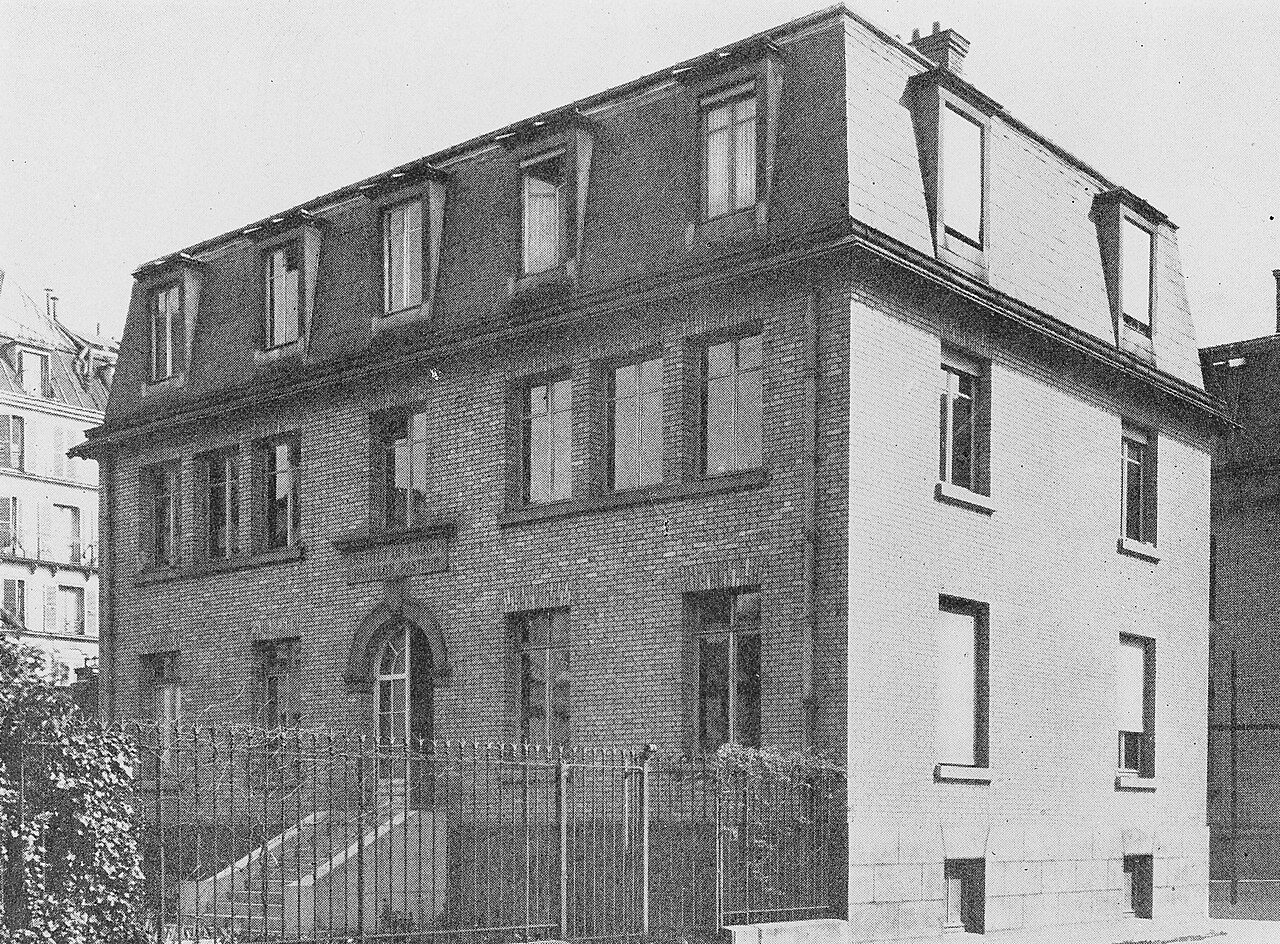
Black-and-white photograph of a three-storey brick building with a mansard roof, dormer windows, and an arched doorway behind an iron fence with a stone staircase. Neighbouring buildings appear at left and right.Photograph

Primary source

The Radium Institute, Paris, Laboratory of Radiophysiology

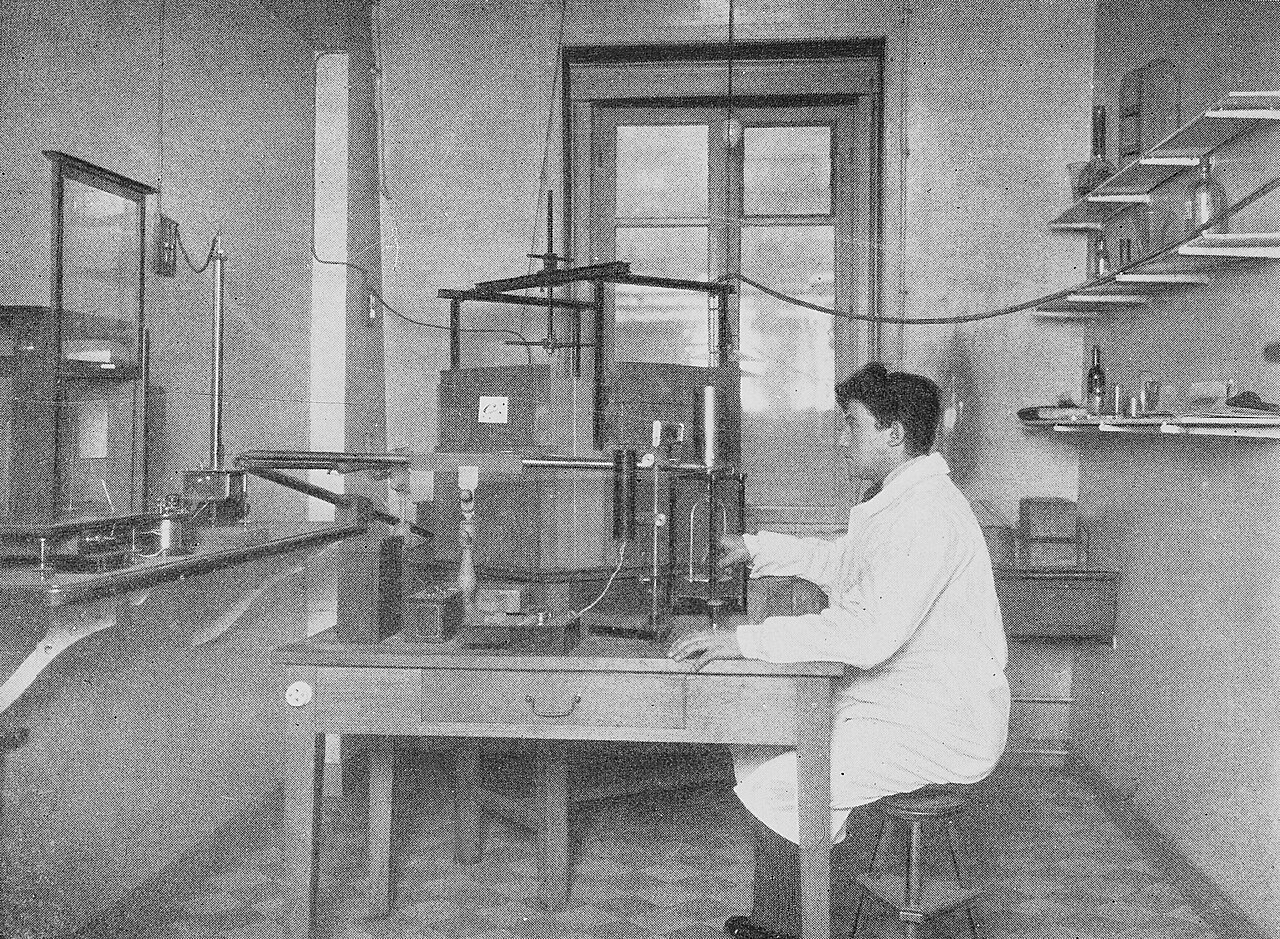
Black and white photograph of a laboratory room with a man in a white coat seated at a wooden table, working on apparatus with glass tubes and metal stands. Shelves with bottles line the right wall, and a tall window is behind the table.Photograph

Primary source

Radon Preparation Room at the Radium Institute, Paris

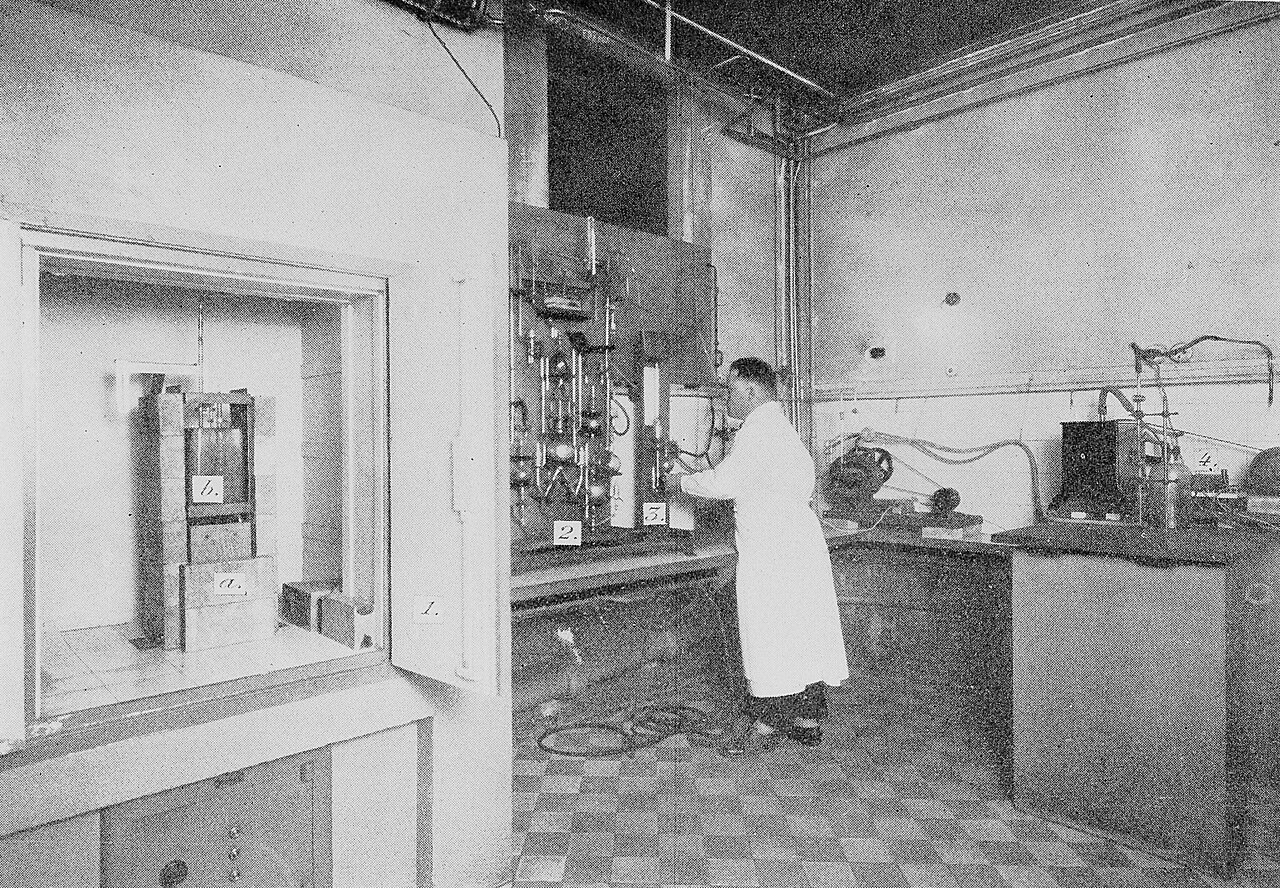
Black and white photograph of a laboratory at the Radium Institute. A man in a white coat stands at a wall-mounted apparatus with numbered instruments and glass tubes. At left, through a window, a lead-walled enclosure holds numbered containers. Tiled floor, a workbench with equipment at right.Photograph

Primary source

Measurement of Radium Tubes at the Radium Institute

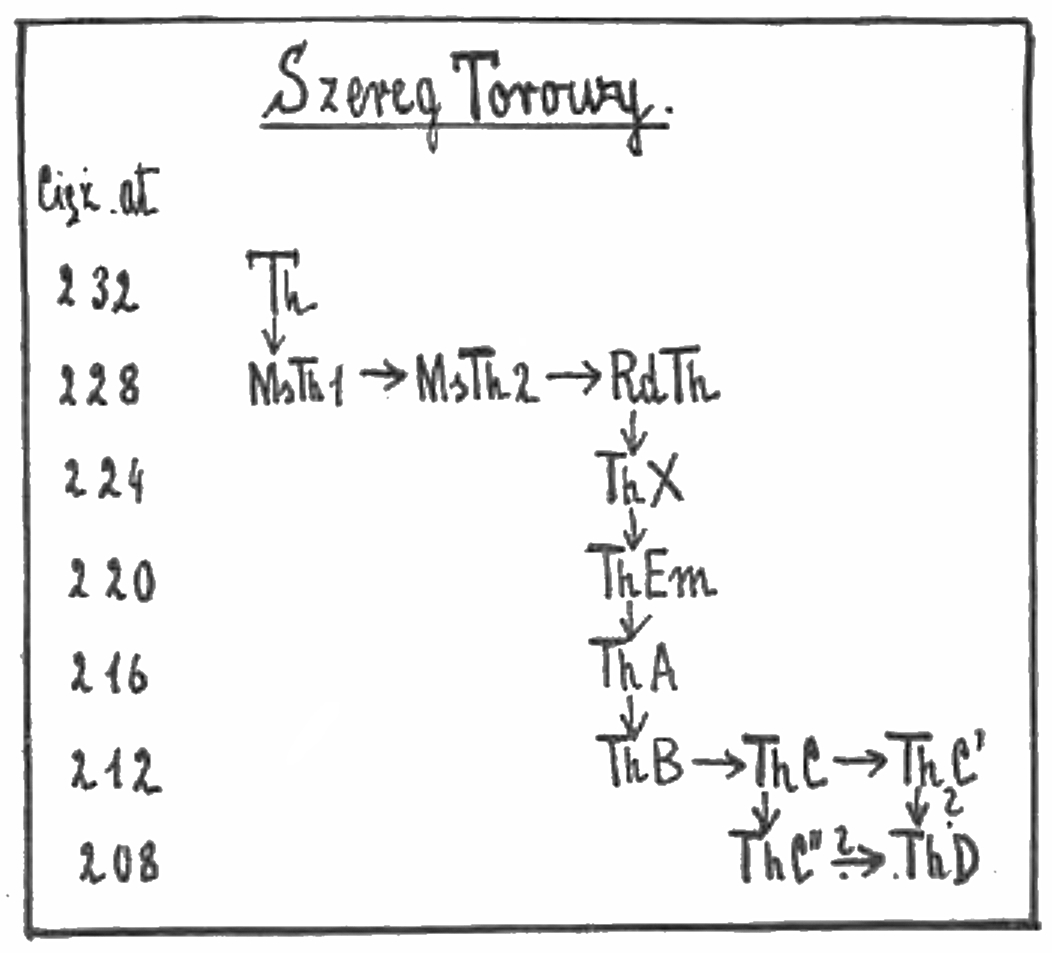
Handwritten page titled 'Szereg Torowy' (Thorium series) with a table of mass numbers 232, 228, 224, 220, 216, 212, 208 on the left. A decay chain of arrows links symbols including Th, MsTh1, MsTh2, RdTh, ThX, ThEm, ThA, ThB, ThC, ThC', ThC'' and ThD.Document

Primary source

Page from Two Lectures by Marie Sklodowska-Curie

Marie Curie · 1926

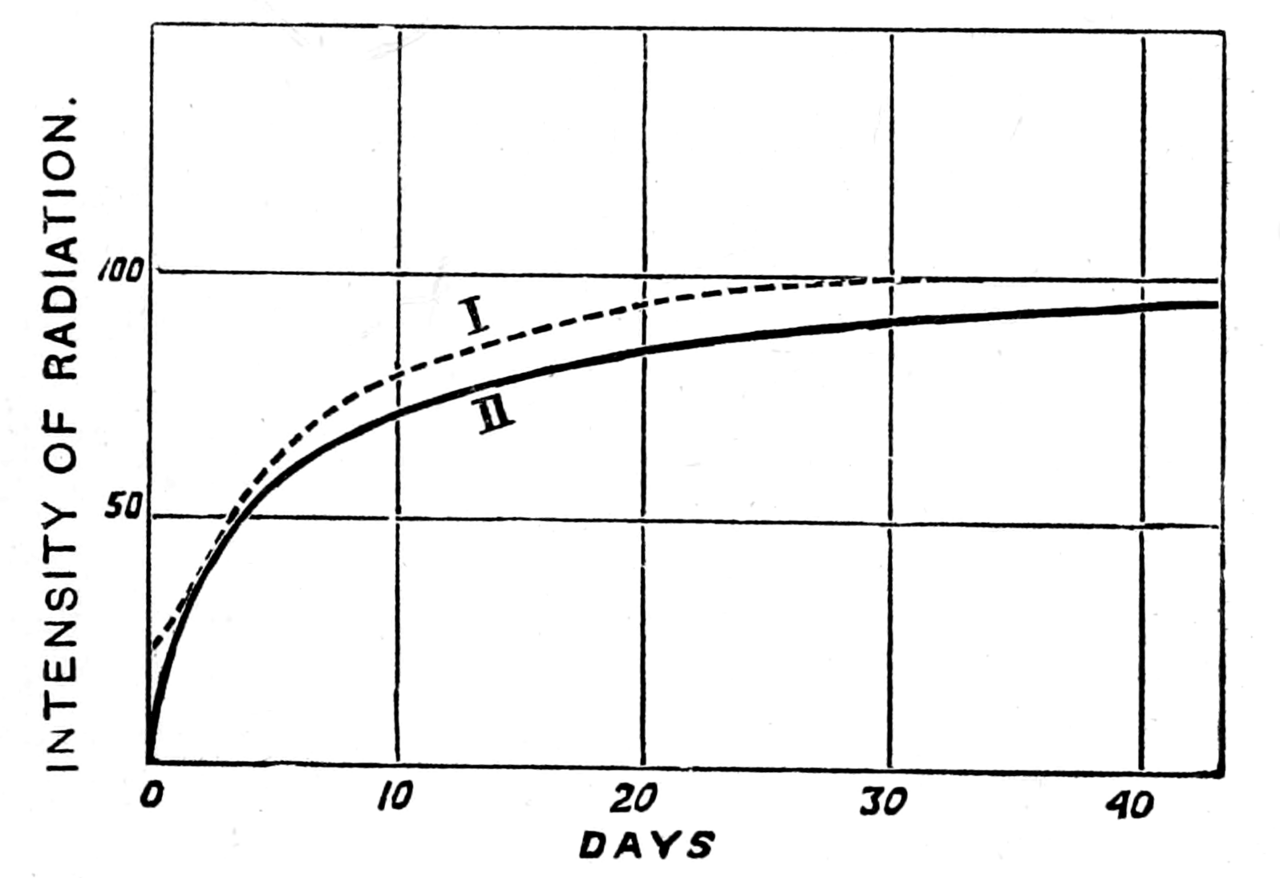
Line graph titled by y-axis 'Intensity of Radiation' versus x-axis 'Days' from 0 to about 43. Two curves rise and level off: dashed curve I reaches 100 near day 30; solid curve II is slightly lower and reaches about 90 by day 43. Y-axis marks 50 and 100.Document

Primary source

Figure 12 from Radio-active Substances

1904

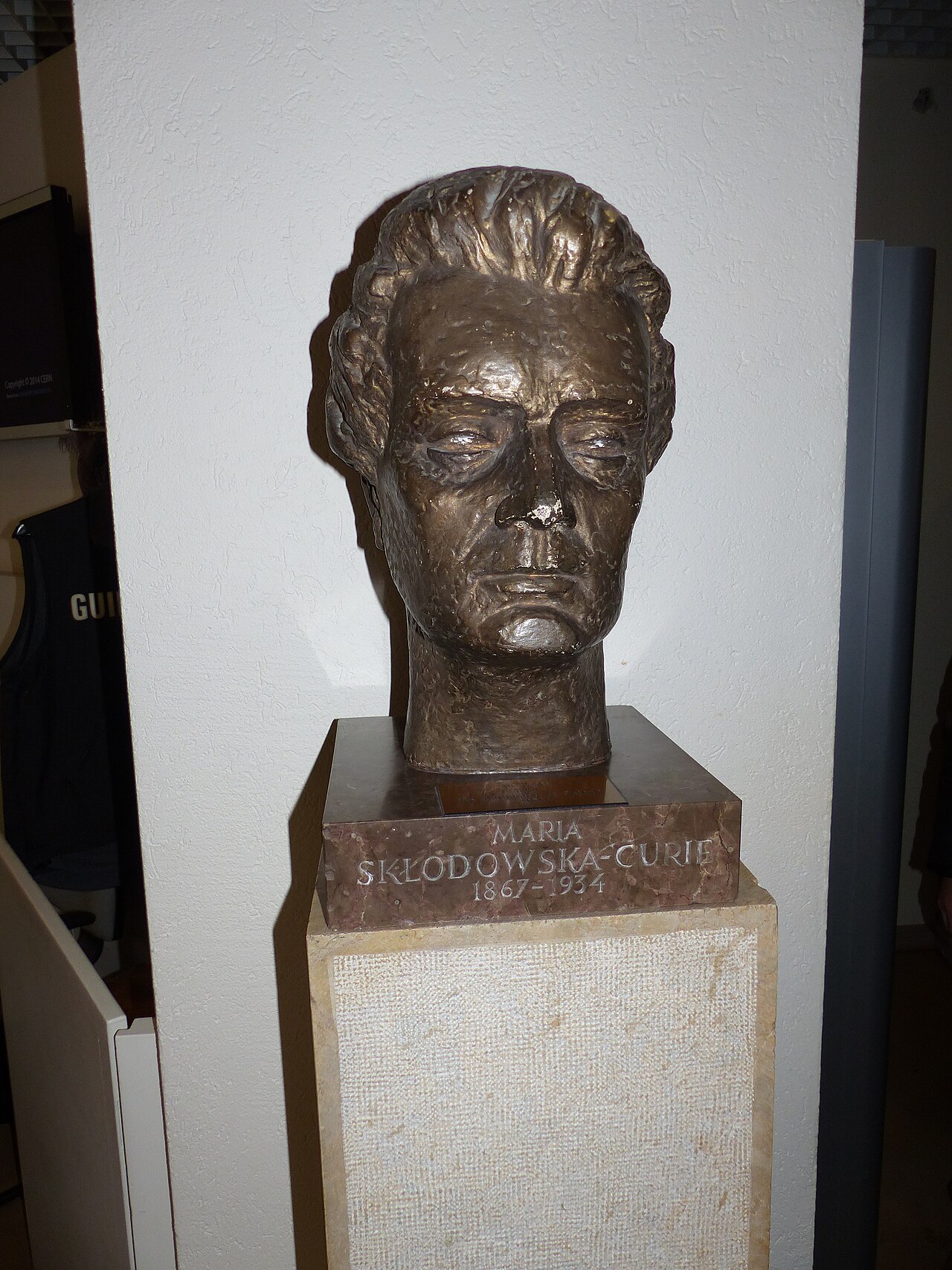
Bronze bust of a head on a stone plinth with a marble-look base inscribed MARIA SKLODOWSKA-CURIE 1867-1934. The face has heavy, textured modelling, closed-looking eyes, and a short wavy hairstyle. Mounted on a pale stone pedestal in a corner.Sculpture

Secondary source

CERN Marie Curie Sculpture

Benjamín Núñez González · 7 December 2015

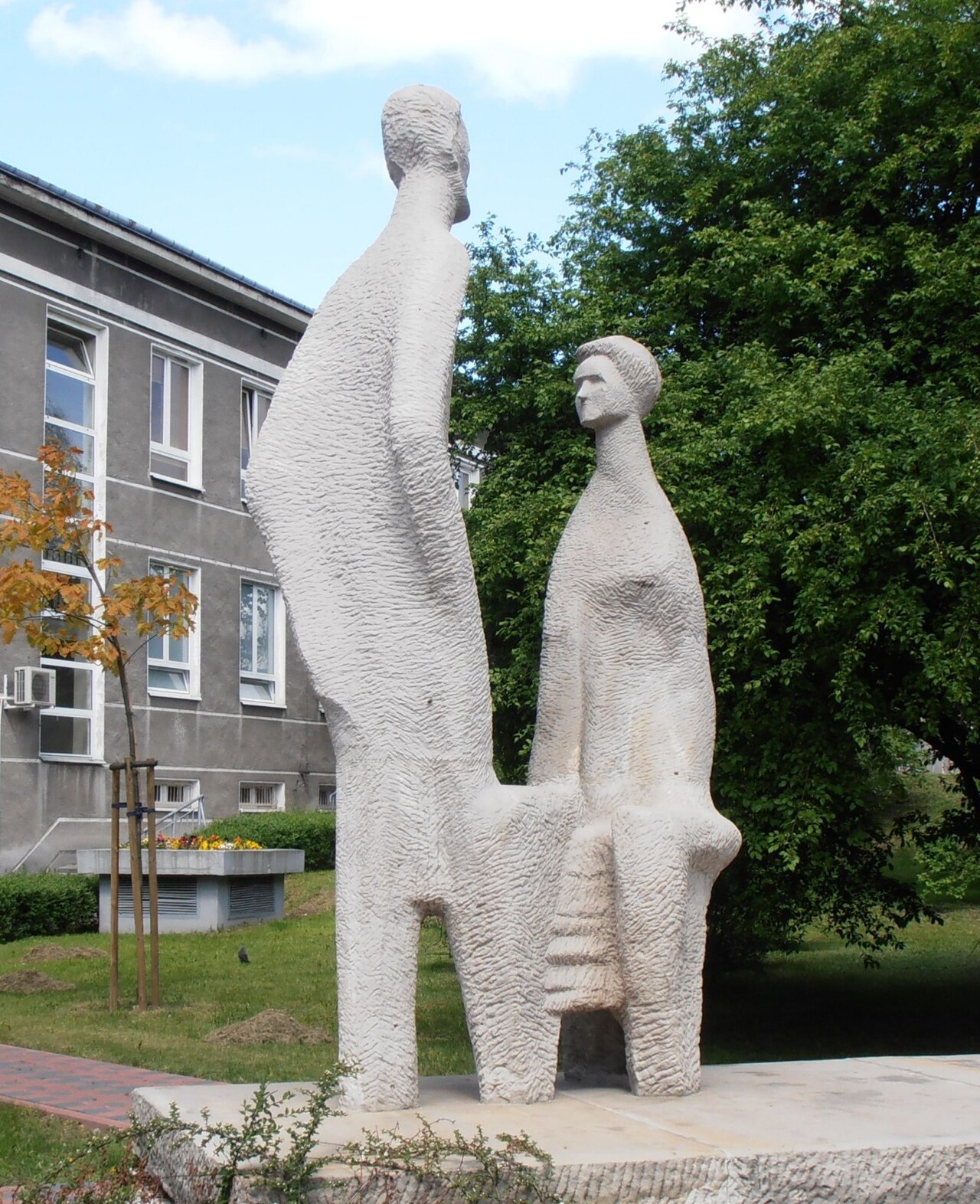
Photo of the Curie couple monument, a pale stone sculpture of two stylised standing figures on a concrete plinth. The taller figure on the left has a long, smooth-textured body and a rounded head. The shorter figure on the right has a smaller head and a fitted torso. Behind them are a grey hospital building with white-framed windows, green trees and a flower bed.Sculpture

Secondary source

Curie Couple Monument, Lublin

Grzegorz W. Tężycki · Monument 1964, restored and reunveiled 2009; photo taken 14 May 2012

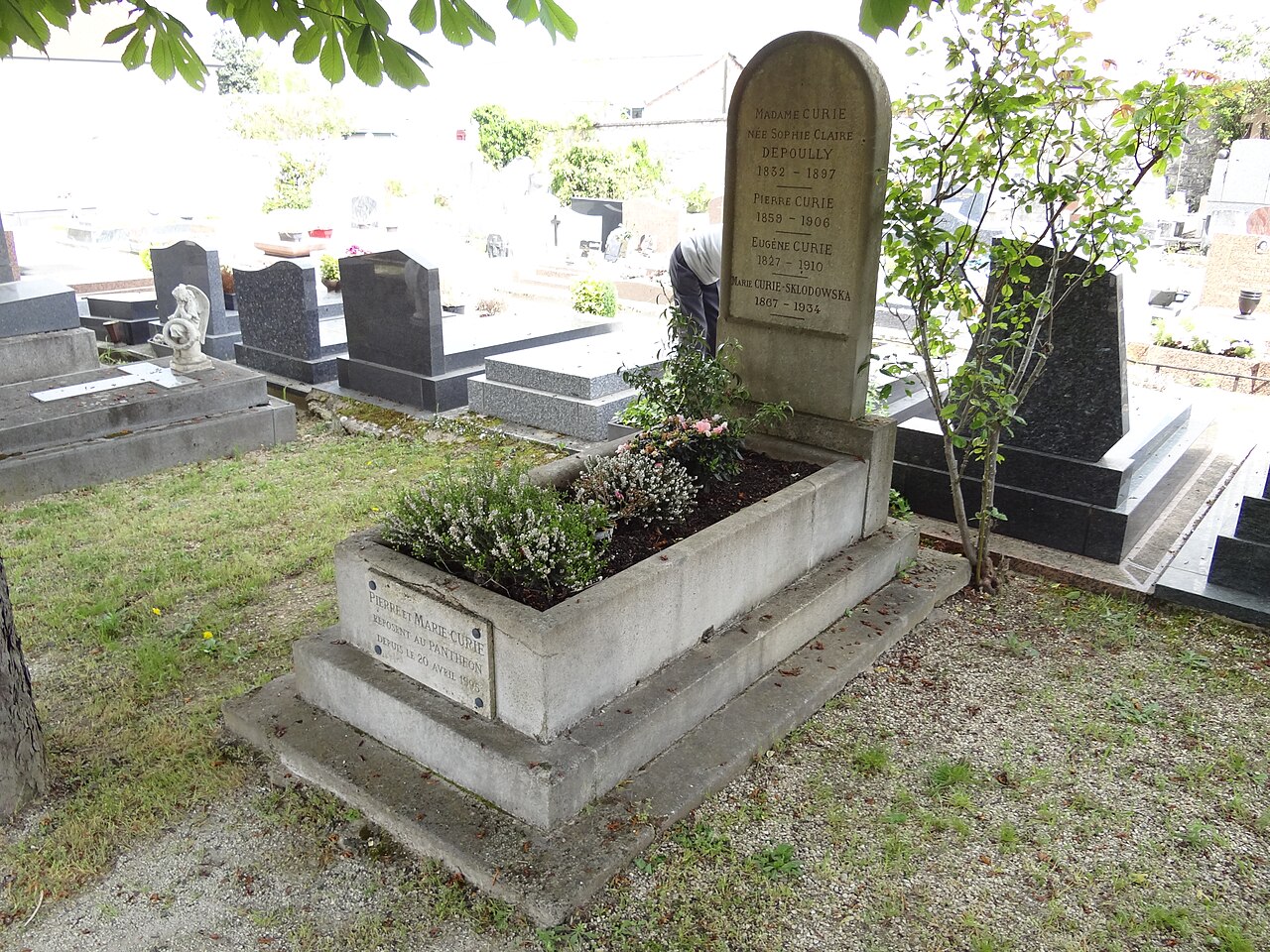
A stone grave in a cemetery with a tall arched headstone inscribed with names and dates for Madame Curie née Sophie Claire Depoully, Pierre Curie, Eugène Curie, and Marie Curie-Sklodowska. A low concrete planter bed with small flowering plants sits in front, and a small plaque on the base reads Pierre et Marie Curie, Rentrés au Panthéon. Trees and other graves surround it on a gravel and grass ground.Sculpture

Secondary source

Former Grave of Pierre and Marie Curie, Sceaux

Antoine Rex · Photographed 14 April 2024

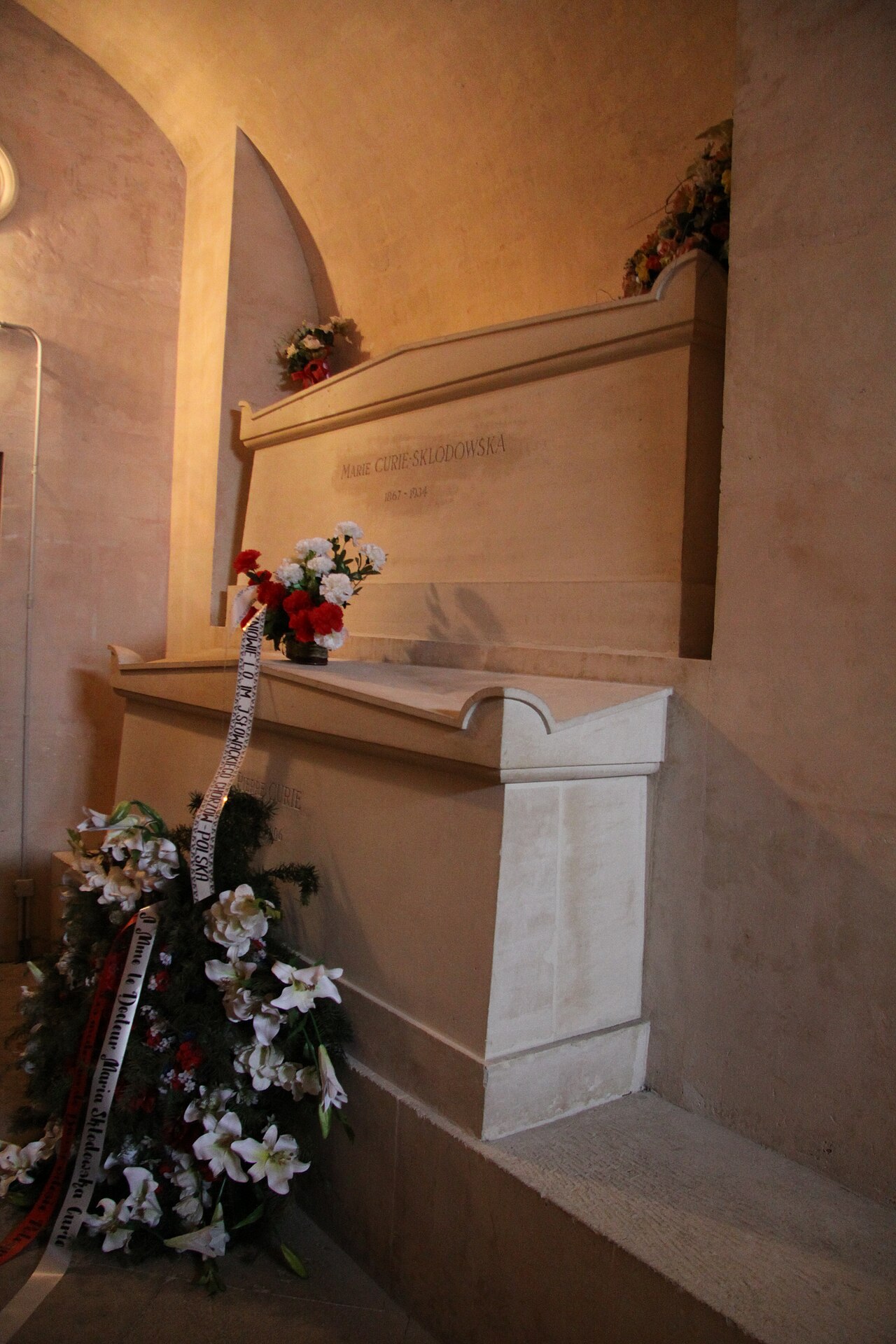
Stone tomb in a vaulted crypt bearing the inscription MARIE CURIE-SKLODOWSKA 1867-1934 on its upper sarcophagus, with a second tomb in front inscribed partly with the name Curie. Red and white carnations in a vase and a wreath with white lilies and ribbons rest on the tombs.Sculpture

Secondary source

Tombs of Pierre and Marie Curie in the Pantheon

Piponwa · Photographed 21 July 2009

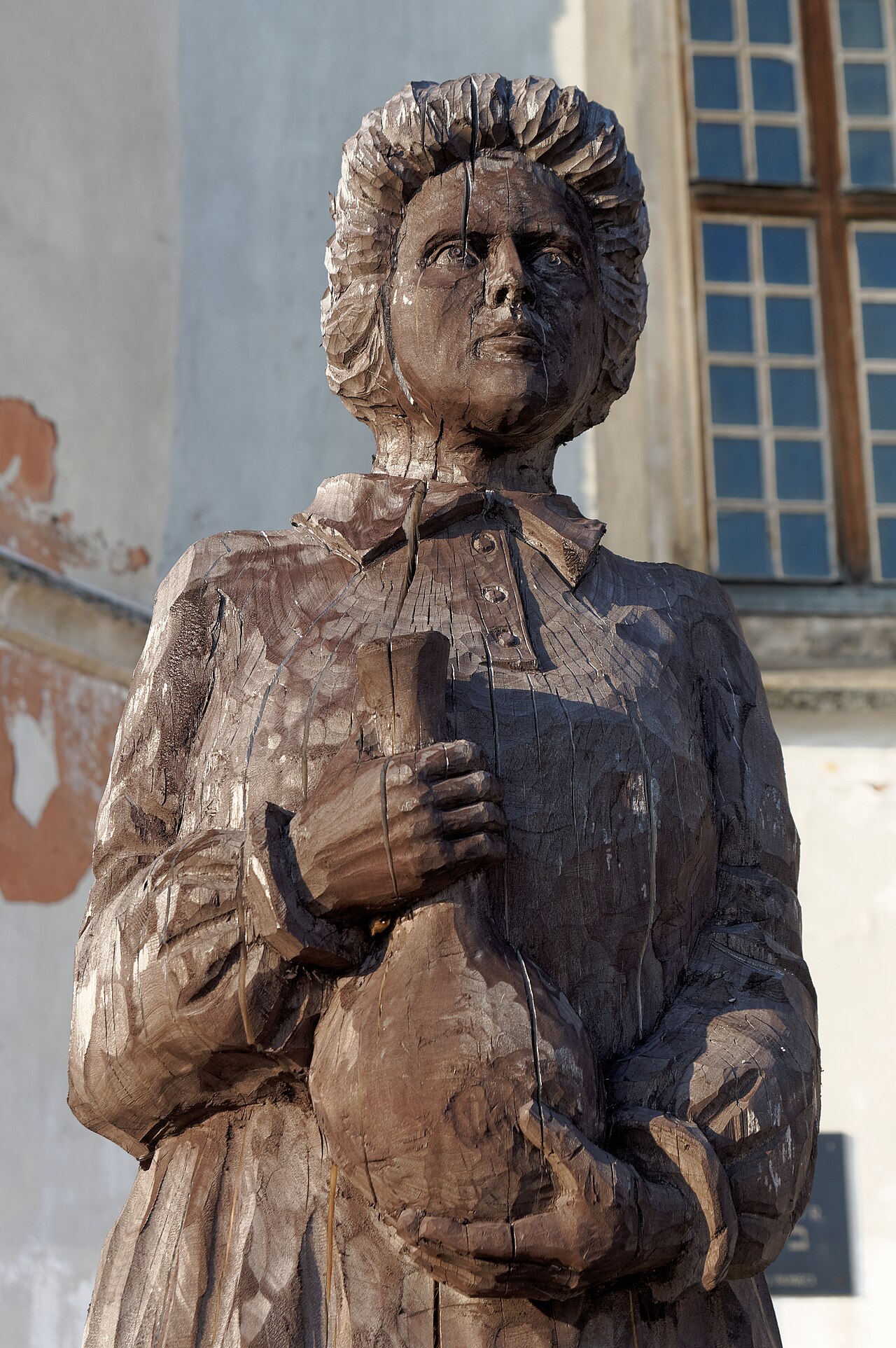
A carved wooden statue of a woman with hair pulled up, wearing a high-collared buttoned blouse and long skirt, holding a small jug or flask in her hands. She gazes upward against a pale wall and a window with small panes.Sculpture

Secondary source

Wooden Sculpture of Marie Skłodowska-Curie, Szydłów

Jakub Hałun · Photographed 11 February 2017

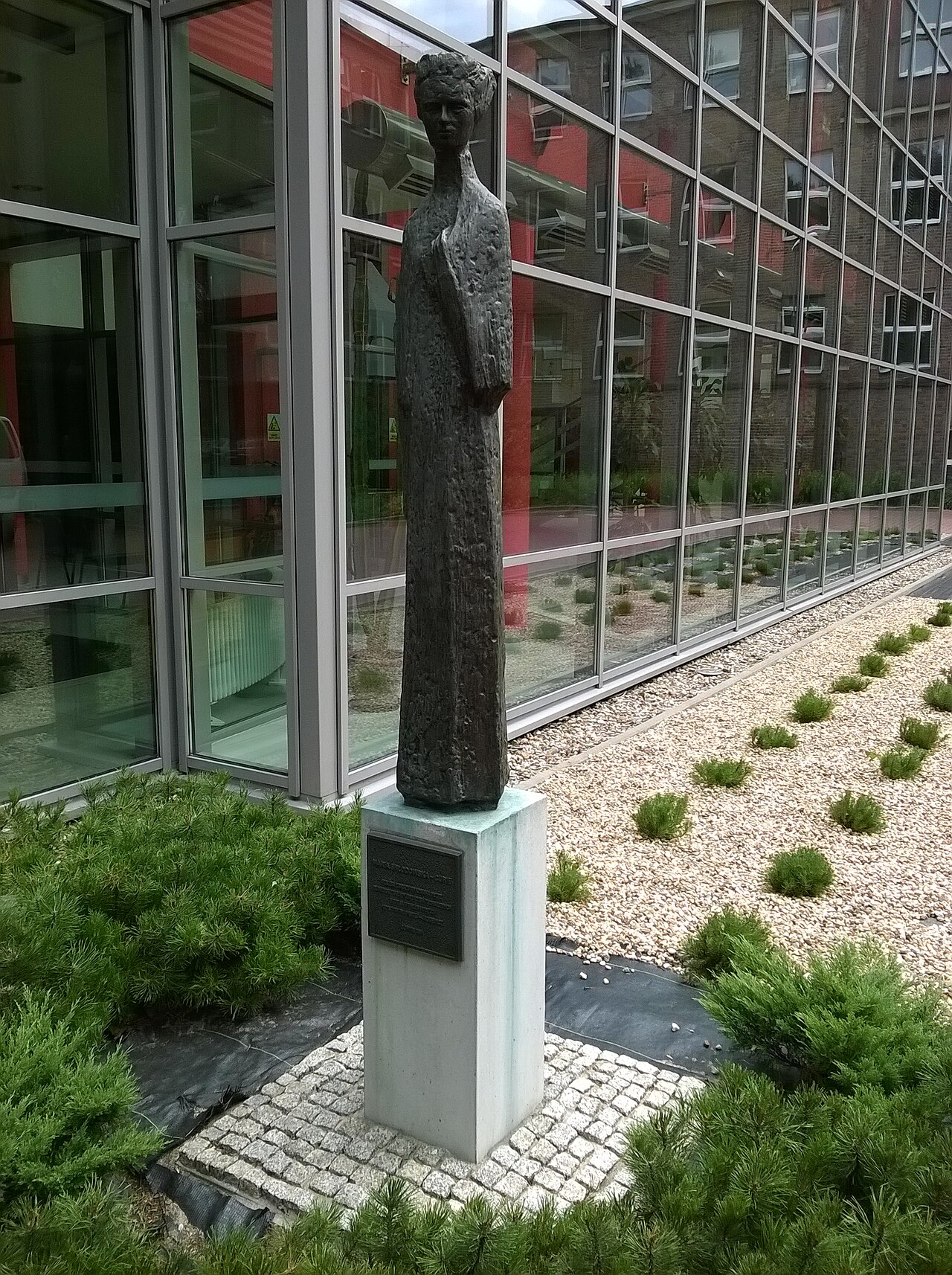
Bronze statue of a standing woman with hair pulled back, wearing a long coat-like garment, on a pale stone pedestal with a dark plaque. Behind it is a glass-fronted building with greenery and gravel in front.Sculpture

Secondary source

Marie Skłodowska-Curie Memorial, Gliwice

Misiokk · Photographed 8 July 2016

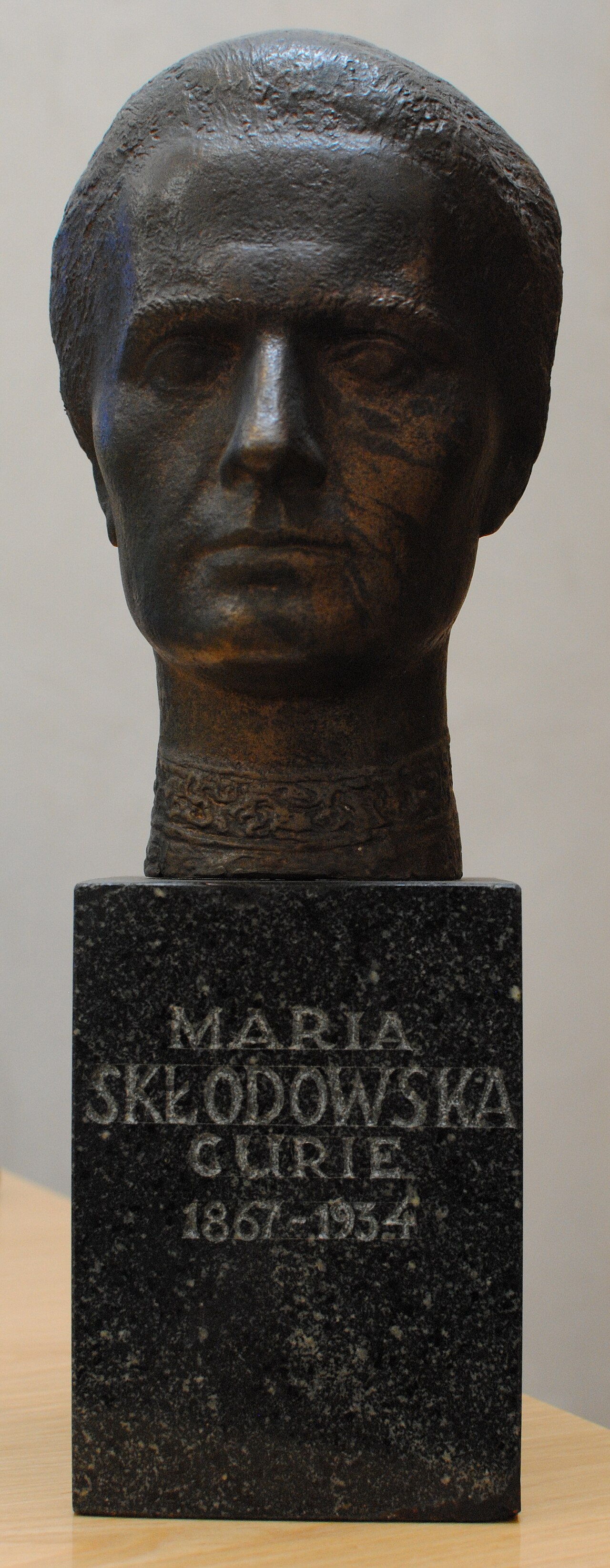
Dark bronze bust of a short-haired figure with a stern expression, set on a black granite plinth engraved with the name Maria Skłodowska Curie and the dates 1867-1934.Sculpture

Secondary source

Bronze Bust of Marie Curie, Burlington House

Presented 1977; photographed 29 July 2015

A glass sculpture on a polished metal block showing a black-and-white ink drawing of a man's head in profile-facing, three-quarter view, with short wavy hair, sealed inside a clear, irregularly shaped glass piece.Painting

Secondary source

Portrait of M. Sklodowska, Glass Textile

Jan Lipský · 2002

Want the full shelf? Chat with Marie Curie in the app and open the Sources panel — every quote links back to the original.

Use Marie Curie in class

1 assignment · 2 collections

A ready-made assignment and collections from the Humy team and other teachers that feature Marie Curie. Preview any of them, then try it free.

Trusted by educators worldwide

Conversations
375,000+
Real exchanges between students and historical figures
Messages exchanged
4,142,000+
Across every figure, classroom and language
Historical figures
100,000+
Each informed by a curated biography and selected sources
Languages supported
50+
From English and Spanish to Arabic and Korean

Paying customers

Used by 98 schools and universities

Partner school logo
Tecnológico de Monterrey logo
Hyper Island logo
Partner school logo
Chambersburg Area School District logo
Broward County Public Schools logo
Nebo School District logo
National Louis University logo
South Florida PBS logo
Punahou School logo
University of Wisconsin–River Falls logo
Partner school logo
Partner school logo
Archbishop Mitty High School logo
Kingsburg High School logo
Norwalk Public Schools logo
Partner school logo
Connections logo
Partner school logo
Moore Public Schools logo
Partner school logo
Partner school logo
Partner school logo
Partner school logo
Robbinsville Public Schools logo
Partner school logo
Partner school logo
Partner school logo
Tecnológico de Monterrey logo
Hyper Island logo
Partner school logo
Chambersburg Area School District logo
Broward County Public Schools logo
Nebo School District logo
National Louis University logo
South Florida PBS logo
Punahou School logo
University of Wisconsin–River Falls logo
Partner school logo
Partner school logo
Archbishop Mitty High School logo
Kingsburg High School logo
Norwalk Public Schools logo
Partner school logo
Connections logo
Partner school logo
Moore Public Schools logo
Partner school logo
Partner school logo
Partner school logo
Partner school logo
Robbinsville Public Schools logo
Partner school logo
Partner school logo

What educators are saying

“We enjoyed the program last year and used it frequently.”
“My students say it’s a welcome change of pace. I’m not a fan of the “sage on the stage” model, so I try to incorporate research-oriented and self-paced activities. With Humy, students have to take charge of their learning. They’ve become more adept at critical thinking, forming better questions, and improving their reading comprehension. The interview feature has been my go-to tool. I create assignments where students must ask historical figures a set number of questions, then summarize the responses to ensure they’re truly absorbing the material. This approach lets them actively explore the past rather than passively consuming information.”
“Humy has helped me bring historical figures, sometimes long past, to life. When my students interact with these figures in real-time, it eliminates some of the perceived “ancient” characteristics of my curriculum. This has shifted my students’ thinking away from viewing history as abstract or irrelevant. Real-time interactions make historical figures relatable, even allowing students to ask off-topic questions that help put historical lives in a more relevant context for 13-year-olds. The feature I use the most is the interview feature. After teaching a topic, most recently Gandhi and Joan of Arc, I have the students ask pointed, focused questions. We practice good conversation techniques beforehand, teaching them to listen (or read) carefully and formulate thoughtful follow-up questions rather than just interrogating. It helps students practice effective conversation skills.”

FAQ

Frequently asked questions

Who is Marie Curie?
Renowned physicist and chemist, known for her pioneering research on radioactivity. On Humy.ai you can chat with an AI version of Marie Curie that draws on a short biography and 94 historical sources during the conversation — by text or voice, in 42 languages.
Is Marie Curie AI free?
Marie Curie is part of Humy's full library of more than 100,000 figures, which comes with a paid plan. A free account (no credit card) includes 20 AI messages a month with the free library's figures, so you can try how the conversations work first. The free plan's 20 AI messages a month are shared by you and your students: enough to try Humy yourself; a whole class needs Plus.
What sources does the Marie Curie AI use?
It draws on a short biography and 94 historical sources (photographs, books and documents), including “Photograph of Pierre and Marie Curie in their Laboratory, rue Lhomond”, “Recherches sur les substances radioactives” and “Rayons émis par les composés de l'uranium et du thorium”. Each source has its own page on Humy.ai.
How historically accurate is the AI version of Marie Curie?
Each figure uses a short biography and a small set of selected historical sources as context (retrieval-augmented generation), so answers stay closer to known material than the model's general knowledge alone. It isn't a citation-grade research tool — like any LLM, the AI can get details wrong or extrapolate. Treat it as a strong starting point for inquiry and cross-reference important claims.
Can I talk to Marie Curie by voice?
Yes. In addition to text chat, you can call Marie Curie and hear their voice respond in real time — useful for auditory learners, interview practice and Socratic dialogue.
Is Humy.ai safe and compliant for schools?
Yes. Humy.ai is used by more than 100 schools, universities and organisations. The platform is FERPA- and GDPR-aligned, supports SSO, and offers an IT-approval pack tailored for school procurement teams.

Ready when you are

Start chatting with Marie Curie now.

20 messages free · No credit card · Available in 50+ languages.