


Secondary sourceArtifact19th century (roundel); photograph modern
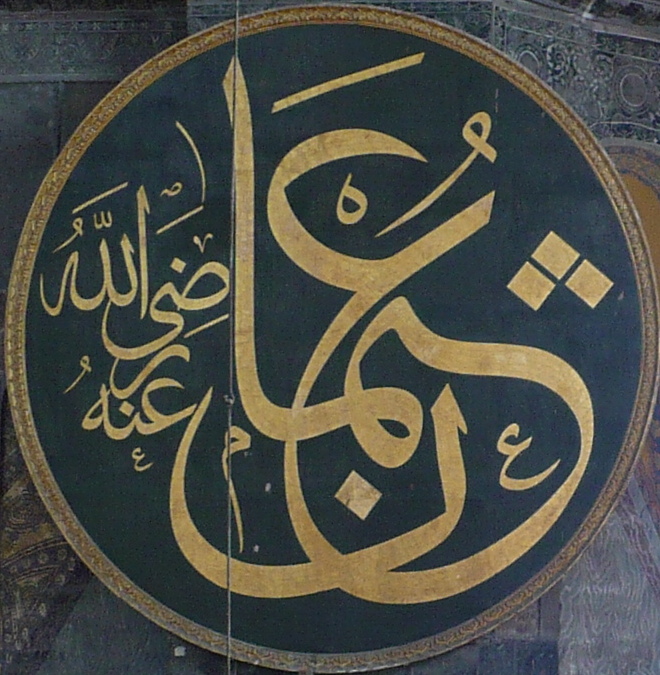
Uthman Roundel, Hagia Sophia
Vikiçizer (photograph by AhmadLX) · 19th century (roundel); photograph modern
A large calligraphic medallion in Hagia Sophia bearing the name of Uthman, part of the mosque's Ottoman-era decoration.
The roundel commemorates Uthman by name, showing his lasting place of honour in Ottoman Islamic tradition.
About this source
What it is
This photograph shows one of the large circular medallions, or roundels, inside Hagia Sophia in Istanbul. It is decorated with gold Arabic calligraphy on a dark green background, naming Uthman along with an honorific phrase of respect.
Why it matters
Hagia Sophia, originally a Byzantine church, was converted into a mosque under Ottoman rule, and roundels like this one, naming the Prophet's companions and early caliphs, became part of its decoration. The inclusion of Uthman's name here shows how he continued to be honoured as a central figure in Sunni Islam many centuries after his death.
Look closer
- Why might Ottoman decorators have chosen to include the names of early caliphs like Uthman inside this building?
- What does the use of elaborate gold calligraphy suggest about how Uthman was regarded?
- This photograph is modern — how is it different from evidence created during Uthman's own lifetime?
This artifact is part of the curated material that grounds the AI version of Uthman ibn Affan on Humy.ai — when students ask about related events, the AI can quote it and cite it.
More Uthman ibn Affan sources
Browse all 45 →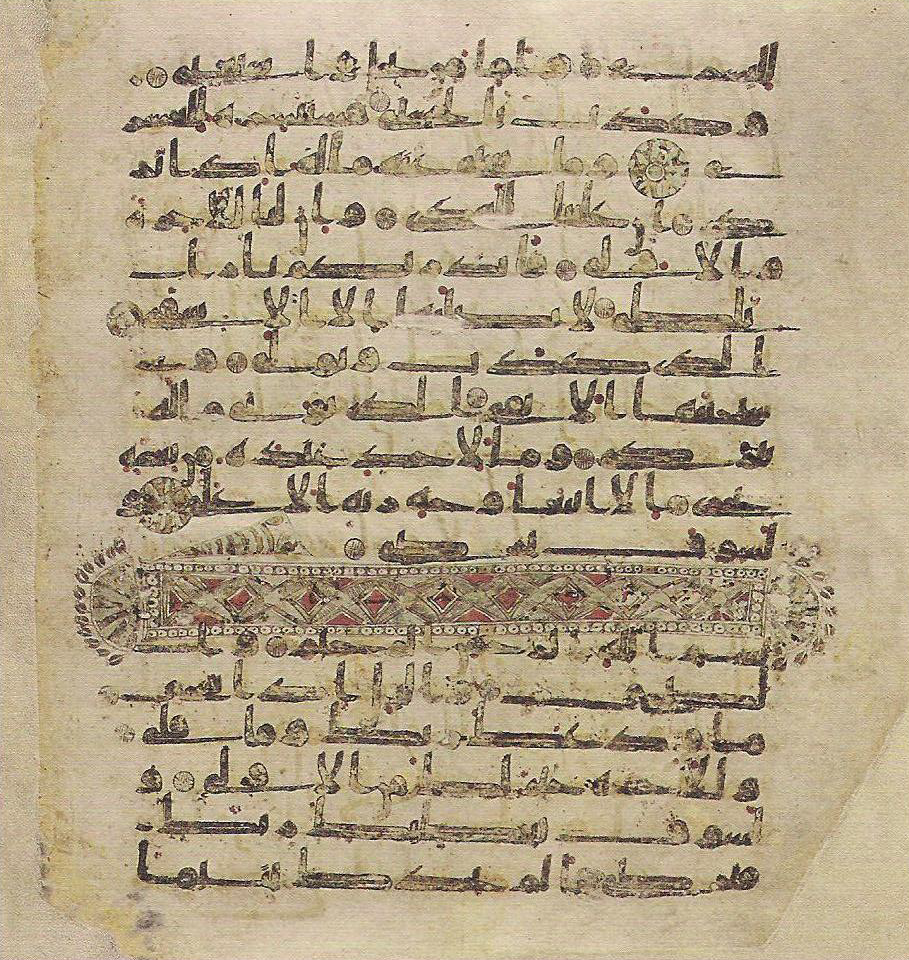 Book
Secondary source
Topkapi manuscript
c. 725-775 CE (traditionally linked to Uthman, d. 656)
 Document
Primary source
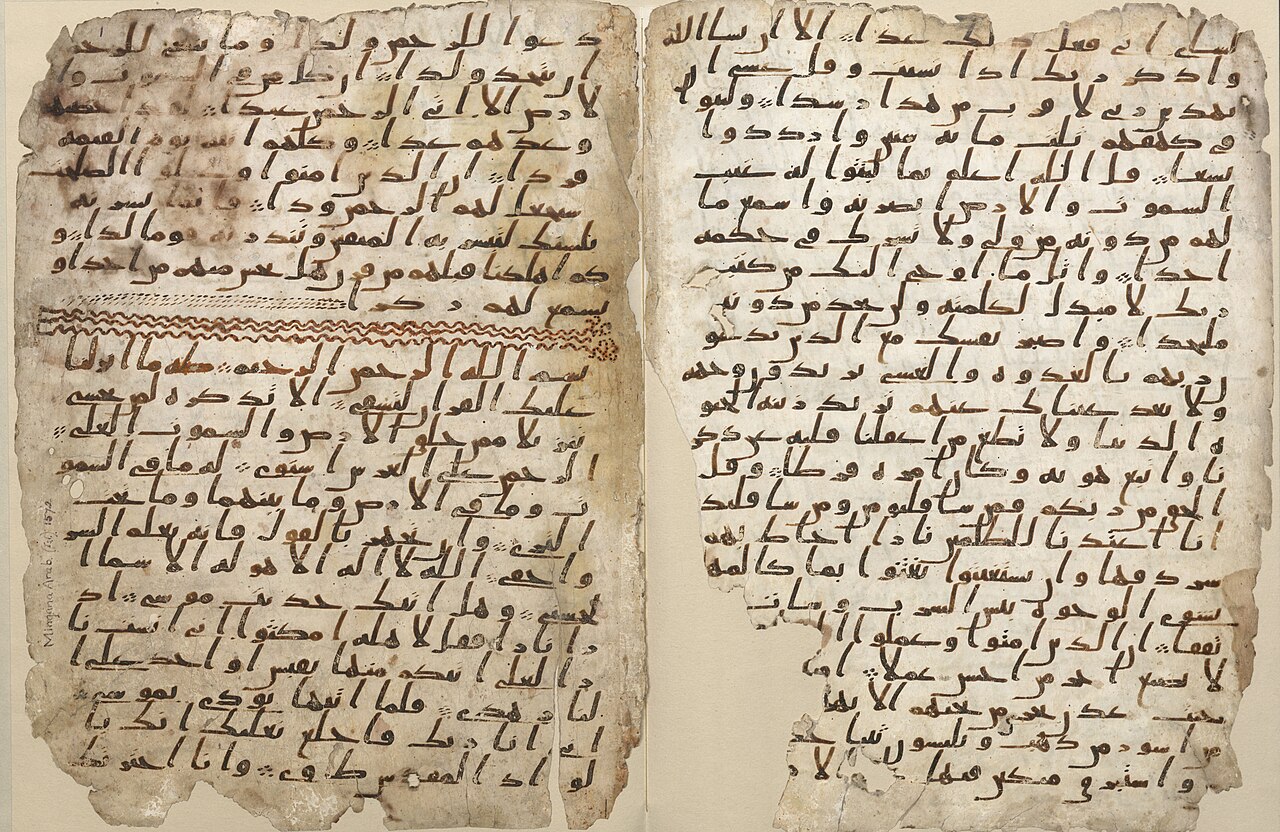
Birmingham Quran Manuscript
568–645 CE
 Book
Primary source
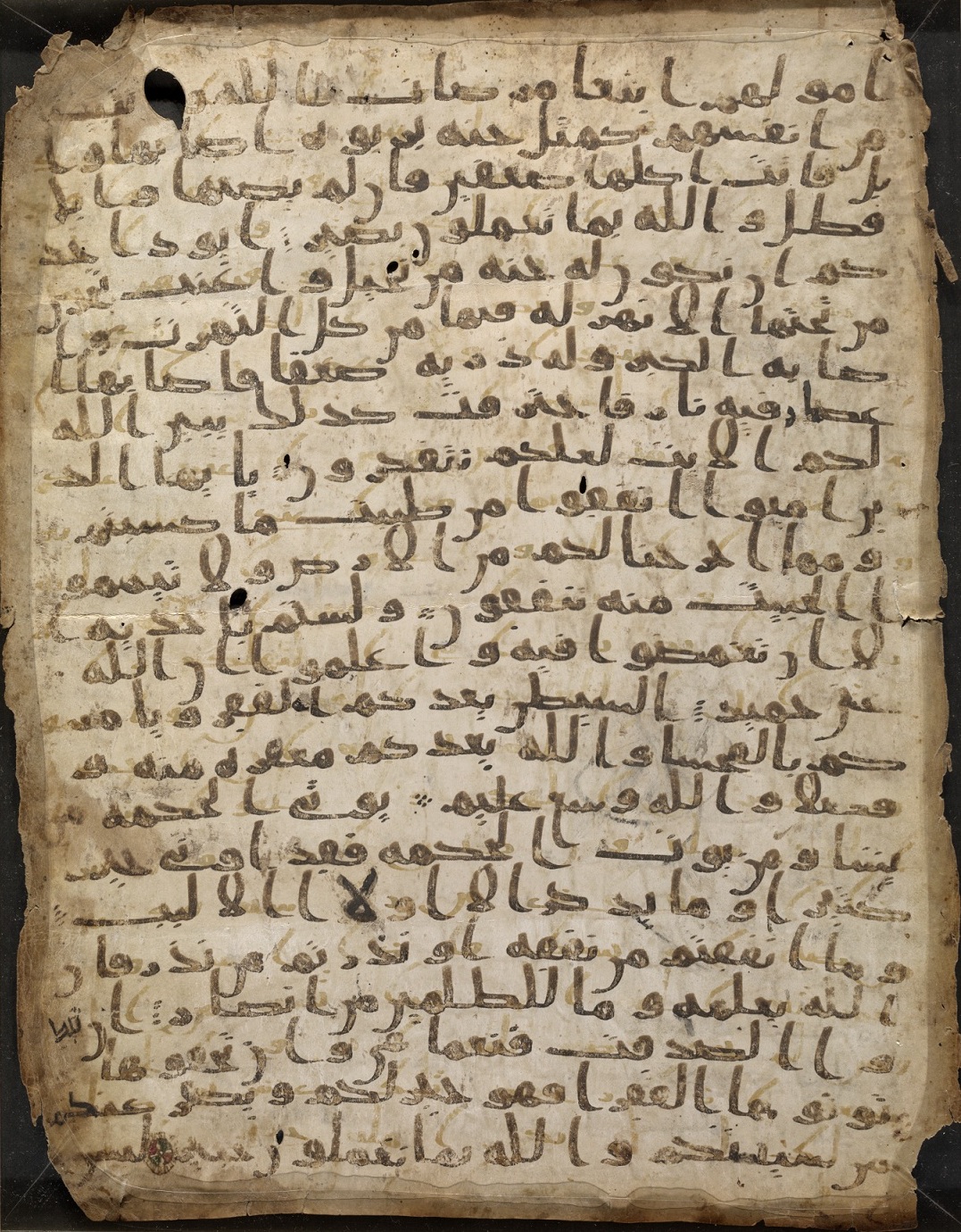
Sana'a Manuscript
c. 650 CE
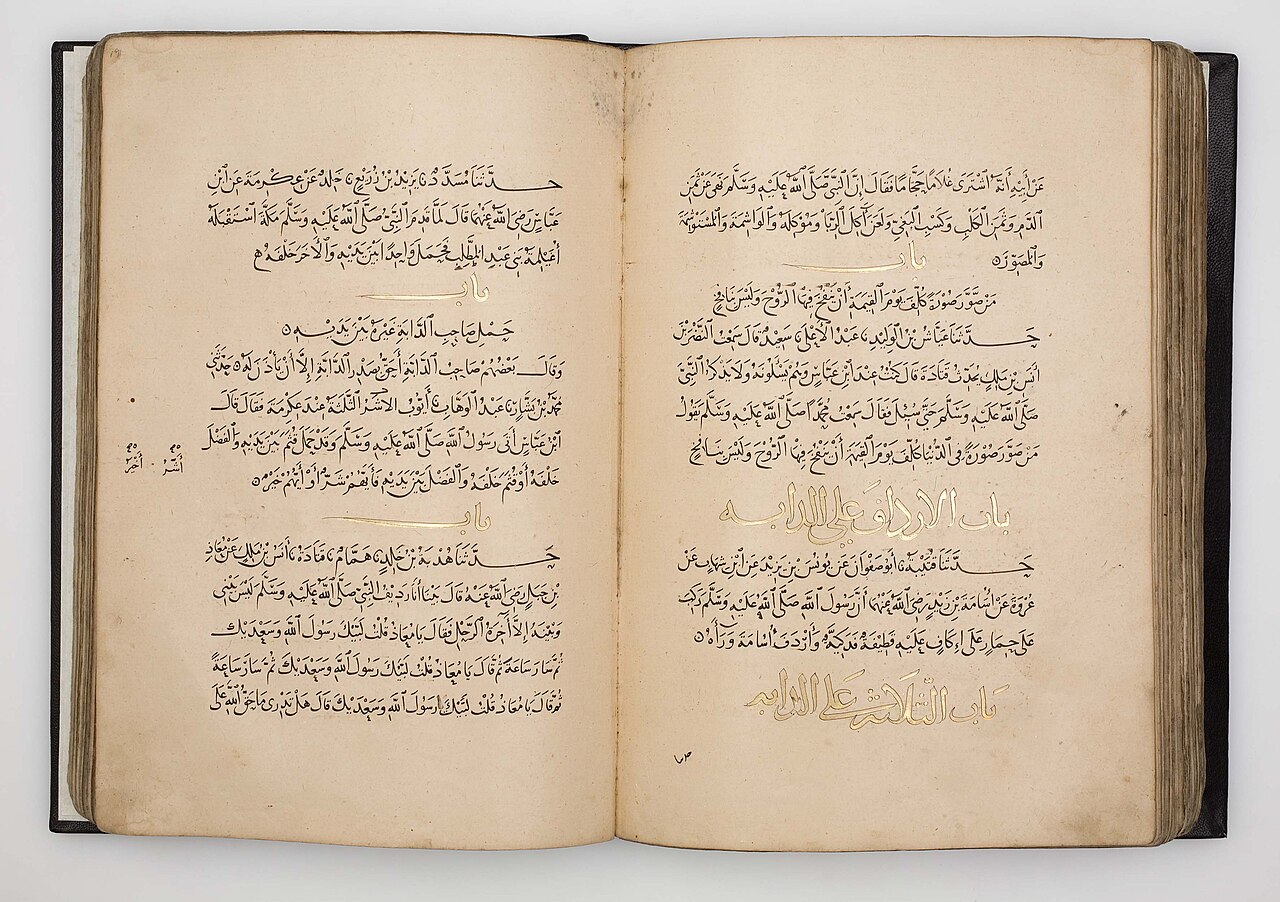 Book
Secondary source
Sahih al-Bukhari
Muhammad ibn Isma'il al-Bukhari · c. 846 CE
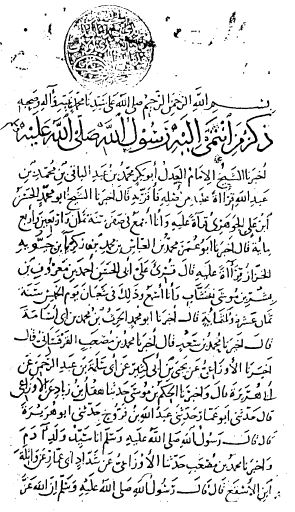

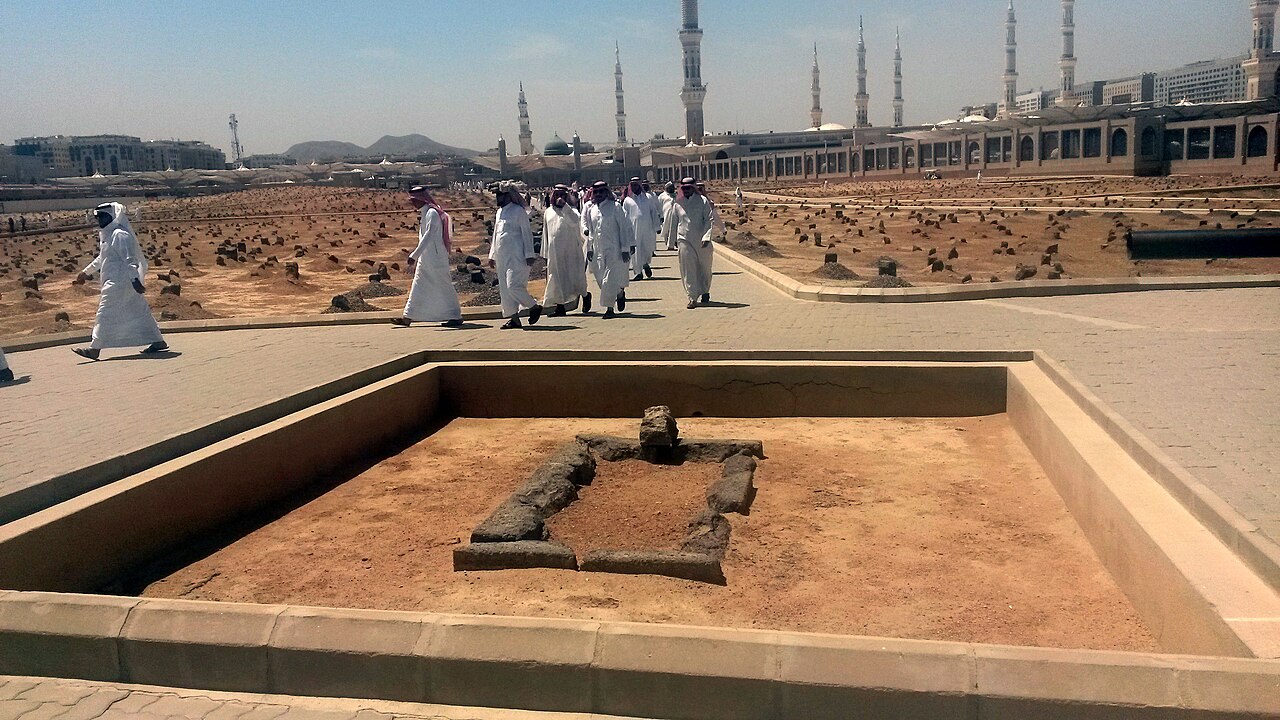
Free account
Read every Uthman ibn Affan source
Sign up free →
Ready when you are
Start chatting with Uthman ibn Affan now.
20 messages free · No credit card · Available in 50+ languages.