


Primary sourceBook1795-1807
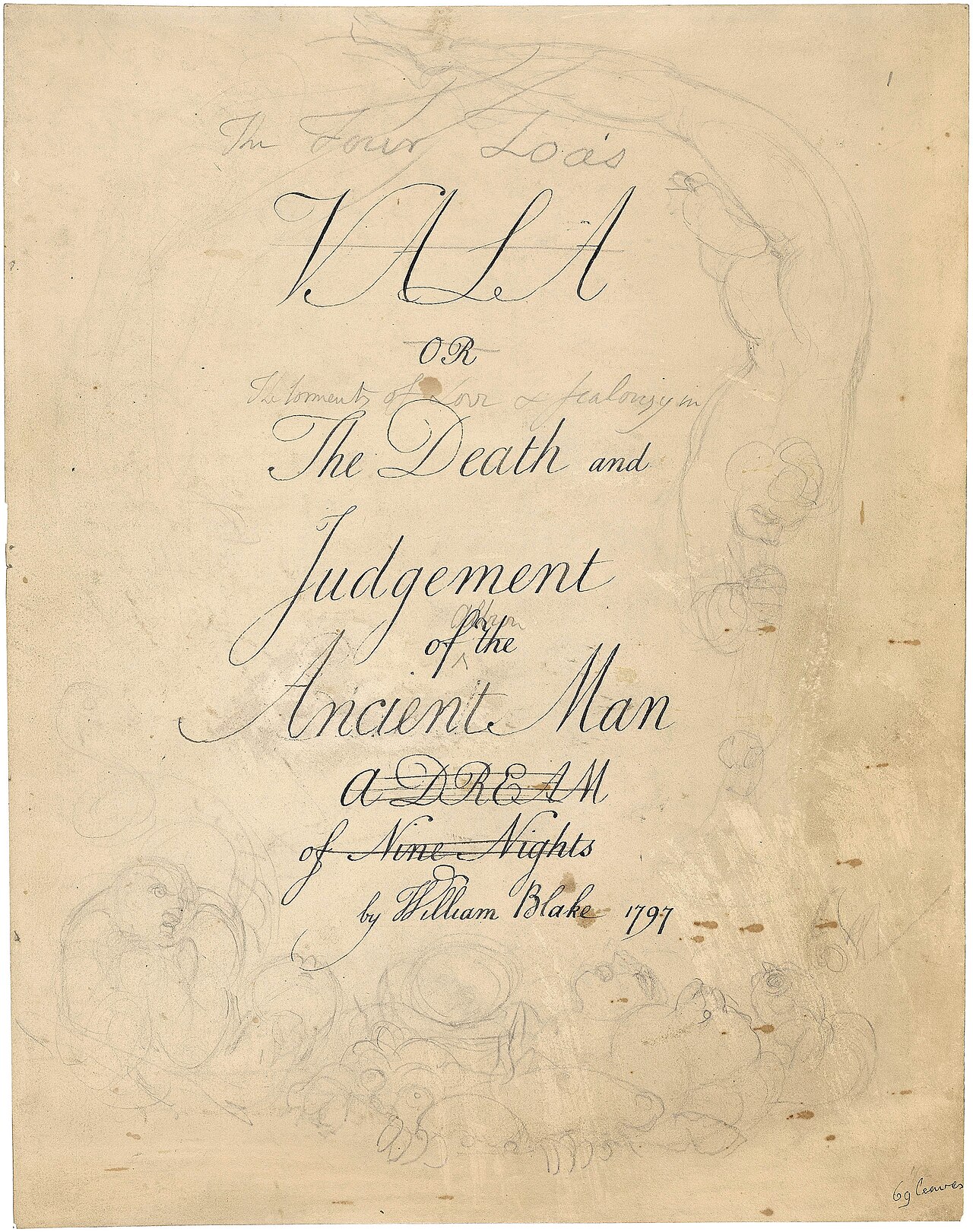
Vala, or The Four Zoas
William Blake · 1795-1807
An unfinished, heavily revised manuscript epic by William Blake, built around his mythology of the Four Zoas.
This is Blake's own draft manuscript, showing him inventing his personal mythology in his own hand.
About this source
What it is
This is a manuscript draft of a long prophetic poem by William Blake, begun in the 1790s. It was written over proof pages of another book he had illustrated, and is covered with corrections, crossed-out words and pencil sketches of figures and clouds.
Why it matters
Blake worked on this poem for about ten years but never finished it or turned it into his usual engraved plates. It shows him building his own private mythology of four cosmic beings, the Zoas, who represent different parts of the human mind and spirit. Because it was never published in his lifetime, it reveals Blake's working process more openly than his finished illuminated books.
Look closer
- What do the crossed-out words and pencil sketches tell you about how Blake worked?
- Why might an artist spend ten years on a work and still leave it unfinished?
- What questions does this raise about how we know Blake's ideas if this text was never published while he was alive?
This book is part of the curated material that grounds the AI version of William Blake on Humy.ai — when students ask about related events, the AI can quote it and cite it.
More William Blake sources
Browse all 86 →
Ready when you are
Start chatting with William Blake now.
20 messages free · No credit card · Available in 50+ languages.