


Primary sourceArtifact1909
Velocities in an etheric theory of light
Max Planck · 1909
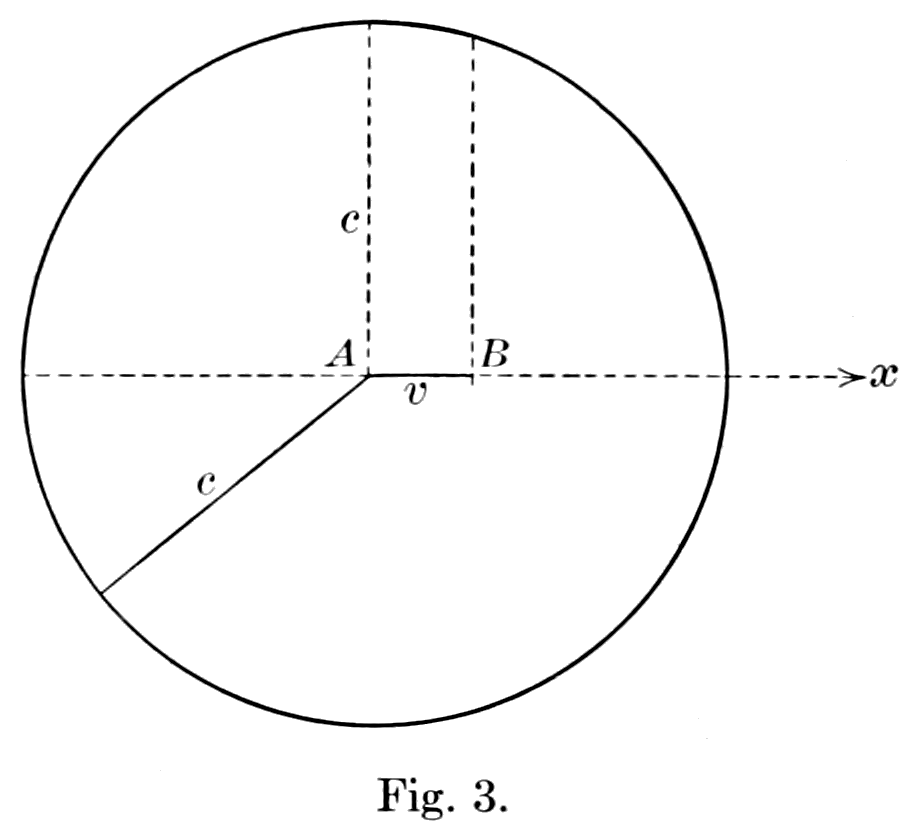
A line diagram from Max Planck's 1909 lectures showing velocity relations in an ether theory of light.
A diagram from Planck's 1909 lectures explaining his view of light velocities in an ether theory.
About this source
What it is
This is Figure 3 from Max Planck's 1909 lectures on theoretical physics, published as Eight Lectures on Theoretical Physics. It is a line diagram showing a circle of radius c centred on a point A along a horizontal axis. A second point B is marked, with a short segment labelled v between A and B, and dashed lines labelled c show the relation between the velocities.
Why it matters
In the early twentieth century, physicists debated whether light moved through a medium called the ether and how its speed would appear to observers in motion. Planck's diagram presents one way of picturing these velocities. It shows how a teacher of the period could use simple geometry to explain a theory that was then being tested and eventually reconsidered.
Look closer
- What do the labels c and v stand for, and how does the drawing show their relationship?
- Why does the diagram use a circle to represent the spread of light?
- What assumptions about the ether does the picture take for granted?
This artifact is part of the curated material that grounds the AI version of Max Planck on Humy.ai — when students ask about related events, the AI can quote it and cite it.
More Max Planck sources
Browse all 97 → Document
Primary source
On the Law of Energy Distribution in the Normal Spectrum
Max Planck · 1901
Primary source
The Origin and Development of the Quantum Theory
Max Planck · 1920 (delivered); published 1922
 Photograph
Primary source
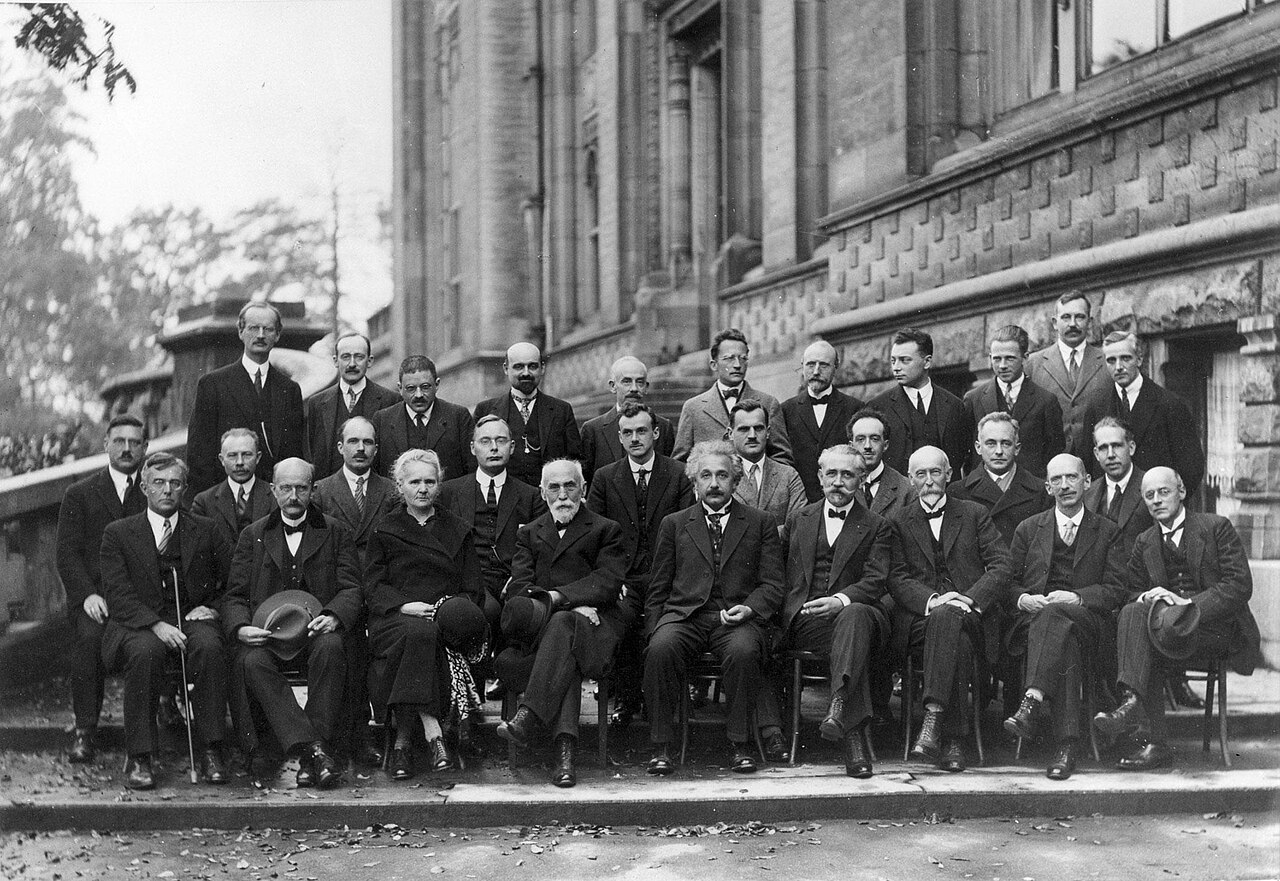
Solvay Conference 1927 Group Photograph
Benjamin Couprie · 1927
 Book
Primary source
Vorlesungen über die Theorie der Wärmestrahlung
Max Planck · 1906
Free account
Browse every Max Planck source
Sign up free →
Ready when you are
Start chatting with Max Planck now.
20 messages free · No credit card · Available in 50+ languages.