


Secondary sourcePainting1920s
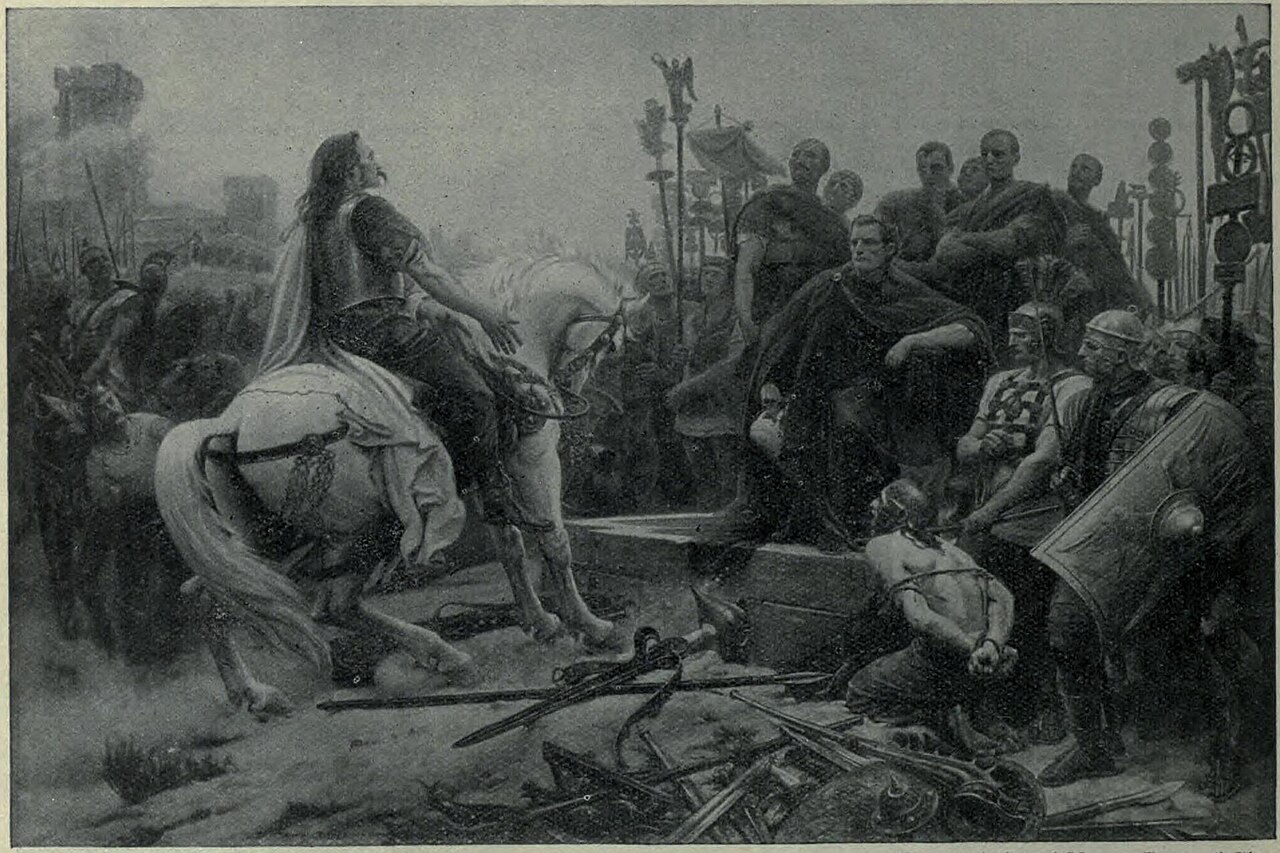
Vercingetorix Before Caesar
Lionel Royer · 1920s
A reproduction of a painting imagining the moment Vercingetorix surrendered to Julius Caesar, used in a children's history book.
An imagined depiction of Vercingetorix's surrender to Caesar, reproduced for young readers.
About this source
What it is
This image is a black-and-white reproduction of a painting by Lionel Royer, printed in a children's history book called Hutchinson's Story of the Nations. It imagines the surrender of Vercingetorix to Julius Caesar.
Why it matters
Painted long after the events, this scene reflects how later artists and writers imagined the defeat of the Gauls. It shows Vercingetorix bound and defeated before Roman soldiers, a dramatic version of history meant to teach a story, not record an eyewitness event.
Look closer
- What details suggest this is an imagined scene rather than a factual record?
- How does the composition make the viewer feel about Vercingetorix and about Caesar?
- Why might this painting be chosen for a children's history book?
This painting is part of the curated material that grounds the AI version of Vercingetorix on Humy.ai — when students ask about related events, the AI can quote it and cite it.
More Vercingetorix sources
Browse all 73 →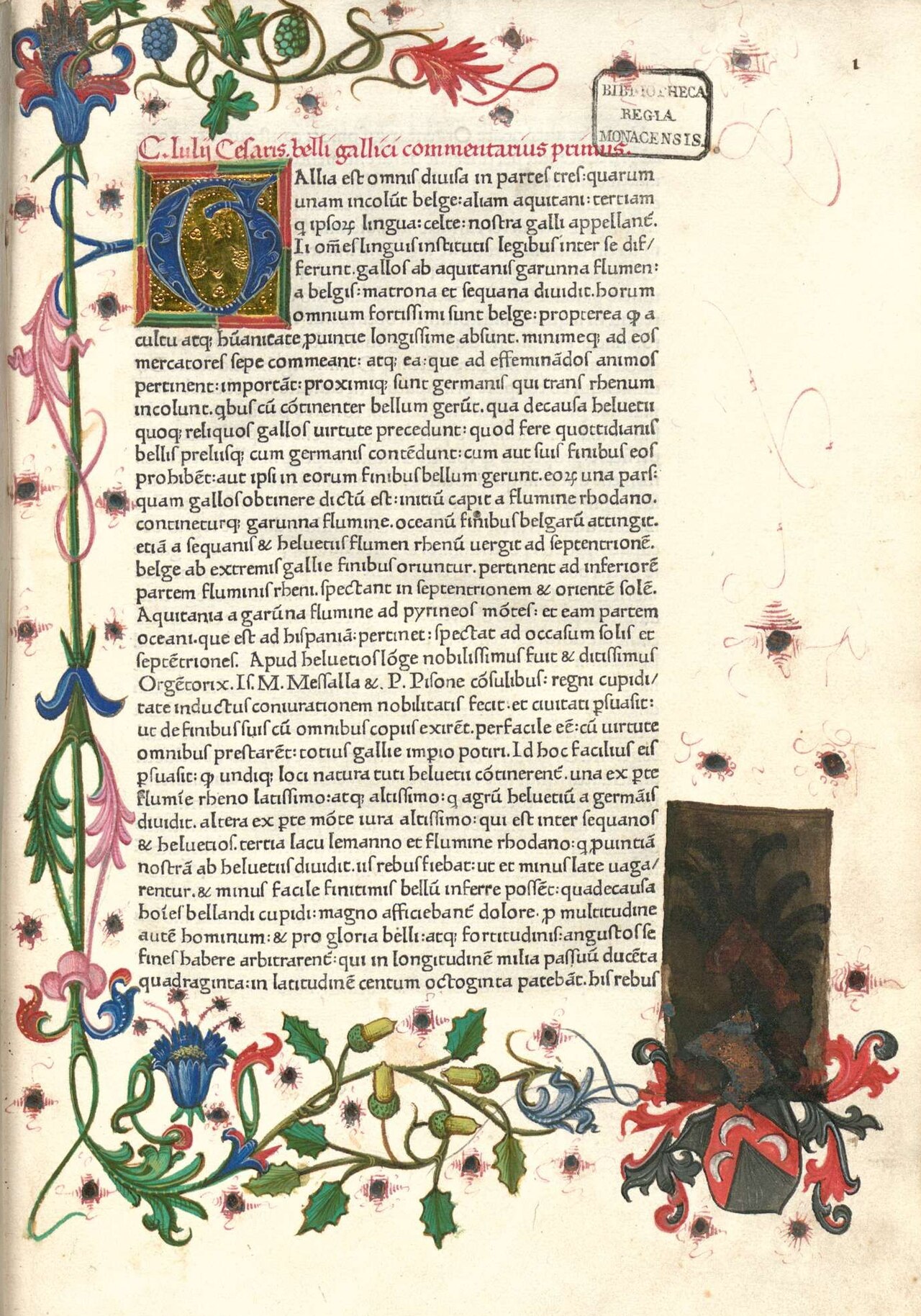 Book
Primary source
Commentarii de Bello Gallico
Julius Caesar · c. 58-50 BCE (this copy 1469)
 Painting
Secondary source
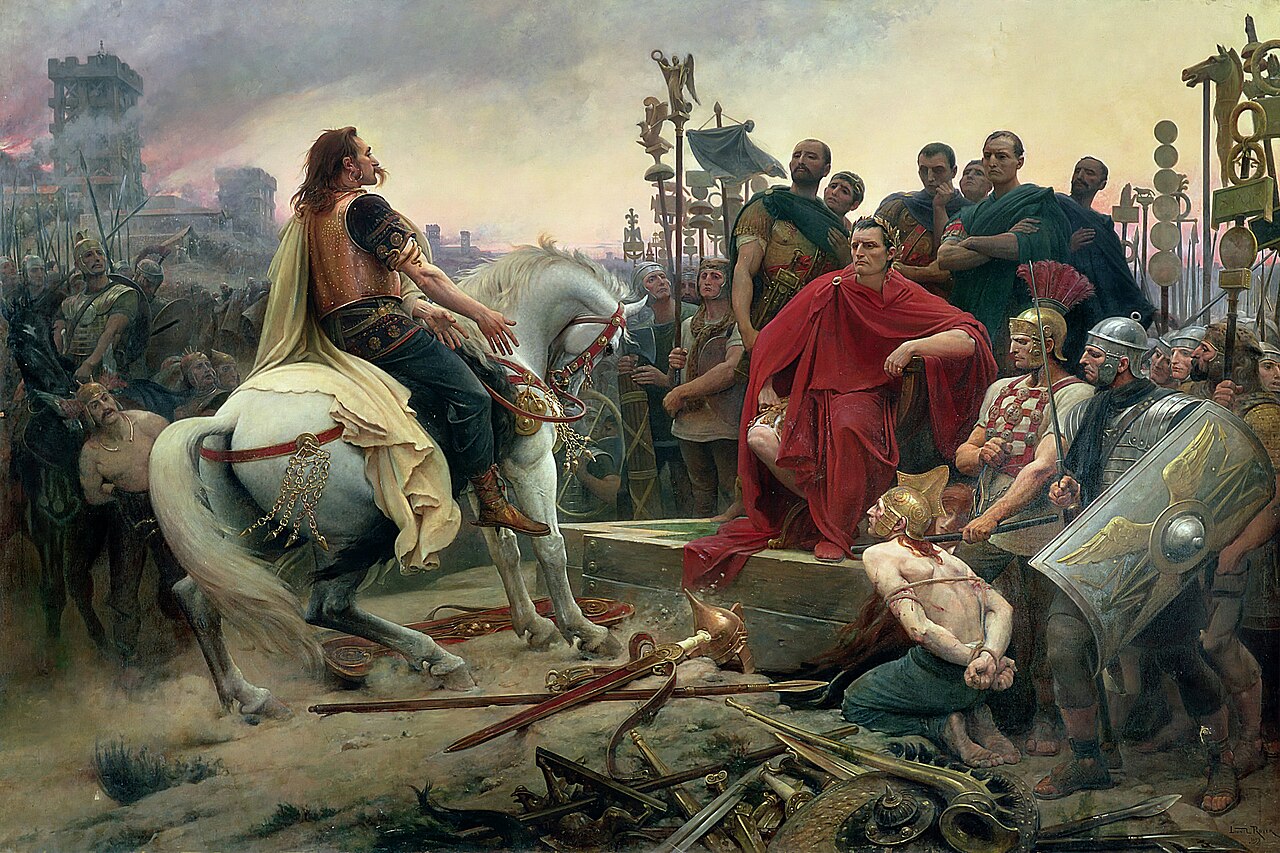
Vercingetorix Throwing down His Weapons at the Feet of Julius Caesar
Lionel Royer · 1899
 Sculpture
Secondary source
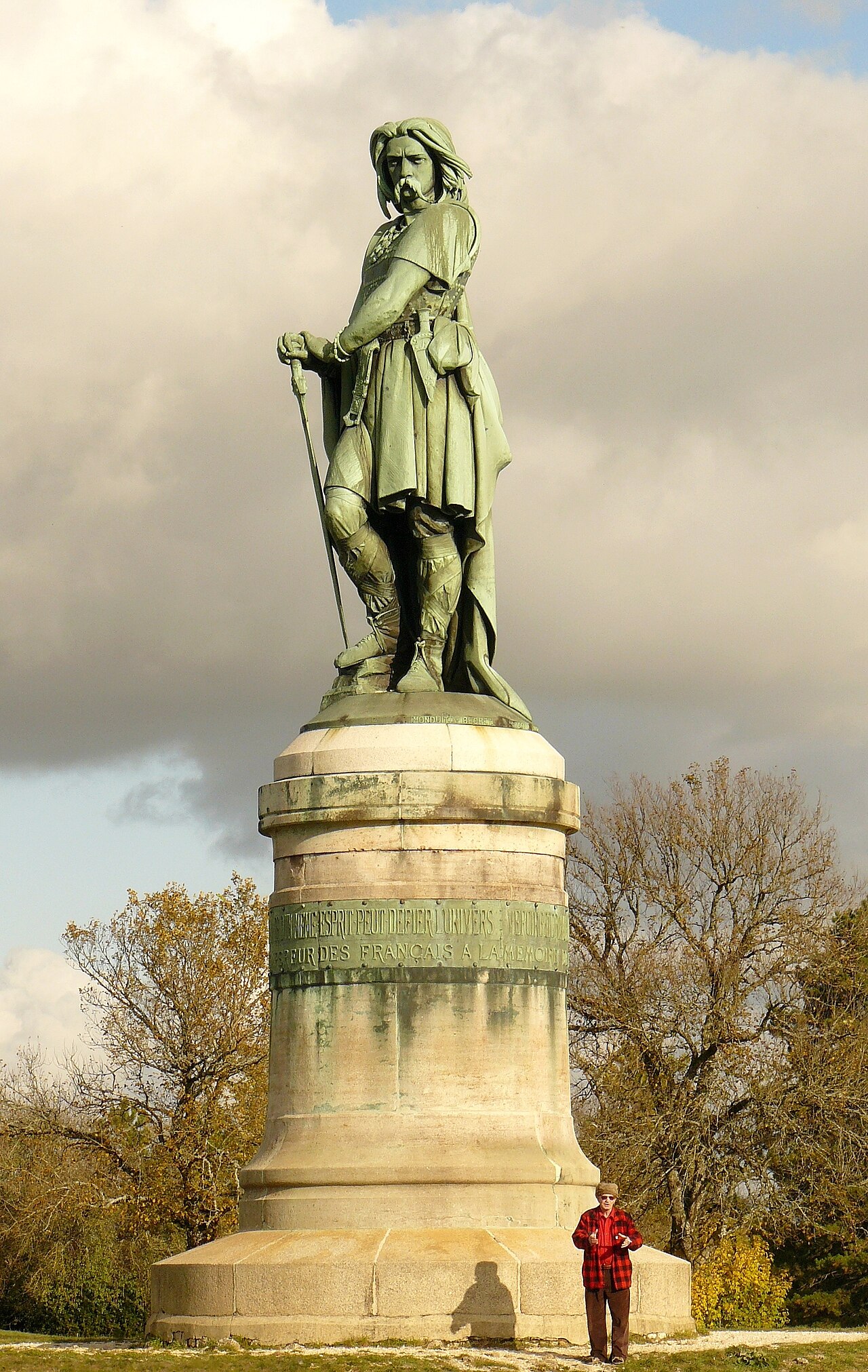
Vercingetorix Monument
Aimé Millet · 1865
 Book
Secondary source
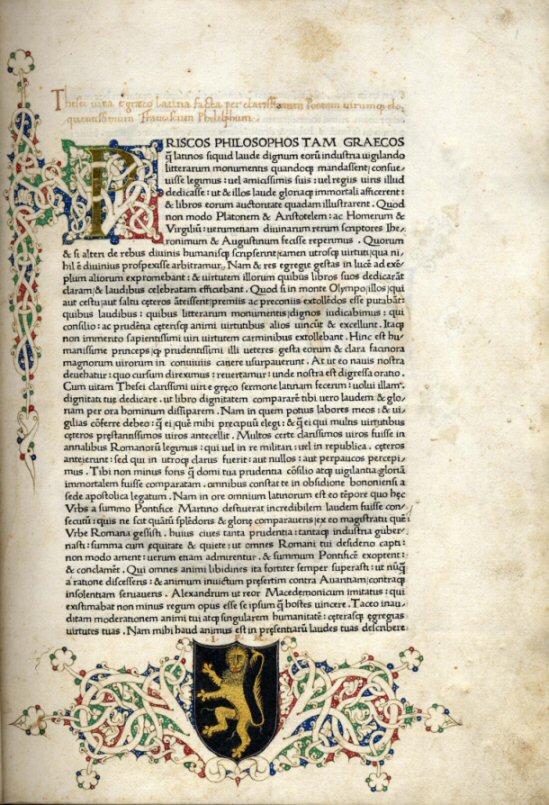
Parallel Lives
Plutarch · c. 100-120 AD
Free account
Read every Vercingetorix source
Sign up free →
Ready when you are
Start chatting with Vercingetorix now.
20 messages free · No credit card · Available in 50+ languages.