


Secondary sourcePainting1886
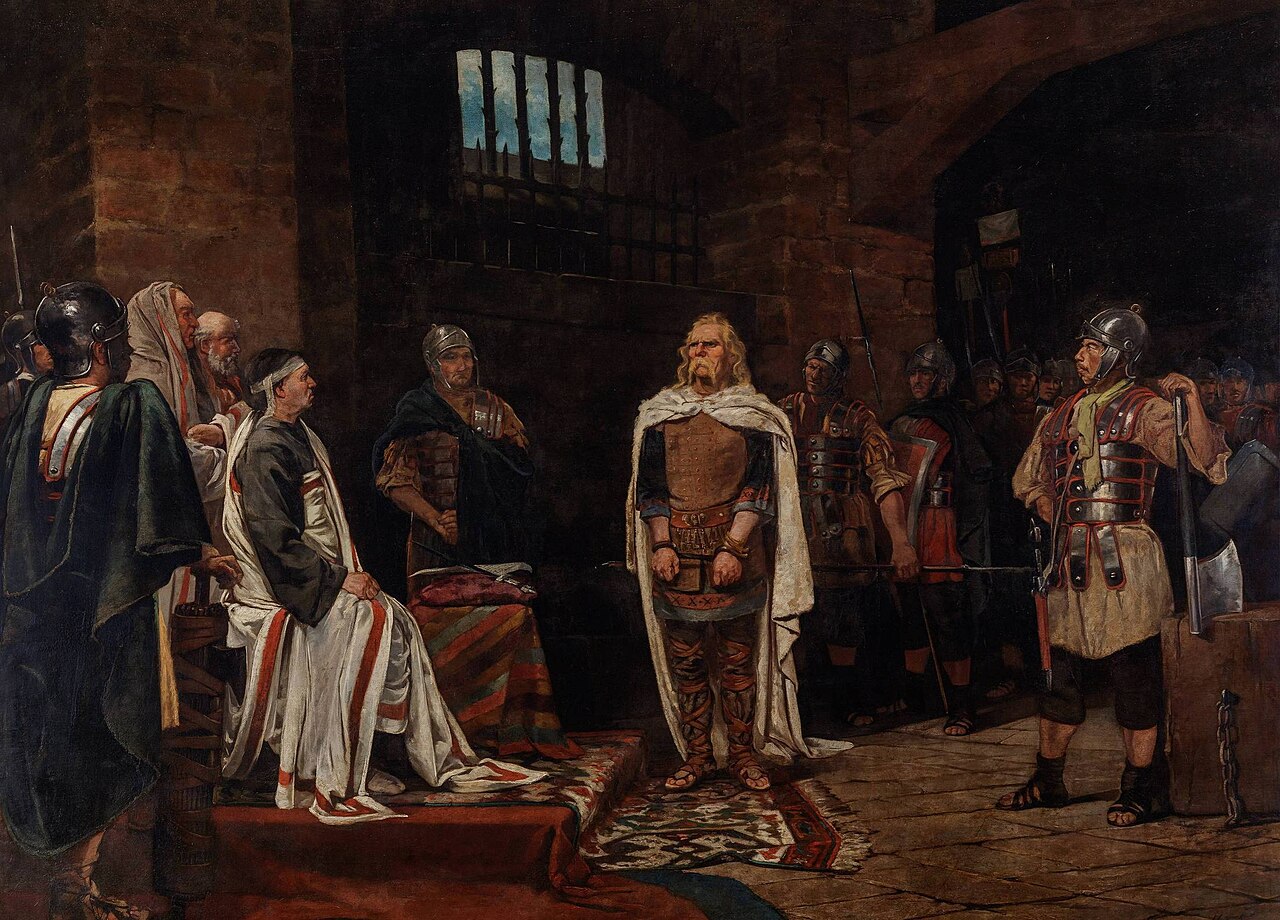
Vercingetorix before Julius Caesar
Antônio Firmino Monteiro · 1886
An 1886 oil painting imagining Vercingetorix bound and standing before Caesar after his defeat.
An imagined 1886 painting of Vercingetorix bound and brought before Caesar following his defeat.
About this source
What it is
This oil painting by Antônio Firmino Monteiro, made in 1886, imagines the moment Vercingetorix stood captive before Julius Caesar after his defeat. It shows him bound, dressed in white, facing a seated Roman official surrounded by soldiers in a stone hall.
Why it matters
Painted many centuries after the events, this work is an artist's imagined reconstruction rather than an eyewitness record. It shows how 19th-century painters dramatized the humiliation of a defeated enemy leader to explore themes of power, conquest, and captivity.
Look closer
- How does the painter use light, posture, and clothing to show the difference in power between the two men?
- What might the artist want viewers to feel about Vercingetorix in this scene?
- What parts of the real historical event might this painting be getting wrong or leaving out?
This painting is part of the curated material that grounds the AI version of Vercingetorix on Humy.ai — when students ask about related events, the AI can quote it and cite it.
More Vercingetorix sources
Browse all 73 →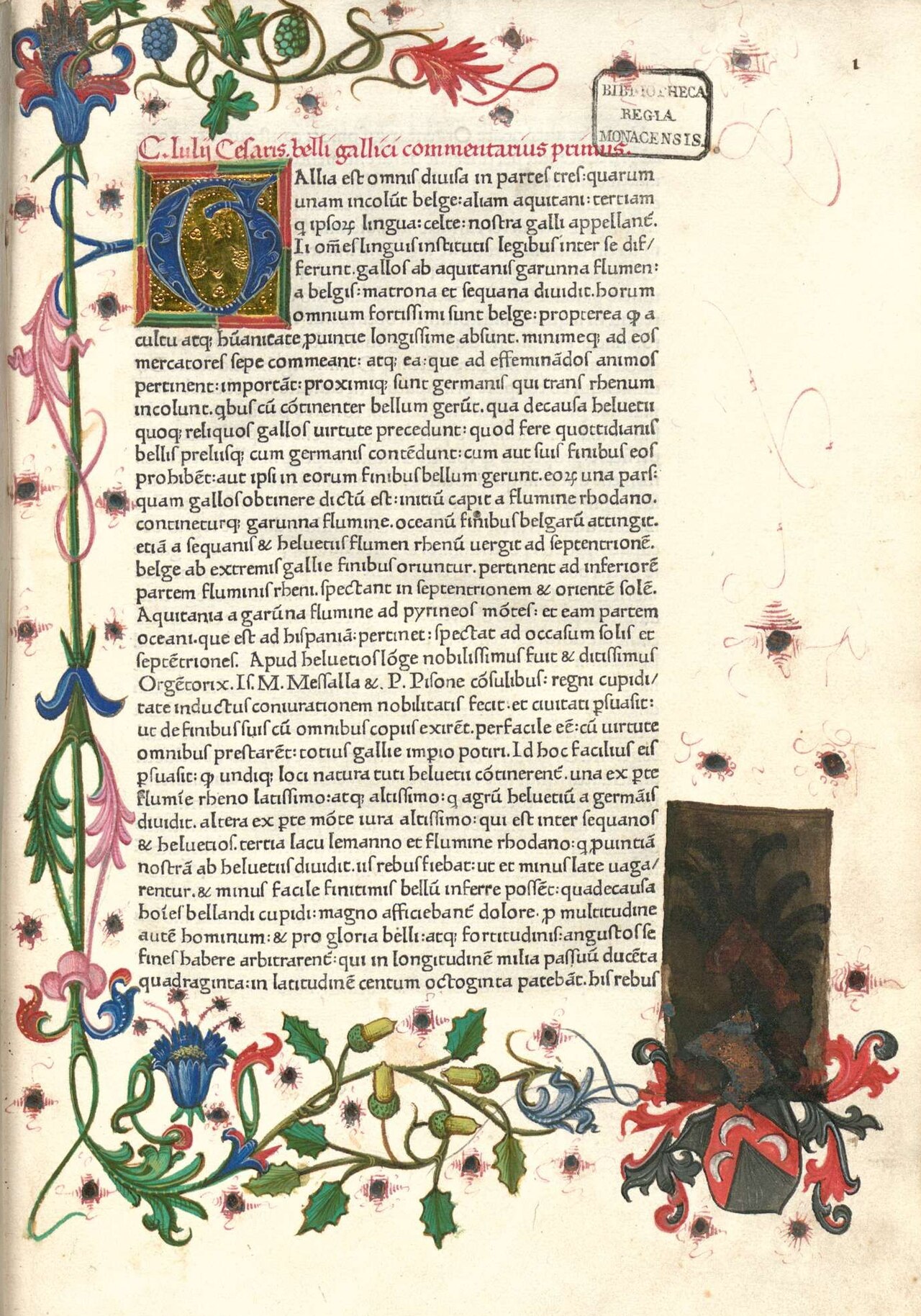 Book
Primary source
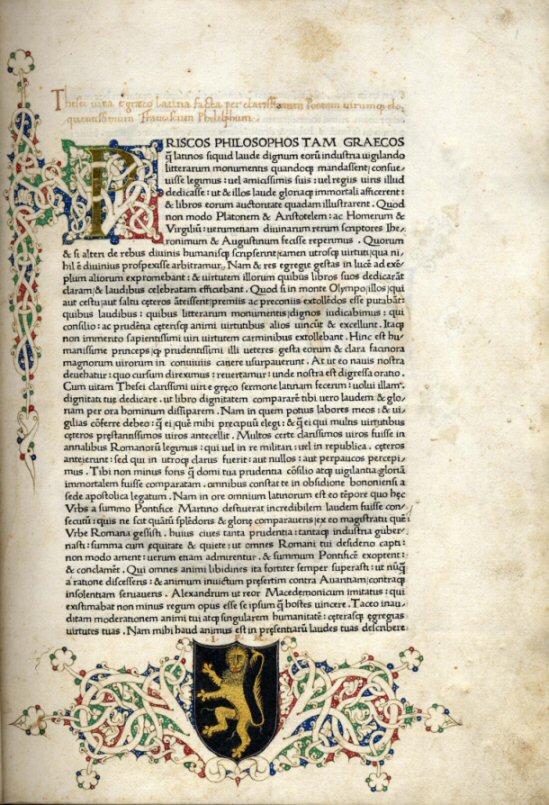
Commentarii de Bello Gallico
Julius Caesar · c. 58-50 BCE (this copy 1469)
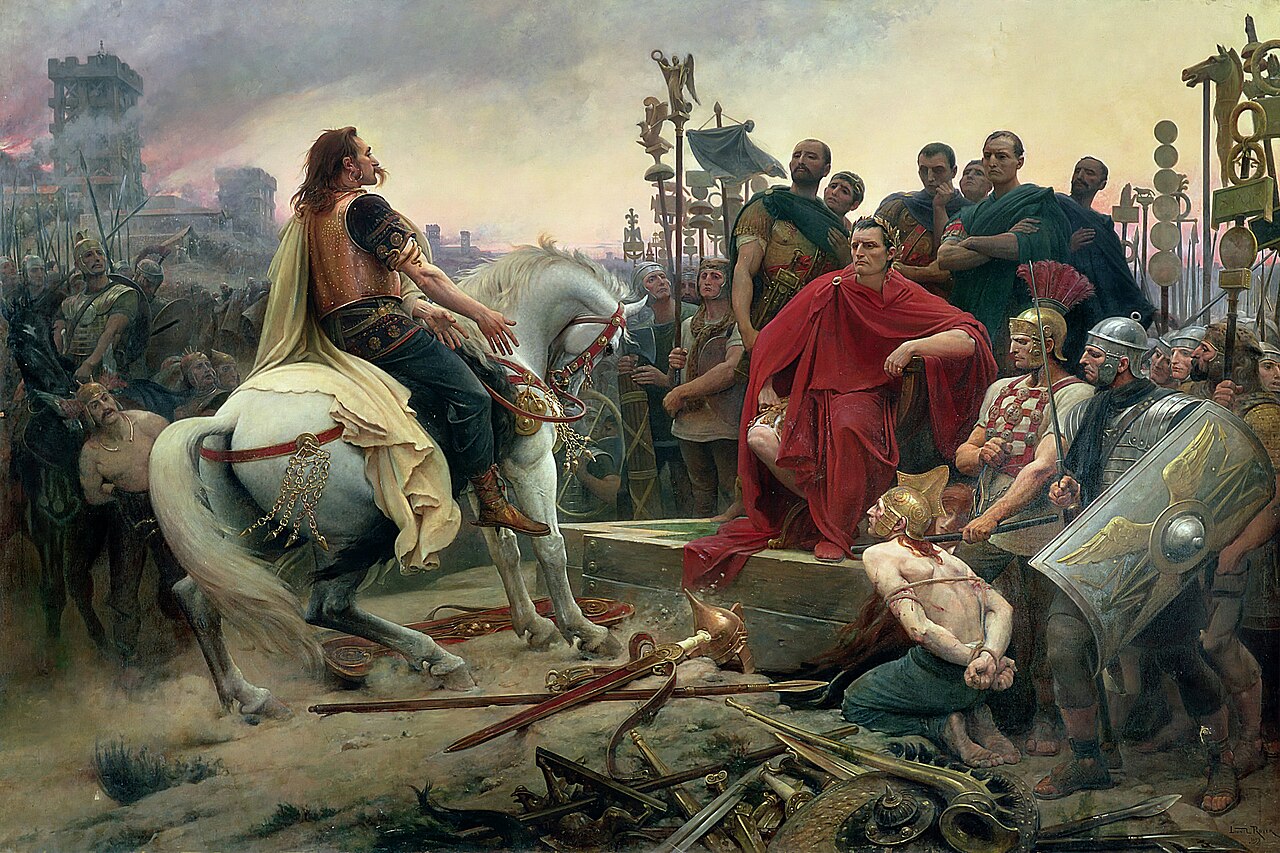 Painting
Secondary source
Vercingetorix Throwing down His Weapons at the Feet of Julius Caesar
Lionel Royer · 1899
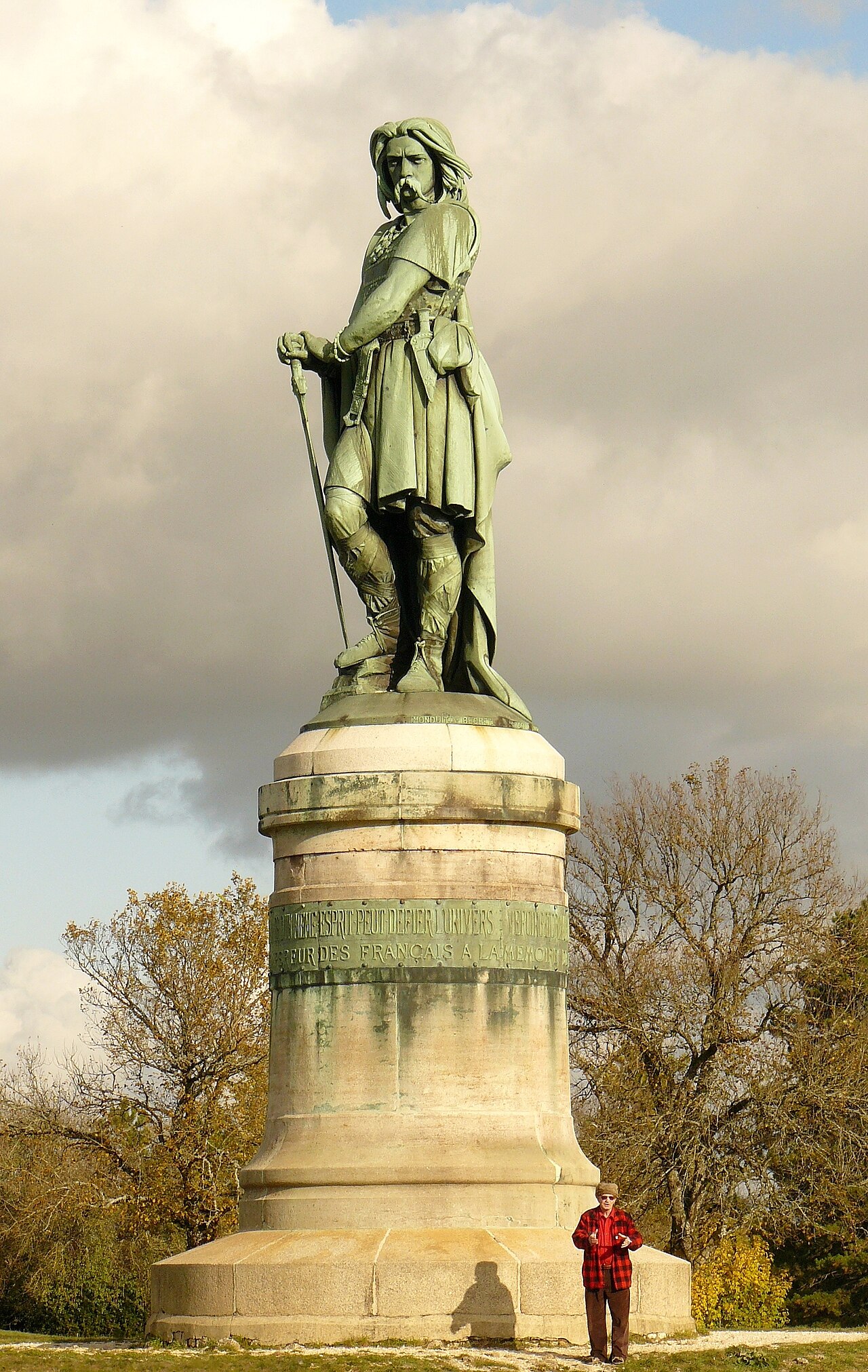 Sculpture
Secondary source
Vercingetorix Monument
Aimé Millet · 1865
 Book
Secondary source
Parallel Lives
Plutarch · c. 100-120 AD
Free account
Read every Vercingetorix source
Sign up free →
Ready when you are
Start chatting with Vercingetorix now.
20 messages free · No credit card · Available in 50+ languages.