


Secondary sourcePainting1829
Vercingétorix
Eugène Delacroix · 1829
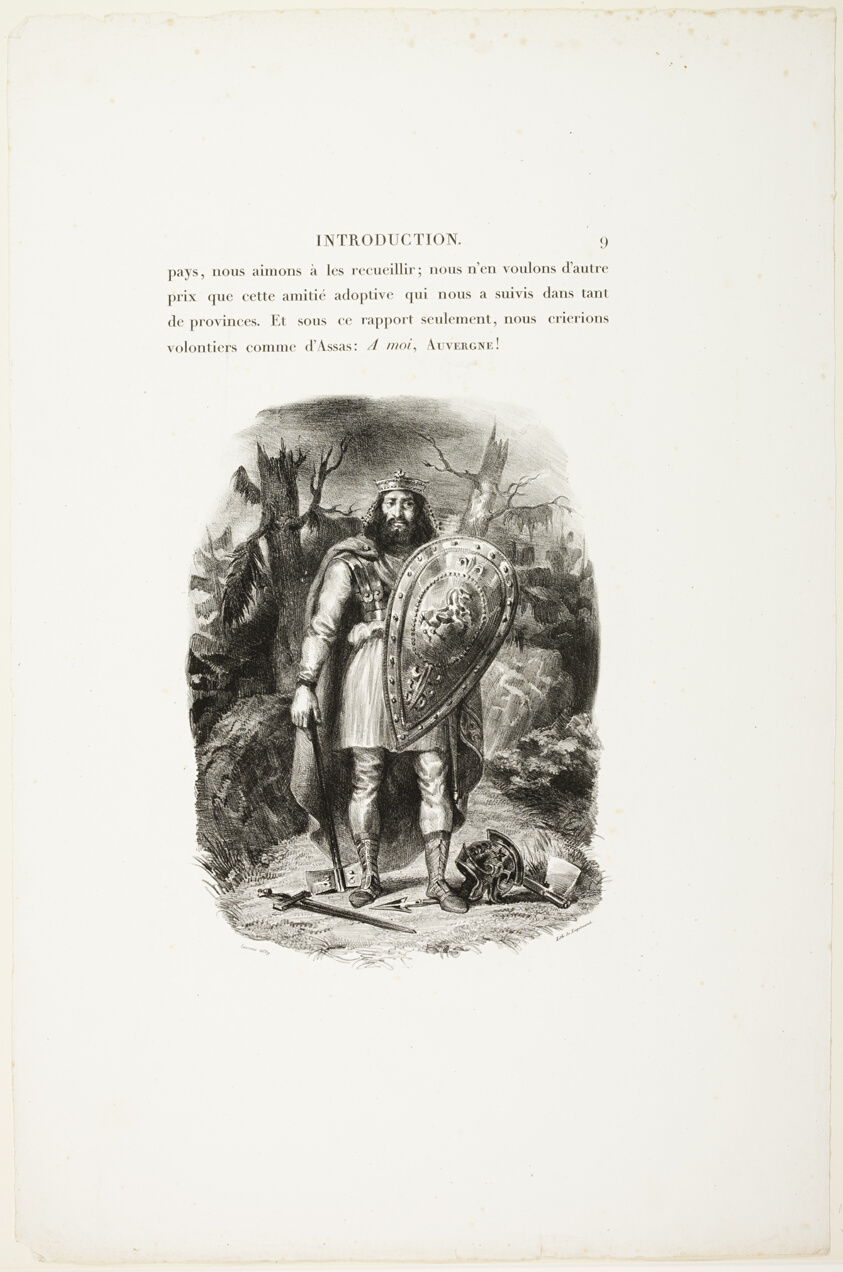
An 1829 lithograph by French Romantic artist Eugène Delacroix depicting a bearded, crowned warrior believed to represent Vercingetorix.
This Romantic-era lithograph imagines Vercingetorix as a noble, crowned warrior figure, reflecting 19th-century French views of him.
About this source
What it is
This lithograph, made in 1829 by the French artist Eugène Delacroix, shows a bearded warrior wearing a crown, standing in a wild landscape with bare trees. He holds a decorated round shield, with a sword and helmet resting nearby. The print is titled 'Vercingétorix' and is held by the Art Institute of Chicago.
Why it matters
Delacroix was one of the most important artists of the French Romantic movement, known for dramatic, emotional works. This print shows how 19th-century French Romanticism imagined ancient and legendary figures like Vercingetorix — not as historical records, but as symbols of heroism, wildness, and national identity, fitting the Romantic fascination with raw nature and noble defeat.
Look closer
- What mood does the wild landscape and bare trees create, and why might Delacroix have chosen this setting?
- Does this image look like a realistic portrait, or more like an imagined ideal — and how can you tell?
- Why might a 19th-century French artist be drawn to depict a defeated Gallic chieftain from ancient history?
This painting is part of the curated material that grounds the AI version of Vercingetorix on Humy.ai — when students ask about related events, the AI can quote it and cite it.
More Vercingetorix sources
Browse all 73 →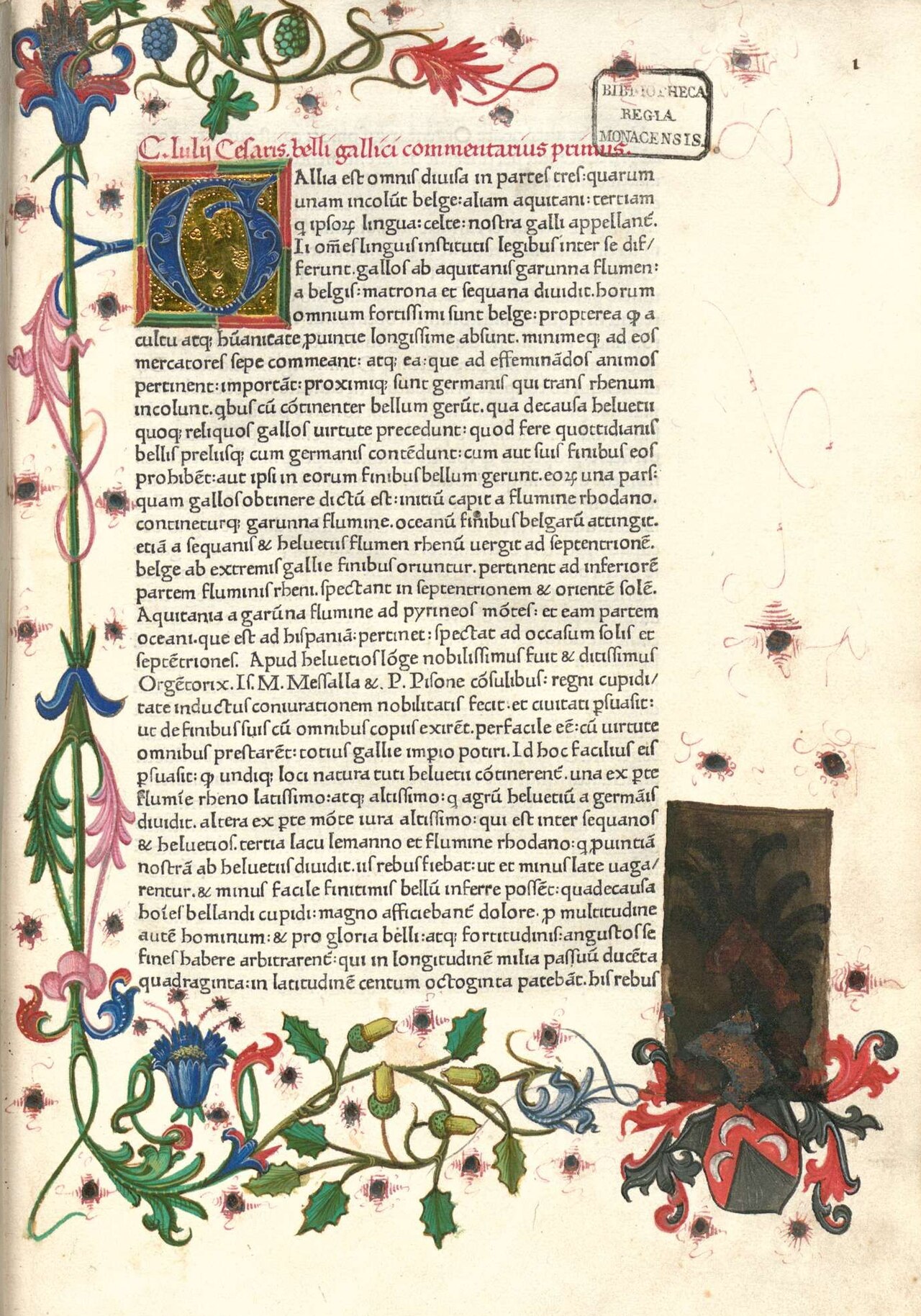 Book
Primary source
Commentarii de Bello Gallico
Julius Caesar · c. 58-50 BCE (this copy 1469)
 Painting
Secondary source
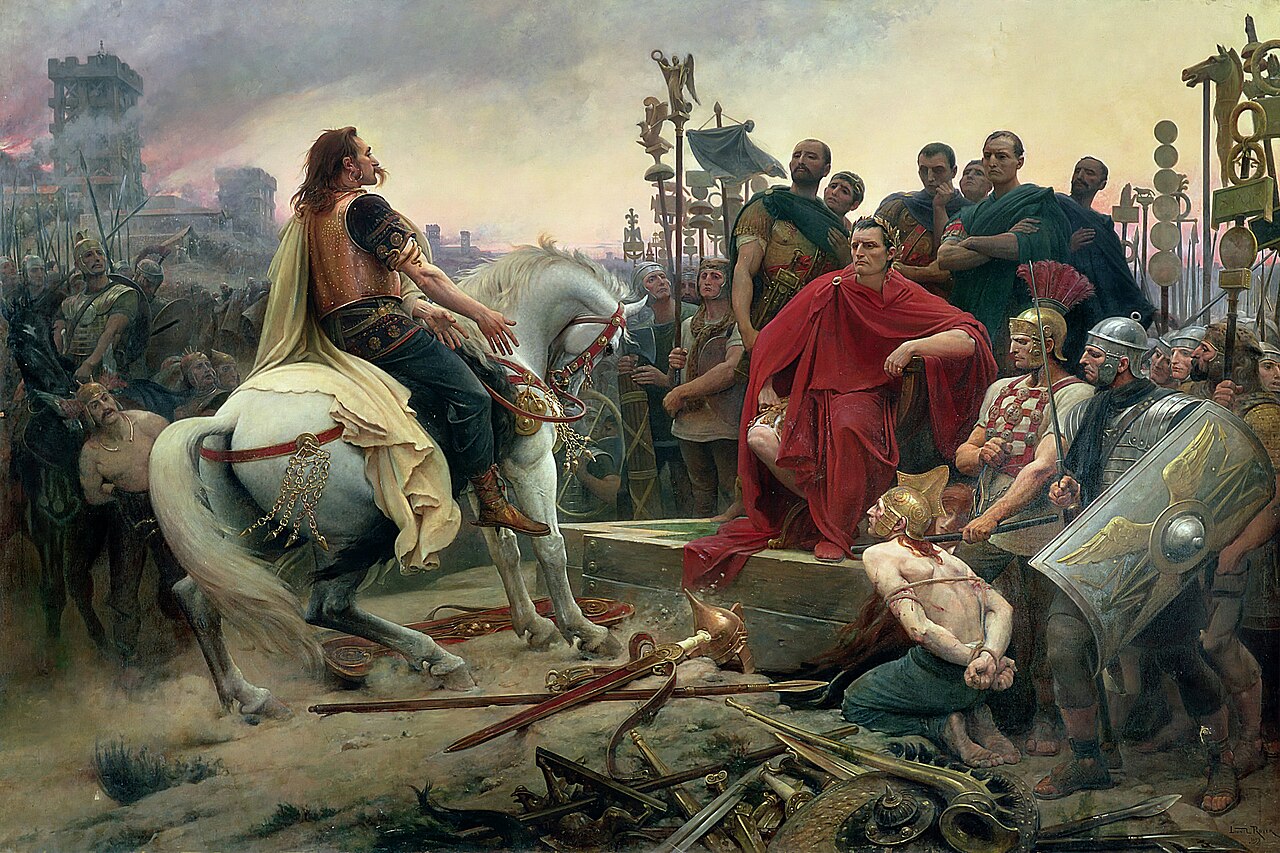
Vercingetorix Throwing down His Weapons at the Feet of Julius Caesar
Lionel Royer · 1899
 Sculpture
Secondary source
Vercingetorix Monument
Aimé Millet · 1865
 Book
Secondary source
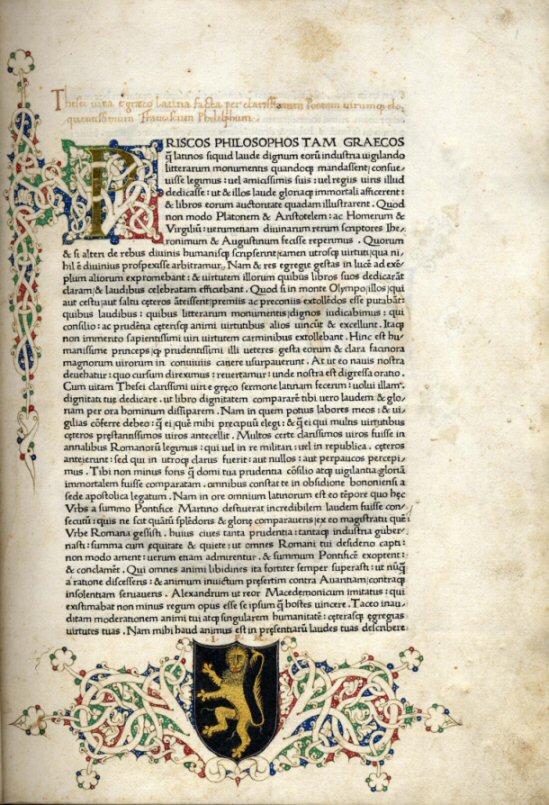
Parallel Lives
Plutarch · c. 100-120 AD
Free account
Read every Vercingetorix source
Sign up free →
Ready when you are
Start chatting with Vercingetorix now.
20 messages free · No credit card · Available in 50+ languages.