


Secondary sourcePainting
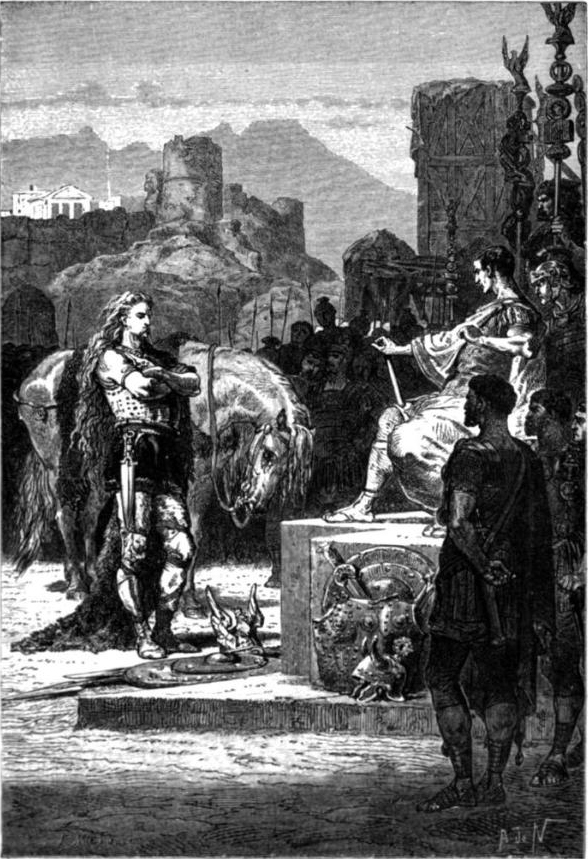
Vercingetorix Surrenders
Alphonse de Neuville
A 19th-century print by Alphonse de Neuville showing Vercingetorix surrendering to Julius Caesar, a heroic image widely reproduced in popular French histories.
A heroic 19th-century imagining of Vercingetorix's surrender to Caesar, spread through popular French histories.
About this source
What it is
This engraved print by the French illustrator Alphonse de Neuville depicts the moment Vercingetorix surrendered to Julius Caesar. It shows a long-haired warrior standing with folded arms before a seated Roman commander, surrounded by soldiers, a horse and a siege tower, with fortified hills in the background.
Why it matters
Created long after the events it shows, this image is not a historical record of the surrender but a 19th-century imagining of it. De Neuville's illustration was widely reproduced in popular histories of France, helping to spread a heroic image of Vercingetorix as a noble defeated warrior facing Caesar.
Look closer
- What choices did the artist make to make Vercingetorix look dignified even though he is surrendering?
- Why might this image have been popular in 19th-century France?
- What does the print leave out about the real historical event?
This painting is part of the curated material that grounds the AI version of Vercingetorix on Humy.ai — when students ask about related events, the AI can quote it and cite it.
More Vercingetorix sources
Browse all 73 →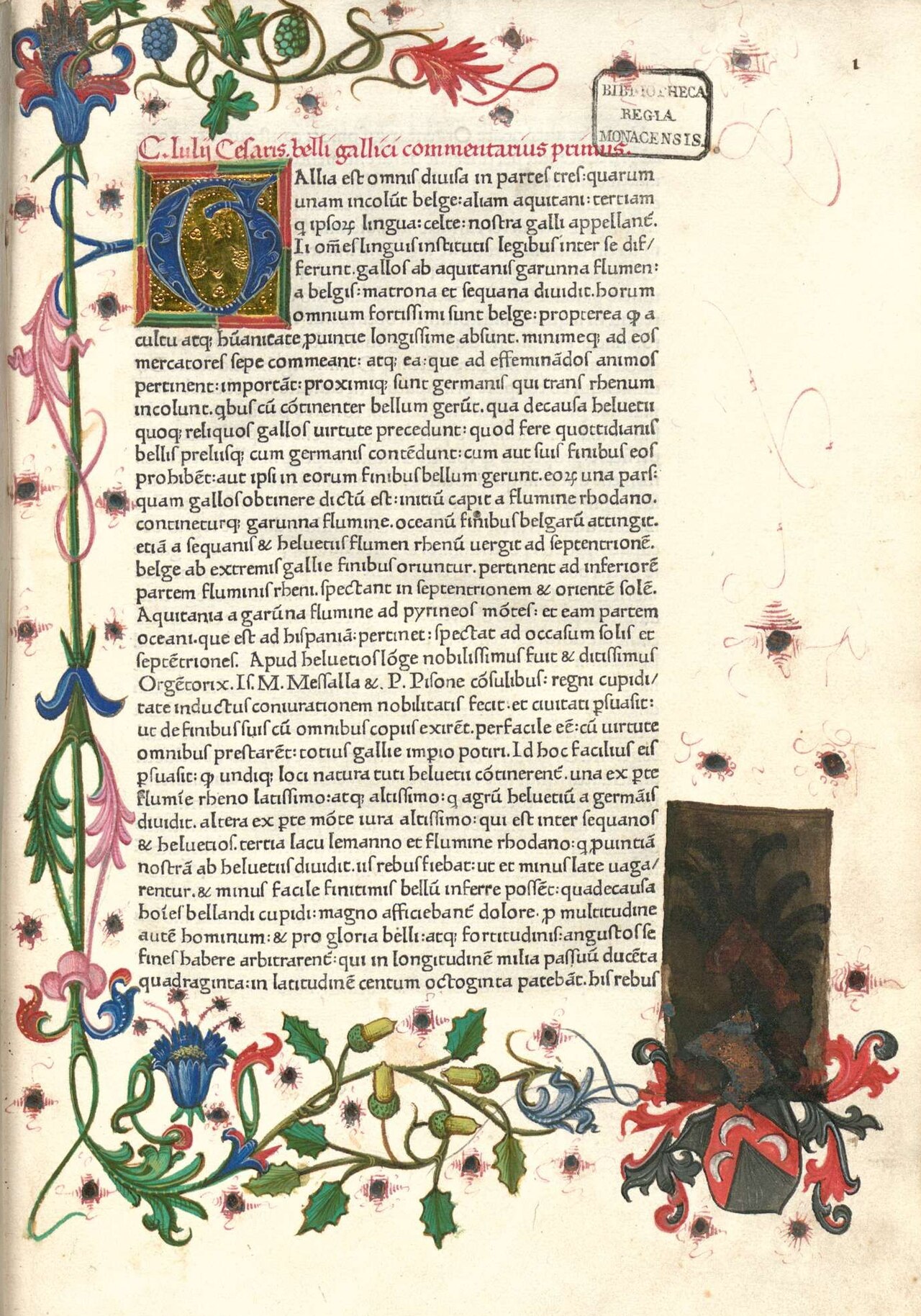 Book
Primary source
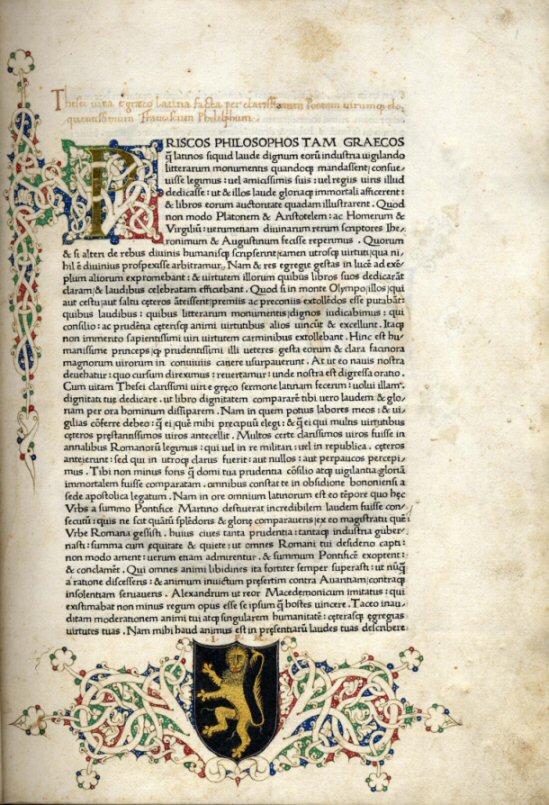
Commentarii de Bello Gallico
Julius Caesar · c. 58-50 BCE (this copy 1469)
 Painting
Secondary source
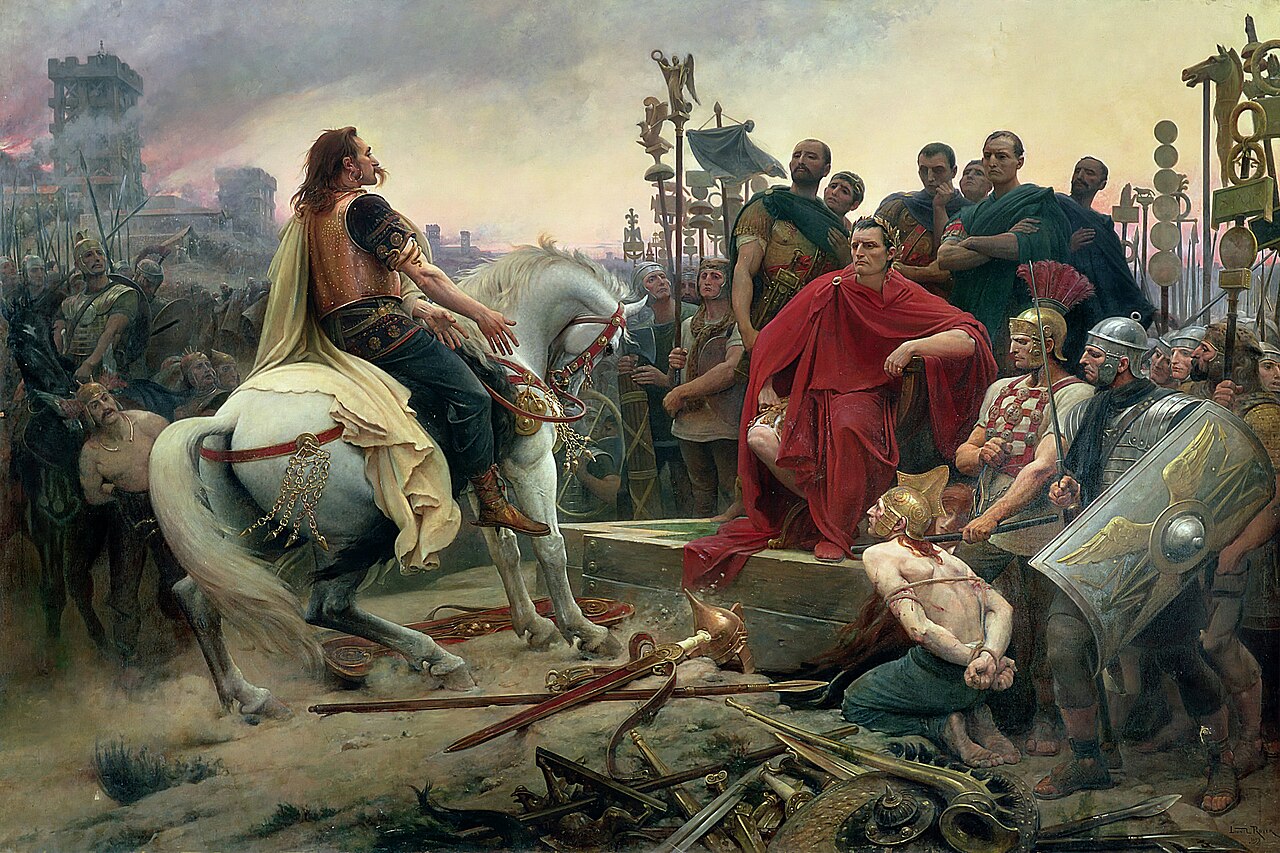
Vercingetorix Throwing down His Weapons at the Feet of Julius Caesar
Lionel Royer · 1899
 Sculpture
Secondary source
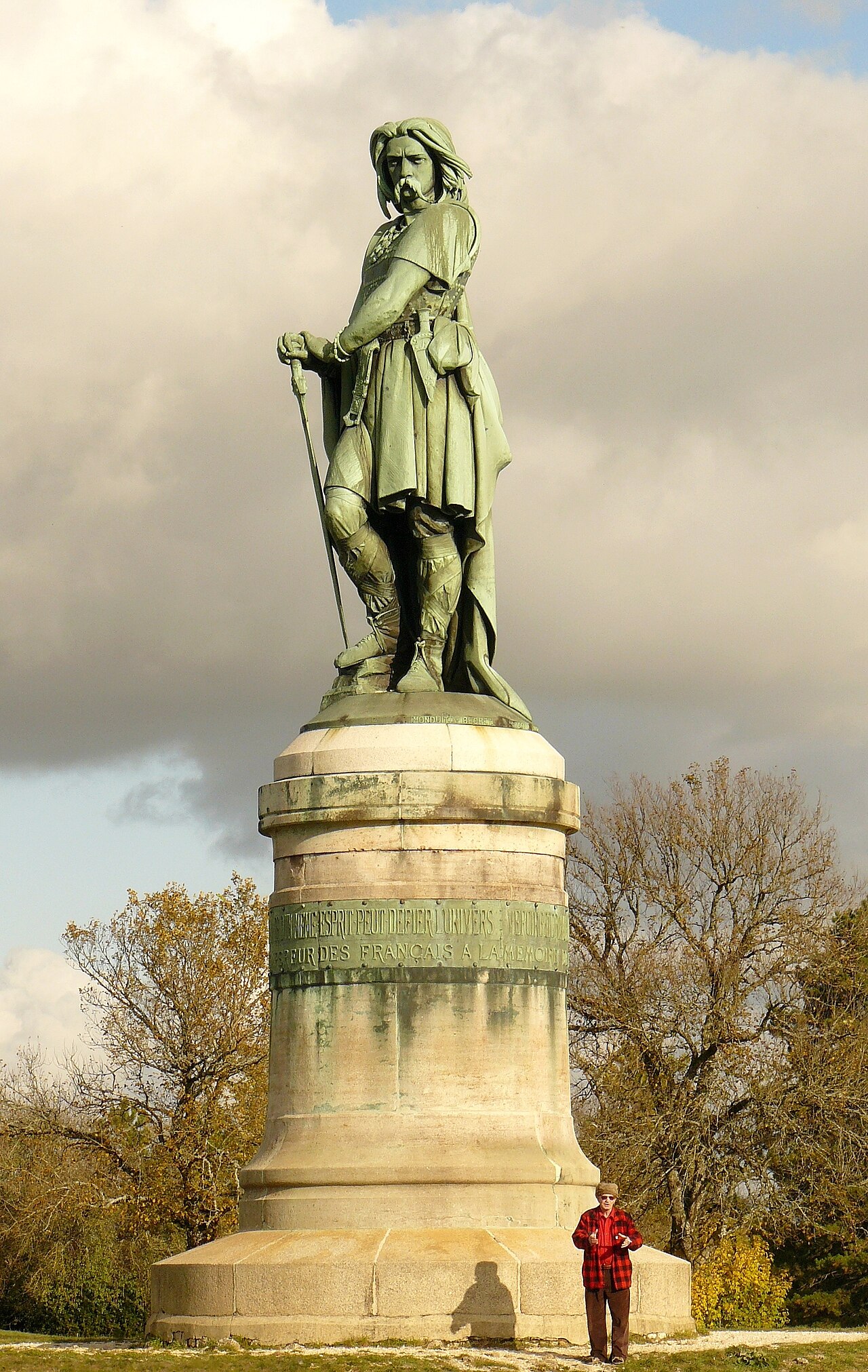
Vercingetorix Monument
Aimé Millet · 1865
 Book
Secondary source
Parallel Lives
Plutarch · c. 100-120 AD
Free account
Read every Vercingetorix source
Sign up free →
Ready when you are
Start chatting with Vercingetorix now.
20 messages free · No credit card · Available in 50+ languages.