


Primary sourcePainting1800
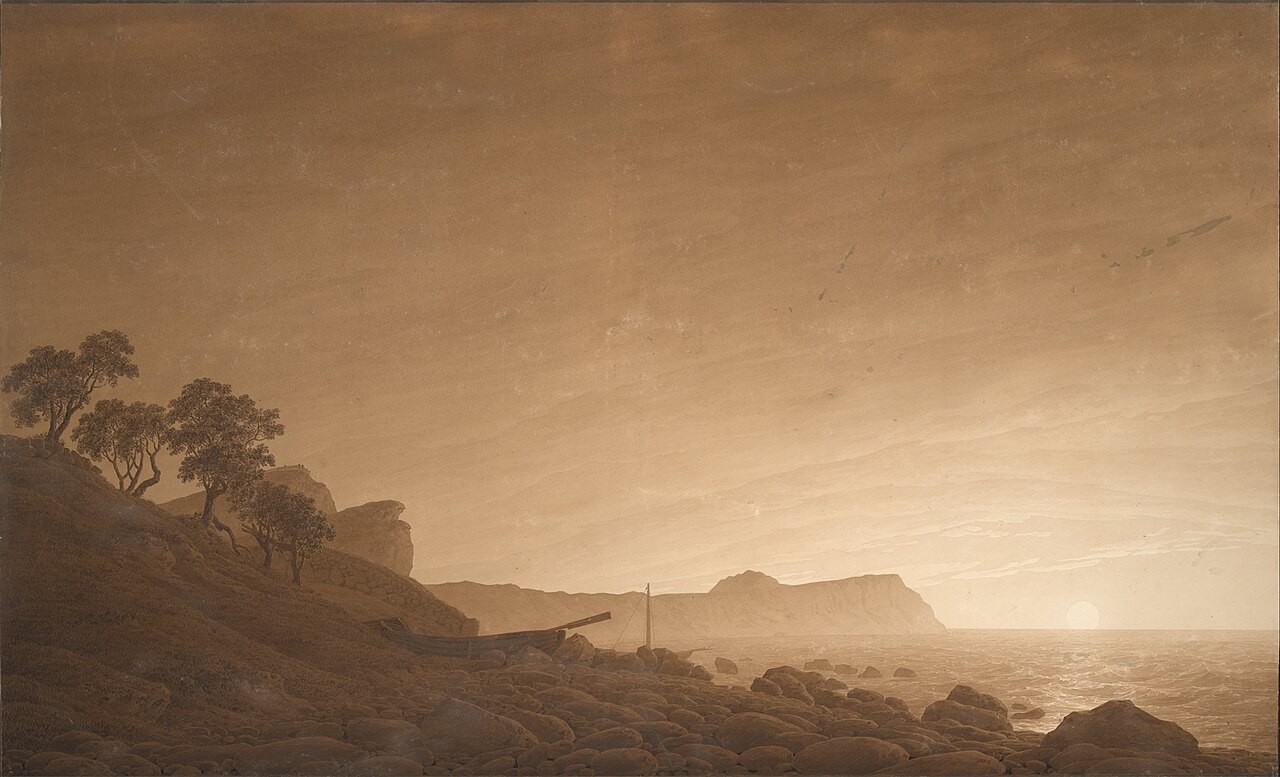
View of Arkona with Moon Rising
Caspar David Friedrich · 1800
A large sepia drawing by Friedrich from 1800, made during his early journeys to Rügen, showing a rocky shore at dusk.
An early sepia drawing by Friedrich from his formative Rügen journeys, the medium that first made him known.
About this source
What it is
This sepia drawing was made by Caspar David Friedrich in 1800, during one of his early journeys to the island of Rügen. It shows a rocky shore at dusk, with gnarled trees, a beached boat, and a moon rising over the sea. It is held by the Albertina museum.
Why it matters
Before Friedrich became known for his oil paintings, it was drawings like this sepia work that first brought him recognition. The Rügen coastline became one of his most important subjects, and this drawing shows the atmospheric, moody style that would define his later Romantic paintings.
Look closer
- What mood does the rising moon and hazy sky create in this drawing?
- Why might Friedrich have chosen sepia tones rather than full color for this scene?
- What does the beached boat suggest about human presence in this wild landscape?
This painting is part of the curated material that grounds the AI version of Caspar David Friedrich on Humy.ai — when students ask about related events, the AI can quote it and cite it.
More Caspar David Friedrich sources
Browse all 89 →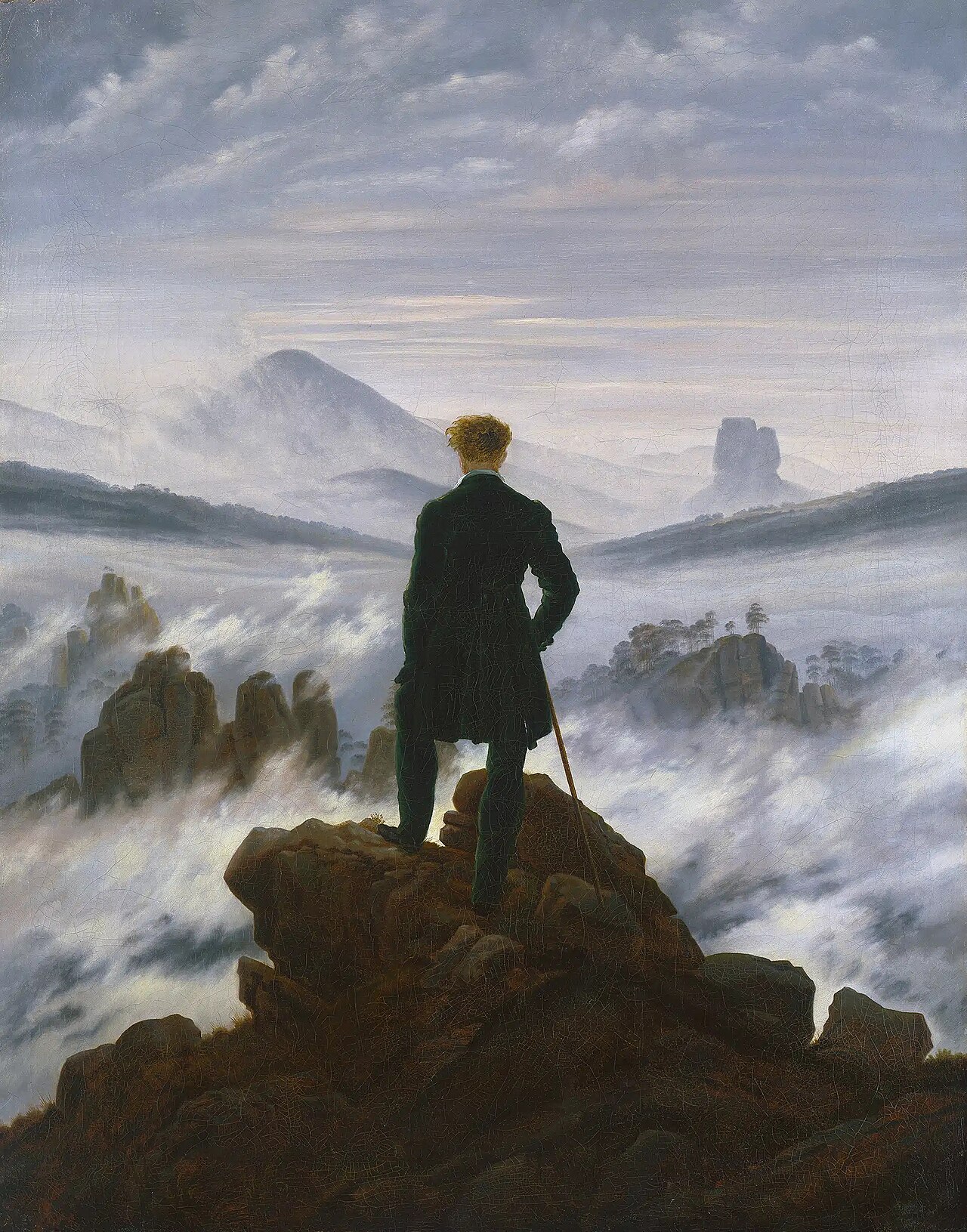 Painting
Primary source
Wanderer above the Sea of Fog
Caspar David Friedrich · 1818
 Painting
Primary source
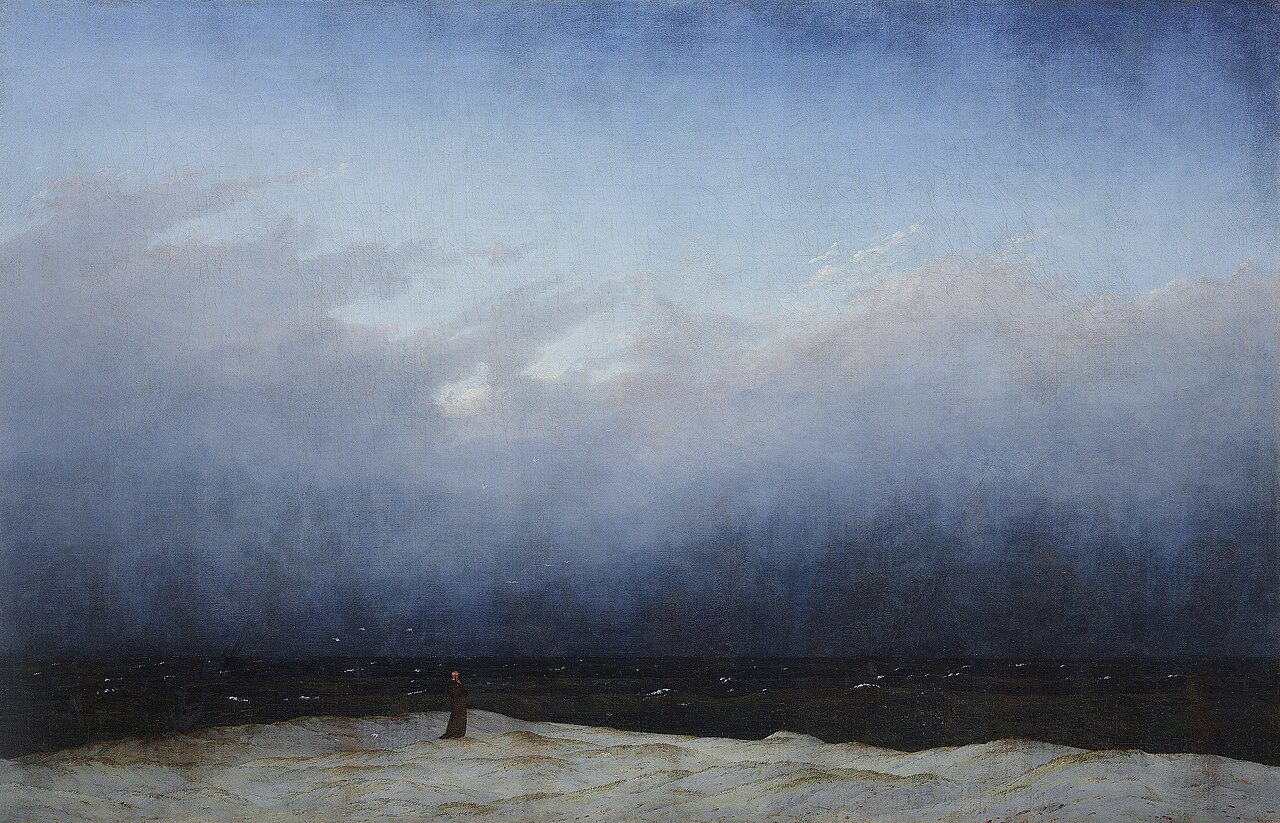
The Monk by the Sea
Caspar David Friedrich · c. 1808-1810
 Painting
Primary source
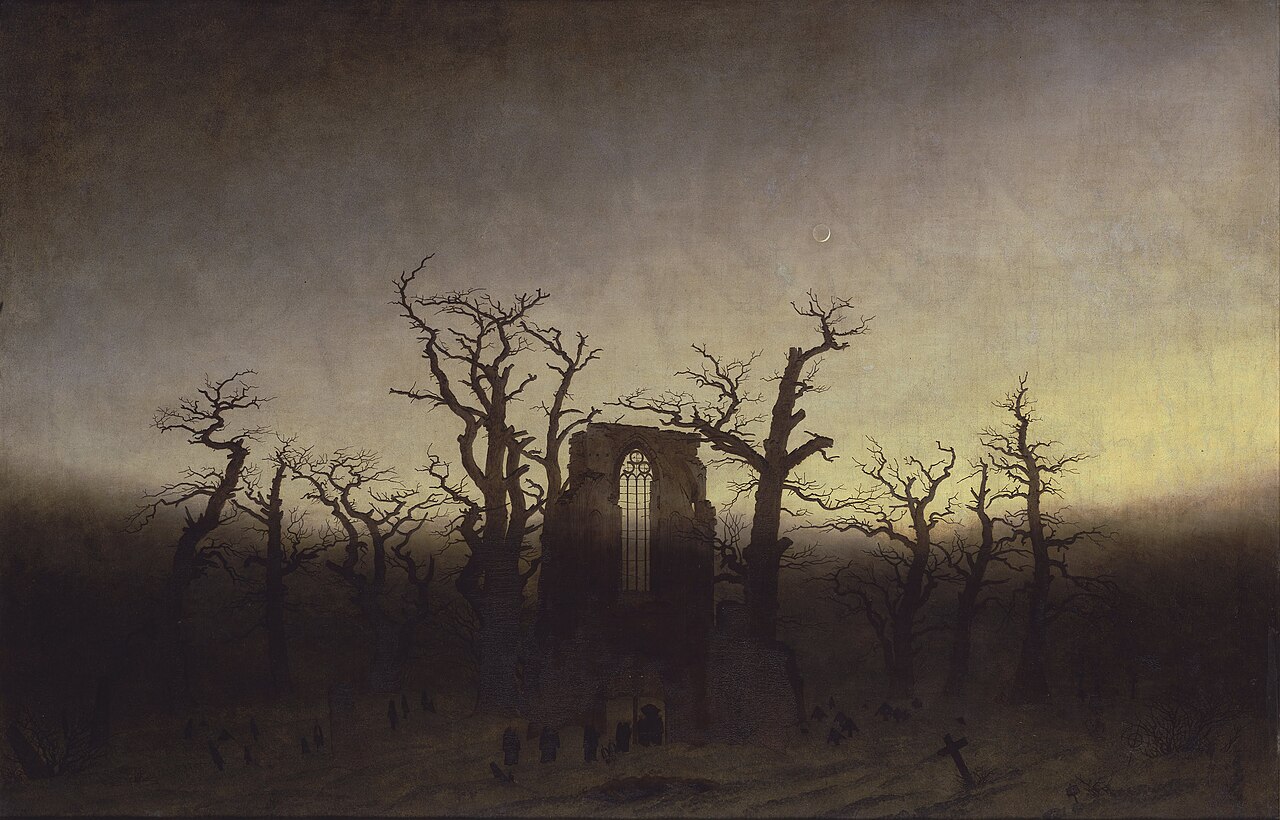
The Abbey in the Oakwood
Caspar David Friedrich · c. 1809-1810
 Painting
Primary source
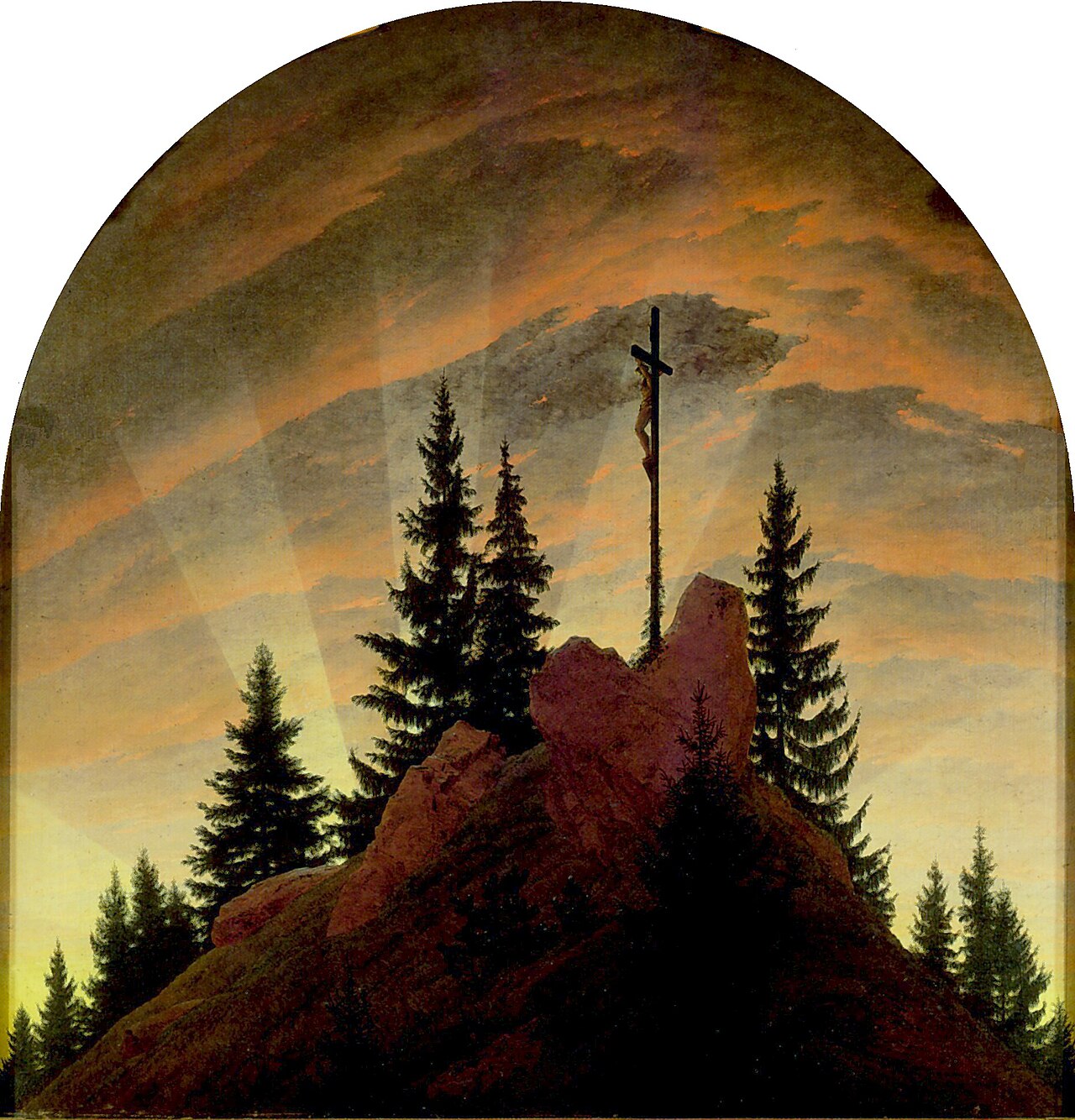
Cross in the Mountains (Tetschen Altar)
Caspar David Friedrich · c. 1807-1808
Free account
Read every Caspar David Friedrich source
Sign up free →
Ready when you are
Start chatting with Caspar David Friedrich now.
20 messages free · No credit card · Available in 50+ languages.