


Secondary sourcePhotograph2009-03-17
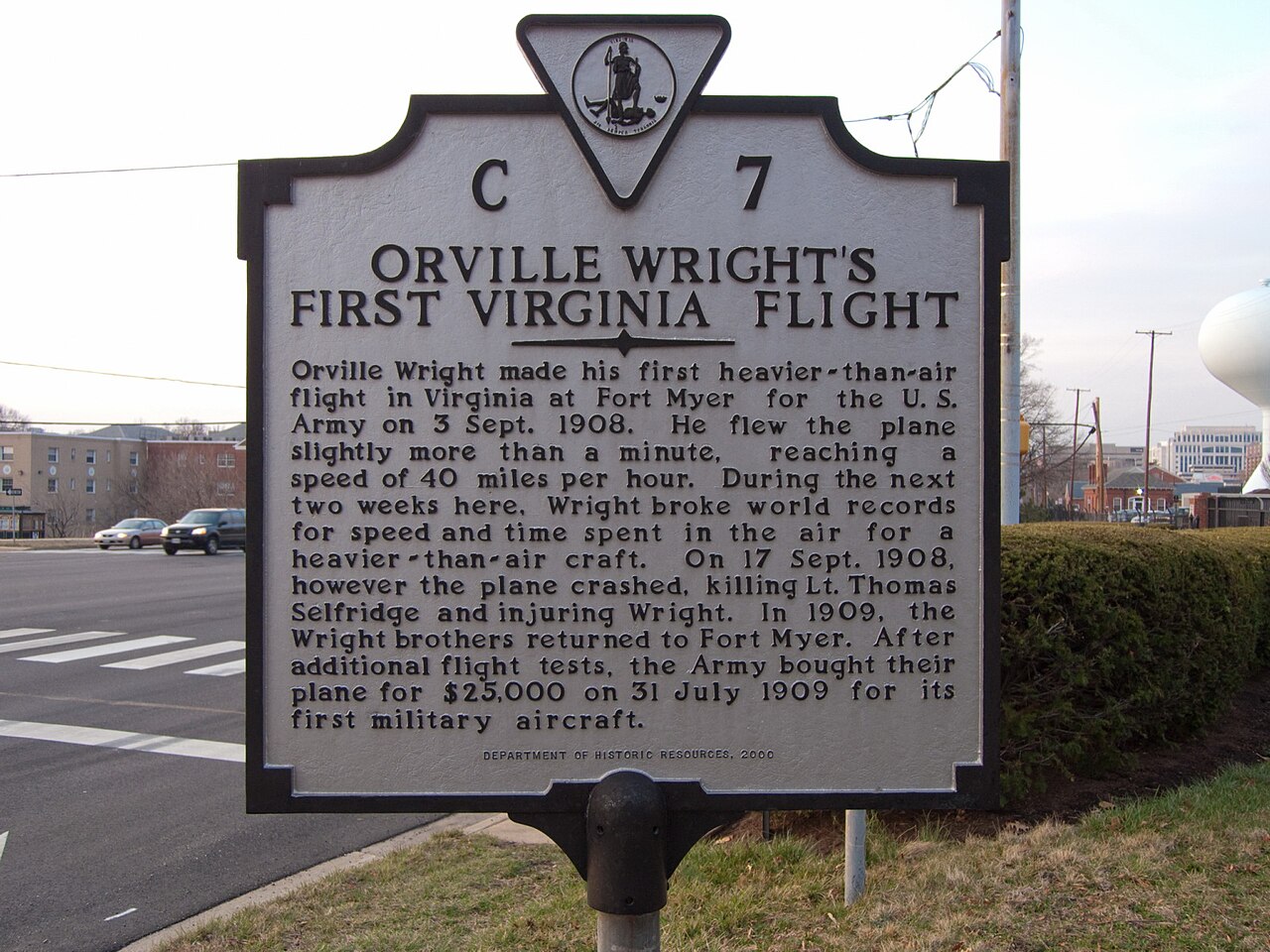
Virginia Historical Marker C-7: Orville Wright's First Virginia Flight
Cliff from Arlington, Virginia, USA · 2009-03-17
A roadside historical marker in Virginia recording Orville Wright's 1908 heavier-than-air flights at Fort Myer for the U.S. Army. The marker is a modern photograph of the sign.
Shows a state marker recording Orville Wright's 1908 Army flights at Fort Myer, the place of his first heavier-than-air flight in Virginia.
About this source
What it is
This is a 2009 photograph of Virginia historical marker C-7, a grey metal sign with a black border and a state seal at the top, standing on a street corner. The marker's text describes Orville Wright's first heavier-than-air flight in Virginia at Fort Myer for the U.S. Army on 3 September 1908. It notes that he flew slightly more than a minute, reaching 40 miles per hour, and that during the next two weeks he broke world records for speed and time in the air for a heavier-than-air craft. The marker also records that on 17 September 1908 the plane crashed, killing Lt. Thomas Selfridge and injuring Wright. The photograph was taken by a Wikimedia Commons volunteer, and the photo itself is modern; the marker text is the historical content.
Why it matters
The marker shows how Virginia later chose to remember early military aviation. The 1909 Army purchase of the plane, for $25,000 on 31 July 1909, marked the start of the Army's first military aircraft. The crash that killed Lt. Thomas Selfridge shows that early flight was dangerous, and that the Army and the Wright brothers both took part in its risks and its progress.
Look closer
- What does the marker choose to emphasize, such as records, distance, or the fatal crash, and what does it leave out?
- Why might a state put up a sign like this decades later, and who was it meant to inform?
- How does reading a modern sign differ from reading a document written in 1908?
This photograph is part of the curated material that grounds the AI version of Orville Wright on Humy.ai — when students ask about related events, the AI can quote it and cite it.
More Orville Wright sources
Meet the AI Orville Wright →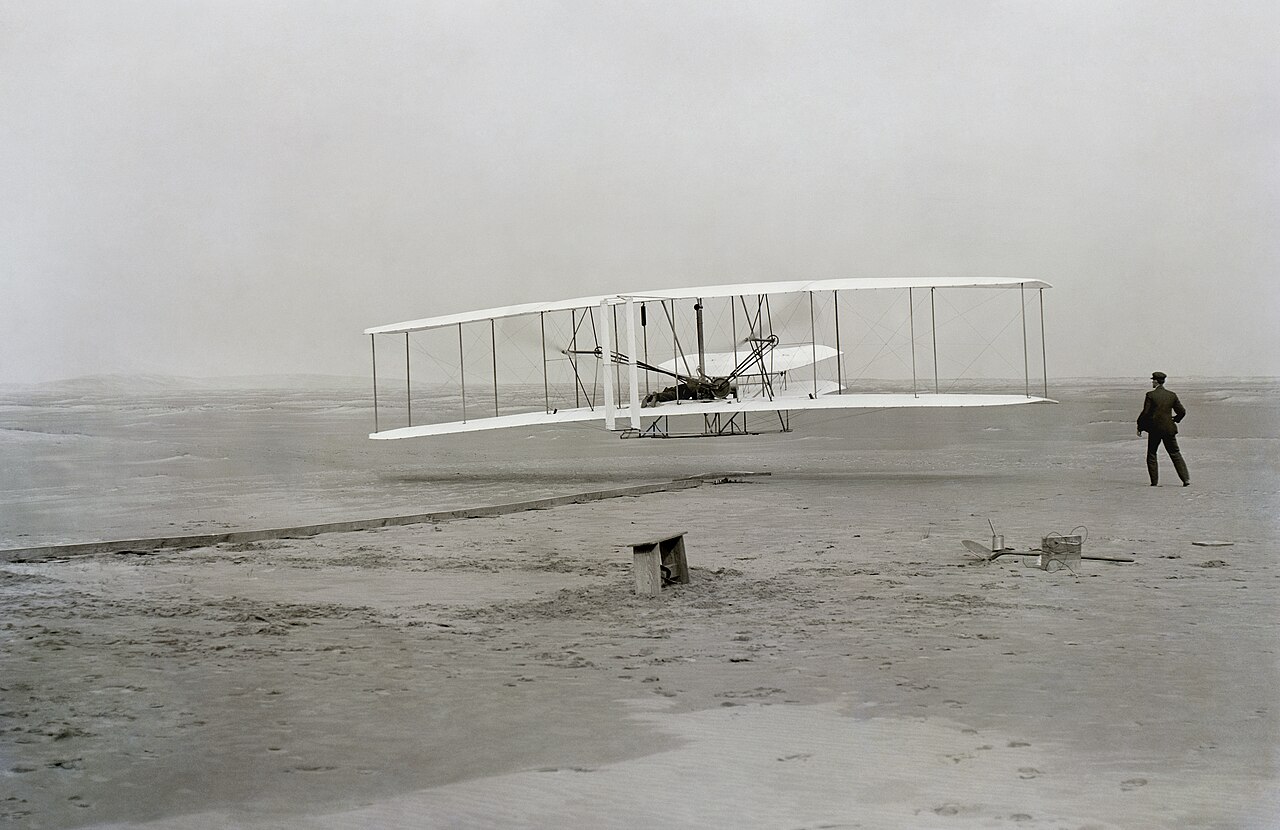 Photograph
Primary source
Wright Flyer
17 December 1903
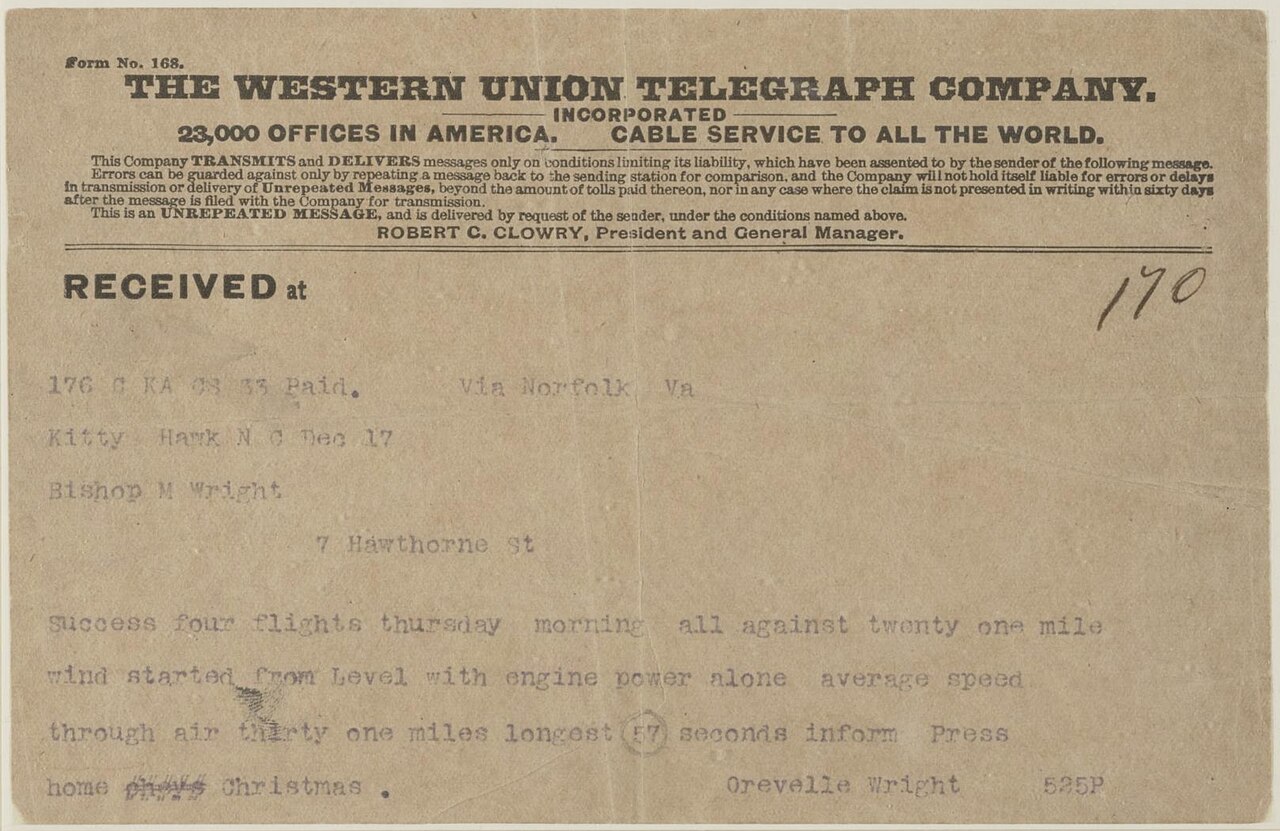 Document
Primary source
Telegram to Milton Wright, 17 December 1903
Orville Wright · 17 December 1903
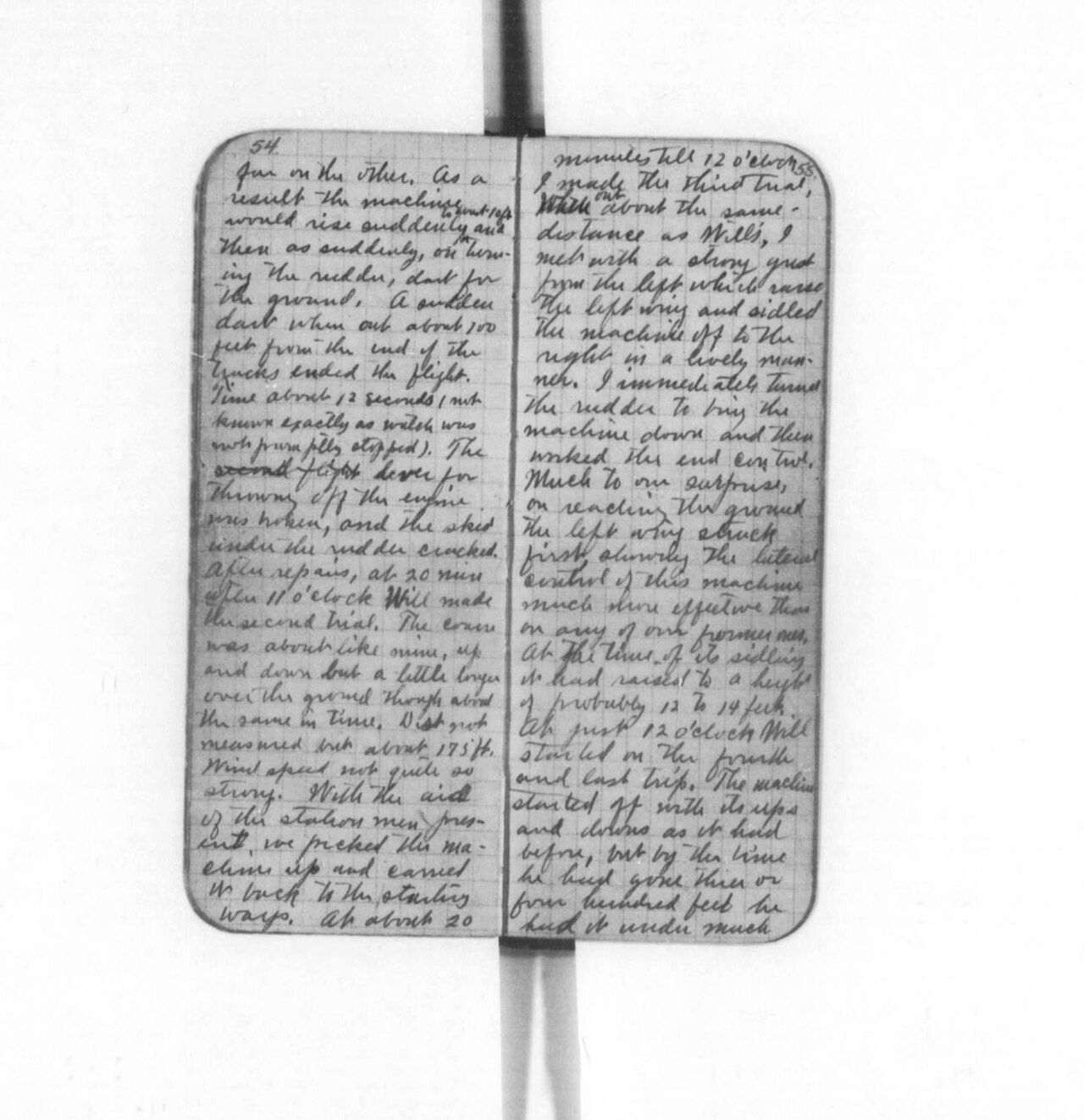 Diary entry
Primary source
Diary Entry for December 17, 1903
Orville Wright · 17 December 1903
 Photograph
Primary source
Orville Wright, 1905 Portrait
Unknown · 1905
 Photograph
Primary source
Orville Wright Flying at Fort Myer
Unknown (US Army) · 1908
Ready when you are
Start chatting with Orville Wright now.
20 messages free · No credit card · Available in 50+ languages.