


Secondary sourcePaintingc. 1819
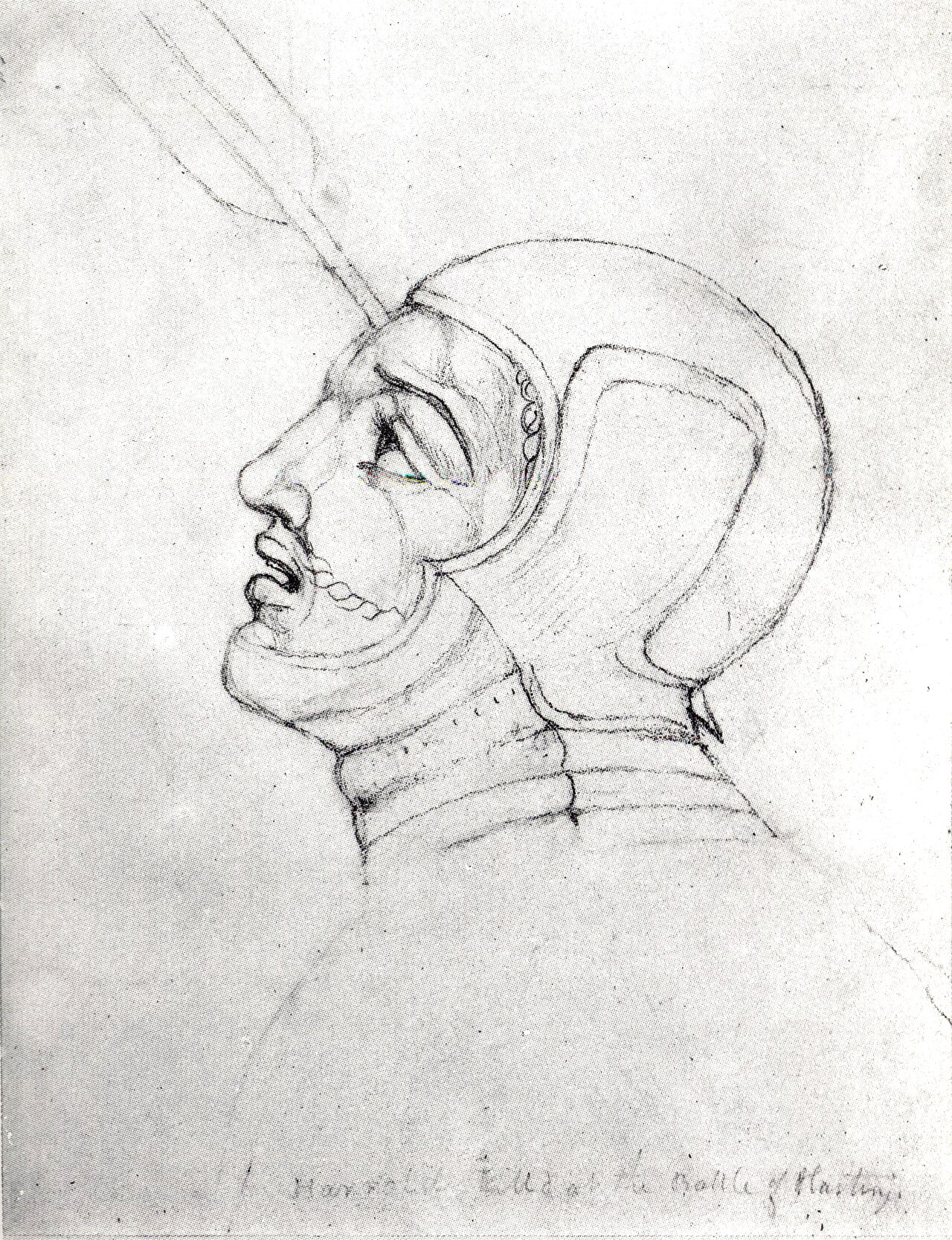
Visionary Head of Harold Killed at the Battle of Hastings
William Blake · c. 1819
A Romantic pencil drawing by William Blake imagines Harold's head at the moment of his death at Hastings.
Imagines Harold's death at Hastings, showing how later artists mythologised his end.
About this source
What it is
This pencil drawing, made around 1819 by the English artist and poet William Blake, is one of his 'visionary heads' — imagined portraits Blake claimed to draw from visions rather than real sitters. It shows a head in profile with arrow shafts piercing it, inscribed 'Harold killed at the Battle of Hastings'.
Why it matters
Blake made this centuries after Harold's death, so it is not a record of what Harold looked like. Instead it shows how Romantic-era Britain imagined and dramatised his death, turning the defeated king into a tragic, almost mythic figure.
Look closer
- Why might Blake have been drawn to imagine Harold's death rather than his life?
- What does the arrow imagery suggest about which version of Harold's death the artist believed or wanted to show?
- How does an imagined 'vision' differ from a historical record?
This painting is part of the curated material that grounds the AI version of Harold Godwinson on Humy.ai — when students ask about related events, the AI can quote it and cite it.
More Harold Godwinson sources
Browse all 51 →
Ready when you are
Start chatting with Harold Godwinson now.
20 messages free · No credit card · Available in 50+ languages.